





Lynne Drexler on Monhegan Island
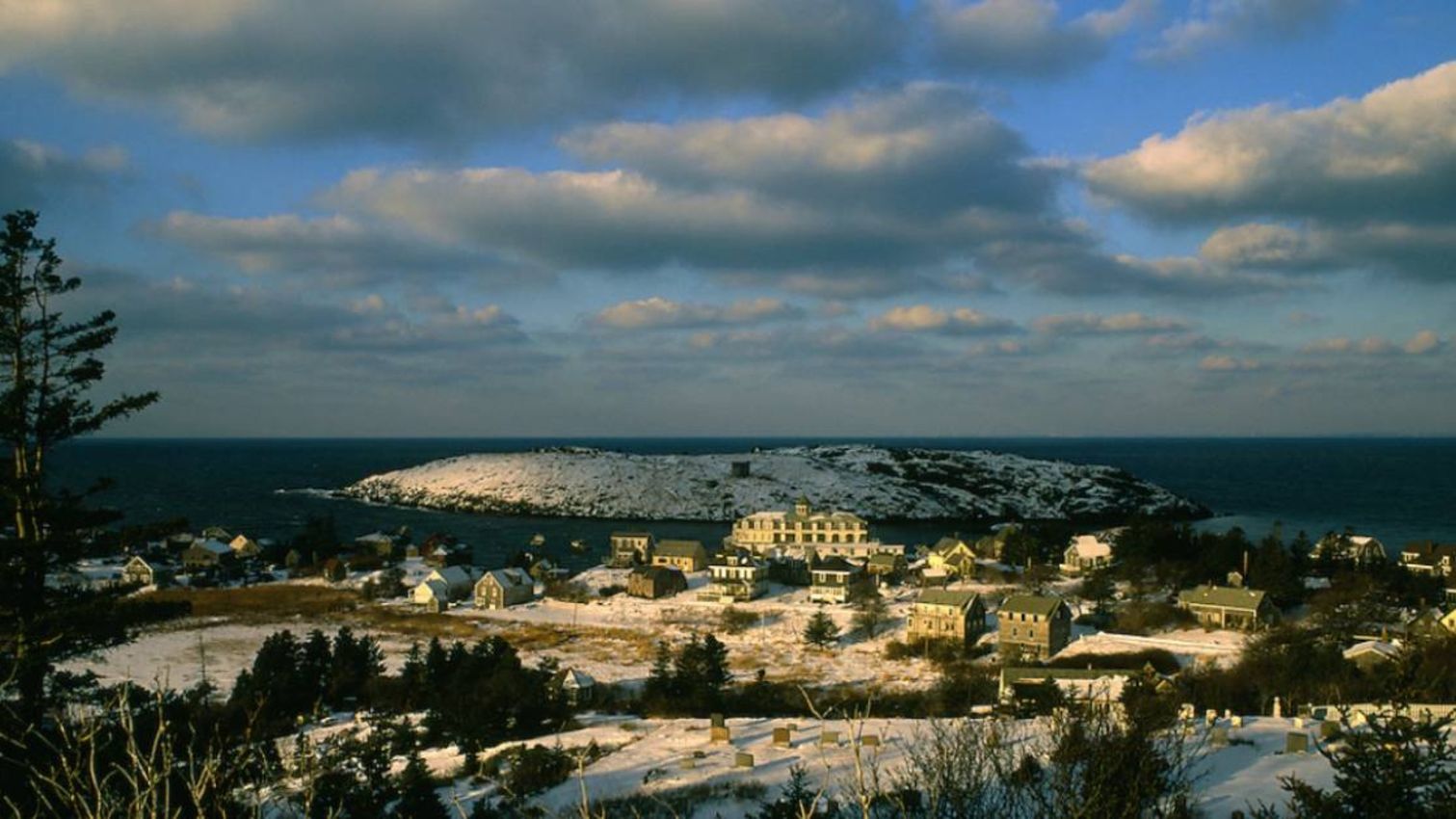
In a very small room in her house on Monhegan—an island 12 miles off the coast of Maine—the Abstract painter Lynne Drexler would sit crossed legged, with the canvas on the floor leaning up against the wall in front of her, and paint for hours. Save to My Ocula

In a very small room in her house on Monhegan—an island 12 miles off the coast of Maine—the Abstract painter Lynne Drexler would sit crossed legged, with the canvas on the floor leaning up against the wall in front of her, and paint for hours.
Drexler first visited Monhegan in the summer of 1963, with her then-husband, fellow painter John Hultberg. At the time, they were living in New York, where—having studied under Hans Hofmann and Robert Motherwell—she had developed a promising career as an artist. But she was becoming disenchanted by the art scene there, and was resolute in her decision to pursue an artistic route independent of shifting currents.
In a letter Drexler wrote to a friend from Monhegan, she joked about what Alonzo Gallery, her dealer in New York, could tell collectors: ‘I suggested she advise them I’d become a hermit—an eccentric one—and that I only come to NYC when provided with orchestra tickets to the MET, clubhouse tickets to the race track, and absolutely no talk of art or the scene.’
After Drexler and Hultberg separated in 1983, she moved permanently to the island. It was here that she found solace, and it was from Monhegan that she looked out onto the rest of the world. Its rugged coastline, unforgiving seas, and the play of light and shadow found their way into Drexler’s paintings. Her dense, tessellated swatches of colour expanded to include geometric forms, such as circles and squares, as well as allusions to palm fronds and the tall grasses of the island. Monhegan became a ceaseless muse, and there was a house full of art to prove it.
In the days following her death in December 1999, the islanders in charge of Drexler’s estate found themselves with a herculean task on their hands. Years’ worth of Drexler’s paintings, collages, and works on paper had amassed in bedrooms, up staircases, under kitchen tables, and balanced on sofas in the home she had left behind, and it needed to be cleared.
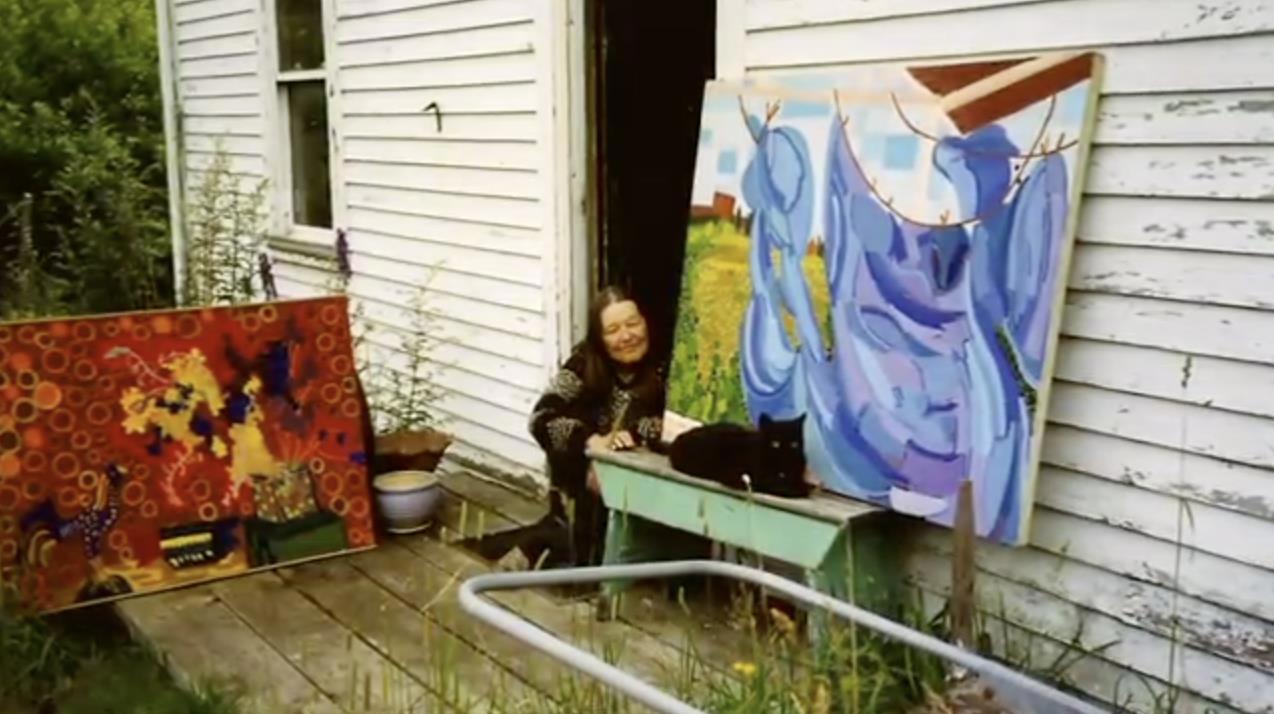
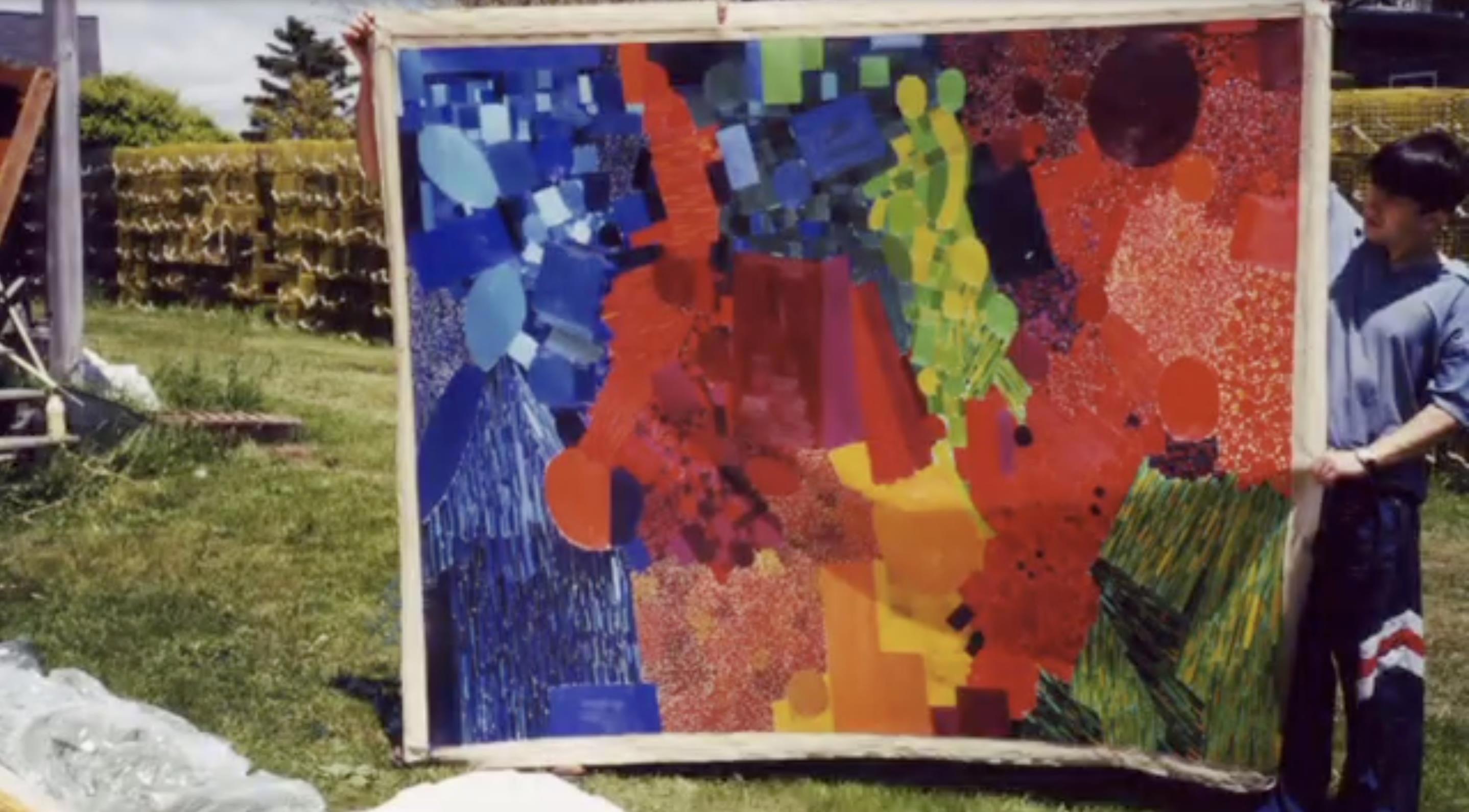
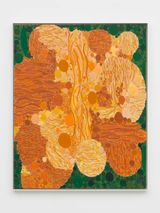
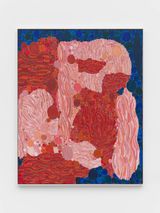
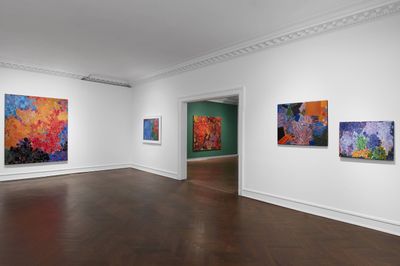
One painting that ended up being laid out on the lawn outside the Monhegan Memorial Library that day was An Activated Land (1965)—an arresting oil on canvas, more than three metres wide, which is now the marquee artwork for a solo exhibition at White Cube Mason’s Yard in London. Tonally rich with a hatchwork of thick impasto, the work seems to slowly unravel stirring the subconscious. Nature is prevalent, but there is something else, unknown and magical, that renders this painting—and so many others by Drexler—truly remarkable.
An essay written by two friends of Drexler—Ann Hughey and Helen Francies—sheds light on the island she fell in love with, the kitchen-table gatherings where she would hold court with her charming southern drawl and husky laugh, and how a love of opera carried her through her last hours.
‘On Island’ by Ann Hughey and Helen Francies
Second only to her art, Lynne Drexler loved Monhegan Island. ‘When I came here, I got to know the year-round people. I like the people out here,’ Lynne once said. She gave the islanders her ultimate accolade: ‘They’re not dull.’
The islanders also gave her privacy. ‘There is no isolation in a place like this—impossible to find—but solitude is respected,’ she said. ‘I had all the time to work I needed.’
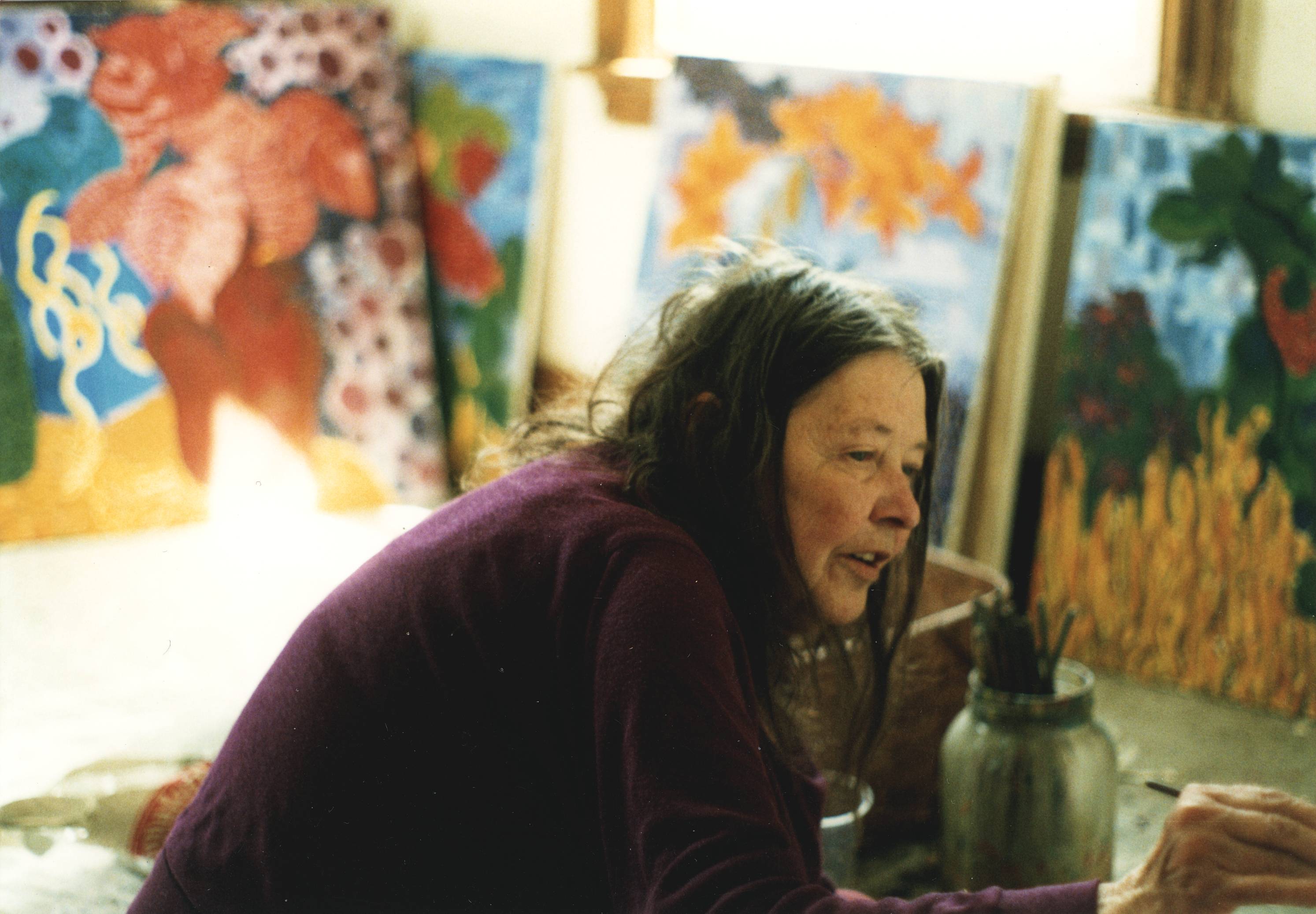
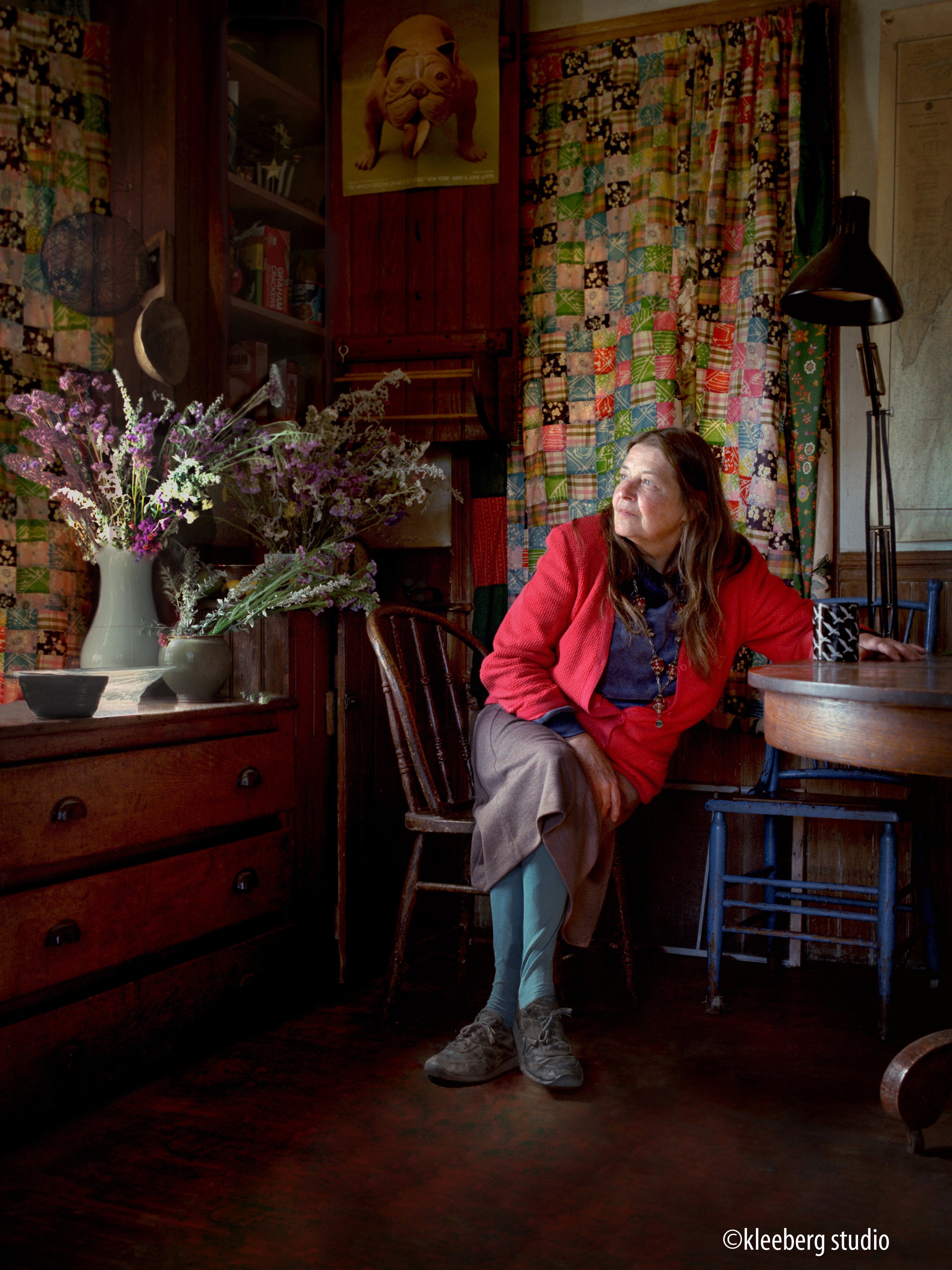
Her house on the meadow was filled with her paintings, hanging floor to ceiling in her studio and piled on the living room shelves. The upstairs remained untouched for years, with artwork stacked to the rafters, under her bed, and against the bathroom wall. During her open-studio hours, intrepid visitors were allowed to forage up there.
Sitting cross-legged on the couch in the living room, one of her cats curled up next to her, or at her big, round kitchen table, Lynne held court. Islanders delivering groceries, propane or mail recall that it was impossible not to stay for a drink. In her charming southern drawl she commanded visitors to ‘come on in and pour yourself a cup of tea’. After five o’clock, she served bourbon on ice, and the conversation was off and running.
“I had all the time to work I needed.”
Lynne unabashedly loved island gossip. She was not in the least bit mean-spirited, but she revelled in tales of human drama: who was feuding, whose health was failing, which children misbehaved, whose dog had bitten who, even which visiting minister got drunk instead of comforting the sick. Islander Harry Bone saved hot news for her but ‘when I thought I had a juicy morsel for her, she already knew the finer details,’ he says.
Politics fascinated her, especially the travails of Bill and Hillary Clinton. The impeachment scandal riveted her. She took her religion seriously and needed little encouragement to hold forth on the latest follies of the Episcopal Church.
Lynne would also reminisce about her adventures living at the Chelsea Hotel in New York, where she had long, satisfying chats with writer Quentin Crisp about British royalty. An emigre Russian prince had courted her in New York and she liked to speculate on the what-ifs of history.

Conversations with Lynne could take uprising turns, such as the time she delivered a lecture on the entomology of four-letter words, declaring them perfectly proper if used correctly. A descendant of [Confederate general] Robert E. Lee, she told tales of growing up as an only child in Virginia’s Tidewater country. And the story of the ribbon-wrapped champagne bottle she used to christen a U.S. Navy ship in Newport News when she was a girl.
Her dinner parties were famous for good conversation and food—and a table set with family silver, supplemented by plastic knives and forks. ‘Under all the unkemptness and disdain for order, there was a very proper Southern woman,’ says islander Kathy Iannicelli. ‘She could curse like a pirate, but she judged people by their manners.’
The island library kept her supplied with books on history, especially Russian, and she devoured mystery novels. Her knowledge of opera was encyclopaedic, and a discussion of the German and Russian works she favoured might wend its way into an aside about conductor Leonard Bernstein’s allergies. She named one of her cats Amfortas, for the king in Wagner’s opera Parsifal [1882], and was gleeful when the black kitten was caught romping in the beds at the Island Inn. With Lynne’s death, ‘the IQ of the island went down considerably’, islander Doug Boynton says.
When Lynne learned she was dying, she banned long faces and any form of what she called ‘crepe-hanging’. The islanders soon after threw her a 70th birthday party, at which she revelled in being the centre of attention. The Island’s Lupine Gallery gave her a one-woman show and she joked that sales of her paintings picked up following the news of her impending demise.
Lynne died the day before New Year’s Eve in her Monhegan studio, surrounded by her paintings and a group of islanders who loved her. A recording of Mozart’s Don Giovanni [1787] was playing and she expired during the liveliest part of the opera, the drinking scene. The islanders gathered to pay their last respects as she left Monhegan on a fisherman’s boat. There was a glorious winter sunset and the trip inshore was rough, which would have pleased Lynne, because she loved a wild ride.
Opening 27 November, The Sixties at White Cube Mason’s Yard, London, marks Drexler’s first major presentation in Europe, and includes paintings, works on paper, and mixed-media collages from this formative period in her career.
Main image: Photo: Karen Raynes, Shooting Star Designs.







A respected voice in contemporary art discourse.
Focusing on ambitious storytelling and insightful art-world commentary. Ocula Magazine publishes in-depth interviews, critical essays and timely analysis on the artists, exhibitions and ideas driving the global art world.
Learn more about Ocula Magazine
Showcasing the best of the art world.
Ocula partners with galleries from around the world to highlight their artists, artworks and exhibitions. Gallery membership is by application and invitation, with each member vetted by an independent panel.
Learn more about Ocula Membership
Specialises in the sale of major artworks.
Led by a team with deep ties to the world’s leading auction houses, galleries and collectors. Ocula’s advisory team offers bespoke services to high-net-worth clients from around the world who are looking to acquire the best of contemporary and modern art.
Learn more about our team and services