
Words of artist: about Circulation / Tianfu District performance and documentation project
Coming from afar to visit Chengdu, I attempted to find an entry point into contemporary life in the city. Because I focus on contemporary life and physicality, my inspiration is rooted in a close investigation of my surroundings. Between environment and life, I use specific actions to create significance. When I was invited to come to this Chengdu residency as part of the cooperation between the Taipei International Art Village and A Thousand Plateaus Art Space, I first looked for Chengdu on a map. Imagining that I would be in residence at a gallery outside the rings of high speed roads, I prepared myself for a remote suburb. When I arrived in Chengdu, I was stunned by the modern city stretching to the horizon. Tianfu District is one of China’s swiftly growing areas, but in fact, no long ago it was still the village I imagined. My apartment faces south. Every day I look at the murky sky, listen to the raucous sounds of construction, and smell the concrete. Although I was not present when the city began to spread to this village, I have witnessed a portion of it’s skyline-altering development.
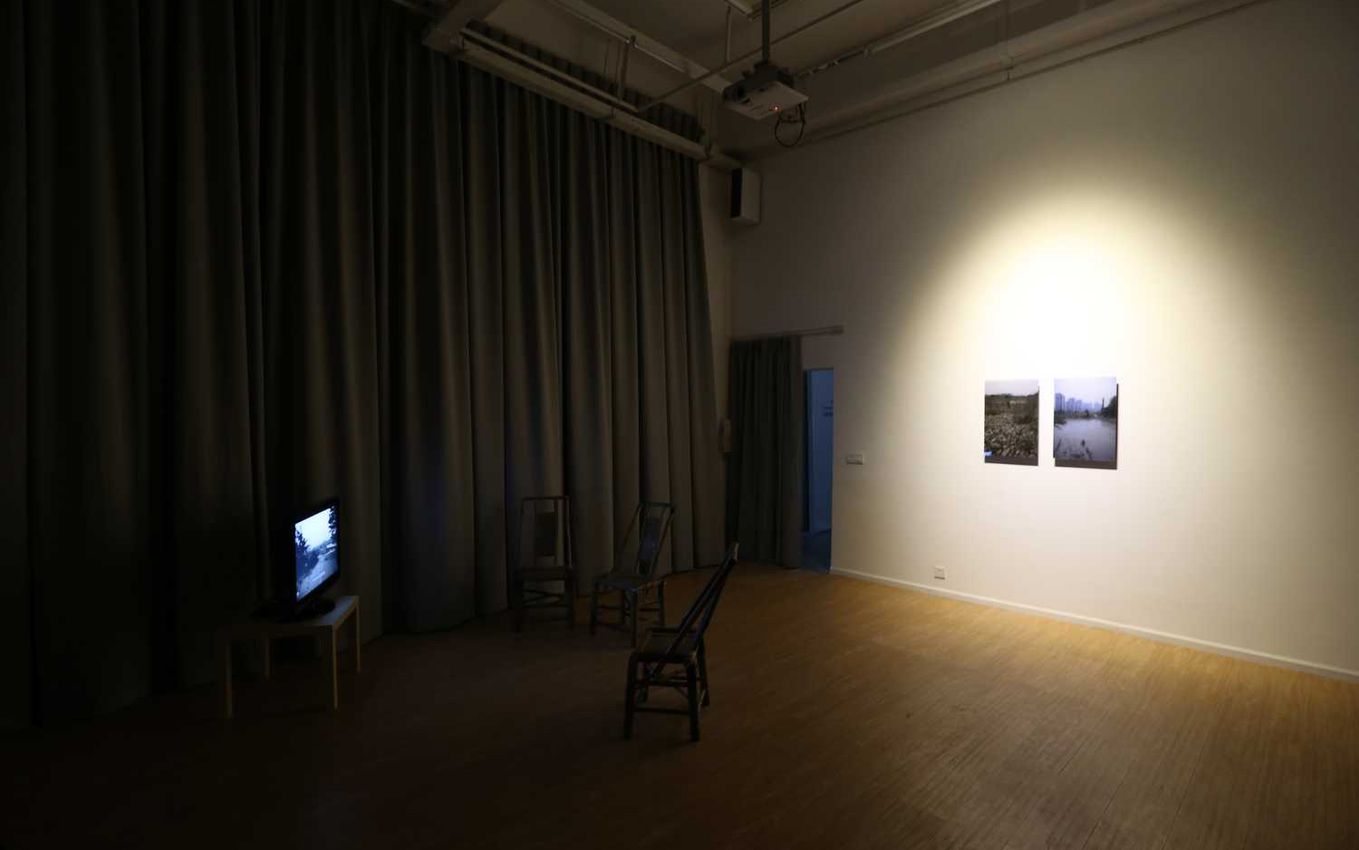
Chen Tianjin and Cao Minghao’s Waterways Plan seeks to discuss change’s in the city’s culture by examining changes in the Chengdu water system. One of the sites for this project is Xinjian Guangtan Village. Located in the southwestern part of Tianfu District, Xinjian’s main industry in years past was agriculture. Due to geographical factors and the development of the shipbuilding industry, it became an important travel centre of Western Sichuan and a centre of shipbuilding for the Minjiang river and Chengdu waterways. Towering buildings began to appear as a result of the modernisation of Xinjian, and the features of the village and landscape were swiftly altered. Guangtan village is built on soil deposits of the Minjiang river. The village is surrounded by water on three sides, and the black soil is quite fertile. The growth of the sand industry in the 1990s caused significant changes along the banks of the river. Instead of being used for cultivating crops, soil became a construction material for urban areas. The rush to finish large construction works changed the formerly cloudy sky to grow dense with smog.
About Lin Wei-lung’s Performance and Documentation Plan
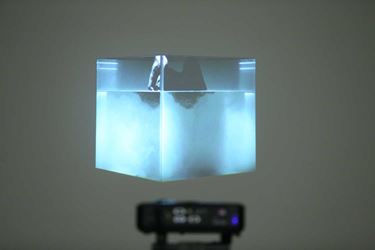
I will attempt to take as much of the riverbank soil as I can carry and walk around Tianfu District. I will start from the local religious centre, Longwang Temple, and depart on the morning of September 19th under the lunar calendar. Using my own body to respond to the modernisation process which turns village to city, I will ultimately return the soil to the village. Ran Maoqiu will use video to document the performance and of the villager’s thoughts on changes in their environment.
Lin Wei-lung
Grew up in Taipei and currently works there.
Graduated from the National Taiwan University of Arts, Fine Arts Department, Taipei National University of the Arts Fine Art Research Group
Studio assistant for artist Wu Tien-Chan.
Founder of Lane 216, East, art documentary studio, responsible for directing and producing Lin Wei-lung’s work and thinking originates in the body, and his early works included a series of works documenting the body. Recent works have been based on a process located between body and material. Performances are often long-term, returning repeatedly to a work to accumulate actions. Extended performances make it possible to record into the body’s memory and use the body as an angle for viewing the world. In addition to his own artistic practice, since 2012 Ling has worked in art documentation, using the camera’s lens to allow the dissemination of artistic messages, acts, and exhibitions.
Whether through artistic works, documentary collaborations, or travel, Ling seeks to further examine and imagine the viewpoints and physical understandings of those living in Asia.
Recently he has received and Asian Cultural Council grant and undertaken a residency at A Thousand Plateau’s Art Space in Sichuan, China.
Co. Director Introductions: Ran Maoqiu
Ran Maoqiu (b.1987) was born in Chongqing, China. He currently lives and works in Chengdu. He received his Bachelor’s degree from the Chengdu University of Electronic Science and Technology (2008–2012). In 2012, he founded Yixuan Video Studio, focusing primarily on independent films, documentaries, and experimental videos. In addition, he has assisted in the editing process for many important exhibition videos. From 2009 until today, he has completed post production on more than ten short films and documentaries. His short film, Earth Preservation received an award for outstanding graduation work.

A Thousand Plateaus Art Space was founded in 2007 in Chengdu, China. It is a professional gallery committed to present and promote China’s contemporary art. Equipped with exhibition hall for artworks and collection and screening room for video data, it is mainly on researching, presenting and promoting outstanding works and experimental projects of China’s contemporary art and culture, actively carries out domestic and international cooperation projects.

A respected voice in contemporary art discourse.
Focusing on ambitious storytelling and insightful art-world commentary. Ocula Magazine publishes in-depth interviews, critical essays and timely analysis on the artists, exhibitions and ideas driving the global art world.
Learn more about Ocula Magazine
Showcasing the best of the art world.
Ocula partners with galleries from around the world to highlight their artists, artworks and exhibitions. Gallery membership is by application and invitation, with each member vetted by an independent panel.
Learn more about Ocula Membership

Specialises in the sale of major artworks.
Led by a team with deep ties to the world’s leading auction houses, galleries and collectors. Ocula’s advisory team offers bespoke services to high-net-worth clients from around the world who are looking to acquire the best of contemporary and modern art.
Learn more about our team and services