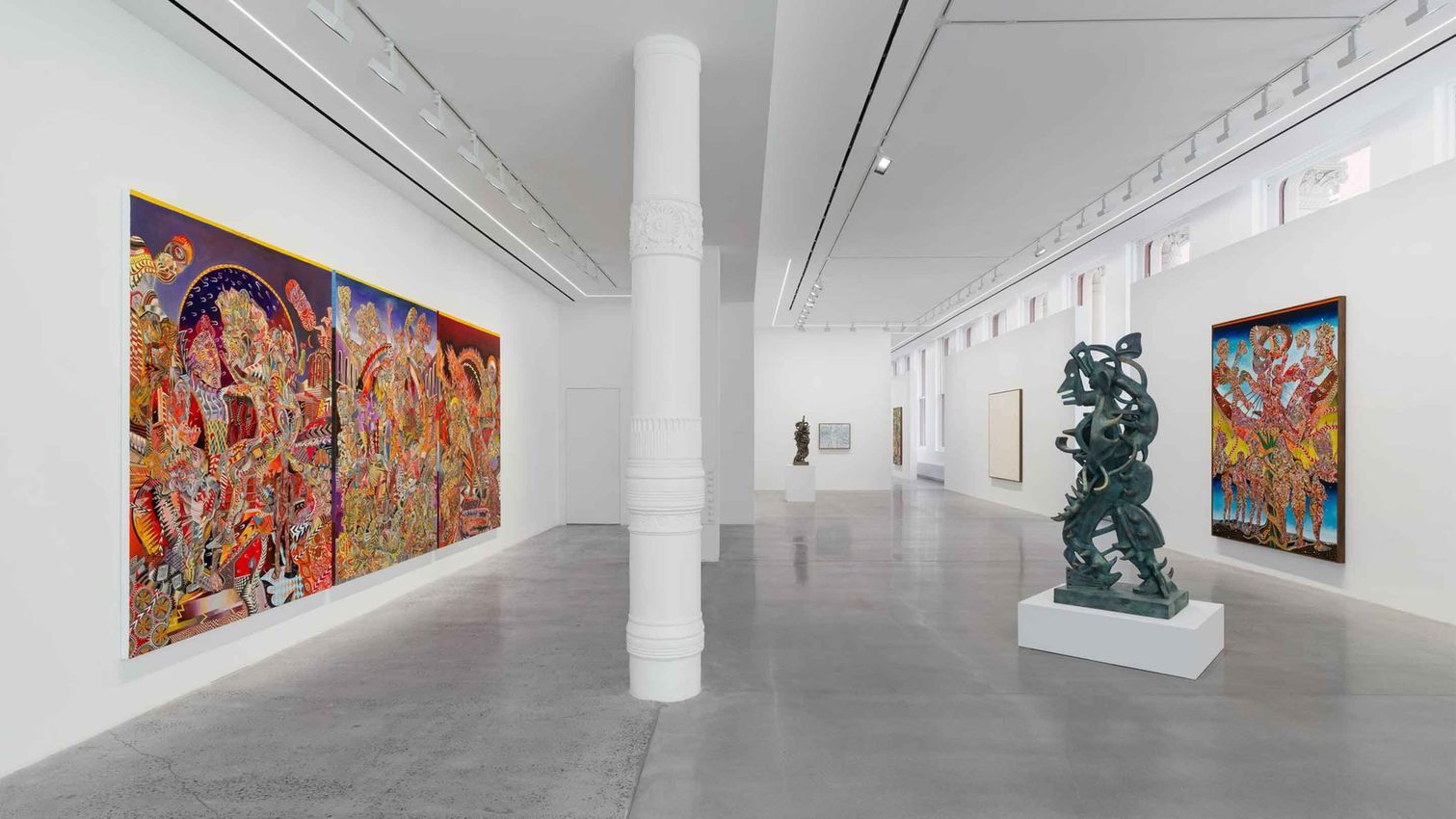
Almine Rech presents its third exhibition of works by German artist Günther Förg (1952–2013), following on the shows the gallery organized in London in 2015 and 2018.
Förg was born in the Allgäu region and studied at the Akademie der Bildenden Künste in Munich, and his ideas have continued to migrate through various media. In 1984, Förg began to achieve recognition when his work was shown in Düsseldorf as part of ‘von hire aus’ an exhibition of new German painting curated by Kasper König. Since then, he has been associated with two trajectories in postwar art. The history of his reception within the Stedelijk Museum in Amsterdam illustrates the duality of his protean artistic practice. In 1995, the Stedelijk, which at the time was led by Rudi Fuchs, presented Förg as the successor to the Germanic painters grouped together as the ‘Neo-Expressionists’: Georg Baselitz, Per Kirkeby, Markus Lüpertz, and A.R. Penck. A New Spirit in Painting (1981) showed that these artists tried, in fact, to root themselves in the culture of their origins and in artistic tradition. More recently—as seen in the retrospective held three years ago by the Stedelijk and the Dallas Museum of Art—Förg was portrayed as an artist concerned with the interpretation and exploration of modernism (both of these having been initiated, in Germany, by Blinky Palermo) in a European and continental perspective. The current exhibition at Almine Rech shows, however, that Förg’s strength lies rather in his ability to create artworks that resist any kind of determinism, and are thereby not at all programmatic, meaning that they do not participate in constructing a certain discourse on art. Förg expressed, basically, a fragile beauty, working on the border of ‘Neo-Expressionism’ and modernism.
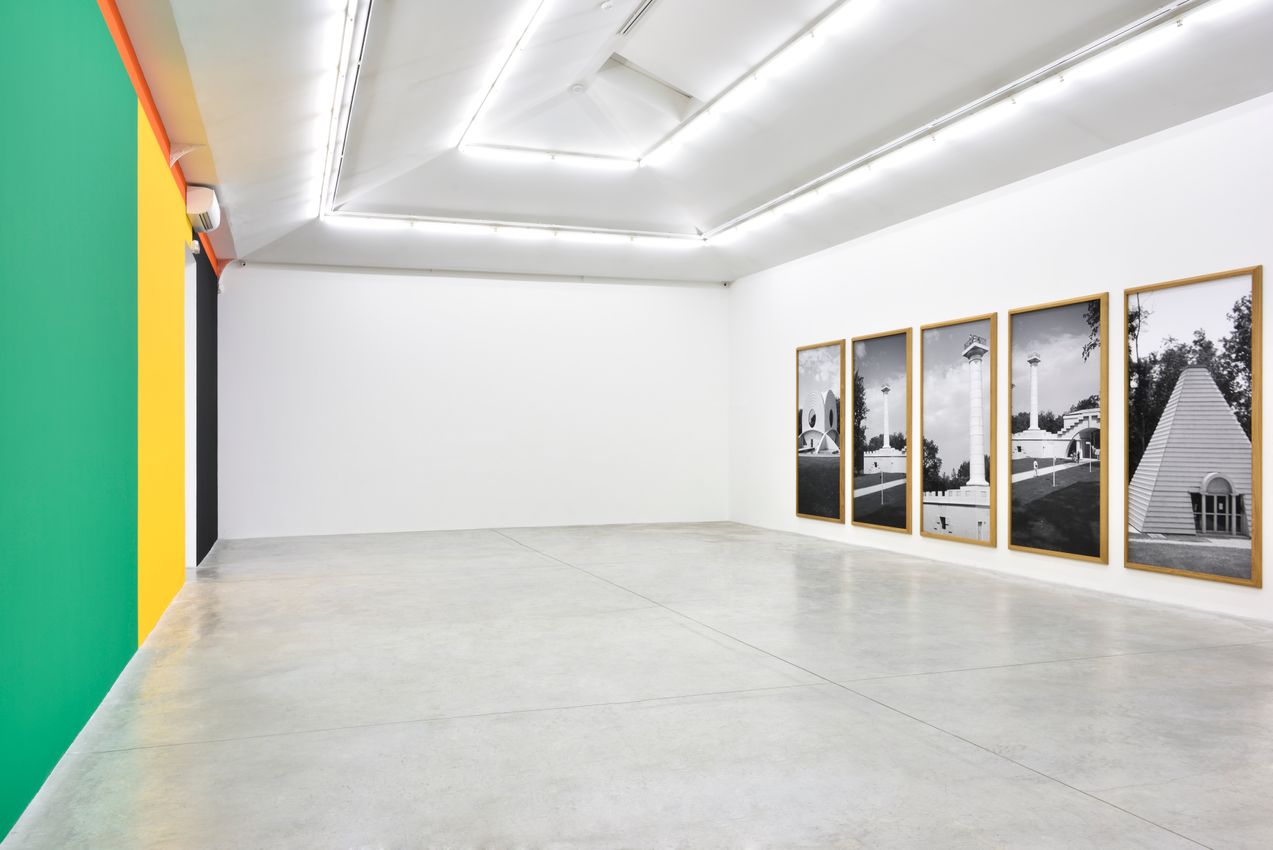
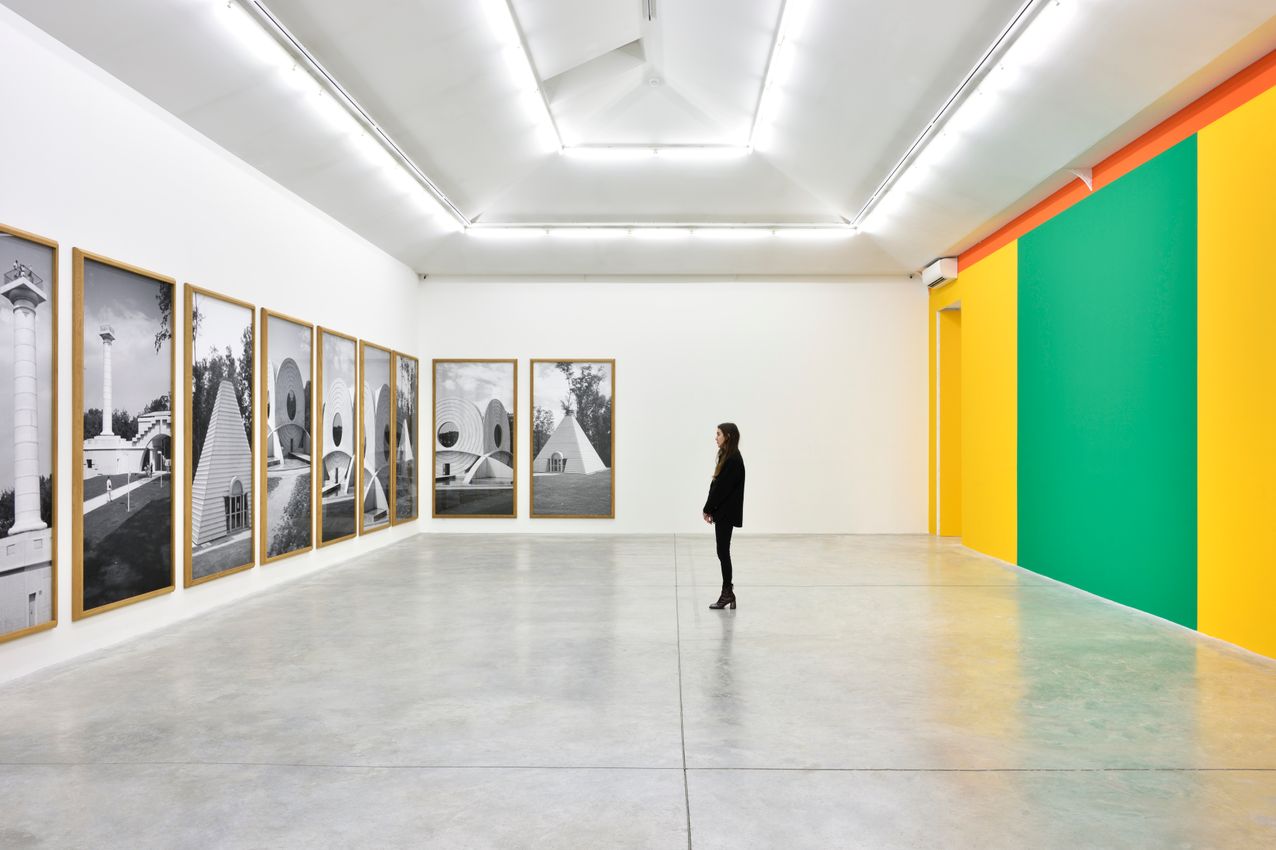
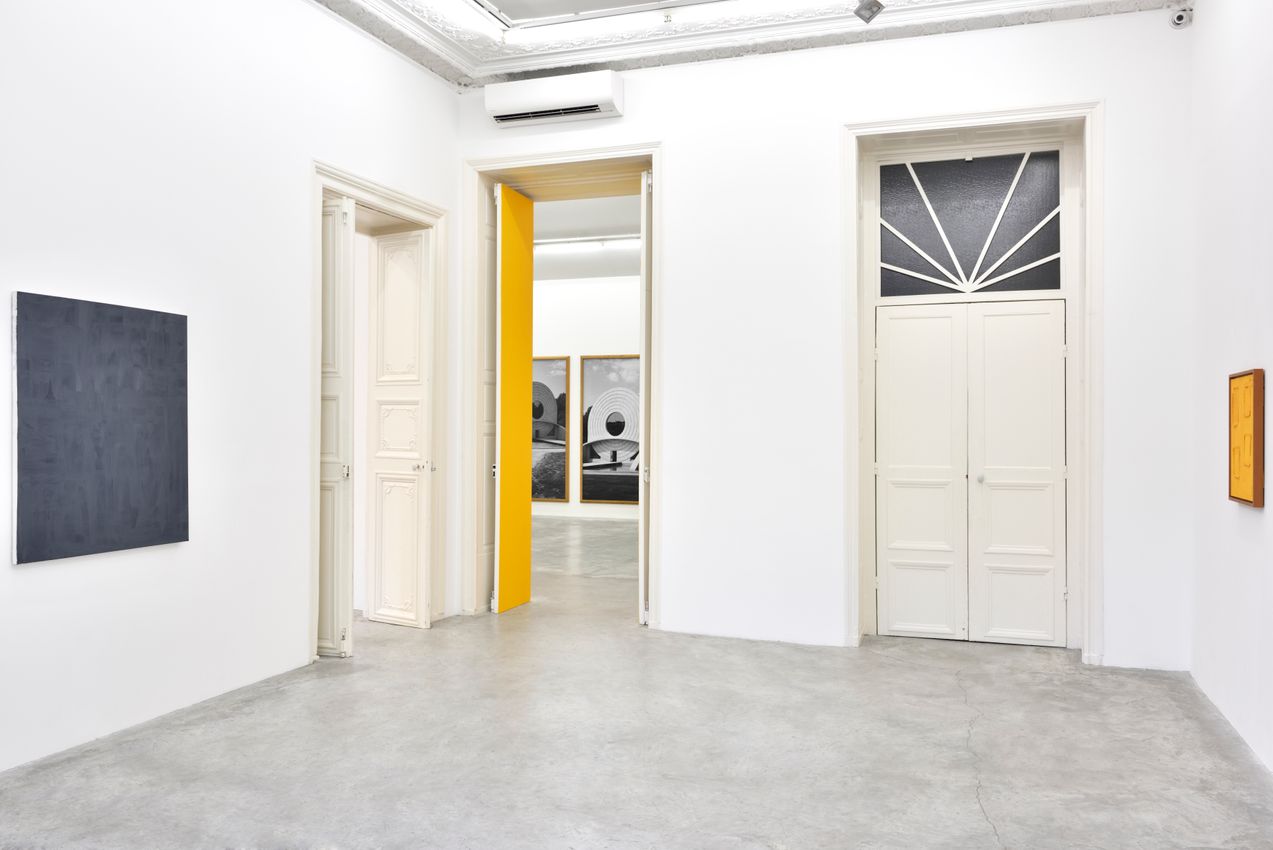
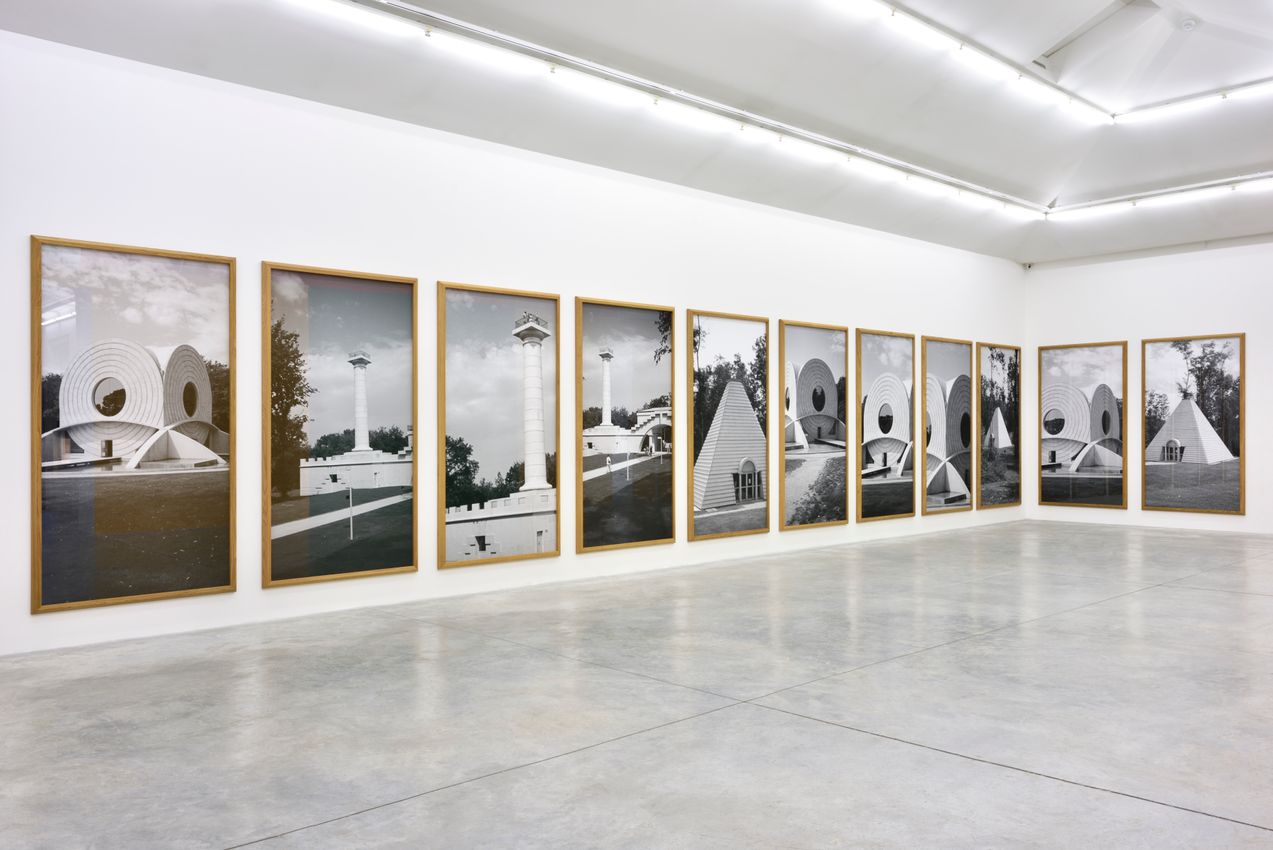
Thirty years after his solo exhibition at the Musée d’Art Moderne de la Ville de Paris, it is now possible to see Förg’s late work (whose origins date back to the 1990s) on Rue de Turenne. It appears to be a pendant to the work shown back then on the walls of the Palais de Tokyo on Avenue du Président Wilson. The gallery’s main space features a wall painting—which echoes what Fernand Léger described as the artistic place of color in architecture—as well as a series of black and white photographs devoted to Claude-Nicolas Ledoux, the eighteenth-century French architect. It is important to add that in 1933, the Austrian historian of art and architecture Emil Kaufmann saw Ledoux as the departure for what he called autonomous architecture, i.e., modern architecture, whose arrival point he located in the work of Le Corbusier.
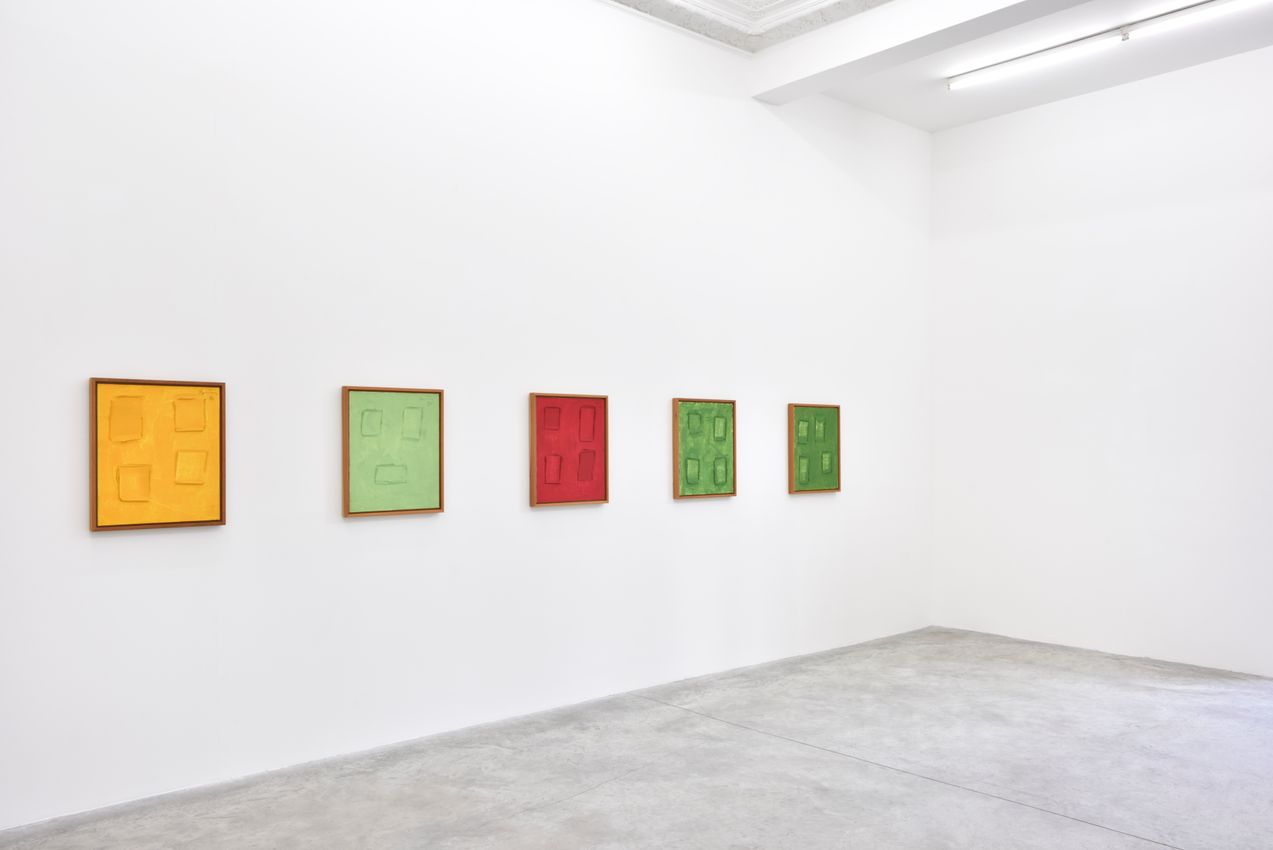
Thus is seems that Förg, questioned the very idea of modernity. He attempted to answer the questions subsequently raised by taking forms from architecture and shifting them to painting.
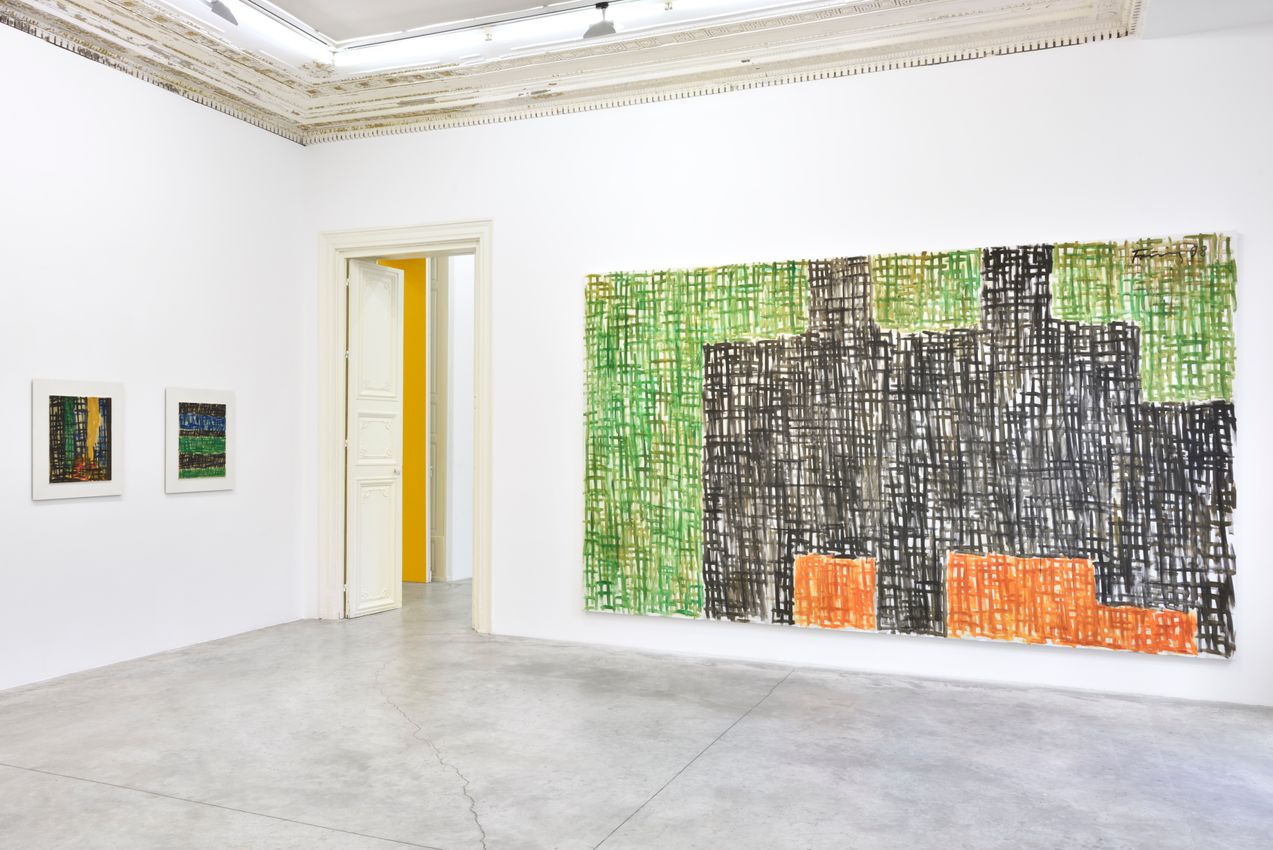
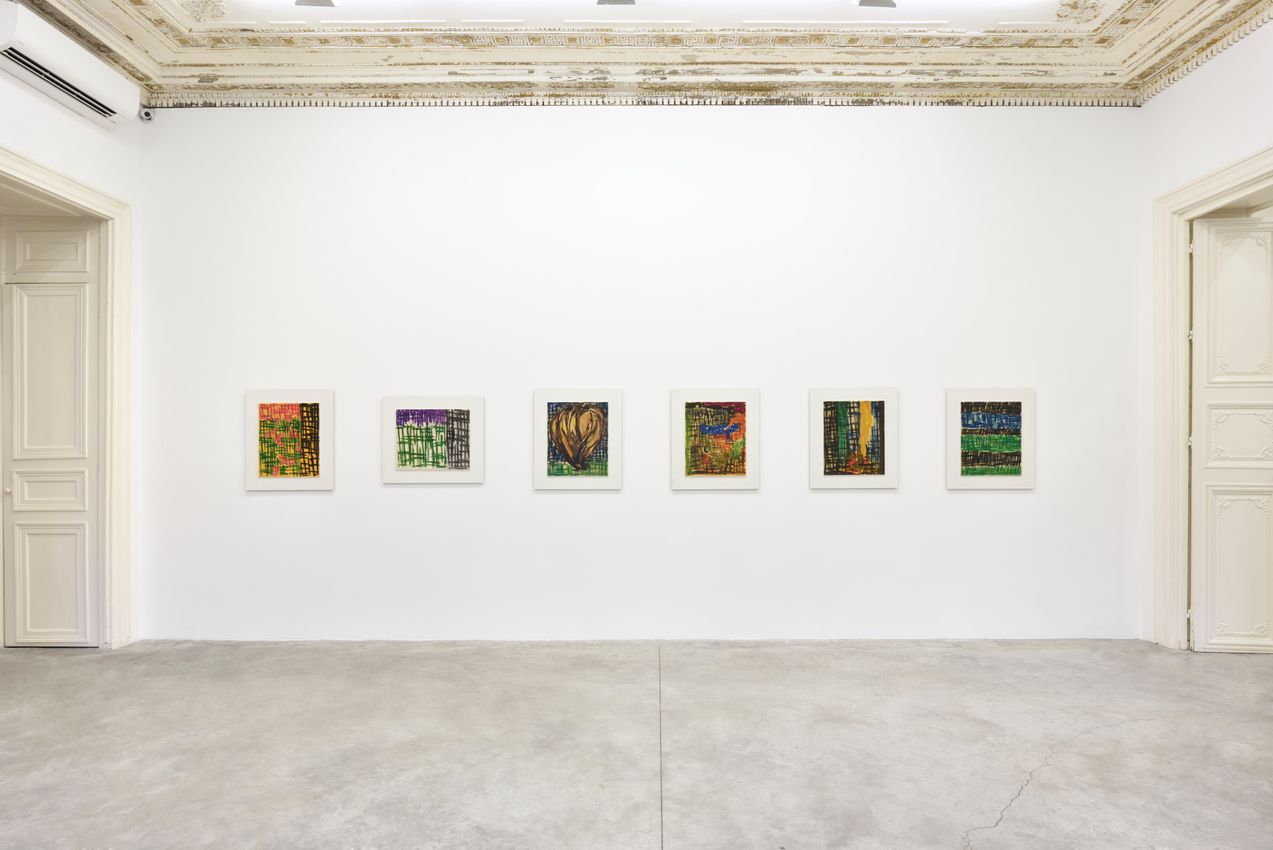
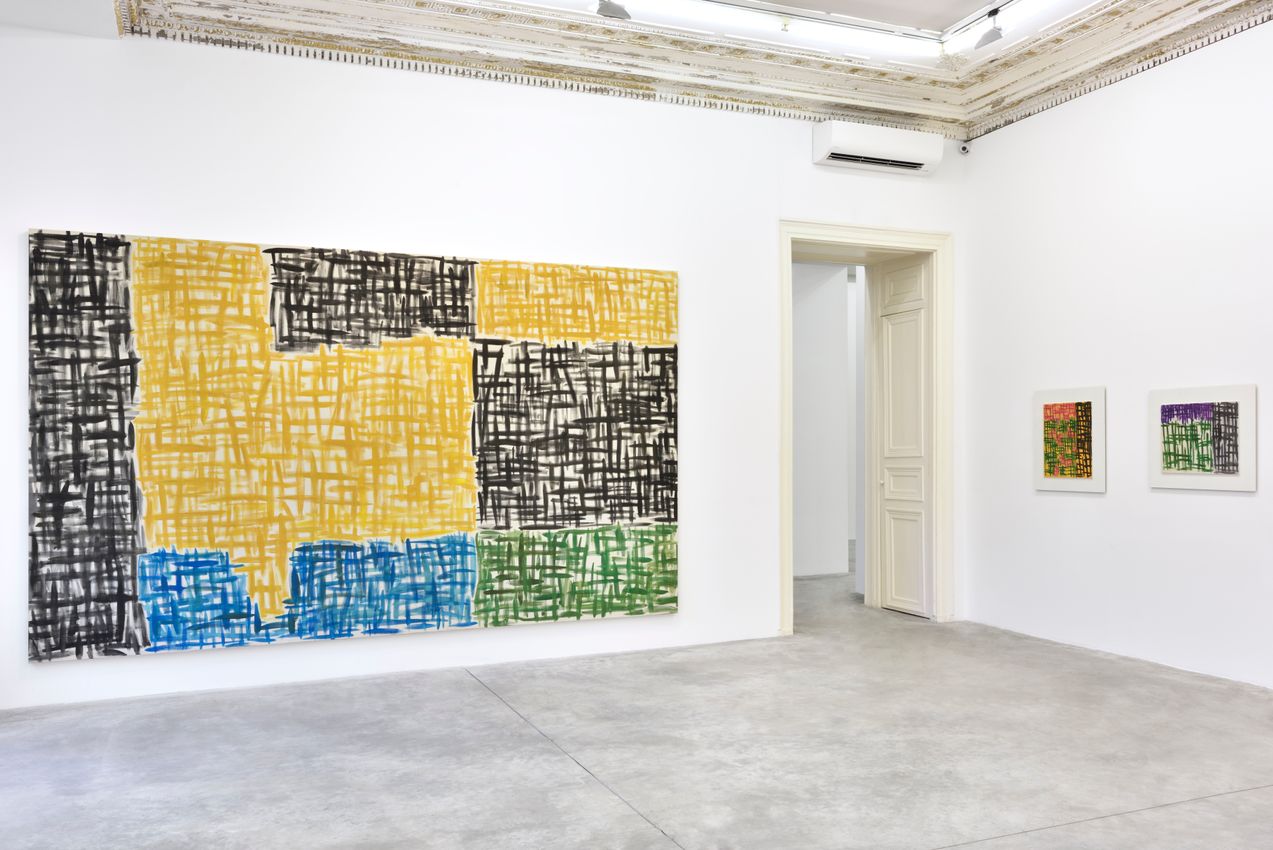
The exhibition concludes with the ‘Grid Paintings’, whose structure calls to mind certain occurrences—from 1996, for instance—of another representative series by Förg: his ‘Grey Paintings’. It has often been said, and correctly so, that the ‘Grid Paintings’ are based on a transformation of the pattern that fills The Death of Marat (1907) by Edvard Munch. Yet to explore more deeply what links the two works we need to look at the artist who, shortly before Förg, found in the Norwegian painter’s work the energy he needed for his own reinvention: Jasper Johns—whose crosshatching came from Self-Portrait Between the Clock and the Bed (1940). Förg, with Johns, participated in the processes of enlargement and shrinking that run throughout the history of painting. However, Förg’s interpretation is expressive, unlike Johns, who systematised the pattern perceived in Munch’s Self-Portrait. In this regard, Förg can be connected, in a German context, to Baselitz, who produced paintings in the 1970s with backgrounds drawing from De Kooning’s maritime and bodily intertwining, which was inspired by the landscapes of Céret depicted by Chaïm Soutine. The second thread to follow in the ‘Grid Paintings’ can be found in the intertwined windows in the Bauhaus building in Dessau, which Förg photographed in the 1990s. His modus operandi could be summed up as memory as index: through a single artwork, we are seeing the territories once explored by Förg.
Text by Théo de Luca, writer and critic. Courtesy Almine Rech.
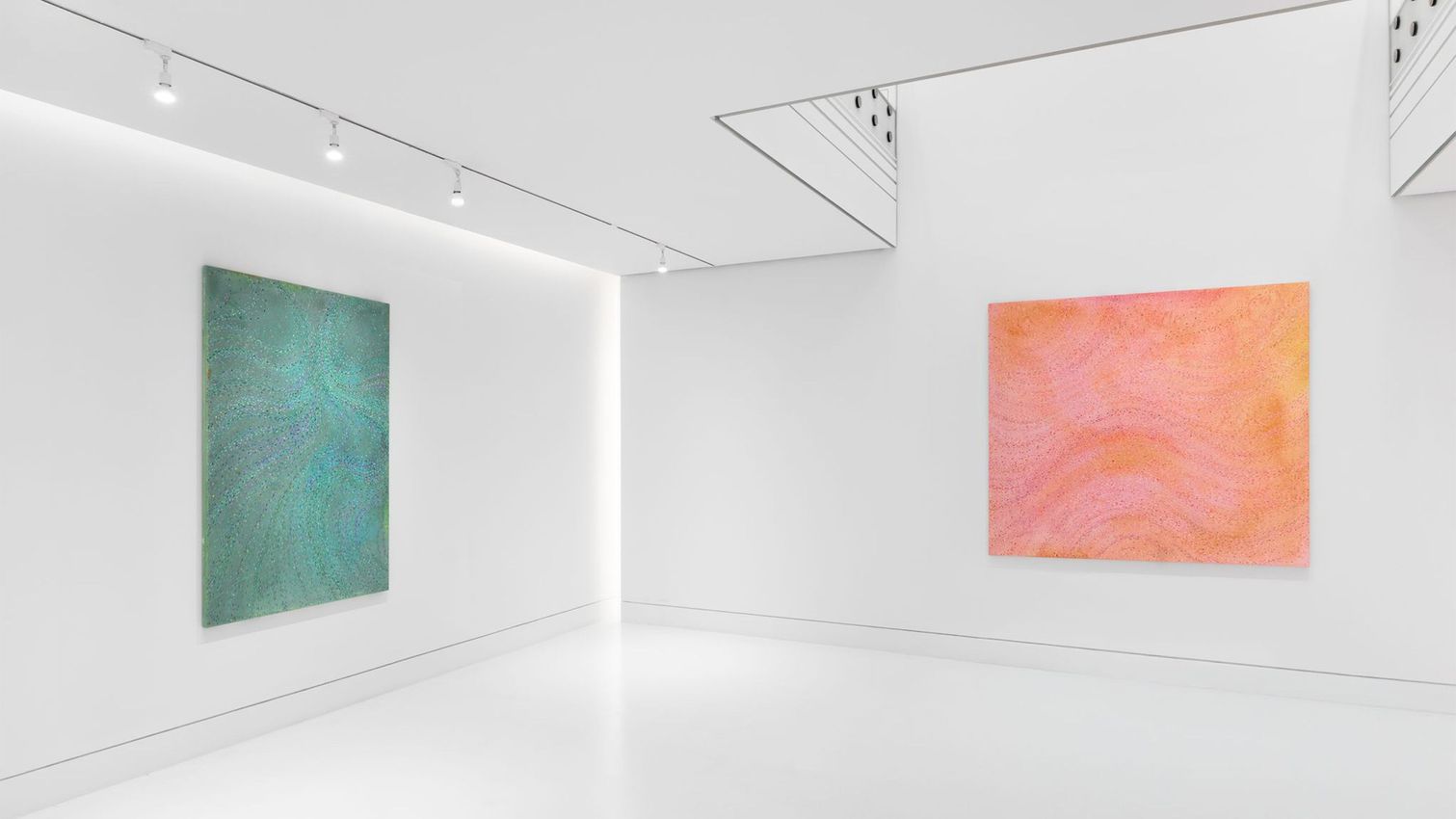
The work of german artist Günther Förg encompasses a variety of media from sculpture to painting, ceramics to photography. Although Förg has worked in a variety of techniques and materials, painting remains his most important expressive medium. He started his career in the 1970s in Munich, where he was influenced by Blinky Palermo and his proclivity for wall painting arose from his interest in architecture, reflected in his turning towards photography. After his early monochromatic paintings, Förg continued to explore modernist themes from postmodern perspectives. Gradually, he achieved a complete command of colour to create space and form, opening up new insights and perspectives in his painting. In his later works, which bear resemblance to the watercolours by Paul Klee, the colour fields of Mark Rothko, or the scumbled marks of Cy Twombly, Förg has gone on to appropriate older strategies of picture-making, presenting them afresh.


Almine Rech opened its doors on April 1st, 1997 in the 13th arrondissement in Paris. The gallery was founded on an axis of California Minimal, Perceptual art and Conceptual art, representing artists such as James Turrell, John McCracken and Joseph Kosuth.

A respected voice in contemporary art discourse.
Focusing on ambitious storytelling and insightful art-world commentary. Ocula Magazine publishes in-depth interviews, critical essays and timely analysis on the artists, exhibitions and ideas driving the global art world.
Learn more about Ocula Magazine
Showcasing the best of the art world.
Ocula partners with galleries from around the world to highlight their artists, artworks and exhibitions. Gallery membership is by application and invitation, with each member vetted by an independent panel.
Learn more about Ocula Membership

Specialises in the sale of major artworks.
Led by a team with deep ties to the world’s leading auction houses, galleries and collectors. Ocula’s advisory team offers bespoke services to high-net-worth clients from around the world who are looking to acquire the best of contemporary and modern art.
Learn more about our team and services