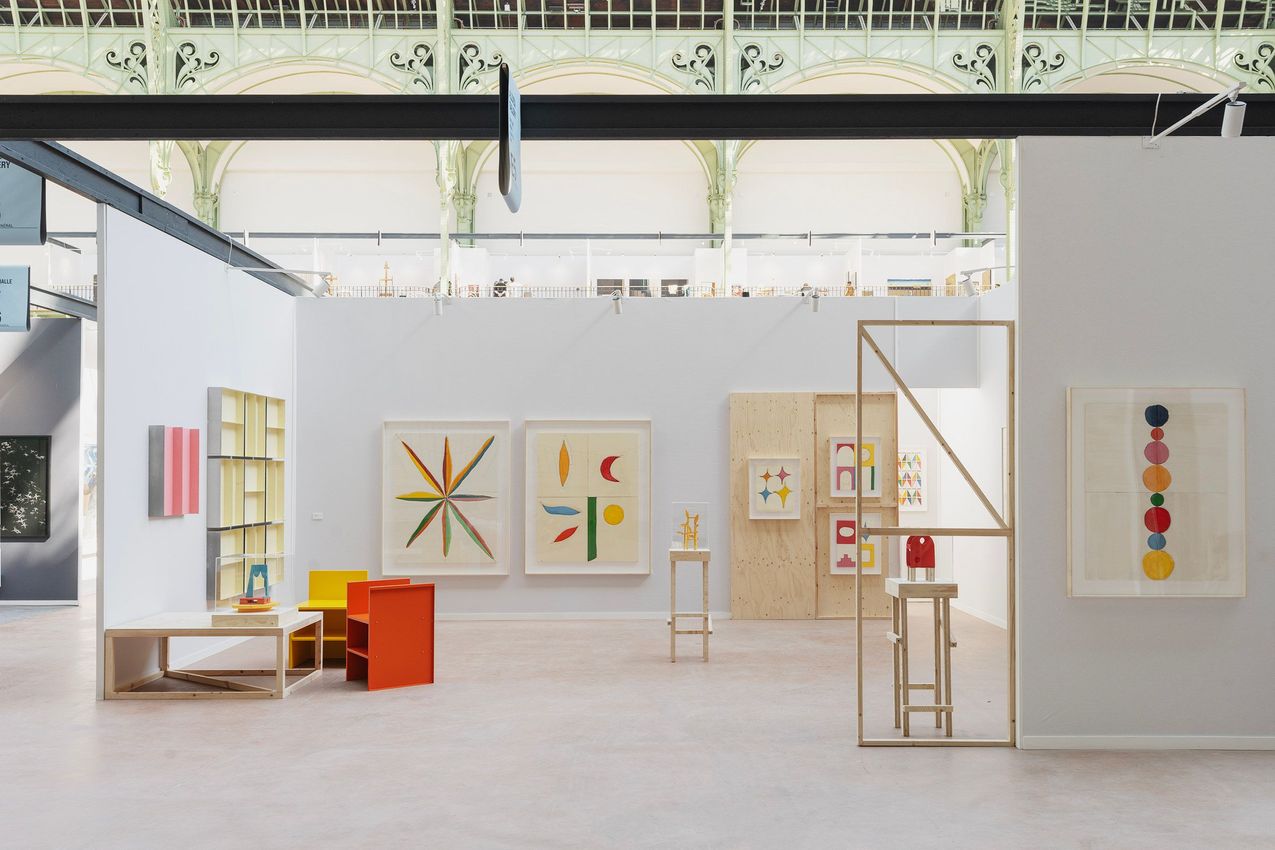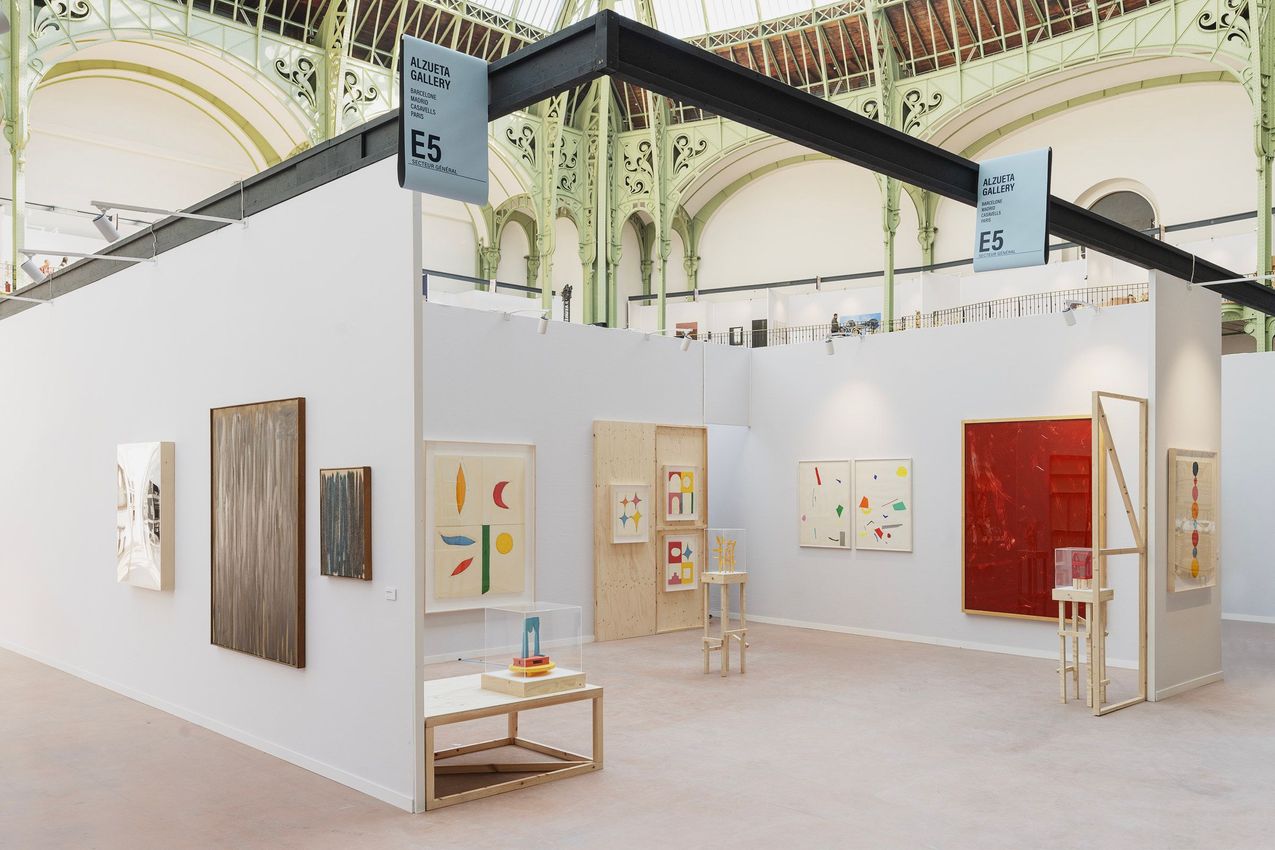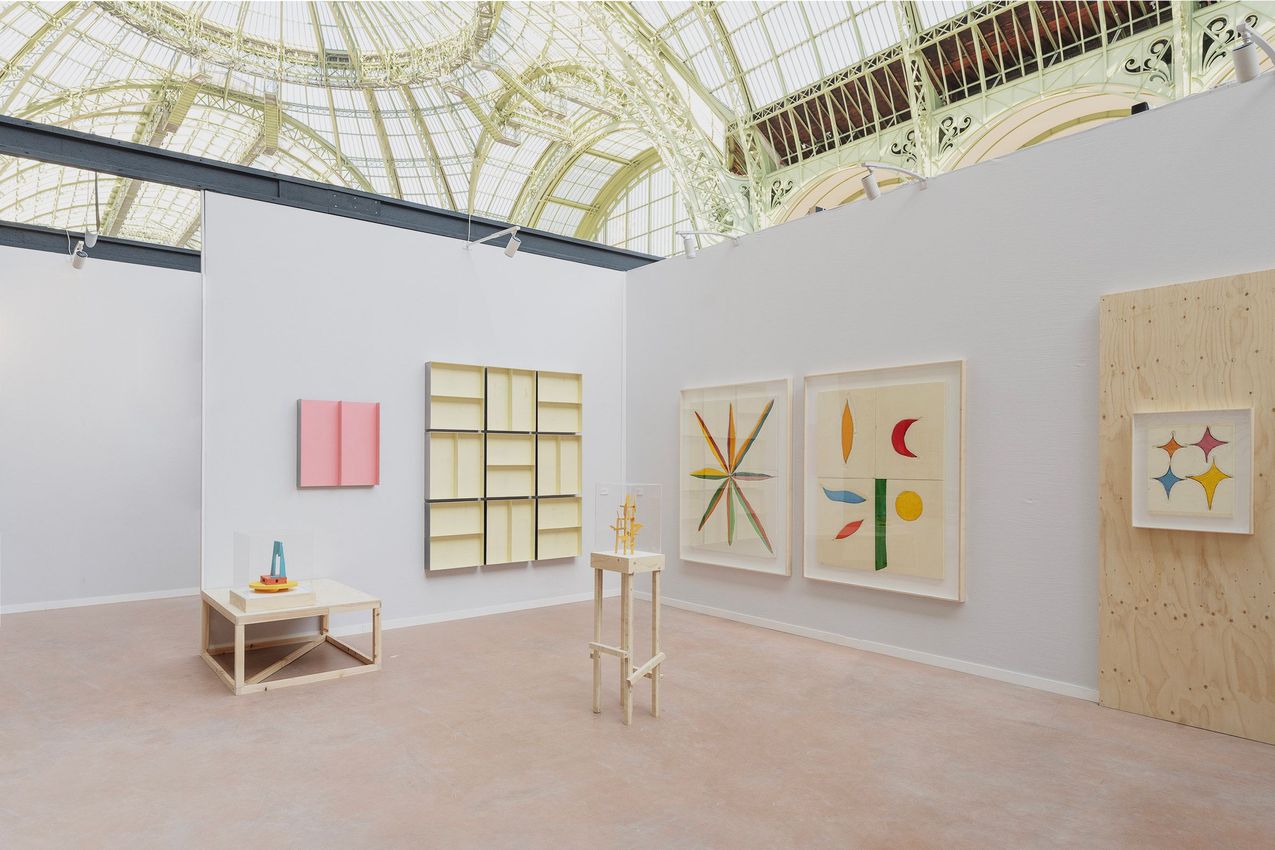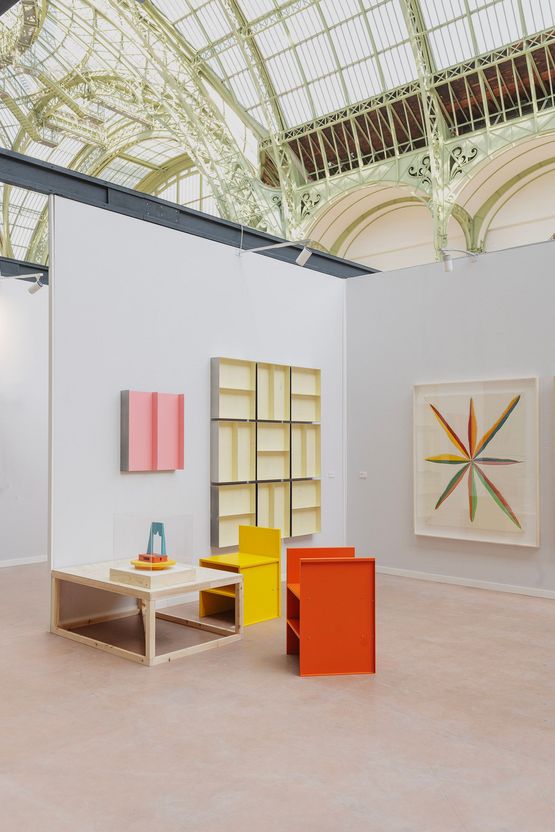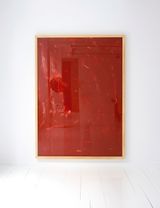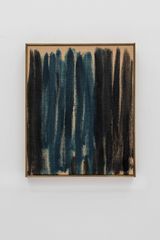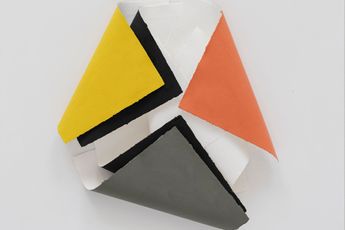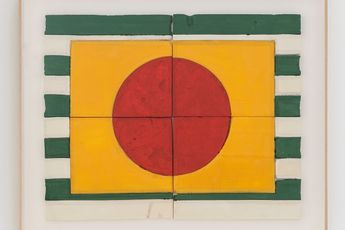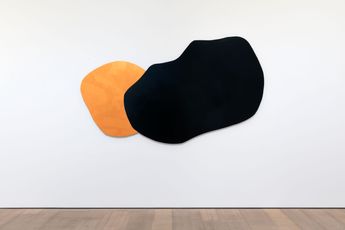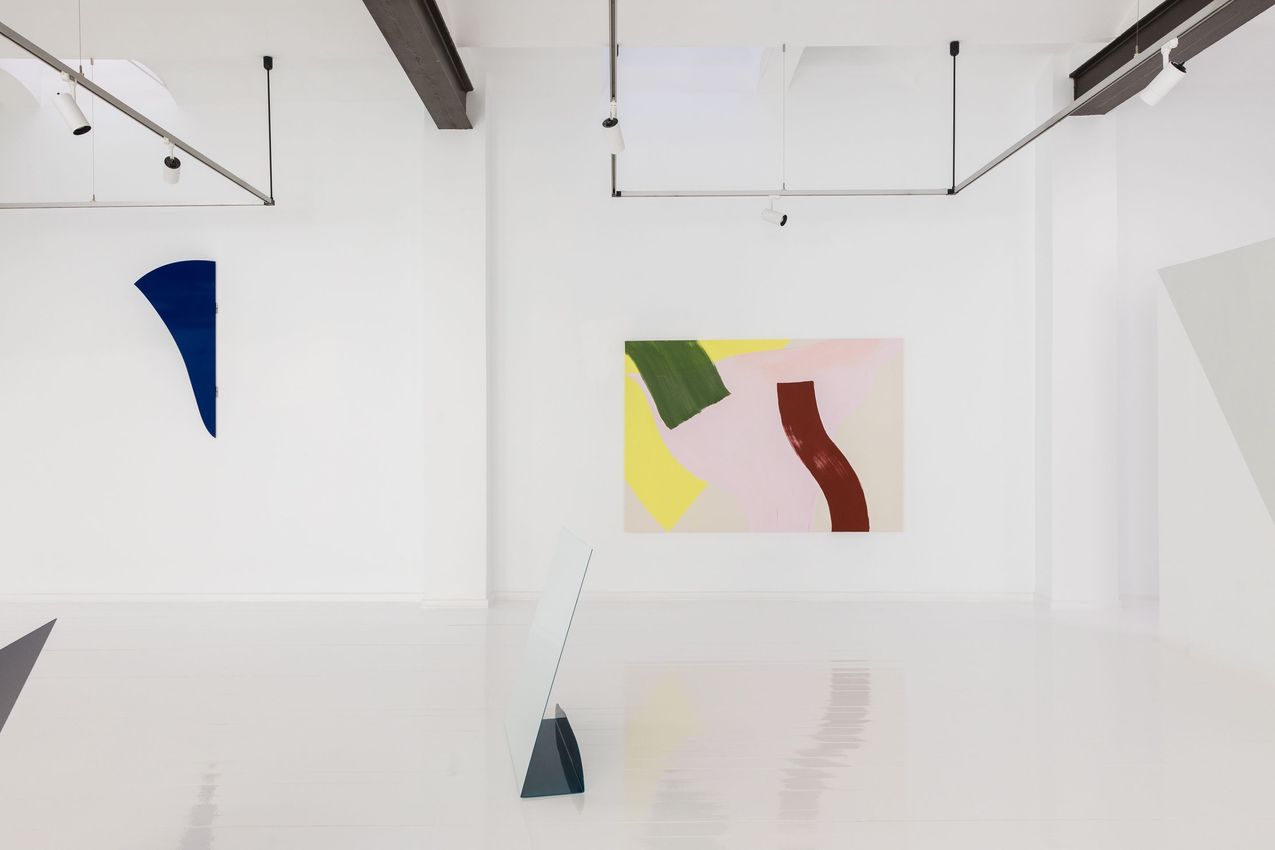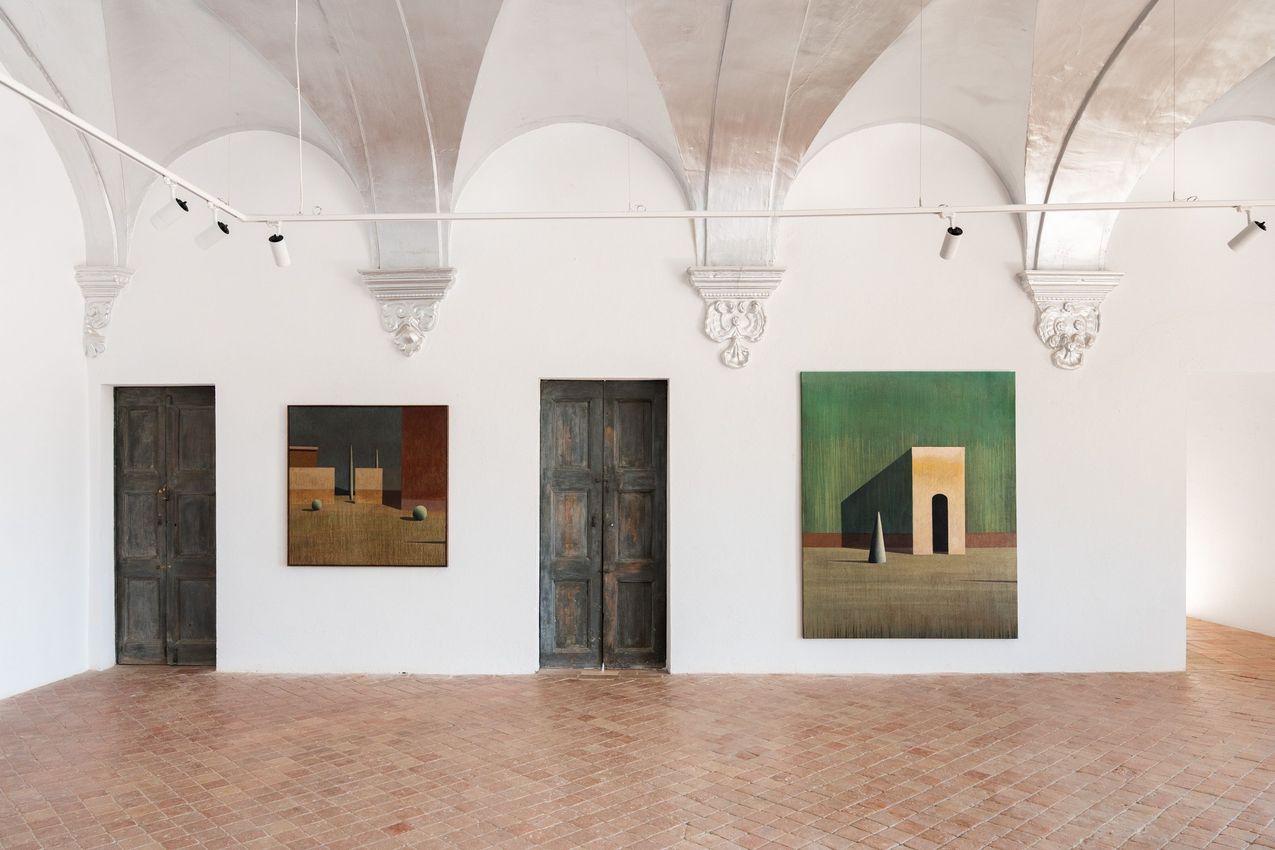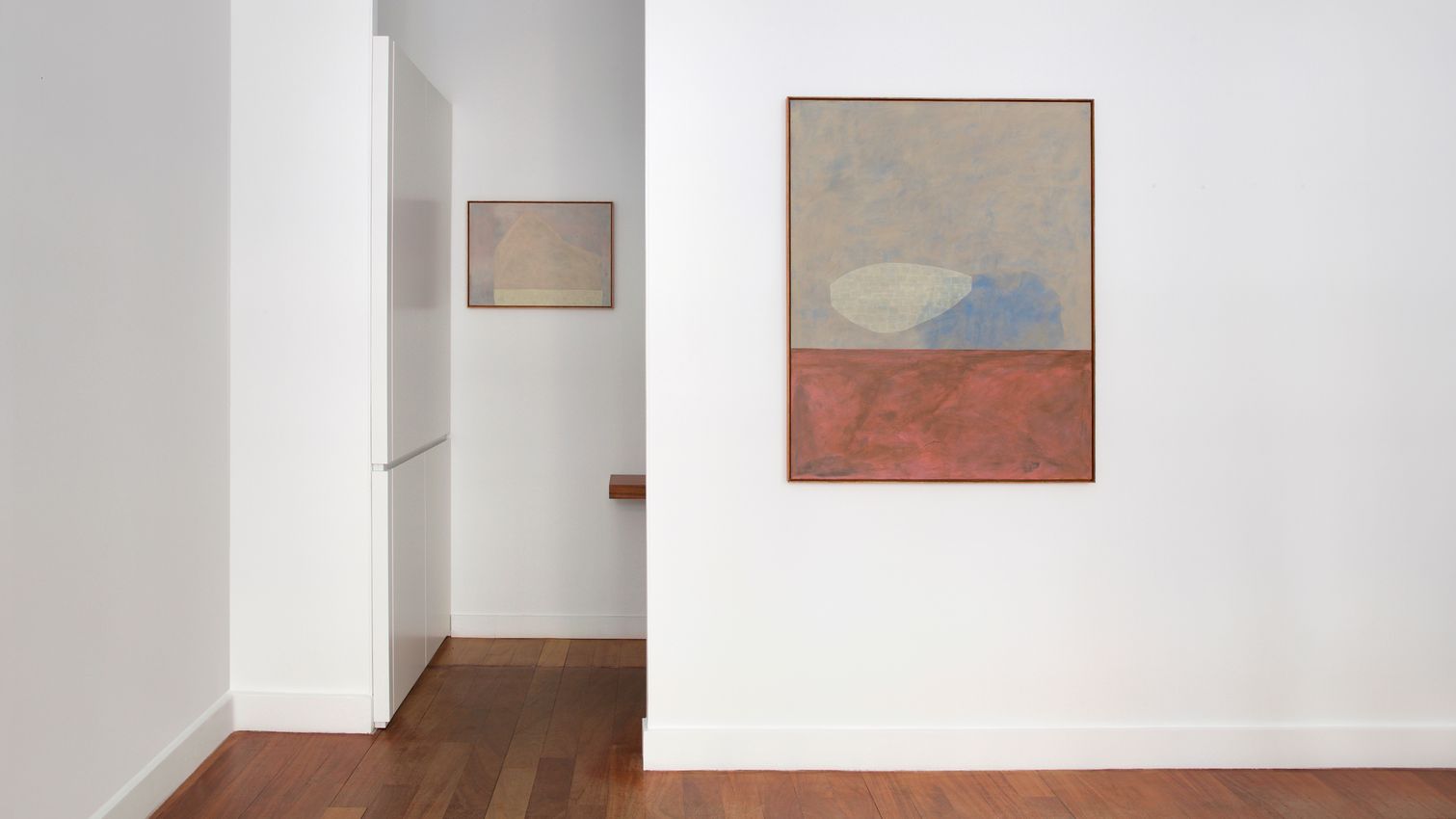
In Alzueta Gallery’s booth for Art Paris 2025, Bruno Ollé (Spain, 1983), Imi Knoebel (Germany, 1940), and Manolo Ballesteros (Spain, 1965) come together in a shared exploration of structure, color, and modularity. Though distinct in their approaches, their works engage in a dynamic conversation—one that plays with contrasts, rhythm, and the expressive possibilities of form. The booth will showcase a selection of works by Imi Knoebel, including four collages and a striking red acrylic-on-glass piece. Bruno Ollé will present large-format works, alongside smaller paintings and sculptures set within a maze of wooden structures crafted by the artist himself. Manolo Ballesteros will bring a series of vibrant geometric compositions, where color and form interact with a quiet but powerful energy. Here, each work stands as a gateway to its own world while seamlessly weaving into a larger visual dialogue.
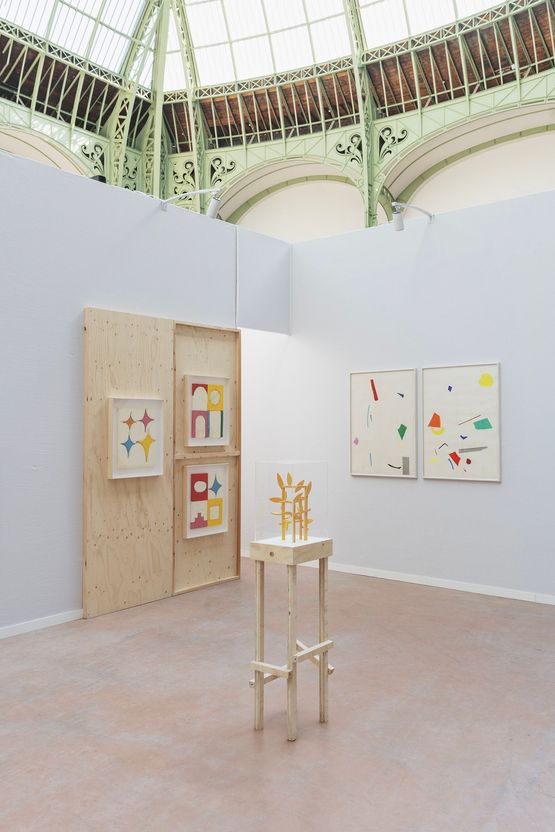
Bruno Ollé’s art feels like stepping into a world of half-told stories and shapes in motion. His compositions are structured but never rigid, inviting you to look closer and let your intuition fill in the blanks. A recurring idea in his work is the curtain—a symbol of what’s visible and what’s concealed, of boundaries that are meant to be crossed. His pieces pull you into this in-between space, where meaning feels just out of reach but endlessly intriguing.
Ollé often works with small, modular components that come together to form larger, layered structures. His shapes—half-moons, delicate branches, floating geometries—teeter between the playful and the poetic, between familiar symbols and abstract fragments. They suggest places or objects without ever pinning them down. Is it a home, a stage, a nest, or something else entirely? Ollé leaves these possibilities open, letting them coexist in a way that feels both deliberate and free.
Modularity is at the heart of his practice. Each piece can stand alone or work as part of a bigger whole, constantly shifting how we see it. His work asks questions rather than giving answers: Is this a painting? A sculpture? Something else? By letting these questions linger, Ollé creates an experience that feels layered and alive, as much about what’s in front of us as how we choose to look at it.
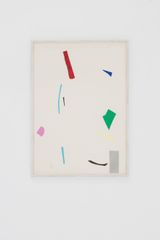
In contrast, Imi Knoebel’s work brings a sense of clarity and focus to the booth. His pieces—minimal, bold, and deeply rooted in color—explore the possibilities of shape and color with a confidence that feels both timeless and modern. Knoebel’s practice draws from Bauhaus and Minimalist traditions, yet there’s nothing static about it. His compositions radiate a quiet energy, showing just how much can be said with the simplest of forms.
Where Ollé’s works feel exploratory and open-ended, Knoebel’s provide a steady rhythm. His blocks of color—whether a striking red rectangle or a soft yellow square—ground the space, creating a sense of structure and harmony. Yet these works aren’t just anchors; they vibrate with their own intensity, drawing you in with their balance of precision and emotional resonance. His compositions, though abstract, carry a weight and simplicity that invite contemplation.
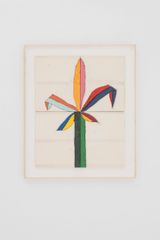
Manolo Ballesteros strives for purity in form, distilling natural elements into their most essential shapes. His geometric abstractions establish a quiet yet dynamic dialogue between structure and spontaneity. Through precise lines and bold compositions, his works achieve a sense of three-dimensionality, whether rendered in soft pastels or vivid primary colors against monochromatic backgrounds. Material also plays a central role in his practice; whether on paper, wood or steel, his choice of medium shapes the final outcome. Ballesteros does not seek to explain his paintings, he is much more interested in the way in which all the different materials interact on the surface of the painting. Like the great abstract artists before him, his pieces exist in a space between the tangible and the universal, where simplicity becomes profound.
Alzueta Gallery’s booth at Art Paris will embody modularity both in each artist’s work and in its curatorial design. Together, Knoebel’s, Ballesteros’ and Ollé’s works shape the booth into something more than the sum of its parts. Knoebel’s color planes and Ballestero’s distilled geometries set the foundation, while Ollé’s layered compositions weave through them, creating a space that feels at once solid and fluid, grounded and open.
This is a space where color, form, and meaning blur and blend—a place to get lost in the possibilities of art. Each piece builds on the others, creating a dialogue that invites the viewer into the conversation. Reality and imagination overlap, and the boundaries between the two feel just as open as the works themselves. Our proposal is a dance of form and color, a conversation between the known and the unknown, and a voyage into the vibrant and ephemeral nature of art itself.


A respected voice in contemporary art discourse.
Focusing on ambitious storytelling and insightful art-world commentary. Ocula Magazine publishes in-depth interviews, critical essays and timely analysis on the artists, exhibitions and ideas driving the global art world.
Learn more about Ocula Magazine
Showcasing the best of the art world.
Ocula partners with galleries from around the world to highlight their artists, artworks and exhibitions. Gallery membership is by application and invitation, with each member vetted by an independent panel.
Learn more about Ocula Membership

Specialises in the sale of major artworks.
Led by a team with deep ties to the world’s leading auction houses, galleries and collectors. Ocula’s advisory team offers bespoke services to high-net-worth clients from around the world who are looking to acquire the best of contemporary and modern art.
Learn more about our team and services