«Things fall apart; the center cannot hold; Mere anarchy is loosed upon the world.» - The Second Coming, by W.B. Yeats.
For the 18th Edition of Art Dubai, Ayyam Gallery is pleased to present a selection of commissioned artworks byRoshanak Aminelahi and Elias Izoli, along with recent bodies of work by Khaled Akil, Rula Halawani, Athar Jaber, Ali Kaaf, Kais Salaman, and Amna Almemari.
The World has been experiencing an everlasting struggle, uncertainty, and instability for the past couple of months, and the severe escalation is taking a massive toll on our psyche. We hope to express our despair and visualize it through different mediums, this state of limbo, pure chaos that resonates with a haunting familiarity.
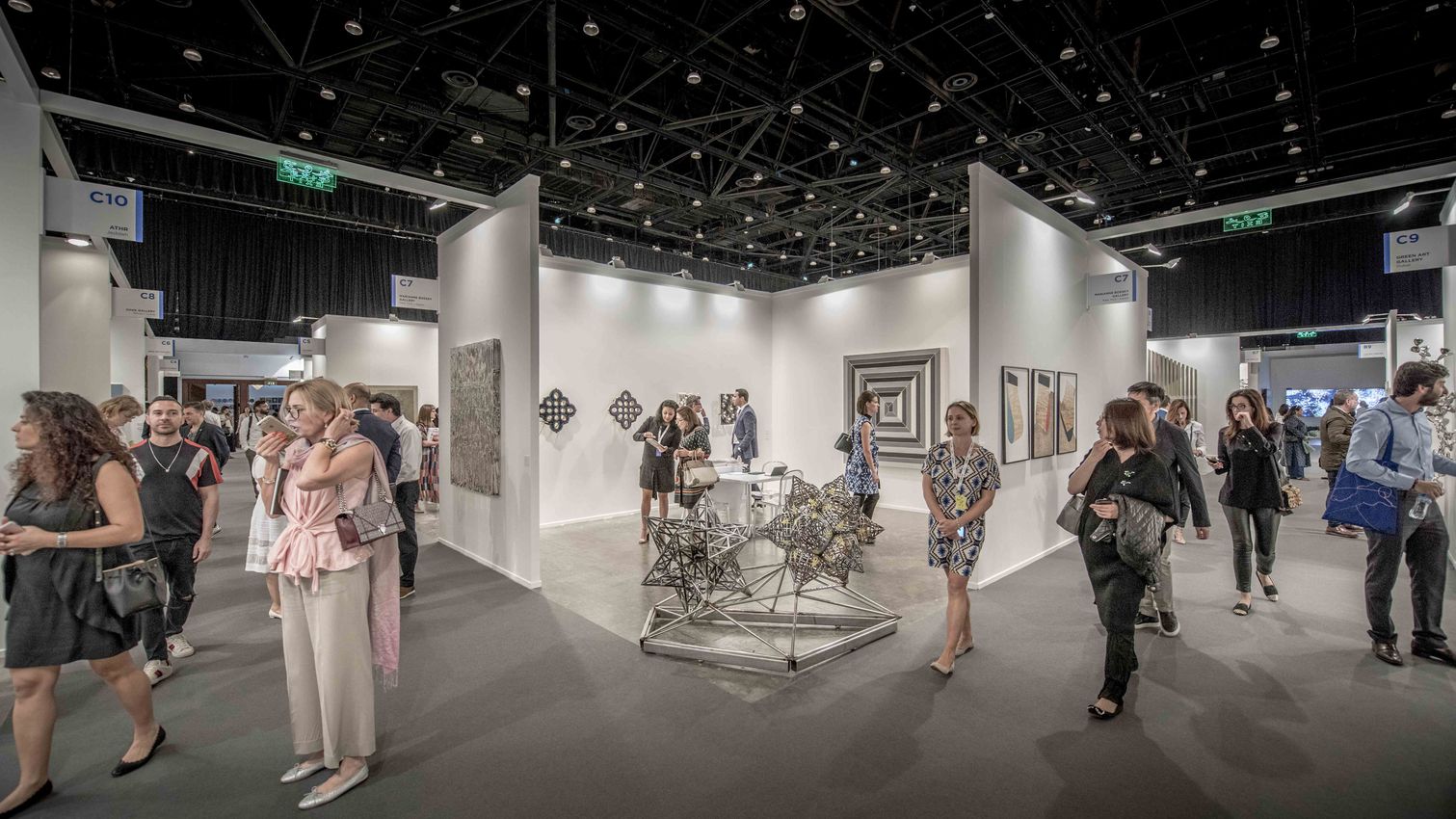
Our booth concept aims to capture the state of maelstrom.
These states are not merely abstract ideas; they embody the visceral experiences punctuating our existence. Limbo represents an existential liminality that bringsforth a suffocating weight; it lingers, taunting us with the possibility of choice while simultaneously immobilising us in indecision. Chaos is not just a backdrop to our struggles; it is a living, breathing entity that stalks us, manifesting as societal upheaval, personal crisis, and existential dread. The in-between is neither comforting nor definitive; it is a liminal space that invites introspection and elicits discomfort.
The omnipresence of the trilogy shatters illusions of unequivocal happiness.
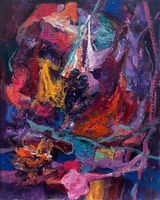
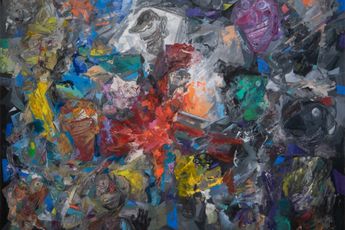
Roshanak Aminelahi’s expressionist paintings embody the tumultuous emotions of conflict and uncertainty. Her fusion of abstraction and figuration captures the chaos of the human experience, particularly during times of war and social upheaval. The featured paintings depict bodies forgotten and lost in the rubble, illustrating the collateral damage.
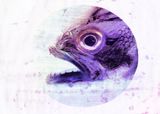
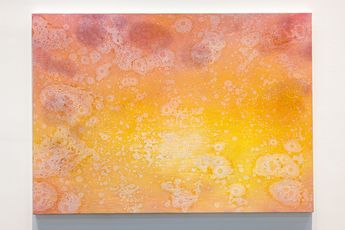
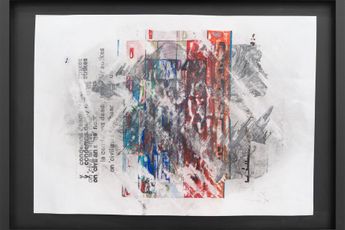
Similarly, Khaled Akil’s internal conflict and existential questions come alive through his exploration of scannography. Scanned images of fish, combined with textural and colorful splatters, evoke Akil’s liminal state—one in which uncertainty reigns. The outcome, process, and expectations of what will be laid onto his paper create a vessel for introspection, showcasing his innermost personal thoughts and revealing the vulnerability of his medium and being. Having left behind all that he loves and knows due to war, Khaled Akil channels his experiences into his work as a form of manifestation, freeing himself from the label of a ‘war victim’.
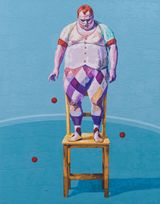
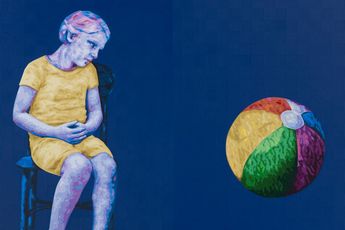
Elias Izoli creates works that balance intimacy and invasiveness. In his commissioned pieces, a rotund figure stands at the center, expertly balancing on a large, brightly painted ball. Despite the vibrant attire, their expression reveals deep introspection—eyes downcast, mouth curled into a subtle frown, overlooking the dropped juggling balls that were, just moments ago, in limbo. The artwork is a powerful commentary on the struggle to find balance amidst the chaos of existence.
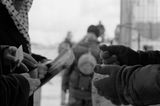
Rula Halawani’s Intimacy series, taken at the Qalandia checkpoint, evokes a profound sense of limbo, capturing life’suncertainty and tension. In this body of work, the checkpoint emerges not just as a physical barrier but as a poignant symbol of the Israeli occupation. On this threshold, lives are suspended in a perpetual state of waiting. Each interaction becomes a fleeting moment, a fragile balance between nearness and distance.
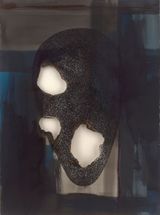
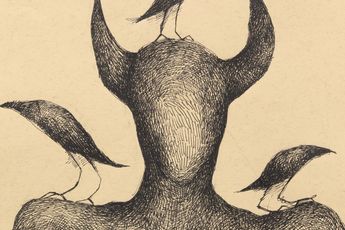
As if hidden in shadow, Ali Kaaf manipulates his preferred medium of paper to create face-like representations that dissociate art from its decorative connotation. Kaaf refers to these works as ‹non-faces›, perceiving them not as human forms but as representations of God’s creation—his thumbprint within the world. They may appear as faces from a distance, yet they transcend the human form, embodying something deeper. Blackened sections, holes, burns, and cuts adorn his works, further distancing them from traditional beauty, as if emerging from darkness and ash. His work delves into an evolving yet repetitive theme of presence and absence, which he describes as essential «both visually and in relation to emptiness. The repetition of form leads me to something new.» The recurring forms in Kaaf’s pieces suggest a cycle of loss and healing, reflecting the ongoing struggle between confusion and clarity. Influenced by Sufism, his consistent patterns possess a spiritual quality—an interplay of liminality, where the familiar and the unknown coexist.
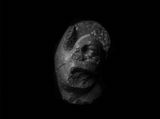
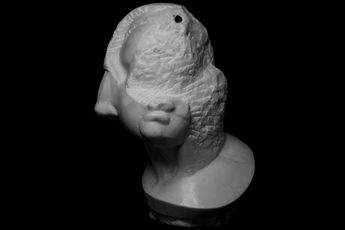
This contrast between clarity and blurriness is mirrored in Athar Jaber’s intricately rendered sculptures. Jaber emphasizes the illusion surrounding beauty in both the rough textures and visual distortions of his works. He balances the rawness of his materials with the perfectionism of Greco-Roman sculptural techniques, through which his figures represent a state of limbo between the beauty and ugliness of humanity. Originally from Iraq and having lived in the West for many years, Jaber grapples with the weight of the war’s impact on his homeland, watching helplessly from afar. Through disfigurement, he conveys the heaviness that pulls humanity downward. Athar Jaber seeks to highlight the beauty in the imperfections brought about by life’s journey, ultimately portraying a torn and strenuous world.
Kais Salman’s most recent body of work revisits the depiction of the face. Emerging through layers of color, it sheds light on the long artistic and philosophical history surrounding questions of beauty and ethics. In the context of current regional tensions, it raises new questions: Who are we? What ethics guide our behavior? Kais Salman continuously reflects on these questions while, at the same time, contenting himself with capturing the face in its in-between state— caught between appearance and disappearance within the blur of the depicted scenes. “I see the face between the lines laid by nature; I try to catch that face in its moment of dissolution in space, I try to catch it in its absence.” In this obscure moment, a light is cast on the rupturing line between form and formlessness.
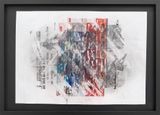
The media has long played a significant role in broadcasting and displaying the world’s tensions. Marking her first showing with Ayyam Gallery, Amna AlMemari reflects on news outlets mindset manipulation through selective imagery and curated vantage points. Coded messages and underlying meanings resurface, particularly through the flora that adorns these otherwise heavy images. By studying the Victorian Floral Dictionary, AlMemari combines older methods of conveying messages with contemporary forms of communication. Graphite and watercolor enhance the interplay between the roughness and softness inherent in the subjects she explores. Lilies, orchids, and tulips invade her drawings, overlaying the hidden meanings of media imagery with the silent messages traditionally conveyed through flower-giving. Together, flora and media create a contemporary environment where violence is beautified yet still carries subliminal undertones. This schizophrenic back-and-forth underscores the stark contrast between the disparate parts of the world and their varying political circumstances, which weigh heavily on humanity, tearing it apart.
A tumultuous, war-tainted environment has unfolded in the Middle East for over a decade and has taken a new toll in recent months. This ongoing political turmoil sparks rage, heaviness, and loss among the region’s people. These externalized emotions manifest through the artists› mediums, giving rise to beautified and idealized visions of a peaceful, harm-free world. A world in which East and West coexist without tensions dragging humanity down from its great potential and progress.


A respected voice in contemporary art discourse.
Focusing on ambitious storytelling and insightful art-world commentary. Ocula Magazine publishes in-depth interviews, critical essays and timely analysis on the artists, exhibitions and ideas driving the global art world.
Learn more about Ocula Magazine
Showcasing the best of the art world.
Ocula partners with galleries from around the world to highlight their artists, artworks and exhibitions. Gallery membership is by application and invitation, with each member vetted by an independent panel.
Learn more about Ocula Membership

Specialises in the sale of major artworks.
Led by a team with deep ties to the world’s leading auction houses, galleries and collectors. Ocula’s advisory team offers bespoke services to high-net-worth clients from around the world who are looking to acquire the best of contemporary and modern art.
Learn more about our team and services