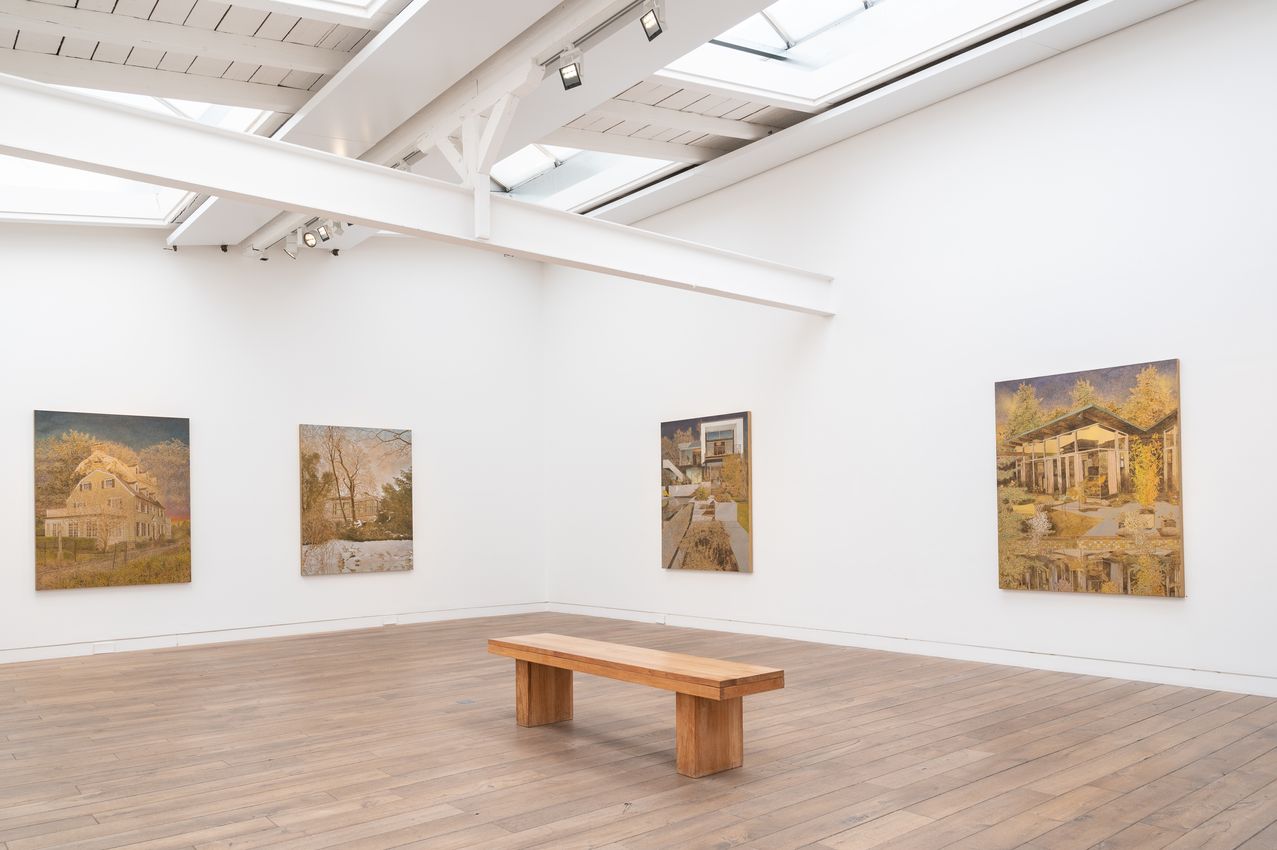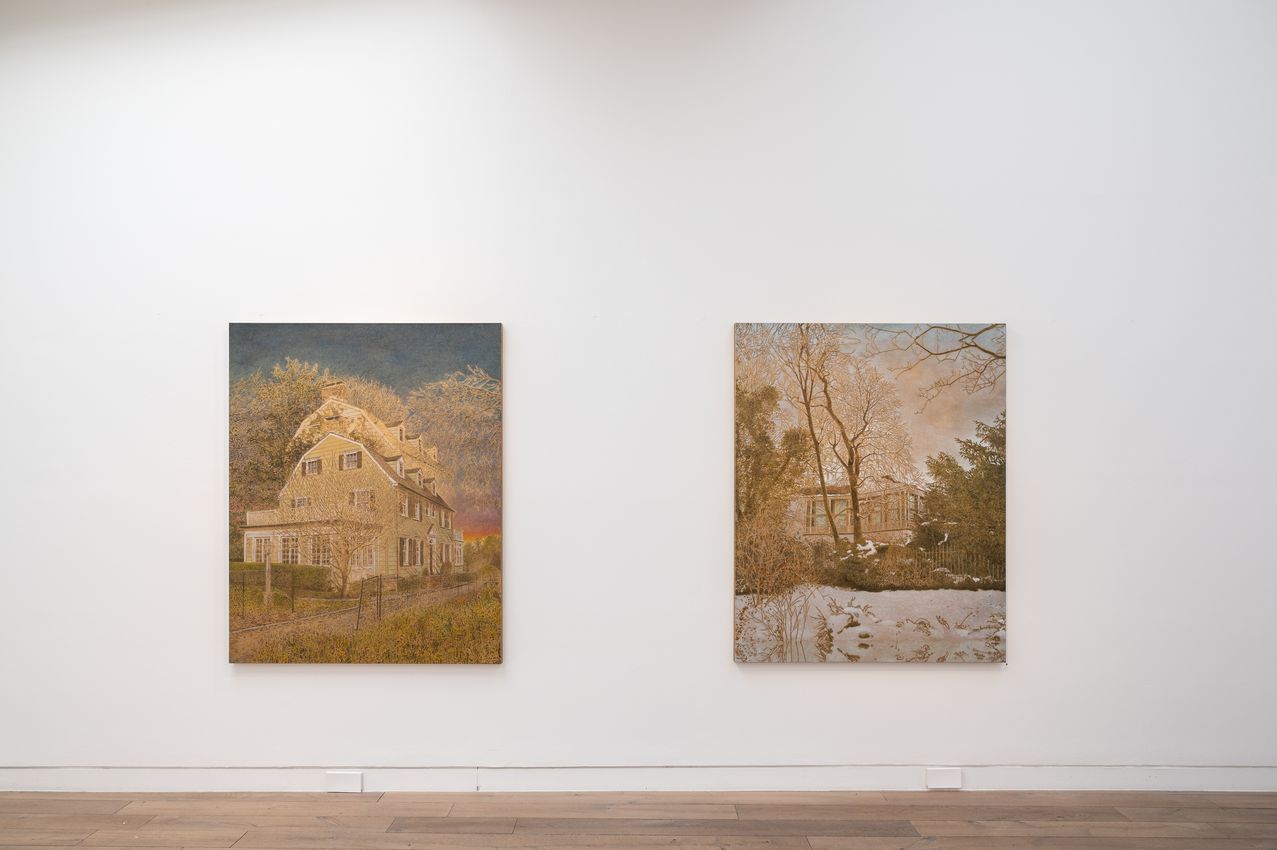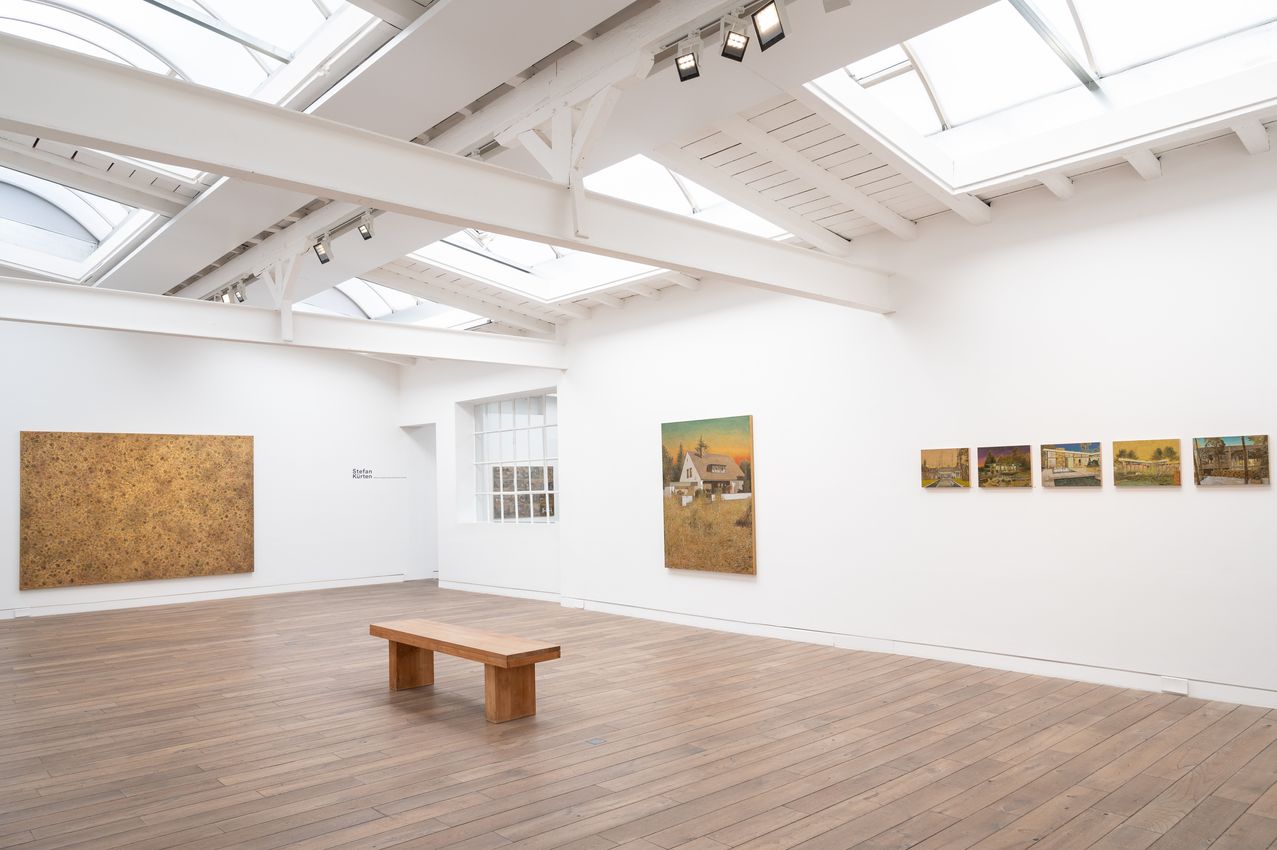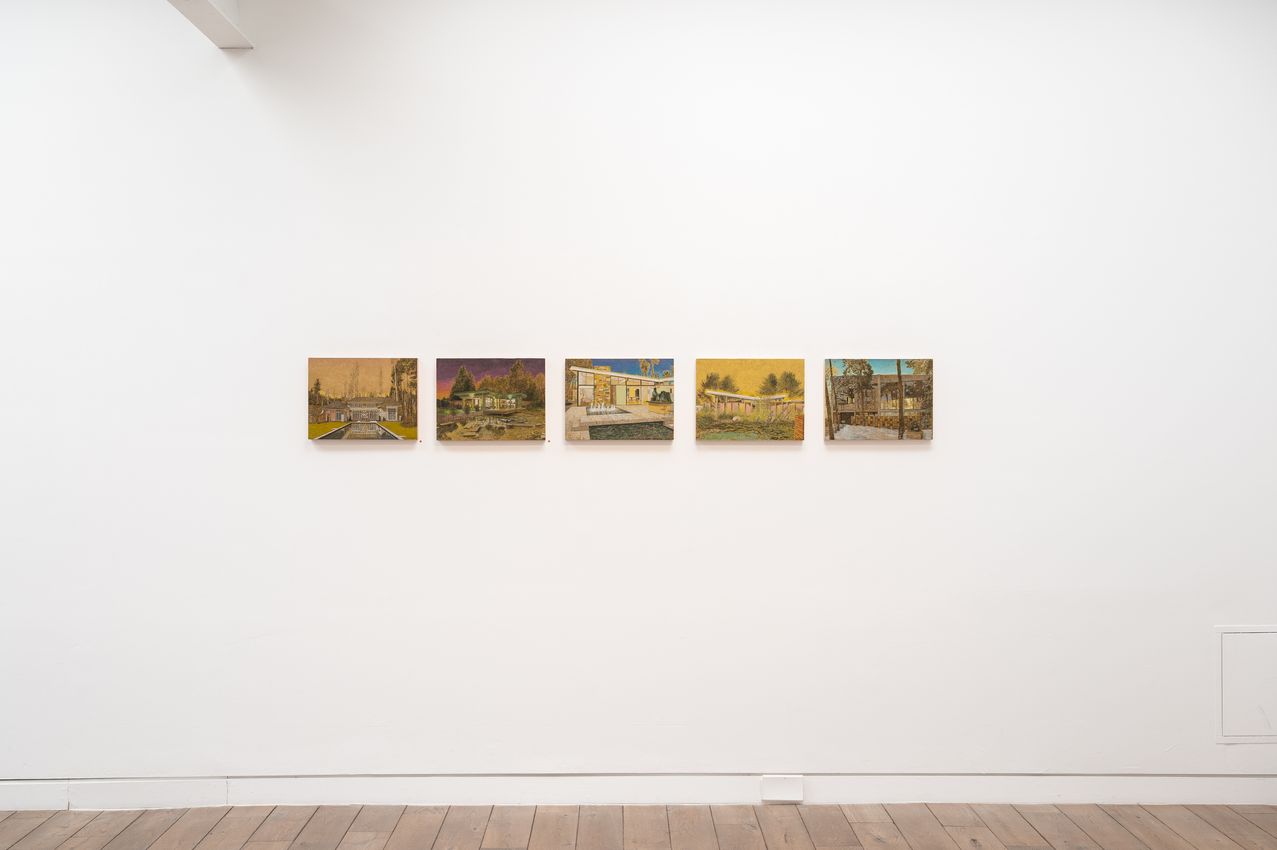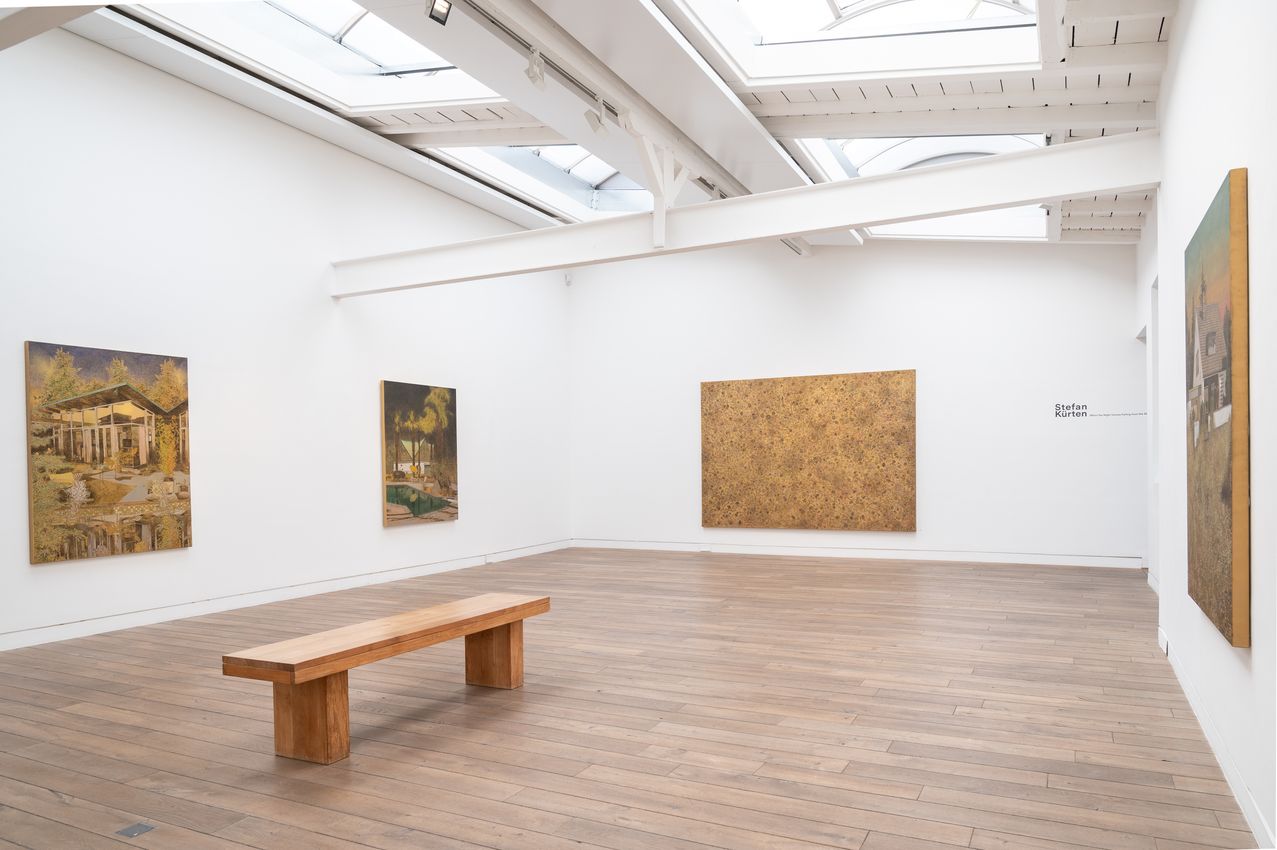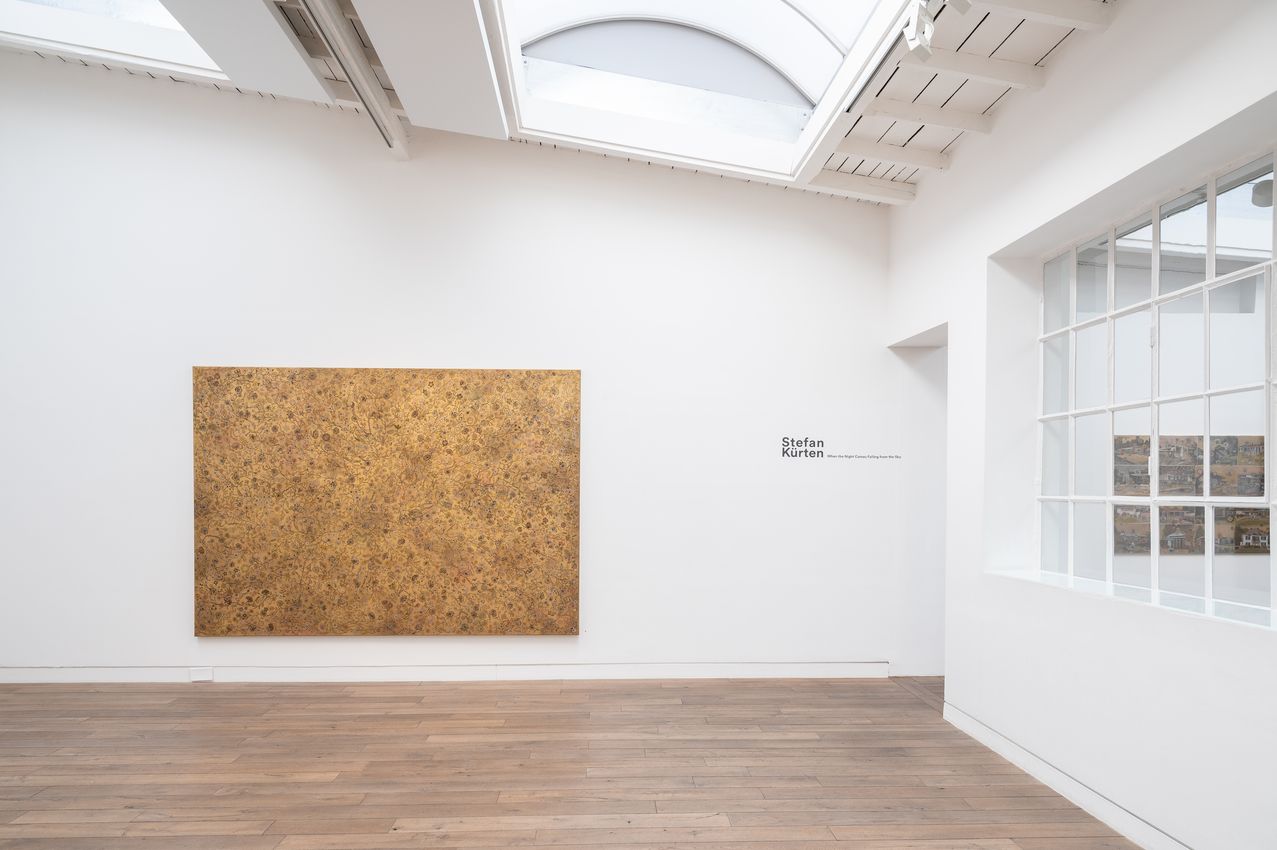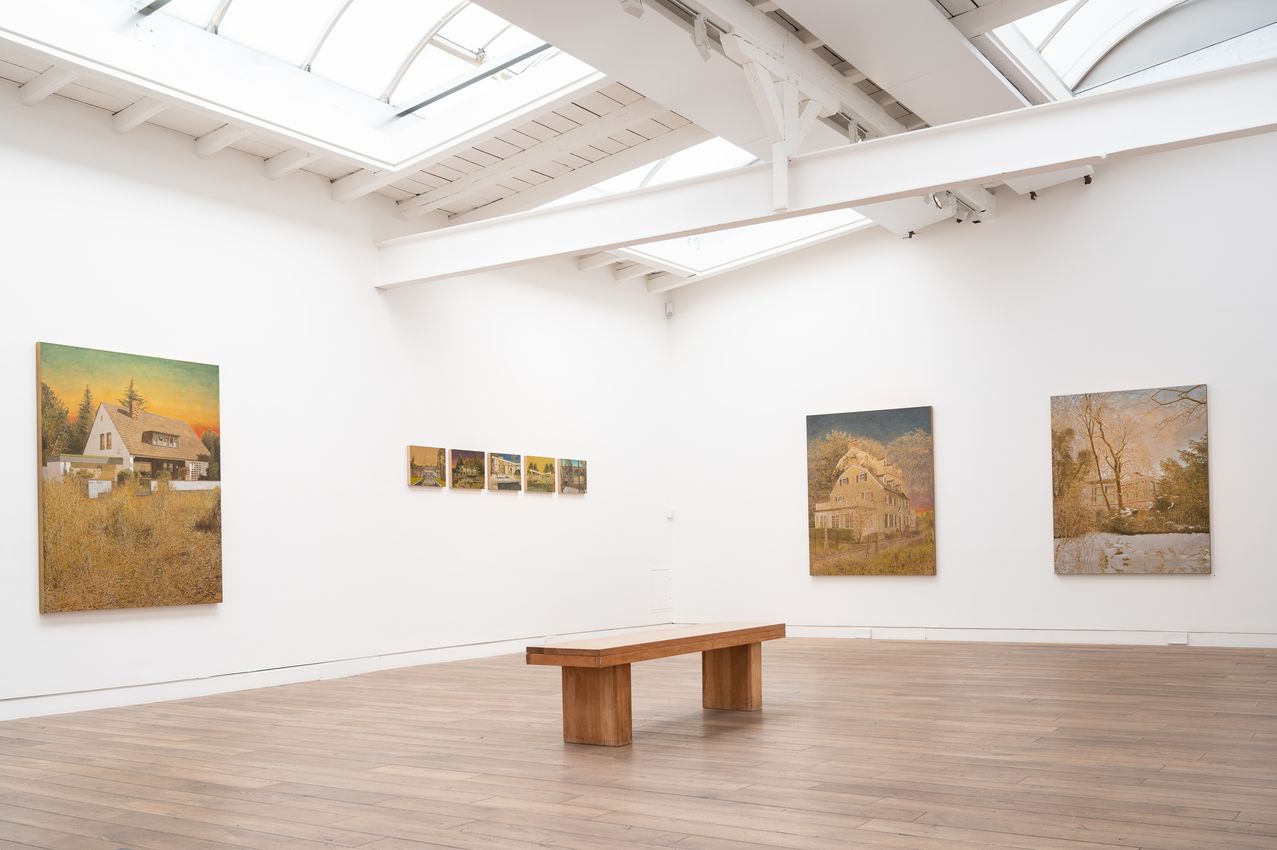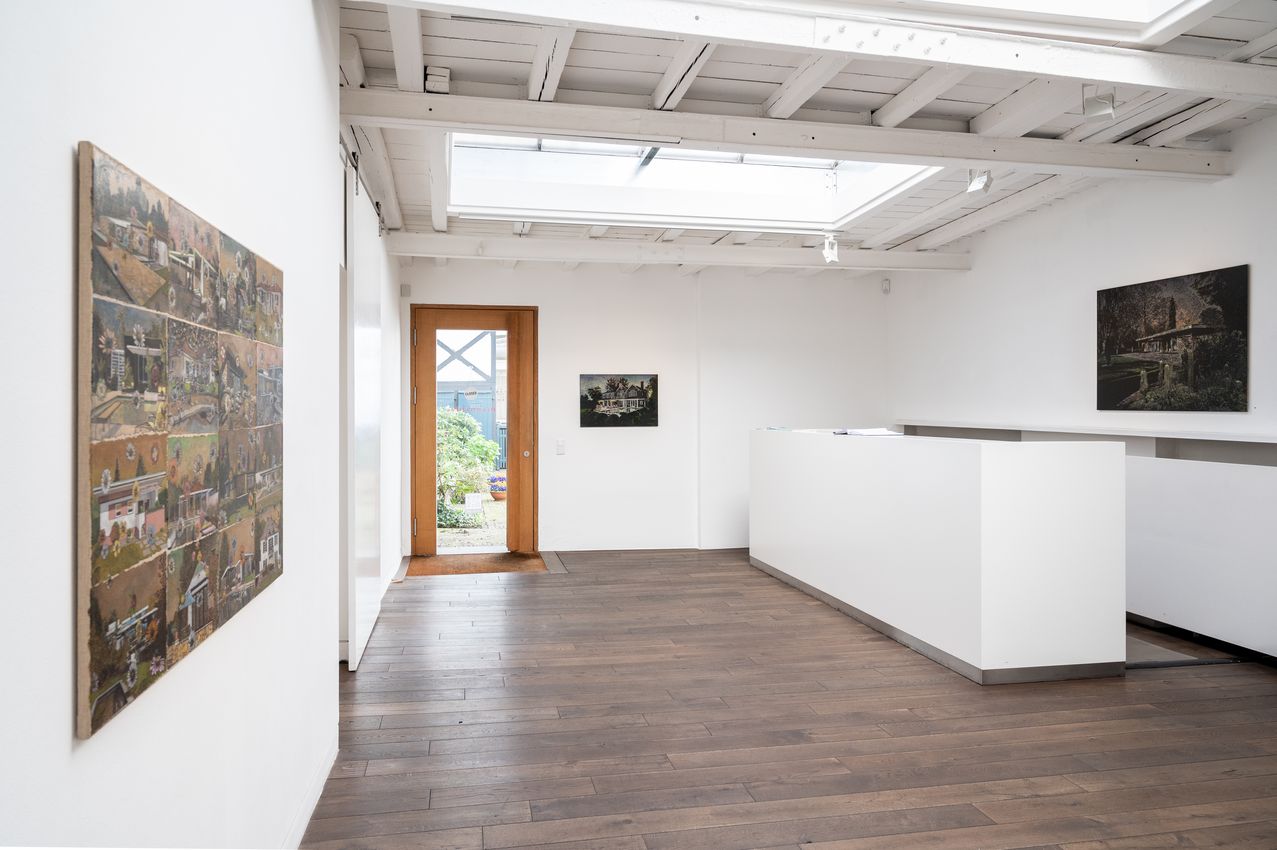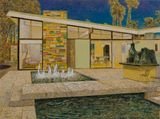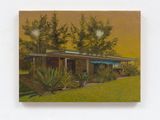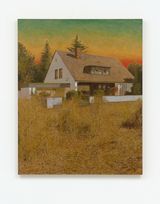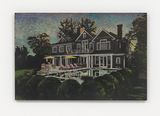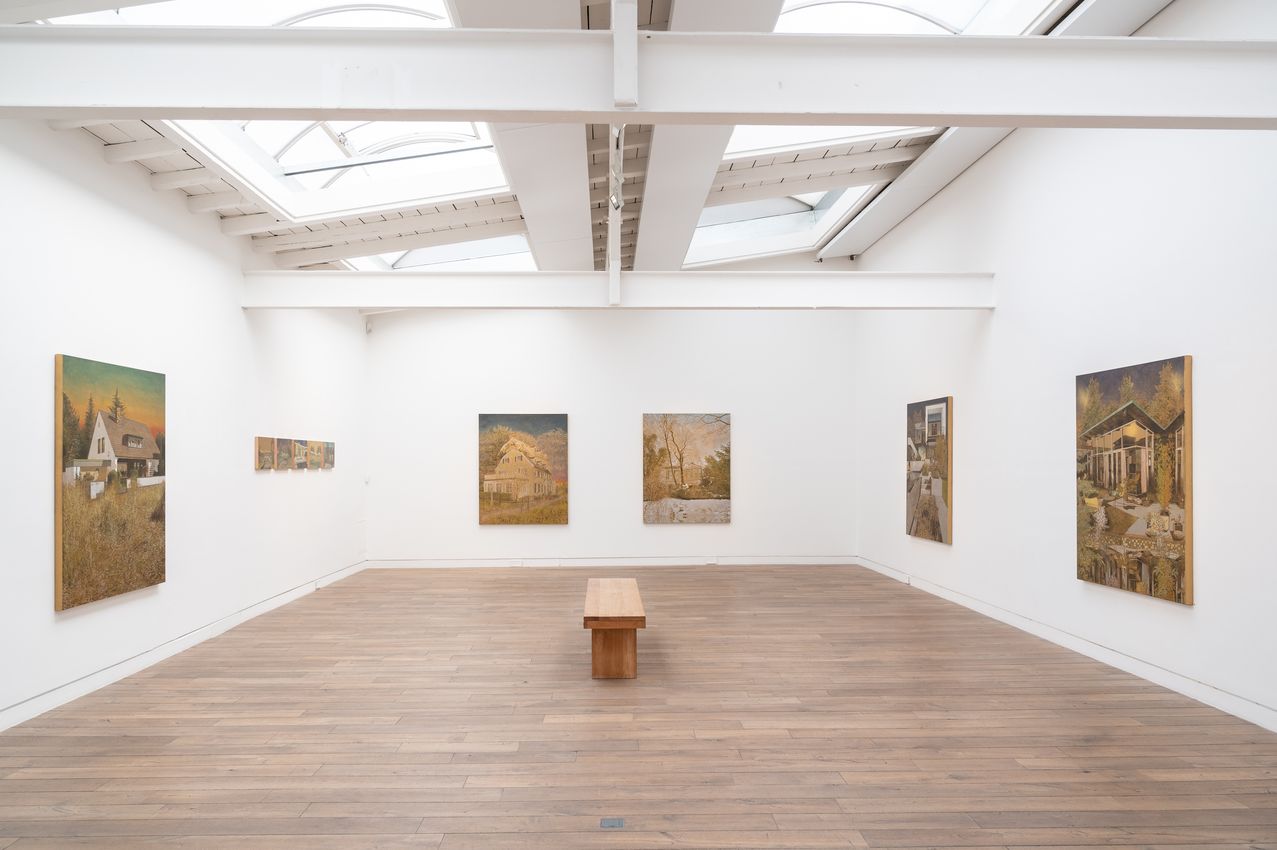
‘Rheinische Post’ dubbed Stefan Kürten a ‘golden boy’ and indeed the golden ground is the defining feature in Kürten’s paintings. Another characteristic in his detailed depiction of buildings is the fact that the painted places and houses immediately trigger a feeling in us that they look familiar. As a rule, however, we do not actually know most of the buildings, as they are fictitious motifs.
Kürten imagines spaces with architecture that spring from a kind of collective memory and aesthetic and therefore seem familiar to us–an enormous, if unconscious, trick on the human psyche. The artist collects images from magazines and takes pictures of landscapes, parks and buildings, sometimes archiving them for years until they come back to him as possible inspiration. Sometimes Kürten also uses places that have an emotional meaning for him and personal memories as a source for his motifs. Some of them are interwoven in the painting process and hold new perspectives even for the artist. He, thus, wants us to believe that we have seen the depicted motifs before.
‘My paintings are only superficially about architecture. Rather, the motifs convey coded messages that deal with social norms and constraints and the universal search for happiness.’ This dazzling promise partly suggests the impression of economic prosperity, of a golden era. Everything glows from within. Then again, the special lighting mood, in which nature and architecture seem artificially illuminated, leads to a dramatic tension and triggers an ambivalent feeling in us. This is particularly expressed in the sky, which does not clearly show day and night or glows as yellow as during a forest fire or an approaching thunderstorm.
The painting itself provides no hint of such an event. Neither does anything in the paintings suggest a particular narrative, nor is there any particular activity or even life taking place. There is an unsettling kind of absence, an eerie form of stillness. That silence, however, is then lifted when the titles of the paintings are read and soft soundtracks buzz through our minds. Kürtens’ long-spun, English-language picture titles are often based on song titles or lines of text and, for the artist, who is himself a passionate musician, establish a connection to the picture on another level.
More insights into Stefan Kürten’s paintings are offered in the exhibition catalogue with an insightful text by Gregor Jansen, director of ‘Kunsthalle Düsseldorf’.
Picturesque houses, stylish bungalows, carefully tended gardens - the works by the Düsseldorf painter show residential architecture that corresponds to the dazzling promise of economic prosperity after the Second World War.
Founded in 1994 by Dr Ute Eggeling and Michael Beck—both from art history and gallery backgrounds—Beck & Eggeling International Fine Art is a leading international gallery. Based in Düsseldorf, it specialises in exhibiting art by European masters of the 19th and 20th centuries, embracing Impressionism, Expressionism, and post-War Modernism, as well as working to foster international contemporary art.

A respected voice in contemporary art discourse.
Focusing on ambitious storytelling and insightful art-world commentary. Ocula Magazine publishes in-depth interviews, critical essays and timely analysis on the artists, exhibitions and ideas driving the global art world.
Learn more about Ocula Magazine
Showcasing the best of the art world.
Ocula partners with galleries from around the world to highlight their artists, artworks and exhibitions. Gallery membership is by application and invitation, with each member vetted by an independent panel.
Learn more about Ocula Membership

Specialises in the sale of major artworks.
Led by a team with deep ties to the world’s leading auction houses, galleries and collectors. Ocula’s advisory team offers bespoke services to high-net-worth clients from around the world who are looking to acquire the best of contemporary and modern art.
Learn more about our team and services