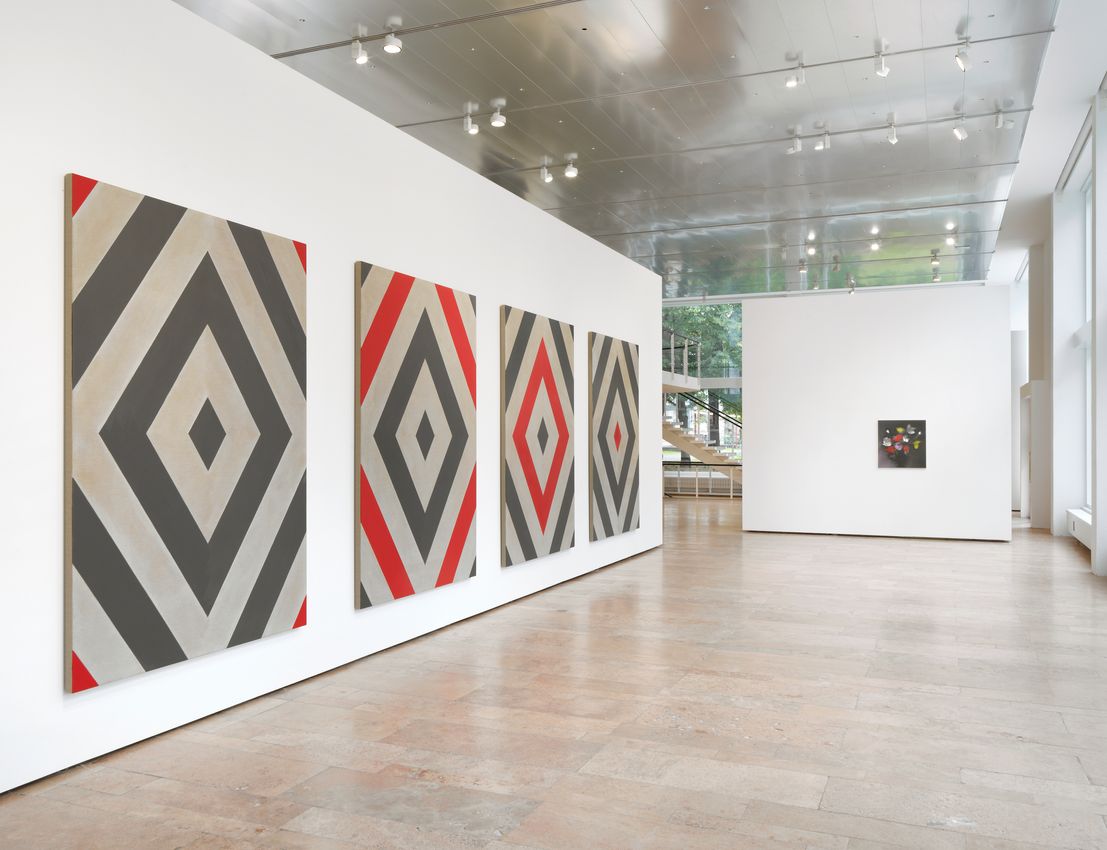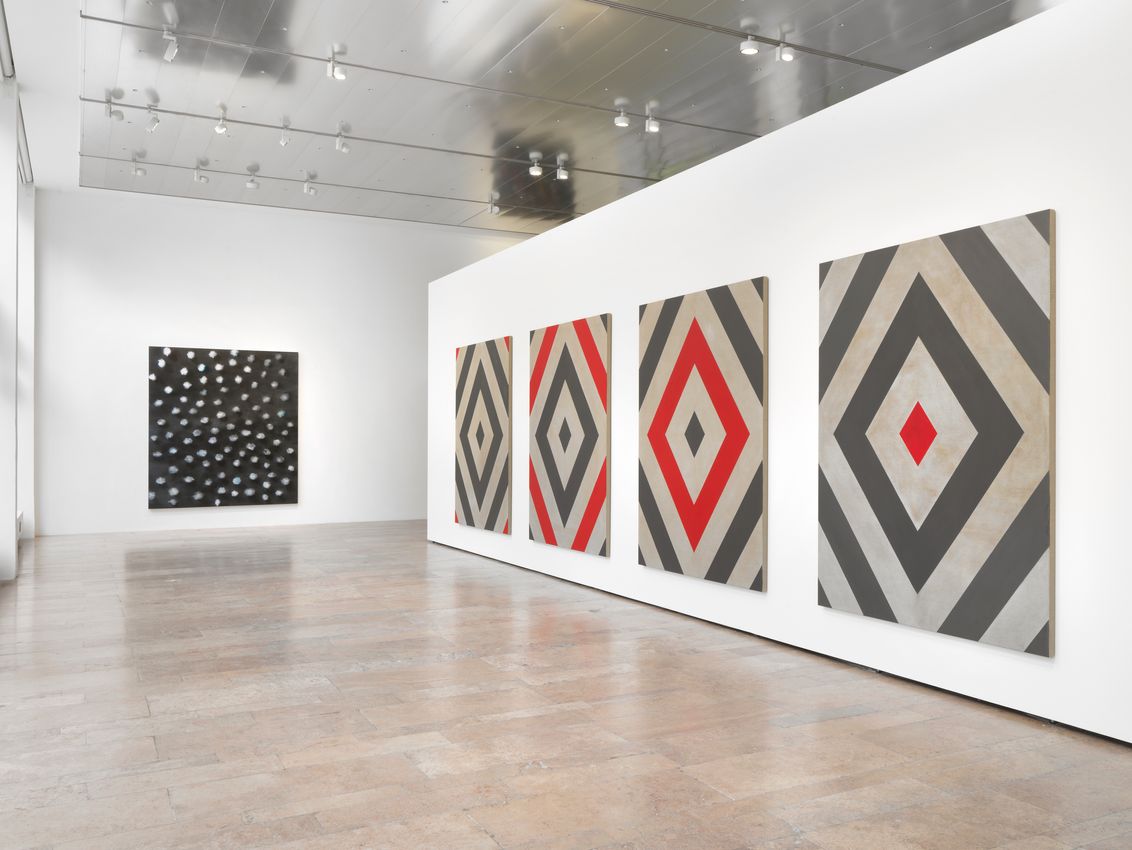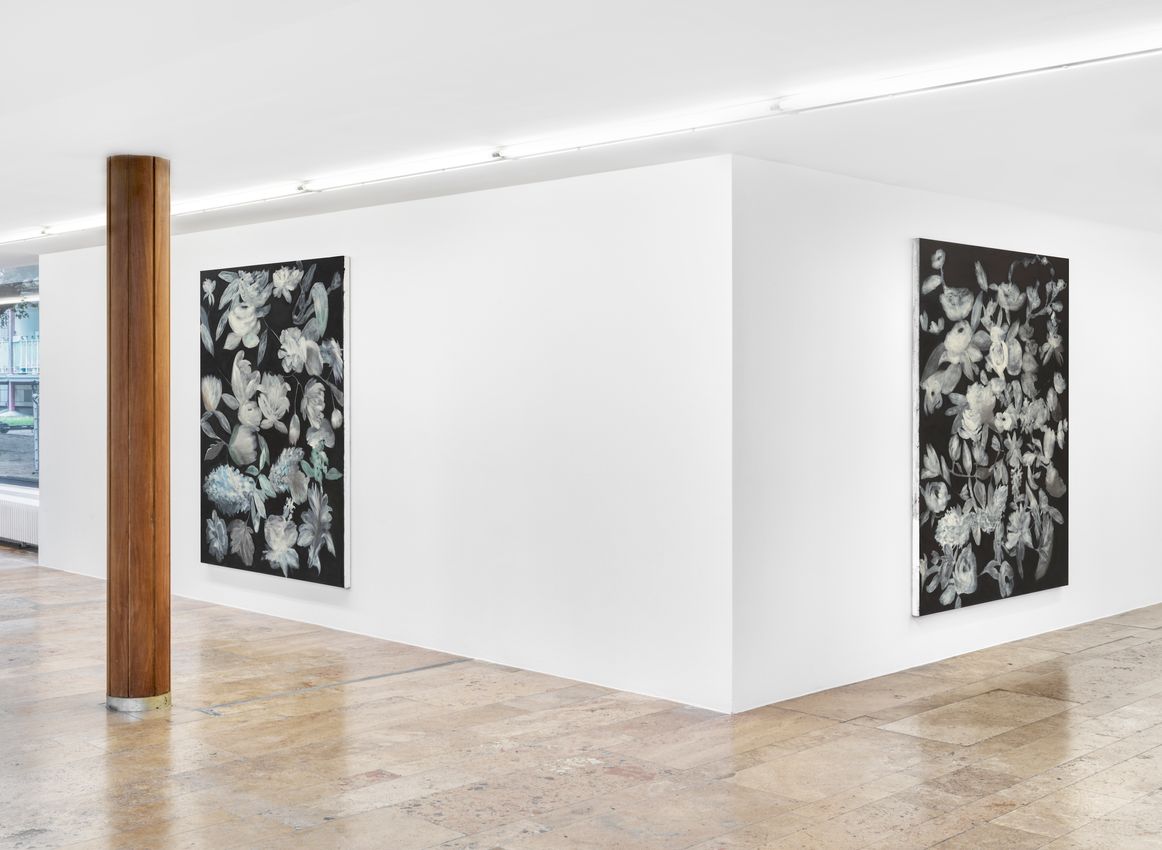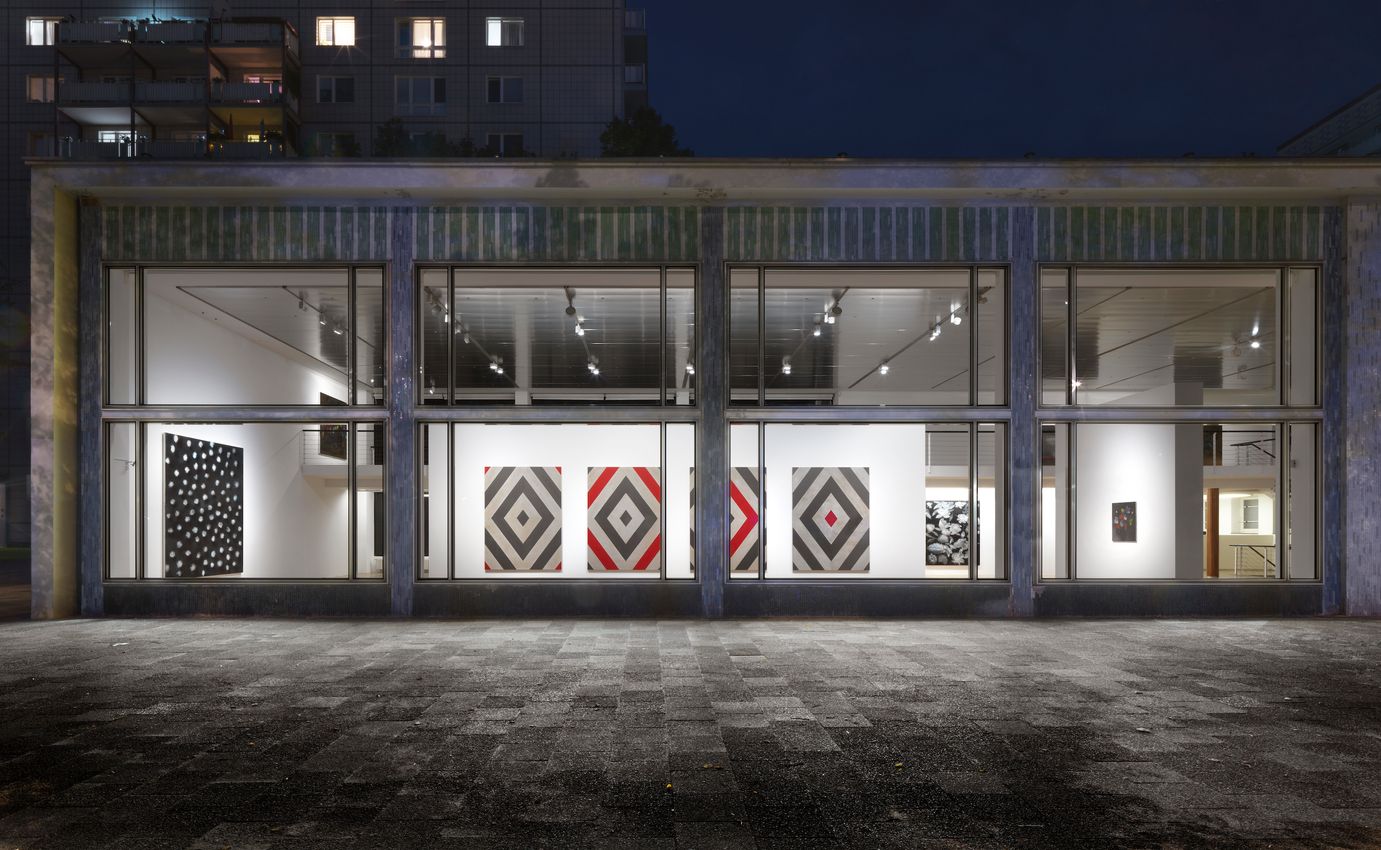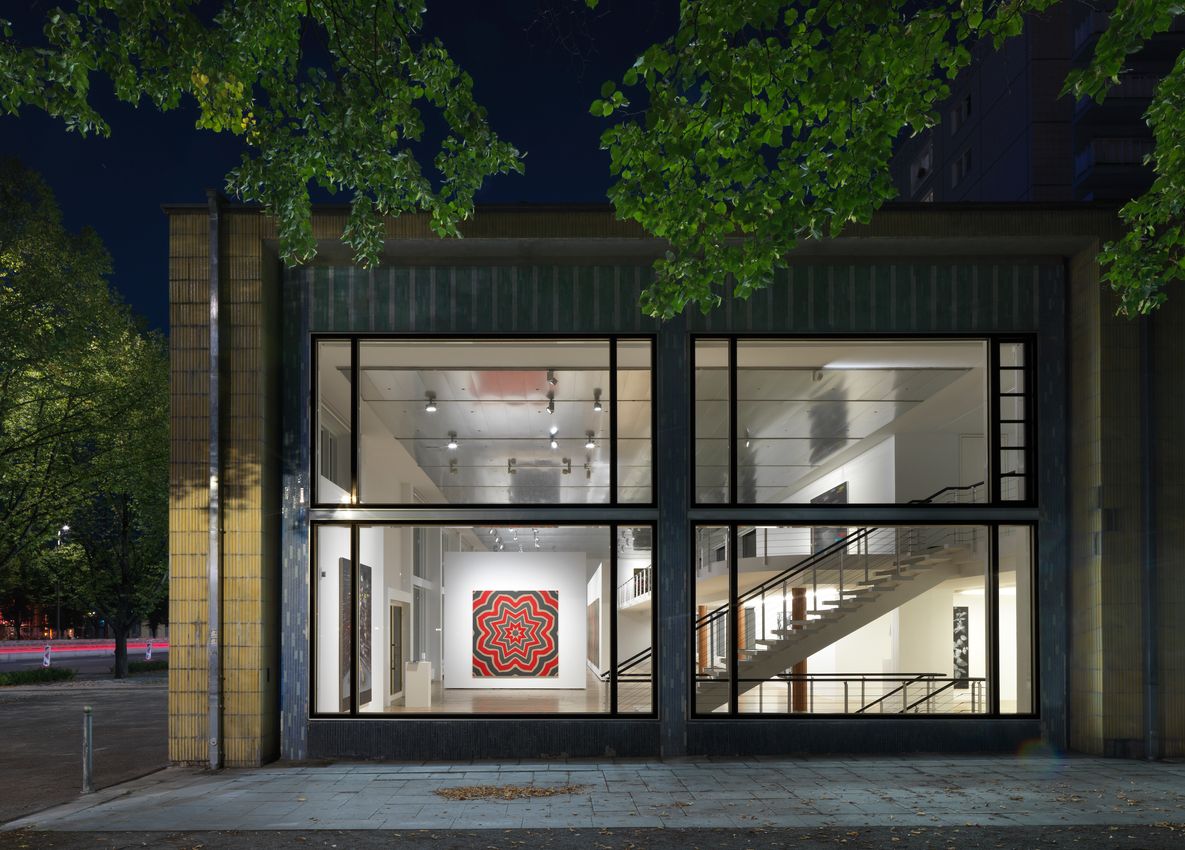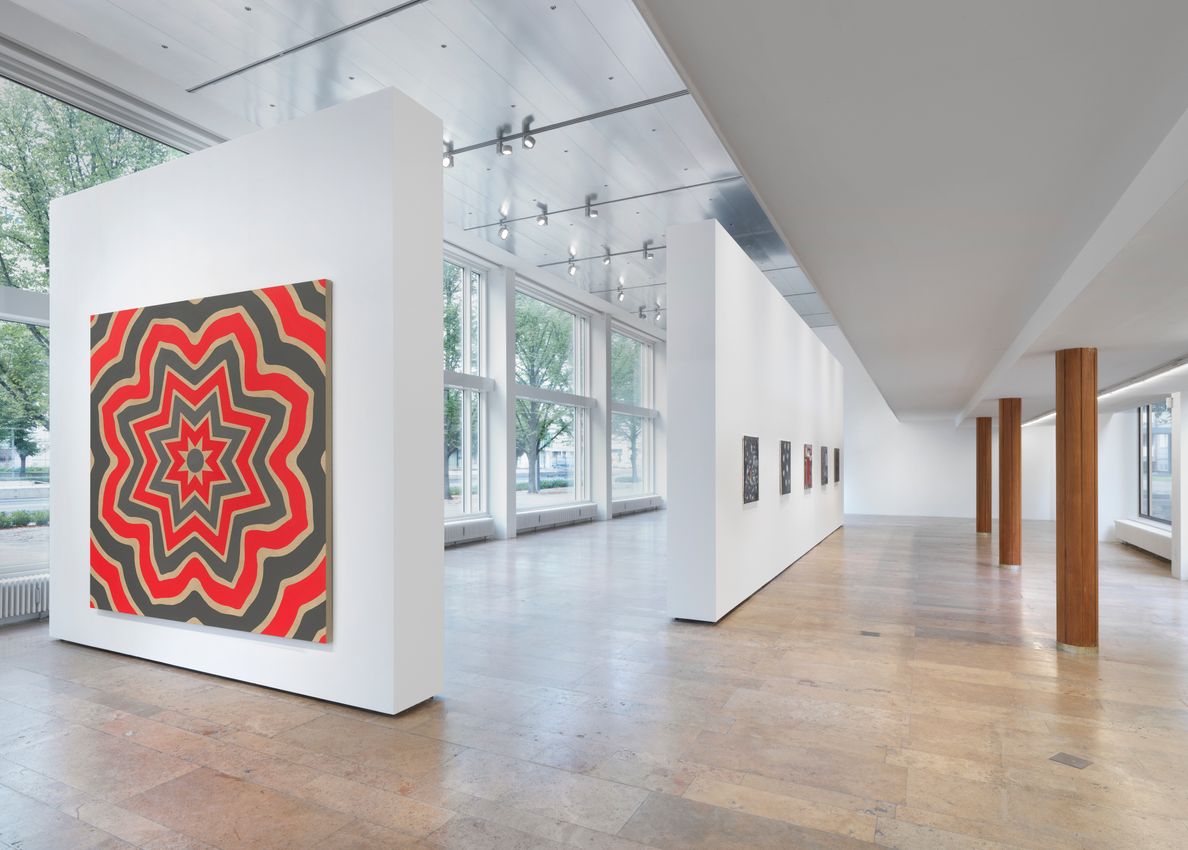
Capitain Petzel is pleased to announce Quid Pro Quo by Ross Bleckner, the artist’s first solo exhibition at the Berlin gallery.
Since rising to prominence in the midst of the AIDS crisis of the 1980s, Bleckner has addressed through painting his awareness of time and societal transition as a means of trying to understand the human condition and its vulnerability. The artist has been reinventing himself from one series of pictures to the next, always referring to the fragility of existence and the human longing for the metaphysical beyond the world of appearances. Death is ubiquitous in the artist’s oeuvre, but by seamlessly marrying darkness with beauty, he cultivates a unique painterly language that is both melancholic and sensual.
Bleckner explains that his work has always dealt with subjects that have created ruptures in society. In the 1980s, this subject was the epidemic which he covered in his famous Cell Paintings. In his more recent works, which are on show at Capitain Petzel, Bleckner confronts what he perceives as the shortcomings of his generation: ‘These works, made in the solitude of my East Hampton studio, reflect on the failure of one generation to pass a better world along to the next, and the attempt (...) to nevertheless continue to live with a modicum of peace (and) joy.’ Quid Pro Quo chronicles Bleckner’s own continual search for truth and beauty. There is a spiritual journey at play in his work that circles around the emotional, the theoretical, and the painterly that reminds us to question our existence.
Throughout the show, the paintings shift in and out of focus, just as Bleckner understands the mind’s way of functioning. He paints based on the mutations of his consciousness — from his Burn Painting series, which speak of destruction and make use of a blow torch to create hazy, ghostly effects, to his ethereal flower paintings inspired by earlier artists such as Emile Nolde or Edouard Manet, to the simple geometric forms of After All These Years which relate to the Buddhist concept of the heart sutra. Constantly vacillating from one series to the next, from one subject to another, Bleckner explores a terrain between biology, psychology and identity, as he deploys a wide range of expressive options, accepting no dividing line between figurative and non-figurative: ‘As am I, these paintings are restless, conflicted yet focused and expansive. They are simultaneously optimistic and pessimistic. I have made a deal with myself to try to be free, which is my own quid pro quo.’
Ross Bleckner (b. 1949, New York) is the youngest artist to receive a mid-career retrospective at the Solomon R. Guggenheim Museum, at the age of 45. Bleckner has held solo exhibitions at Neues Museum Nürnberg; Moderna Museet, Stockholm; Kunsthalle Zurich; San Francisco MoMA, among others. In March 2021, Bleckner will have a solo exhibition at Le Consortium, Dijon. His works are held in public collections throughout the world, including the MoMA and Whitney Museum of American Art, New York; MoCA, Los Angeles; Tate Modern, London; The Astrup Fearnley Collection, Oslo, and Collezione Maramotti, Reggio Emilia, Italy.


Ross Bleckner’s paintings are an investigation of change, loss, and memory, often suggesting meditations on the body, health and disease, much like a memento mori. ‘The idea that the body is so perfect, until it’s not perfect. It’s a fragile membrane that separates us from disaster.’ His immersive paintings, whether pure abstraction of stripes or dots, or more representational renderings of birds, flowers, and brains, elicit a powerful hypnotic and dizzying effect. Smoothly layered on the canvas surface against a darker gray background, Bleckner’s famous multicolored volumetric circles or ‘cells’ look like droplets of blood or molecules viewed under a microscope.

Capitain Petzel is a joint venture between Cologne’s Galerie Gisela Capitain and New York’s Petzel Gallery. Established in 2008, it occupies the Soviet-era modernist gallery space of the former Kunst im Heim on central Berlin’s iconic Karl-Marx-Allee.

A respected voice in contemporary art discourse.
Focusing on ambitious storytelling and insightful art-world commentary. Ocula Magazine publishes in-depth interviews, critical essays and timely analysis on the artists, exhibitions and ideas driving the global art world.
Learn more about Ocula Magazine
Showcasing the best of the art world.
Ocula partners with galleries from around the world to highlight their artists, artworks and exhibitions. Gallery membership is by application and invitation, with each member vetted by an independent panel.
Learn more about Ocula Membership

Specialises in the sale of major artworks.
Led by a team with deep ties to the world’s leading auction houses, galleries and collectors. Ocula’s advisory team offers bespoke services to high-net-worth clients from around the world who are looking to acquire the best of contemporary and modern art.
Learn more about our team and services