



Press Release

Proof of Spirit

Something draws me into this stuff sort of impulsively like eavesdropping, meaning that there is some breached membrane of privacy, a disclosure in it. Like seeing into someone’s apartment—and there is no reason to look away. Why look away, why turn the camera off, why cut? But my own life moves at its own pace which limits my availability to sit around watching for whatever’s happening. Nevertheless I sense a definite pull from within. I make time for it. Part of it is that as a viewer of artworks, films, inanimate objects, I am in control. It’s me who enables them to suck me in. I can turn away at any time. And that makes continuing more appealing. It kind of feels like reading a diary. (That does not sound appealing to me at all—trying to decipher the handwriting, the references, and stomach the legit breach of privacy. But every time I’ve read a diary I have found it pretty absorbing to the point that I get sore from standing there holding still reading for too long.) The unpredictability of this stuff is attractive for sure. And it takes time. You have to let it burn. You can’t really get it just by looking at it. It’s not a stop sign. There is a lot there that’s not even symbolic at all, not communicative or linguistic. And even if there is a linguistic element like “National Association” or something, it can’t be determined immediately what that is. Is it a label? A direction? Is it talking about what’s happening in the room? The flag-show of colors? The redaction? The claustrophobia? The surveilling? The defensiveness? Or is it talking about what happens outside the room? We’ve heard the old “If you have nothing to hide you might as well be honest. ” The reverse is true as well: if you’re walling yourself off you must not be so credible. But we know this—so when someone does it anyway, especially when the folly of closing it down appears to be obvious, I find that my thinking gets a little puzzled, and inwardly turned. I know from my own use of the silent treatment that there’s some self-afflicting desperation there. But now that the wall is up, what does it do?

Suddenly the soft, absorptive and unpredictable you is replaced by something solid, inanimate, certain. Does it change the acoustics? Cause some bounceback? Does it reflect the light like a mirror? In that case maybe I can catch a glimpse of myself in it. And if I were to put my own walls up—an equally bad idea to be sure—would that make something like a reflection chamber? Who knows what you might find in there, with the emptiness bouncing back and forth endlessly. Anything that slips in would multiply and amplify to oblivion. While all this voidship might be happening between fortifications, would we still be two people holed up right next to each other? That proximity is what I try to get to when I do the looking, and I find that if I have the time and the patience for it, a little “hello there” turns up somewhere, proof of the spirit, the psyche, out there at work. And the intrigue of what is under the cover makes anything sticking out all the more tantalizing.

Monochrome

Doing the same thing over and over, sounds boring to me. But I’ve never really tried it. I’ve definitely repeated things into monotony, but these were forced on me. Like a job, or eating the same leftovers for a week, or just returning home down the same old street every night. I think repetition might get more interesting when it’s optional. Kind of like a spell. You do it once, and somehow you find that you can do it again, even though literally everything is changing constantly. And then, if you keep on going, the repeat is no longer the question, but stopping is. Part of it must be sort of delusional. Maybe repetition is not technically possible, because even if the same action is performed multiple times, the world continues to progress and change around that action, and each iteration exists in a different environment. But the feeling of doing it again still seems pretty undeniable—probably worth keeping it secret if you can. A real honest repeat is so rare that I think it must enter the territory of the unknown pretty quickly. And in truth it must also get boring soon after that. But maybe then it becomes easier because you can see a path forward.

The boring and predictable part is only happening now because it’s still early, wait until you can look back and have the consistency behind you, pushing you forward. Maybe it becomes addictive, or compulsive? And what if you mess up and miss a time? Once, twice? Do you feel shame? Does that urge you back into it? The familiarity of the routine must feel pretty satisfying, especially if it’s not being forced on you. It’s your choice, your commitment to continue. It must become part of your identity at some point. You pick up on the nuances of it because you’re experienced, it’s a skill. It’s probably impressive to someone watching. From the inside, it must also feel almost terrifyingly normal. And then you probably also learn to let things go, and let it unfold, helping it along, barely even touching it—until one day you’re done. You just stop and it’s over, and the end is what keeps on going, but it’s one continuous unbroken arc after everything. (This is kind of about On Kawara.)

For me, it’s hard to tell. There are lots of ways something bad could happen, but also lots of ways nothing bad could happen. Often, things that are familiar feel safe to me, even if they’re actually dangerous. But familiar things can also feel bad or unsafe. It depends on the situation—it’s hard to tell. [[[Sometimes you have to test it out. A mistake can help. Supposedly people trust mistakes more than successes because the mistake is perceived as unintentional and revealing. The mistake is the real thing, and the recovery from the mistake is credible by association. Does that mean intention is unreliable? How do you tell if something was intentional or not? How do you tell if something was a mistake, especially with the knowledge of our supposed attraction to failure?]]]

You will notice that there is an aroma in the gallery.

What does it smell like to you? To me it smells like bubblegum. Is that intentional, is that part of the work? Why bubblegum? I also noticed a bubblegum smell on the bus. It may have followed me here. If it did follow me, I hope it stops.

There are many inconsistencies at a gallery.

One day it might smell like bubblegum, another day, it might smell of boot. The traffic outside might be particularly honkey and loud, while somedays the visitors might have an earache. Or a headache, or a stomach ache. Currently I am of the stomach ache contingent. The light is always changing, and good light doesn’t fall the same for every person, or every thing. On top of this, the shows are always different, and they never repeat. I tend to go back to the same galleries over and over, and each time the conditions are different. Each return is the first of its kind, every time. Sometimes, often actually, I find that the gallery is closed.

Sweat

In 2006 there was a German research study that collected sweat for people to smell. Twelve people gave their sweat and seven people smelled it. They were all university students. Some of the sweat came from exercise and some came from feeling nervous. Most of the smellers could detect the scent, but only half could tell that there were different types of sweat. When the researchers made a sudden loud noise, the people who smelled sweat from feeling nervous got scared.* —Jason Hirata, February 2025

Read More

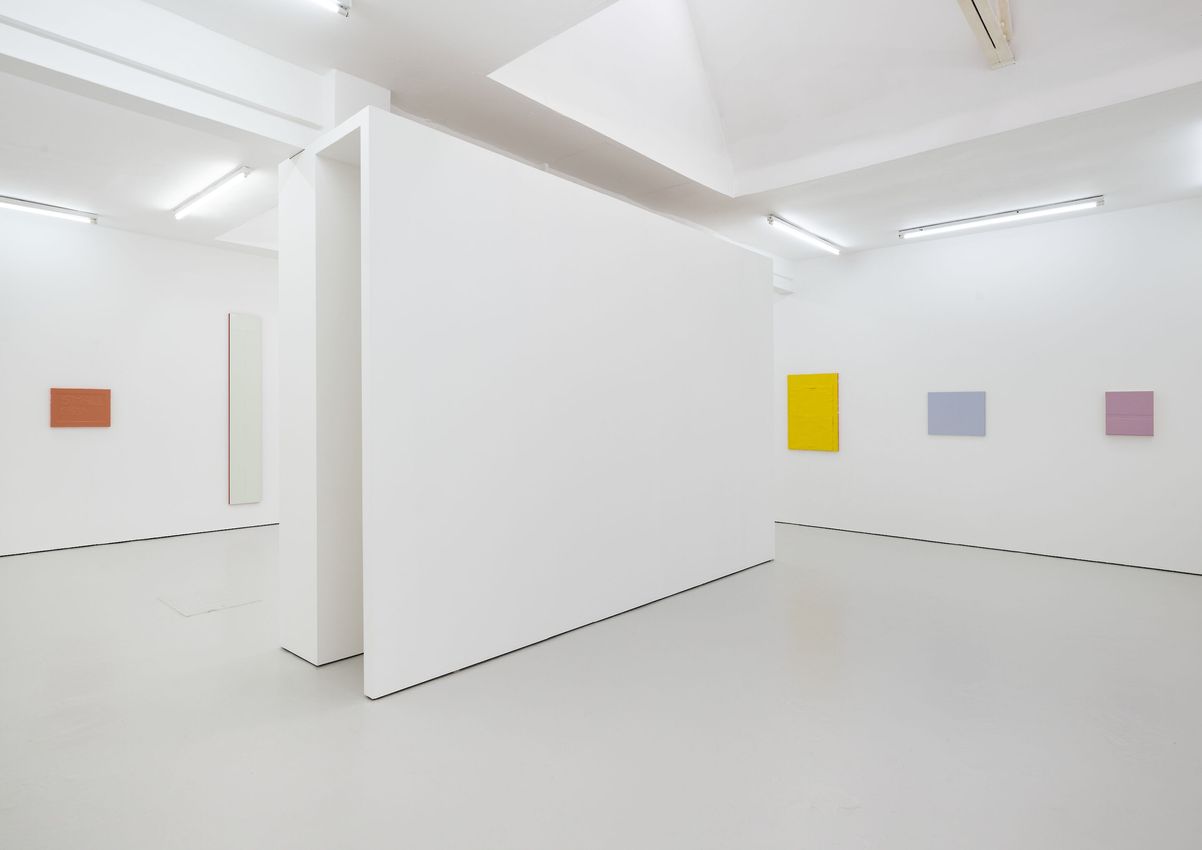
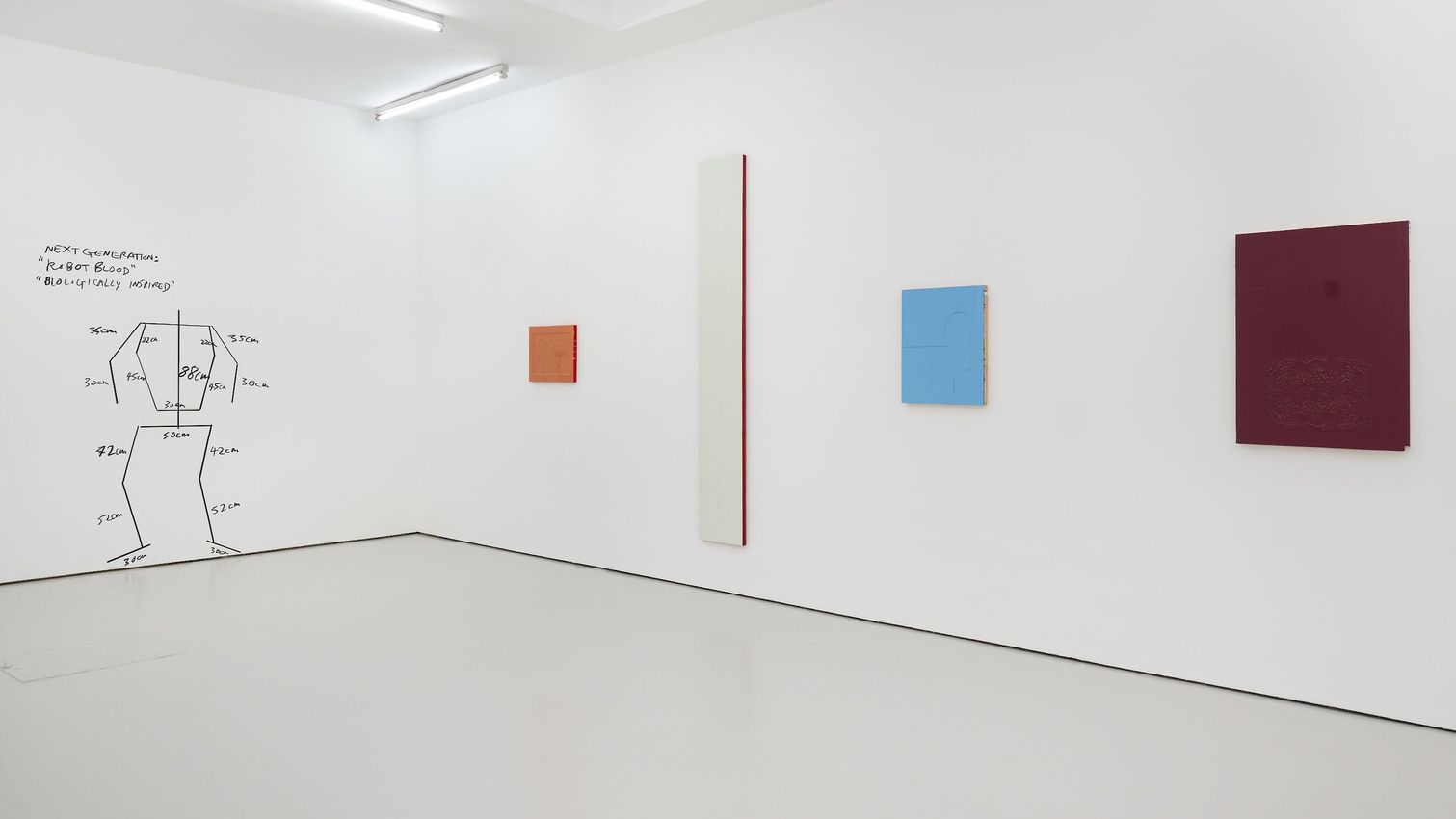
Installation Views

About the Gallery

Carlos/Ishikawa’s programme focusses on artists with wide-ranging, multi-disciplinary and experimental practices. Artists currently represented work with performance, sound, internet, dance, film, installation and text, as well as painting and sculpture. The programme exhibits international artists, offering many artists their first solo shows in London.

View Gallery Profile
Address
Unit 4
88 Mile End Road
London
United Kingdom
Opening Hours
Wednesday – Saturday, 12pm – 6pm
(1)
London Unit 4, 88 Mile End Road
Carlos/Ishikawa
Unit 4, 88 Mile End Road, London, United Kingdom
+44 (0) 20 7001 1744
https://www.carlosishikawa.com

Opening hours
Wednesday – Saturday, 12pm – 6pm
The art world in focus