





OLGA DE AMARAL
b. 1932, ColombiaOlga de Amaral’s art practice transforms humble fibres into luminous fields of colour and sculptural presences, blending contemporary art, craft, and design. Celebrated globally as a pioneer of post-war Latin American abstraction and fibre art, de Amaral’s monumental weavings—often shimmering with gold or silver leaf—have earned her major retrospectives from Paris’ Fondation Cartier to the Institute of Contemporary Art, Miami, and the forthcoming touring survey Olga de Amaral: Weaving the Infinite at the Pulitzer Arts Foundation and Cooper Hewitt, Smithsonian Design Museum. In 1986, she represented Colombia at the Venice Biennale.
Early years
Born and raised in Bogotá, Colombia, Olga de Amaral’s interest in art was shaped early by her mother’s needlework and domestic textiles. She completed a degree in architectural drafting at Colegio Mayor de Cundinamarca in 1952 before moving to Michigan, USA, to study textiles at the Cranbrook Academy of Art, where she developed a rigorous foundation in design and material exploration. Returning to Colombia in 1955, she founded the Telas Amaral design studio and a handwoven textiles workshop with her husband, the artist Jim Amaral, producing fabrics for clothing and interiors alongside experimental woven forms. In 1965, she established and headed the Textile Department at the Universidad de los Andes in Bogotá, shaping the development of fibre art in Latin America and mentoring a generation of artists.
Olga de Amaral Artworks
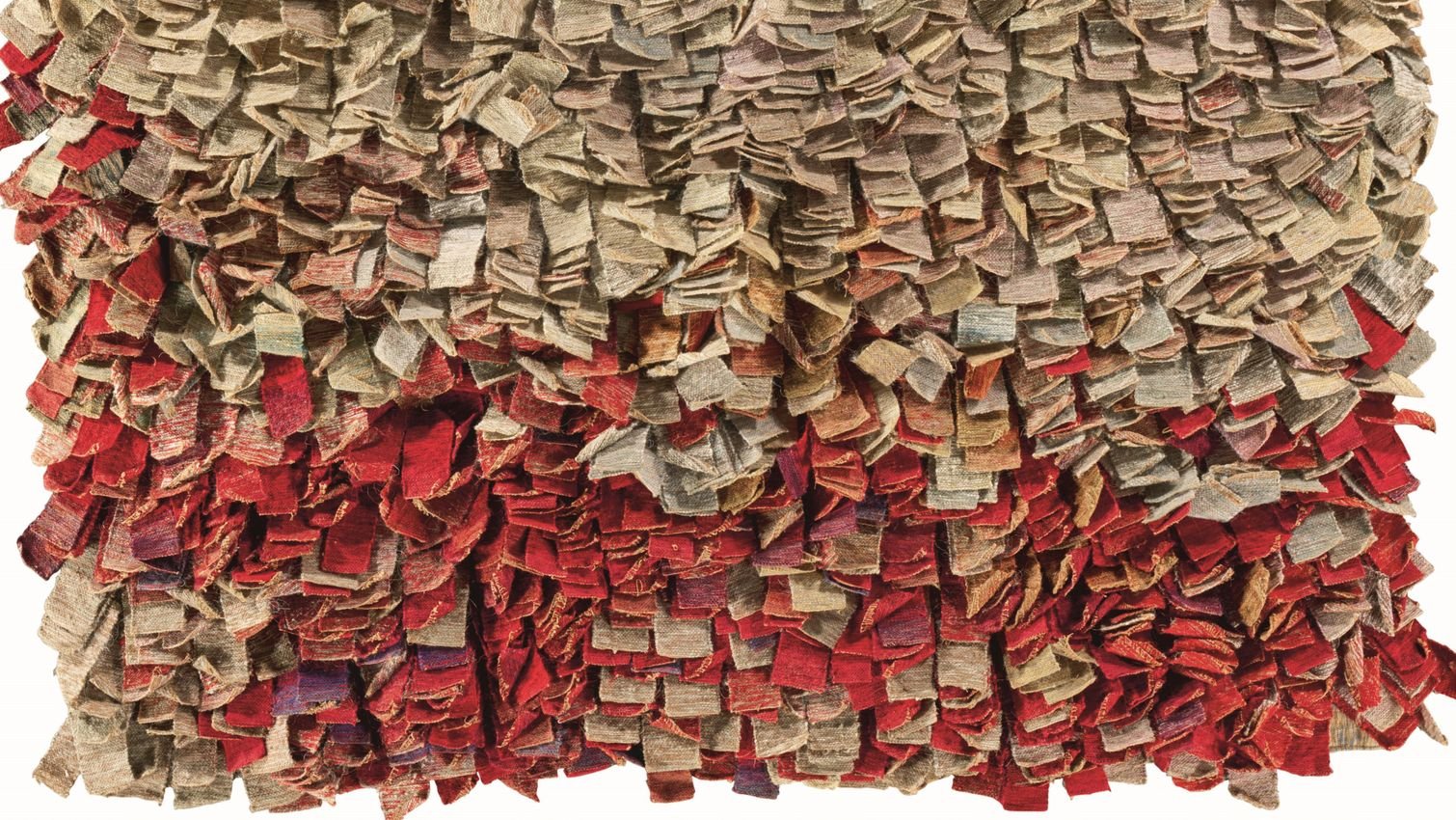
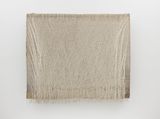
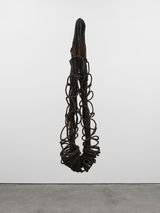
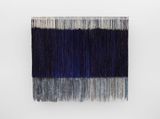
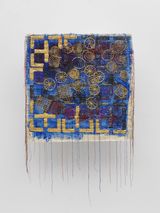
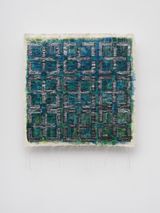
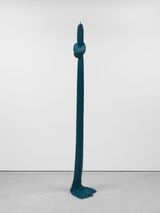
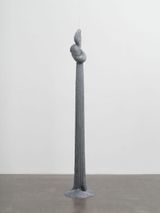
Olga de Amaral’s contemporary art practice dissolves boundaries between textile, sculpture, and painting; her celebrated works incorporate linen, wool, horsehair, gesso, acrylic, and gold or silver leaf to create richly tactile, light-responsive surfaces. Drawing on Colombian heritage, pre-Columbian goldwork, architecture, and nature, as well as the language of modernism, she uses fibre to explore space, rhythm, and perception on an architectural scale.
Seminal Works and Artistic Development
1960s: Fibre as art
De Amaral emerged internationally in the 1960s, pushing fibre beyond functional craft into the realm of abstraction. Her early tapestries, such as Entrelazado en naranja, gris, multicolor (1969), appeared in MoMA‘s landmark 1969 exhibition Wall Hangings, where fibre-based works challenged the territories of painting and sculpture.
1970s: Woven walls and monumentality
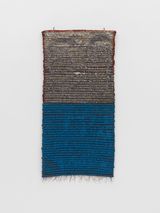
In the 1970s, de Amaral dramatically expanded the scale and dimensionality of her work. Series such as Muros tejidos (“Woven Walls”) and the monumental commission El Gran Muro (“The Great Wall”, 1976) used pre-woven strips of horsehair and wool to create towering vertical forms that transformed public and gallery spaces into immersive woven environments.
1980s–1990s: Alchemy and gold
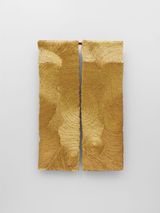
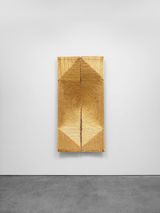
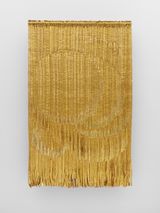
In the 1980s, de Amaral began her iconic Alquimias series, in which she layered gesso, pigment, and gold leaf over woven supports to reflect and refract light. These sculptural pieces evoke Colombia’s pre-Columbian gold and spiritual legacies, each work meticulously constructed to oscillate between surface and depth.
2000s–present: Brumas, Estelas, and the grid
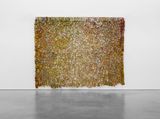
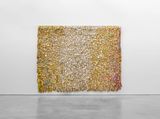
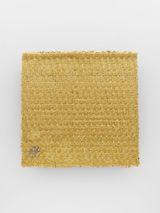
From the late 1990s onwards, de Amaral has continued to reinvent the possibilities of fibre through serial bodies of work. Her Brumas (“Mists”, 2013–2018) infuses geometric abstraction with atmospheric references, using delicately painted threads and suspended grids to create shimmering, diaphanous fields. The long-running Estelas series (1996–2018) comprises vibrant, goldleaf-enrobed panels that recall ritual objects, memory traces, and geological strata. De Amaral’s ongoing innovation continues to influence contemporary art institutions worldwide, culminating in large-scale retrospectives that reassess her foundational role in modern fibre art.
Select Public Commissions
- El Gran Muro (“The Great Wall”), monumental fibre installation, 1976.
Select Awards and Accolades
- Order of Boyacá, Knight Degree, Republic of Colombia, 2022.
- Honorary Master of Fine Arts, Cranbrook Academy of Art, 2022.
- Lifetime Achievement Award, Women’s Caucus for Art, New York, 2019.
- Honorary Chair, Multicultural Benefit Gala, Metropolitan Museum of Art, New York, 2011.
- Visionary Artist, Museum of Art and Design, New York, 2005.
- Guggenheim Fellowship, 1973.
Exhibitions
Olga de Amaral has been the subject of major solo exhibitions and key group exhibitions at leading museums and galleries worldwide.
Solo exhibitions
- Pulitzer Arts Foundation, St. Louis, Olga de Amaral: Weaving the Infinite, 10 September 2026–31 January 2027 (career-spanning retrospective co-organised with Cooper Hewitt, Smithsonian Design Museum).
- Cooper Hewitt, Smithsonian Design Museum, New York, Olga de Amaral: Weaving the Infinite, 2 April–12 October 2027.
- Fondation Cartier pour l’art contemporain, Paris, 2024–2025 (first major European retrospective, October 12, 2024–March 16, 2025).
- Institute of Contemporary Art, Miami, 2025 (retrospective developed in collaboration with Fondation Cartier).
- Lisson Gallery, Los Angeles, Olga de Amaral, November 2025–January 2026.
- Cranbrook Art Museum, Michigan, Olga de Amaral: To Weave a Rock, 2021–2022.
- Museum of Fine Arts, Houston, Olga de Amaral: To Weave a Rock, 2021.
- Museo de Arte Moderno, Bogotá, 2017.
Group exhibitions
- Venice Biennale, 60th International Art Exhibition, 2024.
- Weaving Abstraction in Ancient and Modern Art, Metropolitan Museum of Art, New York, 2024.
- Woven Histories: Textiles and Modern Abstraction (travelled: LACMA; National Gallery of Canada; MoMA), 2023–2025.
- Subversive, Skilled, Sublime: Fiber Art by Women, Smithsonian American Art Museum, Washington, D.C., 2024.
Collections
Olga de Amaral works are held in the permanent collections of museums such as Tate Modern, London; the Museum of Modern Art, New York; the Musée d’Art Moderne de Paris; the Metropolitan Museum of Art, New York; the Art Institute of Chicago; the Smithsonian American Art Museum; and the de Young Museum, San Francisco. Her textiles also feature prominently in exhibitions at institutions including the Museum of Fine Arts, Houston, and Fondation Cartier pour l’art contemporain, Paris.
Website and Instagram
Olga de Amaral’s official website can be found at https://olgadeamaral.art, and her Instagram at https://www.instagram.com/olgadeamaral/
Olga De Amaral FAQs
What makes Olga de Amaral’s art unique in contemporary art?
Olga de Amaral’s works fuse traditional fibre techniques with the visual languages of painting and sculpture, employing gold and silver leaf to create radiant, architectonic surfaces. Her innovative methods have helped position textile-based practice within the same critical discourse as other forms of contemporary art, leading to major exhibitions at institutions worldwide.
Where can I view Olga de Amaral’s works?
Olga de Amaral’s works are held in the permanent collections of Tate Modern, London; the Museum of Modern Art, New York; the Musée d’Art Moderne de Paris; the Metropolitan Museum of Art, New York; the Art Institute of Chicago; the Smithsonian American Art Museum; and the de Young Museum, San Francisco. Recent and upcoming major presentations include retrospectives at Fondation Cartier, Paris (2024–2025), ICA Miami (2025), and Olga de Amaral: Weaving the Infinite at the Pulitzer Arts Foundation and Cooper Hewitt, Smithsonian Design Museum (2026–2027).
How has Olga de Amaral influenced the art world?
De Amaral’s career has redefined the boundaries of fibre as a medium within contemporary art, demonstrating how weaving can operate as sculpture, painting, and architecture at once. She was among the first South American artists to gain international recognition for textile works in the late 1960s, and her teaching at the Universidad de los Andes fostered a vibrant fibre-art scene in Colombia.
What are some of Olga de Amaral’s most important exhibitions?
Key solo presentations include Olga de Amaral: To Weave a Rock at the Museum of Fine Arts, Houston (2021) and Cranbrook Art Museum (2021–2022), her landmark European retrospective at Fondation Cartier, Paris (2024–2025), and the related overview at ICA Miami (2025). Forthcoming highlights include the career-spanning retrospective Olga de Amaral: Weaving the Infinite at the Pulitzer Arts Foundation, St. Louis (September 10, 2026–January 31, 2027), and Cooper Hewitt, Smithsonian Design Museum, New York (April 2–October 12, 2027).
Are there interesting facts about Olga de Amaral?
In 1973, she became the first Colombian artist to receive a Guggenheim Fellowship, marking an important milestone for Latin American fibre art on the global stage. Olga de Amaral’s monumental fibre works often evoke Colombia’s geology, landscape, and pre-Columbian goldwork, and she continues to experiment and exhibit internationally well into her nineties.
Ocula | 2026



















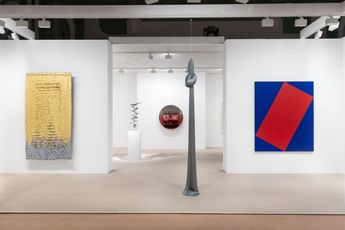
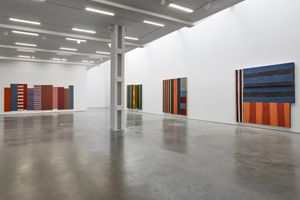
Explore Olga De Amaral's Exhibitions






Explore and Follow Artists Shaping Contemporary Art
A respected voice in contemporary art discourse.
Focusing on ambitious storytelling and insightful art-world commentary. Ocula Magazine publishes in-depth interviews, critical essays and timely analysis on the artists, exhibitions and ideas driving the global art world.
Learn more about Ocula Magazine
Showcasing the best of the art world.
Ocula partners with galleries from around the world to highlight their artists, artworks and exhibitions. Gallery membership is by application and invitation, with each member vetted by an independent panel.
Learn more about Ocula Membership
Specialises in the sale of major artworks.
Led by a team with deep ties to the world’s leading auction houses, galleries and collectors. Ocula’s advisory team offers bespoke services to high-net-worth clients from around the world who are looking to acquire the best of contemporary and modern art.
Learn more about our team and services