Press Release

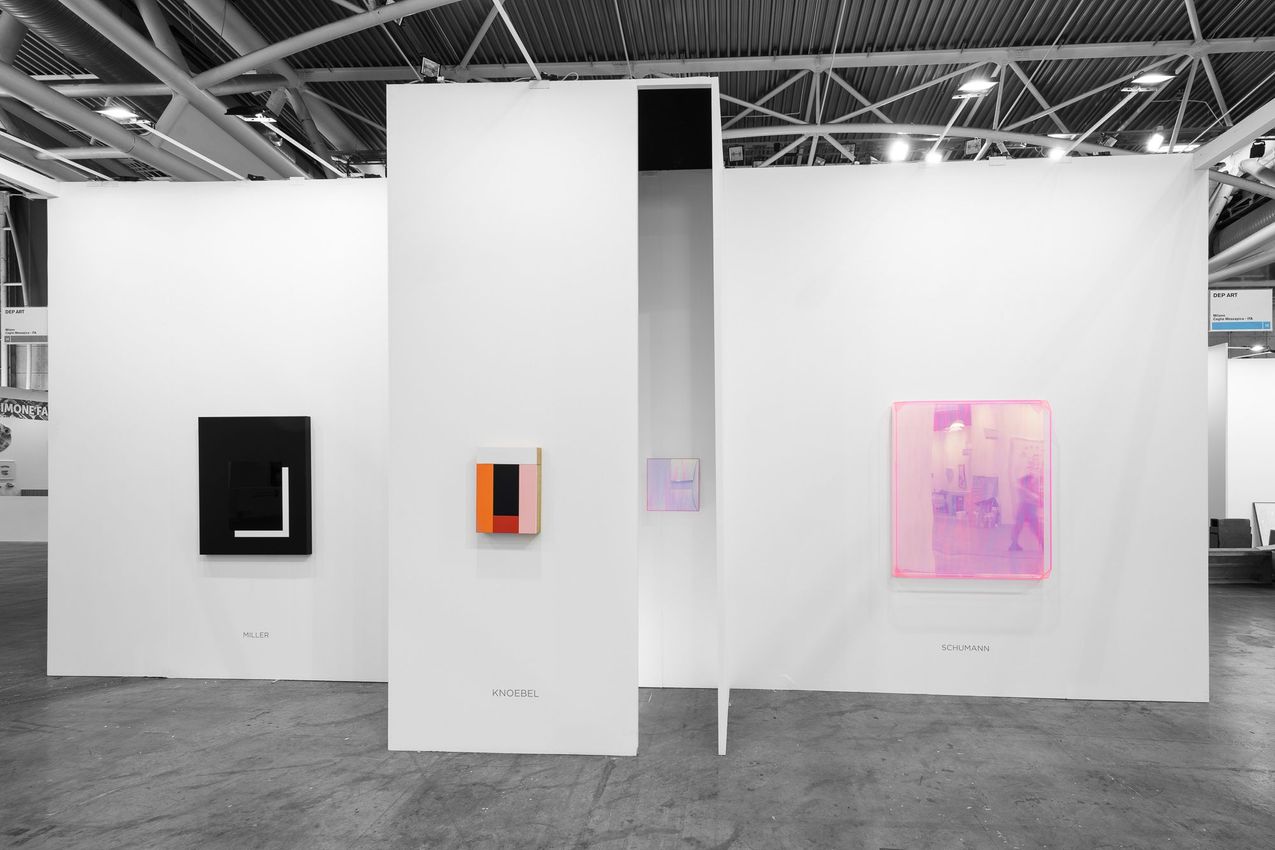
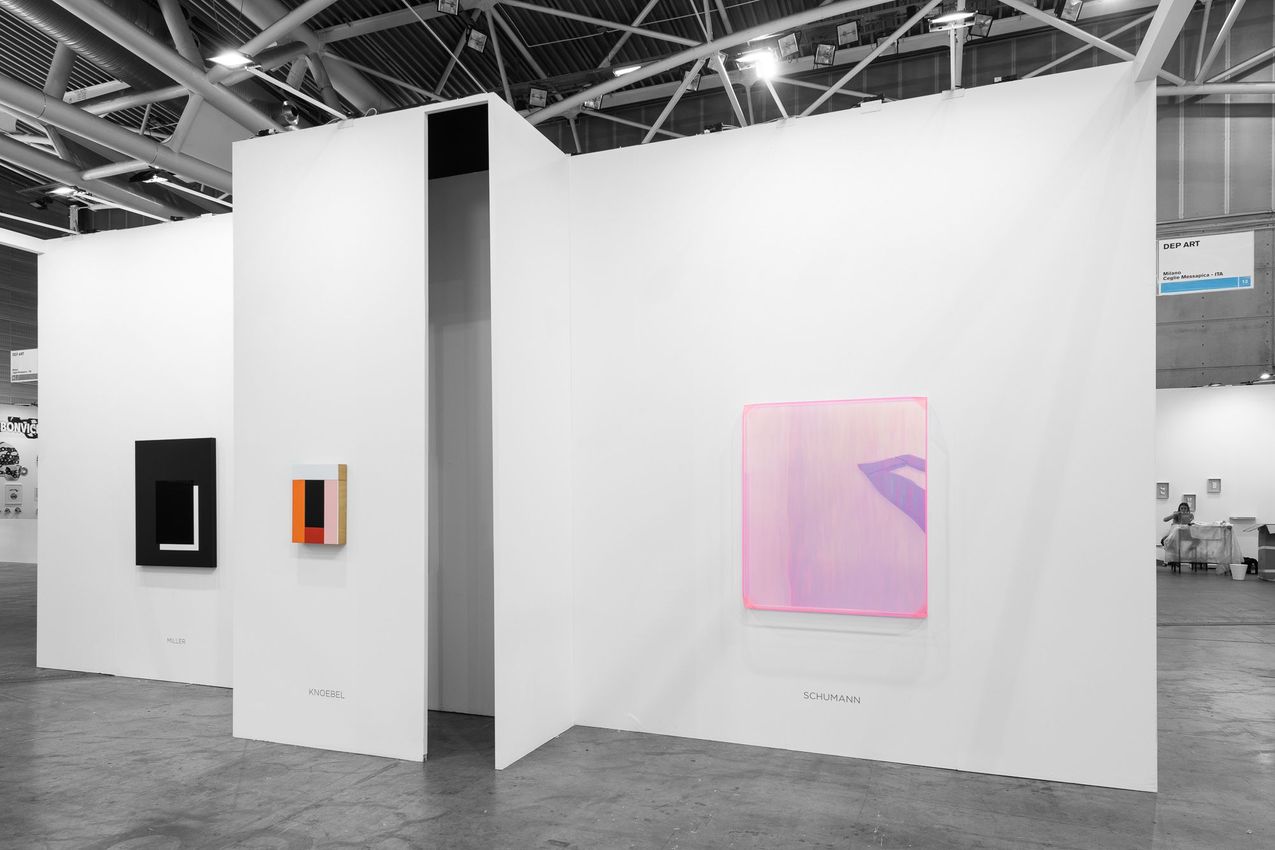
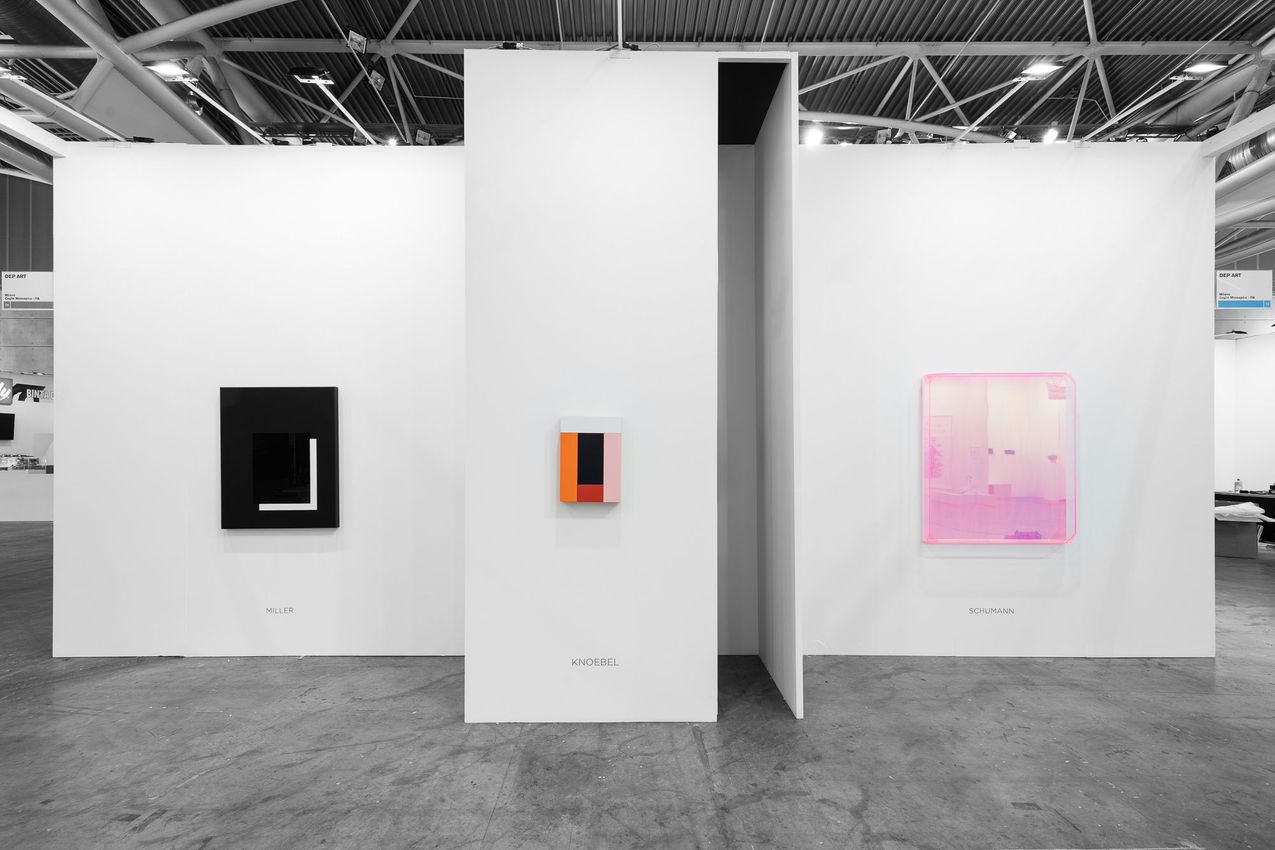
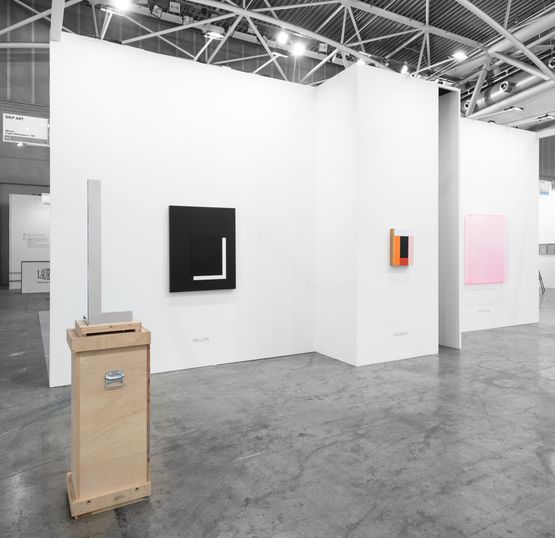
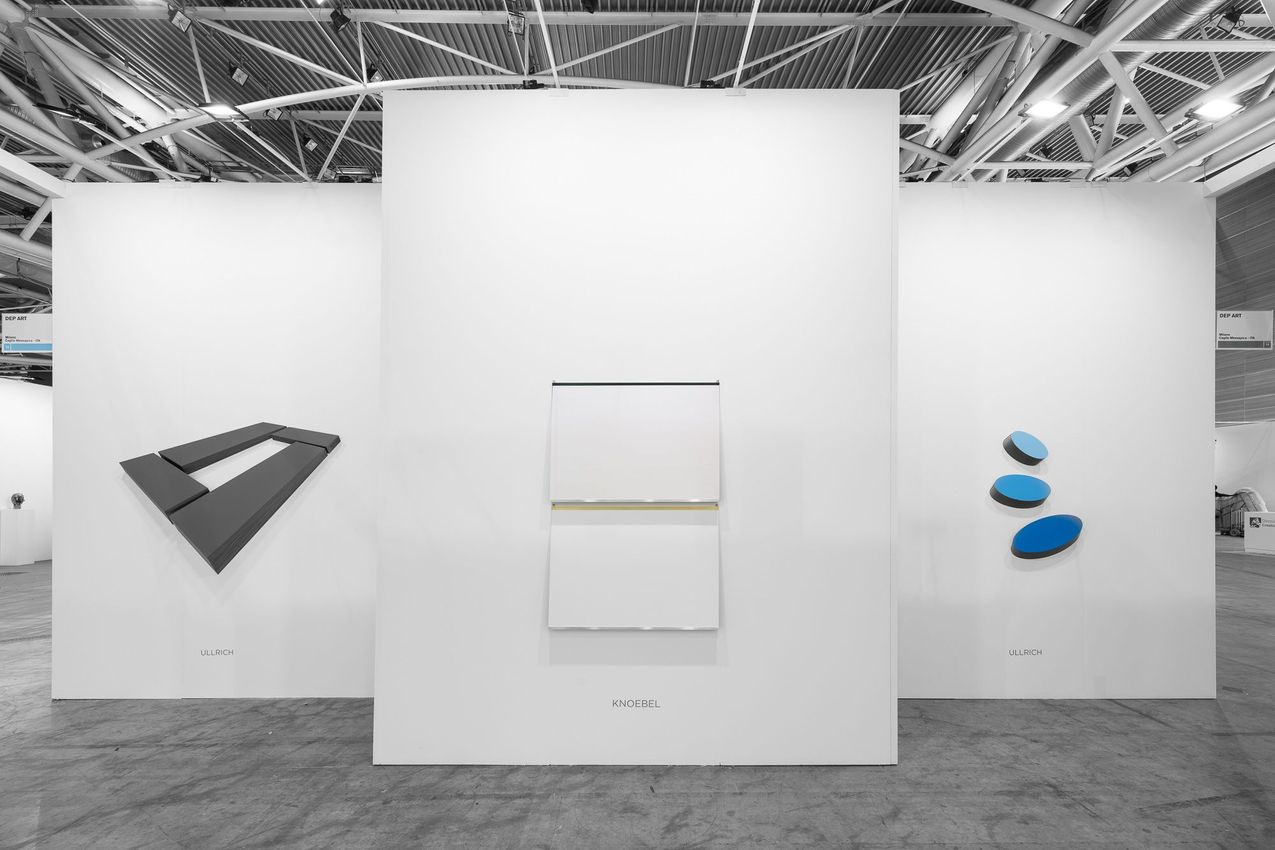
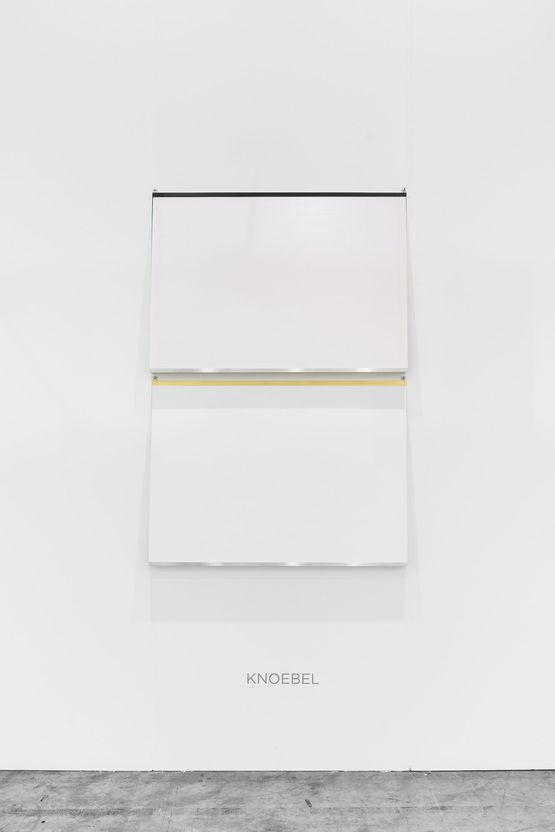
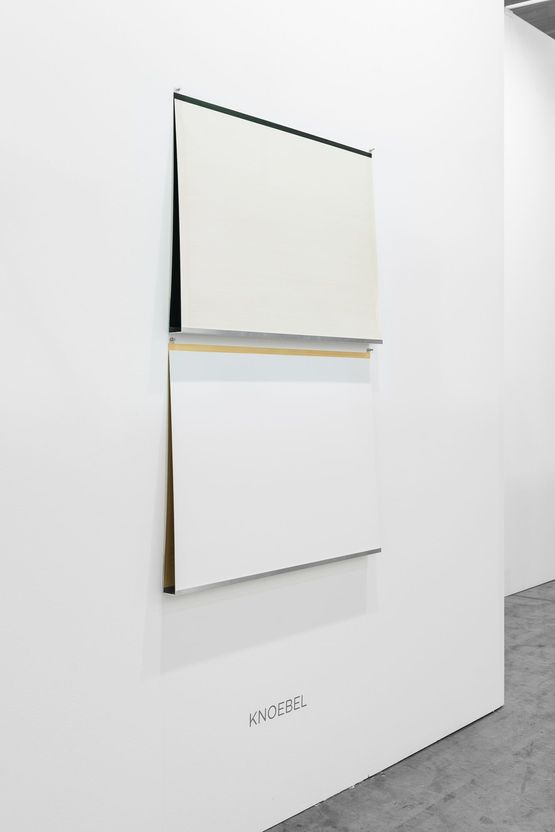
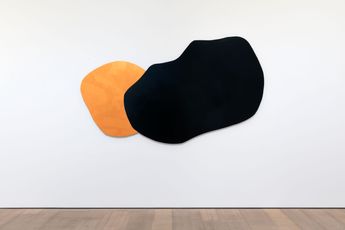
Imi Knoebel’s minimalist hybrids of painting and sculpture explore relationships between color and structure. Knoebel studied under Joseph Beuys at the Düsseldorf Art Academy which also inspired his first important work Raum 19, honouring the number of Beuys’ classroom.

The stylistic and formal concerns of Knoebel’s work can be as- sociated with the modernist principles of Kazimir Malevich and the Bauhaus. While his early pieces were black and white, as in the series Linienbildern (Line Paintings) (1966-69), he began to employ vibrant, saturated color in 1974 with his friend and classmate Blinky Palermo, to whom he would dedicate 24 Farben für Blinky (“24 Colors for Blinky”) (1977), a series of brightly col- ored irregular shapes. In the ‘80s, Knoebel produced his series of Portraits, made up of three vertical rectangles and two horizontal ones, arranged in different nuances of colours from time to time. In 1988, he created Kinderstern, a social sculpture that followed the example of his master Beuys according to whom art should also have a social role and should aim at changing society.
The “Anima Mundi” series have a particular position among Knoeb- el’s works of art, as their title borrows a philosophical term inspired by Botticelli’s Venus in the light of Plotinus’s teachings on the soul. Apart from the title, they respect the formal elements of non-represen- tational art, and when solely beholding these works, they may lead to another cosmos for which their form is merely aesthetic.

Perhaps his most notable achievement and the most significant honour bestowed on him to date, is the major commission of nine large stained-glass windows for the Reims Cathedral installed in 2011 and 2015.

His works can be found in some of the most important private and public collections all over the world and were shown in several solo shows, including Museum Haus Konstruktiv, Zurich, Switzer- land (2018); Kunstsammlung Nordrhein-Westfalen, K21, Düssel- dorf, Germany (2015); Neue Nationalgalerie, Berlin (2009); Dia:Beacon, New York (2008), and Hamburger Kunsthalle, Ger- many (2004), to mention a few.

Knoebel lives and works in Düsseldorf.

Gerold Miller (Altshausen, Germany, in 1961)

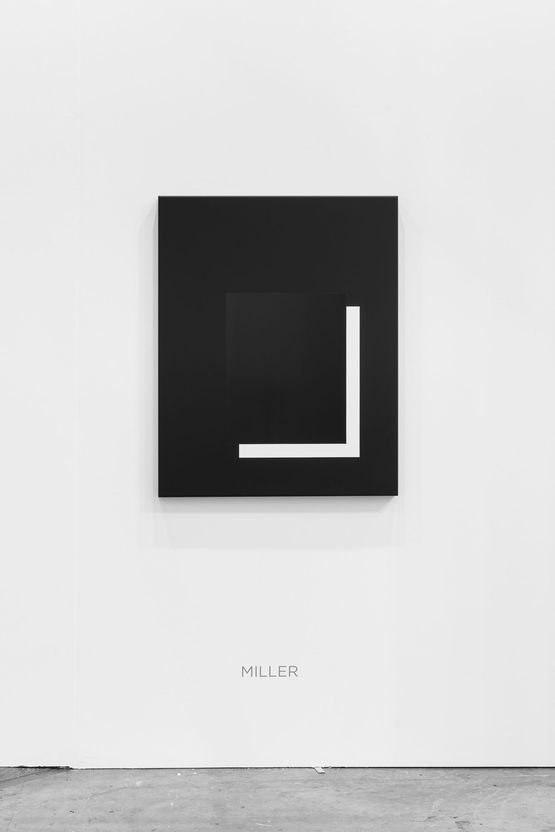
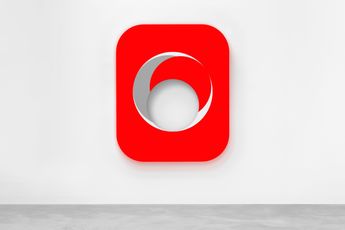
Gerold Miller studied sculpture at the Staatliche Akademie der Bildenden Künste in Stuttgart. His creative roots were firmly planted in the dynamic art scene of Berlin, where he crafted his early signature works - a series of steel (and in some cases steel and stone) structures, some of which were installed outdoors. Graduating in the pivotal year of 1989, an era marked by the fall of the Berlin Wall, Miller’s art evolved into an interactive dialogue between the viewer and the surround- ing space, reaching a creative zenith with the iconic ‘Anlagen’ (composition) series in 1990. A harmonious fusion of sculpture and painting, these works boldly challenge conventional artistic demarcations, inviting the viewer into a dialogue with space, co- lour and form, shifting boundaries and perceptions in the field of contemporary art.

From the outset, Miller was captivated by the concept of the frame, perceiving it as a demarcation between the realms of illusion and tangible reality. This fascination, particularly pronounced in his early creations, led to his quest to deconstruct the classical notion of the image into its fundamental components. Miller explains: “A picture is defined by size, proportion, materials, composition, density, foreground and background. All of these elements are present in my work.”

Regine Schumann

Goslar 1961. Lives and works in Cologne.

From 1982 to 1989, Regine Schumann studied art at the Hoch- schule für Bildende Künste Braunschweig. In 1989, she became a Masters student of Roland Dörfler. From 1986 to 1994, she was a member of the artist group Freiraum, consisting in Frank Fuhrmann, Dieter Hinz, and herself. In addition to numerous schol- arships (including a DAAD-scholarship for Italy in 1990, and a grant from the state of North Rhine-Westphalia for Japan in 2000), and commissions for public artworks, she received the Leo Breuer Prize in 2006.

In her research, Regine Schumann focuses on the effects of light caused by fluorescent materials. Some of the materials she uses are colored polylight-cords, and different colored acrylic panels, which she assembles into complex color spaces in accordance with Goethe’s theory of colors. The artist also uses blacklight to complement other colors. The emphasis of her room-specific instal- lations is the extension of the existing architecture into a dimension of vibration and – as she calls it – the configuration of a room temperature: “The inclusion of sculptural principles as hanging, laying, arranging, conjointing, jacketing is characteristic of the work of Regine Schumann, and leads towards a thinking in colors and color spaces in a spatially experiential plasticity.”

Regine Schumann describes her method of operation thusly: “It’s the material of the colored and fluorescent acrylic glass that takes an important role in my work. The material used illuminates when light energy is supplied to it, whether in the form of natural day- light or artificial light. Differently colored plates depending on the location lead towards a candling, laying, blending, and selection of the light itself.”

Wolfram Ullrich

Würzburg 1961. Lives and works in Stuttgart.

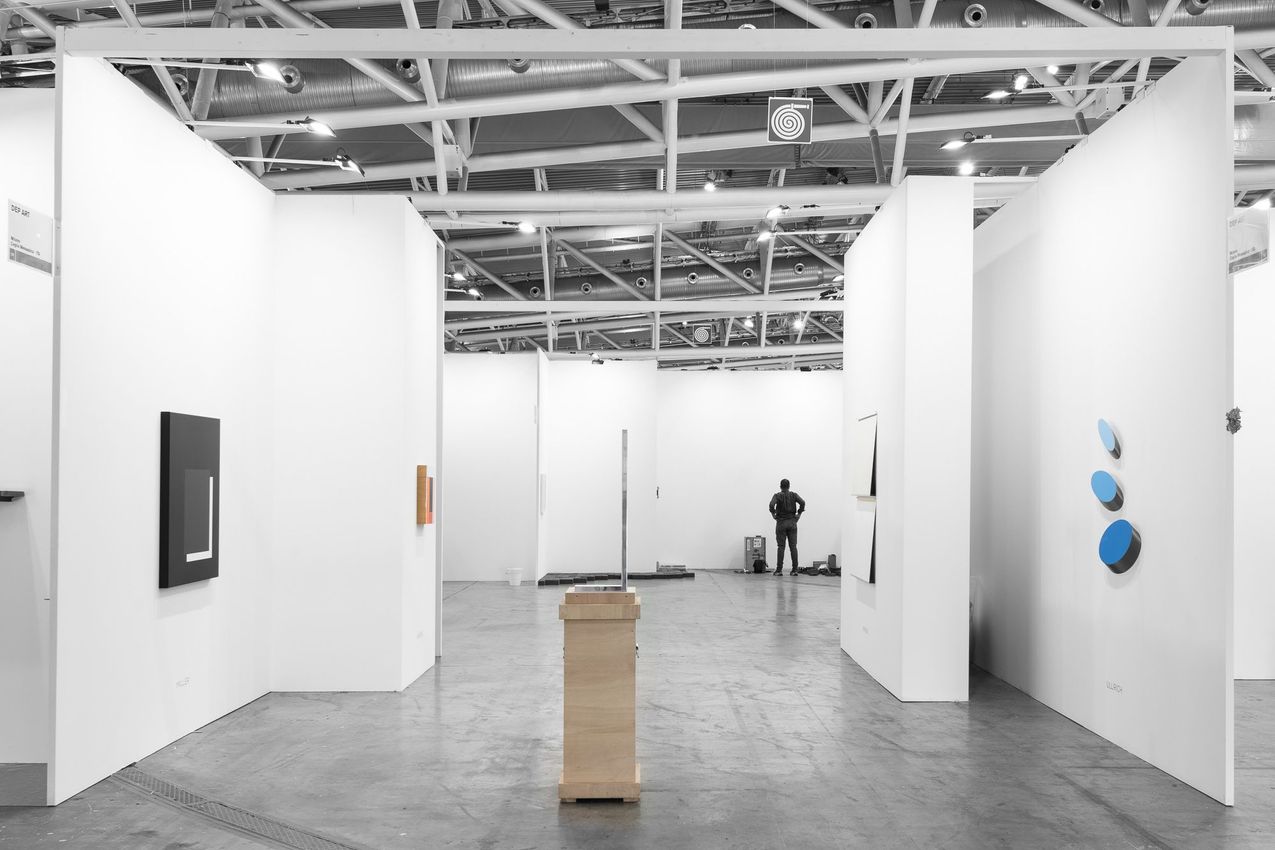
After attending liberal arts high school in his city, in 1980 Ullrich moved to Stuttgart and enrolled at the Staatliche Akademie der Bildenden Künste (State Fine Arts Academy). In the following year, he decided to also attend Art History classes at the Universität Stuttgart, the city’s public university, where he graduated in 1985. Upon completing the academy in 1986, he was given the op- portunity to organize his first solo exhibition as early as 1987 right in Stuttgart. If during his studies his research focused on an amplified notion of painting (he himself wrote, “every painting is also an object”), this became evident from his works starting in the 1980s, where he stood out from the more classic-academic experience since materials alternative to canvas were chosen as surfaces to explore. In the late 1980s, some works were titled Relief, perfectly describing his inclination for three-dimensionality in his new production. Between 1990 and 1992, he won three scholarships including a D.A.A.D. (German Academic Exchange Service) in New York, with which he could work on vaster projects and on large-sale pieces.

His Faltungen (folds) could be dated to 1990, and were made in painted aluminum or steel, which rose up from the wall, and phys- ically conquered the space. In addition to this cycle, throughout the 1990s he created some series of sculptures like, for example, in 1992, the Islands, works in steel which could be described as solid sections on a folded plane. The colors used are almost exclusively primary—Mondrian’s example is still quite alive and influential upon the artist, just as the American minimalists, such as Frank Stella, in addition to, obviously, Concrete Art. Wolfram Ullrich always specifies he studied “painting” and not “sculpture,” and, after his experience with the Islands, or other cycles like Win- dow and Zone, his works once again occupy the space of the wall, though they definitively acquire body and weight. The ma- terial of choice is steel; the works, as the artist himself explains, are literally built by assembling different parts, a process unlike sculpture, where subtraction is key, and so materials like wood are not even conceivable.

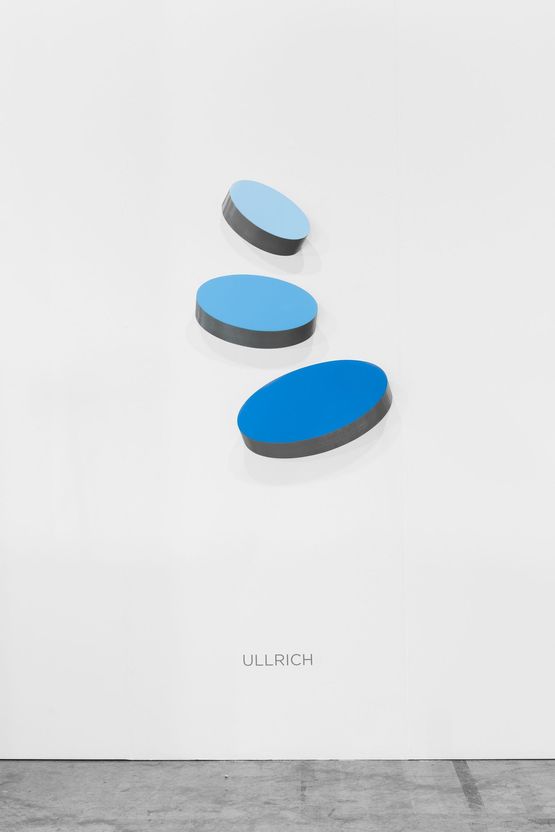
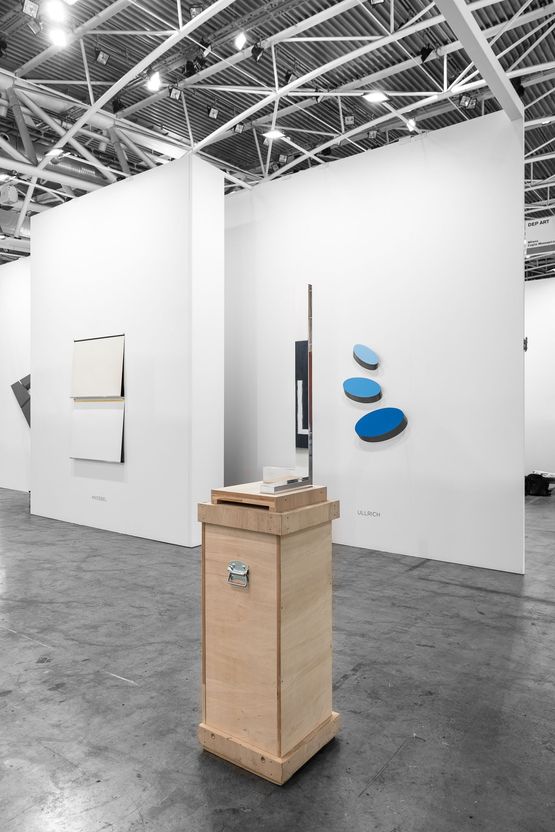
From the year 2000, he started working on single forms, closed polyhedrons where color occupies only the top part, whereas the side, the thickness, leaves the gray steel exposed. Successively, the number of these “segments” increased, the perspectives be- came bolder, and in 2014 the Orbit series was born.

The colors are vibrant, and the layering gives the works a soft, perfect texture. They stand out against the walls, fooling the eye and senses of viewers. Even today, the artist keeps experimenting, constantly taking his investigations one step further: from construc- tion to perception.

Read More

Installation Views

Artists Exhibiting

Also Exhibiting at Dep Art Gallery

The art world in focus