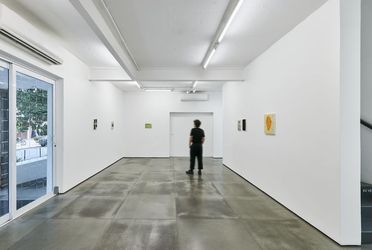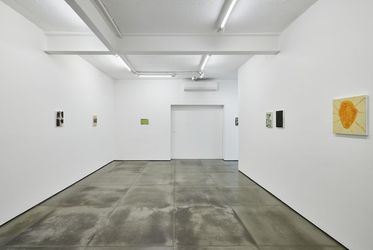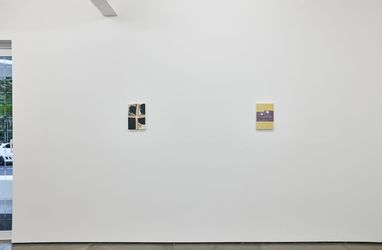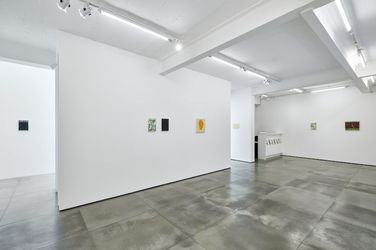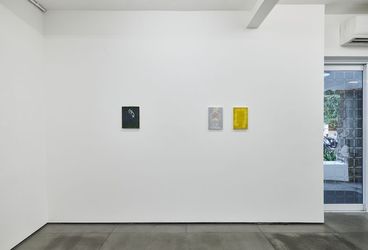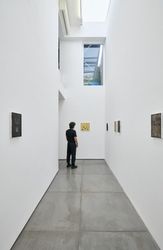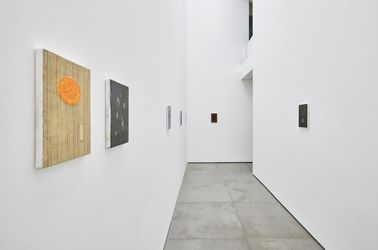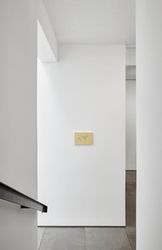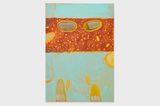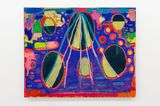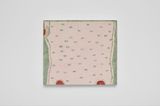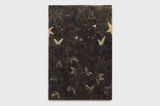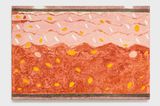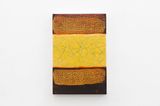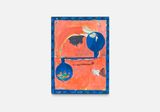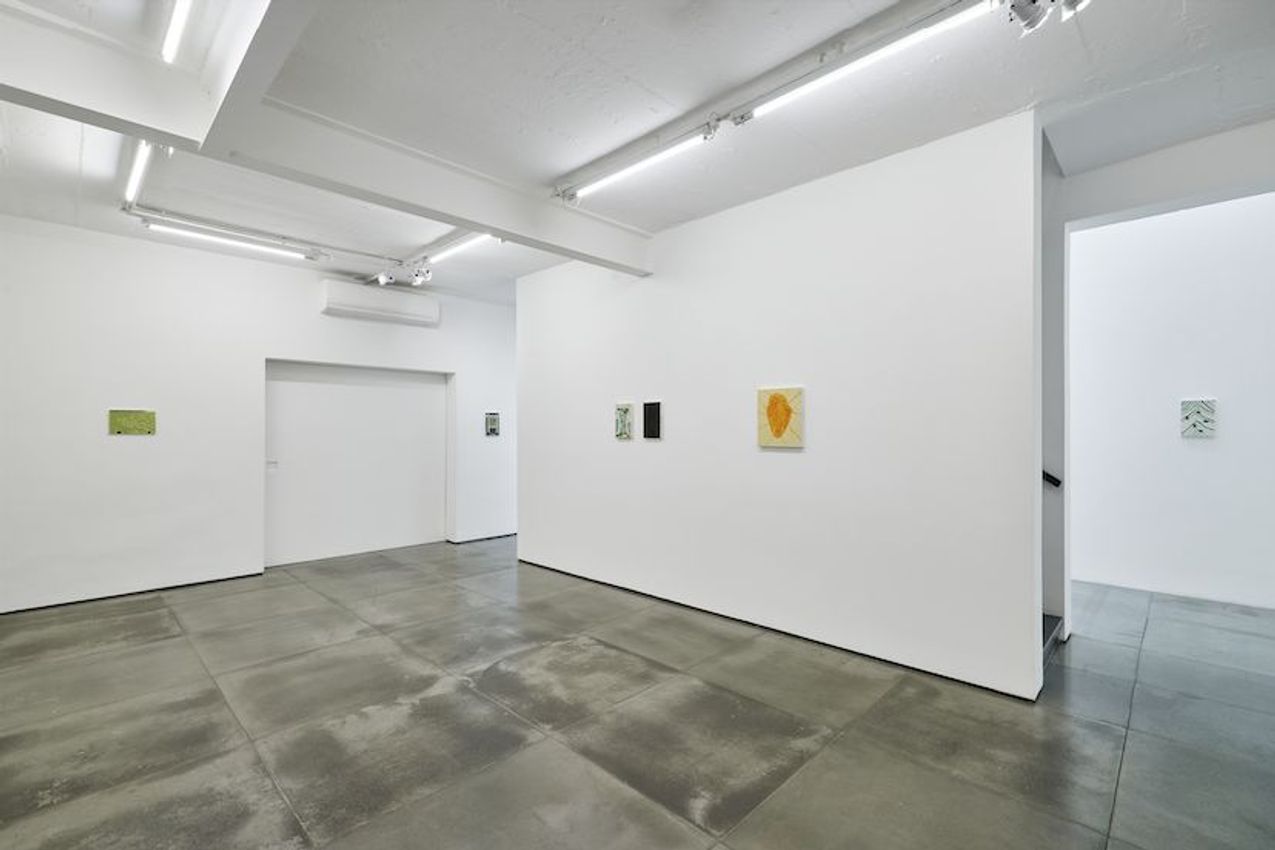
Nara Roesler Rio de Janeiro is pleased to present Pequenas Alegrias, a solo show by Bruno Dunley, with an essay by Pedro França, which brings together around 20 new works by the painter, all in small formats.
The adoption of the small format is one of the main axes of the exhibition. After exploring larger formats over the last few years, resulting in his last two solo shows, Dunley is now turning to works in smaller dimensions. This choice is deeply related to the development of Joules & Joules, the paint factory that the artist created together with his friend and fellow artist Rafael Carneiro. Research into pictorial materials and their properties led Dunley to think of new plastic and visual solutions for his work. In order to explore new paths and possibilities, the artist chose to work in a smaller format, as it allows for a more fluid and experimental aspect in the realisation of his artistic thinking. In the artist’s words, there is a strong ‘drawing’ component in these new paintings. This is not only because of their experimental nature, but also because of the lightness, agility, and gesture that this format allows.
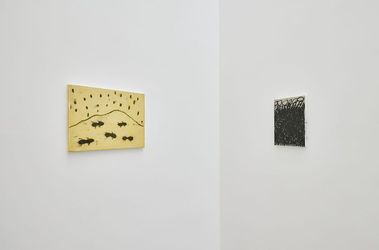
Although they are new, the works in the exhibition revisit earlier moments in Dunley’s career: ‘In 2014, during a trip to Serra da Capivara, I came across a series of drawings and cave paintings made by the first inhabitants of the place. Although they predated the very concept of art and were extremely simple, they were loaded with meaning and fundamental to organising a group’s imagination. At the time [these drawings] had an influence on my poetics, and now they are being revisited.’
Dunley also highlights the fact that, even though they are on a smaller format, the works are full of details: both of a thematic nature, such as figurative elements, remnants of landscapes and beings reduced to essential forms, as well as elements of a technical nature, such as subtle tonal gradations and tactile elements
Nara Roesler Rio de Janeiro is pleased to present Pequenas Alegrias, a solo show by Bruno Dunley, with an essay by Pedro França, which brings together around 20 new works by the painter, all in small formats.
The adoption of the small format is one of the main axes of the exhibition. After exploring larger formats over the last few years, resulting in his last two solo shows, Dunley is now turning to works in smaller dimensions. This choice is deeply related to the development of Joules & Joules, the paint factory that the artist created together with his friend and fellow artist Rafael Carneiro. Research into pictorial materials and their properties led Dunley to think of new plastic and visual solutions for his work. In order to explore new paths and possibilities, the artist chose to work in a smaller format, as it allows for a more fluid and experimental aspect in the realization of his artistic thinking. In the artist’s words, there is a strong ‘drawing’ component in these new paintings. This is not only because of their experimental nature, but also because of the lightness, agility, and gesture that this format allows.
Although they are new, the works in the exhibition revisit earlier moments in Dunley’s career: ‘In 2014, during a trip to Serra da Capivara, I came across a series of drawings and cave paintings made by the first inhabitants of the place. Although they predated the very concept of art and were extremely simple, they were loaded with meaning and fundamental to organising a group’s imagination. At the time [these drawings] had an influence on my poetics, and now they are being revisited.’
Dunley also highlights the fact that, even though they are on a smaller format, the works are full of details: both of a thematic nature, such as figurative elements, remnants of landscapes and beings reduced to essential forms, as well as elements of a technical nature, such as subtle tonal gradations and tactile elements.
Press release courtesy Galeria Nara Roesler


Bruno Dunley was born in Petrópolis, Brazil, and lives and works in São Paulo. His work questions the pictorial premise of painting, in particular, the relations between representation and an individual and collective consciousness. Departing from either found or fictional images, his paintings start as carefully constructed compositions, slowly suffering erasure which, at times, reveal gaps in the apparent continuity of perception. Part of a new generation of Brazilian painters named 2000&8, his work departs from photographs but removes their indexical quality, focusing more on volume and the play of colors in proximity to each other in order to create figures through layers of effacement. The predominance of this minimalist visual language lends a meditative quality to some of his paintings in which, very often, a single color dominates the whole plane.

Founded in São Paulo in 1989, Galeria Nara Roesler is a leading Brazilian gallery dedicated to showing the work of contemporary Brazilian and international artists. The gallery established another branch in Rio de Janeiro in 2014, followed by its first international outpost in New York City in 2015.

A respected voice in contemporary art discourse.
Focusing on ambitious storytelling and insightful art-world commentary. Ocula Magazine publishes in-depth interviews, critical essays and timely analysis on the artists, exhibitions and ideas driving the global art world.
Learn more about Ocula Magazine
Showcasing the best of the art world.
Ocula partners with galleries from around the world to highlight their artists, artworks and exhibitions. Gallery membership is by application and invitation, with each member vetted by an independent panel.
Learn more about Ocula Membership

Specialises in the sale of major artworks.
Led by a team with deep ties to the world’s leading auction houses, galleries and collectors. Ocula’s advisory team offers bespoke services to high-net-worth clients from around the world who are looking to acquire the best of contemporary and modern art.
Learn more about our team and services