Press Release

Nara Roesler New York is pleased to present Tomie Ohtake: The Ultimate Works. Curated by Luis Pérez-Oramas, the exhibition brings together a series of white works produced during the later years of the artist’s life and works from her “blind paintings” series. “It is these two dialectical poles—the blackness of closed eyes that led Tomie toward some of her earliest white paintings and the blind whiteness of her final work—that this exhibition seeks to bring together, tying the artistic and vital thread of the artist’s life, her earliest works and those produced in her later years,” writes Pérez-Oramas.

Born in Kyoto in 1913, Tomie Ohtake moved to Brazil in 1936 and began painting in the 1950s under the guidance of Japanese artist Keiya Sugano. After an initial period devoted to figurative studies, she turned to abstraction. Between 1960 and 1963, she created the works that would become known as “blind paintings”. The experiment, suggested by critic Mário Pedrosa, consisted of painting while blindfolded, giving greater scope to intuition and sensitivity during the creative process.”

In the 1970s and 1980s, Ohtake developed a visual language characterised by organic forms, monochromatic fields, and subtle colour gradations, which would later extend to sculpture and public spaces. Throughout her career, she participated in twenty international biennials, including six editions of the São Paulo Biennial, where she received the Itamaraty Award, as well as the Venice, Tokyo, Havana, and Cuenca biennials. Her work is included in collections such as the Museum of Modern Art (MoMA), the Metropolitan Museum of Art, Tate Modern, the San Francisco Museum of Modern Art, and M+.

The Ultimate Works revisits the “blind paintings” to establish a fundamental connection between two distant moments in Ohtake’s body of work. While in her early works the artist begins with the “darkness” of covered eyes in search of a new form of visibility, in her later paintings she arrives at dense, opaque white fields. For Pérez-Oramas, “that initiatory and “Zen” darkness of vision, the voluntary blindness in search of a new visibility arising from the entire body rather than from the eyes alone, reaches its culmination at the end of the artist’s life in the absolute white of her final paintings and sculptures. In this sense, these works are not merely “ultimate” chronologically; they also possess a recapitulative power, an “ultimacy” in which the entirety of a century-spanning body of work comes to be synthesised in a kind of chromatic “kenosis”, a becoming-nothing—or only white—in order to become everything: ultimate fields for ultimate lines”.

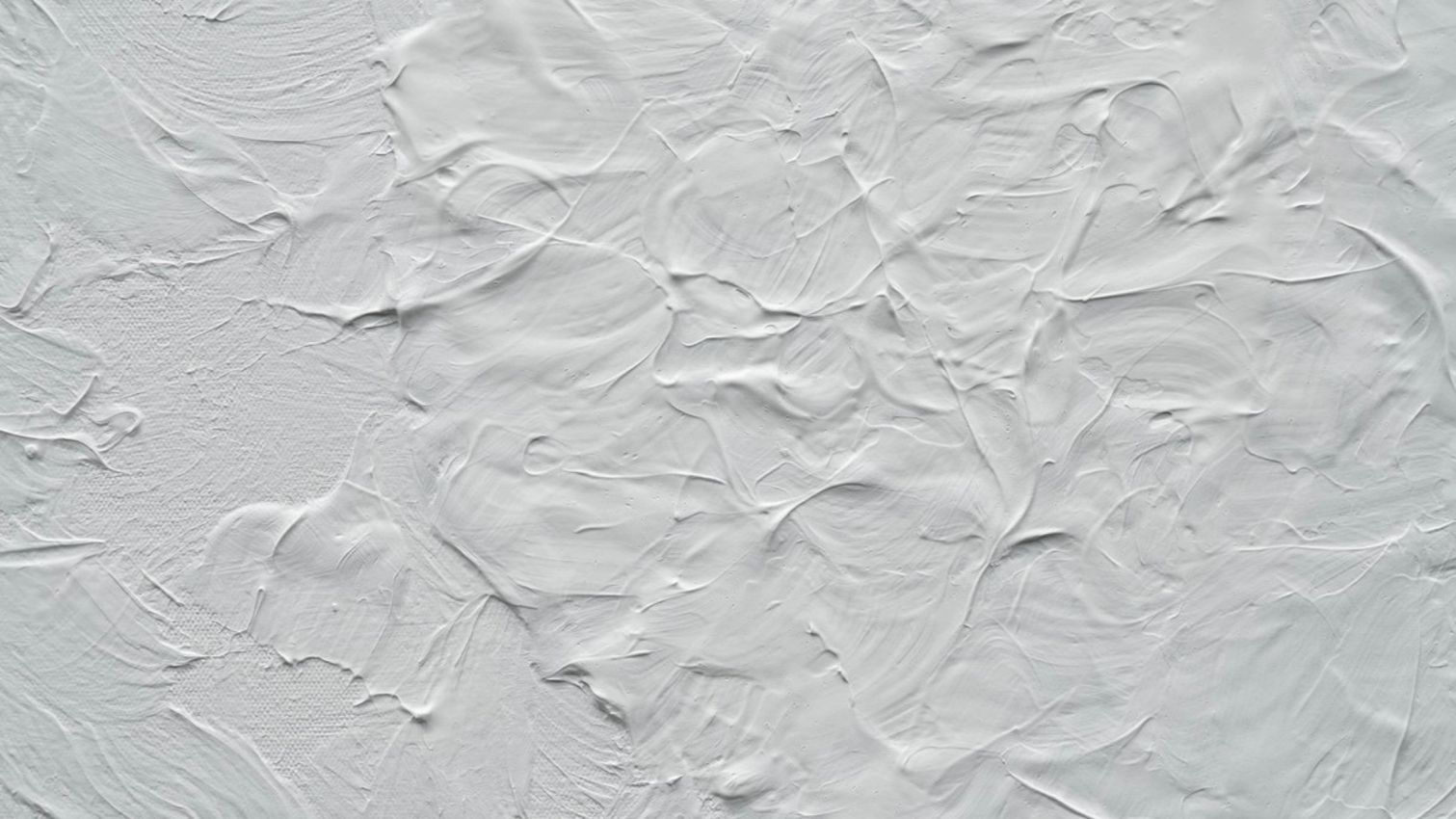
In the white paintings, layers of paint overlap and accumulate, creating thicknesses that make the forms emerge from the surface. Viewed from a distance, the works appear as monochromatic fields; up close, they reveal reliefs. The brushstroke, rather than remaining merely a mark on the surface, creates relief and casts shadows onto the painting itself, revealing its almost sculptural dimension: the colour thickens, concentrates, and, ultimately, seems to contain all colours and none of them at the same time.

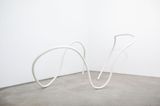
The gesture that runs through these canvases also takes on a three-dimensional dimension in the sculptures presented in the exhibition. Crafted from white tubular steel, they bring into the space the movement previously inscribed on the surface of the painting. Their organic forms twist and intertwine, creating the impression of a thread suspended in the air. The tubular structure creates varying effects of light and shadow, as if it were possible to physically grasp the brushstroke itself. The movement winds through the exhibition space and maintains, in three dimensions, the continuity of the painterly gesture.

In these works from the latest year of her life, Tomie Ohtake reaches one of the most consistent moments of her entire career. The shades of black associated with the voluntary blindness of her early career ultimately meet the white of her canvases and sculptures. Between these two extremes, the exhibition invites viewers to interpret Tomie Ohtake’s career as a continuous exploration of the limits of perception.

Read More

Installation Views

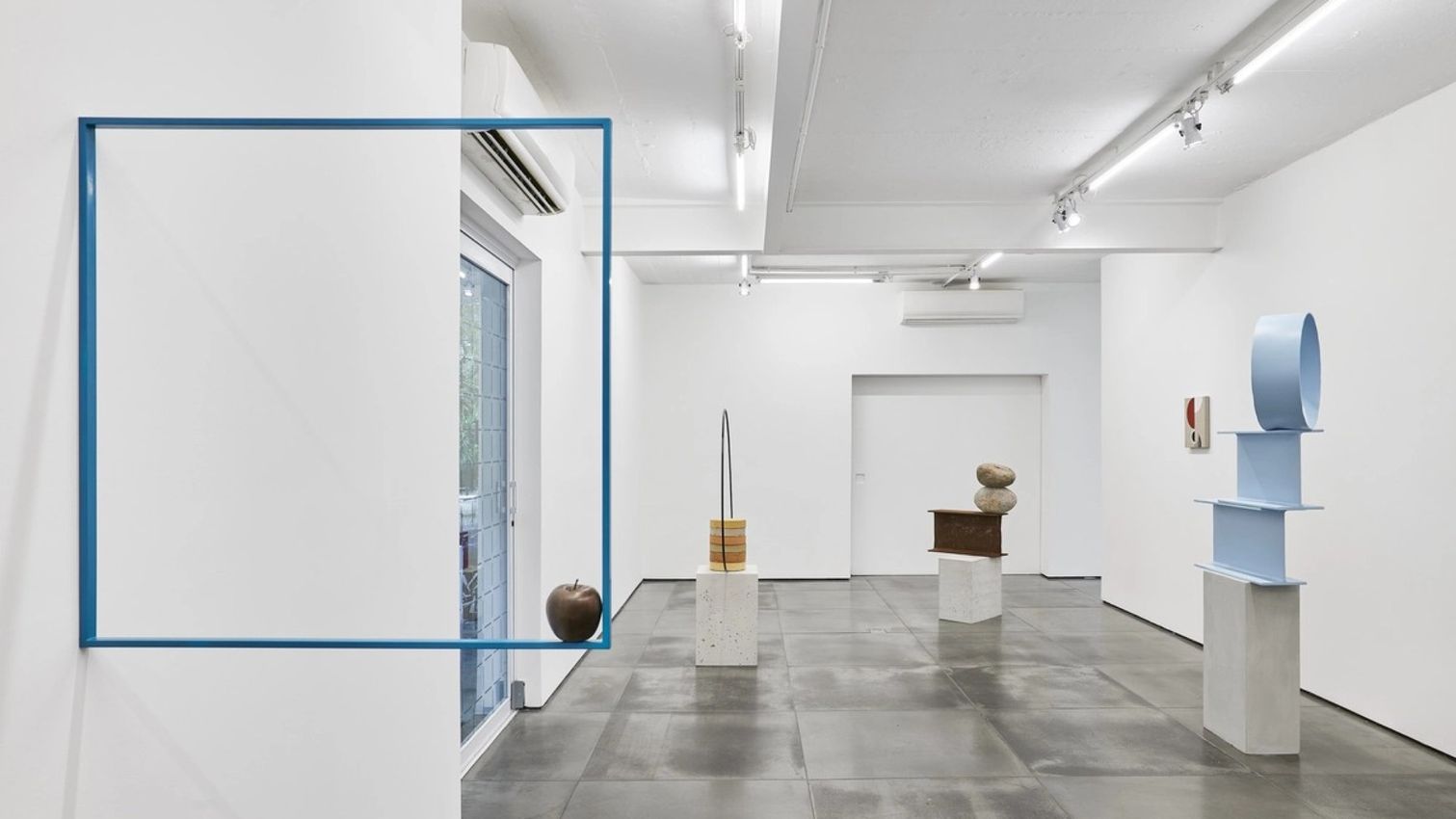
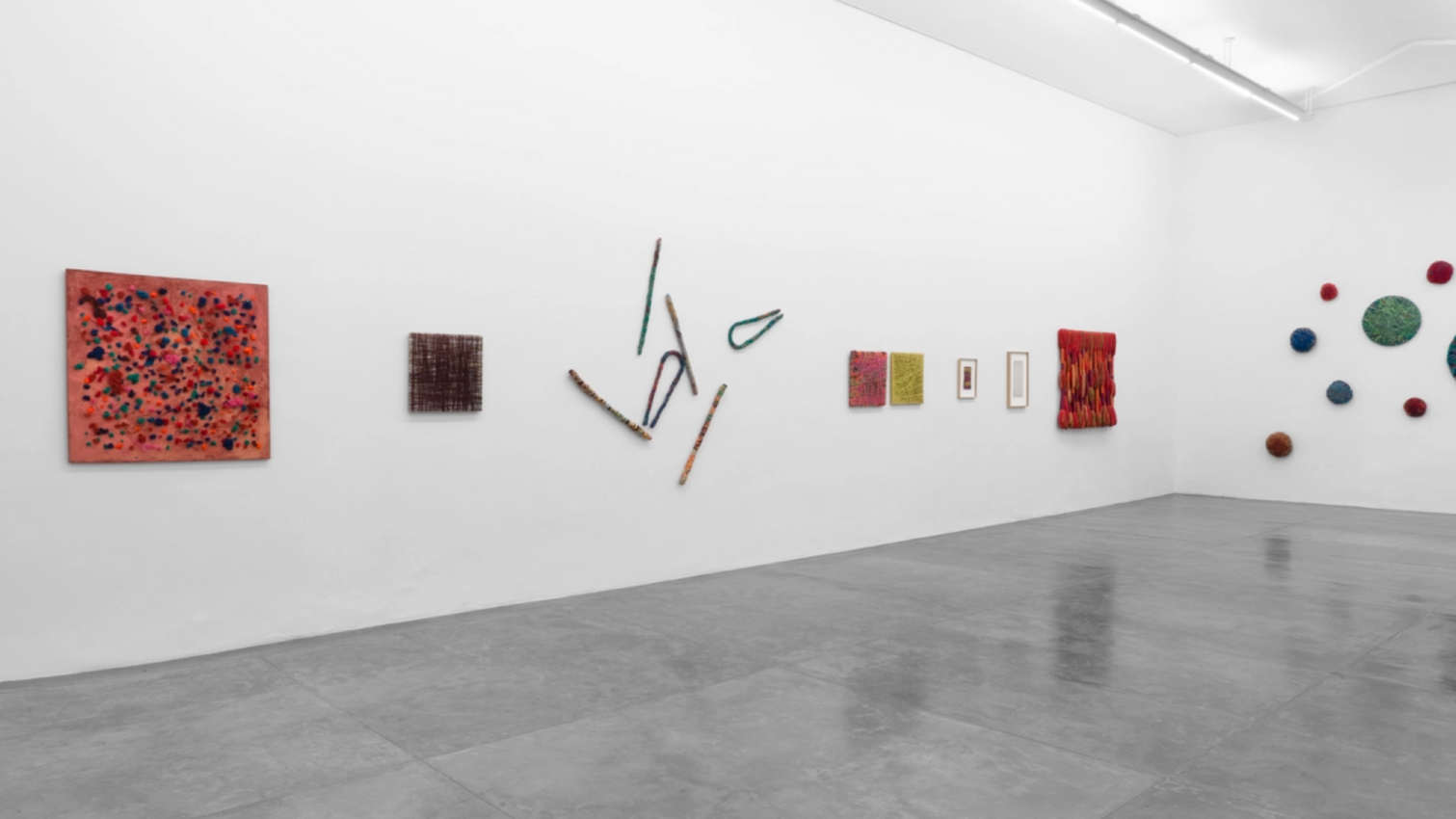
Exhibition view: tomie ohtake, the ultimate works, Galeria Nara Roesler (10 September–24 October 2026). Courtesy Galeria Nara Roesler.
About the Artist

One of the main representatives of abstract art in Brazil, Tomie Ohtake (b. 1913, Kyoto, Japan - d. 2015, São Paulo, Brazil) moved to Brazil in 1936. Her career as an artist began in the 1950s under the guidance of Japanese artist Keiya Sugano. After an initial phase focused on figurative studies in painting, she began to explore the abstract. During this period, she created a series of works known as “blind paintings”, in which she painted blindfolded. This practice was suggested by the critic Mário Pedrosa, one of the main theoreticians of the Brazilian neo-concrete movement, emphasizing sensitivity and intuition in his practice.

View Artist Profile

Also Exhibiting at Galeria Nara Roesler

About the Gallery

Founded in São Paulo in 1989, Galeria Nara Roesler is a leading Brazilian gallery dedicated to showing the work of contemporary Brazilian and international artists. The gallery established another branch in Rio de Janeiro in 2014, followed by its first international outpost in New York City in 2015.

View Gallery Profile
Address
Avenida Europa 655
JD Europa
São Paulo
Brazil
Opening Hours
Mon - Fri, 10am - 6pm
Sat, 11am - 3pm
Book your visit via the link or by emailing agendamento@nararoesler.art
(1)
São Paulo Avenida Europa 655, JD Europa
Galeria Nara Roesler
Avenida Europa 655, JD Europa, São Paulo, Brazil
+55 112 039 5454
http://www.nararoesler.art

Opening hours
Mon - Fri, 10am - 6pm
Sat, 11am - 3pm
Book your visit via the link or by emailing agendamento@nararoesler.art
The art world in focus