



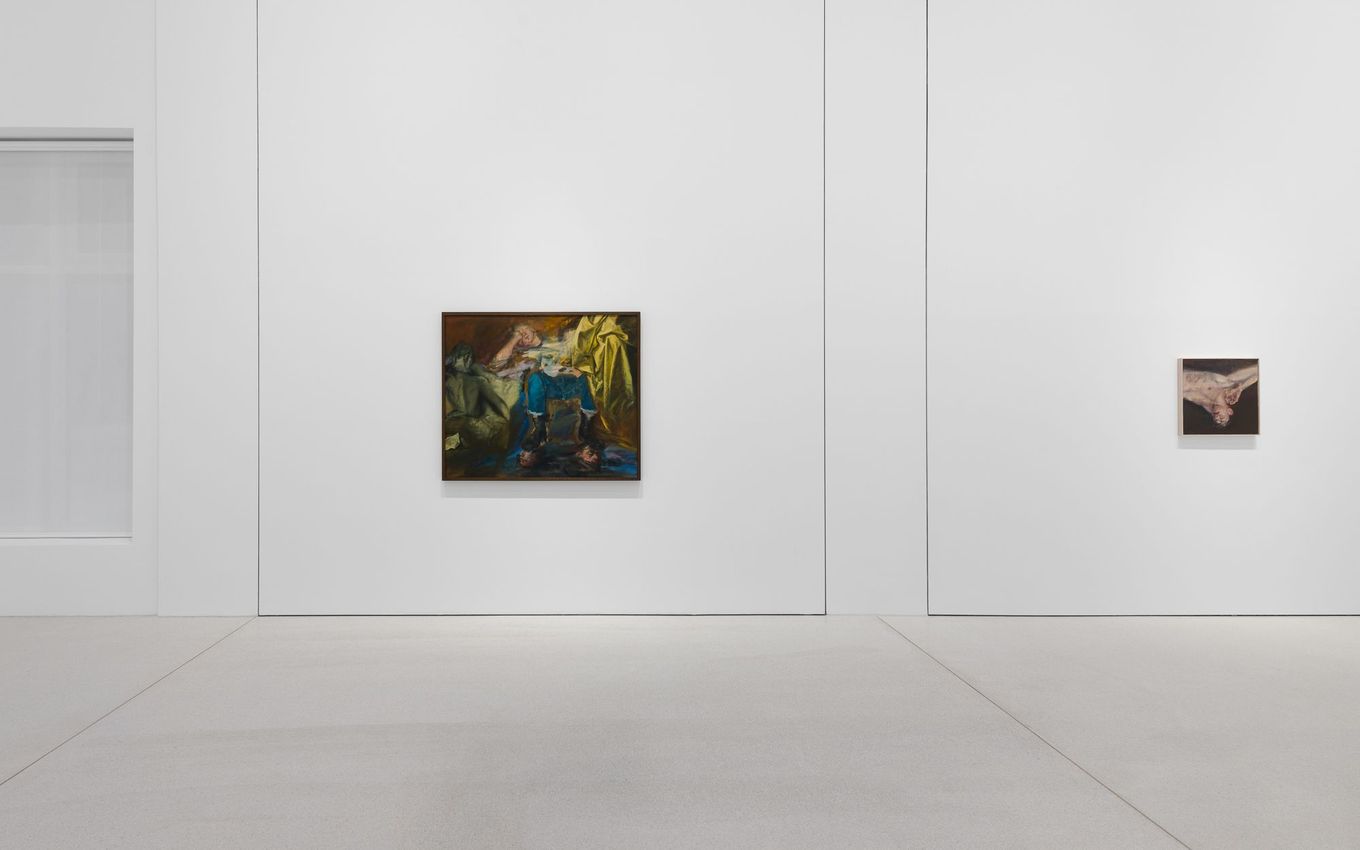
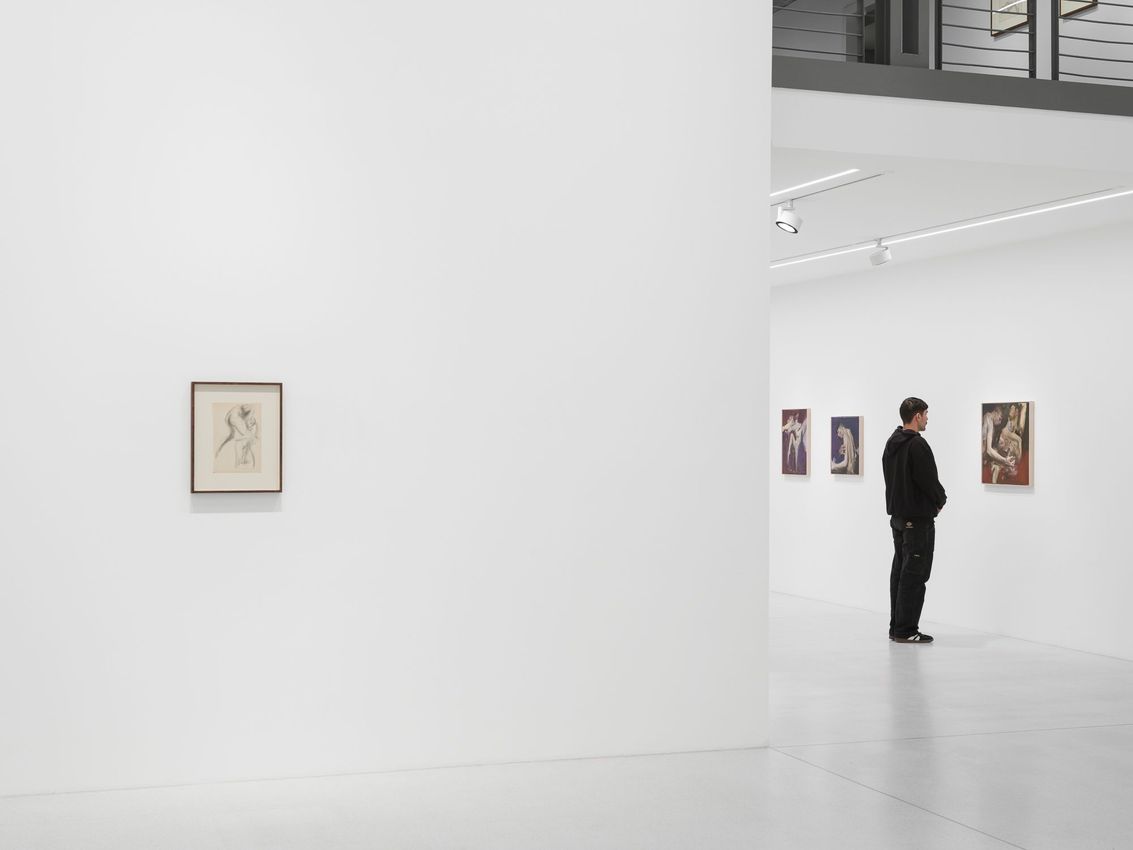
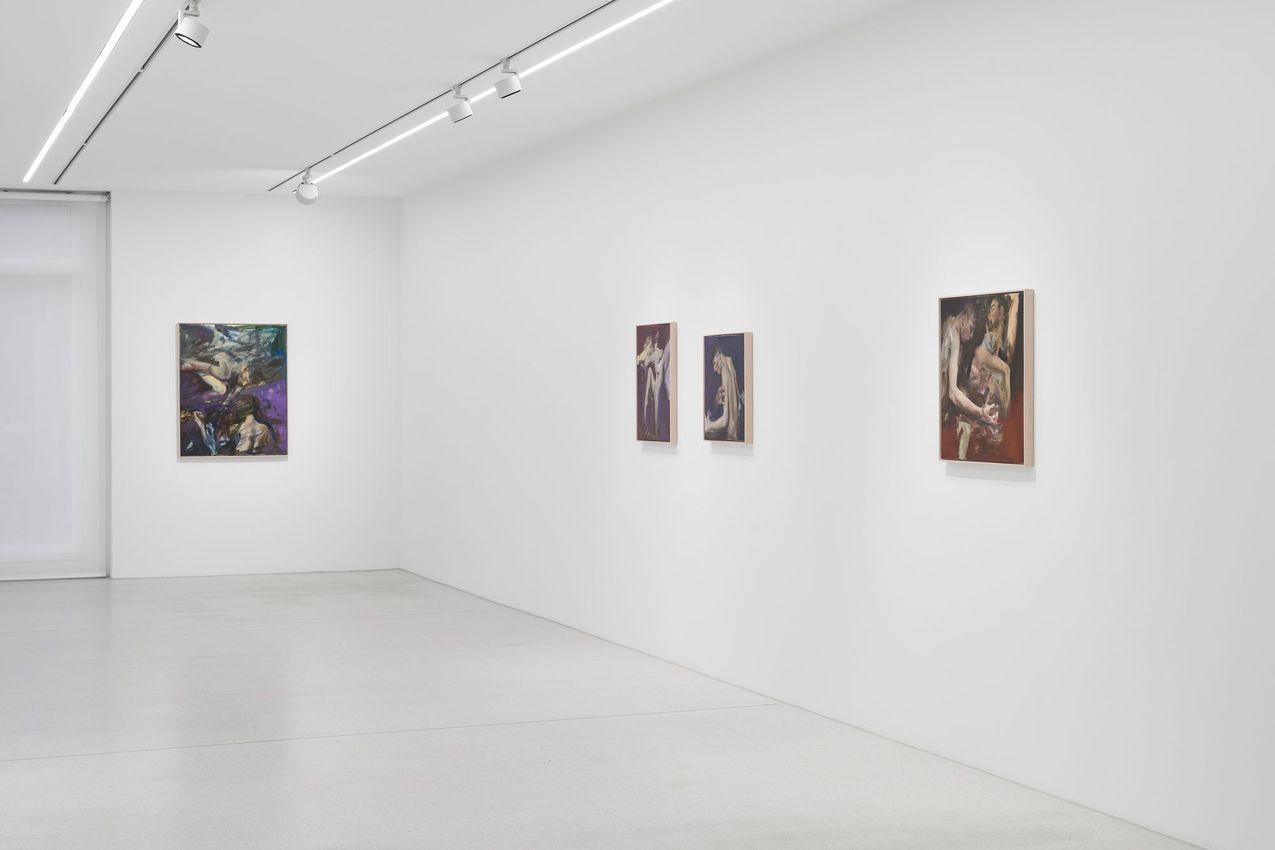
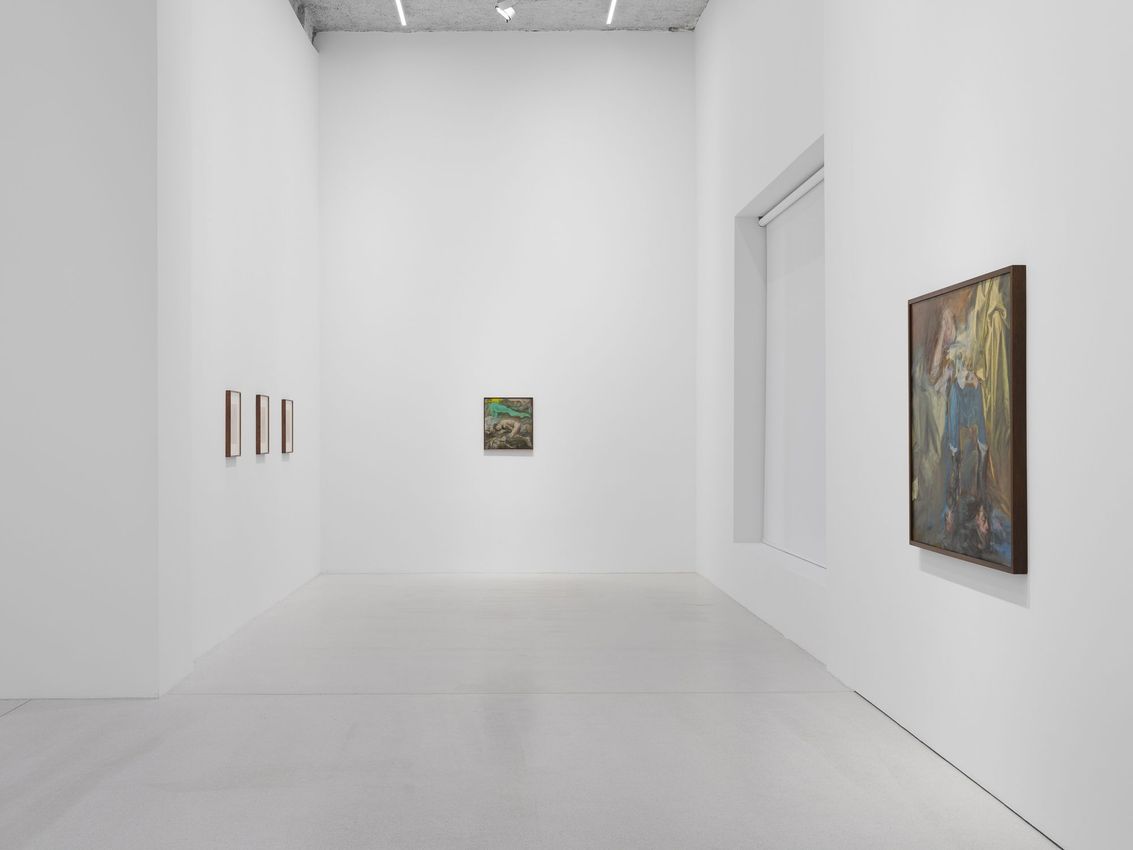
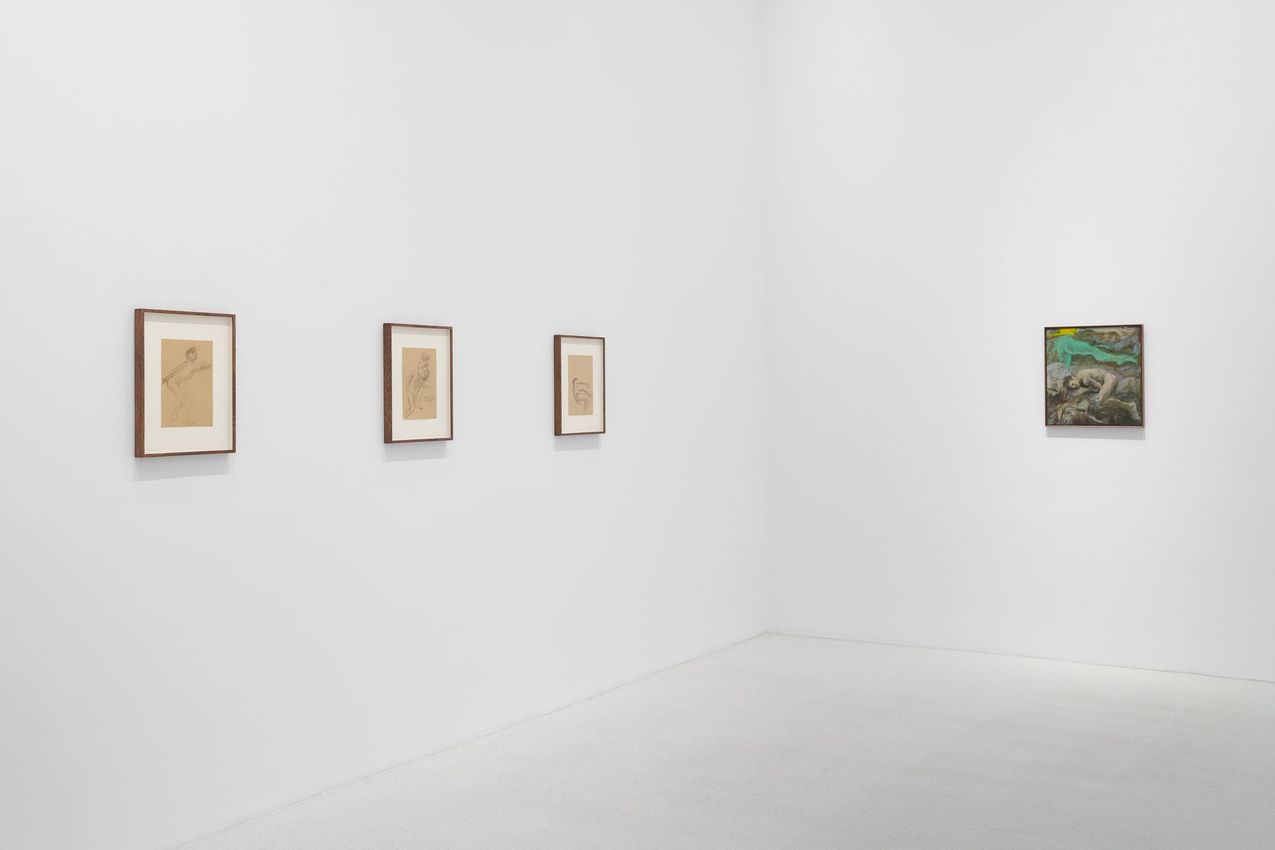
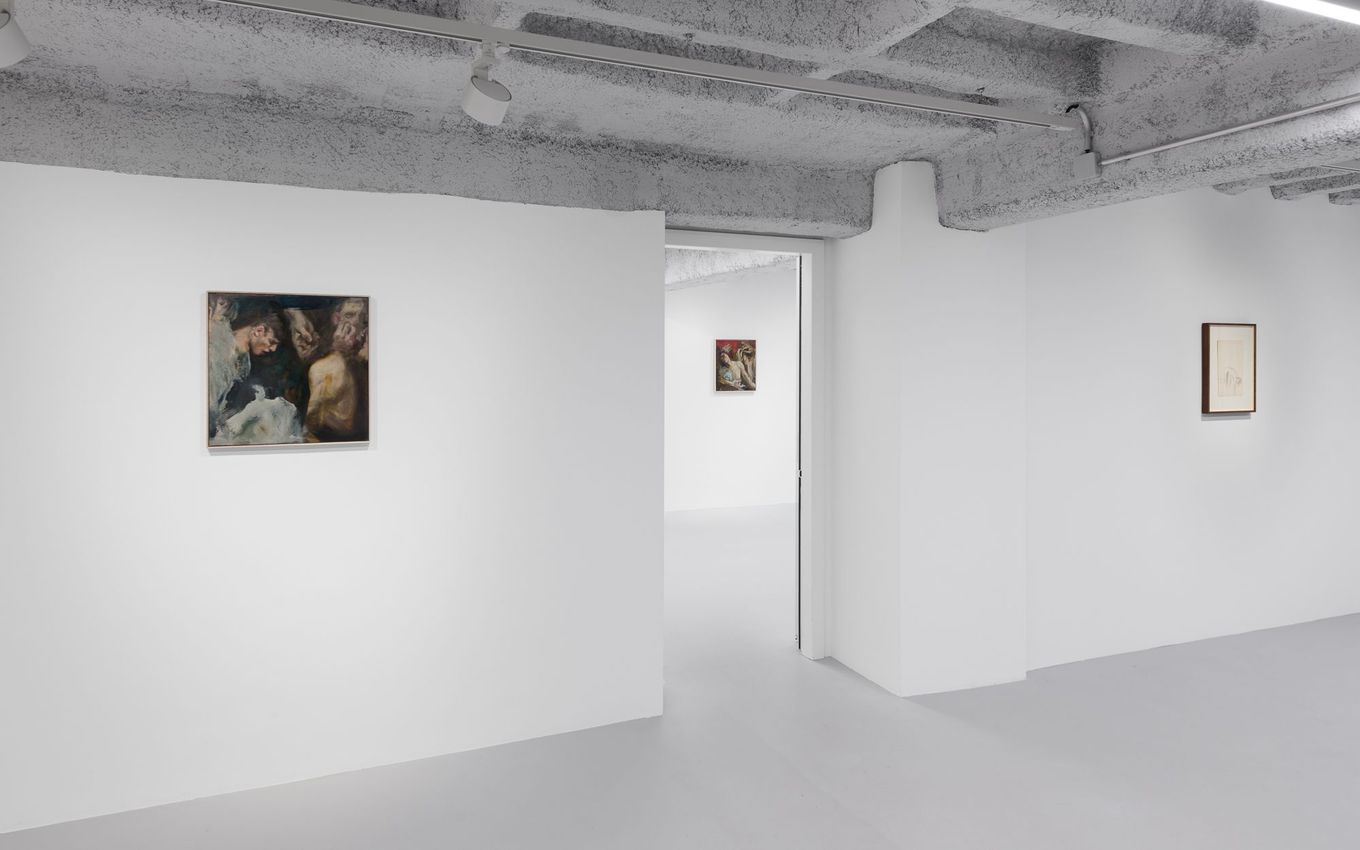
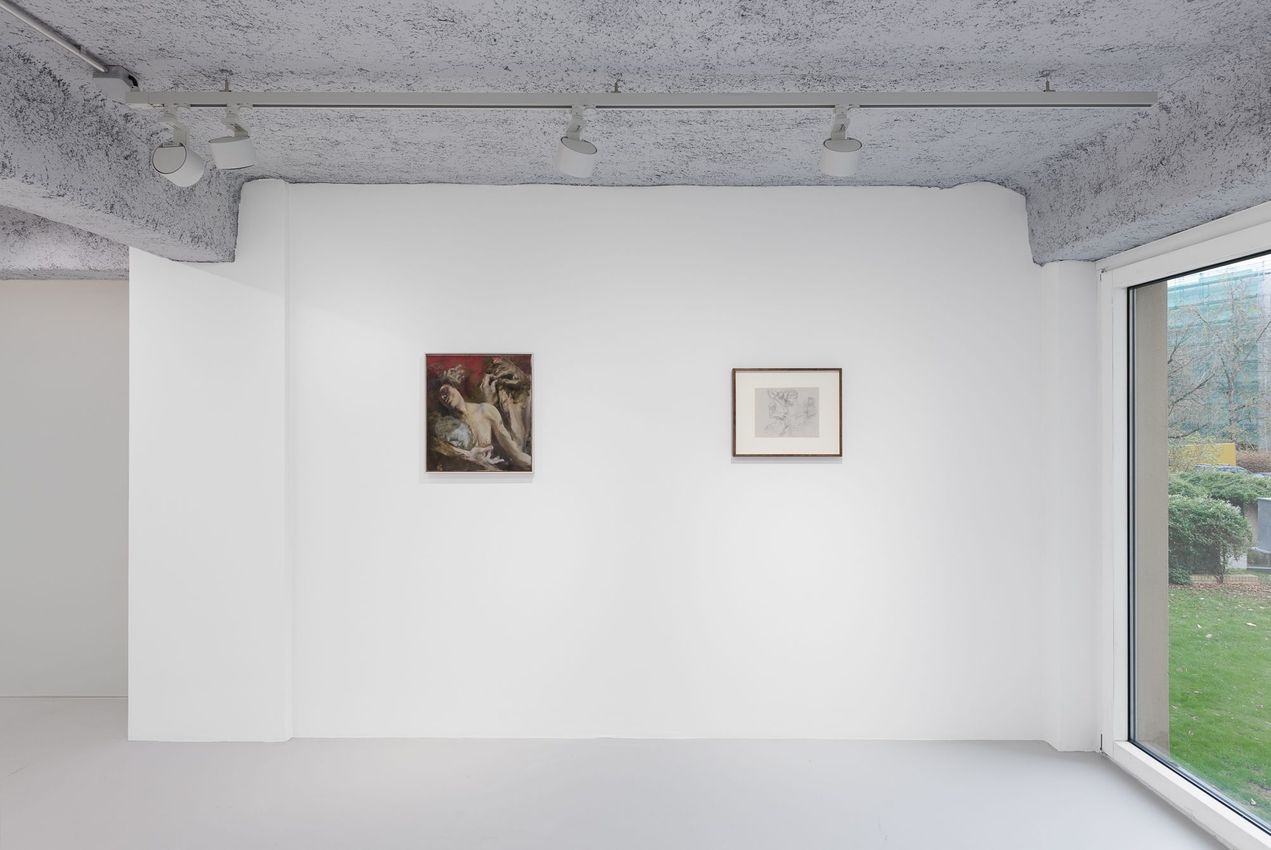
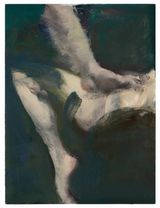
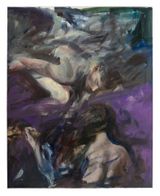
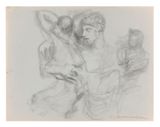
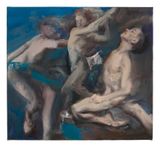
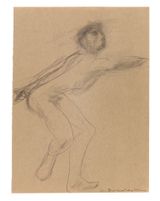
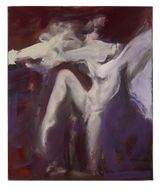
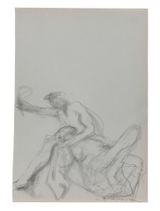
Galeria Plan B is delighted to present Cornel Brudascu’s second solo exhibition with the gallery, featuring a selection of his most recent paintings and drawings. The following text by Kristian Vistrup Madsen is an excerpt from the upcoming monograph on Cornel Brudascu.
‘Cornel Brudascu, painter, born in 1937, has lived in Cluj-Napoca almost his entire life, since a scholarship to the city’s art school allowed him to leave his paternal village. The one-story bungalow that doubles as his home and workspace used to be the porter’s house for the compound of stateowned artist’s studios with which Brudascu shares a lush garden. The studios – two massive stone buildings – are done in a swish neoclassical style; a testament to the respect bestowed on artists during communism. Brudascu’s house is more modest. He sits outside in the morning when the sun hits the square of pavement in front. Already in early May, flowers blossomed in the garden.
On this morning, the retired security agent, who for two decades until Christmas 1989 had been assigned Brudascu’s case, came by to say hello. ‘Why don’t you ever visit anymore’, the Maestro joked, ‘you used to visit all the time.’ Later on, I asked if there was not some animosity between them, but no. The humour of this exchange does not disguise a darker truth, but simply sits inside it, naturally and unperturbed. In a way, they were colleagues, companions. Time and routine breed pockets of levity, among other things. (Brudascu has occupied this place in the sun for more than forty years.) Levity and a rare type of elegance the crucial ingredient of which is dignity, integrity. A fine congruence, a balance between inside and outside.
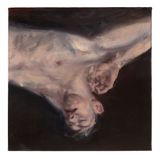
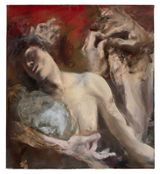
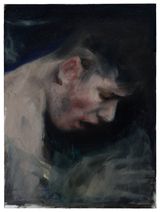
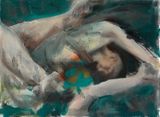
This is not to say that a person of integrity is one without secrets, or one on whose sleeve their inner life might be read. Far from it. Inside Brudascu’s studio are countless painted canvases flashing shades of violet, mauve, jade, and deep royal blue. Body parts tumble across them, legs, arms, hands, the pale faces of young men with brown hair contorted into expressions of sexual pleasure or physical pain. The colours belong to the background, a non-space, or to luxurious bundles of fabric as we could know it only from the history of painting: crumpled, shiny, in excess. It is the fabric of Mary’s blue gown in Konrad Witz’s pietà (1440). The naked body of Jesus rests on top of it, white and thin, with his eyes closed and his mouth slightly ajar. It is not just the fabric that is imbued with religious grandeur in Brudascu; in the passion of his youths we might easily recognise both the agony of Christ and his devotion. Brudascu’s works are not religious per se, but they are full of its themes: the flesh in combat with the spirit; the mystical and the transcendent; what is known in theatre by the roundabout formulation ‘suspension of disbelief’ and in Christianity simply as ‘faith’. Inside Brudascu’s studio is another world, because without territory, sprawling and infinite, and yet sovereign; contained within itself and within every single individual canvas. Far from the ancient city of Cluj-Napoca and still nestled perfectly, effortlessly within it.
In this world, some of the beautiful boys – Greek noses, full mouths – are alert with interest, and yet remain apart in this separate sphere of theirs. Pointing to one of them, I asked the artist, ‘What is this look on his face, what does he feel?’. Seeming somewhat averse to putting words to his art, Brudascu told me nothing. ‘Suspicion, anticipation?’, I offered, ‘fear?’. ‘He’s focused’, he contended, finally, ‘he is a dancer’. Of course. Brudascu’s men belong to the stage. They are elevated; they are other. At least for a night, as long as the set stands, until the curtain falls. Captured in Brudascu’s painting is the face of a dancer, waiting in the wings, about to take off. It is the sort of moment that contains a lifetime; a moment that anticipates transformation. There is magic in transformation, in movement, the magic of beauty, as incidental and exclusive as genius; it makes princes of the ones who have it.’
Cornel Brudascu, born 1937 in Tusa, Romania, lives and works in Cluj-Napoca. He studied at the Institute of Arts Ion Andreescu in Cluj, graduating in 1962.
Selected institutional exhibitions include: Mirrors of the Portrait, Highlights of the Centre Pompidou Collection, Vol. III, West Bund Museum, Shanghai (2023); Looking Anew and Beyond, Taubman Museum of Art, Roanoke (2023); Stefan Bertalan, Cornel Brudascu, Mircea Spataru, Muzeul National de Arta al Moldovei, Chisinau (2023- 2024); Avangarda si Contemporaneitate, Muzeul Județean de Artă, Centrul Artistic, Baia Mare (2023); De leur temps (7), FRAC Grand Large - Hauts-de-France, Dunkirk (2023); YOU FEEL – AND DRIFT – AND SING, National Museum of Contemporary Art (MNAC), Bucharest (2021); Secret Wing, Art Encounters Biennale, Timisoara (2021); Collection display, Musée d’art moderne, Paris (2020); HABITER L’INTIME, Fondation Thalie, Brussels (2019); Flesh and Bone, PS120, Berlin (2019); Ex-East, past and recent stories of the Romanian Avant-Garde, Espace Niemeyer, Paris (2019); Une saison roumaine au Centre Pompidou, Centre Pompidou, Paris (2018); Life – A User’s Manual, Art Encounters Biennale, Timisoara (2017); The World Goes Pop, Tate Modern, London (2015); Burning Down the House, 10th Gwangju Biennale, Gwangju (2014); East of Eden - Photorealism: Versions of Reality, Ludwig Museum of Contemporary Art, Budapest (2011); Romanian Cultural Resolution, Baumwollspinnerei, Leipzig (2010); The Museum of Painting, The National Museum of Contemporary Art (MNAC), Bucharest (2005).
Cornel Brudascu, born 1937 in Tusa, Romania, lives and works in Cluj-Napoca. He studied at the Institute of Arts Ion Andreescu in Cluj, graduating in 1962.
Plan B was founded in 2005 in Cluj, Romania, on the initiative of Mihai Pop and Adrian Ghenie as a production and exhibition space for contemporary art. The gallery program focuses on researching Romanian art from the past 50 years, highlighting the work of remarkable artists who have had little to no international exposure.

A respected voice in contemporary art discourse.
Focusing on ambitious storytelling and insightful art-world commentary. Ocula Magazine publishes in-depth interviews, critical essays and timely analysis on the artists, exhibitions and ideas driving the global art world.
Learn more about Ocula Magazine
Showcasing the best of the art world.
Ocula partners with galleries from around the world to highlight their artists, artworks and exhibitions. Gallery membership is by application and invitation, with each member vetted by an independent panel.
Learn more about Ocula Membership

Specialises in the sale of major artworks.
Led by a team with deep ties to the world’s leading auction houses, galleries and collectors. Ocula’s advisory team offers bespoke services to high-net-worth clients from around the world who are looking to acquire the best of contemporary and modern art.
Learn more about our team and services
