






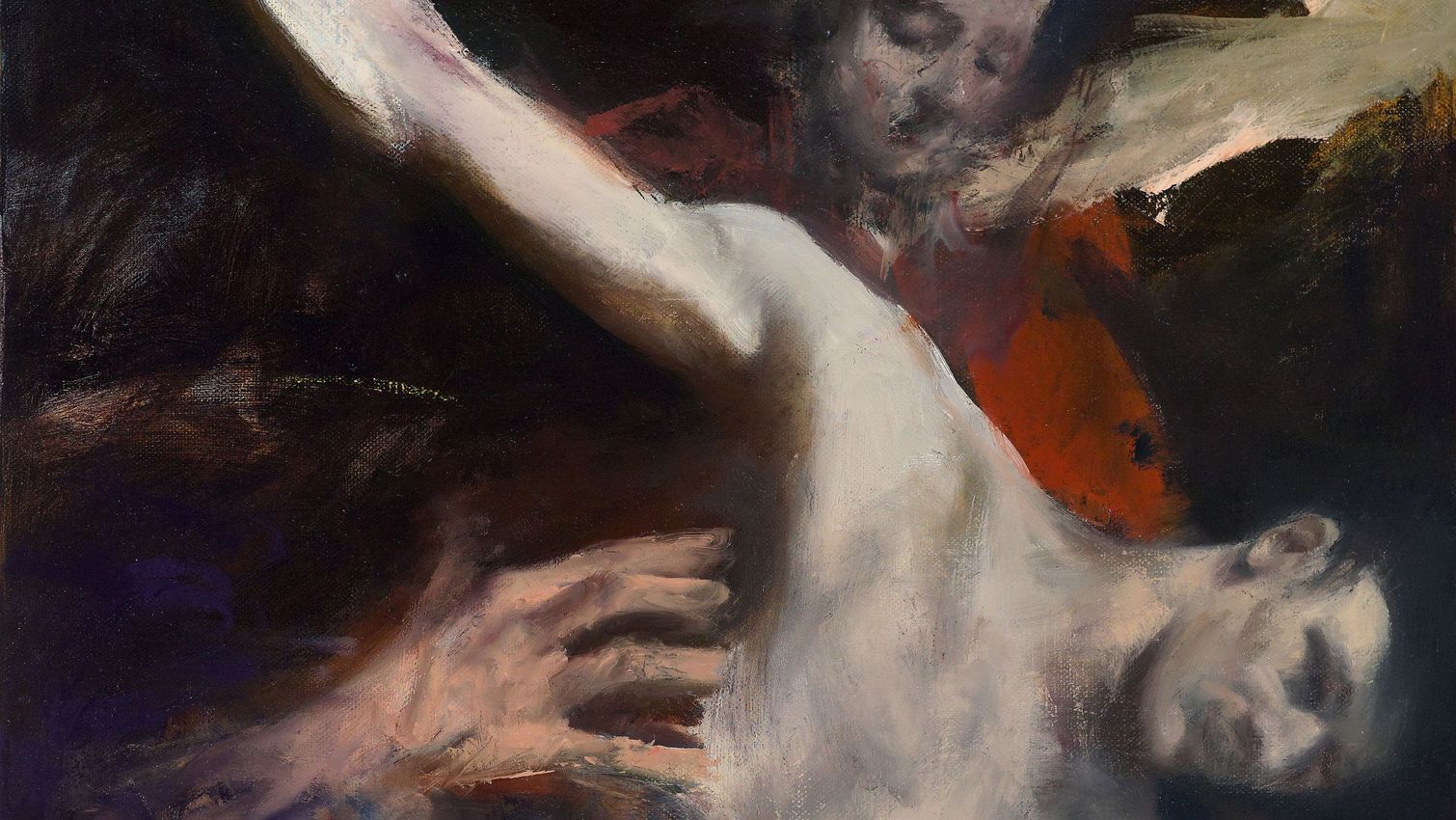
CORNEL BRUDASCU
b. 1937, RomaniaOne of the few Romanian artists associated with Pop Art, Cornel Brudaşcu is an important representative of the neo-avant-garde. As a gay man in 1970s Romania, Brudaşcu was not able to live openly; it was only following the collapse of Communism that his work focused on male nudes. His work became more widely known outside Romania when it was included in The World Goes Pop (2015) at Tate Modern in London.
Early Years
Cornel Brudaşcu was born in 1937 in Tusa, Romania and studied at the Institute of Arts Ion Andreescu in Cluj-Napoca, graduating in 1962. Living and working in Nicolae Ceaușescu’s Romania during the 1970s, Brudaşcu’s practice was partially constrained by the ideology of the time: he painted portraits of friends and family and works that celebrated the building of a Communist society, but his bright colour palette and experimentation with solarised photography set him apart. He was also influenced by contemporary American art: even though travel abroad was banned, he was able to learn about art through Western magazines (for example, the German publication Popcorn.
Cornel Brudaşcu: Artworks
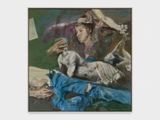
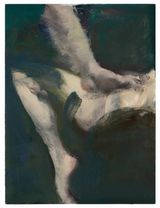
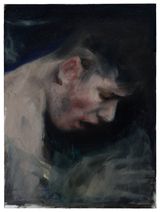
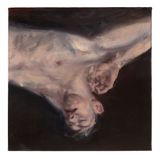
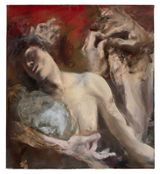
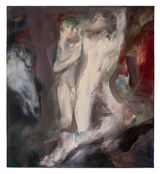
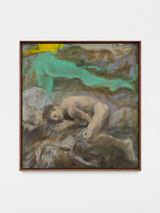
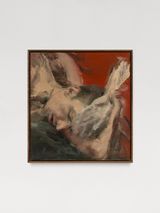
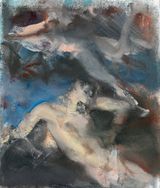
Blending realism and modernism, Cornel Brudaşcu’s portraits capture their subjects’ physicality, perhaps toying with concepts of sexuality via small suggestions in the figures’ expressions. His exploration of movement—certainly in his later works, featuring male nudes—conjures a post-Impressionist mood: bodies painted in oils occupying space on rich fabrics.
- In 1970, Brudaşcu painted Guitarist, Youth On the Building Yard, Composition, Group Portrait and Portrait—all these works were Pop Art-adjacent in their use of block colour but stand apart from the movement because of their blurred edges. He used family members and close friends as inspiration and subject, and his practice was also influenced by the country’s Communist rule during that period: for example, Youth on the Building Yard, represents the ideological drive at the time to promote the construction of a new Communist society.
- Despite the well-worn subject matter, the ethereal edges and staged presentation of Brudaşcu’s paintings of flowers (for example, 1979’s Poppies, or his 1980s’ Anemones) suggest possibilities of life beyond the everyday reality of Communist Romania.
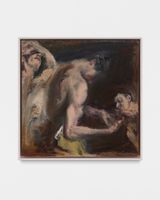
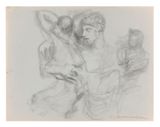
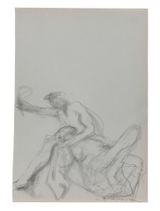
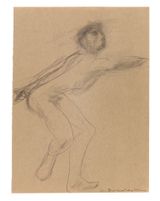
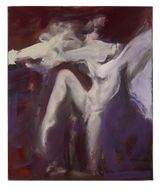
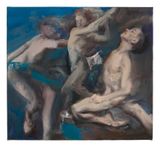
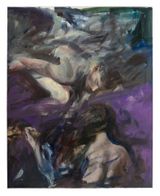
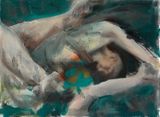
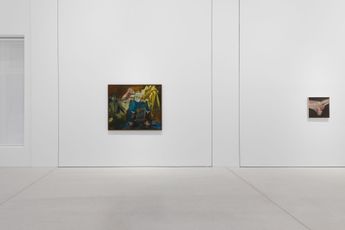
- As the 1990s dawned, Brudaşcu changed his style and concentrated on the male nude, using gestural brushstrokes to depict writhing limbs, somersaults and dancing. His Untitled paintings from 2022–2024 exemplify this style, with their Caucasian bodies set against reds, purples and teal.
Select Solo Exhibitions
- Cornel Brudaşcu, Galeria Plan B, Berlin (2024)
- Cornel Brudaşcu, Galeria Plan B, Berlin (2017)
- Parfum 79, VNH Gallery, Paris (2016)
- Portrait of a Generation, Spatiu Intact, Cluj (2013)
Select Group Exhibitions
- House of Nisaba. New Stories of Painting, Moderna Museet, Stockholm (2026)
- It’s No Crime to Tickle Time: 20 Years of Plan B, Galeria Plan B, Berlin (2025)
- Have No Doubt of the Omnipotence of a Free People, Catinca Tabacaru Gallery, Bucharest (2025)
- Reunion, AYE Project Space, Hong Kong, (2025)
- Mirrors of the Portrait, Highlights of the Centre Pompidou Collection, Vol III, West Bund Museum, Shanghai (2023)
- Desen / Laborator Personal, Galeria Parter, Cluj-Napoca (2023)
- You Feel—And Drift—And Sing, National Museum of Contemporary Art (MNAC), Bucharest (2021)
- Collection display, Musée d’art moderne de la Ville de Paris, Paris (2020)
- Flesh and Bone, PS120, Berlin (2019)
- Ex-East, past and recent stories of the Romanian Avant-Garde, Espace Niemeyer, Paris (2019)
- Une saison roumaine au Centre Pompidou, Pompidou Centre, Paris (2018)
- The World Goes Pop, Tate Modern, London (2015)
Further reading
- 2018 article about Cornel Brudaşcu’s queer identity
- 2015 profile and interview from Tate Modern to coincide with The World Goes Pop group exhibition
- Cornel Brudaşcu’s Instagram
Cornel Brudascu FAQs
What is the Cluj School?
The Cluj School refers to a movement of artists emerging from Cluj-Napoca, all of whom grew up in post-Communist Romania. Cornel Brudaşcu mentored artists in the Cluj School including Alin Bozbiciu (they exhibited together in London in 2022).
Is Cornel Brudaşcu a Pop Artist?
Yes and no! Cornel Brudaşcu’s 1970s work fused Pop Art’s block colours with photorealism and he did not consider himself part of the Pop Art movement, preferring the term “photographic realism” or “hyper realism”. However, his inclusion in the 2015 The World Goes Pop exhibition at Tate Modern in London contextualised his work in terms of Pop Art.
Did Cornel Brudaşcu’s sexual orientation influence his work?
Although Cornel Brudaşcu kept his sexual orientation hidden, it could be suggested that there are faint expressions of homoeroticism in the dream-like haziness surrounding his 1970s portraits. However, following the fall of Communism, Brudaşcu moved away from photorealism towards broader brushstrokes, dramatic colours and a focus on male nudes.
Ocula

View Cornel Brudascu's Artworks
























Explore and Follow Artists Shaping Contemporary Art
A respected voice in contemporary art discourse.
Focusing on ambitious storytelling and insightful art-world commentary. Ocula Magazine publishes in-depth interviews, critical essays and timely analysis on the artists, exhibitions and ideas driving the global art world.
Learn more about Ocula Magazine
Showcasing the best of the art world.
Ocula partners with galleries from around the world to highlight their artists, artworks and exhibitions. Gallery membership is by application and invitation, with each member vetted by an independent panel.
Learn more about Ocula Membership
Specialises in the sale of major artworks.
Led by a team with deep ties to the world’s leading auction houses, galleries and collectors. Ocula’s advisory team offers bespoke services to high-net-worth clients from around the world who are looking to acquire the best of contemporary and modern art.
Learn more about our team and services