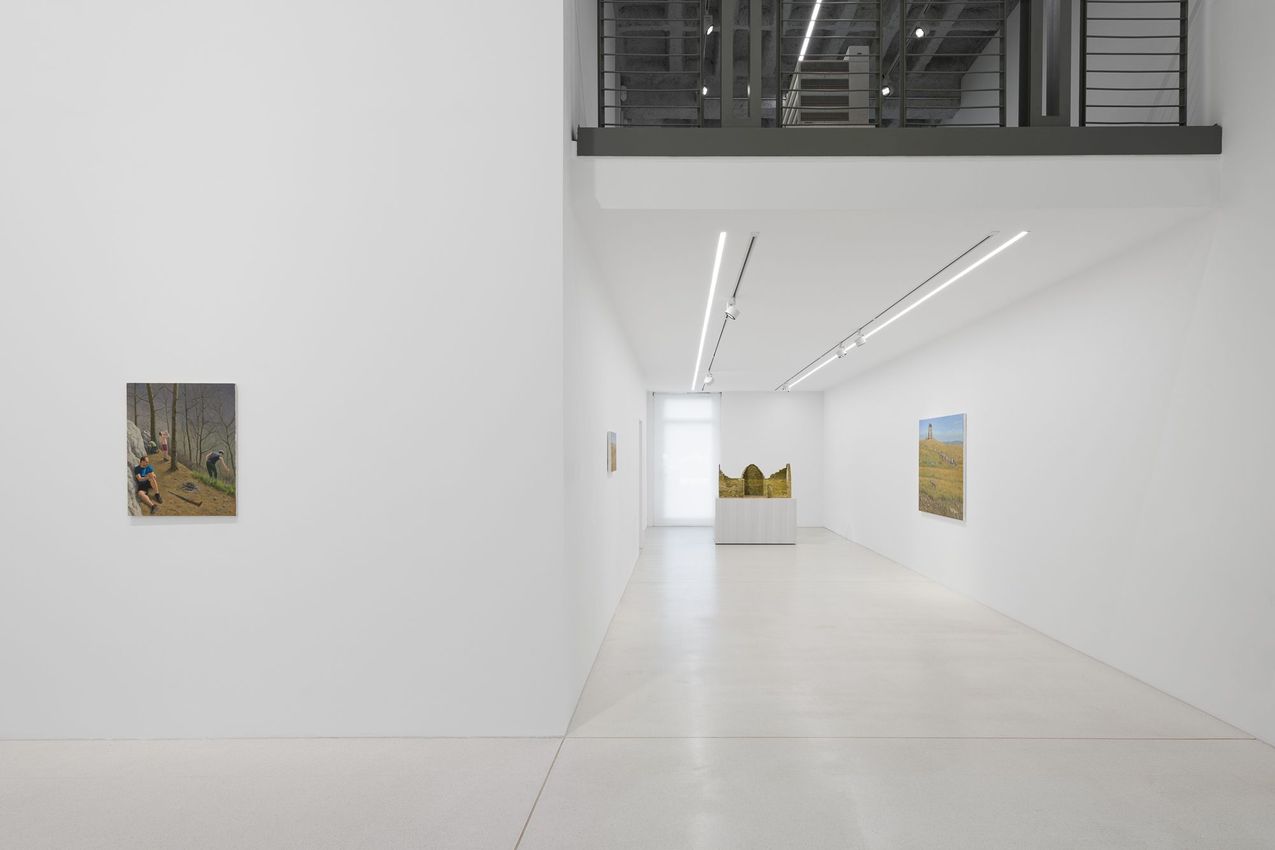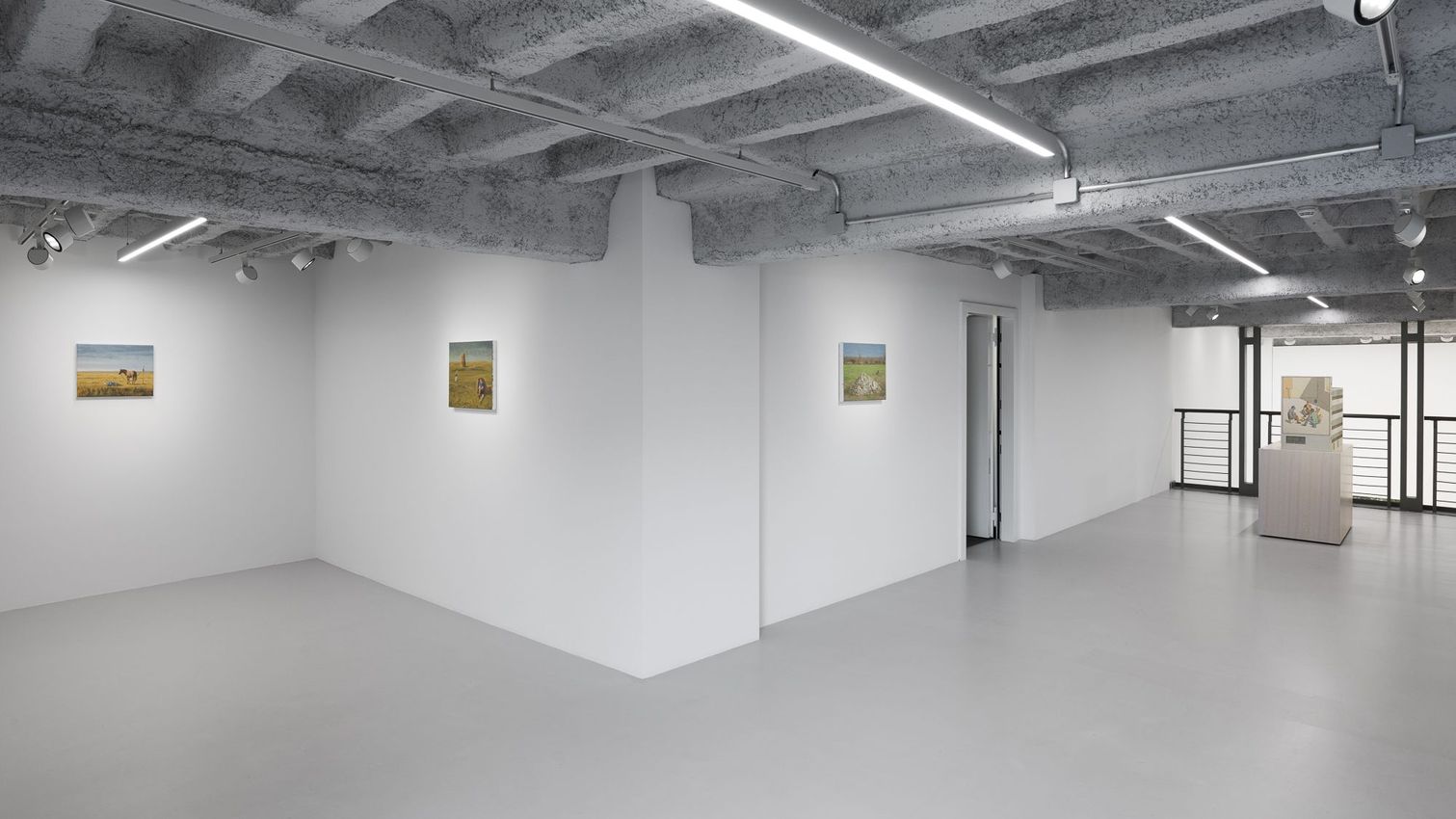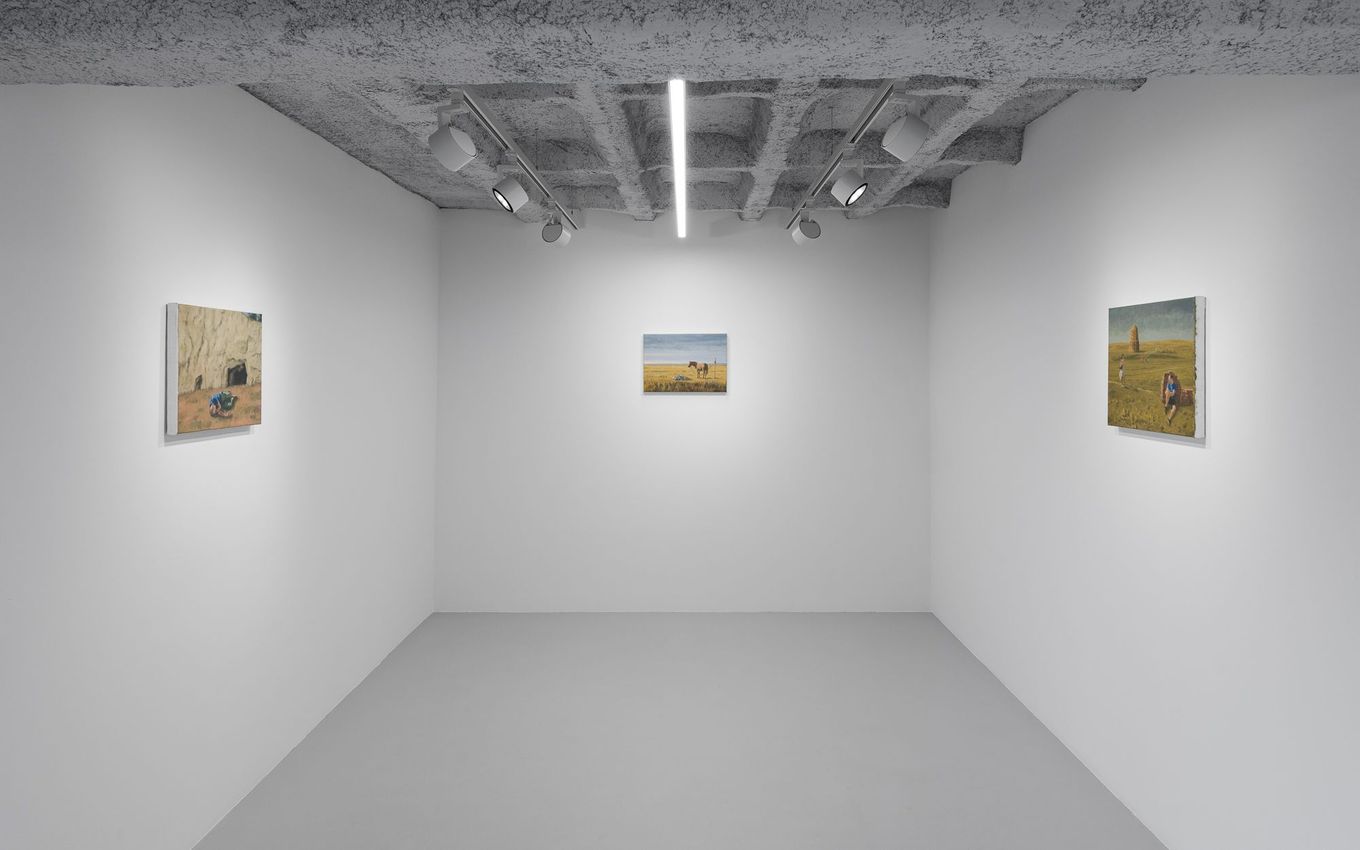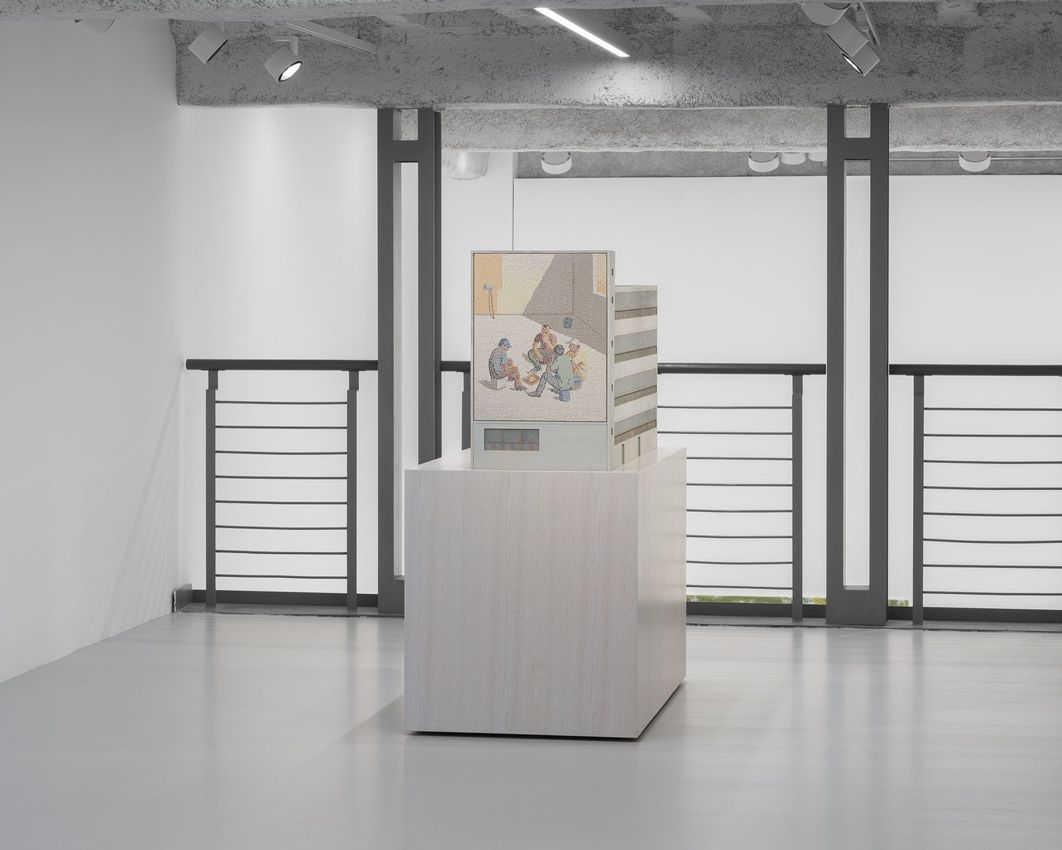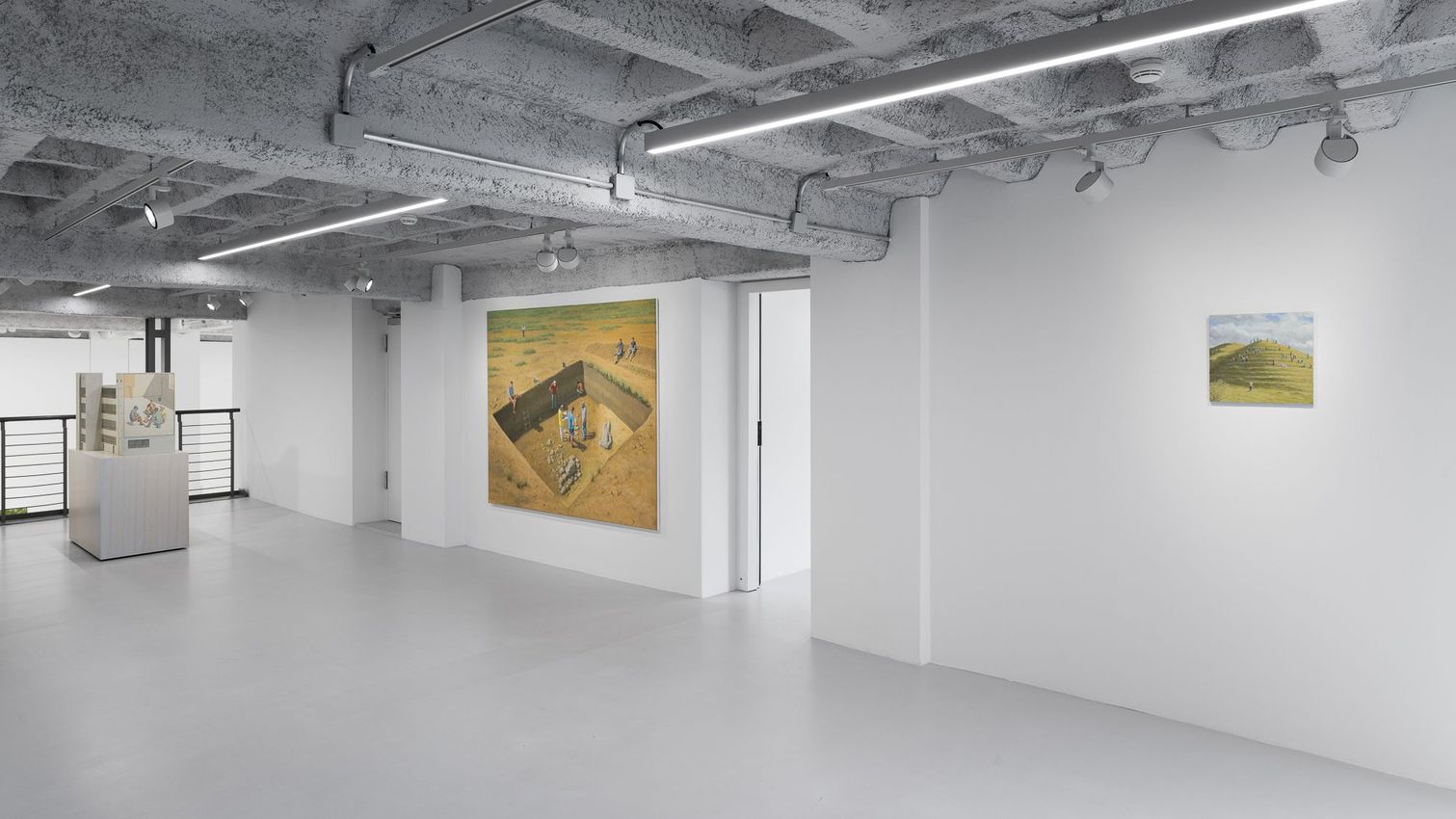




For Gallery Weekend 2025, Galeria Plan B is pleased to present Serban Savu’s sixth solo exhibition with the gallery.
Interested in the multiple meanings of visible reality, Savu paints the world around him as reflected through the lens of art history. Characterized by empathy and a keen sense of observation, his paintings employ synthesis and re-composition to invite viewers to reassess the present within a broader historical context.
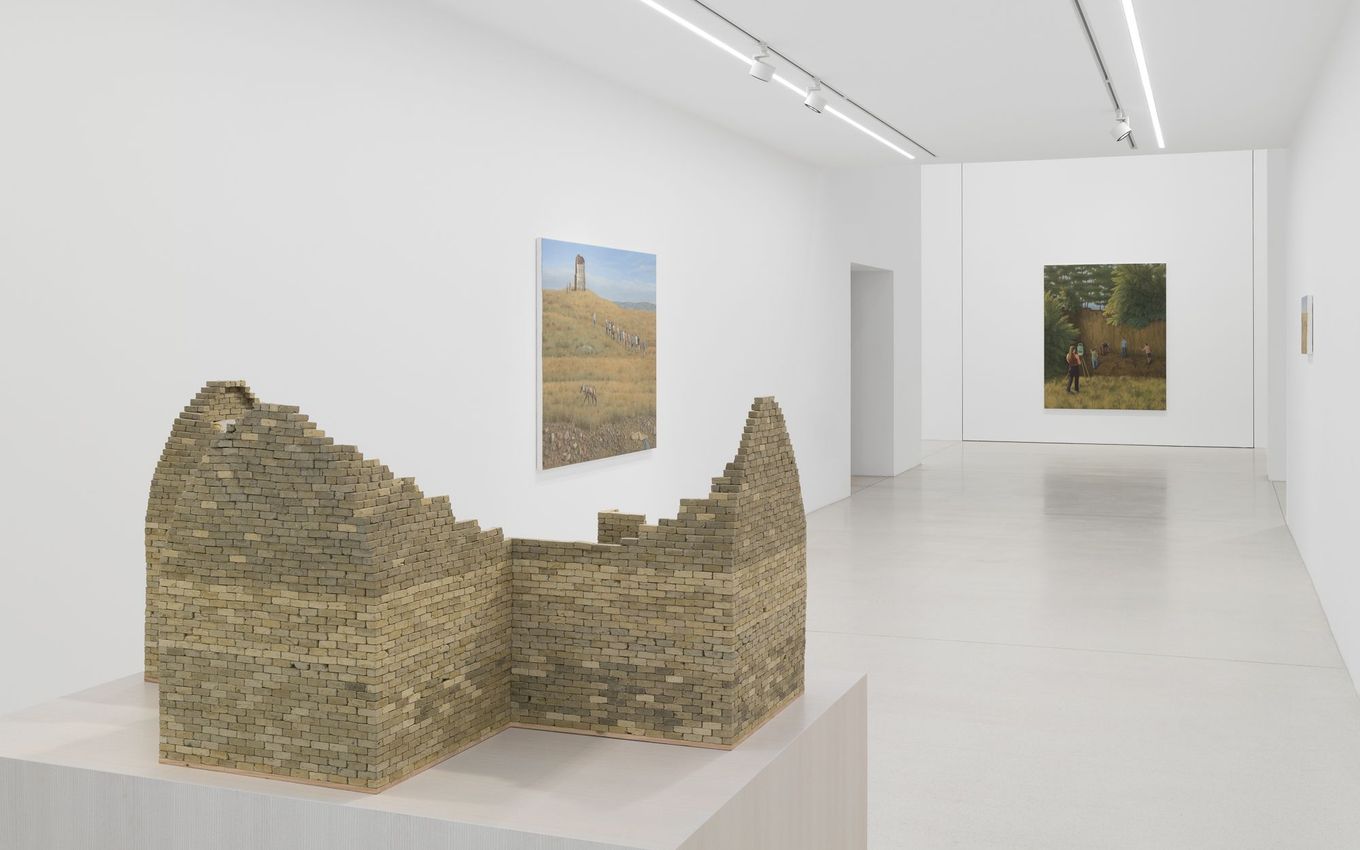
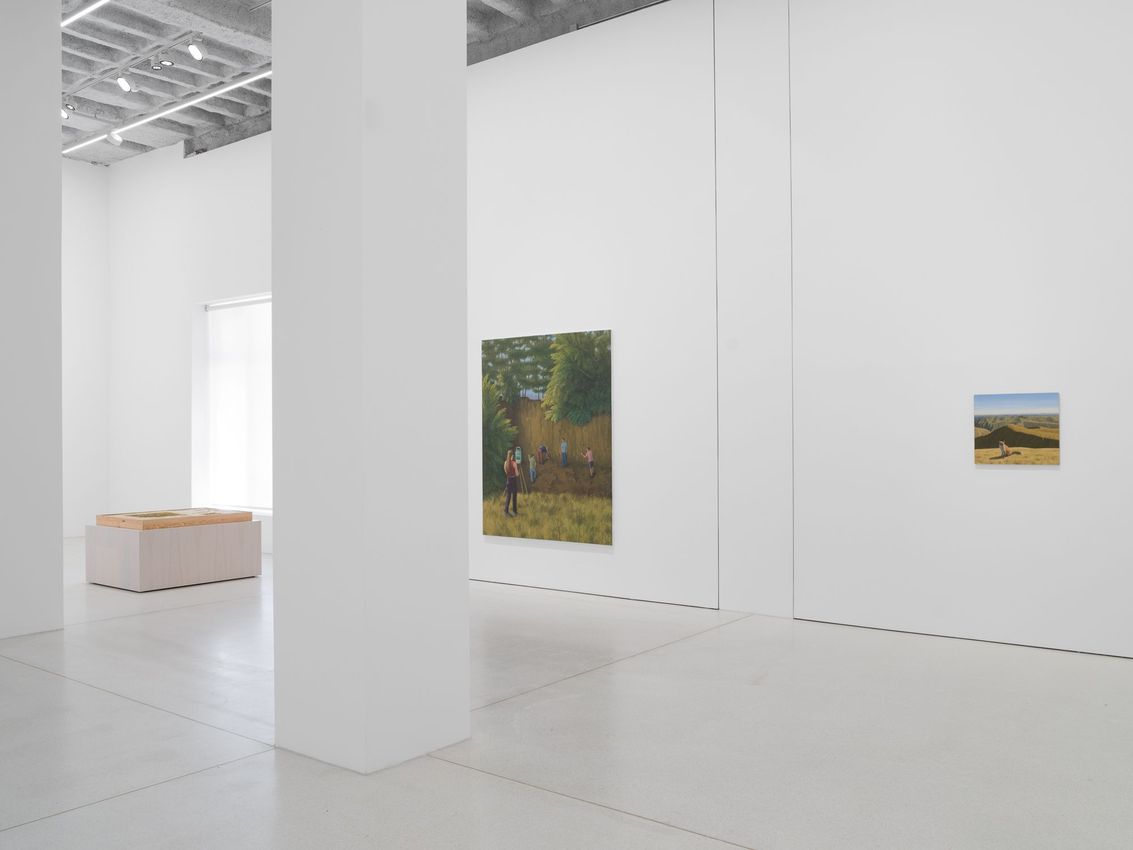
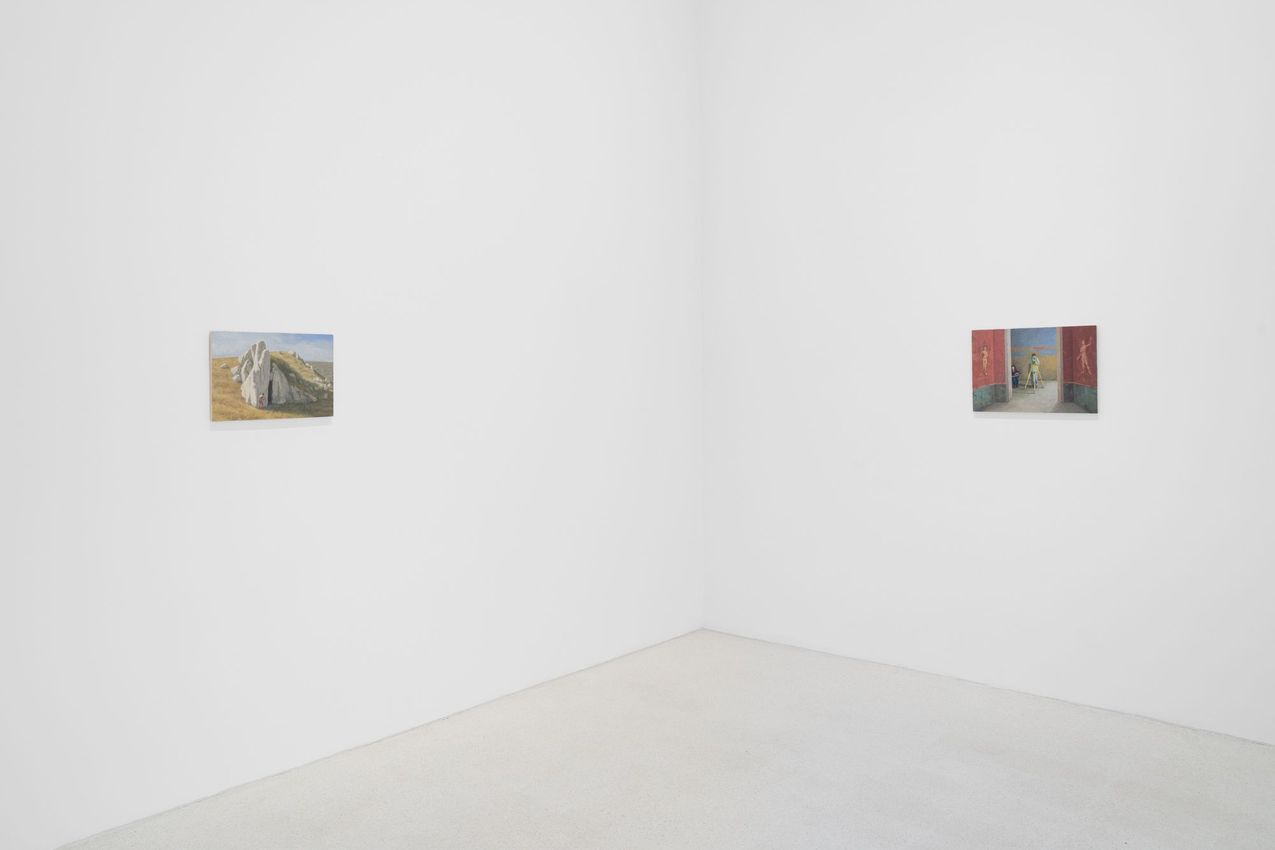
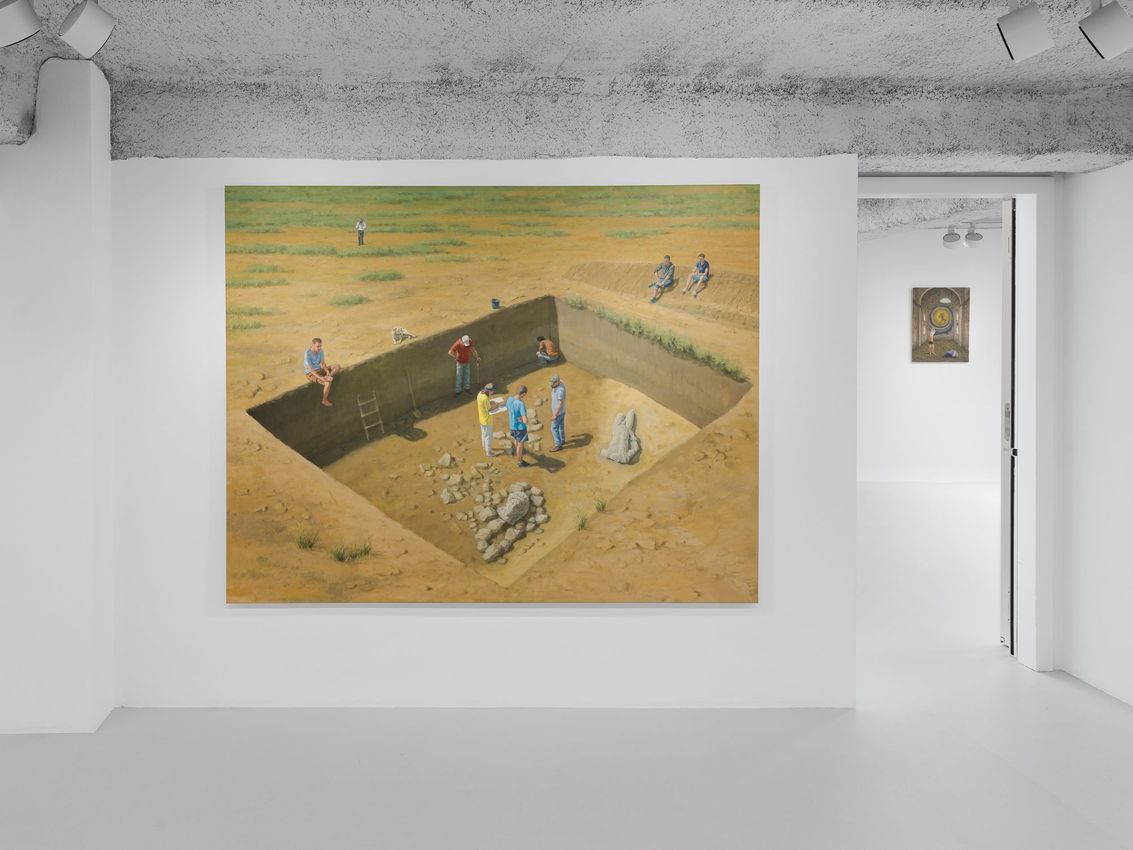
For his solo exhibition, Golden Ages, Serban Savu continues his investigation of history and art history, revisiting and reinterpreting themes such as myths, ruins, and hunting. In a narrative where each epoch is built on the ruins of its precursors, Savu reflects on how we relate to the past, inviting us to view the present as though it already were the past—a continuous sequence of construction and destruction.
Underlying these motifs is a deeper meditation on the fragile boundary between the world shaped by human ambition and the elusive remnants of a reality beyond our control. This tension animates the works in Golden Ages, where scenes like archaeological digs unfold with uncanny stillness—moments caught between excavation and entombment, presence and absence. Through such images, Savu constructs a world in which the contemporary and the ancient are not neatly separated by time, but layered—coexisting in silence, as if waiting to be reinterpreted.In contrast to the succession of man-made worlds—each rising from the ruins of the one before it—there still lingers a vestige of untouched nature, a realm that evades not only human intervention but even our imagination. This “real world,” elusive and unscripted, stands in stark contrast to the ordered fictions of civilization. Yet since the dawn of history, this unclaimed space has steadily diminished, increasingly shaped and absorbed by human thought and design. Today, it faces near-total assimilation—subsumed by the power of our projections, ideologies, and ambitions.
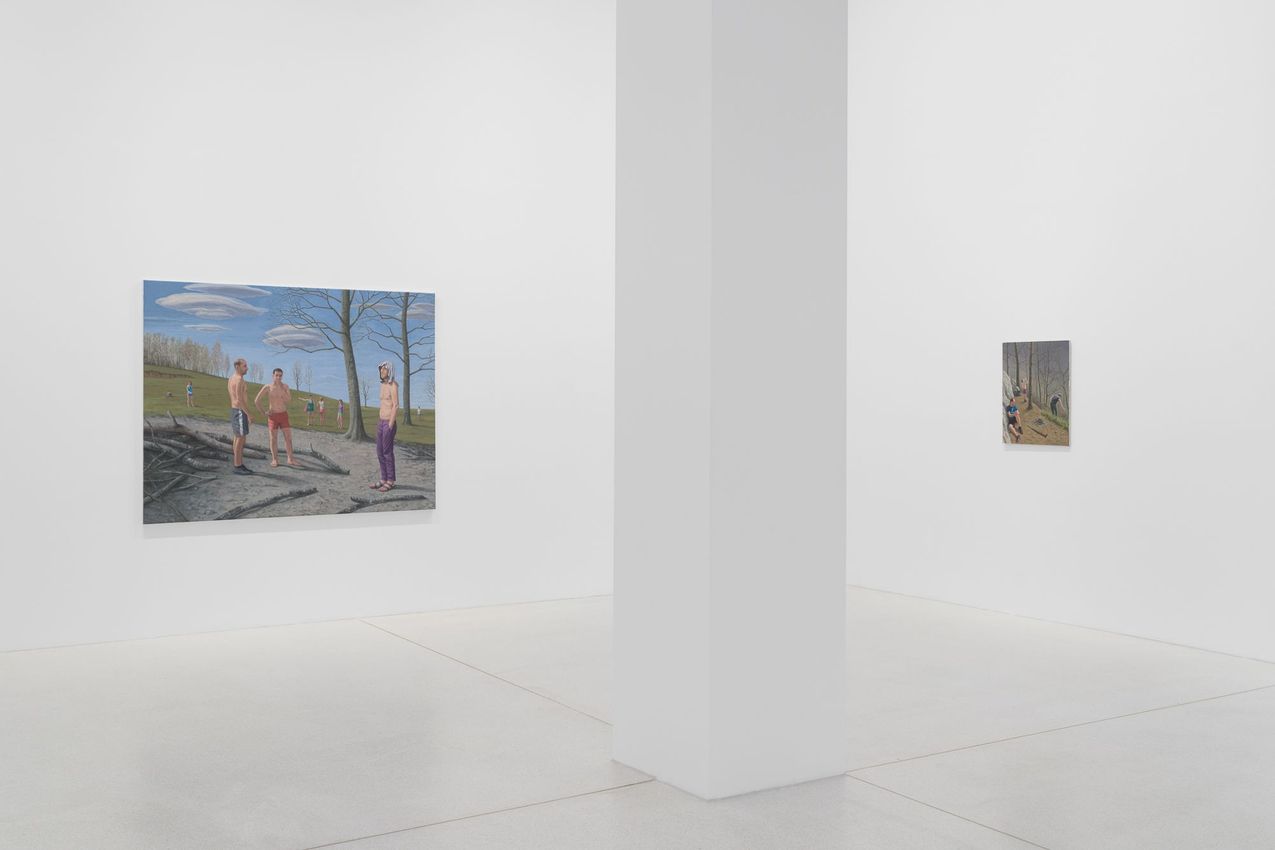
This tension between the fabricated and the untouched resonates deeply in Savu’s latest body of work. While rooted in a realist tradition, his paintings often slide into the surreal, with an erratic logic that disrupts linear narratives and conventional temporality. Figures drift through landscapes that seem at once familiar and estranged, anchored in a present that feels already archaeological. His canvases become contemplative spaces—both scene and artifact—where viewers can sense the quiet echo of tomorrow’s relics.
It is said that the past contains all the seeds of the future, including the patterns of decline and rebirth that shape civilizations. Savu’s Golden Ages captures this cyclical rhythm with a delicate irony: the golden age is never now, always just behind or just ahead, its glow both nostalgic and foreboding. Through his painterly synthesis of the everyday and the uncanny, he asks us to look at our own world as if through the eyes of posterity—poised on the edge of transformation, or ruin.


Serban Savu’s skillfully rendered canvases capture the daily existence of people at work and leisure. Savu’s realistic depictions of life in urban and rural landscapes evoke the essence of a rapidly changing society. Characterized by empathy and close observation, reduction and re-composition, his paintings are capable of initiating an assessment of the present moment understood in a wider, historical sense.
“Not unlike a Courbet mindset, in which classical tropes are applied as a filter through which to view the encroaching, democratized present, Savu’s paintings physically look and feel very old and very new at the same time. It’s post-impressionist, it’s post-classical, it’s post-Soviet — but it’s not Post-Modern. It ignores the visual markers of linear time and repositions both sociopolitical history and art history as feedback loops, as weavings in which the threads can no longer be unraveled — as reflections of the current moment marked both by hope and despair, inseparable still from the past that defines and confines it.” (Shana Nys Dambrot)
Plan B was founded in 2005 in Cluj, Romania, on the initiative of Mihai Pop and Adrian Ghenie as a production and exhibition space for contemporary art. The gallery program focuses on researching Romanian art from the past 50 years, highlighting the work of remarkable artists who have had little to no international exposure.

A respected voice in contemporary art discourse.
Focusing on ambitious storytelling and insightful art-world commentary. Ocula Magazine publishes in-depth interviews, critical essays and timely analysis on the artists, exhibitions and ideas driving the global art world.
Learn more about Ocula Magazine
Showcasing the best of the art world.
Ocula partners with galleries from around the world to highlight their artists, artworks and exhibitions. Gallery membership is by application and invitation, with each member vetted by an independent panel.
Learn more about Ocula Membership

Specialises in the sale of major artworks.
Led by a team with deep ties to the world’s leading auction houses, galleries and collectors. Ocula’s advisory team offers bespoke services to high-net-worth clients from around the world who are looking to acquire the best of contemporary and modern art.
Learn more about our team and services