





A Dinosaur of One’s Own

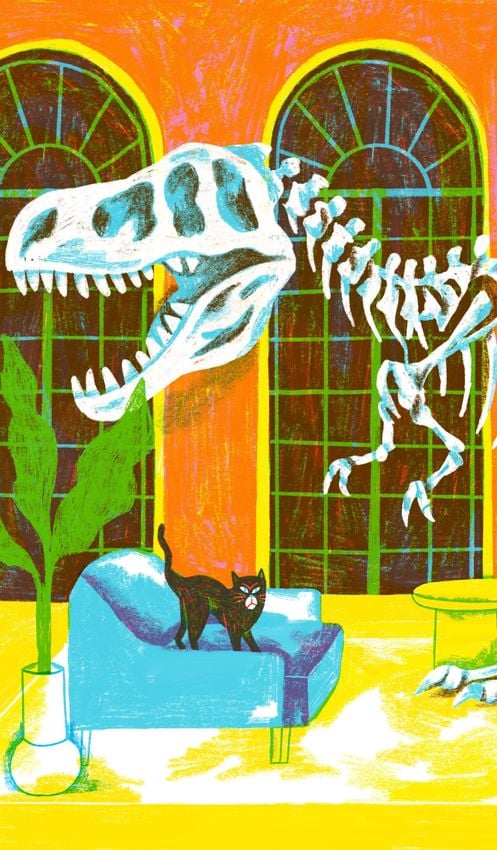
Who buys a dinosaur? That was the question on everyone’s lips this week, as a fossilised T-Rex called Gus sold to a private phone bidder for a record-breaking sum at Sotheby’s in New York City. Once the preserve of natural history enthusiasts, dinosaurs are emerging as a new collectibles market for the super-rich, with more and more colossuses going under the hammer for increasingly giant prices.
In 1997, the hilariously named “Sue” became the first T-Rex sold at auction. Bought by the Field Museum of Chicago with support from private donors, she hammered home at $8.36 million USD, equivalent to around $16 million USD today. Skip to 2020, and Stan, another T-Rex, sold for $31.8 million USD. In 2024 the billionaire hedge fund manager Ken Griffin dropped $44.6 million USD on a stegosaurus fossil named Apex. On Tuesday 14 July, Gus the T-Rex sold for $50.1 million USD including fees, making him the most expensive dinosaur fossil sold at auction and putting him out of reach of museums, much to scientists’ dismay.
It’s fair to say that, during the pandemic when we were all going a bit loopy, buying a dinosaur might have made slightly more sense. But in the years since, demand for dinos from private buyers has only grown. If fossil-collecting conjures up images of pipe-smoking men with unkempt nostril hair, you’d be surprised: modern fossil-collectors (the ones we know about, at least) range from the super-rich Griffin to Oscar-winner Leonardo DiCaprio. What I want to know is, why on earth would anyone want one in their house?
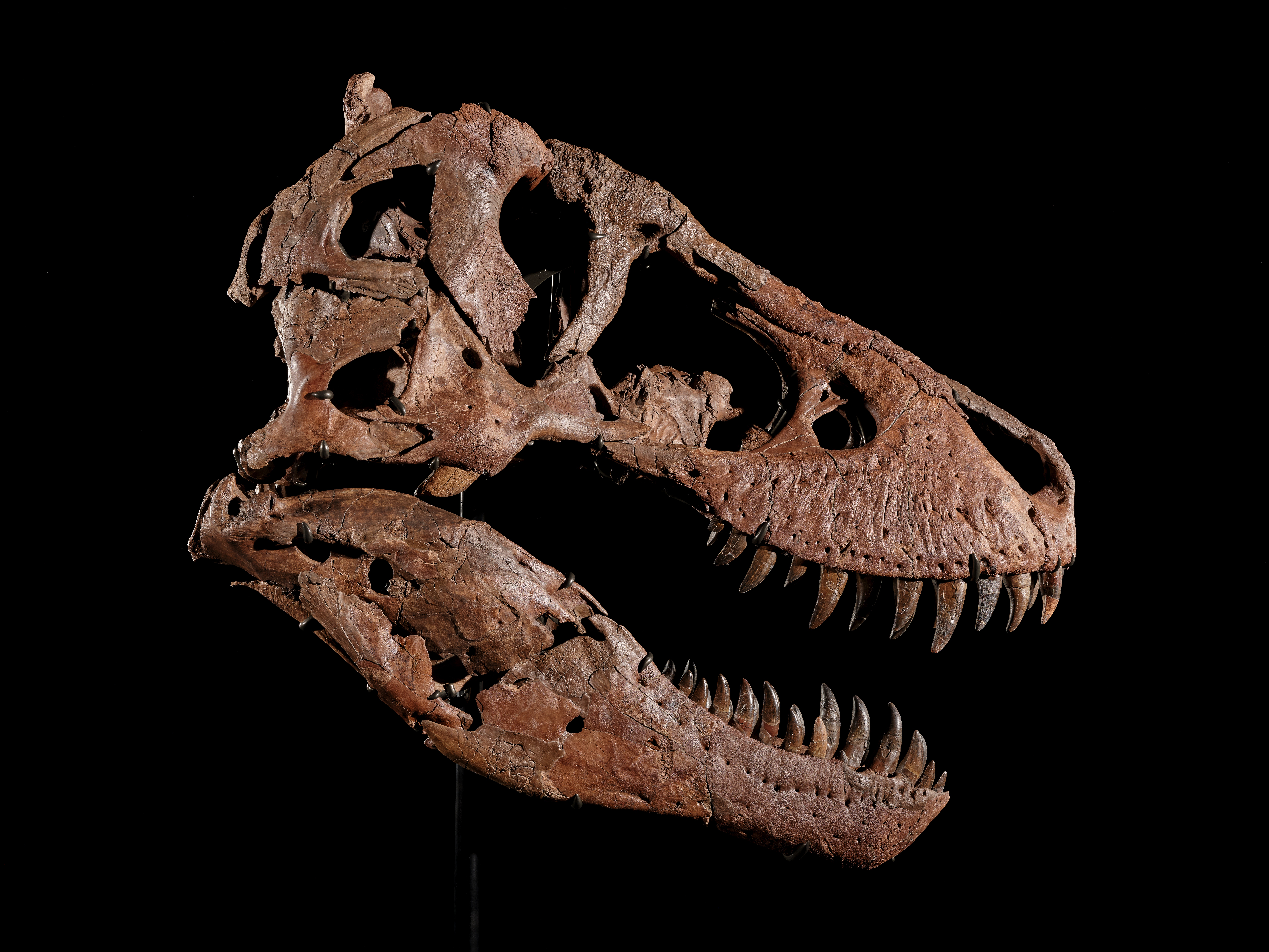
Standing nearly four metres high, everything about Gus, from his toes to his teeth, is gigantic. Discovered in 2021 on a ranch in South Dakota, he is one of the most complete T-Rex skeletons ever found, with bones that tell a story of how he lived: ribs broken and healed over the course of a lifetime, and bite marks on his skull, suggesting possible dinosaur battles. Seeing him displayed in the auction house, it’s not hard to imagine him covered in reptilian skin, stalking the plains of the ancient Midwest. His cutesy name belies a terrifying affect. “The huge teeth are displayed within the gaping jaws,” Sotheby’s advised prospective buyers, helpfully recommending specialist shipping owing to the size and weight of the object.
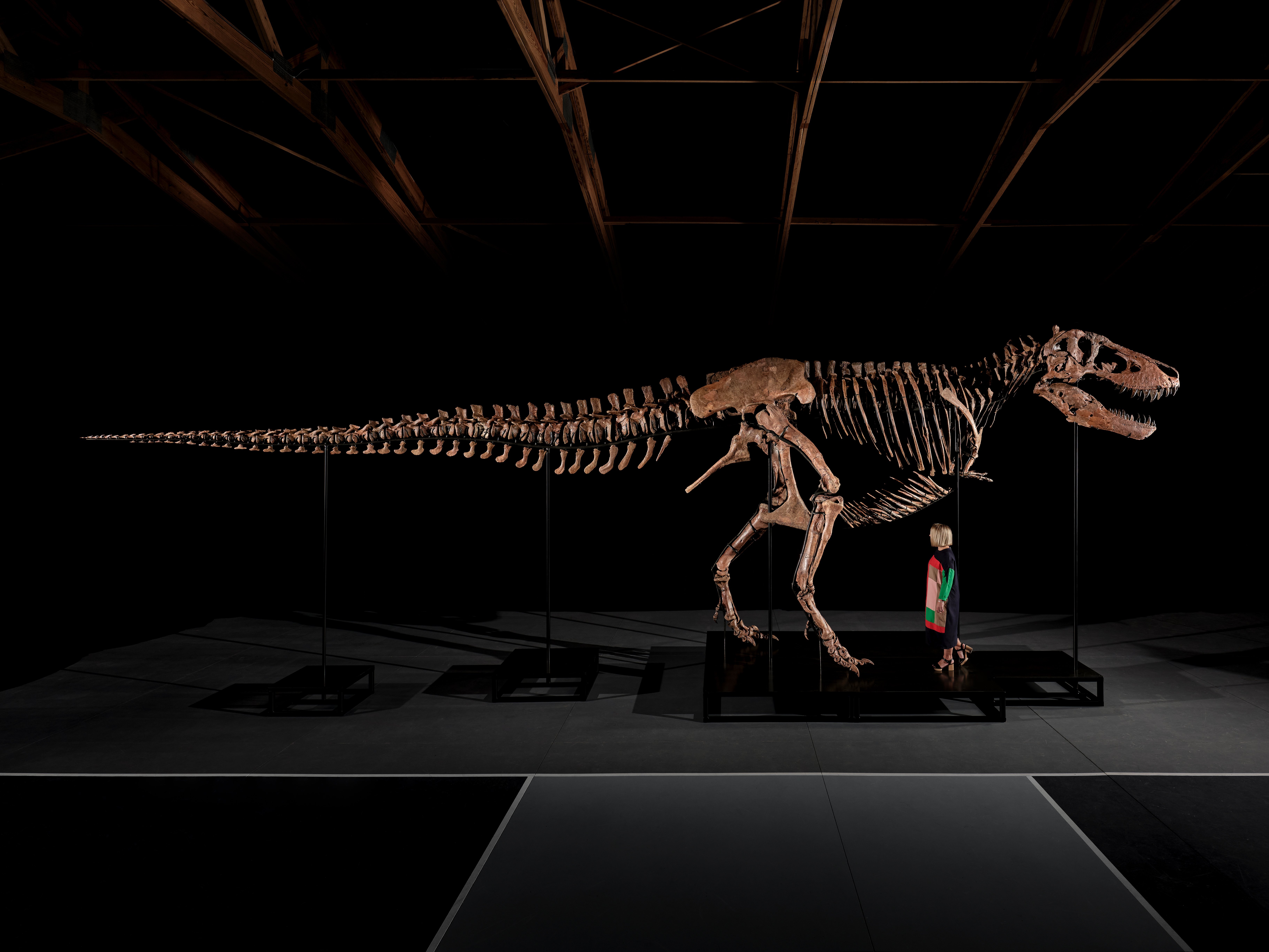
He is a formidable presence, granted, but his appeal for the super-rich is clear. The rarity of these one-in-nearly-probably-a-million specimens means that when it comes to Late Cretaceous-chic, demand will always outstrip supply—good news for billionaires in a world where Patek-Philippe watches and Fabergé eggs have gone a touch mainstream. I only wish we could see how these billionaires furnish their fossils. Are they tucked behind glass, or used more creatively? It’s hard to imagine a better climbing gym than a near-complete dinosaur skeleton.
“When it comes to Late Cretaceous-chic, demand will always outstrip supply”
Nevertheless, there is a collective sigh to be heaved that such an incredible discovery as Gus the T-Rex could now be found in a billionaire’s front room, towering over other collectibles like Eames chairs and mid-century modern side tables. Apex was also a massive specimen and, soon after purchase, Griffin loaned his giant predator to the American Museum of Natural History. One can only wonder if this is because his new dinosaur dwarfed the rest of the furniture.
Once, collectors would use their findings for scientific research. Think of Mary Anning, whose discoveries on the Jurassic coast in the early 19th century contributed to humans’ understanding of the prehistoric earth. The fact that such rare specimens are now going to private buyers suggests that they are merely intended as collectibles for the here and now, rather than tools of discovery for future generations. Some are actually suggesting buying them as an investment asset. The influencer Logan Paul, himself a proud owner of a $500,000 USD dinosaur skull, predicted on a podcast: “Over the next 20 years, I do think a dinosaur is going to outperform the stock market.”
This, of course, is a problem. Certain controls need to be put in place for these specimens to be studied, which usually only museums can provide. Some countries have already implemented legislation that helps to preserve archaeological discoveries: in Brazil and Mongolia, all fossils are owned by the state. But in the US, private sales are common.
Should we feel depressed that dinosaurs are being subsumed into a vortex of collectibles? Absolutely. I think we can all agree that Gus would be better homed in a museum.
But even palaeontologists aren’t immune to the child-like thrill of owning a dinosaur of one’s own. As Stephen Brusatte, professor of palaeontology and evolution at the University of Edinburgh, told the Guardian: “If I was a billionaire, I would probably buy one too.”—[O]






A respected voice in contemporary art discourse.
Focusing on ambitious storytelling and insightful art-world commentary. Ocula Magazine publishes in-depth interviews, critical essays and timely analysis on the artists, exhibitions and ideas driving the global art world.
Learn more about Ocula Magazine
Showcasing the best of the art world.
Ocula partners with galleries from around the world to highlight their artists, artworks and exhibitions. Gallery membership is by application and invitation, with each member vetted by an independent panel.
Learn more about Ocula Membership
Specialises in the sale of major artworks.
Led by a team with deep ties to the world’s leading auction houses, galleries and collectors. Ocula’s advisory team offers bespoke services to high-net-worth clients from around the world who are looking to acquire the best of contemporary and modern art.
Learn more about our team and services