





Ferran Barenblit Named Chief Curator of 2027 Shanghai Biennale

Ferran Barenblit. Photo by Leo de Blas
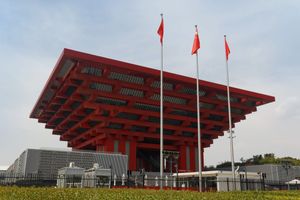
The Power Station of Art (PSA) has appointed Ferran Barenblit chief curator of the 16th Shanghai Biennale, set to open in November 2027.
The Buenos Aires-born, Barcelona-based curator directed the Museum of Contemporary Art of Barcelona (MACBA) from 2015–2021, after leading CA2M in Madrid and Centre d’Art Santa Mònica in Barcelona.
For Shanghai, the 16th biennial “should be demanding and legible, accessible and complex, capable of addressing broad publics while preserving art’s power to resist simplification”, Barenblit said.
“Its ambition is to create a situation in which art generates encounters between local histories and international conversations, between critical thought and lived experience, between what is already visible and what has not yet found a form.”
Launched in 1996, Shanghai Biennale was China’s first international biennial of contemporary art and remains its longest-running. PSA has organised the exhibition since 2012.
Barenblit succeeds Kitty Scott, whose 15th edition, Does the flower hear the bee?, took scientific research into communication between life forms as its starting point, exploring how intelligence and perception might be understood beyond the human.
For its next edition, PSA said Barenblit would “rethink and break through the traditional thematic curation model of biennales”. The proposed approach aims to place greater emphasis on the relationships that emerge among artworks, audiences and their wider social and historical contexts.
Barenblit’s proposed approach has precedents both within the Shanghai Biennale and beyond. When Cuauhtémoc Medina was appointed chief curator of the 12th Shanghai Biennale (2018), he proposed introducing change and rupture into the thematic unity associated with large international exhibitions.
That same year, Gabriel Pérez-Barreiro organised the 33rd São Paulo Bienial around seven group exhibitions, each conceived by an artist placing their own work in dialogue with that of their peers. Complemented by solo exhibitions selected by Pérez-Barreiro, the structure shifted attention from overarching themes to artistic affinities and processes.
Barenblit’s recent biennial work has similarly emphasised openness. As chief curator of the 16th Cuenca Biennial in Ecuador in 2023, he brought together 31 projects addressing democracy and contemporary conflicts, with particular emphasis on Latin America. Titled Maybe Tomorrow, the exhibition treated art as a space of uncertainty and continuous questioning instead of a vehicle for fixed conclusions.




A respected voice in contemporary art discourse.
Focusing on ambitious storytelling and insightful art-world commentary. Ocula Magazine publishes in-depth interviews, critical essays and timely analysis on the artists, exhibitions and ideas driving the global art world.
Learn more about Ocula Magazine
Showcasing the best of the art world.
Ocula partners with galleries from around the world to highlight their artists, artworks and exhibitions. Gallery membership is by application and invitation, with each member vetted by an independent panel.
Learn more about Ocula Membership
Specialises in the sale of major artworks.
Led by a team with deep ties to the world’s leading auction houses, galleries and collectors. Ocula’s advisory team offers bespoke services to high-net-worth clients from around the world who are looking to acquire the best of contemporary and modern art.
Learn more about our team and services