Press Release

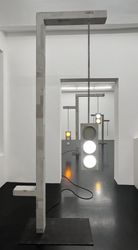
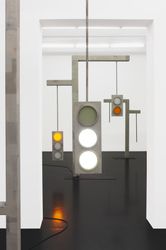
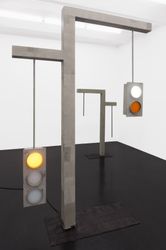
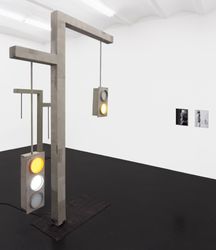
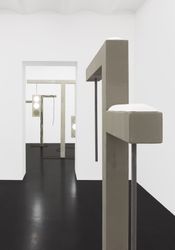
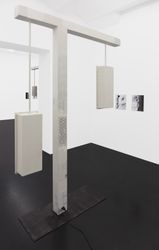
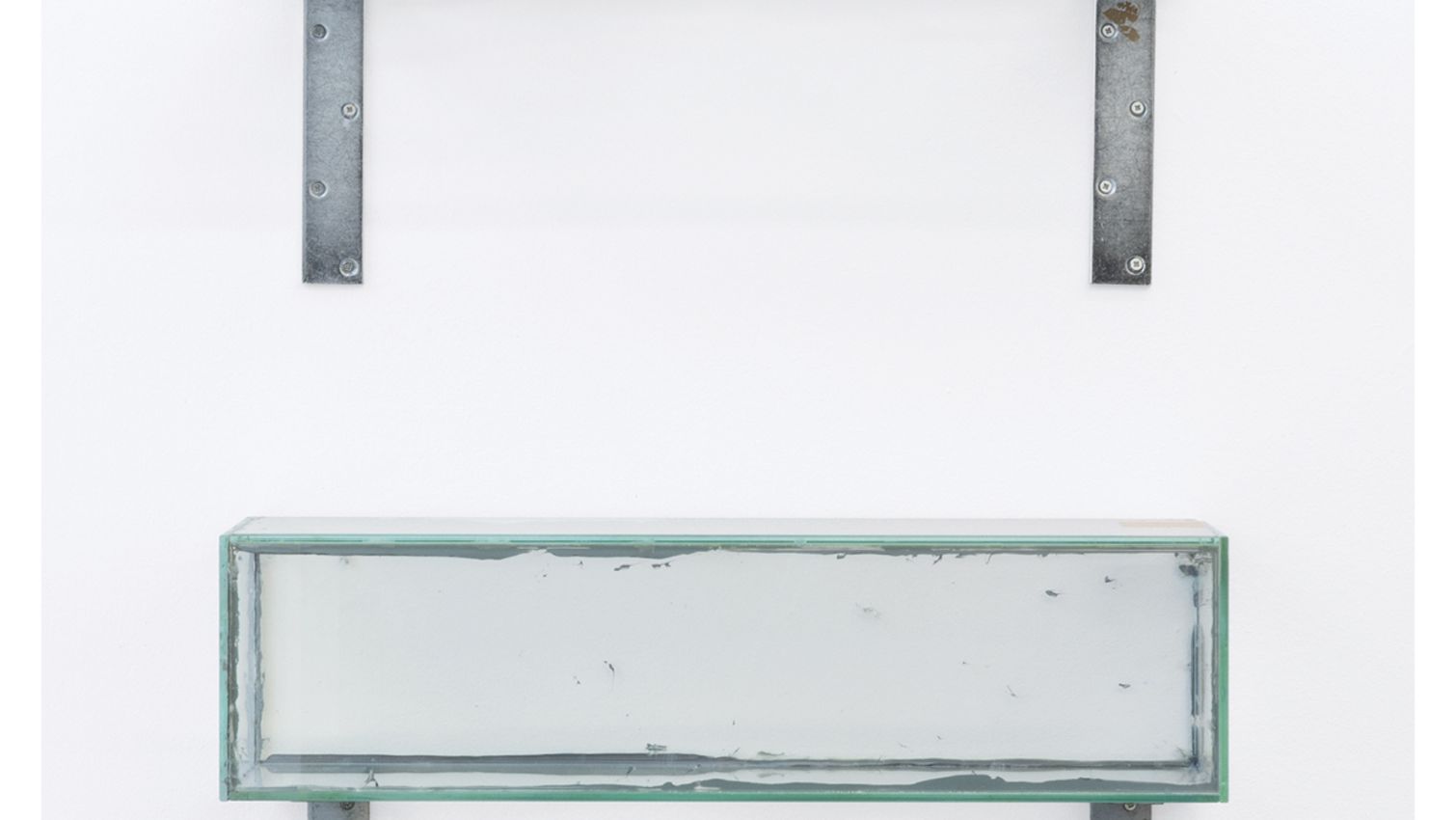
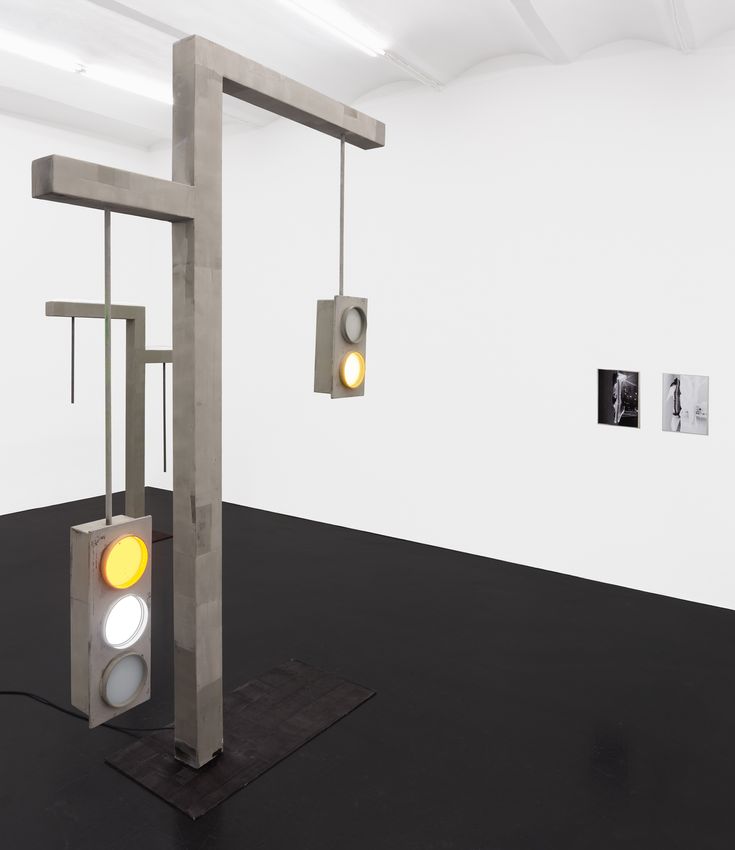
Peter Fischli’s new kinetic sculptures stand in the room, blinking at, and illuminating, the beholders. The sequence of signals does not hew to a recognisable pattern. As one approaches the sculptures with dazzling lights, elements of a stage setting may come to mind. They are made of plywood, glass, and coated cardboard and show several layers of paint—imitating the layers of weatherproofing paint applied to the perfunctorily cleaned surfaces of metal street signs.

The colour grey evokes a range of connotations: we associate it with memories; with a kind of essentialised imagery from which visual disturbances and incongruences have been eliminated. At the same time, grey stands for an erasure of subjectivity, for institutional inhumanity - including, not least importantly, the ‘lifeless’ architectonic spaces of postwar modernism. Light signals, too, belong to the mundane sphere of the administration and regulation of human behaviour. The glaring white light, meanwhile, metaphorically gestures toward transcendence, toward a disembodied, otherworldly space. The sculptures might also be described as dream machines. The partial effacement of the signal lights’ colours, and the decelerated succession of switchovers, detaches the naturalised signifiers from their meaning.

In his essay Painting: A Thing of the Past (1967), Jean Clay comes down squarely on the side of conceptual art. Laconically defining kinetic sculptures as ‘works which move,’ he outlines their potential as follows: ‘The work has ceased to be a mere static account of a movement experienced by the artist and then described through the intermediary of forms and colours which evoke and try to restore the original emotional shock.’ As to the temporal dimension of such art, he offers a comparative observation: ‘To draw a grammatical parallel we may say that a kinetic work is in the present tense, whereas a conventional painting - be it a landscape or abstract composition - is in the past tense, since it represents primarily the transposition of an emotional reality experienced previously by the artist.’

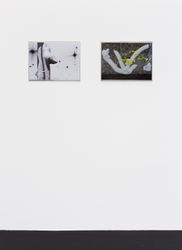
A publication released in conjunction with the exhibition presents collages based on photographs taken throughout Zurich. For the past three years, the artist has documented peculiar ‘remnants of nocturnal revelry’: cars, park benches, and building façades sprayed with shaving foam - easily removable vandalistic interventions into the urban fabric, gestures of infinitesimal subversion. The foam figments are formless, lacking both definite shape and durable substance. The amorphous as-if graffiti does not transmit an identifiable politics, looking much rather like primordial markings. It is in this decided being-nothing, in non-representation, that their aesthetic potential resides.

Text by Arthur Fink

Read More

Installation Views

About the Artist

Born in Zurich

View Artist Profile

Also Exhibiting at Galerie Buchholz

About the Gallery

Galerie Buchholz is an art gallery specializing in international contemporary art, with exhibition spaces in Cologne, Berlin and New York City. The gallery was founded in Cologne in 1986 by Daniel Buchholz, and today is run jointly with Christopher Müller.

View Gallery Profile
Address
Neven-DuMont-Str. 17
Cologne
Germany
Opening Hours
Tues - Fri, 11am - 6pm
Sat, 11am - 4pm
(1)
Cologne Neven-DuMont-Str. 17
Galerie Buchholz
Neven-DuMont-Str. 17, Cologne, Germany

Opening hours
Tues - Fri, 11am - 6pm
Sat, 11am - 4pm
The art world in focus