




The art world in focus
Subscribe to our newsletter for news and insights on artists, galleries and exhibitions.

“You couldn’t invent Andrew Edmunds,” says the legendary British curator Sir Norman Rosenthal. “He was a great character; a great 18th-century character.” A longtime neighbour of the restaurateur, print collector and gallerist, Rosenthal tells me of his admiration for Edmunds and his well, if idiosyncratically, lived life. Edmunds, who died aged 79 in 2022, was “living in the past, in the present”, Rosenthal, who is now 81, says. For the curator, this gave Edmunds a special kind of worldiness. “It’s called culture!”
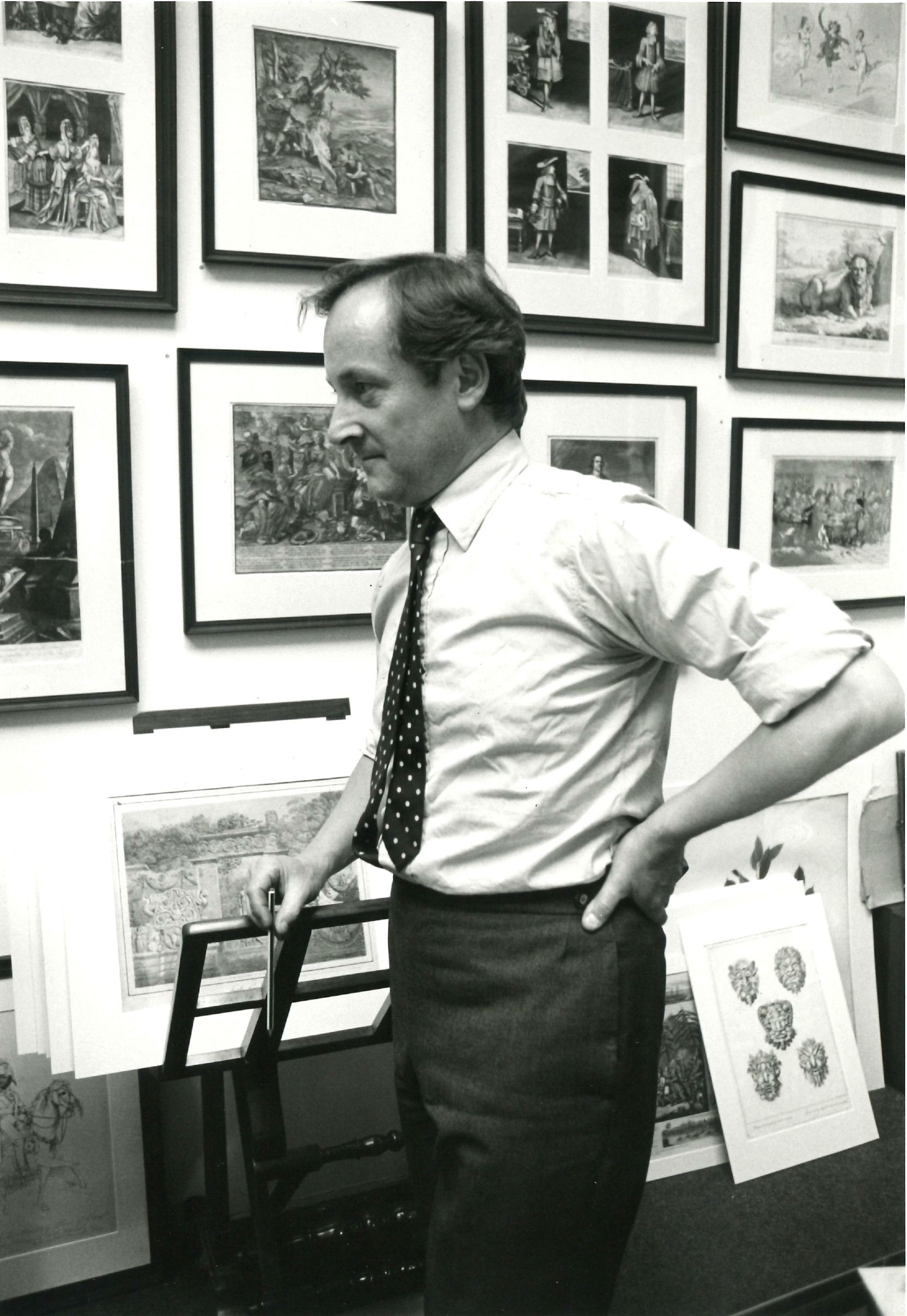
Edmunds’ small empire, which consists of two lively Georgian townhouses on Lexington Street that house his eponymous print shop and restaurant, is one of the final refuges of London’s vaunted, yet increasingly elusive, as TikTok foodies and streetwear queues proliferate, old Soho. “In an honest, just, universe,” Rosenthal wrote after Edmunds’ death in 2022, “the world that this much-missed man created would be ‘listed’ and protected as a monument to true culture, much as the great cafés of Vienna are today.”
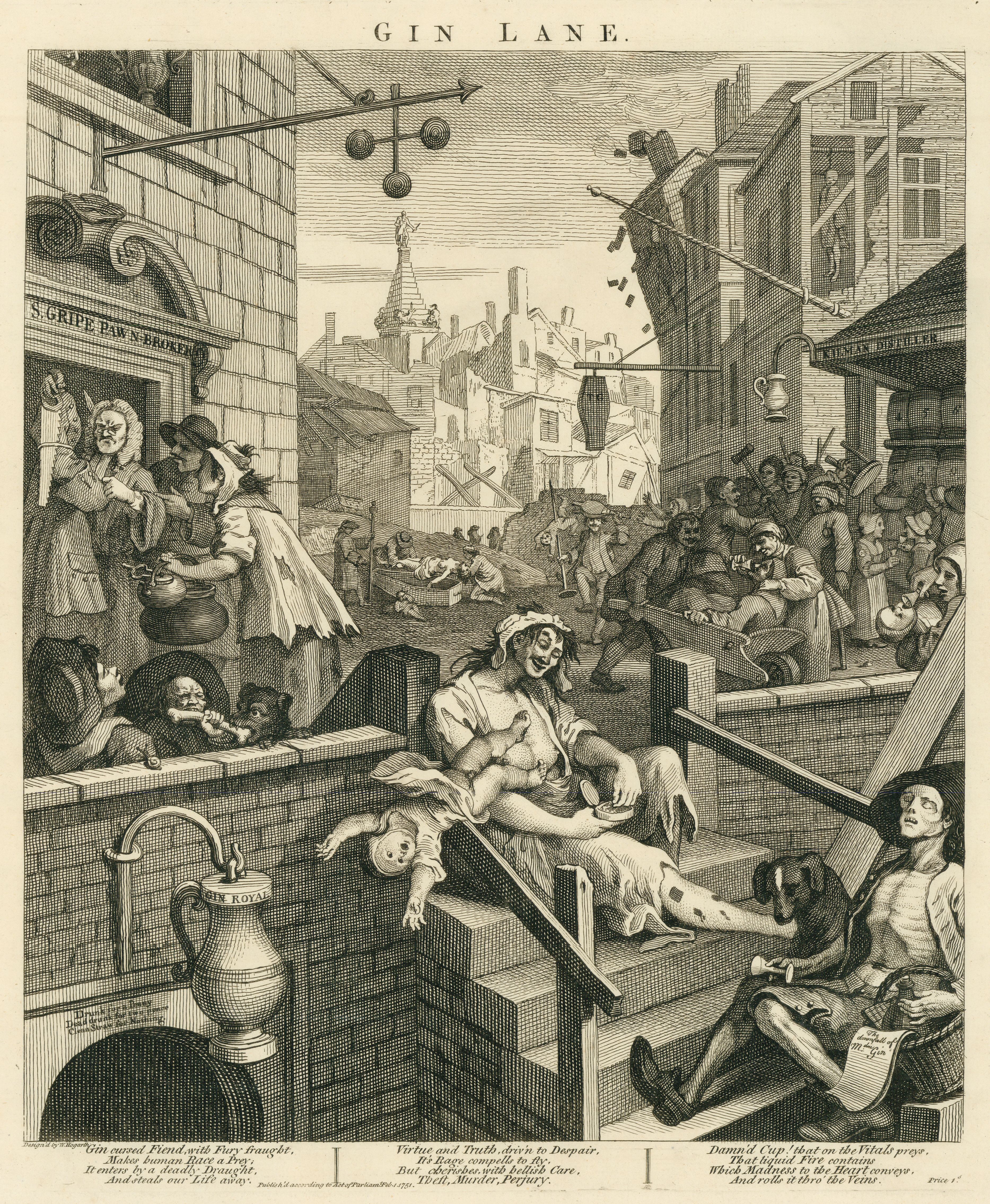
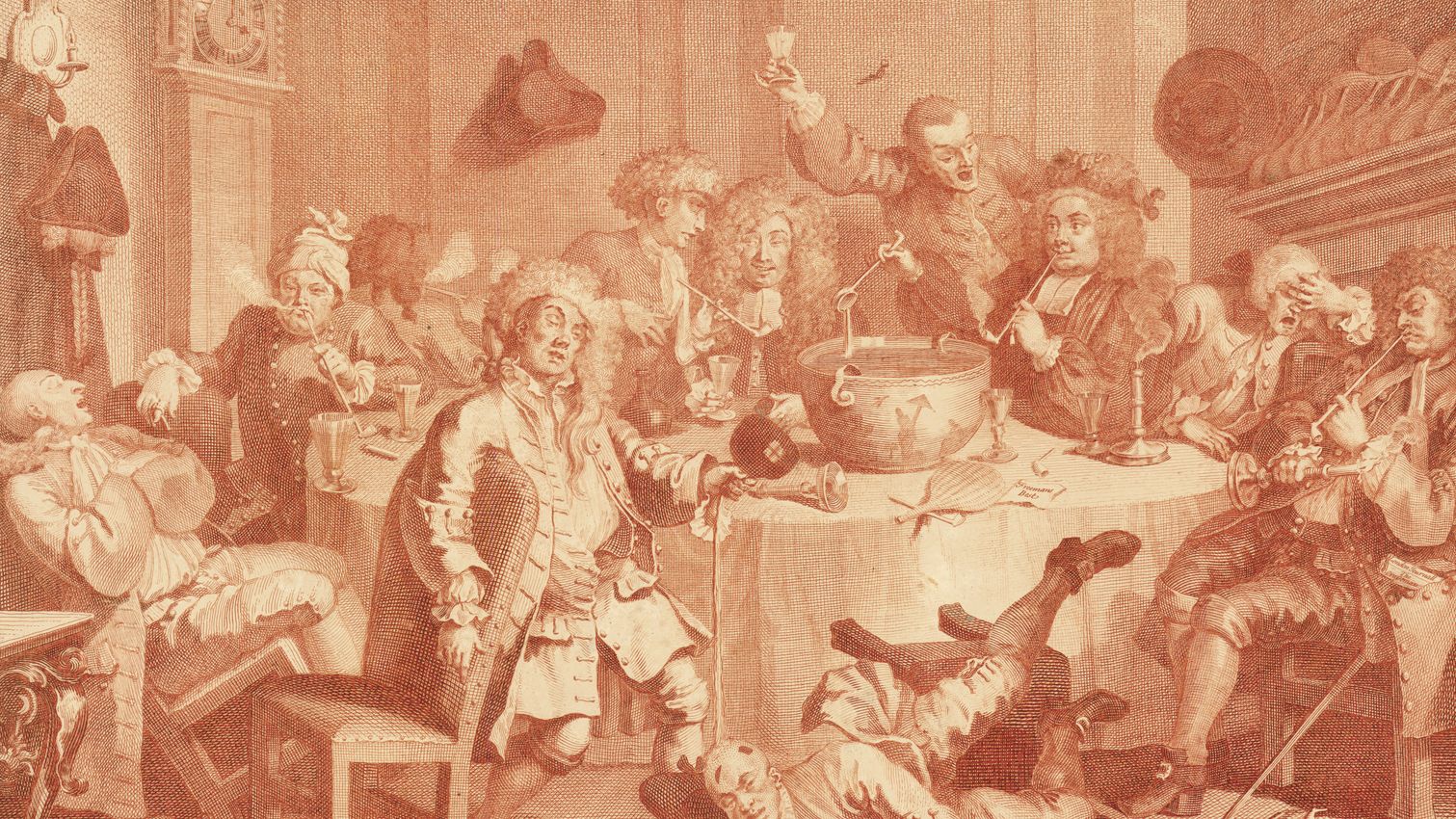
At Frieze Masters this year, a significant slice of that world will see the light for the first time as the dealer Daniel Crouch presents Edmunds’ private collection of more than 10,000 prints and drawings for sale at the fair. Mostly comprising satirical prints from the 18th and 19th centuries by artists including William Hogarth and James Gillray, it’s an esoteric trove compared with the work of the brand-name artists who will steal the headlines this week. Crouch calls it “one of the great social and political collections”. It is on offer as a single lot, priced at £12 million. Rosenthal tells me that it belongs in a museum: “It would have to be a mad individual who would want to have 10,000 prints by Hogarth and Gillray.”
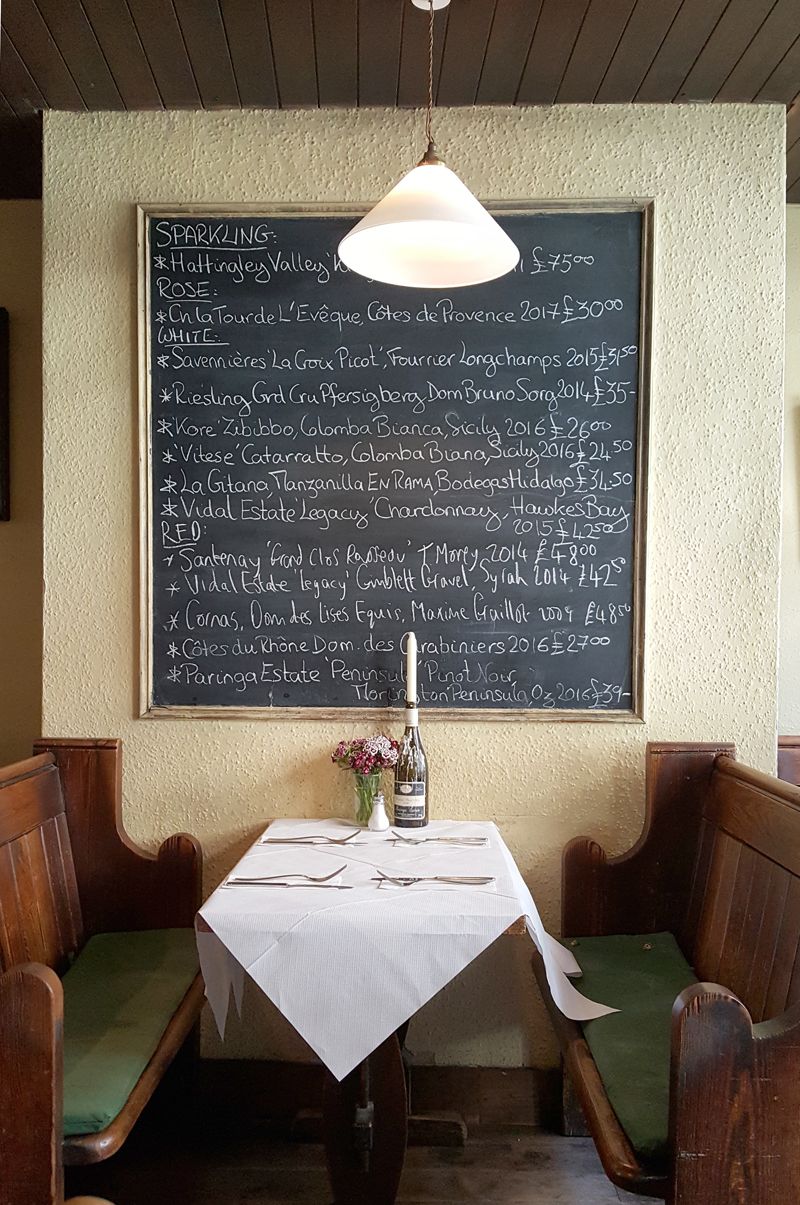
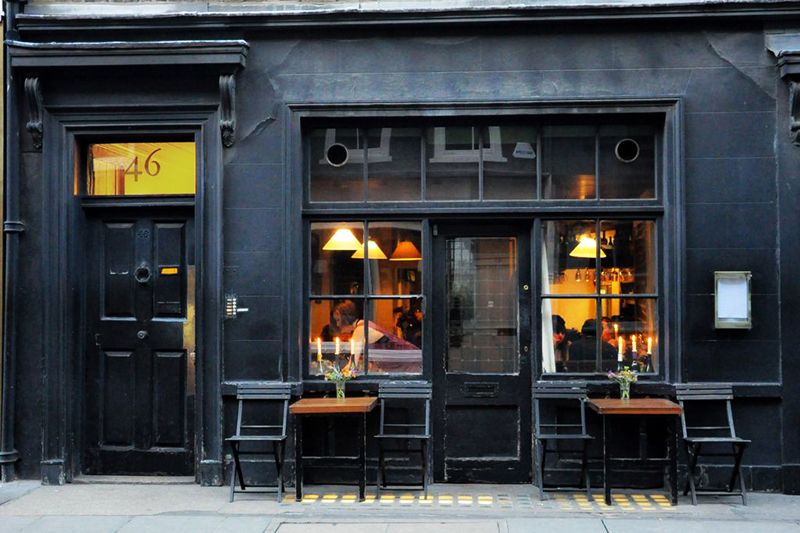
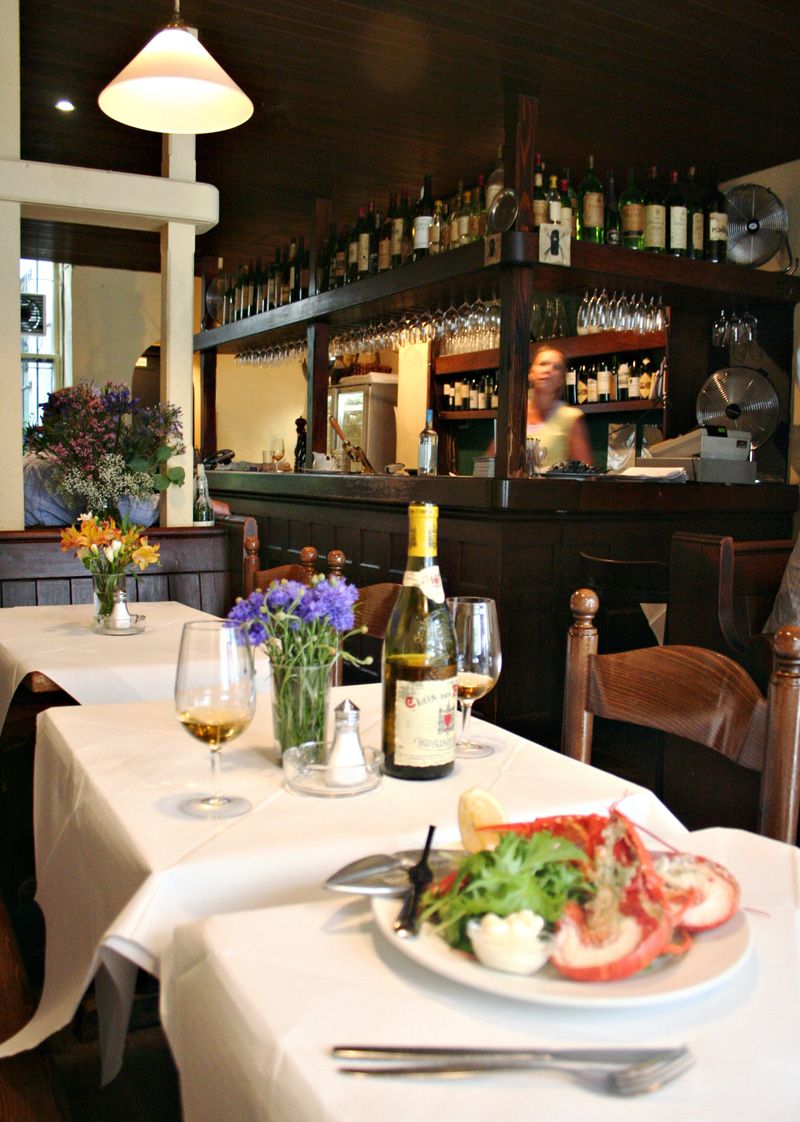
Edmunds remains best known as a restaurateur. He opened his eponymous dining room in 1985 and it has run continuously since then, even following his death, serving unfussy European food and excellent wine in a small, candlelit room that contains just enough light to see your dining companion. Andrew Edmunds Prints and Drawings next door has been open since 1974 (although it is currently closed for renovations).
Edmunds was, as his neighbour and friend Paddy Renouf puts it, “erudite and fun; slightly irreverent”. Writer and editor Josh Spero remembers Edmunds as an “agreeably glowering presence” at The Academy Club, a members club co-run by Edmunds and a favourite haunt for many writers, founded in 1989 and located above the restaurant. “We called him the Duke of Lexington Street,” Rosenthal says, “and he was in many ways.” Until recently, though, relatively little was known about the specifics of his considerable art collection.
“This was very much his private passion and lifelong obsession”
“I knew Andrew had a great caricature collection,” Crouch says, “but I hadn’t ever seen it in its entirety.” Though he’d been close with Edmunds as a friend and colleague for three decades, with Crouch running his rare book shop in nearby St James since 2008, he’d only “seen little corners” of the collection “when he brought things into the shop,” until he was entrusted to sell it earlier this year.
Crouch wasn’t alone. Xanthe, one of Edmunds’ three children, describes her father to me as “actively clandestine” about the exact contents of his art collection. After he passed away, she recalls visiting the storage unit in south London where most of it was kept and learning that she was the only person authorised to enter. The scope and quality of the collection that she found, she says, “completely stunned me”.
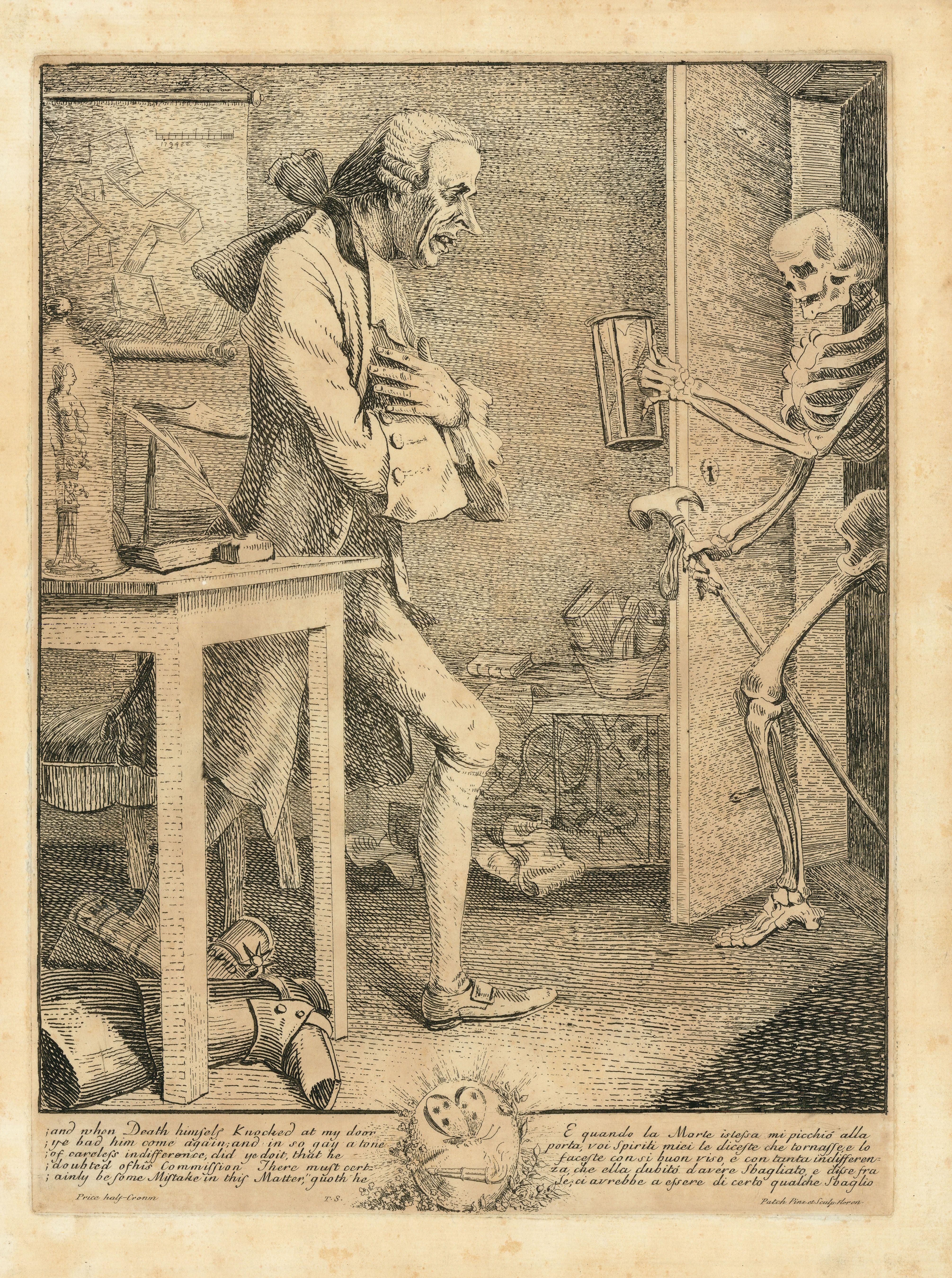
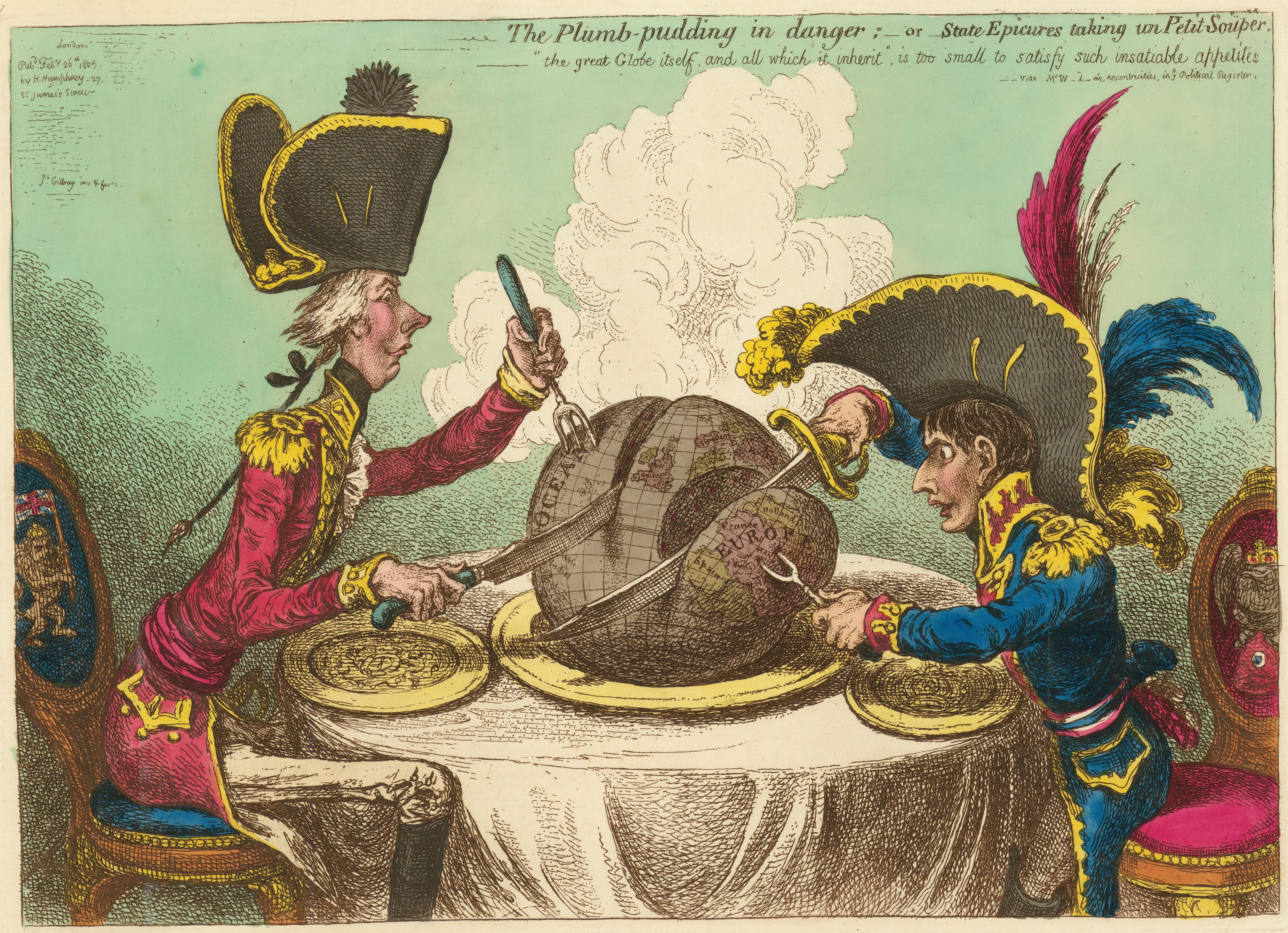
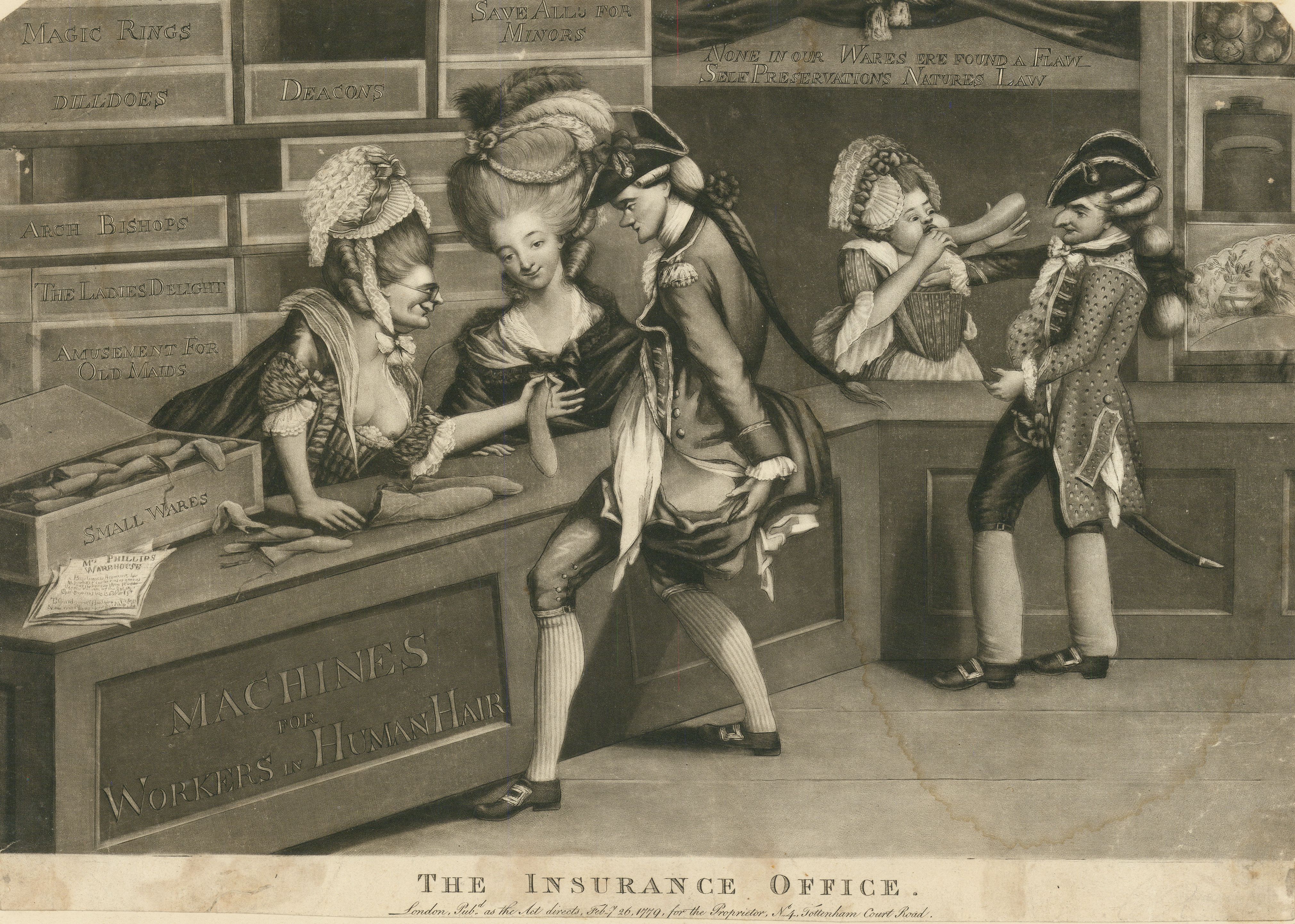
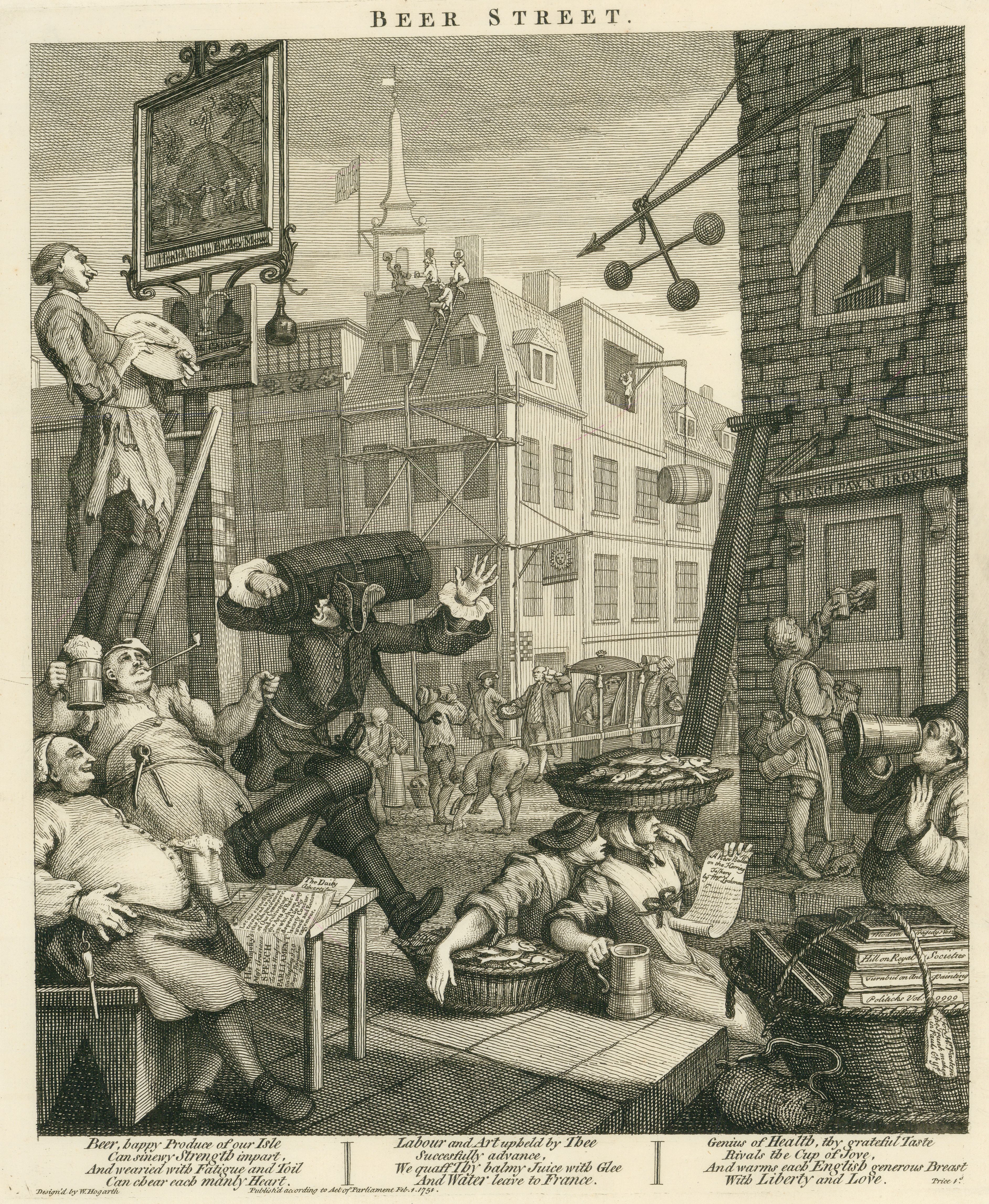
The 10,000 images, which Crouch has assembled in an 84-volume catalogue, constitute a no-holds-barred tour of the public and private life of Georgian Britain. They are full of irony and swagger. “Every part of the world is covered here,” says Crouch, “from big politics to huge areas of cultural change, social mores, sexual politics, race, medicine, alcoholism.” The collection includes Gillray’s famous print of William Pitt the Younger and Napoleon frenziedly carving up their world-shaped dinner, The Plumb-Pudding in Danger (1805), Hogarth’s two-part pictorial endorsement of the societal benefits of drinking beer over gin, Beer Street and Gin Lane (both 1751) and Thomas Patch’s particularly haunting And When Death Himself Knocked at My Door (1768), a caricature of the novelist Laurence Sterne standing up from his desk to meet death: a bandy-legged skeleton holding an hourglass.
Xanthe had, of course, known something of her father’s collecting. She had practically grown up in the shop, after all, and her mother had described the west London home in which the couple had lived before Edmunds opened at Lexington Street as being stacked with prints and ephemera. “The entire floor of the flat was waist-deep with piles of folders and prints and books,” Xanthe says. A path exactly the width of a carpet sweeper connected the front door, the window, the kitchenette, the telephone and the bathroom.
Though discreet, Edmunds was often tapped by museums for loans. In her obituary of Edmunds, writer and former editor of the Erotic Review Rowan Pelling recalls noting that Edmunds had lent half of the prints at Tate Britain’s exhibition James Gillray: The Art of Caricature in 2001. He corrected her: “I lent almost all of them.” Xanthe remembers a penny-drop moment about the scale of her father’s project when, in 2021, she visited another Tate Britain exhibition, Hogarth and Europe. “The only other person who had so many prints in that exhibition,” she says, “was the Queen.”
But, such loans notwithstanding, Xanthe says: “This was very much his private passion and lifelong obsession.” Indeed, Edmunds was one of very few people in the world—perhaps the only person—collecting 18th-century satirical prints at the level that he did. “He was standing up for a quite neglected part of the market that I doubt really has a champion now at all,” says Spero.
Though it’s consistent with his anachronistic lifestyle and cultivated character, exactly why Edmunds alighted on the niche and idiosyncratic specialism that he did is the subject of a few interlinking theories. “He loved ribaldry,” says Tom Fleming, a contributing editor at Literary Review magazine, longtime neighbours of Edmunds on Lexington Street. “Anything slightly obscene seemed to really tickle him.” “He loved anything slightly weird, slightly unusual,” agrees Xanthe. Rosenthal takes a loftier view of what might have drawn Edmunds to the work of Hogarth, Gillray and their peers. “They’re sites of memory, of historical memory,” he says. “They encapsulate lost worlds.”
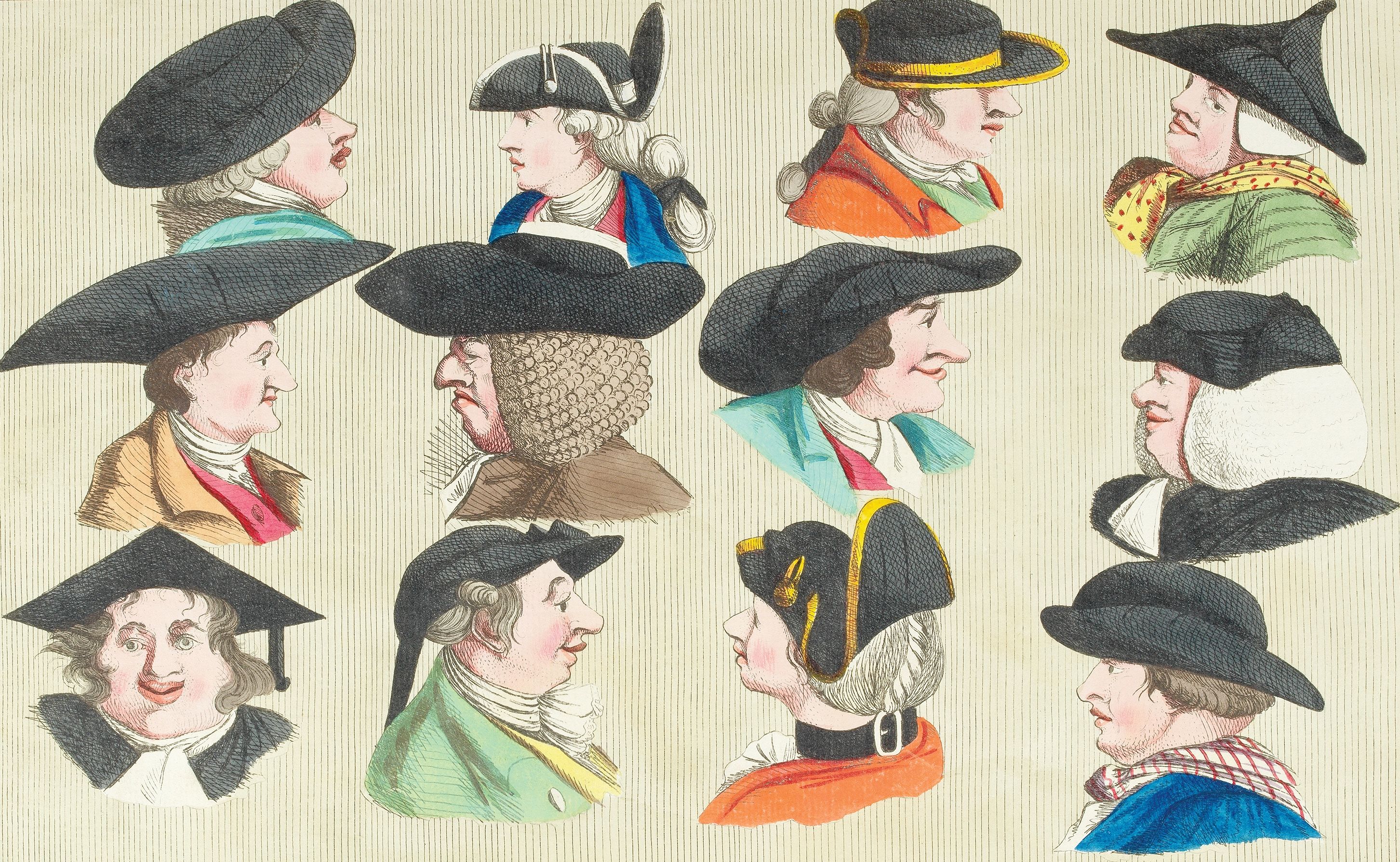
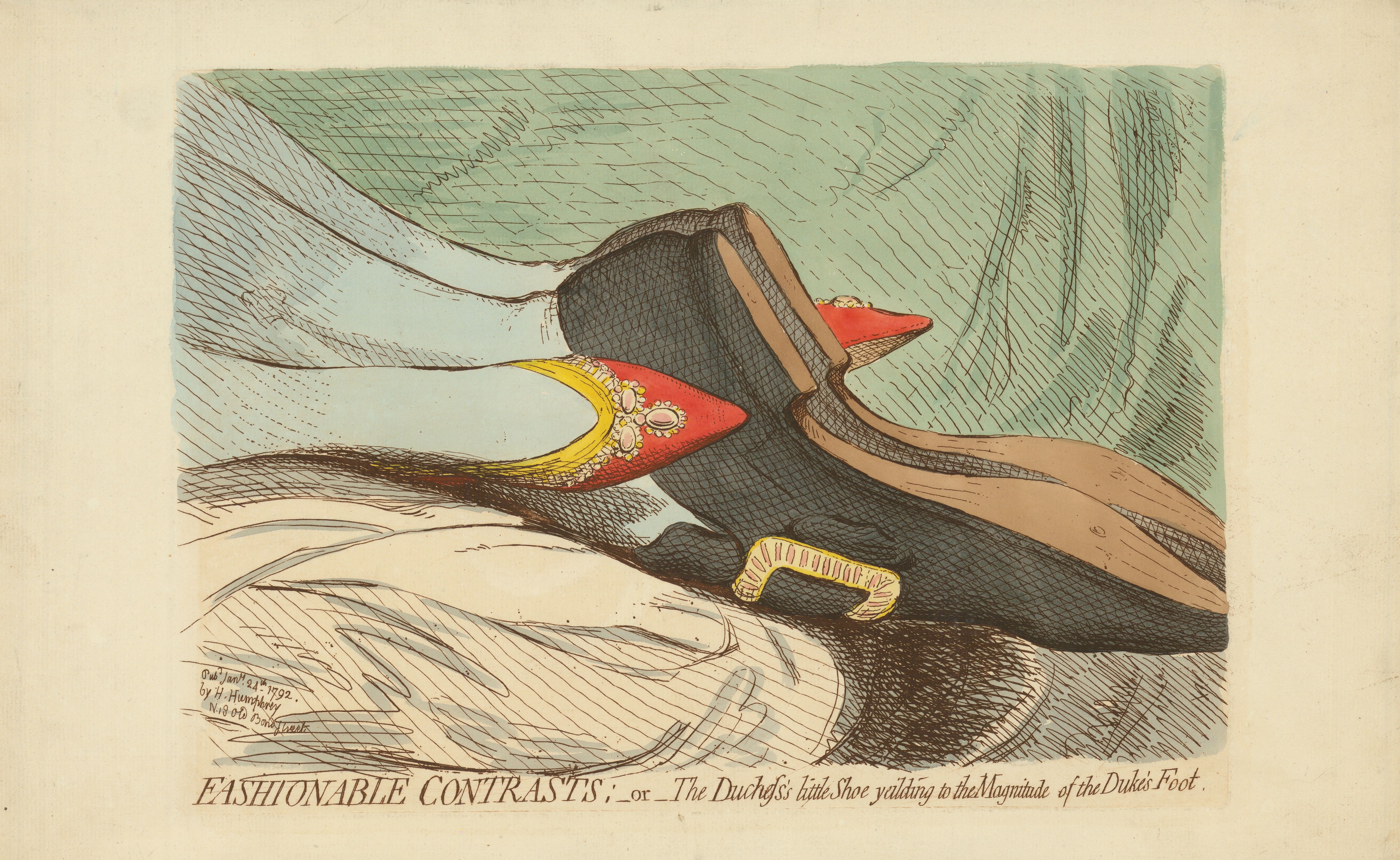
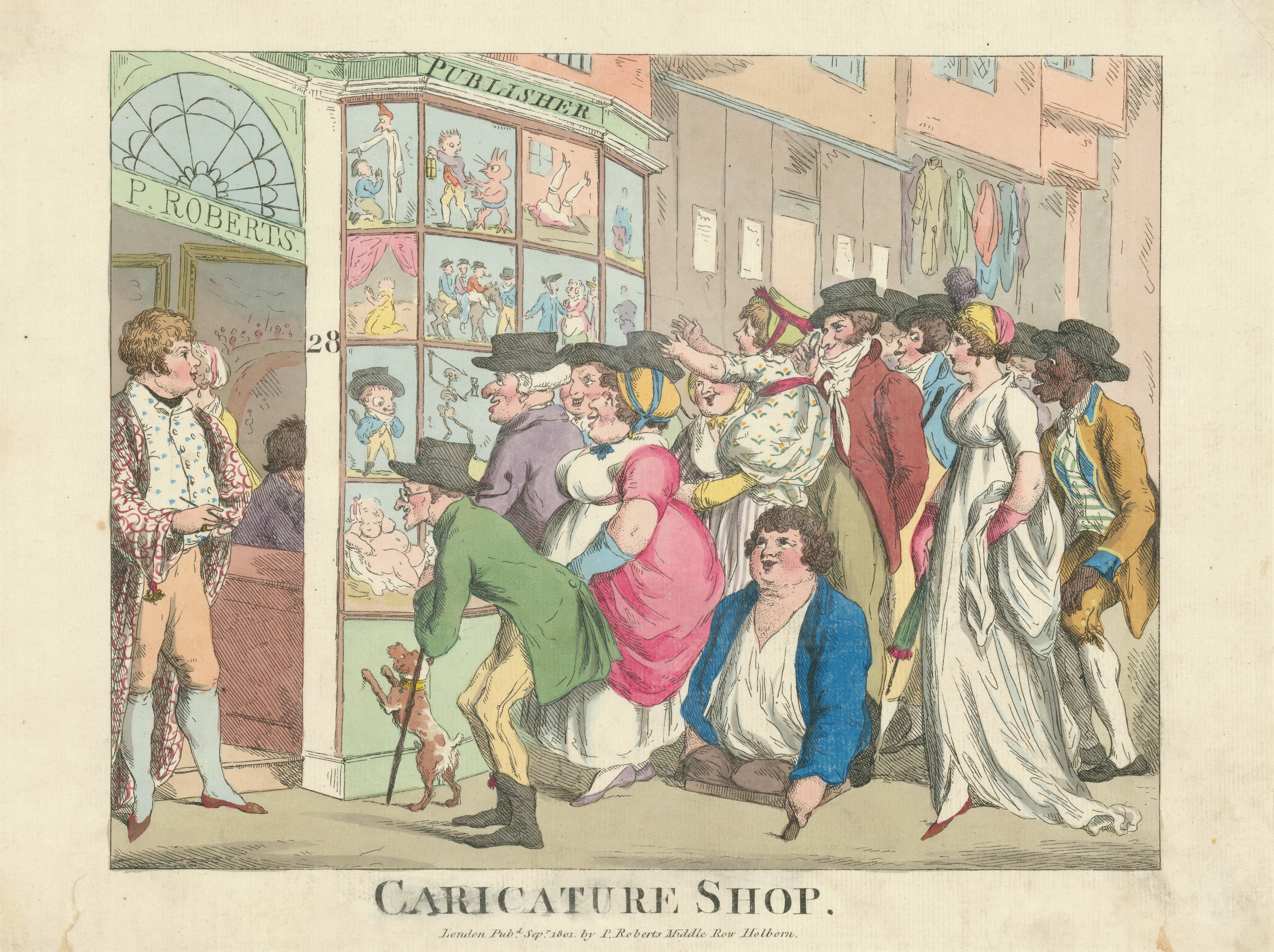
The first daily newspaper in Britain, The Daily Courant, was published at the start of the 18th century, Mark Hallett, the Märit Rausing director of the Courtauld, who worked at Edmunds’ restaurant during the 1990s, tells me. At the same time, print shops—which looked much like the one that still stands on Lexington Street—were opening all over London. Hogarth and Gillray both came of age as artists during a time when images were being reproduced at a previously unimaginable speed and scale: “The printed visual image was a ubiquitous form of everyday life,” Hallett says.
It was in this context that the satirical print, an unexpectedly vital and complex art form, thrived. “It meshes together imagery from a mass of both pictorial and textual sources,” Hallett says. “The more you look at it, the more you realise it’s this web of references: to earlier images, to different kinds of art forms.” And advancements in printing technology made satirical prints ever-more accessible.
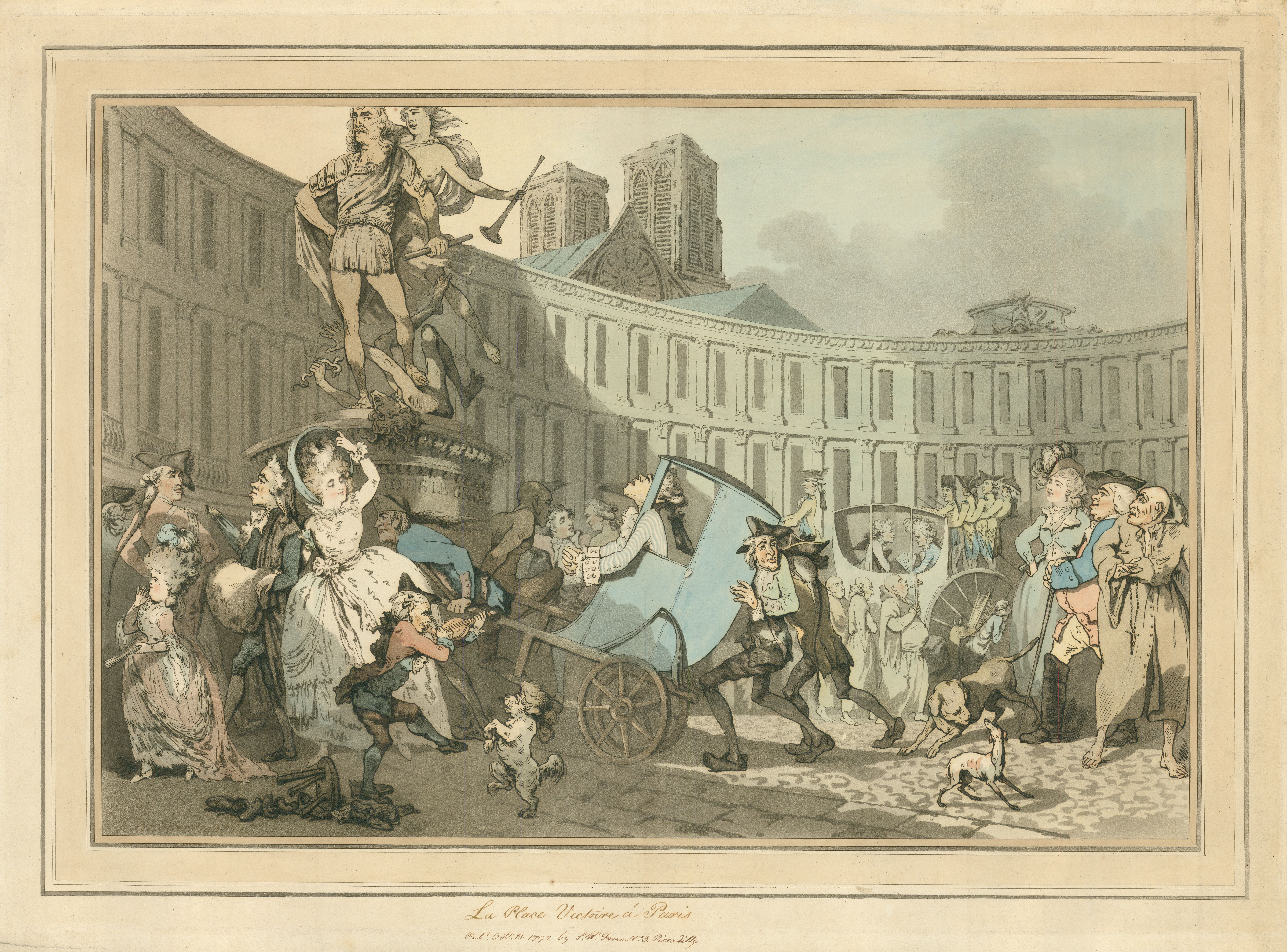
If it was the content of these prints that first drew Edmunds in, it was the small variations in their physical form that kept him poring over thousands of examples, trading different versions until he found himself with the Platonic ideal version of each print. “He very much prized the knowledge of the collector and the dealer,” says Hallett, “the people who, as it were, got their hands dirty working with prints, rather than the people applying theory to print culture.”
“Every part of the world is covered here”
A layperson might assume that, printing being a method of duplication, all prints of a particular image are more or less the same and therefore fungible. This, as Edmunds might have told you more vehemently than anyone else, is incorrect. He had a seemingly innate sense of which prints had original colour—hand-applied at the time of their publishing—and which had the considerably less coveted modern colour. “He absolutely abhorred anything with modern colouring,” remembers Xanthe. The collection attests to this, says Crouch: among the 10,000 prints, there isn’t a single example of modern colour.
It’s not surprising, really, that Edmunds was so attuned to the material nuances of the medium that he loved. The picture of him rendered by my conversations with those who knew him is one of a man who, unpretentious and occasionally gruff, relished the easy-to-miss textures of what he saw to be life’s great pleasures. Today, his name is most closely associated with food and wine; depending on where his collection ends up, it may one day be associated equally strongly with 18th-century graphic satire. Before taking a serious interest in either, Xanthe tells me, he collected cutlery. “He was engaged in many agreeable pursuits and he had set his own terms for them,” says Spero, “and, I suppose, that’s the most any of us could ask for.”
Edmunds’ duchy on Lexington Street is a living monument to this way of being. So is his print collection, which, by way of political allegories and grotesque figures, paints a portrait of Edmunds as a man who devoted himself to the pursuits that he thought worthwhile, and happily let them form his identity. “It was so much a defining feature of him and of his life,” says Xanthe of the collection. “Anyone who devotes their life to collecting anything, it’s always a poignant insight into that person.”—[O]




A respected voice in contemporary art discourse.
Focusing on ambitious storytelling and insightful art-world commentary. Ocula Magazine publishes in-depth interviews, critical essays and timely analysis on the artists, exhibitions and ideas driving the global art world.
Learn more about Ocula Magazine
Showcasing the best of the art world.
Ocula partners with galleries from around the world to highlight their artists, artworks and exhibitions. Gallery membership is by application and invitation, with each member vetted by an independent panel.
Learn more about Ocula Membership
Specialises in the sale of major artworks.
Led by a team with deep ties to the world’s leading auction houses, galleries and collectors. Ocula’s advisory team offers bespoke services to high-net-worth clients from around the world who are looking to acquire the best of contemporary and modern art.
Learn more about our team and services


