


The art world in focus
Subscribe to our newsletter for news and insights on artists, galleries and exhibitions.

What’s for sale at London’s biggest art fair? Ocula writers and editors round up the signs, symbols and ensembles on show in Regent’s Park.
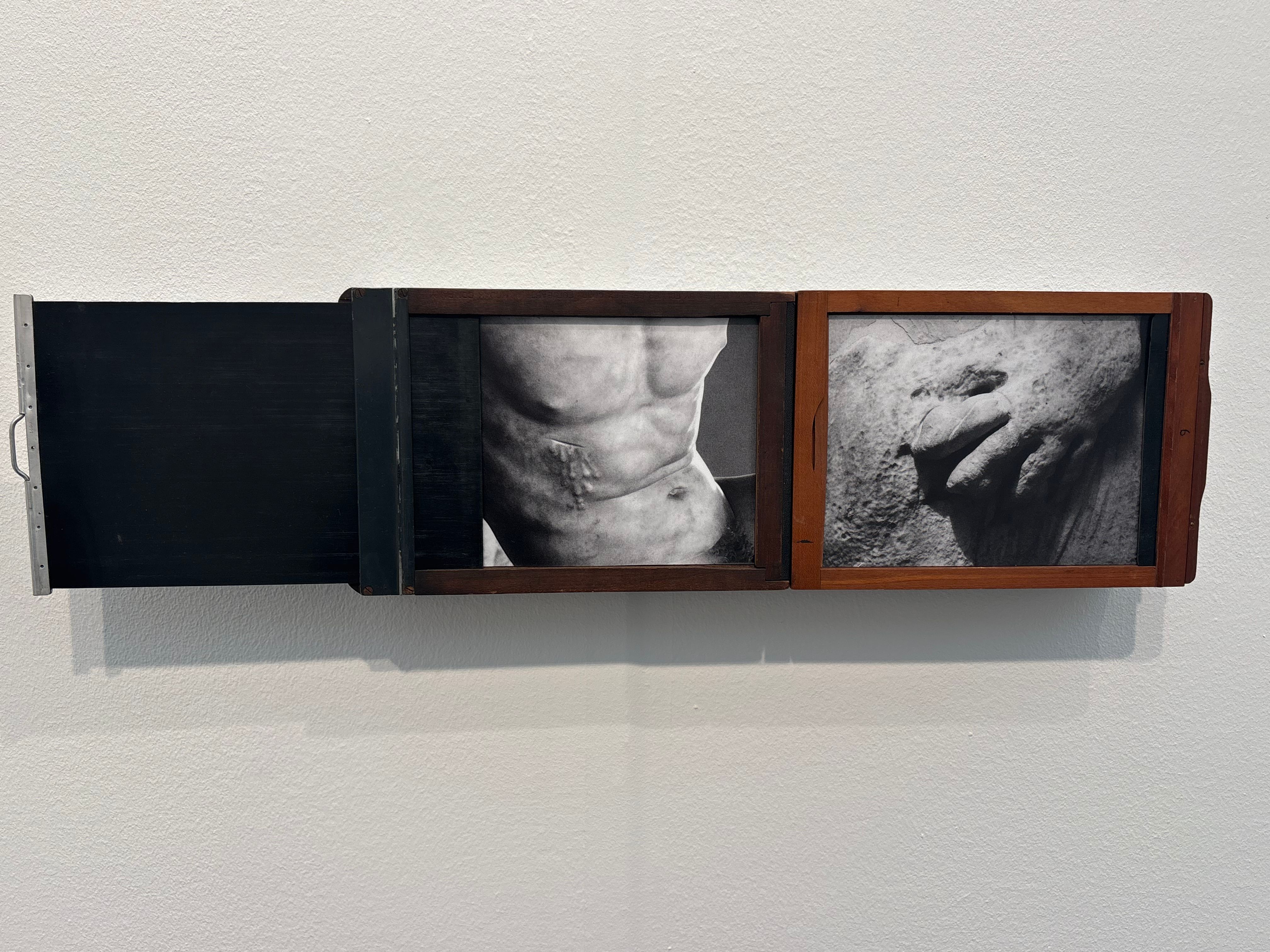
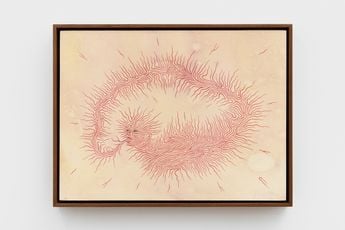
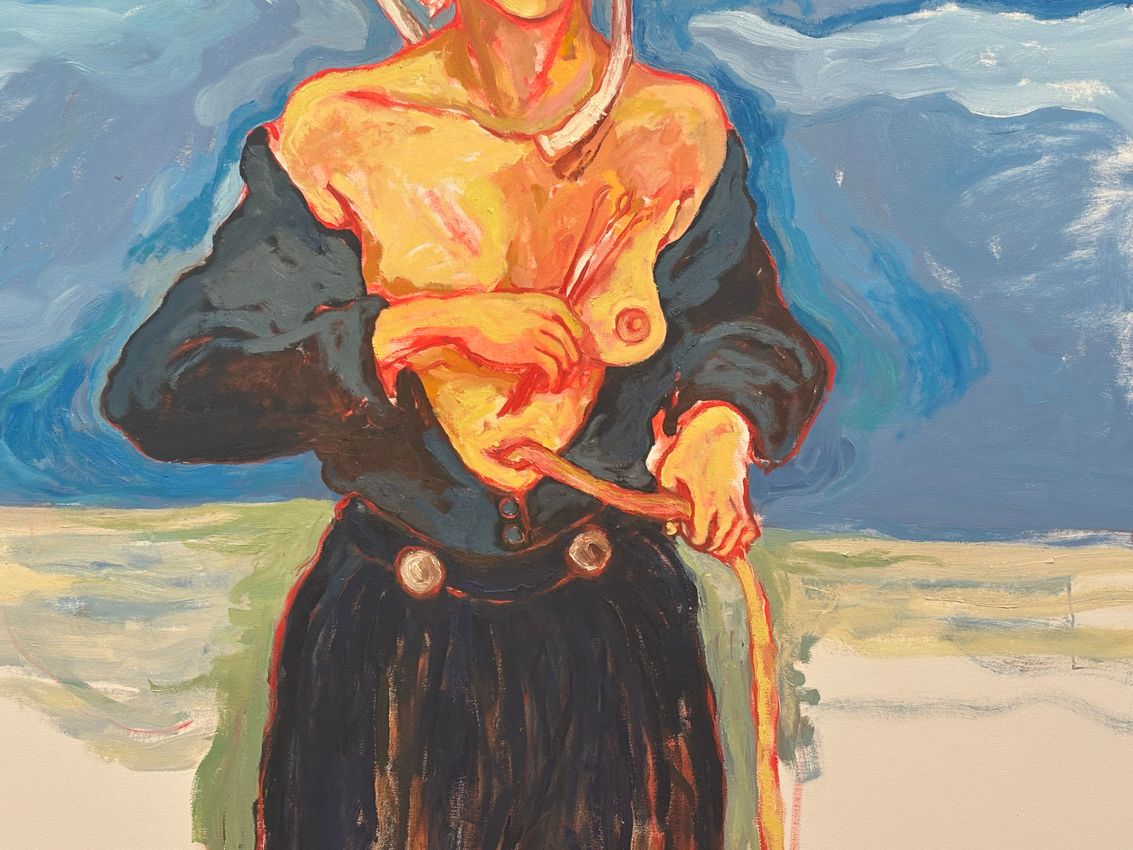
In Helen Chadwick’s Loop My Loop (1991), Goldilocks meets the Three Little Pigs and no one comes out intact. The sight of blonde hair intertwined around a pig’s intestine is gorgeous and repulsive—about right for an artist who once professed her love for the “subcutaneous human motor forces [that] squelch around the subconscious like mud wrestlers”. She’s not the only artist at Frieze getting under visitor’s skin. Her booth bedfellow at Richard Saltoun is the macabre, mischievous Cathy de Monchaux, who achieves similar levels of tactile ick in the flesh and fur of Sovereign (1999). If these two Turner nominees are the grand dames of cracking open the rib cage and truffling for the soft stuff, then their spawn are all over the fair. At Carl Freedman, there’s Lindsey Mendick, a long-time viscera enthusiast, and Joline Kwakkenbos with a painting featuring a never-ending umbilical cord. Elsewhere, there are wounds (Vasco Araújo’s Punctum 23 (2026) at Galeria Francisco Fino), bones (Asami Shoji at Linseed), and weird capillary/tentacle creatures (Felipe Baeza at Maureen Paley). There are also a lot of abstract slashed paintings—what is the canvas, after all, but skin? One could argue that anyone who has done three days at Frieze will understand the urge to disembowel oneself, but perhaps this appetite for innards reflects a wider culture steeped in true crime and dark libidinal churn. Only here, there are no victims—just us, observing the strange, slippery beauty of what we’re all made of.—Rosalind Jana
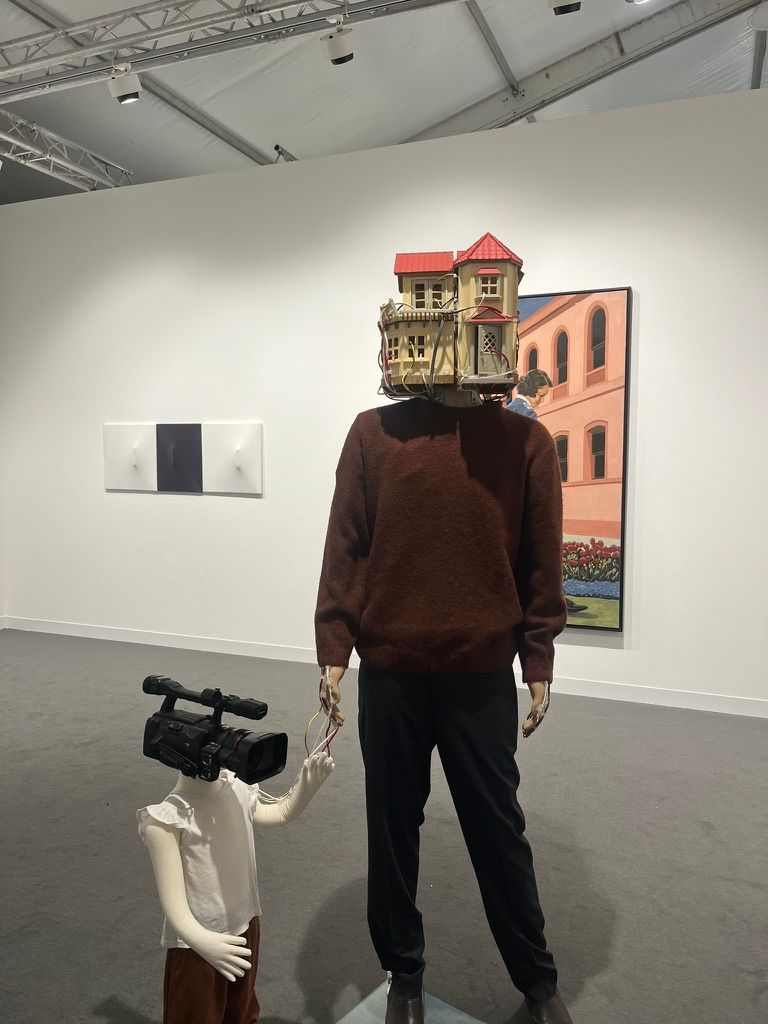
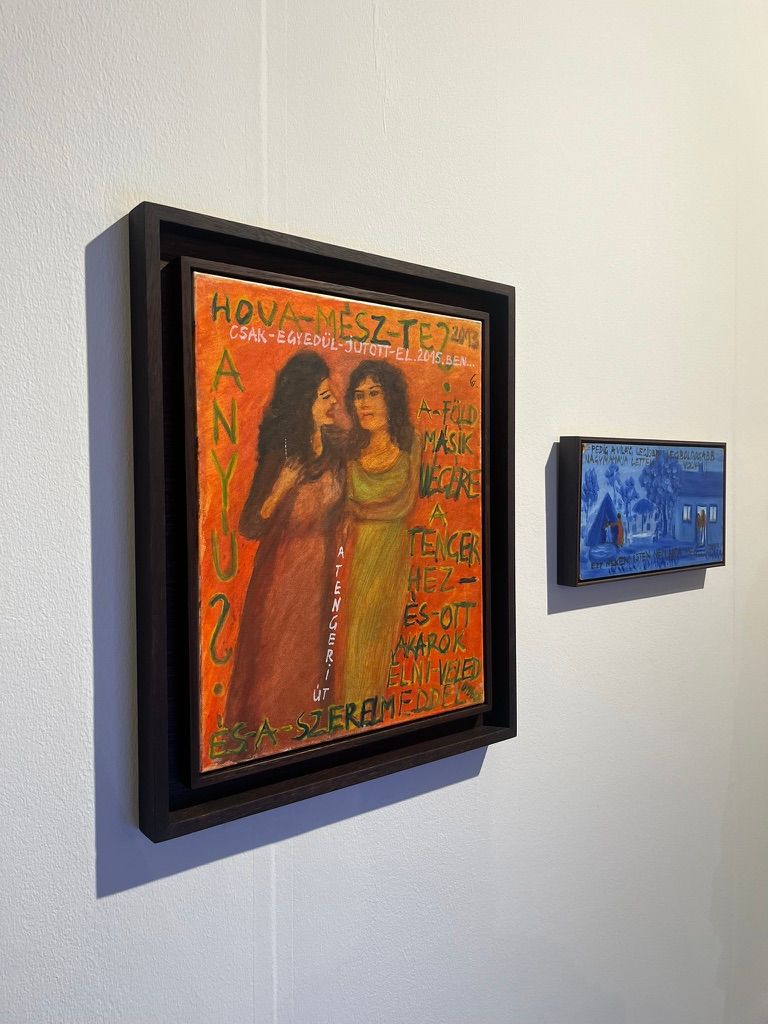
I went to Frieze to see Omara’s (also known as Mara Oláh, and of no relation) paintings at Seventeen Gallery. Mara was a Romani woman from Hungary and I believe that this is the first time her work has ever been shown in the UK. There were just two paintings on display: a domestic scene and a double portrait of Mara with her daughter. In the portrait, which is quite ethereal, both women are shown wearing soft, floaty dresses. It made me think about textiles and clothing—the hand-me-downs between mother and daughter—and then I arrived at Arcadia Missa to see Morag Keil’s work. House (2026) is a sculpture of a man with a doll’s house for a head, teeming with wires, and a child sculpture next to it with a camcorder for a head. The man wears a soft knitted jumper. It’s a diabolical combination that speaks to our growing estrangement from the tactile world. I found it to be completely devastating.—Nathalie Olah
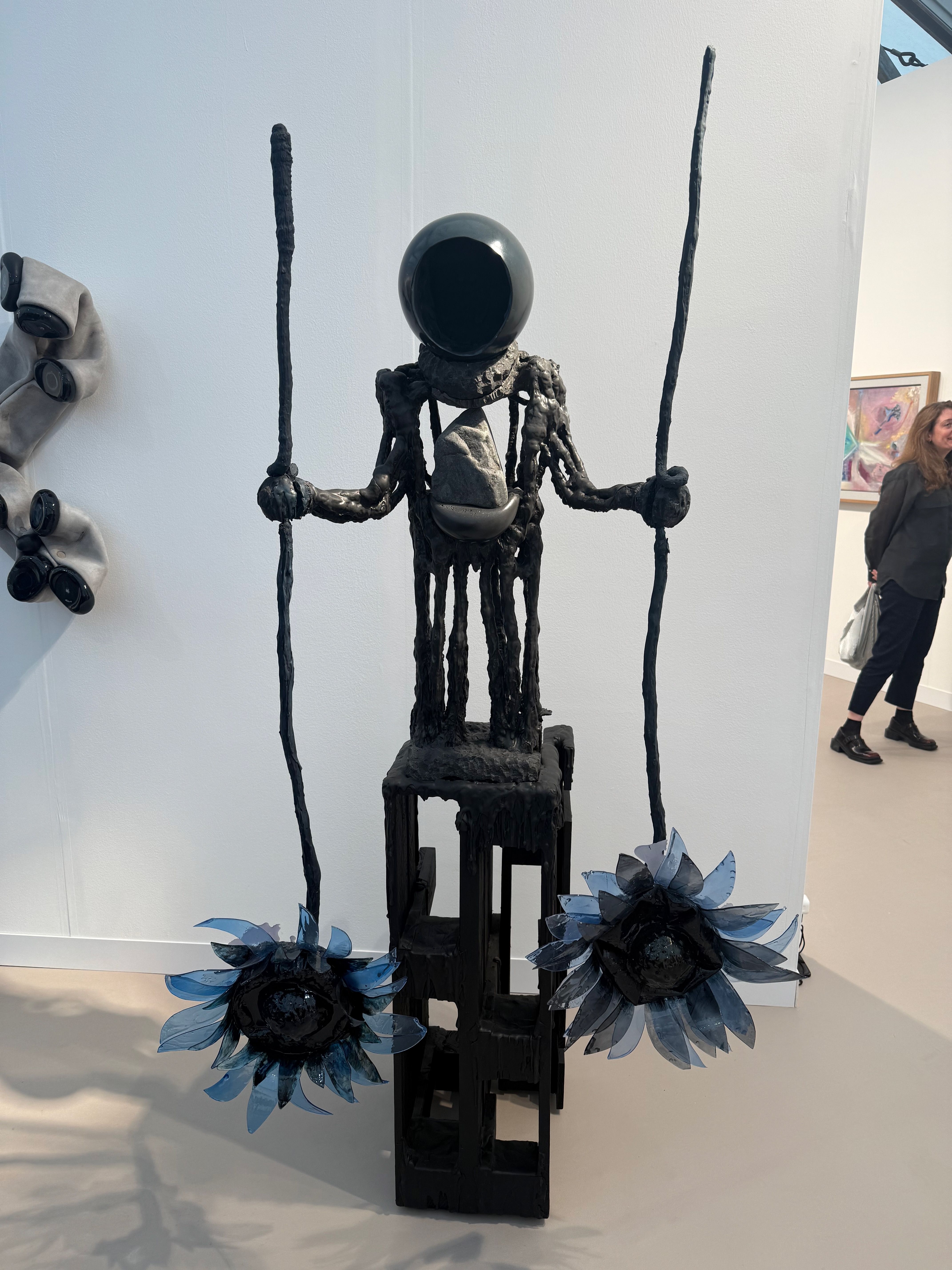
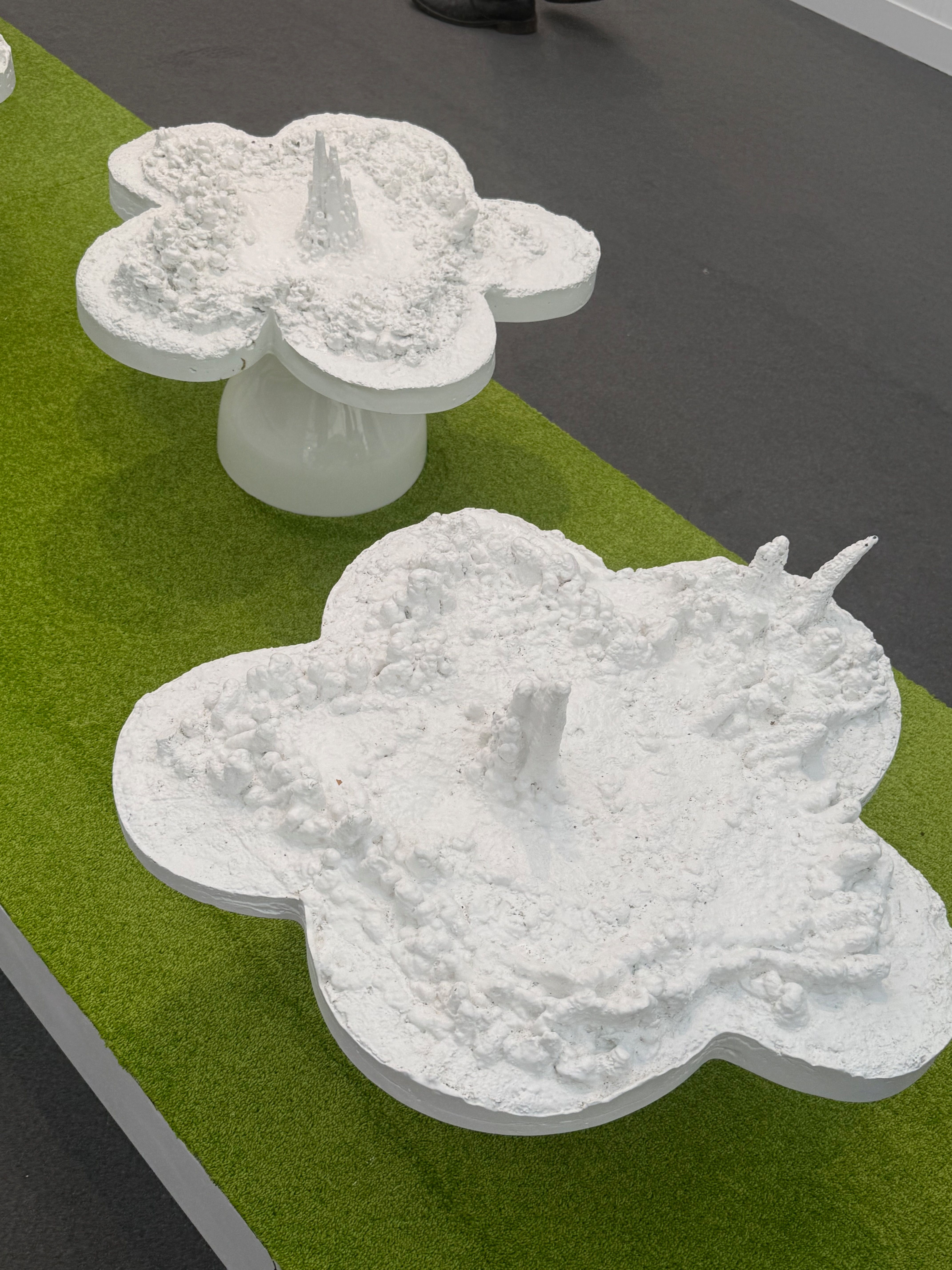
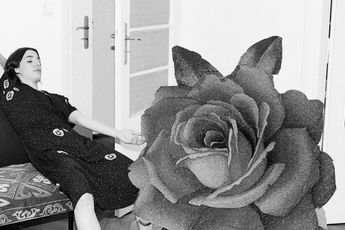
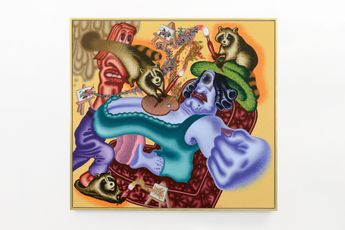
Is there still hope for the world when even the flowers aren’t beautiful anymore? For centuries an artistic byword for vitality, sensuality, and of course sexuality (even if Georgia O’Keeffe spent her whole career denying it); at this year’s Frieze I repeatedly encountered flowers turned grotesque, threatening and mechanical. Rachel Youn‘s playful sculptures graft artificial orchids onto modified neck massagers, which gyrate like strippers strapped to torture devices, doomed to lap dance until the end of time at G Gallery and Sargent’s Daughters. Nearby at Richard Saltoun are Helen Chadwick‘s Piss Flowers (1991-1992) (find a better title at this year’s fair—I’ll wait), where cartoonish flowerheads emerge from a bed of astroturf, coated in unsettling mineral growths; alive in all the wrong ways. The Fleurs du Mal kept coming: in Apollinaria Broche‘s sculptures which grasp with metal claws at Union Pacific, Zhang Ruyi‘s botanical chimera bisected by an iron bar at Don Gallery, and—maybe too on the nose—Peter Saul‘s cartoonish Argument with a Bowl of Flowers (2024) at Michael Werner Gallery, in which a bulbous purple vase has sprouted hands in order to shove an onlooker square in the face. What are you looking at? All these ugly flowers felt like a response to the dire state of the environment. How can you focus on pretty roses when the forests are burning and the oceans are boiling? The only true floral beauty I saw were in the richly dark aquatic plantscapes of Brazilian artist Fernanda Galvão with Casa Triângulo and Foundry Seoul. A helpful attendant told me brightly that the artist is inspired by science fiction. In these dark days, then, the only plants that can still be beautiful are the ones we imagine.—Tom Faber
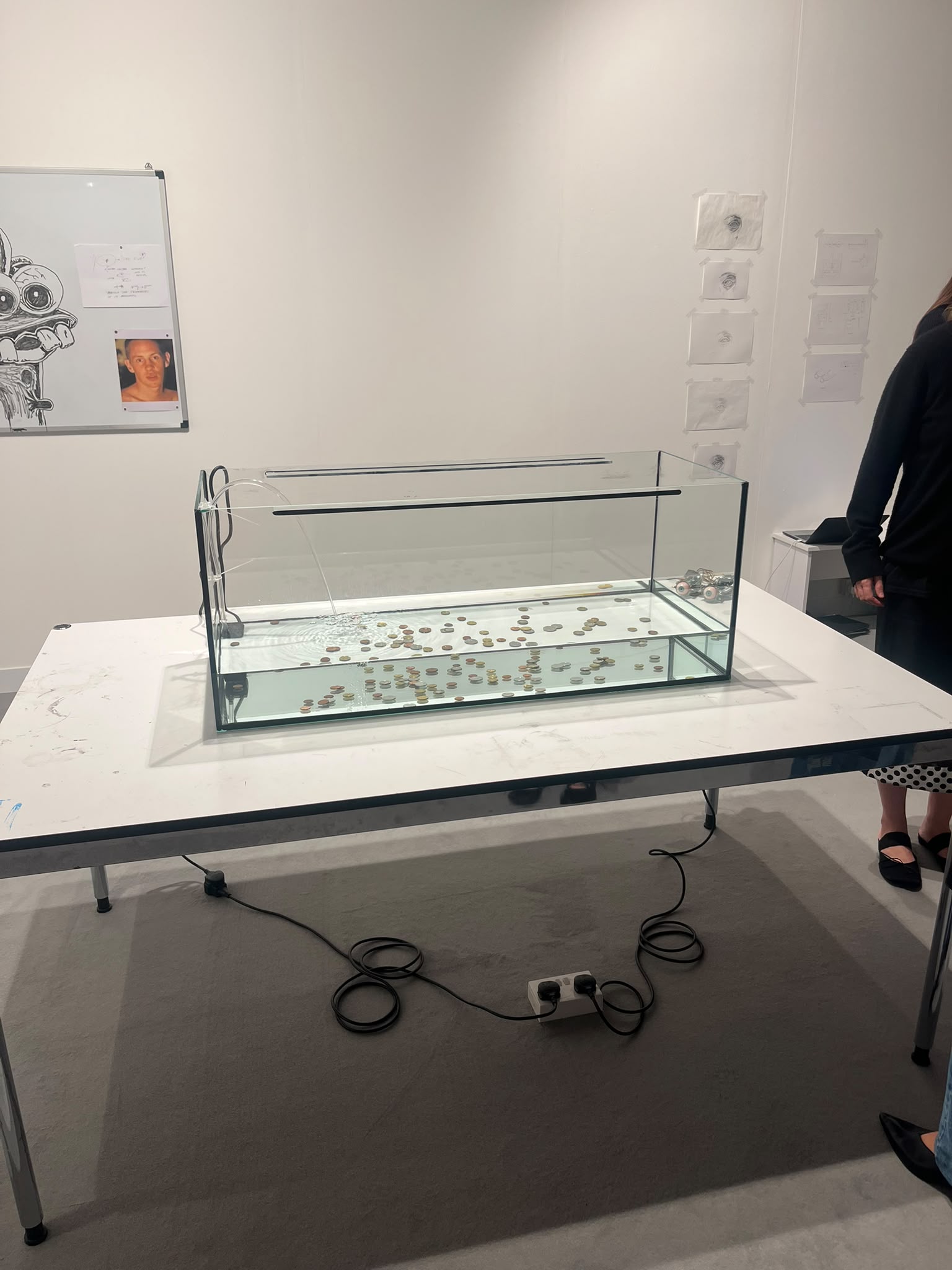
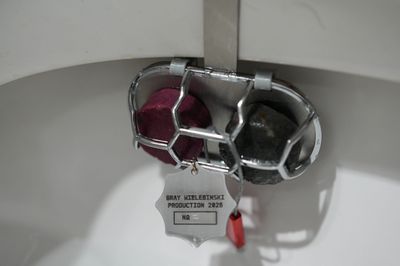
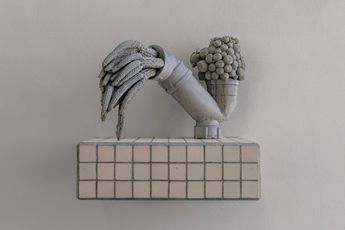
It might have been Gray Wielebinski who got everyone posting pictures of toilets this Frieze, but the topic of hygiene, and systems for achieving the hygienic, were everywhere. One of the fair’s most striking works, to me, was Myriam Mihindou’s Fleurs de peau (1999-2024) at Phillida Reid, a wall of dangling Marseille soaps (some also formed of wax or latex) in lumpen, glossy shapes, like amulets worn down by ceremonial use. Elsewhere, it was cisterns and systems on display. Hwang Suyeon, at Platform Korea, showed bodies made of sand, half-submerged in glass tanks on wheels; at Heidi, Benjamin Lallier had two twitching eyeballs observe another tank, into which visitors were encouraged to drop coins. What spiritual pollution has taken place in the art world, to provoke these scenes of ritual cleansing?
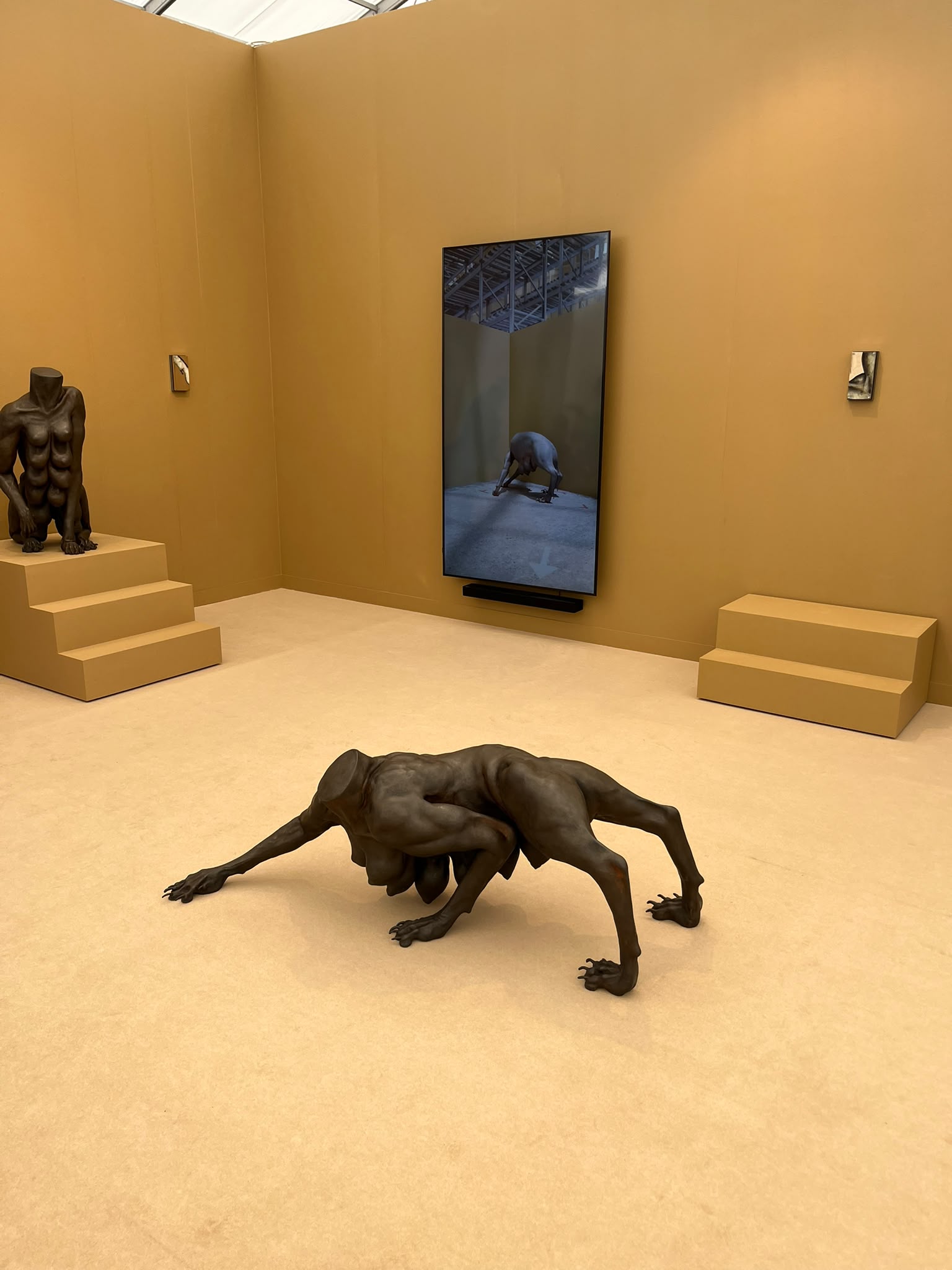
But this was the work of the fastidious Superego, then the Id’s presence was marked by a proliferation of teats—appearing on the body of Yuli Serfaty’s dog-woman figures (Who’s a Good Girl? with Xxijra Hii Gallery), at the Tina booth by Karim Boumjimar, and in hand-blown glass form, suspended on towel rails, by Gabrielle Beveridge at Seventeen Gallery. When it comes to attracting the attention of an overstimulated and distracted crowd, many breasts are best.—Nell Whittaker
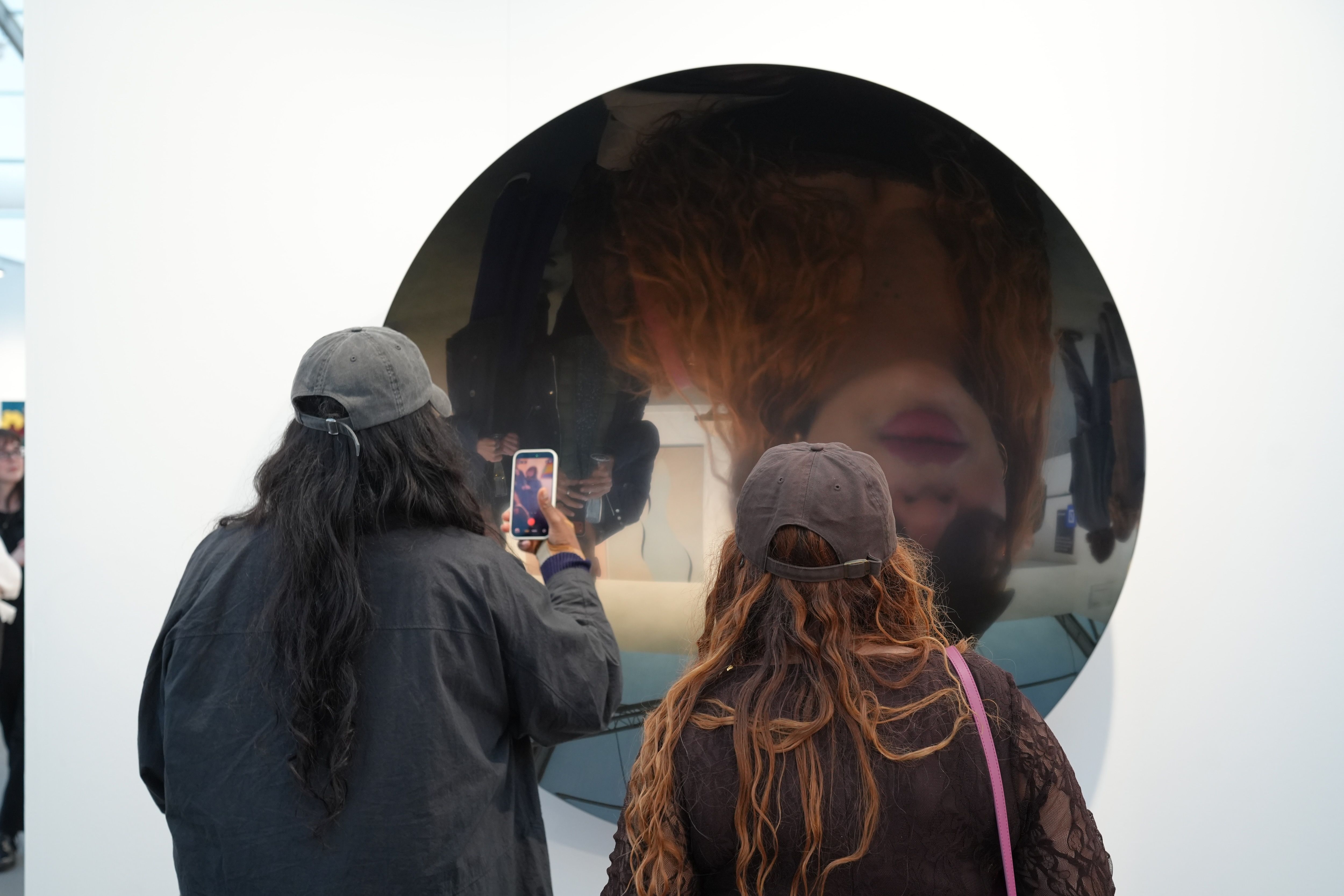
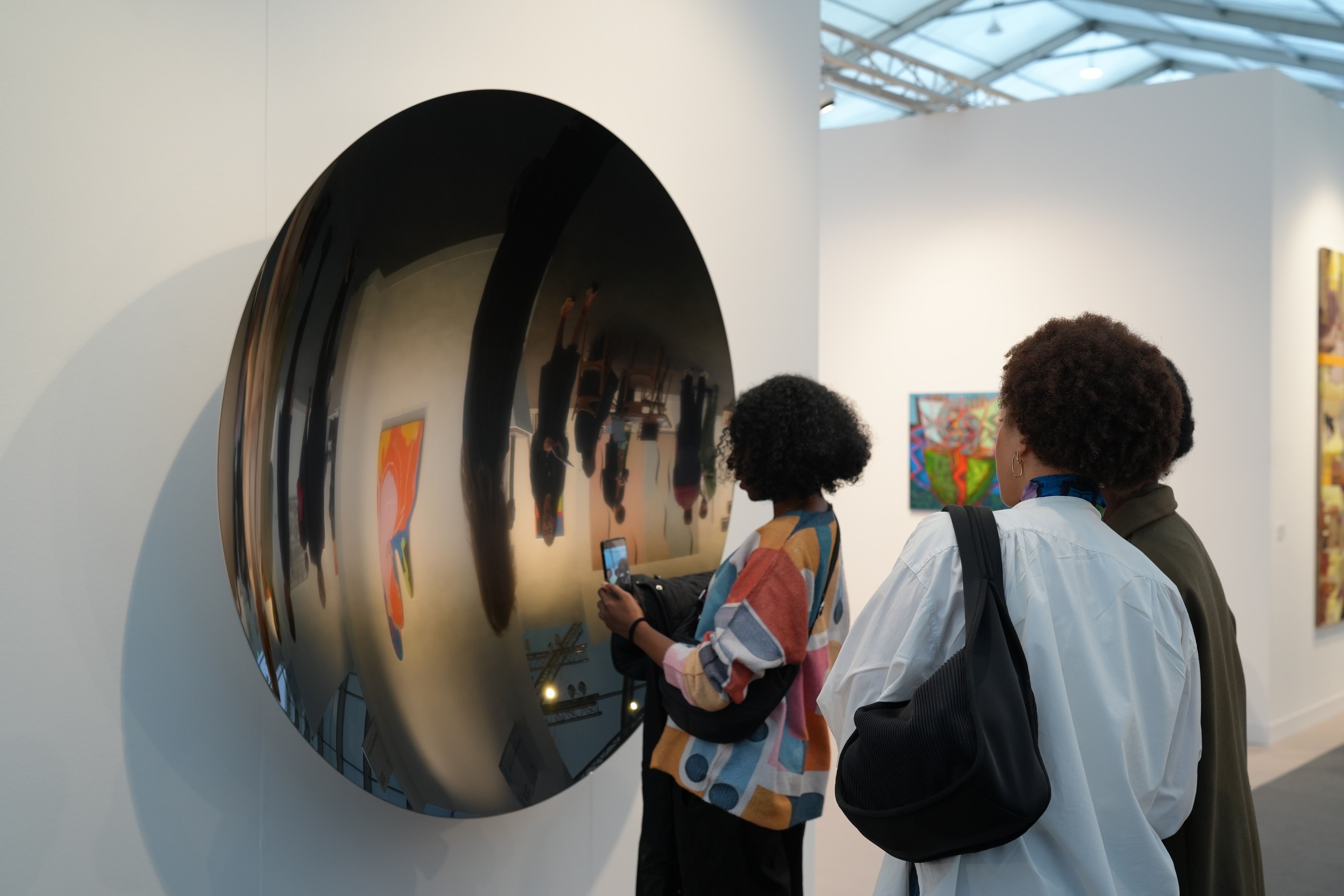
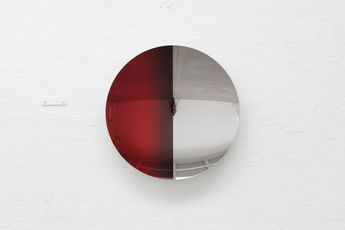
One doesn’t need to look far to find a mirrored artwork at Frieze, and I could have done without the repeated glimpses of my own flushed face in shiny surfaces under the constant, artificial lights of the fair floor. Purveyor of spectacle Anish Kapoor amplified things at Kukje Gallery with Green and Brandy (2021), his distorted circular mirror which drew passing viewers in with an initial glossy reflection, only for their preening faces to be magnified to hideous proportions when they approached to inspect more closely. I witnessed one woman get a jump scare from her own face as she attempted to reapply her lipstick. Nearby, Ryan Gander’s inflatable, three-metre-wide black ball inscribed with the question ‘Are you above 55%?’, beamed back a softer outline of its viewers in the shiny black sphere.
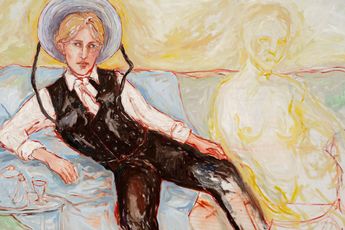
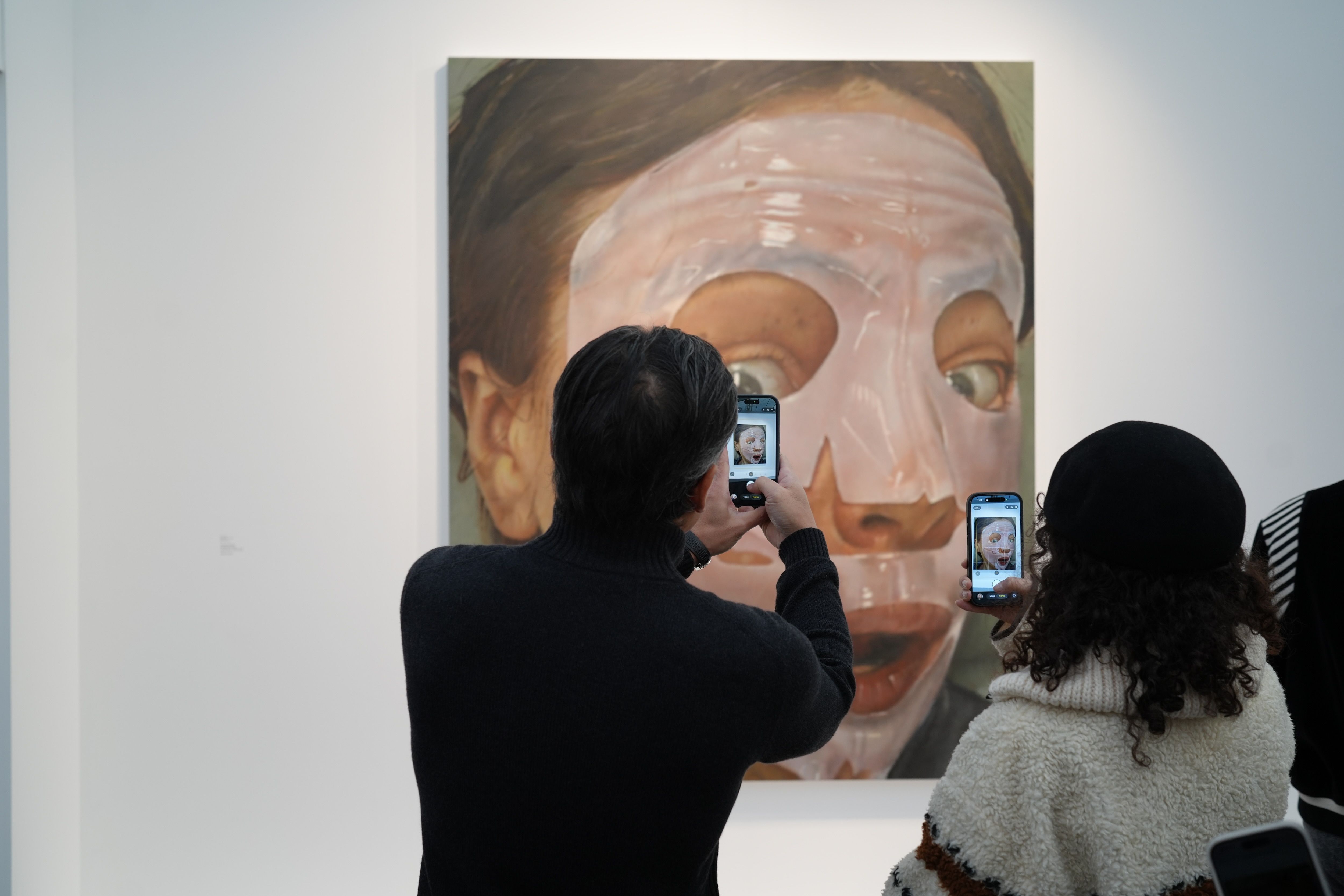
A wooden figure of a faun by IW Payne at 243 Luz & Co was criss-crossed with a mirrored ribbon, giving peeks of passers-by in it among the artist’s evocation of the aftermath of a party, complete with a crumpled parachute and a rogue rat on the floor. The party was over, too, at Rose Easton’s presentation of Amanda Mostrom’s discarded mirrorball and lonely roses lying sadly on the floor of the booth. Issy Wood’s self-portrait in a sticky face mask, face contorted in faux surprise, at Carlos Ishikawa at the entrance to the fair, offered a scene from the morning after the night before. Perhaps most striking is Wood’s insistence in the work on the performance of the self, even in the supposed privacy of the imagined bathroom mirror, which felt all the more pertinent as fairgoers stopped beside it to take selfies.
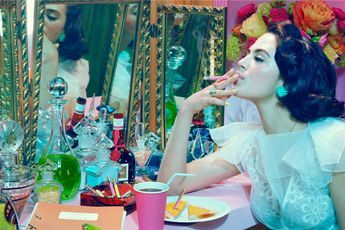
For those with cash to burn, or £380 to be precise, veteran fashion photographer Miles Aldridge was offering the chance to pose for your own picture-perfect polaroid over in Mayfair’s Mount Street, taken by the man himself against an orange curtain with props including cigarettes, pills, cream cakes and other vices. Glossy, camp and seductively vain, it offered the most revealing lens of all through which to view the fair’s endless hall of mirrors.—Louise Benson
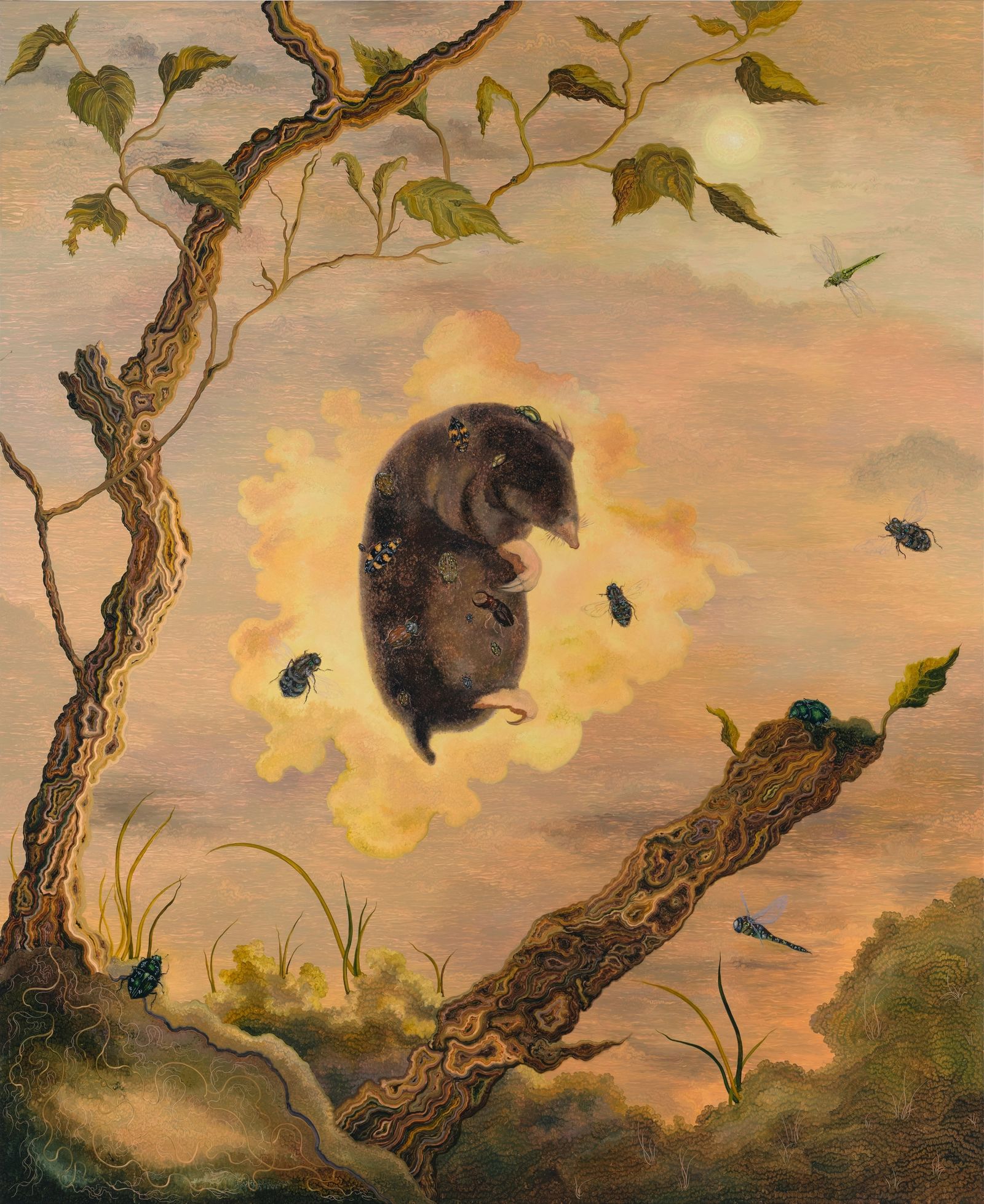
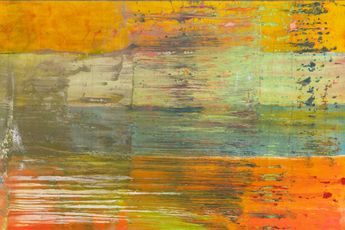
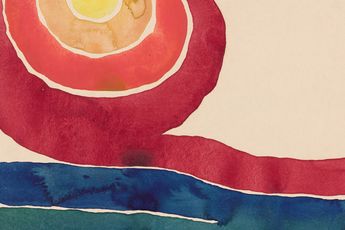
What I noticed at Frieze were sunsets, or sunset-type works. Possibly topical in our end times; the wildfires and fluorescent haze of particulate matter that we don’t need screens or art fairs to see. More pertinently, sunsets are easy to sell, as everyone likes them! I saw a huge, glittering, spectral orange butterfly hovering in a watery red sky in Chioma Ebinama’s The Tower (2026) at Maureen Paley. I thought Sigmar Polke’s Untitled (Farbprobe) (1983) at VeneKlasen seemed like a sunset-work; creamy-yellow and purple. A light calpol-pink sunset, just beginning, emerged at the back of Farida El Gazzar’s painting of palm trees at Kalfayan Galleries, and sunset skies glowed orange in Ryan Mosley paintings at Josh Lilley. Frank Bowling’s fluorescent pink Watermelon Bight also seemed pretty sunsetty to me, a faint disk in the background, at Hauser & Wirth. But the most sunsets in one booth was at Pilar Corrias; Rachel Rose’s small squares of sky, Sholto Blissett’s mountains with vague sunset backgrounds, and Georg Wilson’s sunset pastorals, including a painting of a mole decorated with bugs floating on a golden cloud, the rest grey and orange cirrostratus. Compositionally, this had an AI-generated Renaissance feel, generic but surreal (but aren’t all sunsets?). —Lucy Mercer
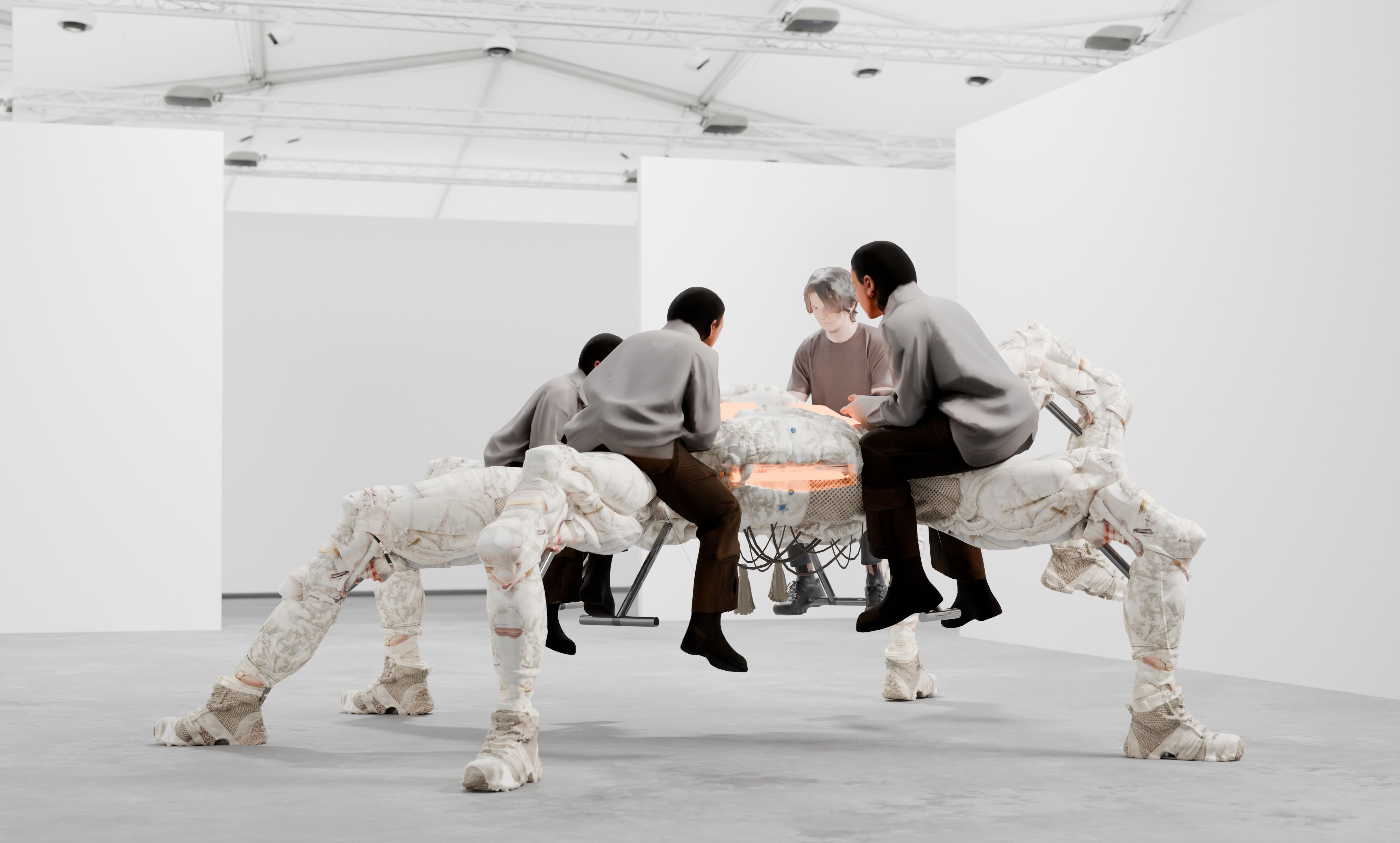
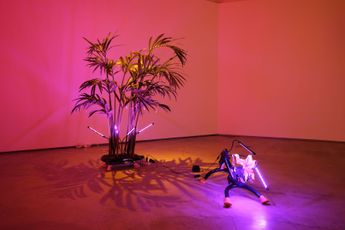
Every year, at every major art fair, in every major city, there is a work that, whether through style, social media savvy or the capturing of some political zeitgeist, generates a level of interest that spreads beyond the fair floor. Last year, at Art Basel Miami, this work was Beeple’s robotic dogs. This year, at Frieze London, it’s a creature with rather more legs. From the moment doors opened on Wednesday morning, VIP fairgoers were drawn to Theo Triantafyllidis’s Feral Metaverse (Spider) (2026), commissioned through the Frieze London Artist Award. Women in gleaming heels and men in expensive suits could be seen clambering atop the participatory arachnid, which acts as a shared video game-style environment. It all looked rather fun, if a little ungainly. Elsewhere in the fair I spotted works that, though less lighthearted, put me equally in mind of creepy crawlies. At King’s Leap’s Frieze Focus booth, Isaiah Davis’ large-scale sculpture is bound to the wall by a metal chain in the form of a spider’s web. According to the New York gallery, the work “uses the contradictory nature of metal–both hard and malleable–to deconstruct the codes society prescribes onto identity”. Nearby, at London-based Xxijra Hii’s stand, a figure reminiscent of both spider and dog, replete with many pendulous breasts, appeared ready to pounce. The headless work, by multimedia installation artist Yuli Serfaty, suggests an autonomous machine primed to “track, perform, optimize and absorb command”. Overall, thoroughly unnerving—much like encountering a real eight legged beast.—Philippa Kelly
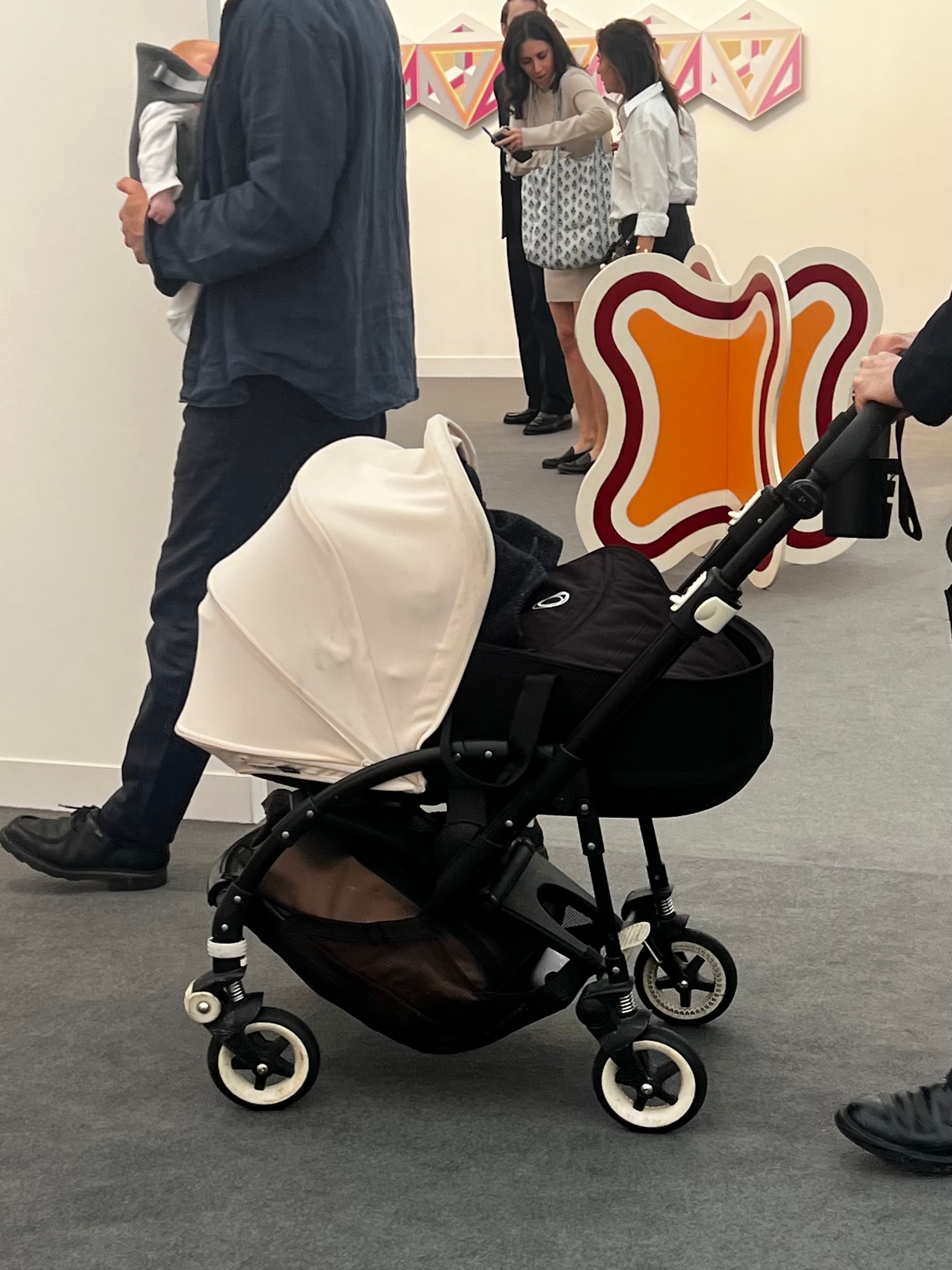
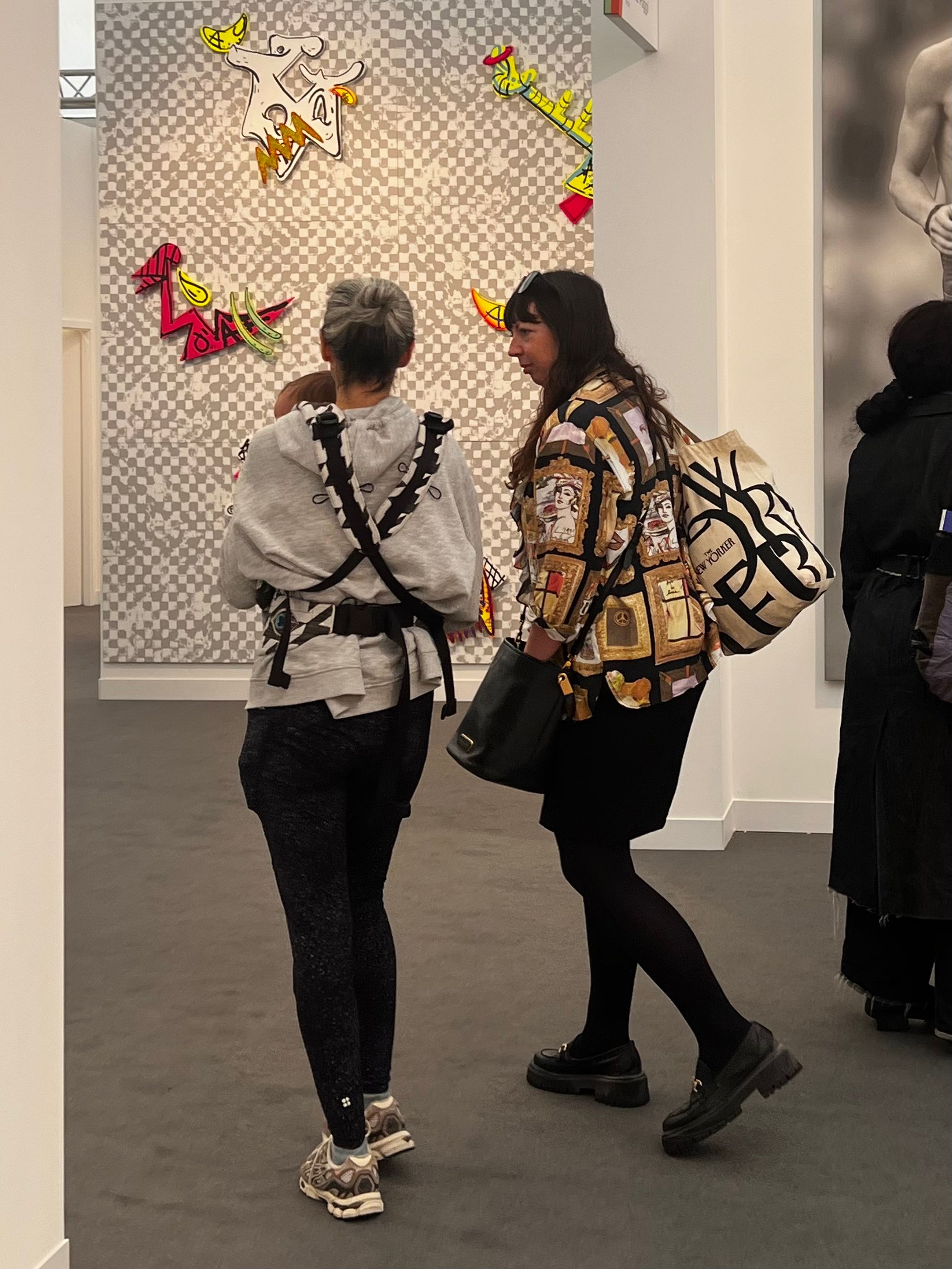
It’s Take Your Child to Work Day! An established convention in some industries, I was surprised to see a good two dozen kids—newborns, that is, of the fresh, immobile, crying kind—being carried around between overcrowded fair booths. Highly overstimulating for a twenty-something, I can’t begin to imagine how it felt to the babies, let alone the parents. Decked out in designer bodysuits and wheeled around in chrome-finished, state-of-the-art buggies, the infants were an adorable sight nevertheless, and a most welcome demonstration of the realities of juggling employment and care work during some of the busiest weeks of the art world calendar.—Maja Renfer
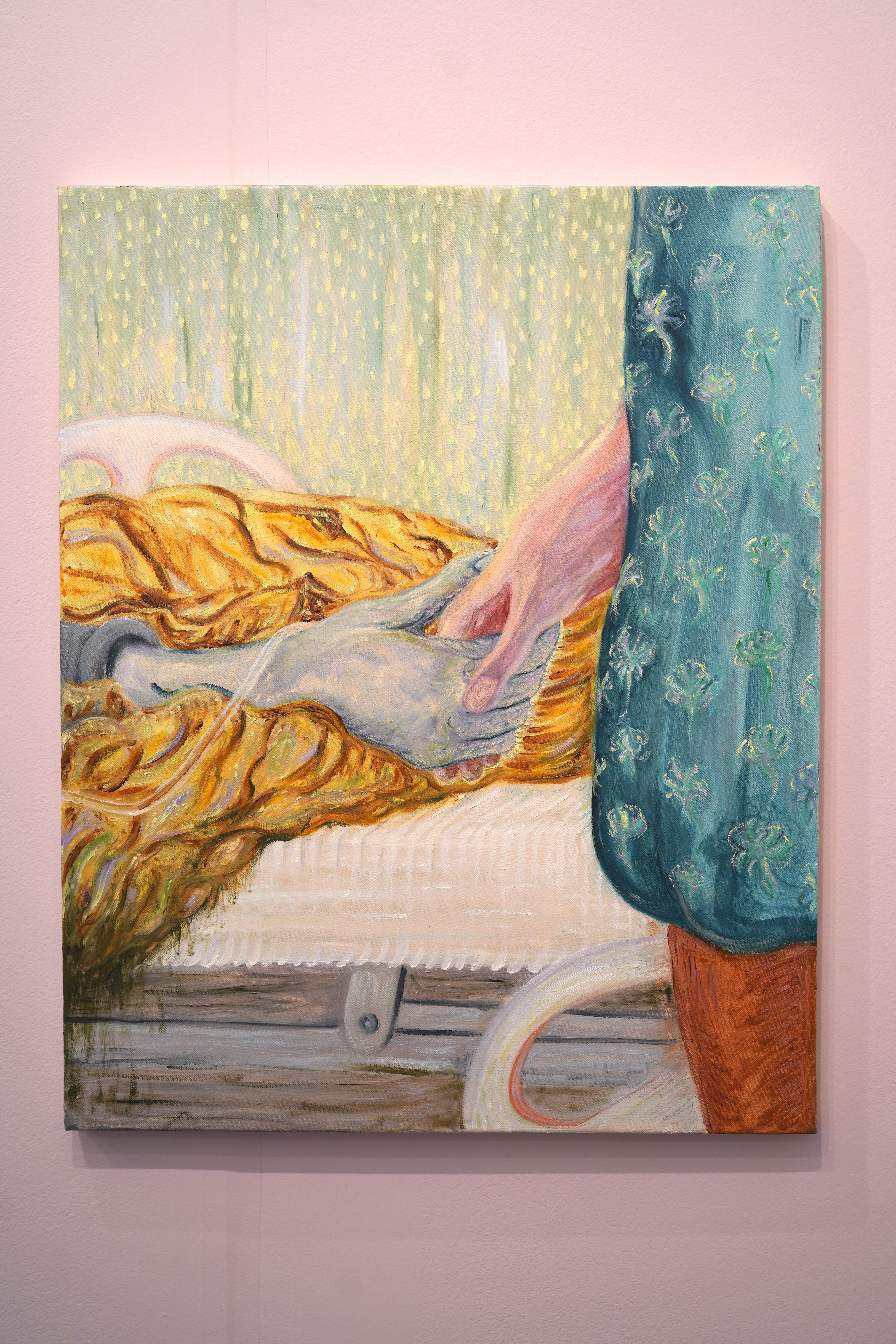
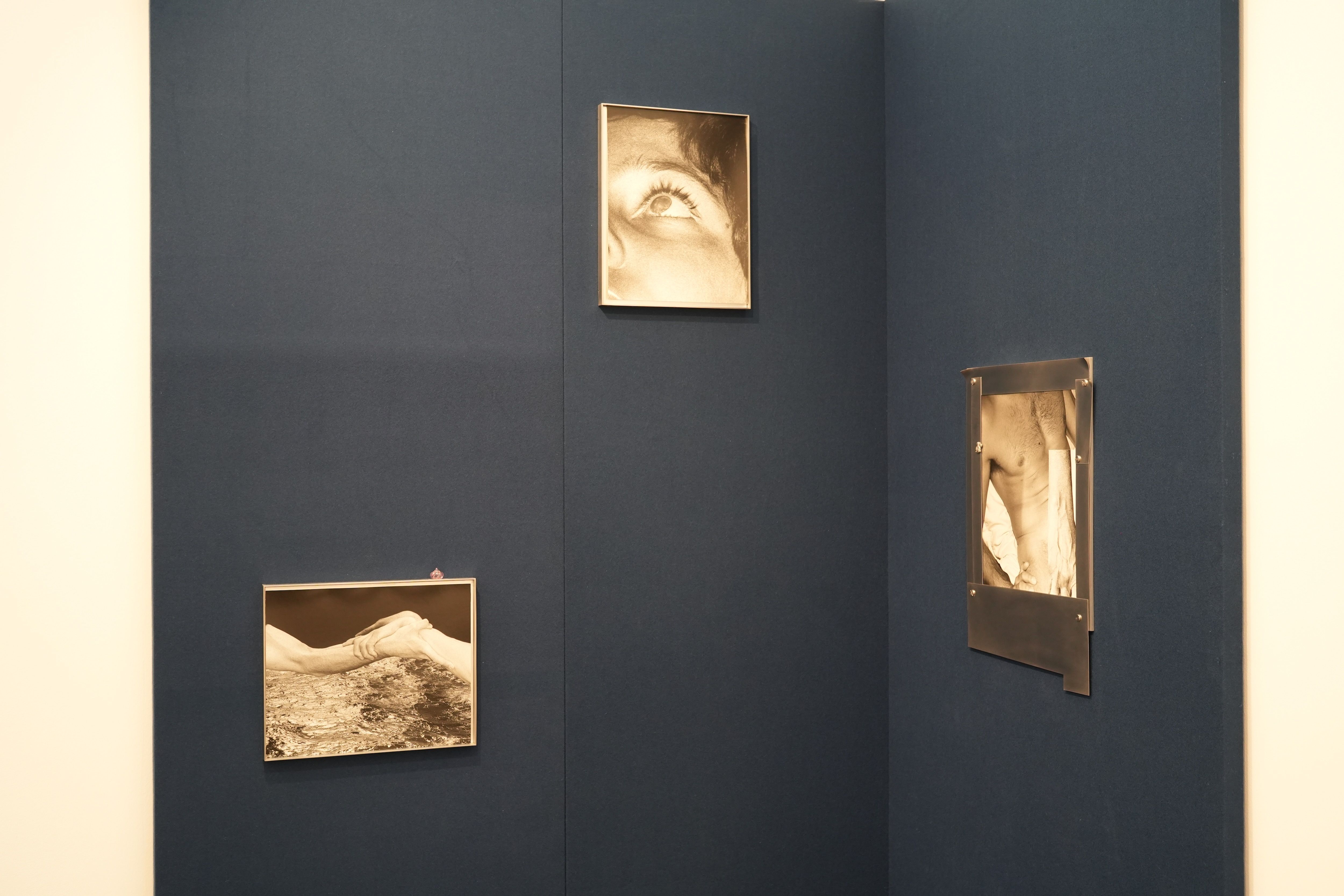
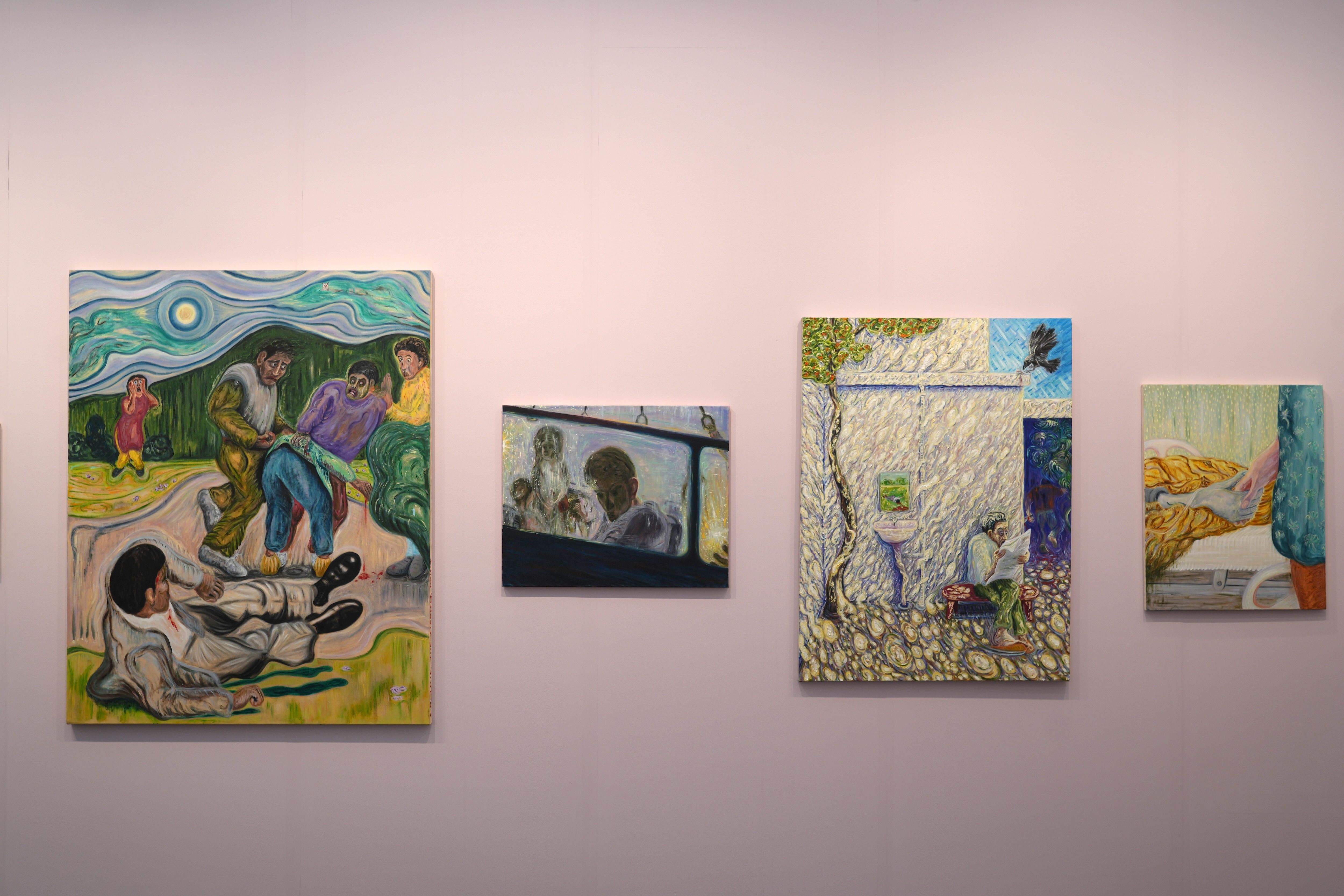
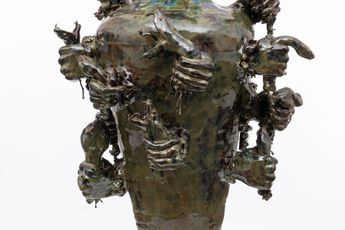
The thing which I found my eye drawn to at Frieze this year was fingers. They were in Joanna Piotrowska’s black-and-white photographs at Phillida Reid: a hand grasping a woman’s waist, two hands holding onto each other’s wrists or cradling someone’s chin from behind; Shannon Cartier Lucy’s realist painting of a finger poised to spray a heavy glass bottle of perfume at Soft Opening; Sohrab Hura’s oil of a dozing figure at Experimenter, their hand providing a pillow for a white cat as it sleeps on the floor; Paul Robas’ blurred oil of a cigarette-holding hand at Alice Amati and Juan Uslé’s refreshingly immediate series of 210 photographs and paintings at Frith Street Gallery, which the artist made while walking through London, New York and Saro in Spain. You can feel that the works were shot from the perspective of a human body, often peering down at things on the ground, pointing up at tall things, or drawn up close to the subject. He caught the marble fingers of a sculpture pulling back the heavy fabric of a robe, clasped hands enclosing someone in a hug and the roots of a tree, splayed like fingers as they burrow their way into the soil. In amongst the hundreds (thousands?) of metres of colourful, living room-friendly abstract painting, I was craving something more immediate and more literally expressive: the way someone interlocks their fingers to keep a lover close, or the strength of the hold when two people hold onto each other’s wrists, like a human chain link.—Baya Simons
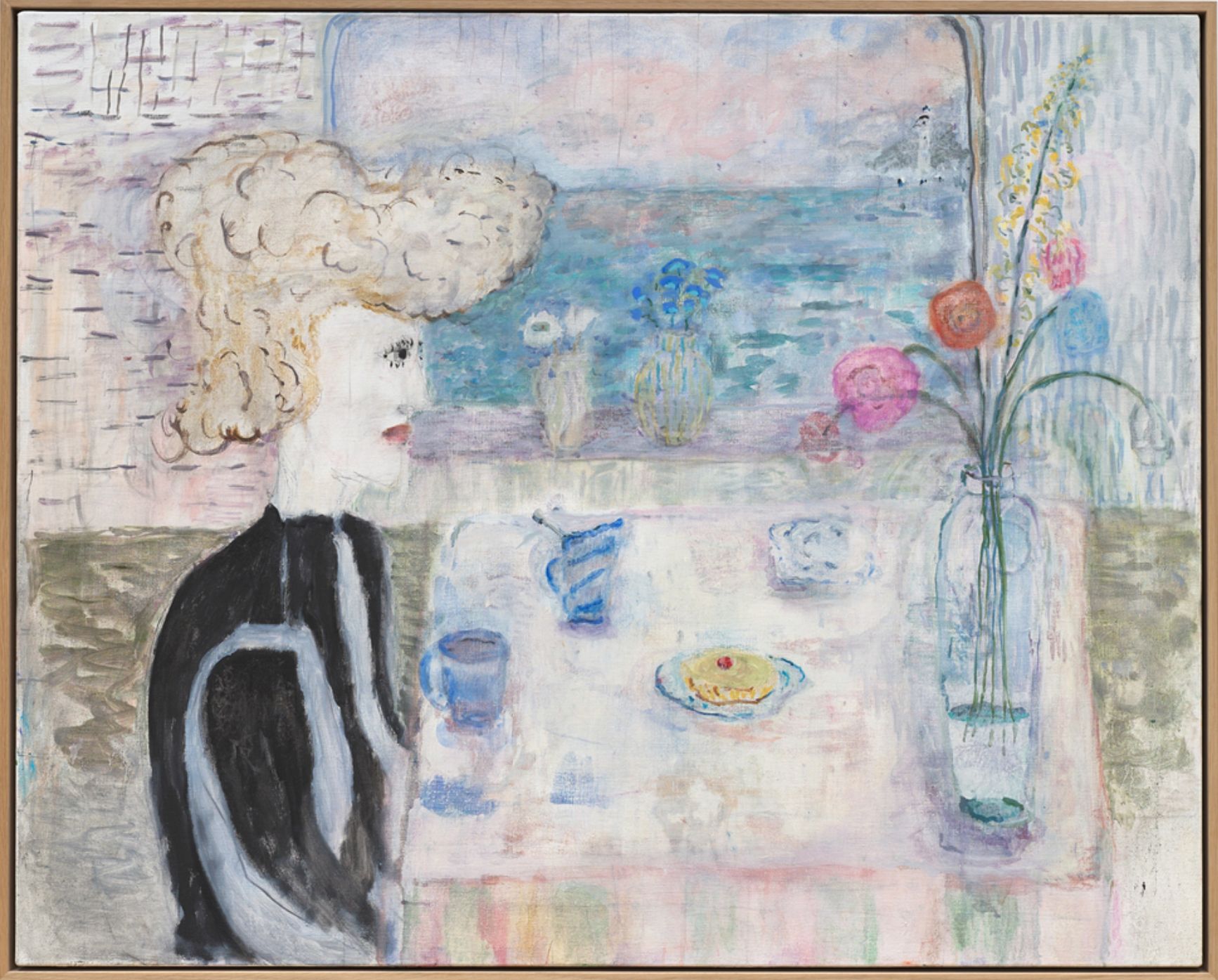
At the peak of an art world cycle that, to my mind, has been defined by a strong (if delayed) reaction against the kind of vapid, lurid, squeaky-clean art that became associated with the label ‘ultracontemporary’, I expected to see less of such work at Frieze. I was certainly more engaged by the gnarlier, darker, somehow more literary work on show this year—things like Tom Hardwick-Allan’s babel of glassine-wrapped books at South Parade’s booth, the two small, slight, hazy paintings by Ellen Siebers on show with Olney Gleason or everything shown by Ingleby Gallery. But my overall visual impression of the fair—neon signs, dayglo abstractions and a golden sign with the words “Fuck Wars” embossed in the Star Wars font—showed me that easy-on-the-eye, soft-on-the-brain contemporary art may never go out of fashion. For me, this year’s trend was more of the same. Perhaps I’ll stick to Frieze Masters next year. (In more optimistic news, I noticed a lot of guys looking smart and rugged in thickly knitted, large-collared zip up jumpers; a sexier, vaguely naval twin of the finance bro quarter-zip.) —Phin Jennings

A respected voice in contemporary art discourse.
Focusing on ambitious storytelling and insightful art-world commentary. Ocula Magazine publishes in-depth interviews, critical essays and timely analysis on the artists, exhibitions and ideas driving the global art world.
Learn more about Ocula Magazine
Showcasing the best of the art world.
Ocula partners with galleries from around the world to highlight their artists, artworks and exhibitions. Gallery membership is by application and invitation, with each member vetted by an independent panel.
Learn more about Ocula Membership
Specialises in the sale of major artworks.
Led by a team with deep ties to the world’s leading auction houses, galleries and collectors. Ocula’s advisory team offers bespoke services to high-net-worth clients from around the world who are looking to acquire the best of contemporary and modern art.
Learn more about our team and services