



The art world in focus
Subscribe to our newsletter for news and insights on artists, galleries and exhibitions.
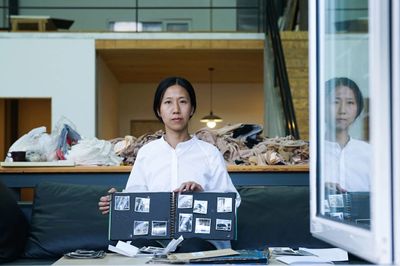
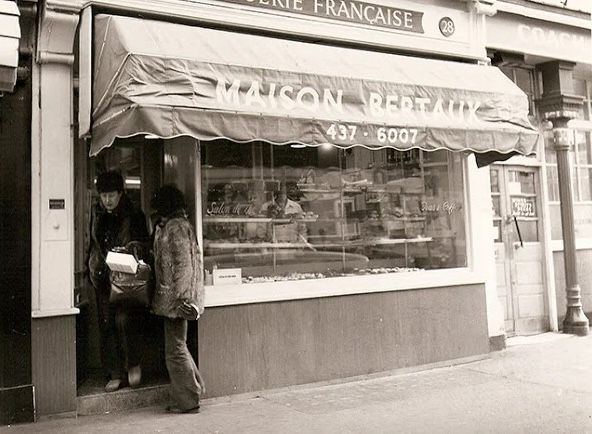
It’s a muggy September afternoon when I arrive at Maison Bertaux in Soho. I’m inside, staring at the window case of lip gloss strawberry tarts, fruit cream boats and currant-speckled scones when, through the glass, I see Evelyn Taocheng Wang arriving, her neat bob skimming along the top of her crisp black coat. It was Wang’s suggestion that we meet here for tea on the eve of the opening of her show Being Poetic Ruins Life at Goldsmiths CCA. Though it’s a busy day of final preparations at the site, and there’s a stream of texts arriving, Wang seems unruffled. We look at the display case together. “I have to have the scone, for poetic England,” she says, and we settle upstairs with two cream teas and a fruit tart.
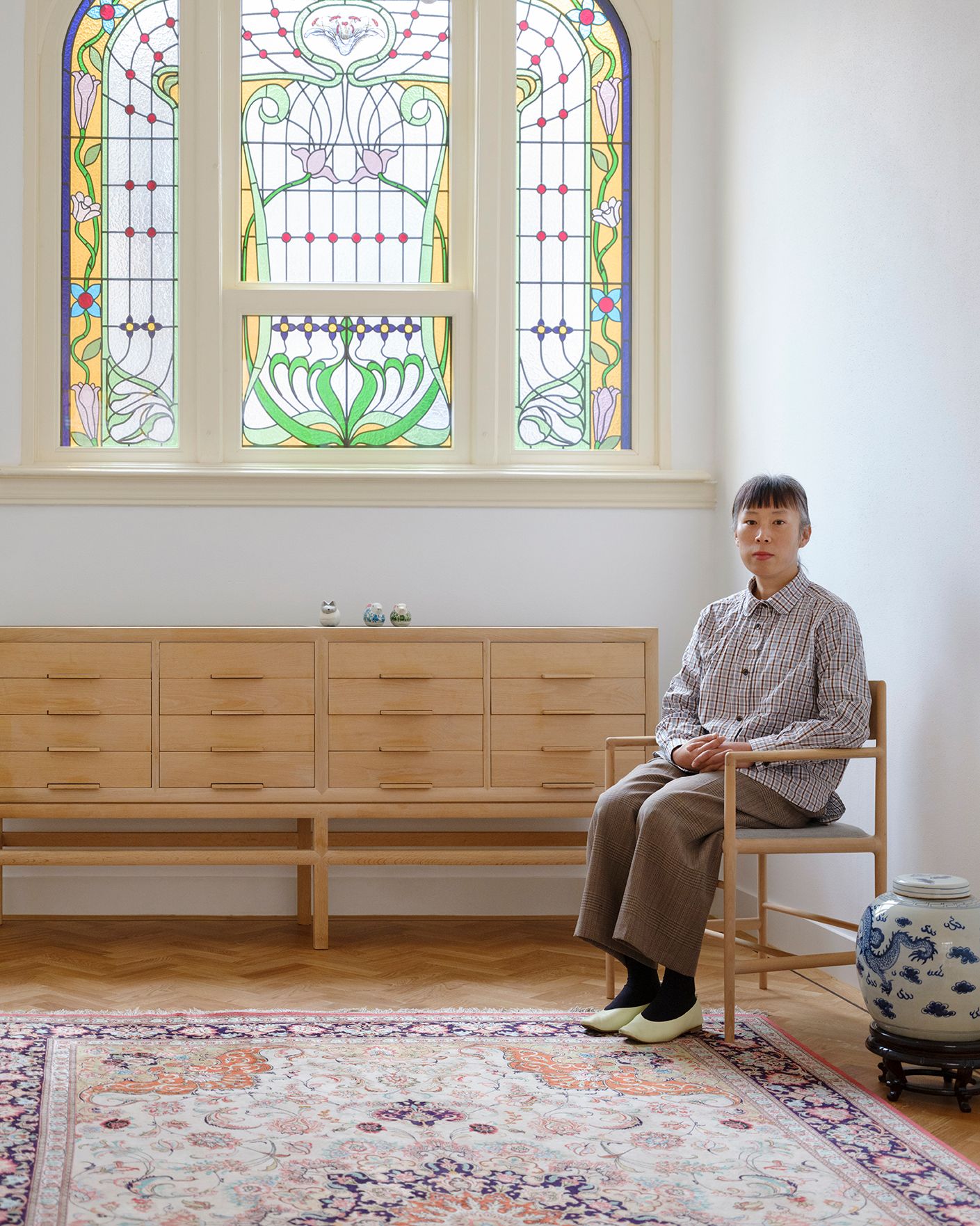
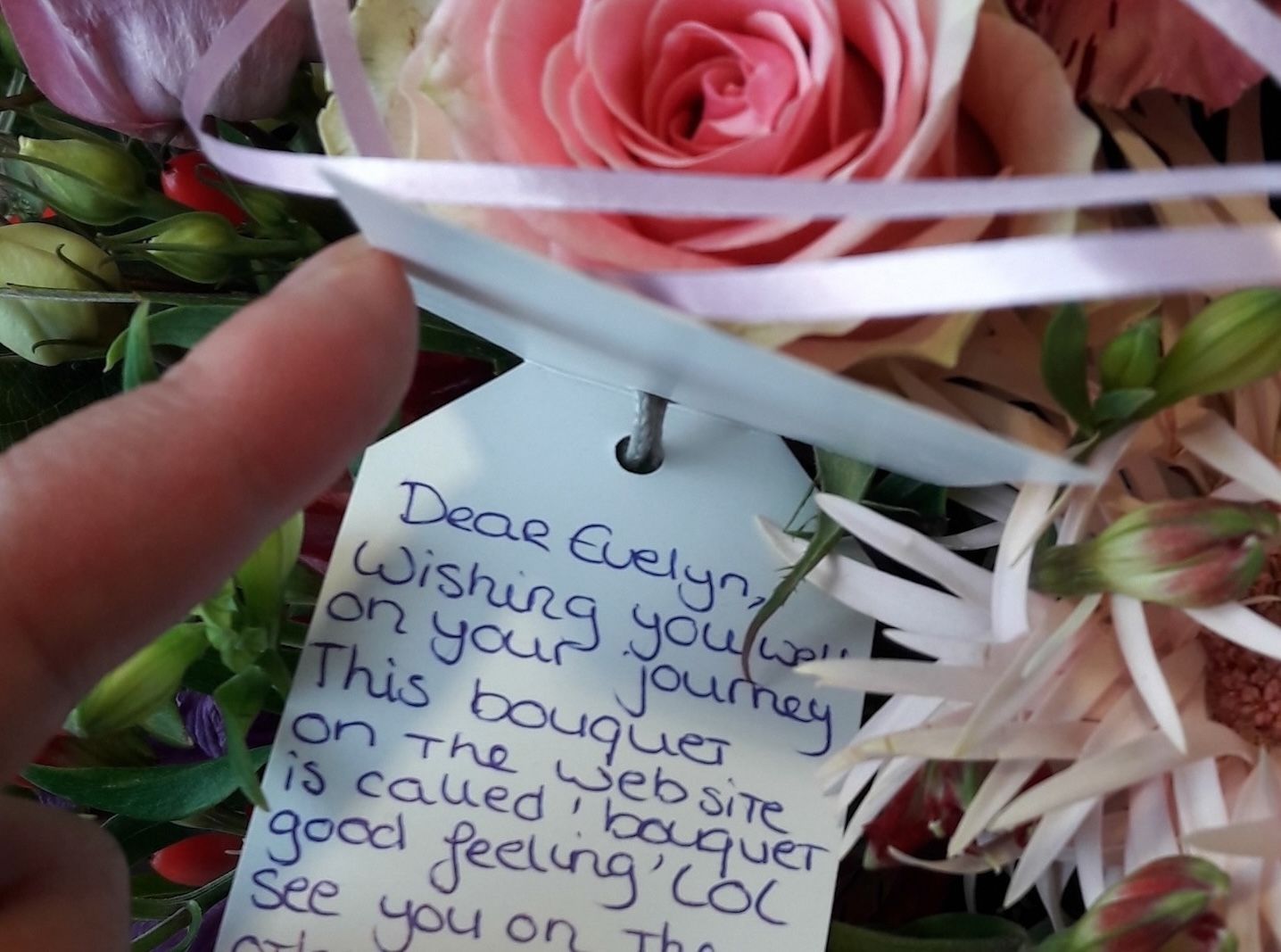
For Wang’s first major institutional show in London, the title was the idea that came first. It wasn’t exactly Wang’s decision, though. “It was the Cultural Whore who suggested it, actually,” she tells me, having removed her coat to reveal an ironed checked shirt. The Cultural Whore, a kind of alter ego or artistic emissary for Wang, told her to think about England’s romantic “exported culture”; the one she had grown up with in China during the 1980s and 1990s. The picture painted of England was “an image of literature”, and Wang was exposed to that literature—often one of “misty landscapes”—by her English teacher at the same time as she was studying poetic landscapes in classical Chinese painting, alongside calligraphy.
“I always start with some sentence… because writing is quite important—not for me, but for the Cultural Whore,” she tells me. “So, I said: ‘OK, poetics.’” The title Being Poetic Ruins Life got a mixed reaction from Wang’s friends. Some thought it was too ironic—“Why so funny?”—but the Cultural Whore said: “Oh, that’s perfect!” Being poetic, ruins, life. “Ruins is a verb, but I would also like to see it as a noun,” says Wang. A noun that captures misty landscapes and country houses. It’s like the romantic garden created at Sissinghurst Castle by writer Vita Sackville-West during the 1930s, which, when we met, Wang had just been to visit. Overgrown and rambunctious, some of the garden is “so shabby”, she explains, smiling a little at the thought, then pausing to find the precise words. “I call it ‘starved Italian’,” she says, also finding a sadness or pain, “a certain ‘ruins’ there”.
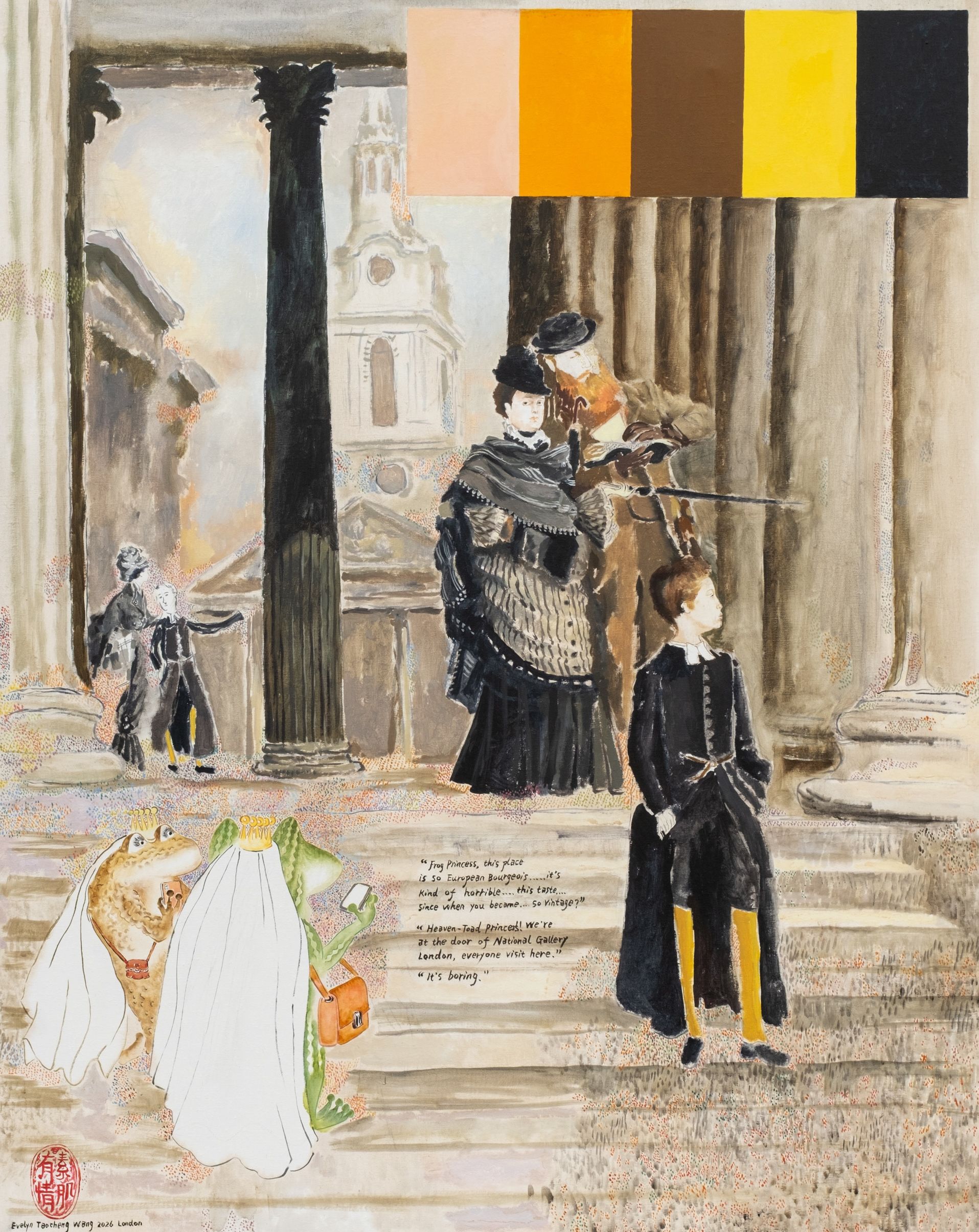
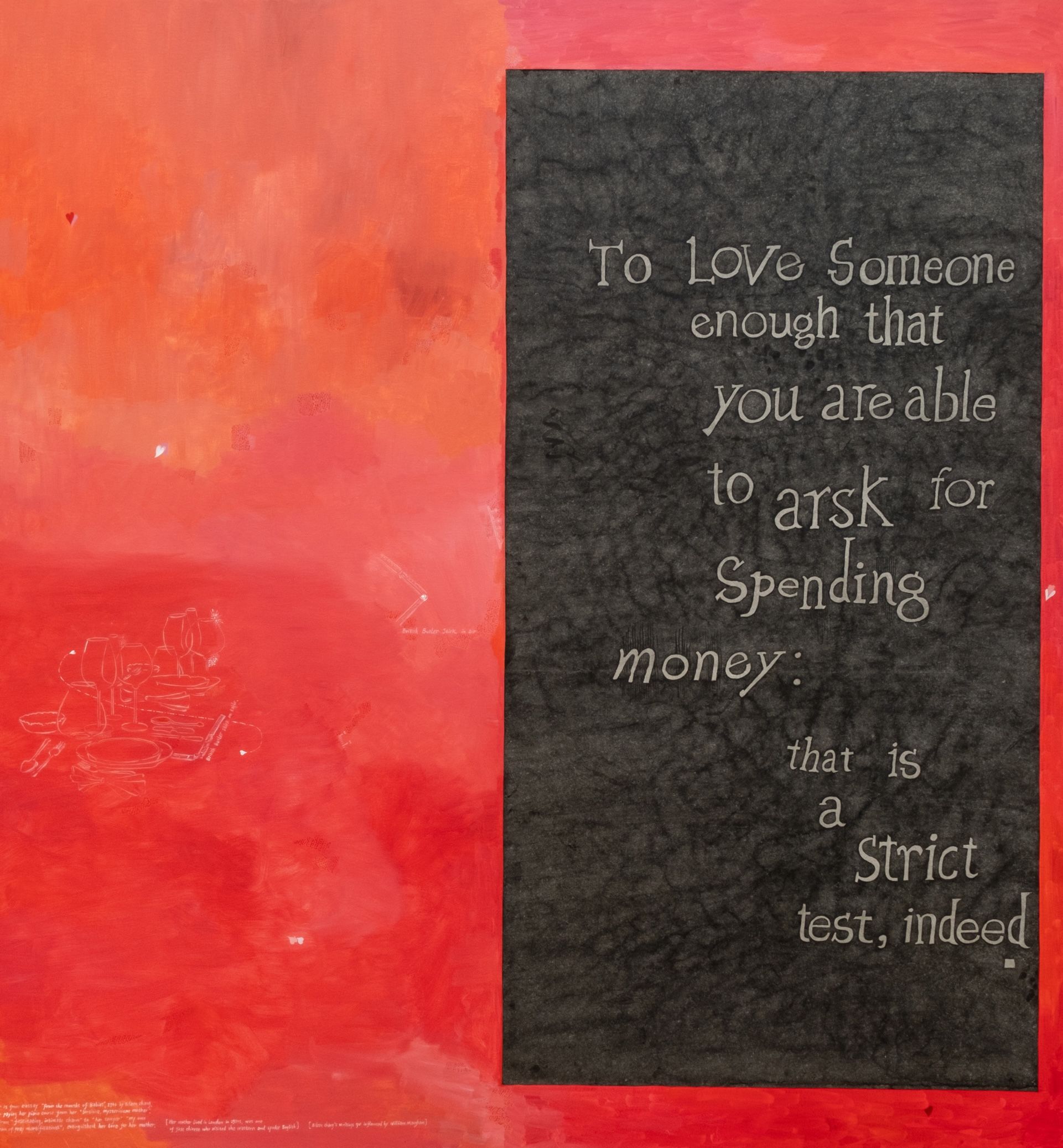
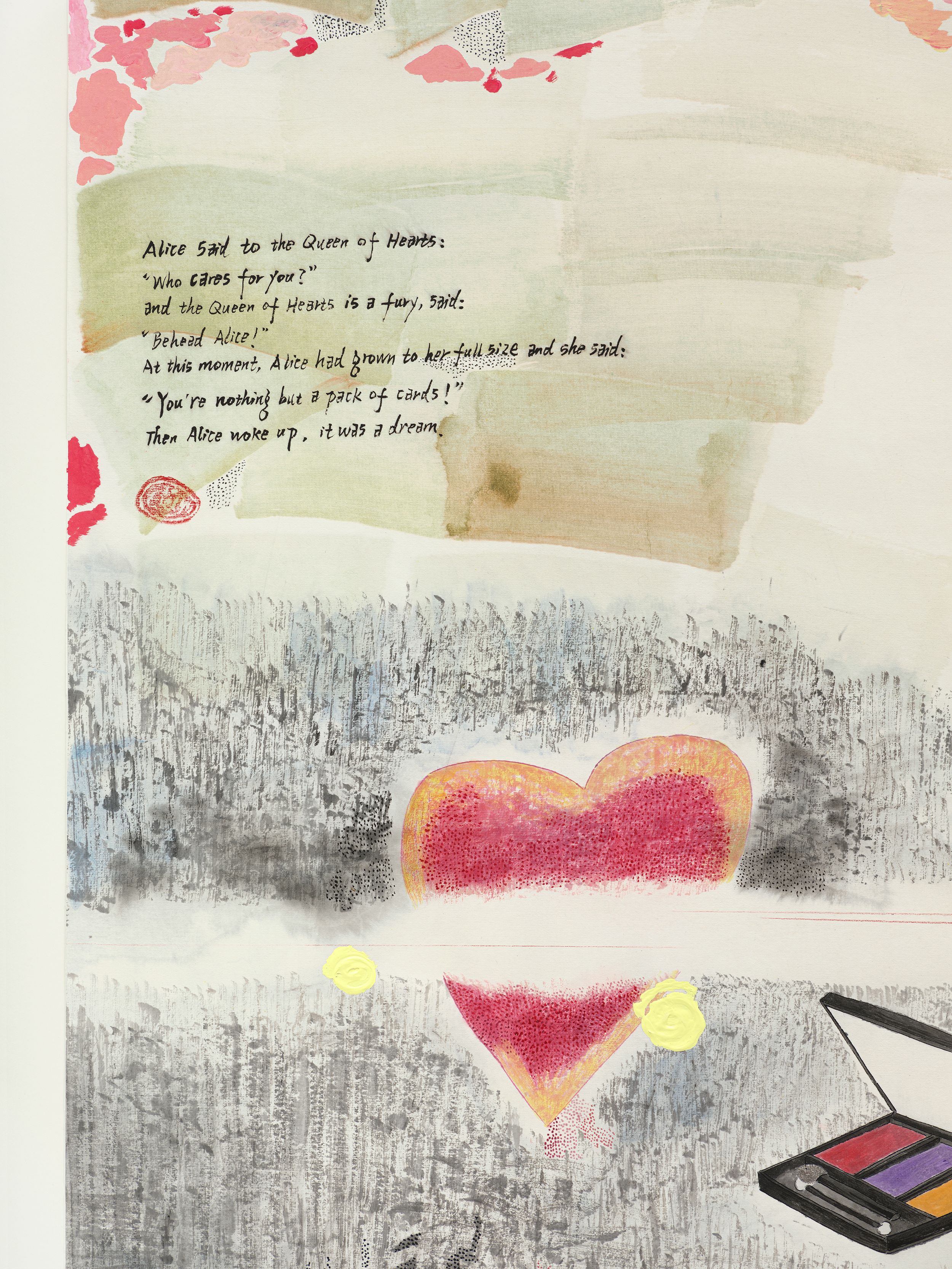
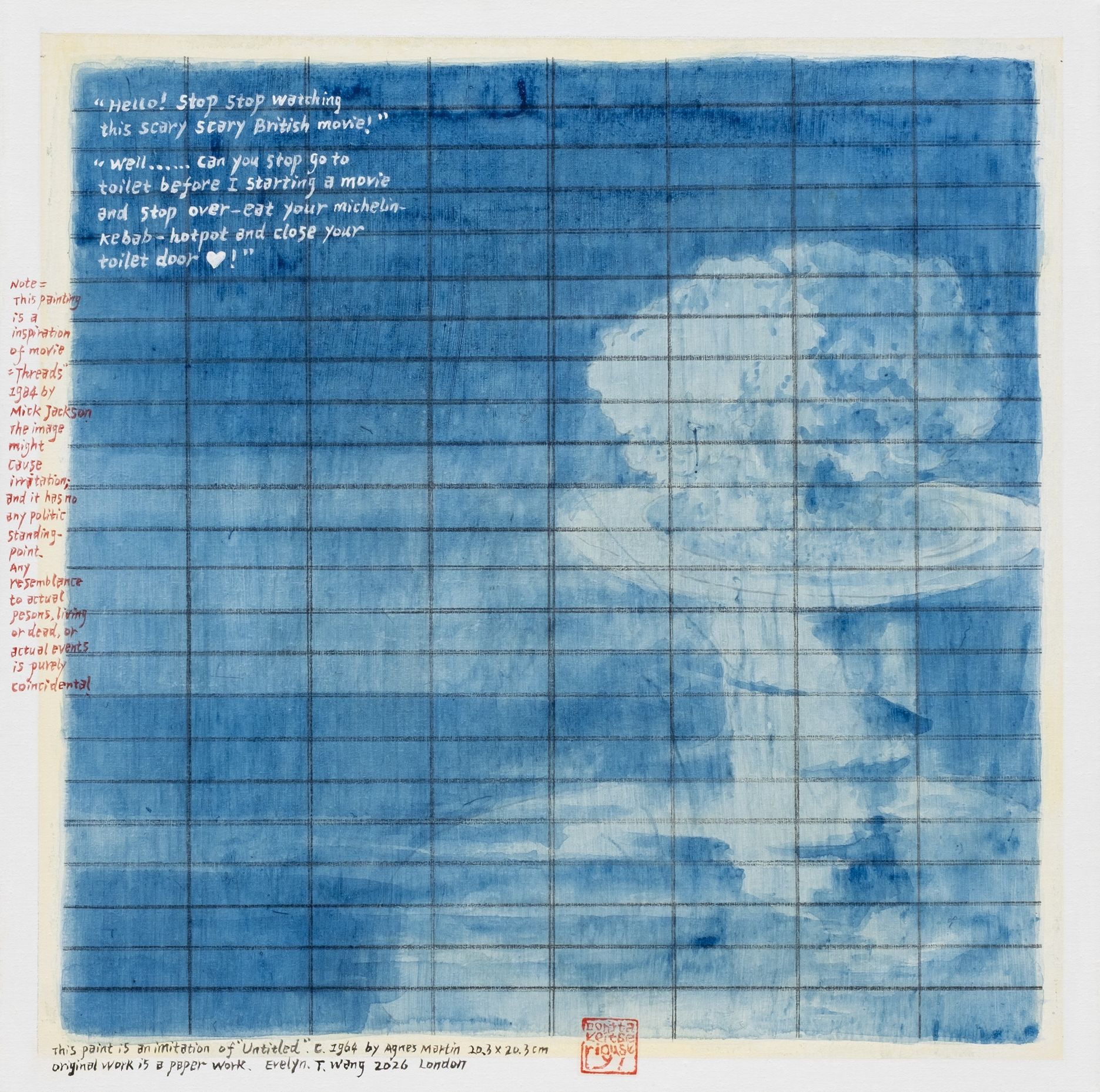
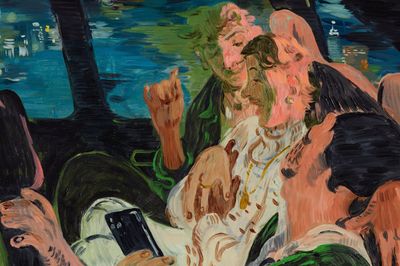
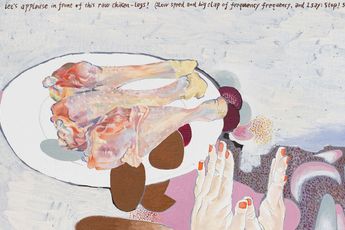
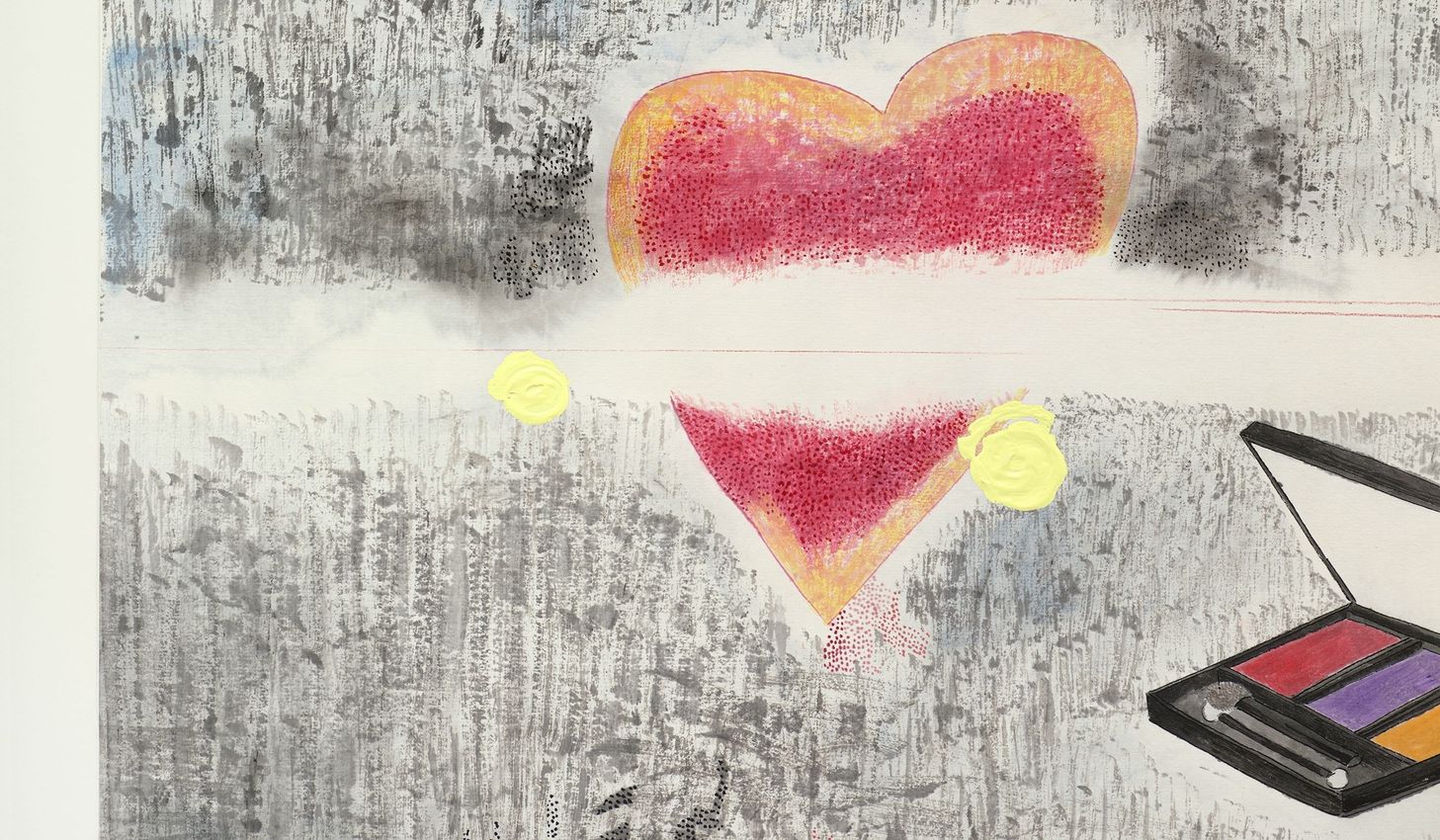
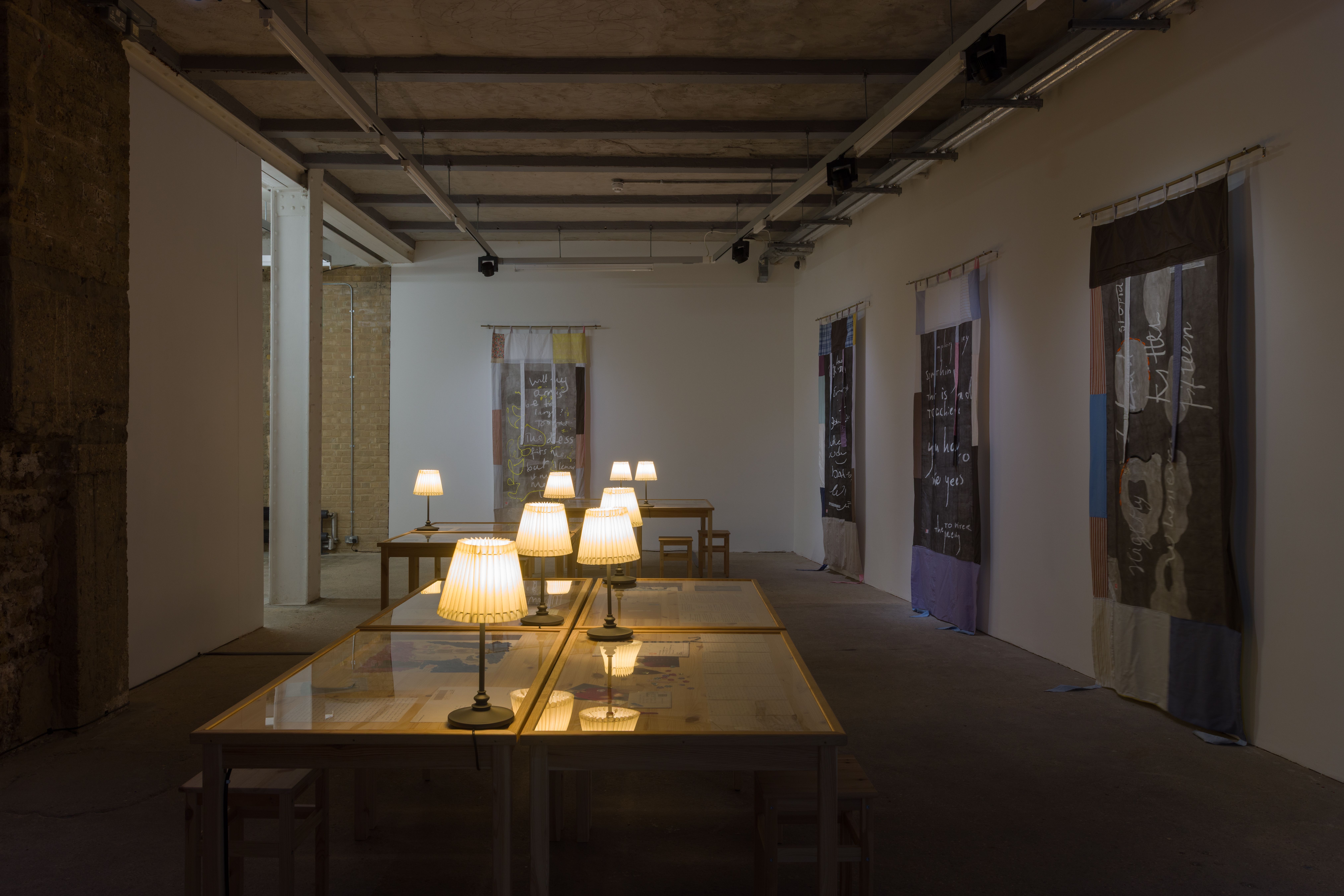
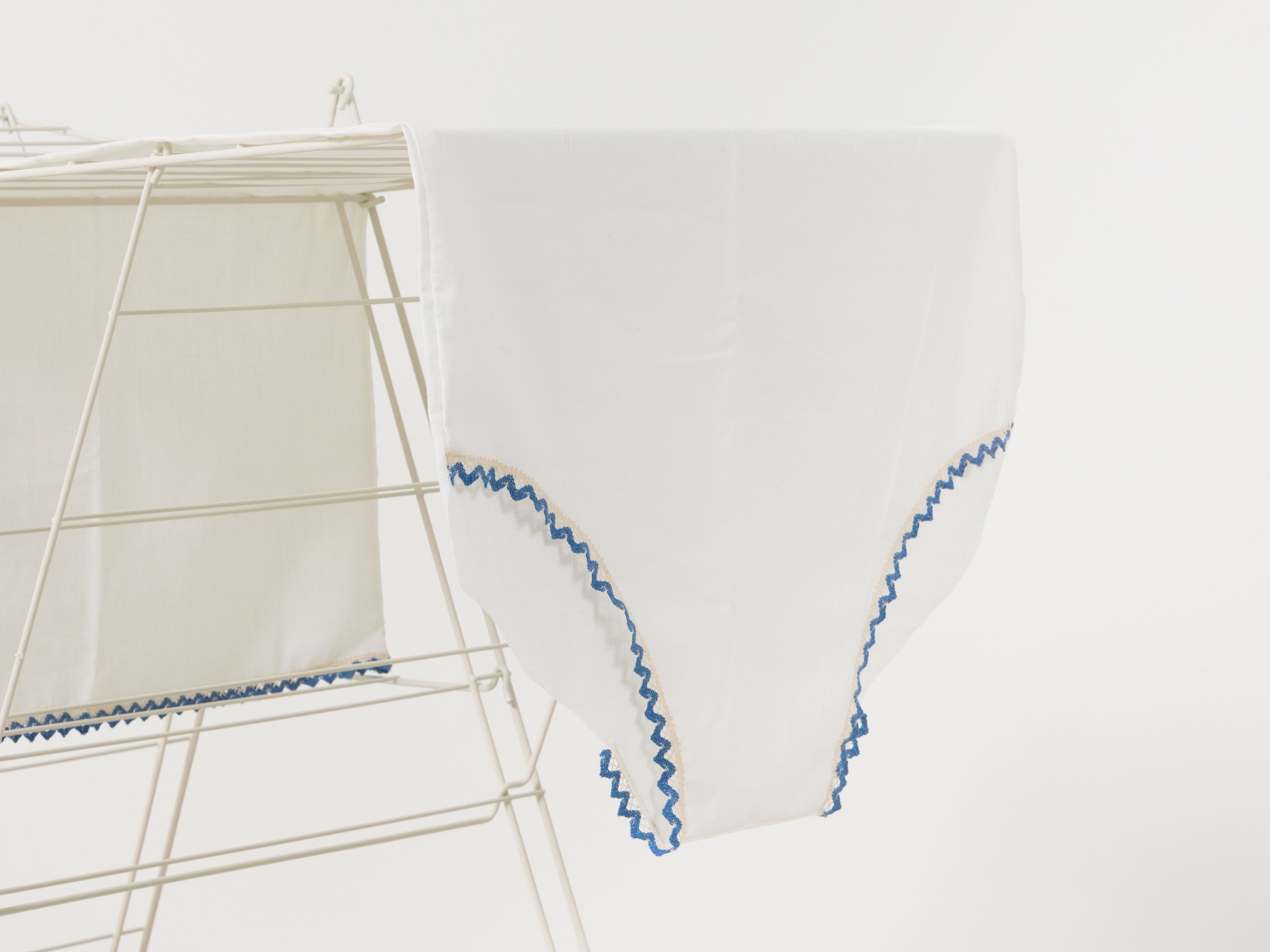
Across the galleries at Goldsmiths CCA, in both newly commissioned and retrospective works for the show, the Cultural Whore tells irreverent, gossipy, episodic stories crystalised from a rich referential world: there’s an early handscroll, My History (2008), a love story involving Mr Bingley, punting on the River Cam, and Merchant Ivory’s Maurice; one of the paintings depicts the “Wrong Chinaman” from the scene of an argument in another Merchant Ivory film, The Remains of the Day, and there’s an abiding interest in the internal landscapes of the abstract painter Agnes Martin’s grids, which are “almost like a checked shirt, ironed so nicely”.
Navigating the crumbling homes and idyllic pursuits of 20th-century elites, the work also invites the question of who can be poetic. What kind of life situation provides occasion to be poetic? The class structure that dictates who gets to live a poetic life, vacating the busy world to build a romantic garden, paint at leisure, or write poetry. Poetic language withholds and excludes, it obfuscates and disguises, and it has double meanings. It shares this quality with the language of polite society, but also with the world of gossip. In these three forms, language is often “opposite” or unclear in meaning, suggests Wang, as if “there is some fairy playing with the view behind the oak tree”, and “you don’t know which fairy is real and which one is not real”.
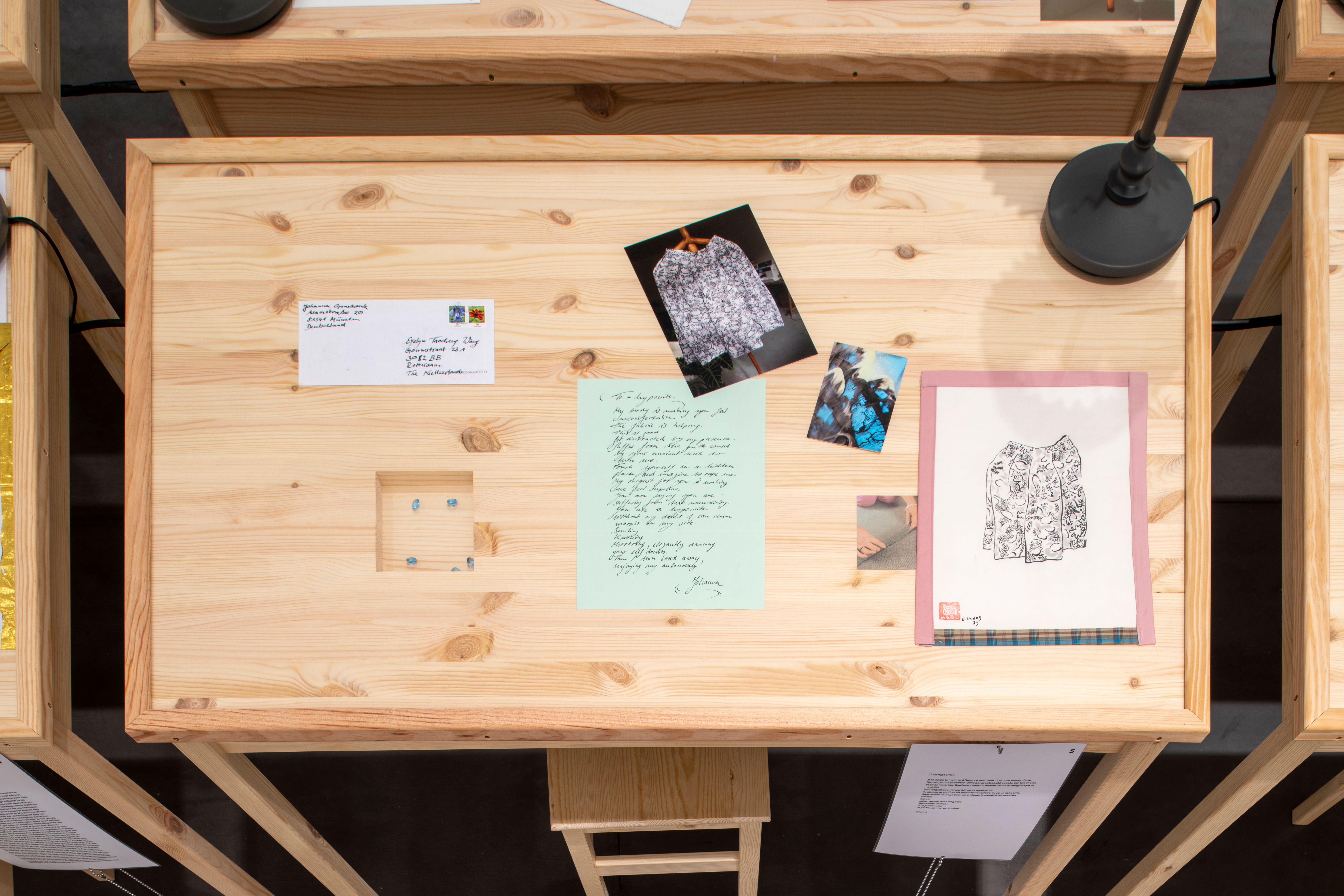
These problems of language are one of the Cultural Whore’s specialisms. Though the exhibition at Goldsmiths is her first formal outing in the artist’s work, she has been with Wang for a long time. “I was struggling with my art practice since I moved to Europe. I was struggling with text and language a lot,” says the artist, who was born in Chengdu, China, studied in Germany and, since 2012, has been based in the Netherlands. She was encountering difficulty with the ways in which “Western language is so into labelling” and invested in categorising people, saying “I was being pushed into a corner” and being asked to discuss LGBTQ issues and gender. She had also worked as a masseuse in Amsterdam after graduation (the subject of her 2016 work, Massage Parlour) and experienced the cultural assumptions of customers: “Do you know how to cook this rice? Do you know where the best dumpling place is?” She decided to “set up a middle agent” who could “deal with all this dialogue or mental logistics”.
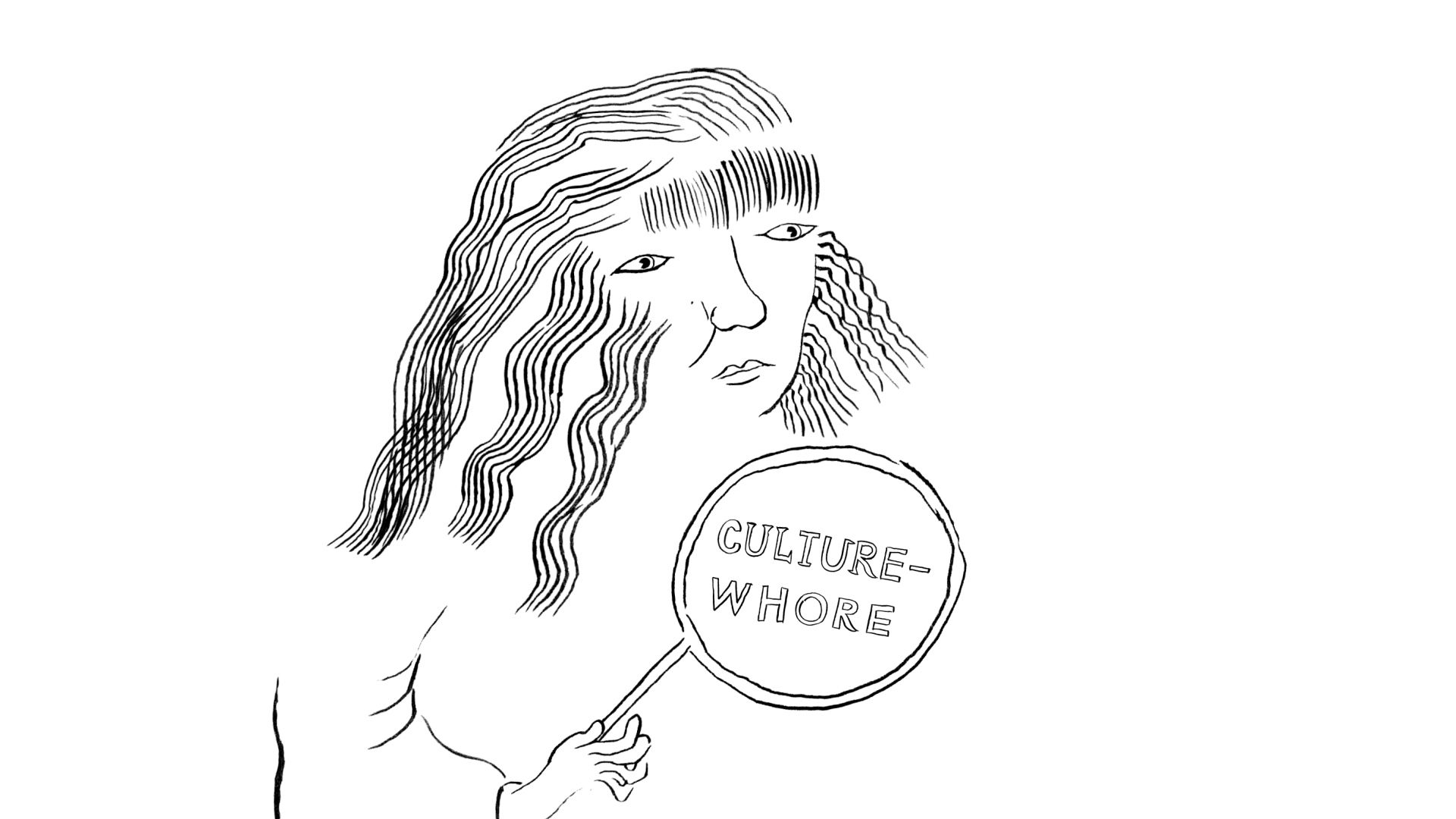
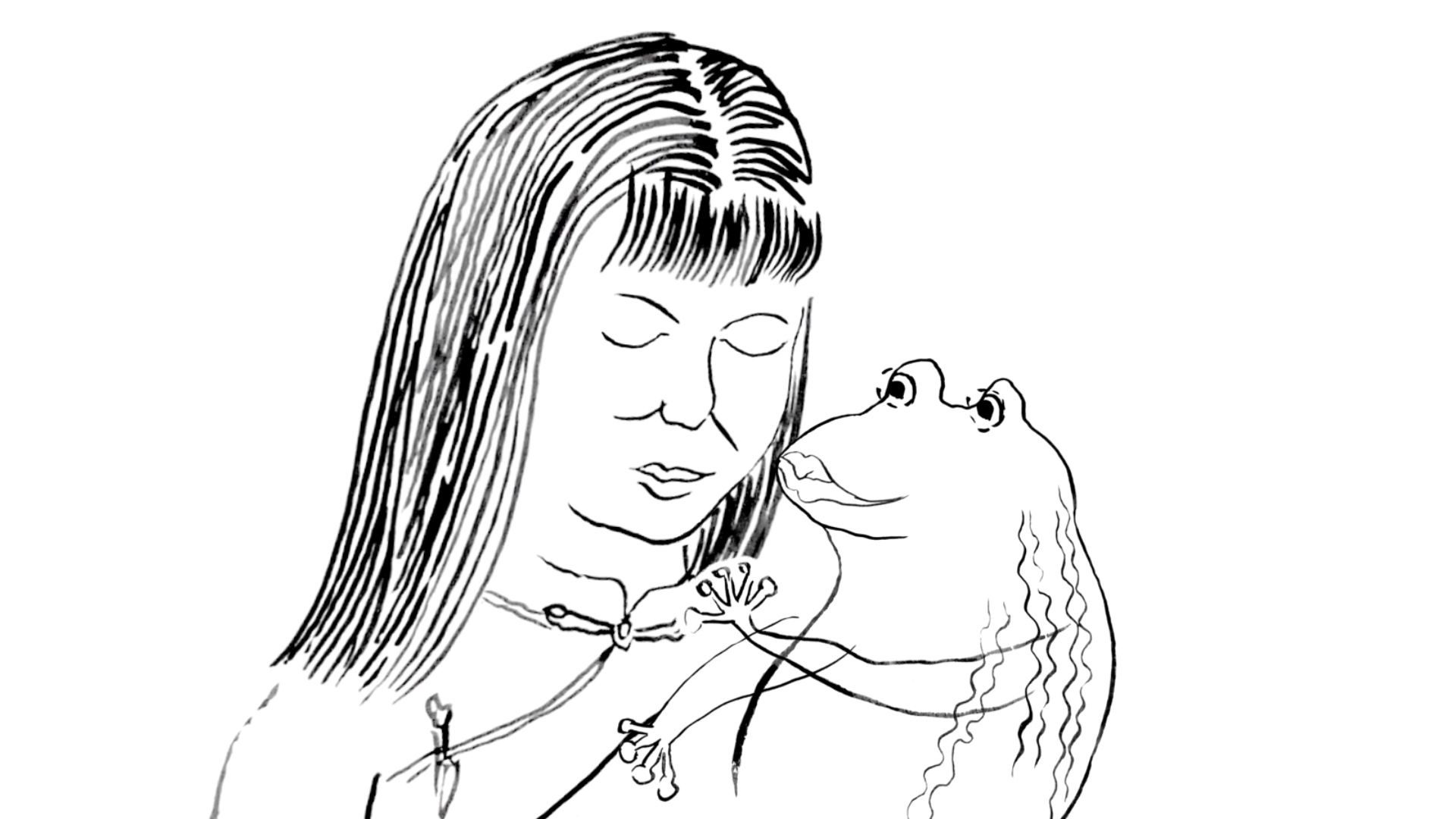
The Cultural Whore is “not perfect”, Wang clarifies. She’s based partially on the “Green Tea Bitch”, a figure of 2010s Chinese internet slang; a beautiful, “calculated” woman. “She’s so bitchy, she’s ‘I want to enjoy everything and I want to post everything online. I want to be seen. I travel somewhere and I want everyone to know it.’” She takes selfies. She “always looks like she did research, but she never does research”. She watches the movie, but she never reads the book. She comes from “a really nuanced corner” where there is space for unreliable interpretation and subtle cultural misunderstandings.
“Western language is so into labelling”
She is the perfect companion for Being Poetic Ruins Life. Wang tells me about Sunny England and Rainy France (2026), a painting inspired by the Chinese-American writer Eileen Chang’s childhood misconceptions of England. It’s a dappled blue and green impressionist painting of a set of London townhouse windows with ornate iron balconies, overlaid with text from Chang’s essay “Whispers” (1944). It appears to be raining, but someone, perhaps the Cultural Whore, is complaining that the imagery is all still much too French.
That romantic muddle is everywhere. Here we are now, in a French patisserie open since the late 19th century, trussed up with bunting that reads “Liberté, Égalité, Fraternité”. But this is just as much a mid-century English tea shop. Our plates are covered in scone crumbs and smears of cream and jam. As we get ready to leave, I think: what witty observation would the Cultural Whore have come out with if she were here with us? It is only as I’m walking away into the strangely sunny afternoon that I wonder whether she was there the entire time.


A respected voice in contemporary art discourse.
Focusing on ambitious storytelling and insightful art-world commentary. Ocula Magazine publishes in-depth interviews, critical essays and timely analysis on the artists, exhibitions and ideas driving the global art world.
Learn more about Ocula Magazine
Showcasing the best of the art world.
Ocula partners with galleries from around the world to highlight their artists, artworks and exhibitions. Gallery membership is by application and invitation, with each member vetted by an independent panel.
Learn more about Ocula Membership
Specialises in the sale of major artworks.
Led by a team with deep ties to the world’s leading auction houses, galleries and collectors. Ocula’s advisory team offers bespoke services to high-net-worth clients from around the world who are looking to acquire the best of contemporary and modern art.
Learn more about our team and services