




The art world in focus
Subscribe to our newsletter for news and insights on artists, galleries and exhibitions.

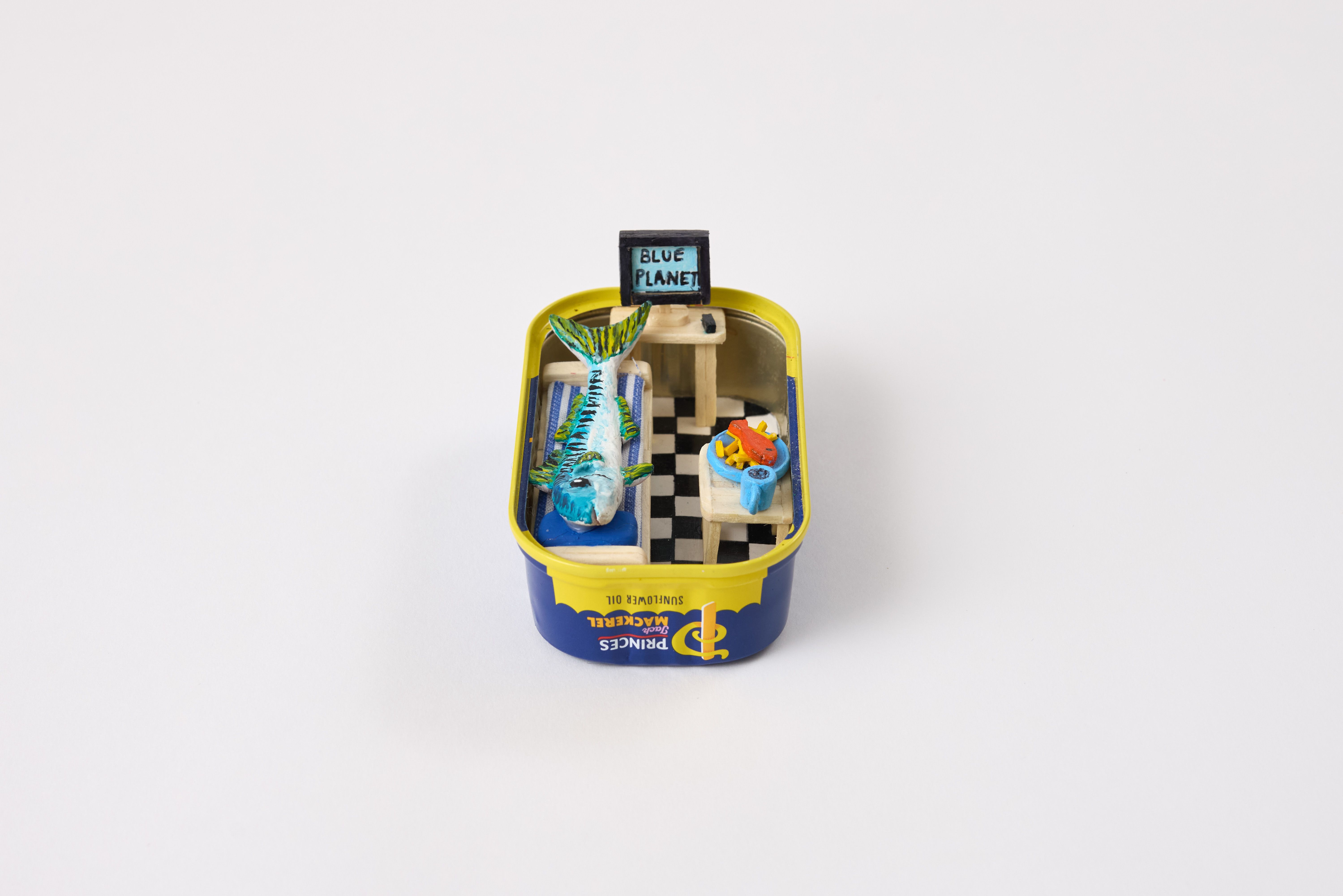
The Childhood of My Dreams, Orwell House, 2026. Courtesy Southbank Centre.
Opening today at London’s Southbank Centre, a new exhibition of art made in criminal justice settings and curated by young adults with experience of parental incarceration aims to encourage visitors to “think differently” about what it means to have a parent in prison.
The show is made up of more than 200 artworks submitted to the 2026 Koestler Awards, a national prize for work made in secure institutions. This year, members of the Parental Imprisonment Collective (PIC), a group of 18–35-year-olds with childhood experience of a parent in prison, chose art from a pool of more than 7,500 entries.
What happens to children and families when a parent goes to prison is “a perspective that is often missing from conversations about imprisonment”, Fiona Curran, chief executive of Koestler Arts, the charity behind the award, told Ocula. The collective has lived experience that has “brought enormous insight, sensitivity, and imagination to the curation”, she added.
Previous curators of the show have included high-profile names such as artists Ai Weiwei, Antony Gormley and Sarah Lucas, but “the power to select and interpret work should also be shared with people whose voices are less often heard”, Curran said. Alongside these world-leading creatives, past exhibitions have also been curated by women in HM Prison Downview, and others affected by crime, who have brought fresh perspectives to the work.
The curators have titled this year’s show Rock, Paper, Scissors, after the well-known game of chance, a reflection on how outcomes can be determined through a combination of choice and happenstance. It also references the range of materials used in the works entered into the awards.
The experience is not as marginal as one might think, with the Ministry of Justice estimating that 193,000 children in England and Wales, or one child in every two primary school classes, has a parental figure in incarceration. “We also want visitors to remember that everybody in prison was once a child too,” the curators said. “They are not just the sum of their sentence.”
The exhibition includes paintings, works on paper, textile and sculpture, as well as music and writing. The selection responds to themes including childhood, home, confinement, and imagination, which are dealt with through humour—as in a matchstick model of a mackerel inmate in tin-can cell—and vulnerability, as in a vista of a landscape glimpsed through a gap in the bars of a cage.
For people in secure settings, Koestler Arts recognises that creativity can “communicate ideas and emotions that are difficult to capture in ordinary conversation”, and helps those outside to “encounter people as individuals”, Curran said.
“Statistics can tell us how many people are in prison, how many children are affected, or how many leave prison each year, but they cannot convey what it feels like to be separated from family, to hold on to hope, or try to build a better future post-release,” she said. “Art can.”
A respected voice in contemporary art discourse.
Focusing on ambitious storytelling and insightful art-world commentary. Ocula Magazine publishes in-depth interviews, critical essays and timely analysis on the artists, exhibitions and ideas driving the global art world.
Learn more about Ocula Magazine
Showcasing the best of the art world.
Ocula partners with galleries from around the world to highlight their artists, artworks and exhibitions. Gallery membership is by application and invitation, with each member vetted by an independent panel.
Learn more about Ocula Membership
Specialises in the sale of major artworks.
Led by a team with deep ties to the world’s leading auction houses, galleries and collectors. Ocula’s advisory team offers bespoke services to high-net-worth clients from around the world who are looking to acquire the best of contemporary and modern art.
Learn more about our team and services