




Press Release

Galerie Max Hetzler is pleased to announce Imaginary Solutions, anexhibition showing sculptures, film stills and works on paper by BarryFlanagan ****(1941–2009) from five decades of his work.

One of Britain’s most inventive and charismatic sculptors, BarryFlanagan worked across a range of media and styles from the 1960sonwards until his early death in 2009. His practice encompassed notonly solid materials, but also elusive forms such as daylight, moonlightand other light sources, as well as sound and its absence, whichFlanagan considered to be as intrinsic to sculpture’s character asweight and volume. In his work, any material from industrial sand tocloth, stone, clay and metal could become a sculptural form. He talkedabout the smell of objects and how they were uniquely attributed. Afterhis Minimalist practice of the 1960s and 1970s, Flanagan’sinvestigations turned to figuration in 1979, and in later life he becamebest known for his bronze statues of biomorphic forms alluding toanimals, human figures and mythological creatures.

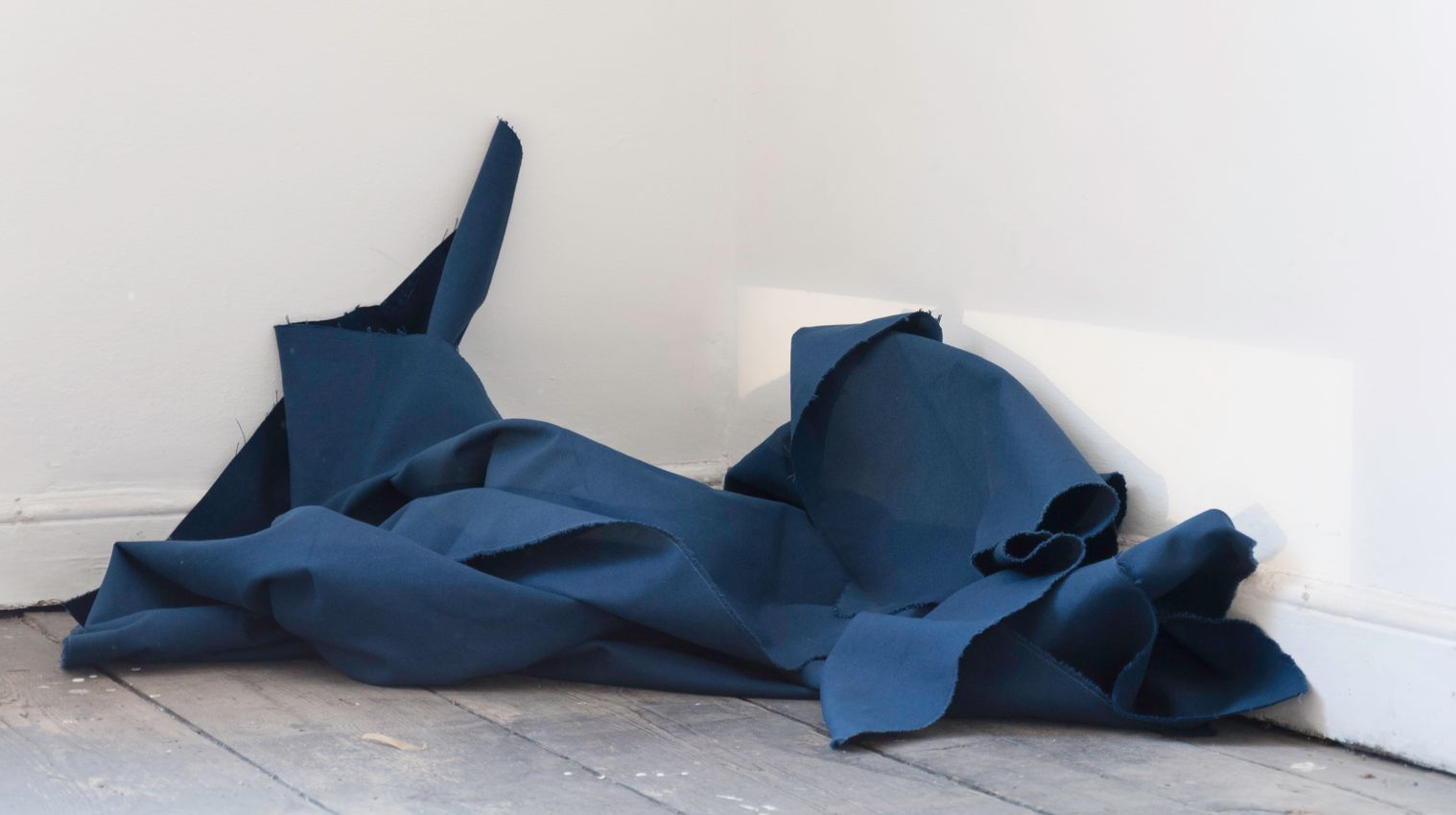
In this exhibition we find examples from Flanagan’s earliest conceptualworks, based on serialism, repetition, colour and the process drivenconcerns of Minimalism, through to the collages on paper concernedwith an investigation into the nature of material as much as form, thefigurative bronzes of the 1980s and ‘90s, right until his silver castCroissant in Silver (Bread Roll) from 2006. The earliest work ondisplay, metal 2 ‘64, 1964, is an intelligent and humorous piece, whichquotes and questions the attitude to formalism promoted by his teacherAnthony Caro. Where Caro used firm structures and glossy paint,metal 2 ‘64 while made from similar salvaged materials, is deliberatelyunstable and unfinished. Following on chronologically, three works fromFlanagan’s 1969 ‘daylight light piece’ series are imbued with a subtleand poetic quality: beams of light are projected onto an empty cornerof the exhibition space, a crumpled length of blue canvas, and a pieceof cloth pinned to the wall respectively, taking the viewer unawares andexemplifying the artist’s elevation of light as a sculptural material.

In the late 1960s, in collaboration with video artist Gerry Schum,Flanagan began working on the short film A Hole in the Sea, 1969, inScheveningen on the Dutch coast. Engaging with the land as asculptural medium–an art form which would become widelyrecognised under the term Land Art–the film documents the gradualdisappearance of a hollow cylinder buried in the sand with thechanging tide of the North Sea. Three ‘hole in the sea’ film stills from1967–1970 are on view. While the film draws to a close with Flanaganremoving the transparent glass cylinder from the sand, thus disavowing the enigma of the hole and revealing it as sculpture, the threephotoscreen prints on paper, taken from a bird’s-eye view, preserve itsmystery.

The exhibition also presents several works on paper, including a seriesof untitled collages, made in 1968 from coloured shapes of children’ssticky-back paper pasted onto blank sheets. The tactile properties ofthe collages, with their torn, frayed edges, demonstrate Flanagan’sexperimentation with different effects, preempting his later metal works.Another series, ‘Jan 70’ from 1970, exemplifies his fascination with thetransactional, in art, in money and in life: blue ink patterns are madefrom the artist’s thumbprints on paper, in formations which are eitherdense or very sparse, regular or irregular, creating aesthetic andcomplex images which toy with notions of authorship and ownership.

Toward the late 1970s, Flanagan began experimenting with ambiguousforms that bridged the mythological and the real, through fantasticalinterpretations of animals. Amongst these, the hare–with its richsymbolism from both Christian and pagan mythology, shamanicproperties, vital power and elegance–caught the artist’s imagination ina way which would shape the rest of his career. Central to Flanagan’ssculptural vernacular is the whimsical and humanlike quality of hishares, as encapsulated in the dynamic portrayal of one such creaturepoised on a cricket stump in The Cricketer, 1989, or in the stretchedand springing hares of Six Foot Leaping Hare on Empire State, 2002,and Hells Bells, 2005. Flanagan’s sculptural practice was anexpression of his mercurial persona, which his contemporaries haveoften associated with the animated and larger-than-life hares hedepicted. Absorbing the myths and folklore of the land, the artistopened up a multitude of possibilities over the course of a deeplyinfluential and innovative career.

Read More
About the Artist

Barry Flanagan was one of Britain’s most innovative and widely acclaimed sculptors, celebrated for his radical transformations in sculptural practice and his signature dynamic bronze hares. In 1982, he represented Britain at the Venice Biennale.

View Artist Profile

Also Exhibiting at Galerie Max Hetzler

Address
Potsdamer Straße 77-87
Berlin
Germany
Opening Hours
Tuesday–Saturday: 11am–6pm
(1)
Berlin Potsdamer Straße 77-87
Galerie Max Hetzler
Potsdamer Straße 77-87, Berlin, Germany
+49 30 346 497 85-0

Opening hours
Tuesday–Saturday: 11am–6pm
The art world in focus
