Press Release

Moonhee Cho: RESTAGE (2021)

On Feeling the Surreal, Townhouse Pathos and the Ventriloquism of Silence

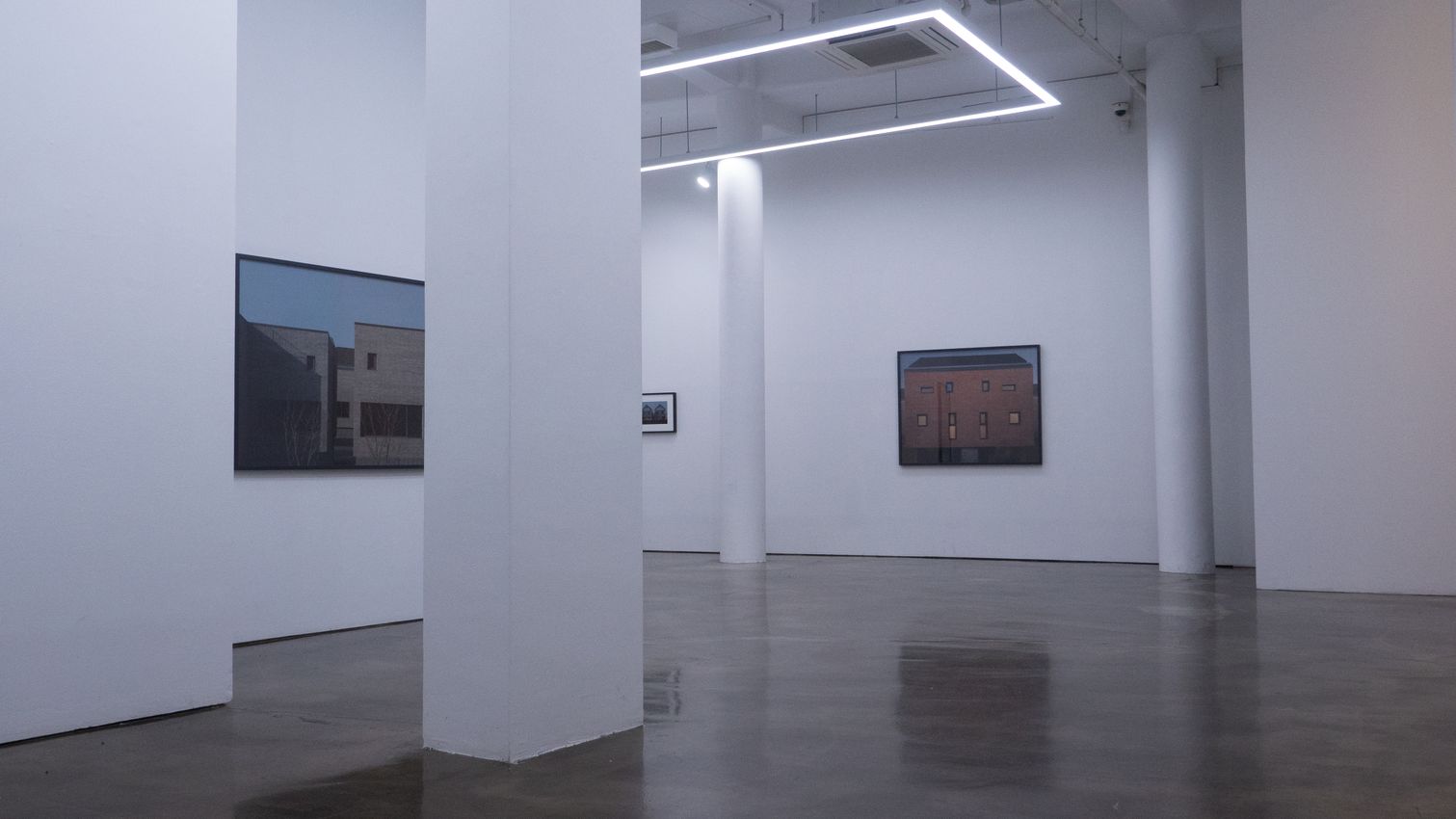
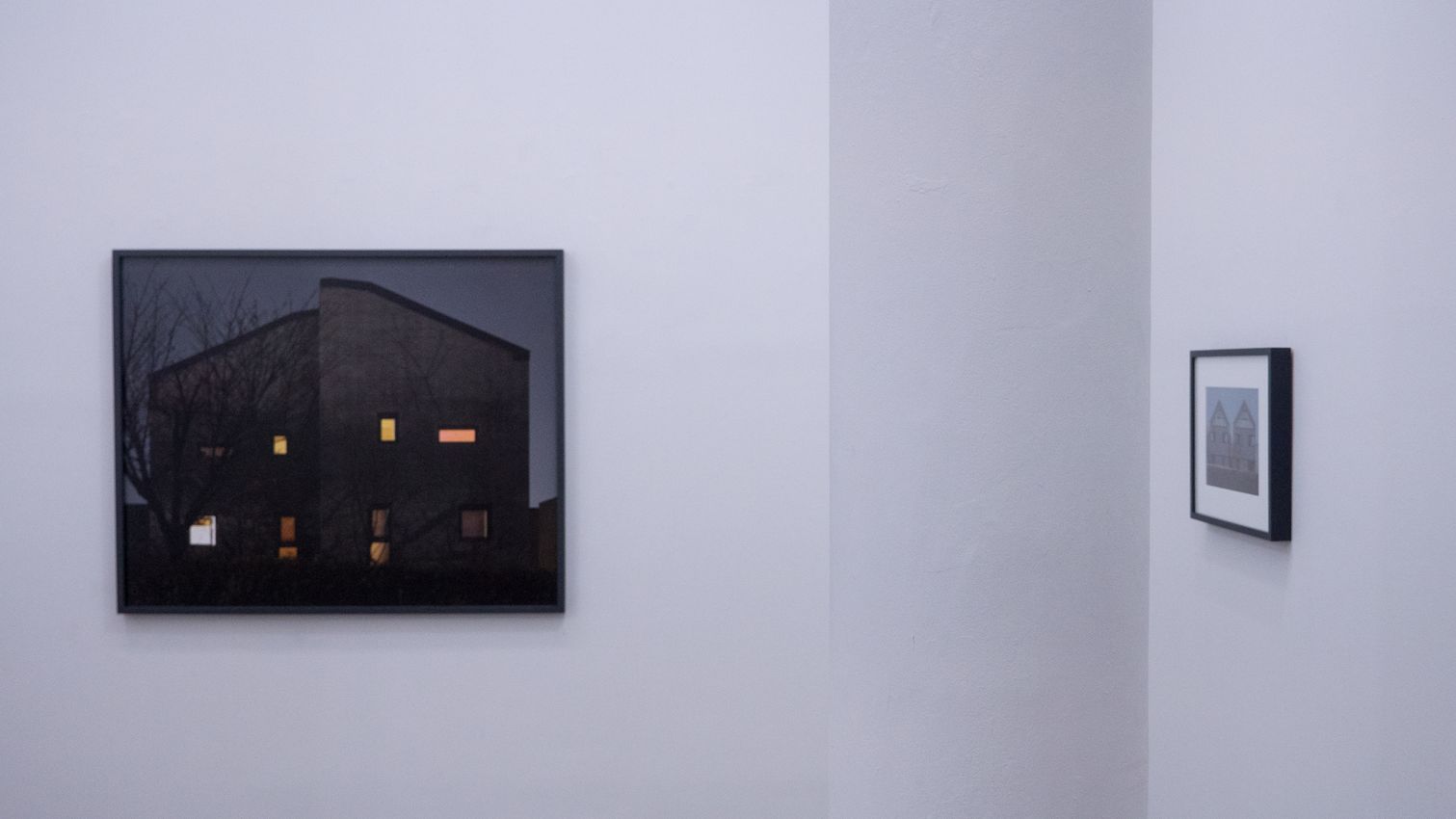
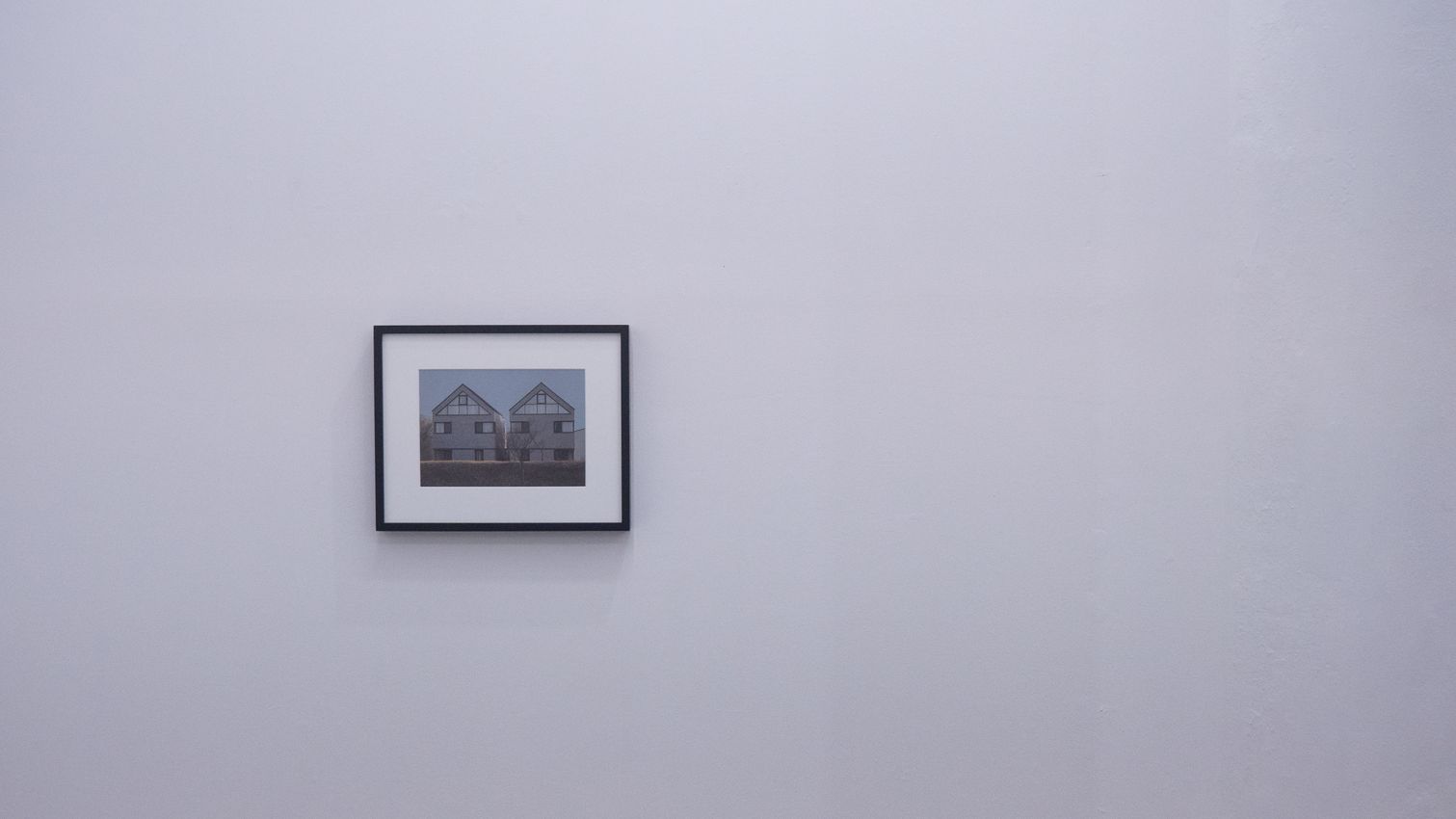
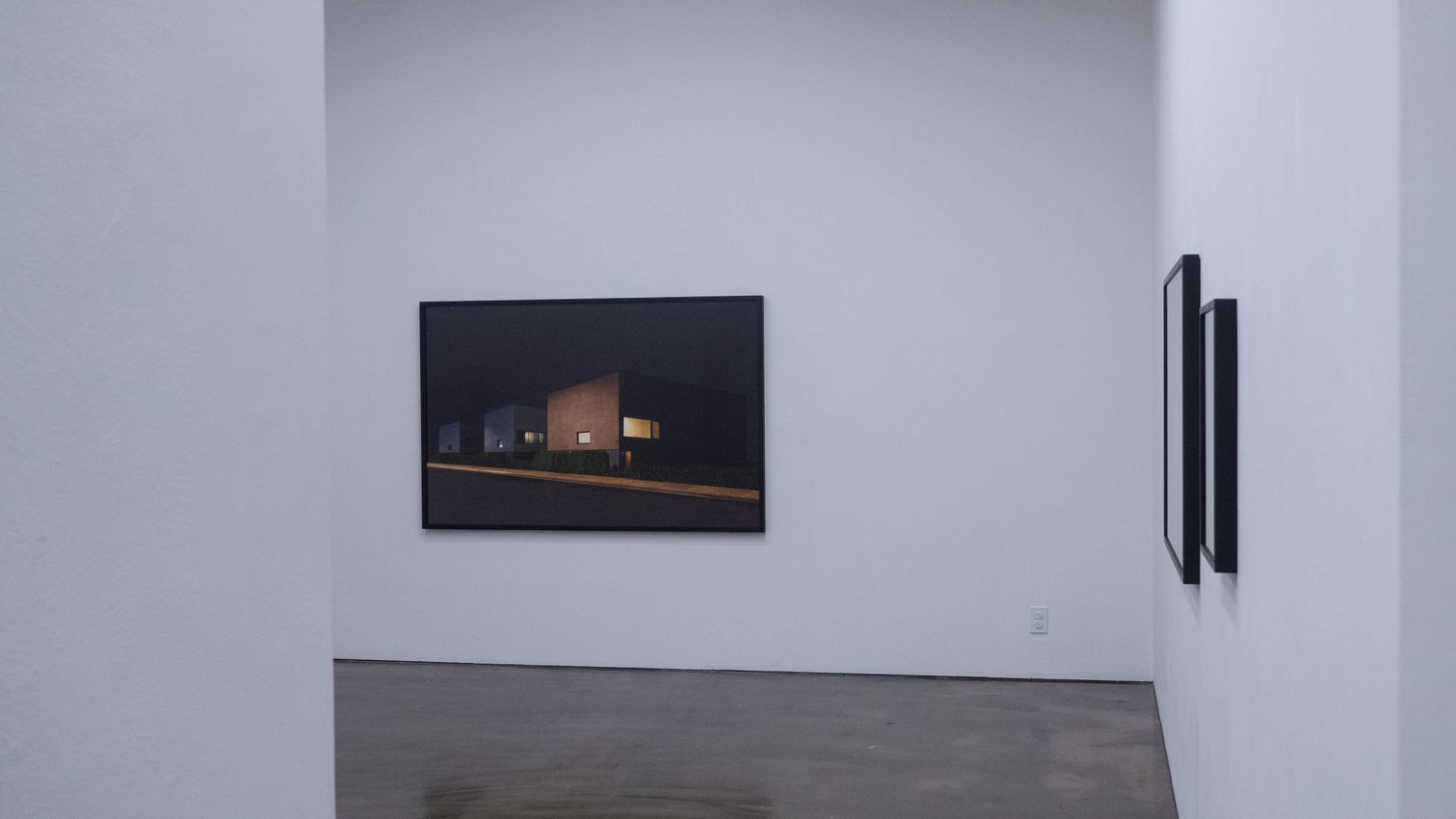
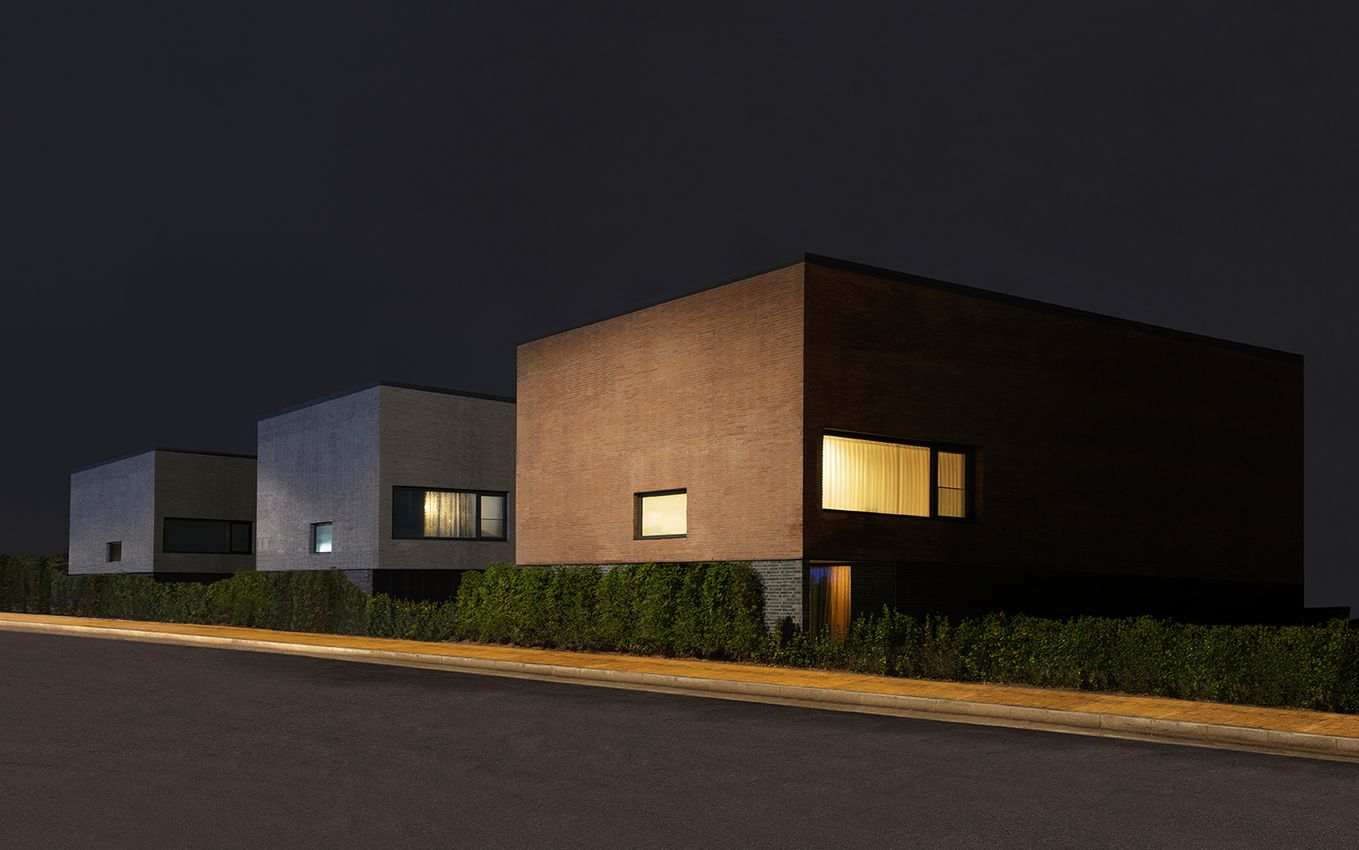
As the wide mouth opens up to swallow me, I die joyfully. The house’s lips shall never be dry. -Excerpt from Lee Geunhwa’s poem, The House Does Not Get Wet “We are building film props, but that moment will be truly beautiful. We are dying day by day in a house that swallows our identity. As such, the house’s lips shall never be dry.” - From the author’s interview. Cho questions the essential nature of Western style houses built on the outskirts of megacities. Her attitude toward townhouses, the primary subject of her work, is two-pronged; while simultaneously denounceing them as “film props,” she also exalts them by insisting that “they will be truly beautiful.” In keeping with Lee Geunhwa’s claim of dying joyfully in The House Does Not Get Wet, Cho perceives townhouses as places of both death and joy. Such a paradoxical combination of feelings permits her to transcend mere figurative considerations of her subject and study the inherent nature of these structures by staring down their true faces. The title of the exhibition, Restage, betrays Cho’s attempt at framing townhouses as both stage props and places of everyday life. As such, the townhouses in her works are simultaneously welcoming and repulsive. Degree of Transparency in Place of Appropriation History In this exhibition, Cho once again explores the surreal yet definite spaces that surround contemporary megacities. In her past works, she depicted scenes of planned cities and neighborhoods, including townhouses; however, the works she presents in this exhibition exude a different pathos. In her exhibitions Empty Landscape (2017) and Middle Landscape (2020), Cho conveyed the uncanny sensibility evoked by vivid recreations of the boundary between physical reality and the surreal, thanks to the focus of her creative process and its formation of visuality. For this exhibition, the artist’s approach is more strongly grounded in pathos. Monochrome buildings with few windows, gray skies overhead, and a generally drab atmosphere contrast with the warm glow of interior lighting seen through their windows, tangling with orange sunlight that emerges miraculously from the ashen sky. It should be noted that Cho does not abandon her pursuit of visual forms, which plays a critical role in her oeuvre; she photographs symmetrical compositions that are characterized by an exacting longitudinal and latitudinal balance, which makes the buildings appear like still lifes. The overall appearance of the works in this exhibition, however, hints at an increased attention toward the emotional dimension of images. Emotion in Cho’s practice stems from a methodological shift away from tracing a process of appropriation and toward exploring a degree of transparency. Cho states that her current focus centers on the notion that houses represent living people instead of merely their figurative manifestations, and she purports to see these structures as they are. Her previous works attempted to trace the city’s process of appropriating various functional elements such as storage units, multiplexes, megamalls, and townhouses. In other words, she consistently seeks to explore the hidden nature of planned communities by visualizing appropriations of contemporary urban planning processes as portrayed in static images. Such a tendency can be seen in her Townhouse 2020 series, a title which betrays the artist’s intention to record both the external and internal expressions of contemporary townhouses; in fact, this demonstrates Cho’s conversion toward exploring the process of change rather than simply recording its history. Her recent works attempt to peer into these townhouses and capture the different emotions and human experiences according to varying degrees of transparency. She thus manages to imbue the atmosphere of this series with a certain pathos as she shifts her focus and introduces new levels of transparency to her depictions. In a recent interview, Cho wondered how long living in a townhouse can remain a pleasant experience. Townhouses are built to accommodate Western/American lifestyles in which daytime hours are allotted for professional pursuits in a crowded city before people return to their pleasant homes at night. Within a Korean cultural context, such a construct may only function as a film prop or a theatrical stage; the Korean experience is essentially different from Western ones in its reliance on population-dense metropolitan areas. Luxury apartments and multiple-family houses in Korea can guarantee a certain degree of privacy within megacities, bringing together multiple urban planning elements and styles in accordance with the shifting social circumstances of contemporary Korean life. Cho ponders whether Korean aspirations for Western lifestyles lead to envisioning townhouses as fantasy spaces in the housing landscape, and whether townhouses in turn become closed fortresses as they adapt to Korean society. Denser housing that magnifies profit as well as psychological security can lead to the invasion of privacy, and ultimately the sacrifice of freedom and pleasure, in the name of profit. Korean construction firms seek to build taller, more crowded housing developments in pursuit of maximum profit, whereas consumers are psychologically drawn to structures that embody a feeling of a pleasant community. Although townhouses retain a loose sense of community in Western urban environments, the rapid individualization of Korean society compels citizens to prioritize privacy over community. Such cultural developments are responsible for the paradoxical pursuit of both freedom and exclusion in Korean townhouses, priorities that manifest in the form of smaller and fewer windows covered with draped curtains designed to shut out as much of the neighboring buildings as possible. Cho’s depictions of such architectural developments in series such as Sweet Home, Townhouse 2020, and After Snowy highlight such gloomy, closed spaces. The depressing isolation of townhouses is maximized in the daytime, possibly due to a general absence of people; social silence here is the product of enforced silence rather than spontaneous silence, delineating the archetype of a townhouse in the least transparent manner possible. The Beauty of the Moment of the Reveal Increasing the transparency of the subject reveals different scenery. Cho has said that every architecture has its moment of beauty; however, one can only encounter such beautiful moments by looking inside buildings. In the case of townhouses, they become beautiful whenever people fill their interiors with human warmth. Cho notes that townhouses only look like places that are inhabited when they are viewed at night. As their windows leak light into the shadow-draped scenery outside, it is possible to imagine the existence of residents casting shadows across the curtains within, and it is this moment that the artist perceives as truly beautiful. Since everything else in the townhouse is closed off to outsiders, we are only allowed to see simple interior lights. This exclusivity carries with it a sense of hollowness, which Cho believes reveals a uniquely beautiful pathos. The portrayal of townhouses at dusk and at night in both Sweet Home and Townhouse 2020 embodies this pathos. As the hard shells of townhouses crack open to reveal their soft interiors beneath the setting sun, Cho sees the true face of the architectural construct. At the same time, the aspirational pathos of the townhouses warms them from within; their uniform, standardized facades take on individual characteristics thanks to the presence of their residents’ diverse human experiences and each building thereby acquires its own story. When the bleached and thinned-out signs of life return to the houses at night, this paves the way for an entirely new narrative. Cho’s recent works contain narrative potential that was previously lacking in her practice, and although her past works contain a modicum of narrative elements, they are no match for the quality of narratives in this exhibition. For example, Cho’s comparison of townhouses during the day and at night offers a juxtaposition of their daytime identity as scenes of occurrence where events take place, alongside their nocturnal identity as spaces of human experience. In other words, the townhouses express different narratives depending on the time of day, with the latter retaining a sense of subjectivity that is notably absent in the former. Ultimately, the nighttime townhouse expands its narrative as a locus of human experience while nonetheless retaining the residue of the daytime townhouse’s identity as a scene of occurrence. There is no linear progression that traces the transformation between these two identities, since they are essentially disparate spaces with different narratives. Whereas a scene of occurrence conveys a sense of cold exclusion, a space of human experience retains a sense of human worth; Cho manages to flay the facade-like persona of townhouses with her emotionally-infused artistic approach. The variable transparency in Cho’s consideration of the curtains and interiors of townhouses reflects her recent interest in the physicality of transparency. Two Chairs in Room and Sunset, both featured in this exhibition, reveal the interiors of townhouses to coax out a new sense of pathos. Sleepless depicts a semi-visible building interior by deploying a clever use of reflected light on the window to express the in-between space that separates the inside and outside of the townhouse at night. These candid studies visualize traces of human presence while also implying the experience of future residents. In other words, Cho’s recent works convey heightened emotional significance and narrative potential. It is important to note that these studies also include daytime townhouses, transforming from scenes of occurrence to spaces of human experience through different degrees of transparency that define her perspective. This is only possible due to the artist’s physical proximity to townhouses, which allows her to examine previously unseen elements; the physical distance to an object inversely correlates to the degree of familiarity felt between a viewer and an object. By approaching the townhouse, Cho deconstructs a process of silence and acts as a ventriloquist capable of transmitting the house’s voice so that viewers can hear. However, this short-live moment of narrative communication is inevitably truncated as soon as the curtains close. Cho explains, “I always wonder about what kind of experiences the townhouse residents have. I see beauty in the fleeting glimpses of things I see through the window in those brief glances of the space’s naked face.” She considers such fleeting glances as the true visual identity of these architectural constructs. By studying the various facades of townhouses as seen with different degrees of transparency, Cho reveals the multiple layers of meaning they embody— the exclusivity of Korean townhouses, the hidden warmth of human experiences inside, and the moment when the architecture’s true beauty is revealed to outsiders. All these different portrayals of townhouses are rooted in their fundamental structural characteristics. Whether they be film props for a fictional rendering of Western lifestyles or a theatrical expression of luxury, the fact that they are still homes where people actually live is enough to transform such one-dimensional theatricality into a complex array of human experiences. Therefore, viewers are invited to immerse themselves in the manifold narrative potential of townhouses that Cho depicts using an emotional visual language based on the pathos of their interiors.

Korean-English Translation of this text is supported by Ministry of Culture, Sports and Tourism and Korea Arts

Read More

Installation Views

About the Gallery

Gallery Chosun was established in 2004 in Bukchon, an area in Seoul known for its vibrant art scene comprising prominent art galleries and the National Museum of Modern and Contemporary Art. With a reputation for providing a versatile environment for its forward-thinking exhibitions, Gallery Chosun is committed to becoming an ultimate paradigm for Korean contemporary art.

View Gallery Profile
Address
BF1, 2F
64, Buckchon-ro 5-gil
Jongno-gu
Seoul
South Korea
Opening Hours
Tuesday – Sunday
10:30am – 6:30pm
(1)
Seoul BF1, 2F, 64, Buckchon-ro 5-gil
Gallery Chosun
BF1, 2F, 64, Buckchon-ro 5-gil, Jongno-gu, Seoul, South Korea

Opening hours
Tuesday – Sunday
10:30am – 6:30pm
The art world in focus