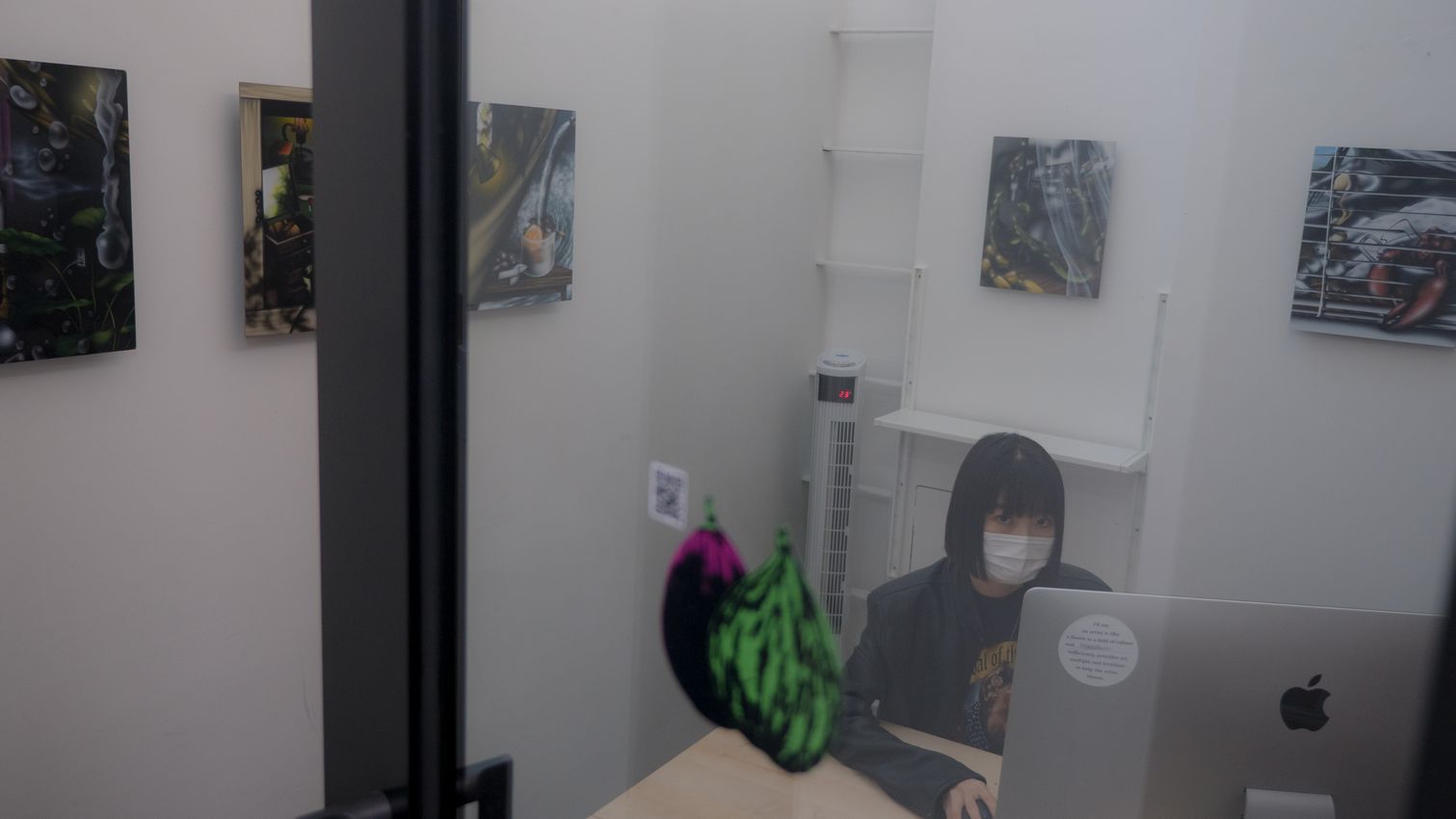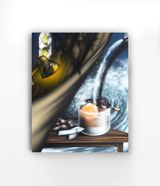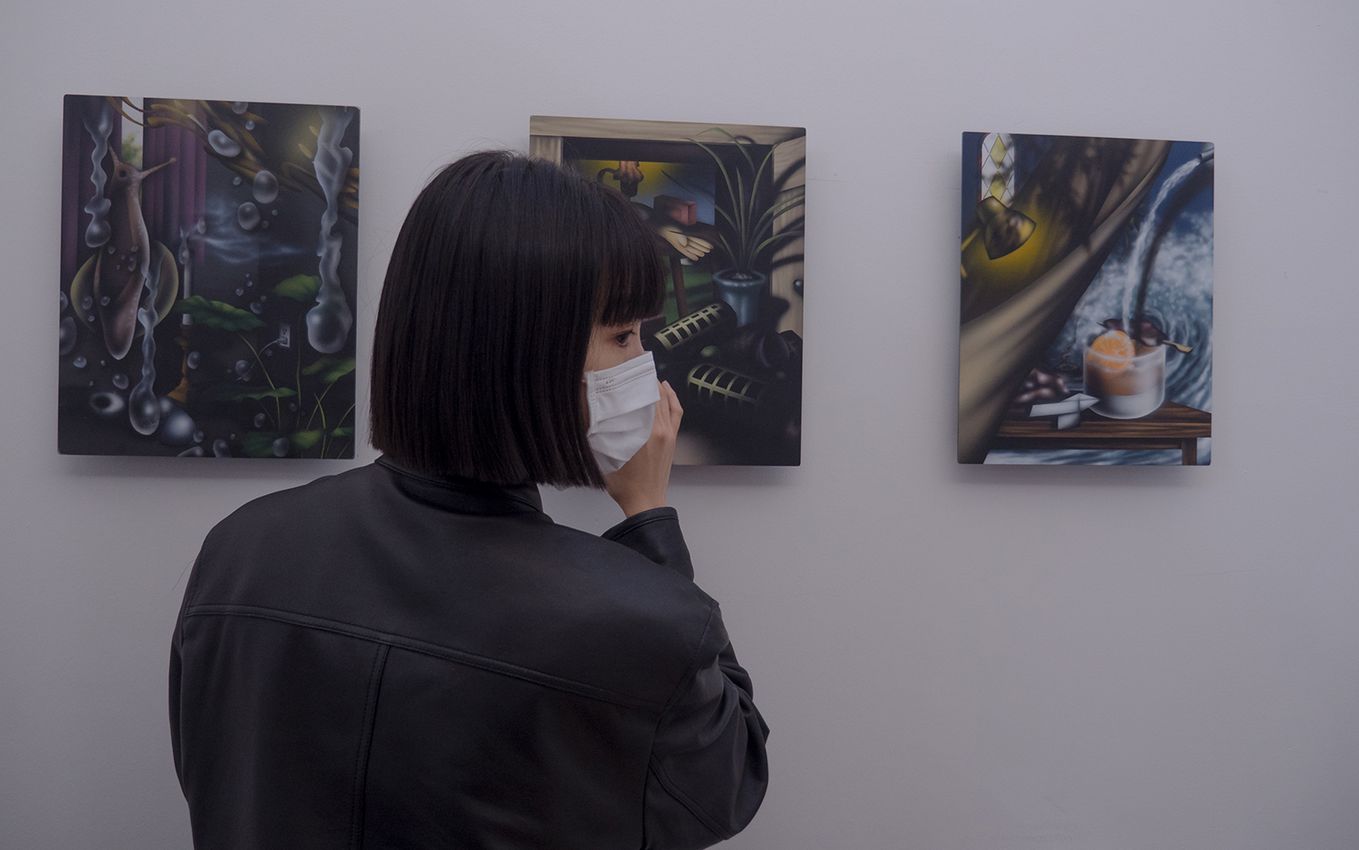
In the past, images relied on physical structures for distribution and existence. Today, these images, summoned in the form of data, stride through the internet independently. The surfaces constructed by Sun Woo appear as though memes from the net and symbols from classical paintings have been jaggedly pasted onto one another, then neatly trimmed. Like the layers in Photoshop, these images are overlapped and combined, and the intersections created in this process act simultaneously as clues for understanding their relationships, as well as a blank space that consists of empty symbols. Each component, such as stock images from the web, is separated by invisible layers, interfering with one another’s boundaries without crossing them. The shadow created by a steel frame seems to have brought the drop-shadow effect from Photoshop into the real world. In Sun Woo’s previous exhibitions, one could perceive images that seemed to escape from the bounds of the frame and infiltrate into the white cube. Mangled images that are stretched, cropped and distorted, appeared to return to the real world as they interacted with the exhibition space. Breathing together with the paintings hanging on the wall, these images seemed to manifest a subtle tension between the virtual and real. Both within and beyond the physical boundary of painting, images revealed themselves based on our visual systems through the physical labor of digital editing and painting. At a certain, unspecified point in time, digital images ceased to exist as mere representations and began to breathe as fragments of the real world. What we need to note is that images have always been a visual index pointing to our desires and fears, regardless of what had produced them or what physical structures had supported them. Clothed in traumatized narratives of the past, these images become ‘bruised images,’ becoming distributed and consumed rapidly in order to reach the place that we want them to be. As a subject who absorbs and consumes changes in the contemporary reality, Sun Woo is at once an artist who performs the long-held role of painting, as well as an anonymous user who continuously repeats the act of appropriation, replication, and mutation.
Nah Garam Independent curator

Oscillating between digital and analogue, Korean-born Canadian artist Sun Woo’s paintings employ symbols and signs prevalent in contemporary society and pop culture to enquire into the paradigms and desires that underlie the consumption and distribution of images.
Gallery Chosun was established in 2004 in Bukchon, an area in Seoul known for its vibrant art scene comprising prominent art galleries and the National Museum of Modern and Contemporary Art. With a reputation for providing a versatile environment for its forward-thinking exhibitions, Gallery Chosun is committed to becoming an ultimate paradigm for Korean contemporary art.

A respected voice in contemporary art discourse.
Focusing on ambitious storytelling and insightful art-world commentary. Ocula Magazine publishes in-depth interviews, critical essays and timely analysis on the artists, exhibitions and ideas driving the global art world.
Learn more about Ocula Magazine
Showcasing the best of the art world.
Ocula partners with galleries from around the world to highlight their artists, artworks and exhibitions. Gallery membership is by application and invitation, with each member vetted by an independent panel.
Learn more about Ocula Membership

Specialises in the sale of major artworks.
Led by a team with deep ties to the world’s leading auction houses, galleries and collectors. Ocula’s advisory team offers bespoke services to high-net-worth clients from around the world who are looking to acquire the best of contemporary and modern art.
Learn more about our team and services