






Human Interest
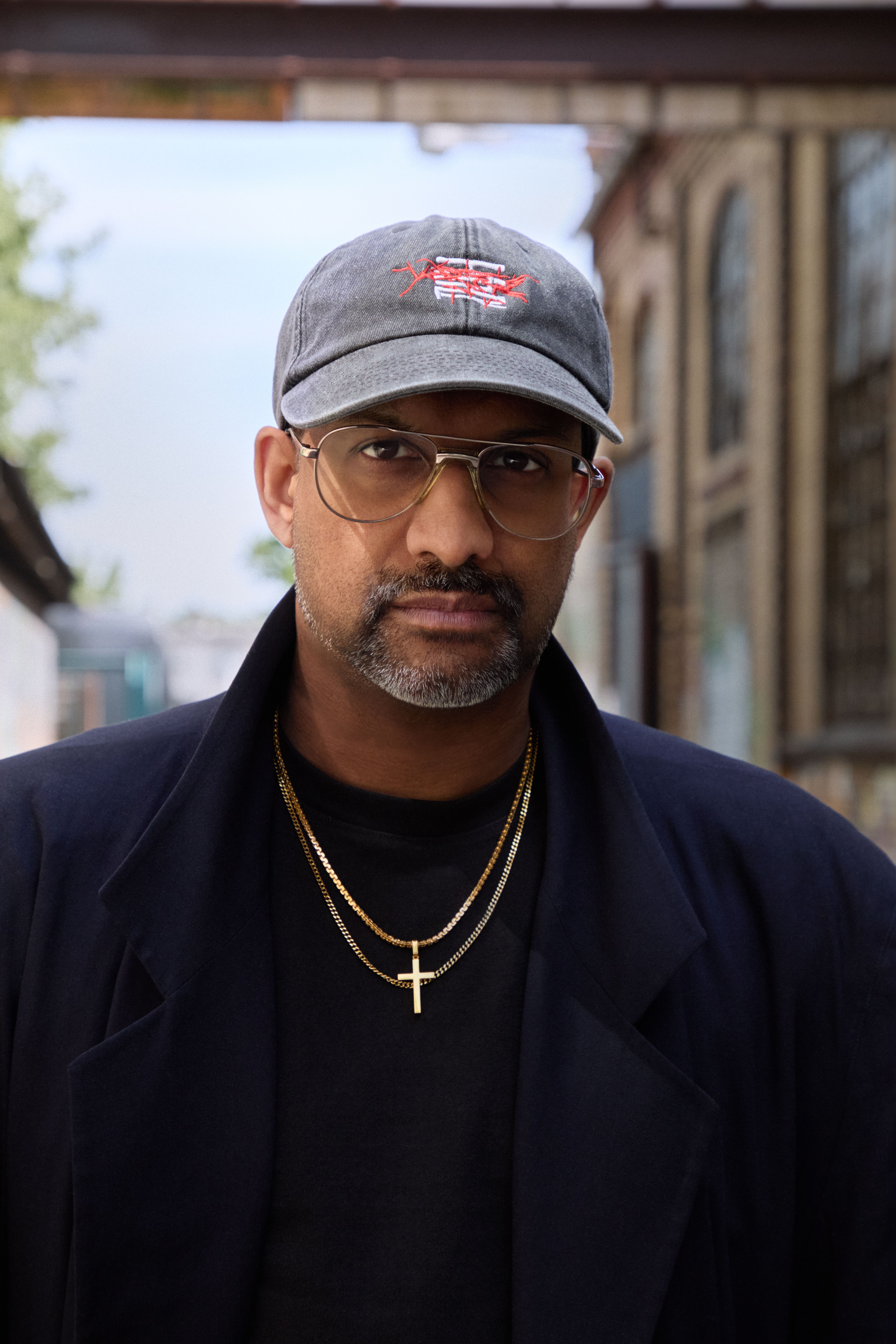
The Tamil artist is training AI to create installations that ask us to question the veracity of dominant historical narratives and Western liberal values. Save to My OculaLooking at the multimedia work of Christopher Kulendran Thomas, you wouldn’t expect him to be a staunch Kim Kardashian fan. In what universe would a reality TV star who has built an empire making television for the masses be regarded by an artist whose work concerns genocide and 9/11 as a “genius”? But she is. “The Kardashians are geniuses,” Kulendran Thomas tells me. “Kim’s a total, total genius”. For the Tamil artist, the criterion for this designation comes, in part, from the idea that the Kardashians understood reality, or at least the concept of an objective reality, as a fictional construct light years before rest of society, and profited from their knowledge. “Of course they’re the world’s greatest reality TV stars,” he says. “They were born understanding reality as fiction.”
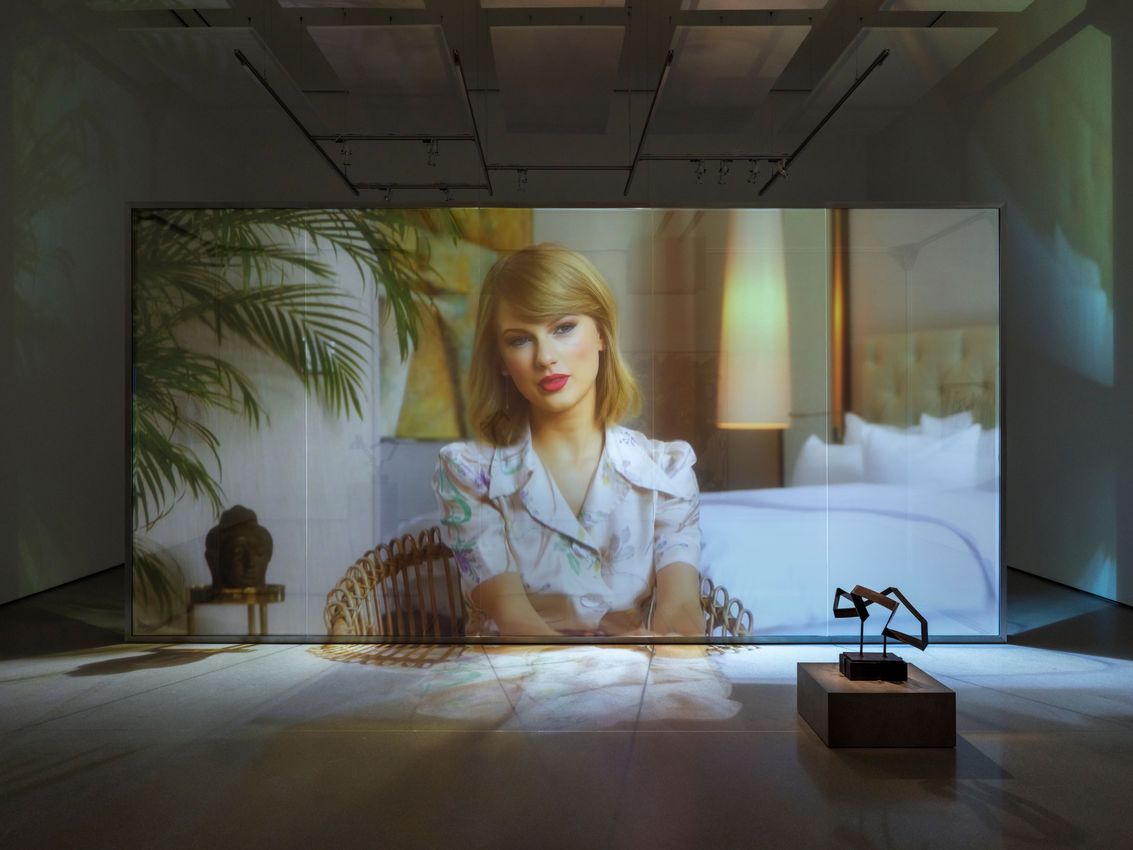
A deepfake of Kim is one of the stars in Kulendran Thomas’ work currently on show in the New Humans exhibition at the New Museum in New York City. His 2022 film installation, titled The Finesse, is the second part of an as-yet-to-be-completed trilogy exploring historical narratives, diaspora and displacement. In the video, we watch on five mirrored panels as deepfake Kardashian says: “I feel like us Armenians know that nothing can protect you when the narrative goes against you.” Elsewhere in the film, we see footage from OJ Simpson’s 1995 trial, in which Kim’s father Robert Kardashian served as Simpson’s defence attorney, spliced with deepfake Kim talking about her own experience as both an influencer and the granddaughter of diasporic Armenian grandparents. For Kulendran Thomas, the Simpson case “was a seminal historical moment where everyone around the world got to see how these institutions, that you have to believe in to pretend that you’re a human being in a democracy, could be shaped and contorted by narrative and storytelling. The Kardashian kids were born into that rupture in the matrix”.
Much of Kulendran Thomas’ work probes this idea of history as a kind of fiction that has been narrated by those in power, and that we are at a moment in which two profound shifts in power are taking place. “The first is the technological platform shift with AI, which we are at the very beginning stages of,” an evolution he considers on par with the invention of the printing press in its potential to alter the course of history. The second is “the shift in the balance of power from the so-called West to the so-called East”.
“I’m kind of interested in lost histories that didn’t get to play out, because they’re a way of glimpsing an alternate possible reality”
In The Finesse, these themes are foregrounded by the story of the Sri Lankan Civil War. The conflict between the Tamil and Sinhalese people began in 1983, and saw the Tamils try to create an independent state to combat ongoing discrimination and persecution. It culminated in the Mullivaikkal massacre in 2009, which saw tens of thousands of Sri Lankan Tamils killed. In the film, Kulendran Thomas explores the events from the perspective of the losing side, the Tamils. By centring the lesser-reported accounts of the defeated, he raises the idea that the dominant historical narratives we are taught might contain other stories—“lost histories,” as he has called them. Watching deepfake Kim Kardashian interspliced with interviews with Tamil people, we have to ask ourselves: which parts of what we are we looking at are real? While I was watching, a gentleman I didn’t know kept asking me to tell him who all the people in the video were, including Kardashian. It was obvious that he thought they were all real people.
Kulendran Thomas’ work has tapped into something in the New York City art scene right now. Alongside his work at the New Museum, he has shown two other bodies of work in the city recently, all produced with long-time collaborator Annika Kuhlmann, with whom he also runs Earth, a project space located in New York City’s Lower East Side and in Los Angeles’ Echo Park. Peace Core (2024), independent from the trilogy, though it shares some of its conceptual preoccupations, was shown at Gagosian’s Park & 75 location last September. At MoMA, there’s Being Human, the first part of the trilogy, which explores the rise of the Sri Lankan contemporary art market after the civil war.
Kulendran Thomas and his family left Sri Lanka for London at the beginning of the ethnic violence that eventually became the civil war. His recent works elucidate the interwoven geopolitical narratives that led up to the massacre and structured its aftermath, including the economic boom which Sri Lanka experienced afterwards (the Sri Lankan economy grew 8.0 percent in the year 2010 and reached 9.1 percent in 2012). That boom fostered the arrival of contemporary art events like the Colombo Art Biennale, which was founded in the same year as the massacre.
Kulendran Thomas is particularly interested in the country’s unique history with the internet. “Sri Lanka got its first internet service provider in 1995, and the Tamil Eelam were very quick to see the potential of the world wide web, not just to circumvent government censorship on the island, but also to coordinate the Tamil diaspora around the world,” he says. “They set up a division called the Internet Black Tigers and built a globally distributed identity protocol, which became the basis of a parallel economic system: they collected taxes around the world to fund the liberation movement back home.” This, he notes, is “quite different to what the mainstream Silicon Valley was doing in mid-1990s, but quite related to what people are becoming more interested in now. I’m kind of interested in lost histories that didn’t get to play out, because they’re a way of glimpsing an alternate possible reality.”
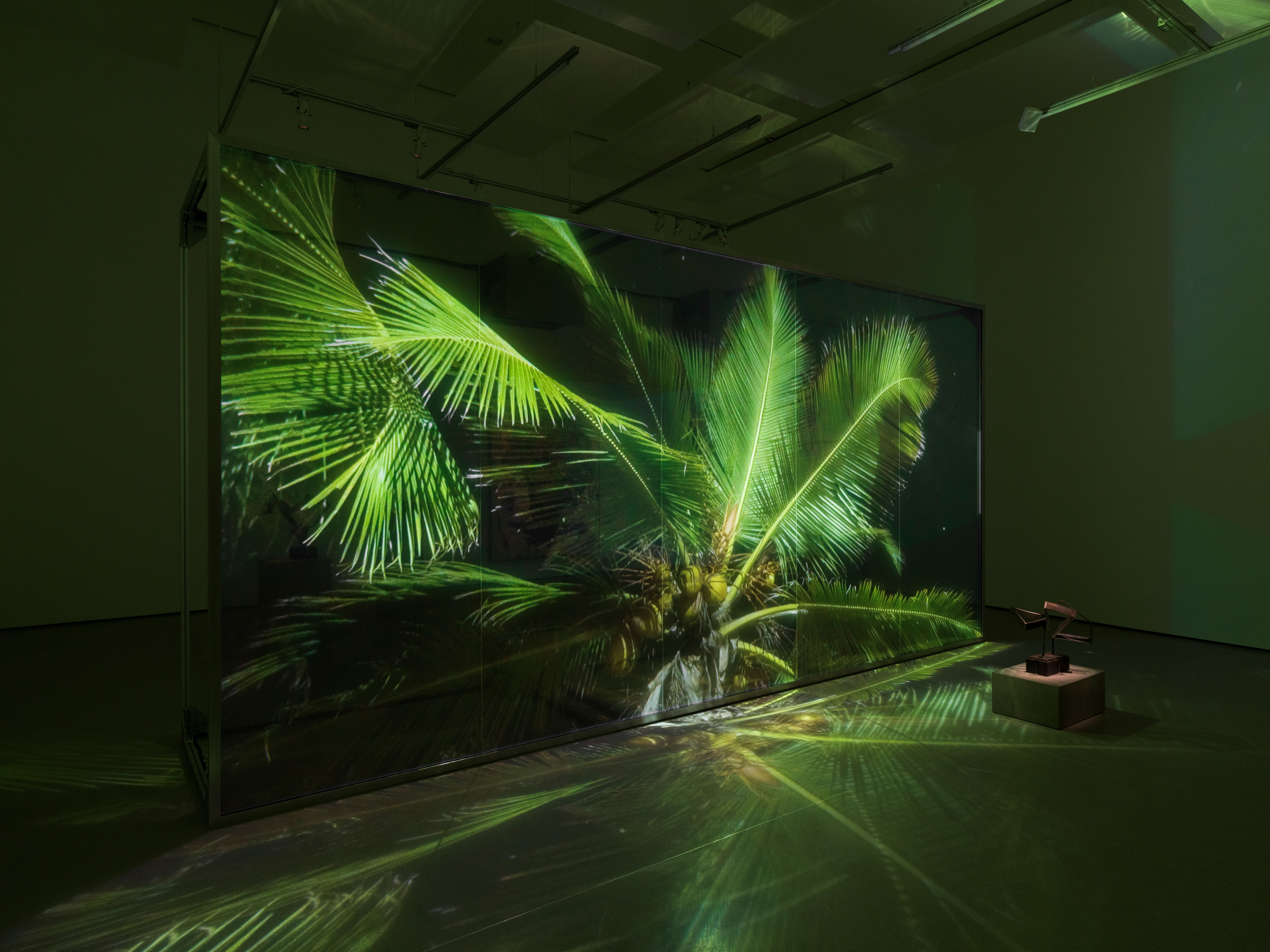
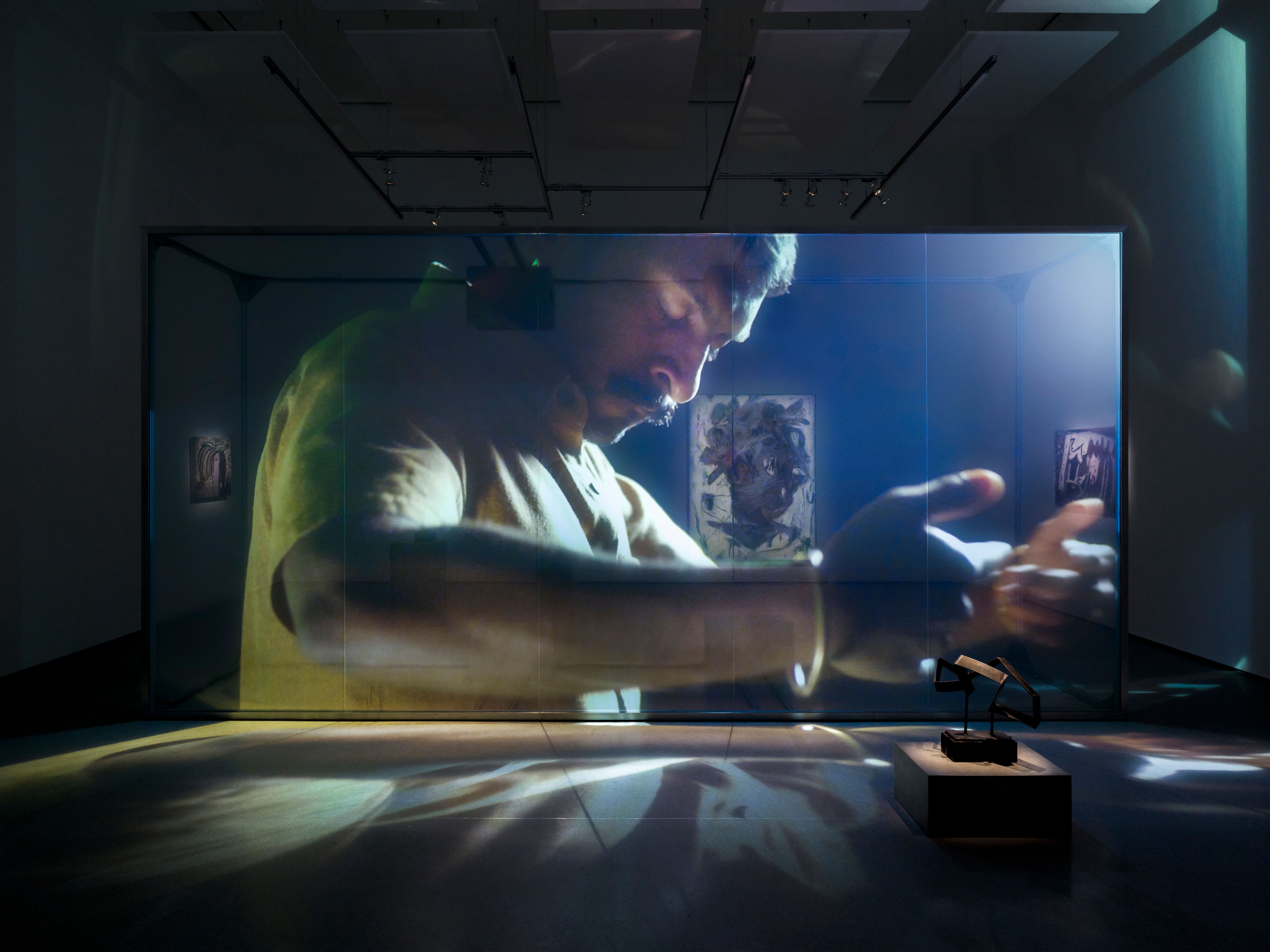
This connection between “progressiveness” and political violence is the subject of Being Human, the exhibition currently showing at MoMA. The film is the first “chapter” in the trilogy and is displayed on what appears to be a narrow aquarium, wherein the projection often spills, dazzling, off the screen and on to the floor of the space. The video stops dramatically at certain moments, and the lights flicker. The work is surrounded by Kulendran Thomas’ AI-derived paintings, which he makes from digital images generated by a neural network, as well as sculptures produced using the same networks, both of which have been trained on the work of other Sri Lankan artists.
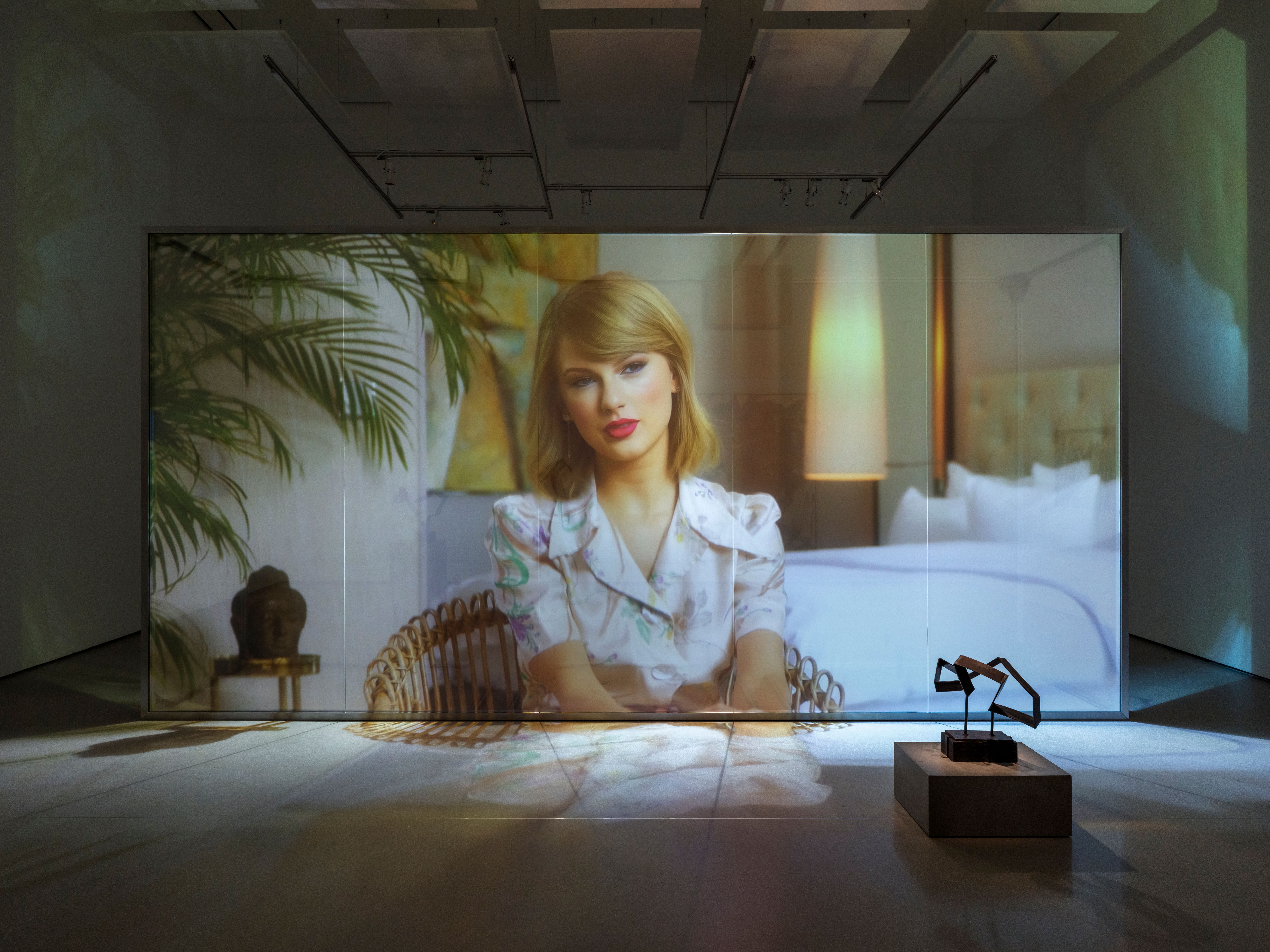
When I viewed the work at MoMA, people crowded around me, riveted. A deepfake of Taylor Swift appears, talking about authenticity: “You know, everyone believes that even if the whole industry is corrupt, at least I’m true to myself. So, if believing in your own authenticity is the basic price of admission, then authenticity itself becomes the most contested object of synthesis.” These scenes are spliced with individuals talking about the rise of the Sri Lankan contemporary art market in the wake of the massacre: “The work looks at the relationship between contemporary art as a historically specific genre based on a set of values from the West—let’s call them liberal democratic values,” says Kulendran Thomas. In the film, he uses the prism of artificial intelligence to “look at the relationship between contemporary art as the aesthetic expression of those values and human rights as the juridical expression of those values. And it kind of circles around this question of whether we have ever even been human or whether that’s a kind of ideological fiction.”
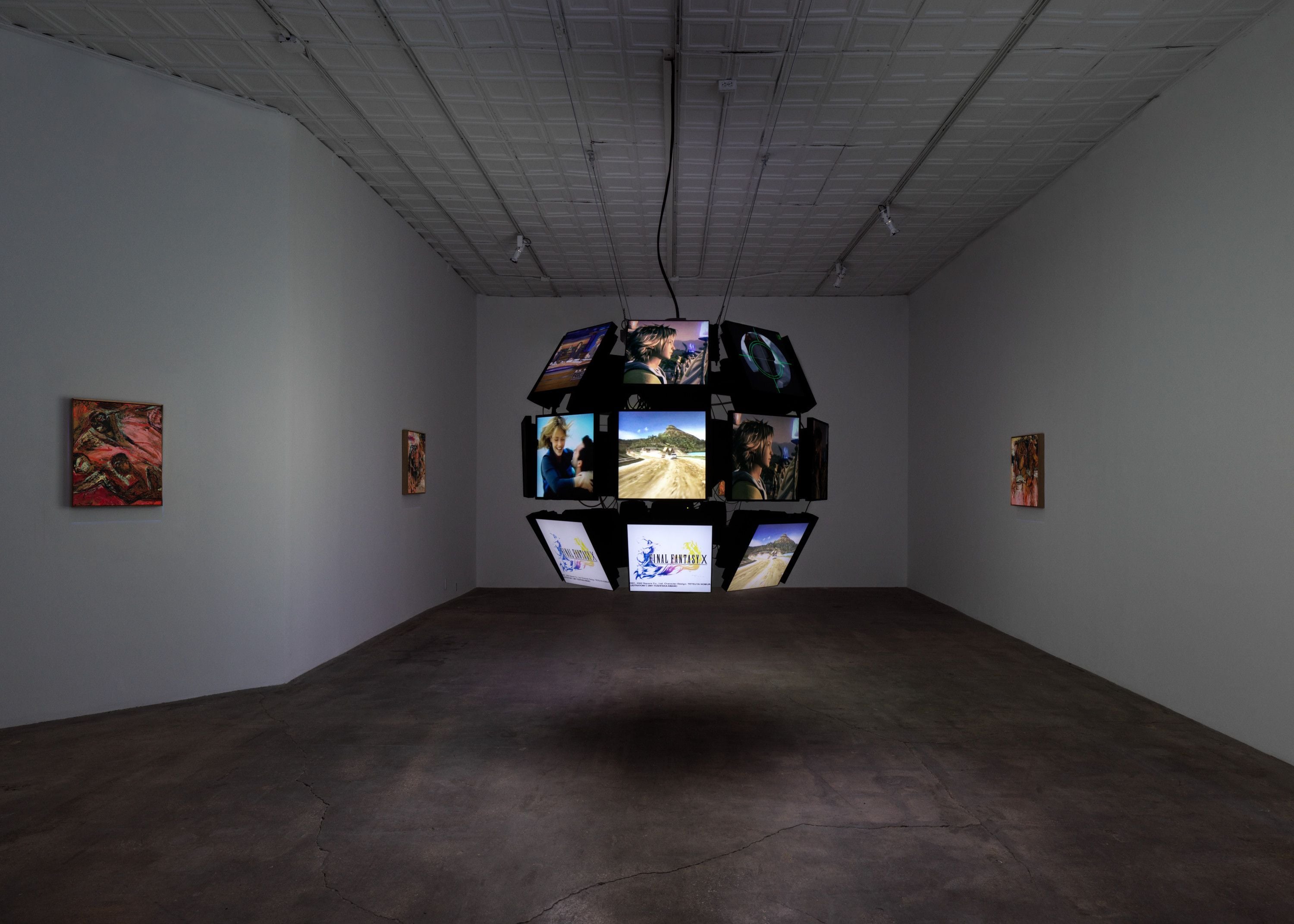
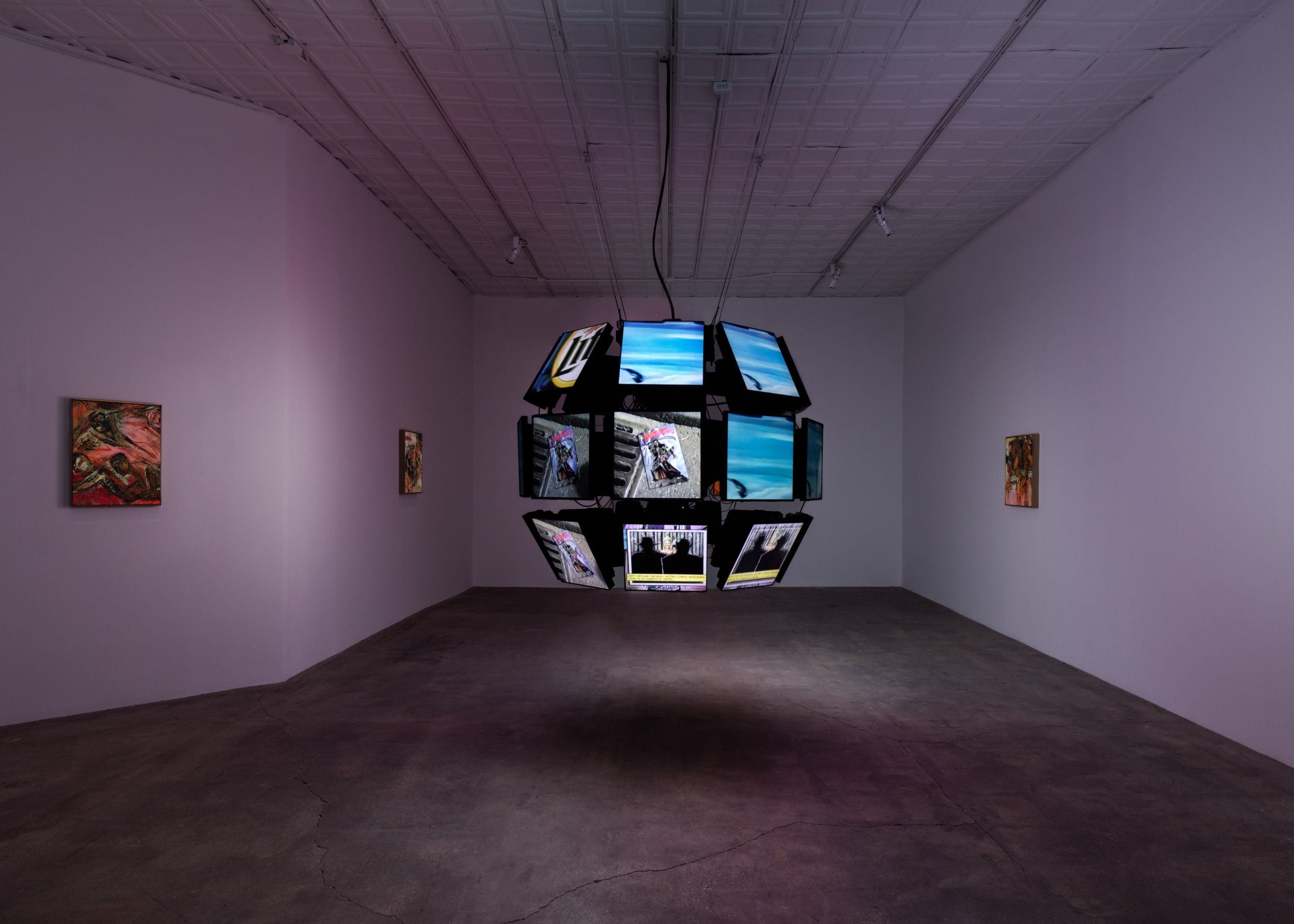
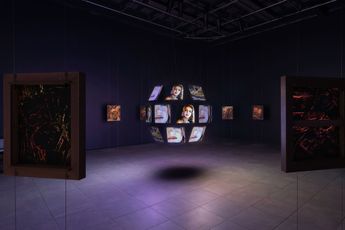
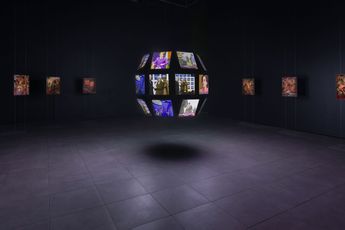
Kulendran Thomas’s most recent work, Peace Core, probes further this relationship. It centres on a large-scale sculptural video work, composed of a rotating orb made up of 24 televisions that continuously stream archive footage from American TV. The clips have been stitched together by an AI algorithm built by Kulendran Thomas from more than 24,000 pieces of footage, forming “an ever-evolving sequence, accompanied by a soundscape that continually remixes sounds and music”. The footage is mined only from what was broadcast on morning television in the moments before channels cut live to the unfolding events of 11 September 2001. Nodding to Kulendran Thomas’ interest in Internet Cinema and other nascent, online-native trends, the algorithm created for this piece was trained on “corecore” videos, a niche trend beginning in 2022 whereby users create rapid compilations of footage to express a particular mood.
“I wanted to bring together these two Ground Zeroes”
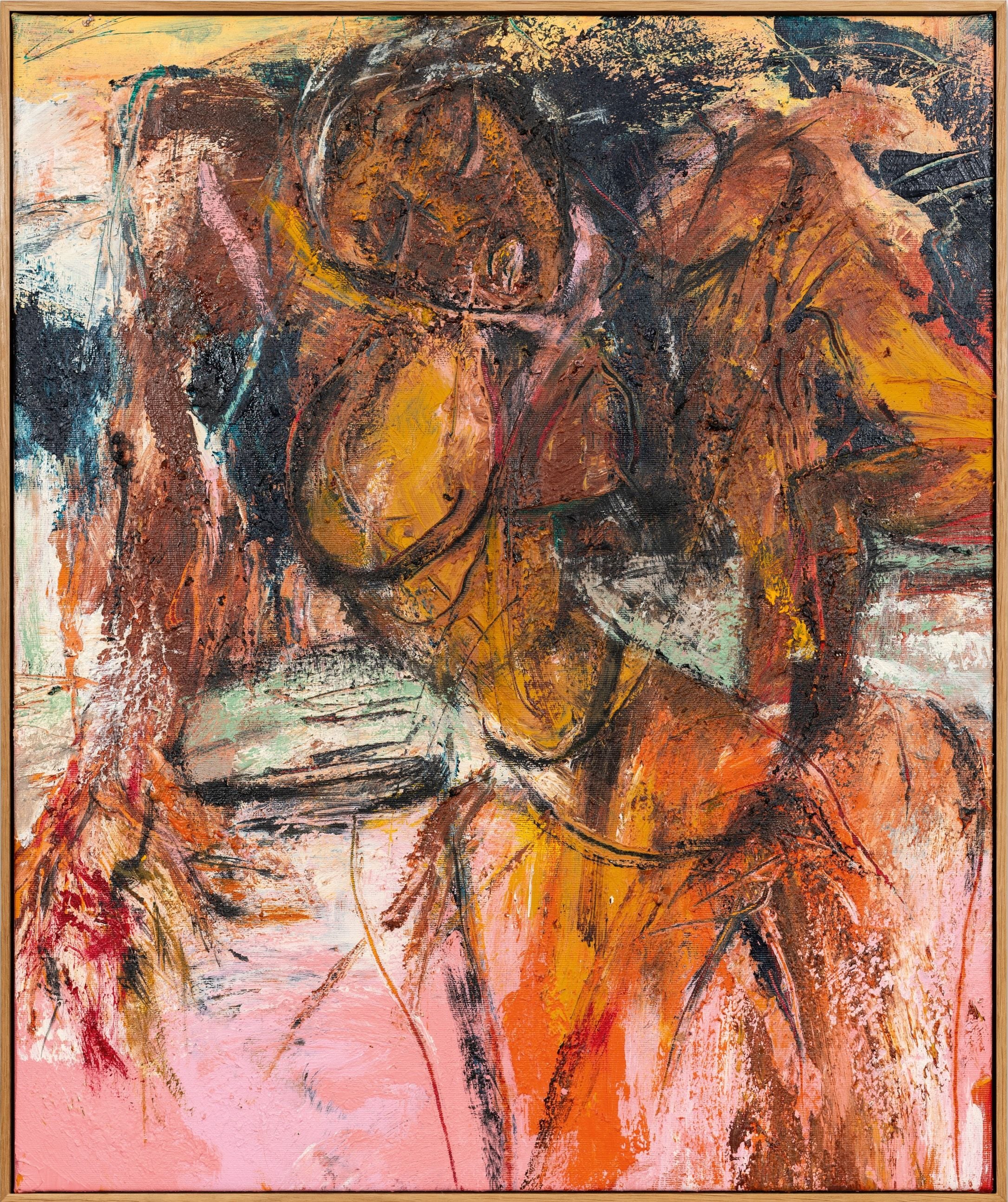
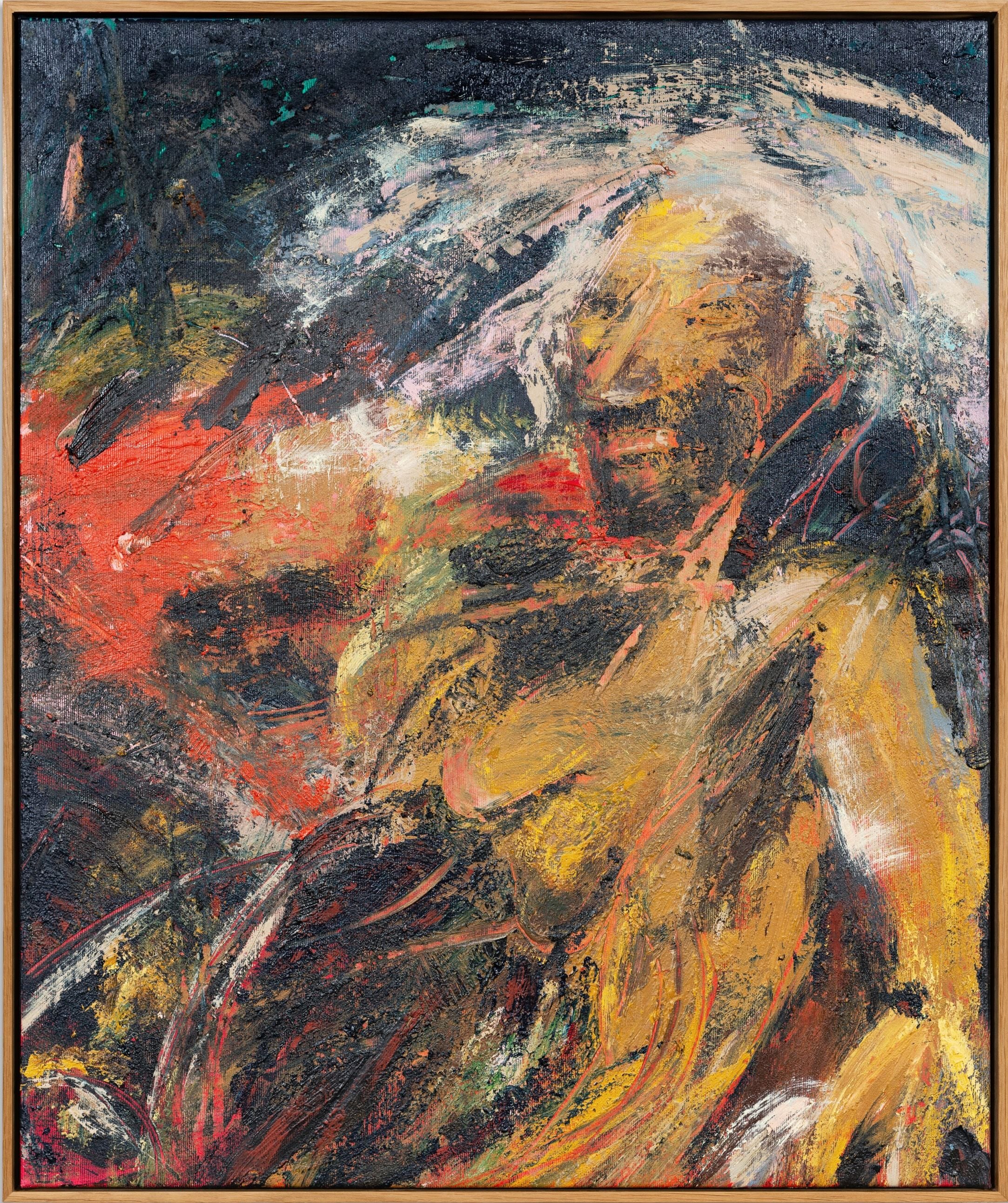
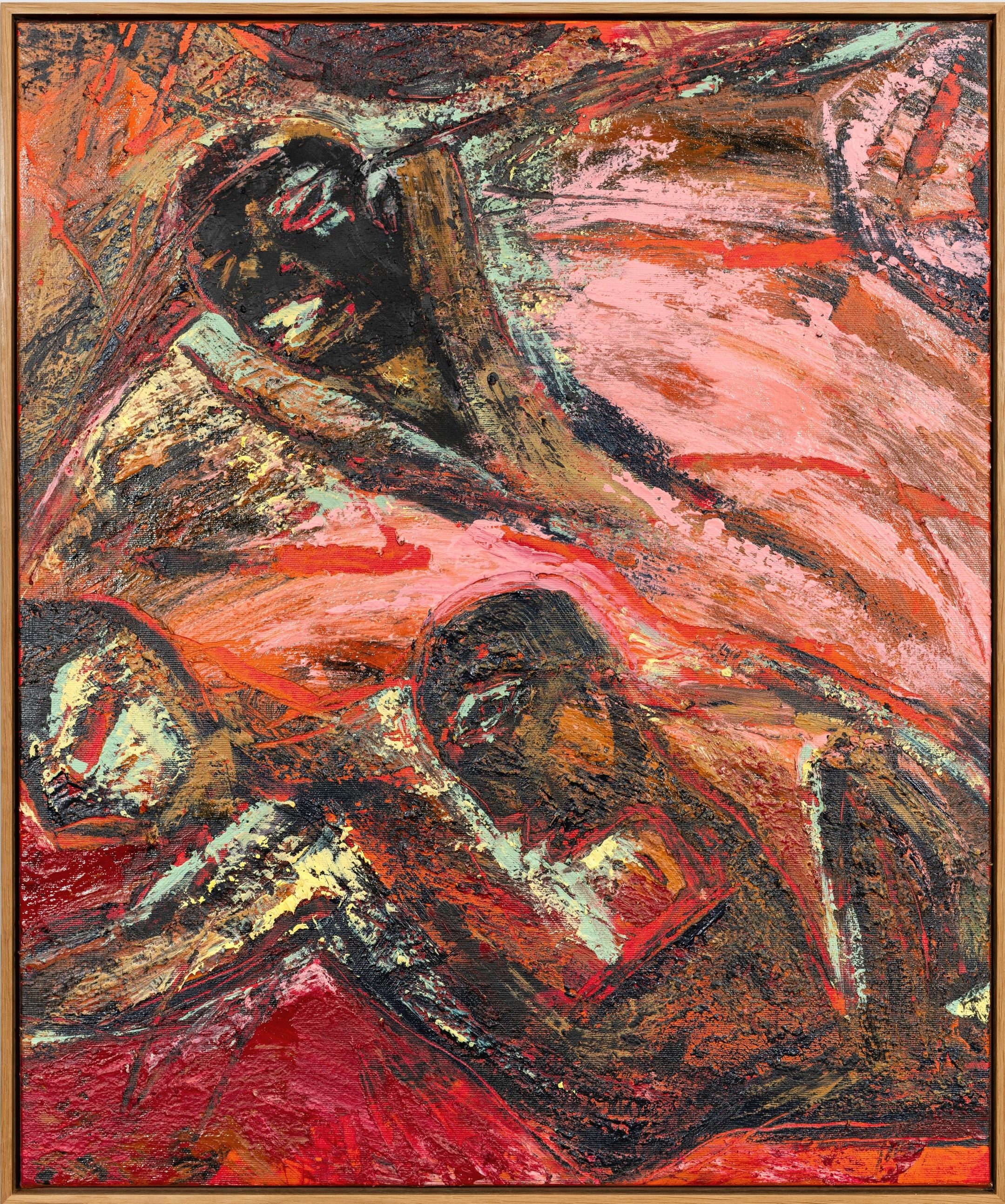
The orb is bordered by acrylic-on-canvas abstractions depicting what Kulendran Thomas calls “The most haunted place I’ve ever been”: a narrow strip of beach in a place called Mullivaikkal in the north-east coast of what is now Sri Lanka, where the Mullivaikkal massacre took place. “This narrow strip of beach was made into a safe zone in the final days of the war there,” Kulendran Thomas tells me, “And something like 100,000 Tamil civilians were marshalled into a no-fire zone. This was made smaller and smaller and smaller, and then bombed on 18 May 2009. And nobody knows how many people were killed that day.”
Those paintings are not painted “from photographs or any kind of documentary evidence”, says Kulendran Thomas, because there is no photographic evidence of what happened: the Sri Lankan government compelled the United Nations to leave the country before the genocide began, and foreign journalists were not permitted entry to the country for years afterwards. Instead, “They’re imagined, the same way I’ve composed all of my paintings.” Together with his studio team, Kulendran Thomas trains models on his own datasets. For these paintings, the models were trained on “work by successive generations of some of Sri Lanka’s most well-known artists, who have been influenced by the Western canon,” he says. “I wanted to bring together these two Ground Zeroes. One, [9/11], was seen live by probably billions of people; another happened in its aftermath, but wasn’t seen by the outside world at all.”
The undercurrent running through all this work is timelines. “In a way, Being Human and The Finesse look at what happened in the aftermath [of 9/11],” says Kulendran Thomas. “When I was watching those aeroplanes fly into those buildings on television, I, of course, had no way of knowing that the knock-on effect would be that [the region] my family is from would cease to exist. But that’s how that shit went down: the ‘war on terror’ that followed 9/11 gave Sri Lanka’s president at the time, Chandrika Bandaranaike Kumaratunga, the narrative pretext to reframe the Tamil Liberation movement as a terrorist organisation and wipe them out.”
While the prevailing Western narrative is that the foundation of a fair and equitable political system must be democracy, it is the essentially combative quality of the democratic process that, in Kulendran Thomas’ view, led to the genocide. “The really deep tragedy is that when my parents were kids, they didn’t know the difference between Tamil and Sinhalese,” he says. “They knew that they were Tamil, but it didn’t matter. The British Empire left the island artificially united as a democratic nation-state, with all these wonderful institutions of representative democracy. Politicians did what that system incentivises and differentiated themselves by finding divisive issues.”
In his eyes, the lessons of 20th-century geopolitics continue to play out. “I can see the same kind of dynamic [that happened between the Tamil and the Sinhalese] happening in democracies around the world […] because that’s what that system incentivises,” he says. The solutions he offers are not “more, better, different democracy”, but instead a waking-up to what he feels is the fallacy of “liberated, autonomous individuals with our own free will”. As he says: “This idea of the individual as the basic unit of society is particular to the West. It’s the foundational fiction.”
When I suggest that living in a “post-fiction” world might seem nihilistic, Kulendran counters my claim. What do you mean by nihilistic? The word is often conflated with pessimism or cynicism, but I relate to it in its philosophical sense, about a rejection of morality as a form of control or oppression.” I tell him I had referred to this meaning, too—a nihilism that doesn’t refute the world, but rejects the logical structures by which it is currently organised. With this, he can agree. “In that sense,” he says, “I think I am optimistically, and idealistically, a nihilist.” —[O]
Christopher Kalendrun Thomas’ work Is ongoing at the New Museum and MoMA in New York City .
Main image: Christopher Kulendran Thomas, Being Human (2019), in collaboration with Annika Kuhlmann. Museum of Modern Art, NYC, 2025. Digital Image ©️The Museum of Modern Art, New York. Photo: Jonathan Dorado.











A respected voice in contemporary art discourse.
Focusing on ambitious storytelling and insightful art-world commentary. Ocula Magazine publishes in-depth interviews, critical essays and timely analysis on the artists, exhibitions and ideas driving the global art world.
Learn more about Ocula Magazine
Showcasing the best of the art world.
Ocula partners with galleries from around the world to highlight their artists, artworks and exhibitions. Gallery membership is by application and invitation, with each member vetted by an independent panel.
Learn more about Ocula Membership
Specialises in the sale of major artworks.
Led by a team with deep ties to the world’s leading auction houses, galleries and collectors. Ocula’s advisory team offers bespoke services to high-net-worth clients from around the world who are looking to acquire the best of contemporary and modern art.
Learn more about our team and services