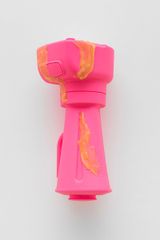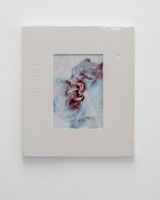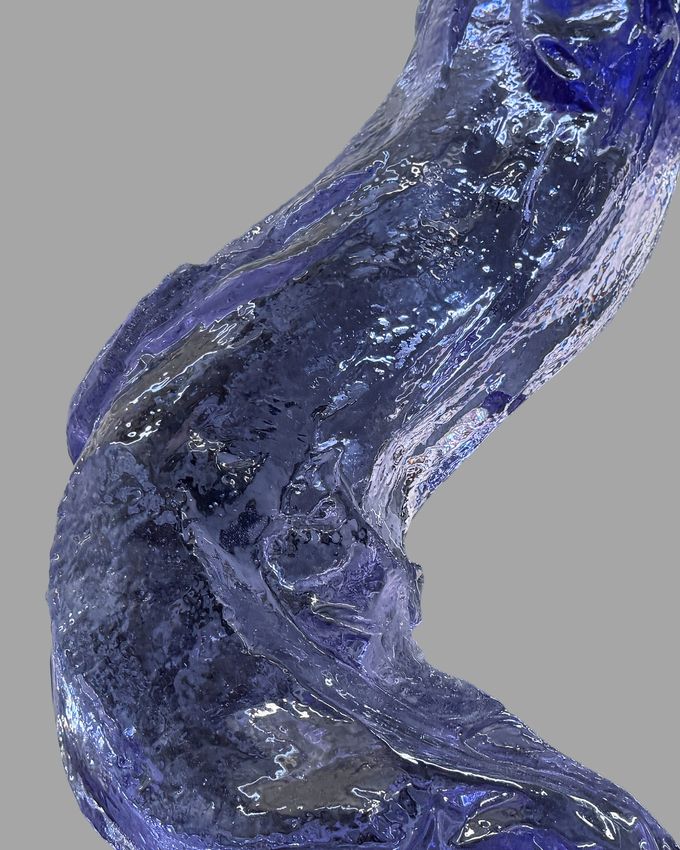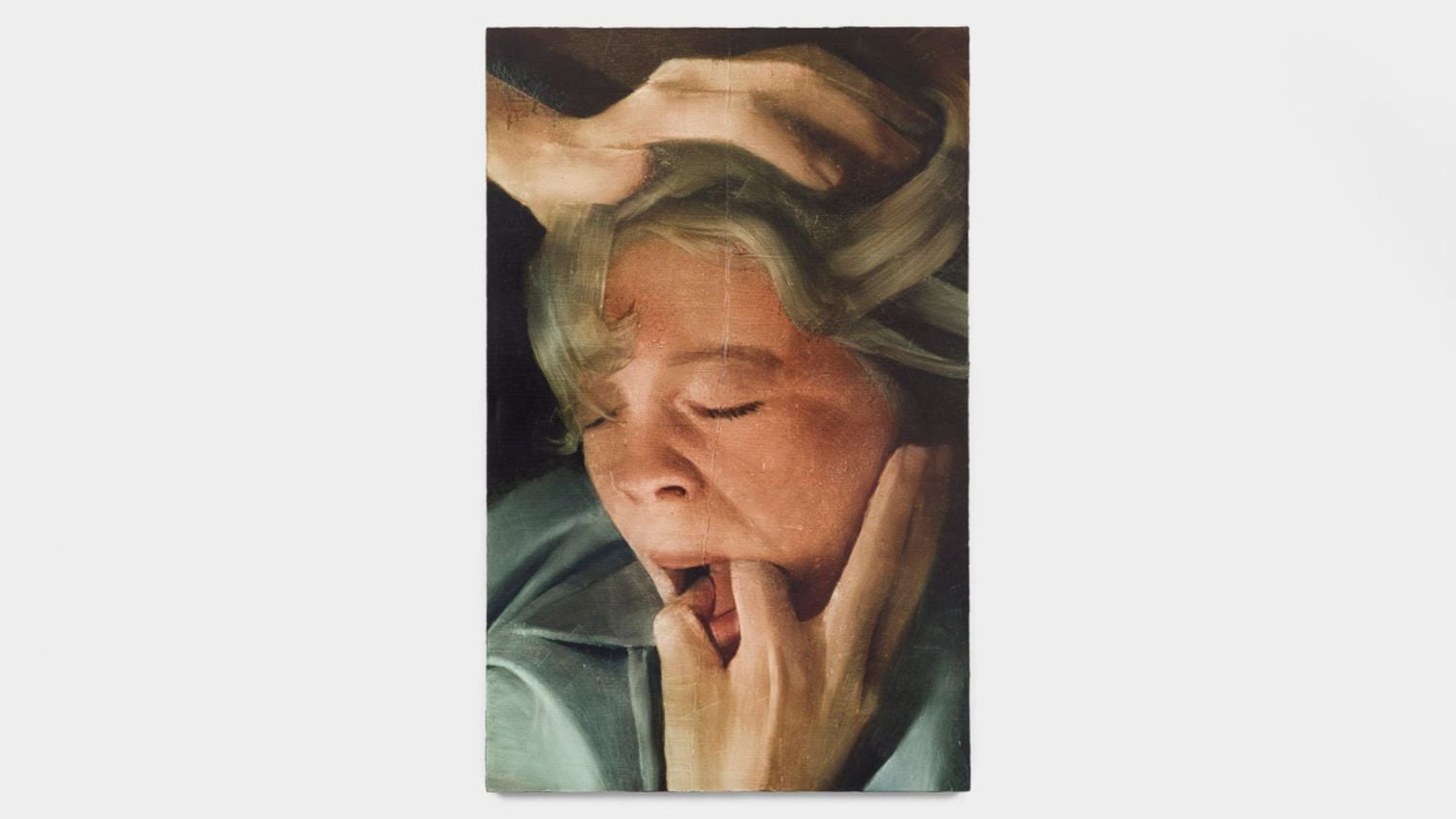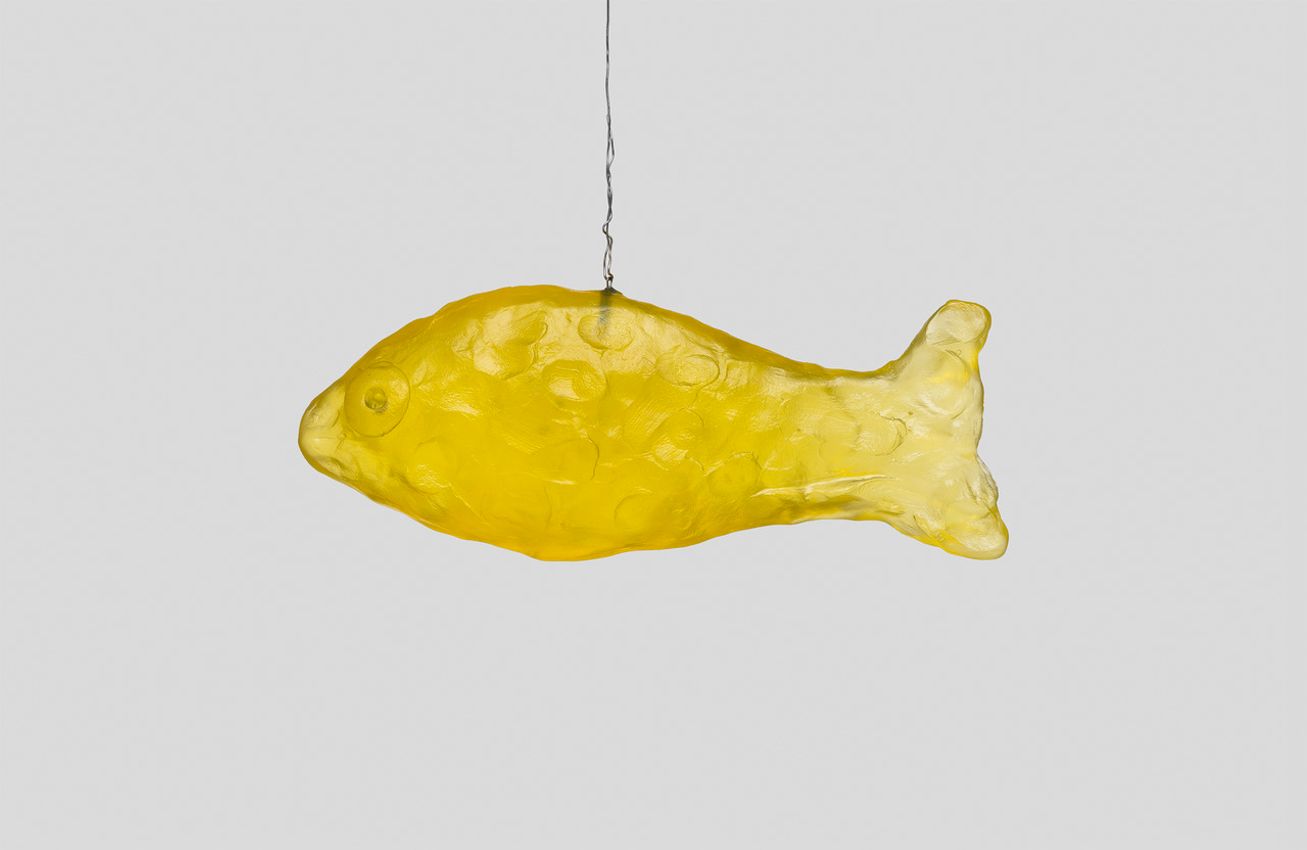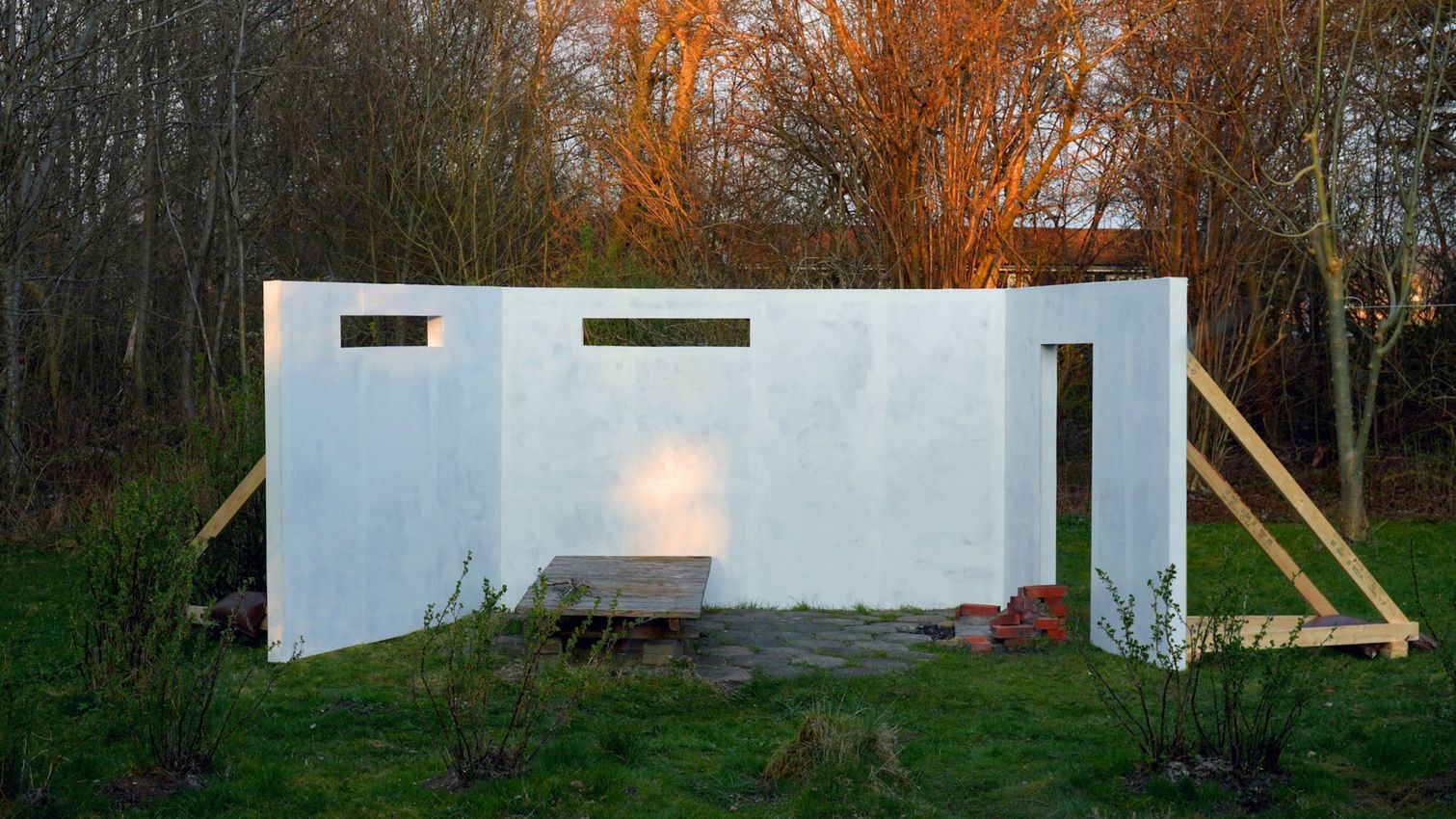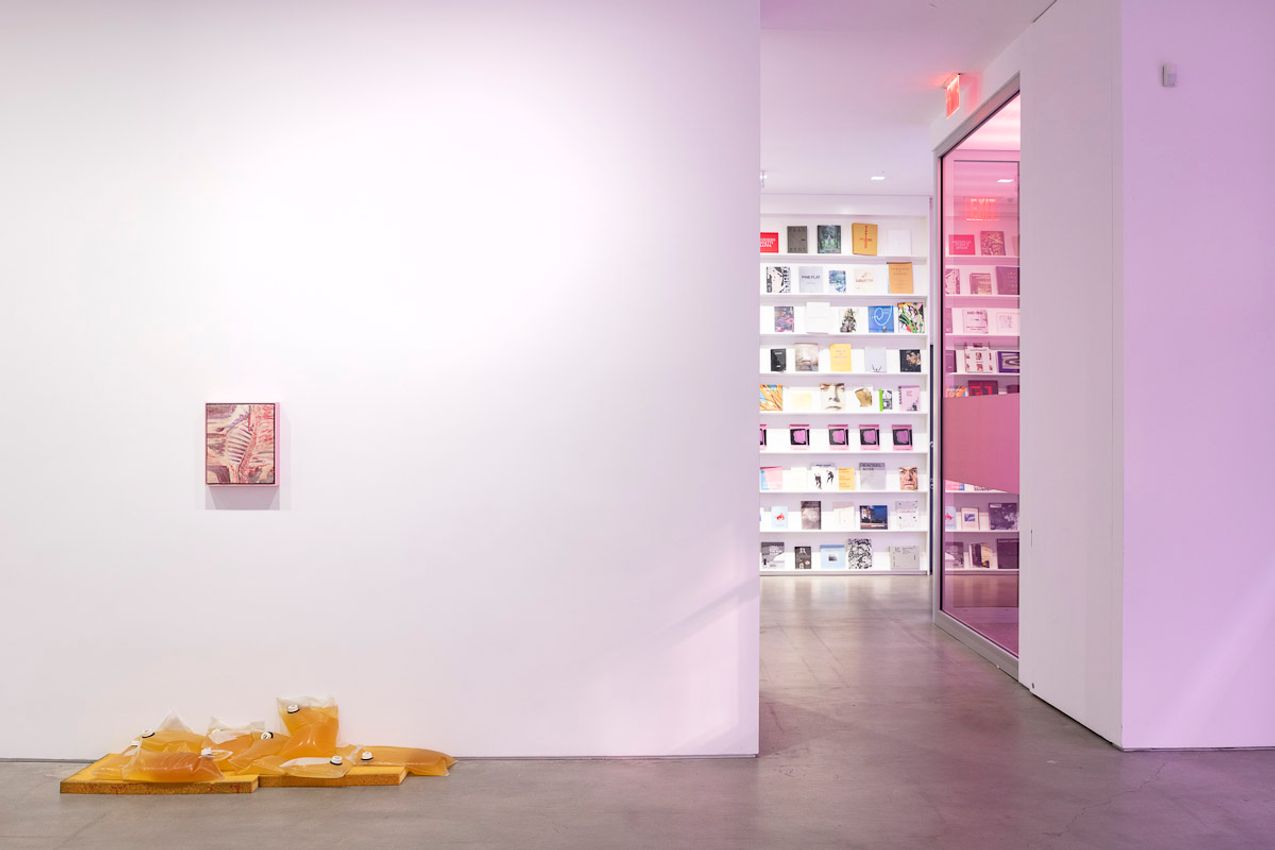
An image that is not just an image, but closer to a thing that it is also not—flesh—is visible some-where in every room. Like the red eye of a camera, it follows your movements and tracks your status in relation to an open wound. It shares its title, Boyfriend.JPEG, with all the others works in the exhibition because they too describe something that they are not: not a boyfriend but a jpeg; not a presence but its format, that is to say, its absence. Are you following? This is obviously about love.
Shahryar Nashat has specialised in conjuring the particular kind of presence that is absence pushed past its limit. The truant body that we find in his work is potent enough to function as an eloquent de-scriptor of what is not there. A foam mattress and sheer plastic bags of urine make a symphony of yellow and a consideration of skin, containment, intimacy, rest, and waste. Coloured spines with uneven surfaces are suspended from the ceiling, carriers of nothing and so shiny they should be liquid, just as the bruised skin of a slab of marble is so finely draped it should respond to your touch. Large shell-like shapes of fibreglass manifest a kind of lapsed materiality, or negative space, miscarried from the virtual. Each in their way, all of Nashat’s sculptures sit breathlessly on the border between soft and hard, thing and being, deliberation and detritus, like a sound turned up high enough that it achieves a different texture. These are things that might be, and already were. You hear the echo of a blast that happened elsewhere—not so faint at all.
“Please, nothing happens” a voice repeats in the video, as we follow the shell of an armed figure cont-rolled by someone who is not here. “Yes, I’ve been crying,” the voice admits to the sound of a damaged, fragmentary score, words and music both somehow ominous in their partiality. These utterances are measures of the distance between an avatar and a person, or a jpeg and a boyfriend, suggestions of potential as well as impotence. It is with such lines that we leave ourselves defenceless in the face of love. Still, they are not just expressions of Ohnmacht (what the Germans have named the particular lack of agency inherent to romance) but the stirring of a powerful emotion that can make all kinds of things materialise. We hear in them the sound of two parts detaching, the moment when love is the most physical, the most raw and tangible that it will ever be. It is in this moment that the hounds come out; when the crash is not a test and the heart not a metaphor.
I’ve come to think of this as an anti-vanitas logic. As opposed to the blooming flowers and dewy lobsters on old Dutch paintings, not an emphasis on the peak of life as foreboding of its demise, but sober manifestations of what remains: the moulds detached, the skins shed; things become useless, be-come art. To come back to the open wound, the flip side to its exposure is an invitation to care, just as vacancy is a space carved out for inhabitation. We could say there’s something desolate about these objects, something empty about the scene. But it is precisely amidst the material reality of goneness, in this celebration of aftermath, that we meet, finally, paradoxically, love—aborted into the world, an un-shapely thing.
Press release courtesy Gladstone Gallery. Text: Kristian Vistrup Madsen,
Shahryar Nashat is a dynamic artist who creates videos, sculptures, installations and other artworks in which the human body and its depictions play a central role.


Gladstone is known for its commitment to artists whose prescient approaches and experimental practices have defined the contours of contemporary art. The gallery has long been an active partner in the cultivation of iconoclastic careers, fostering a roster of artists recognied for their ground-breaking contributions. Headquartered in New York and including outposts in both Brussels and Seoul, Gladstone’s impact extends globally, enabling both the presentation of new bodies of work, and an amplification of the international reach of its artists. Alongside its work with contemporary artists, the gallery is steward to the legacies of pivotal historical artists and serves as an advocate for the enduring power of art. Gladstone is led by a team of partners who spearhead its long-term vision and program, building on the values of its founder Barbara Gladstone.

A respected voice in contemporary art discourse.
Focusing on ambitious storytelling and insightful art-world commentary. Ocula Magazine publishes in-depth interviews, critical essays and timely analysis on the artists, exhibitions and ideas driving the global art world.
Learn more about Ocula Magazine
Showcasing the best of the art world.
Ocula partners with galleries from around the world to highlight their artists, artworks and exhibitions. Gallery membership is by application and invitation, with each member vetted by an independent panel.
Learn more about Ocula Membership

Specialises in the sale of major artworks.
Led by a team with deep ties to the world’s leading auction houses, galleries and collectors. Ocula’s advisory team offers bespoke services to high-net-worth clients from around the world who are looking to acquire the best of contemporary and modern art.
Learn more about our team and services