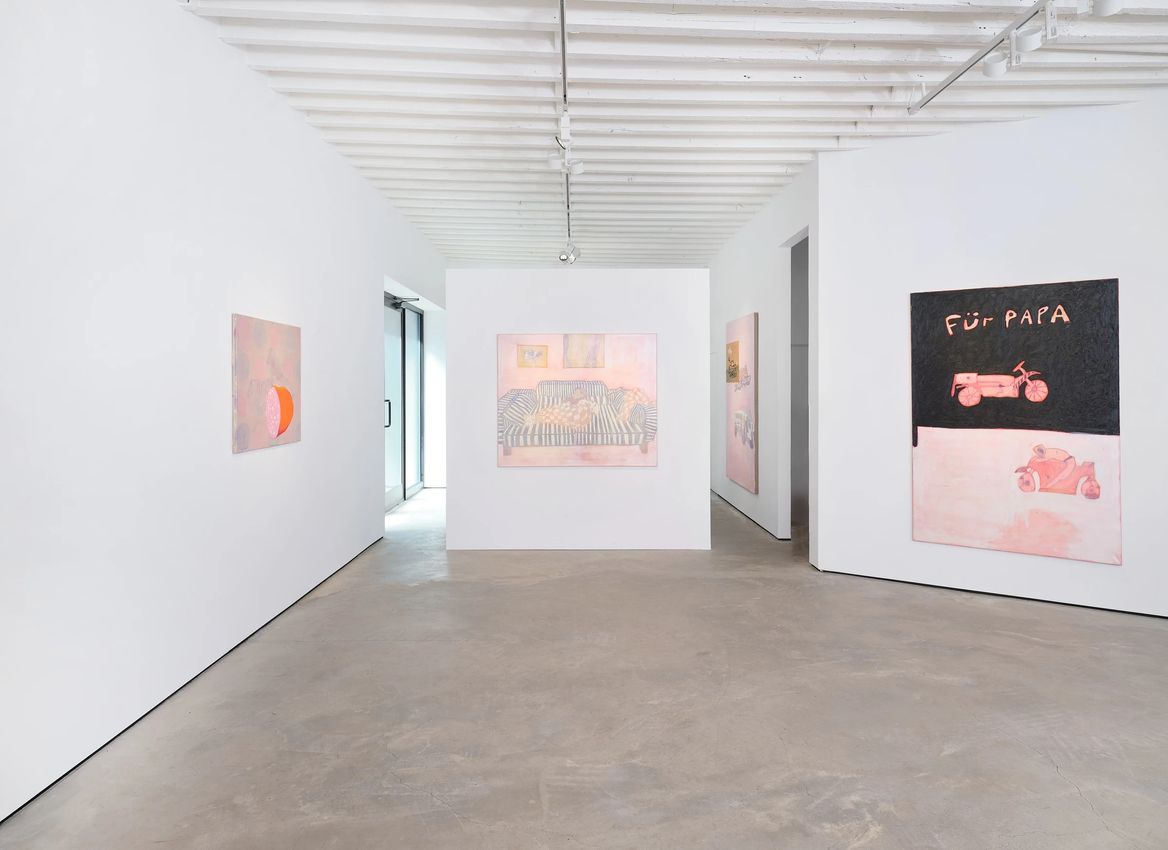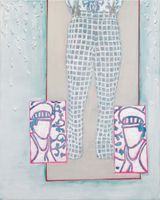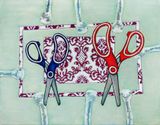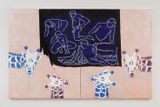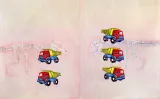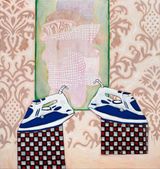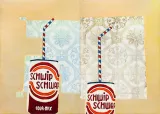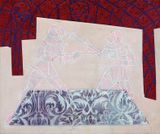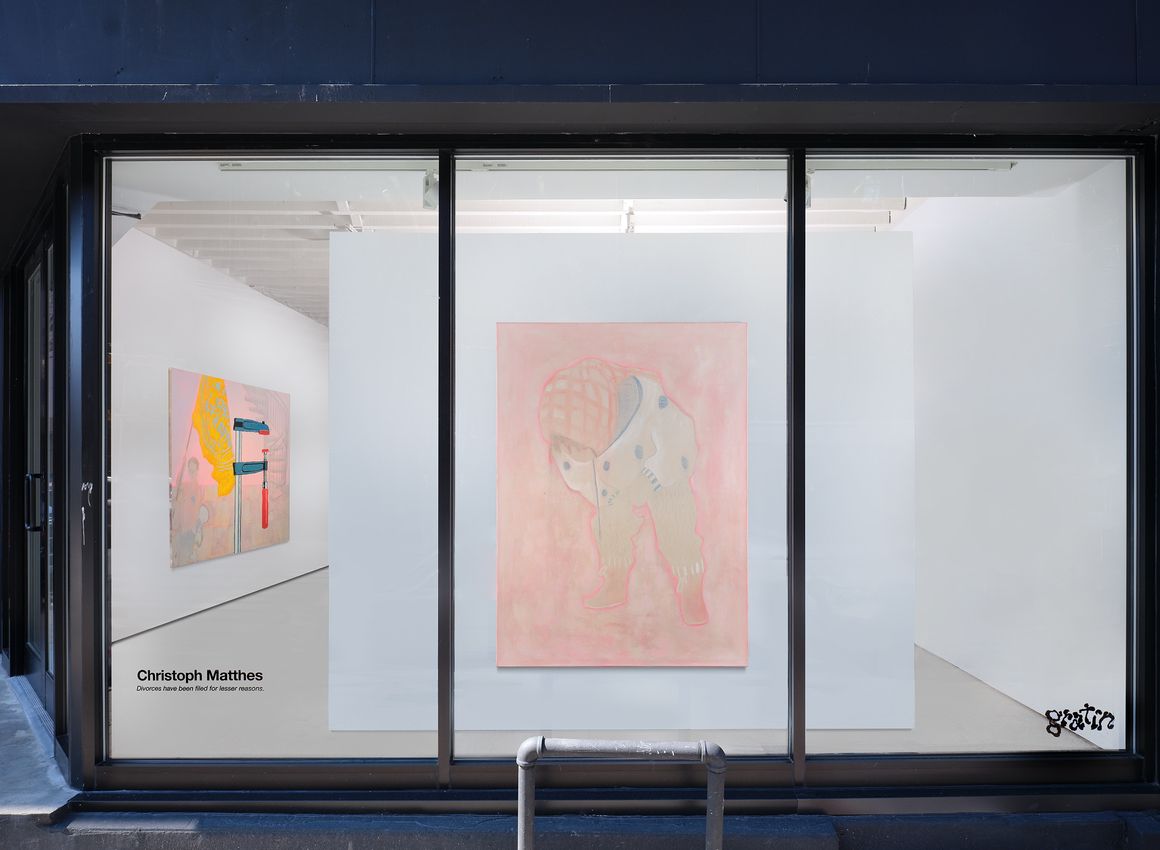
The integrity of these paintings results from Christoph Matthes’s adaptive sensibility. Experimentation with process was the precursor to the compositions, making way for new figure-ground relationships, and their emergent tensions. Intrafamilial frictions and malaise are subjects that Matthes consistently returns to. In dealing with the disaffection of middle-class Germany, cars and domestic interiors reappear out of this interest in a suburbanism constantly verging on the rural. Matthes contends that the muscle cars and trucks are most recognisable as representative of a certain strain of masculinity. He pays homage to his own coming of age in a military family, with the image of a little tank recurring across two paintings on view.
Matthes initiated this body of work with drawings on paper, which were executed using a ballpoint pen then diluted using a shellac and alcohol mixture. He discovered the potential in this mode, and went on to apply it to canvas. This produces a distancing effect between viewer and object, as the film between foreground and background results in an ominous haze. He presents this process uninterrupted in not flawless but gorgeous, where he’s forgone the addition of a vivid foreground in favor of the entombed spatter of materials that consistently make up his backgrounds.
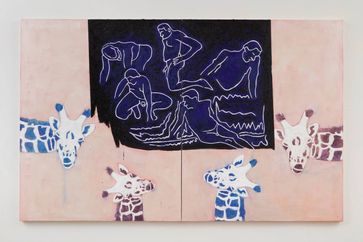
The stage is set in an accumulation of gestures and chemical steps, which are constantly remixed by Matthes as he moves from painting to painting. He describes the construction of Fish, in particular, as it began with a ballpoint pen drawing on raw canvas, which was then stretched and primed with rabbit skin glue. This traditional priming technique serves as a membrane in this case, as it creates a film of protection over the illustration. After this, Matthes applied alcohol to the surface and painted pigmented rabbit skin glue around the pen lines, then directly on top of them. He washed the background color out with a thin layer of white, creating an appearance akin to that of an overworn, overwashed T-shirt. This was all sealed with an acrylic emulsion and an alcohol-based ink, afterwards Matthes pursued the foregrounded composition of fighter fish.
Consistent pale pink colour fields reflect the artist’s consideration of virtuous colour relationships. The eye and mind combat over the transparency of pink, never really clarifying whether its disposition is opaque or translucent. The pale background of Schlusselkinder (‘Latchkey children’), in particular, creates the impression of viewing an outside world from inside the aquarium tank. While the foregrounds are largely populated by specified forms, Matthes doesn’t move with any predetermination. The addition of the concrete image on top of this washed out background is a disruptive mode, but not a destructive one. Like selecting the best word for a sentence, things connect by an interplay of logic and happenstance.
Matthes’s paintings emerge in layers and entangled narratives. He embraces a metaphorical status as the unwanted child of Louise Bourgeois and Martin Kippenberger. Setting out with the sensitivity, intimacy, and brutality of the former while dutifully employing Kippy’s humour. The rigour of Matthes’s process coalesces with the apparent levity of his subjects, igniting a disquietude that compels the viewer to marinate in his kinetics. Having engaged with the medium for over a decade, he consistently restruct.
Christoph Matthes****(b.1990 in Karlsruhe, Germany) lives and works in Düsseldorf, Germany and was an artist from 2011 - 2017 at the Kunstakademie in Düsseldorf as Meisterschüler of Professor Peter Doig.
Recent solo shows include: Gratin (New York, 2023), at B10B (Düsseldorf, 2020). Selected group exhibitions include: Michael Werner Gallery (East Hampton, 2021), Sinalunga (Tuscany, 2019), Kunstverein (Leverkusen, 2018), Castello di Gargonza (Tuscany, 2018), Galerie Kiki Meier-Hahn, (Düsseldorf 2016).

Christoph Matthes (b. 1990 in Germany) lives and works in Düsseldorf. Matthes was a student at the Kunstakademie in Düsseldorf as Meisterschüler of Professor Peter Doig. Matthes’ artistic creations draw inspiration from various aspects of his life. What distinguishes his work is the technique he employs. He initiates his pieces using a ballpoint pen and subsequently incorporates other materials such as shellac, acrylic, and oil. This unique approach contributes to the distinctiveness and compelling nature of his artistic style.

A respected voice in contemporary art discourse.
Focusing on ambitious storytelling and insightful art-world commentary. Ocula Magazine publishes in-depth interviews, critical essays and timely analysis on the artists, exhibitions and ideas driving the global art world.
Learn more about Ocula Magazine
Showcasing the best of the art world.
Ocula partners with galleries from around the world to highlight their artists, artworks and exhibitions. Gallery membership is by application and invitation, with each member vetted by an independent panel.
Learn more about Ocula Membership

Specialises in the sale of major artworks.
Led by a team with deep ties to the world’s leading auction houses, galleries and collectors. Ocula’s advisory team offers bespoke services to high-net-worth clients from around the world who are looking to acquire the best of contemporary and modern art.
Learn more about our team and services