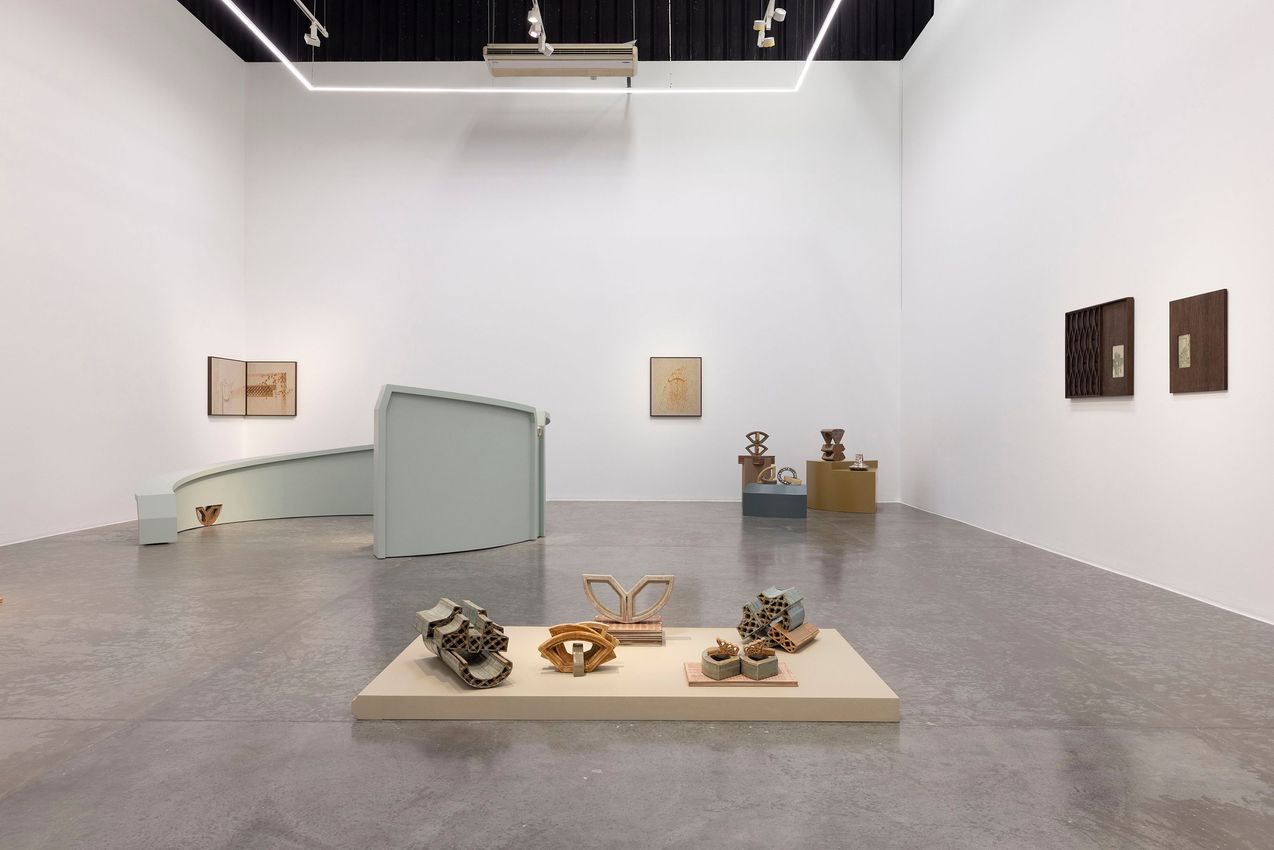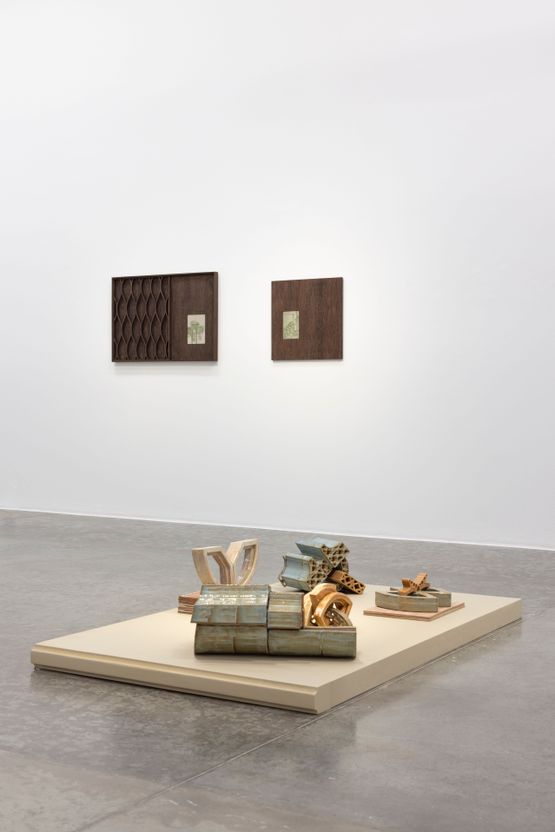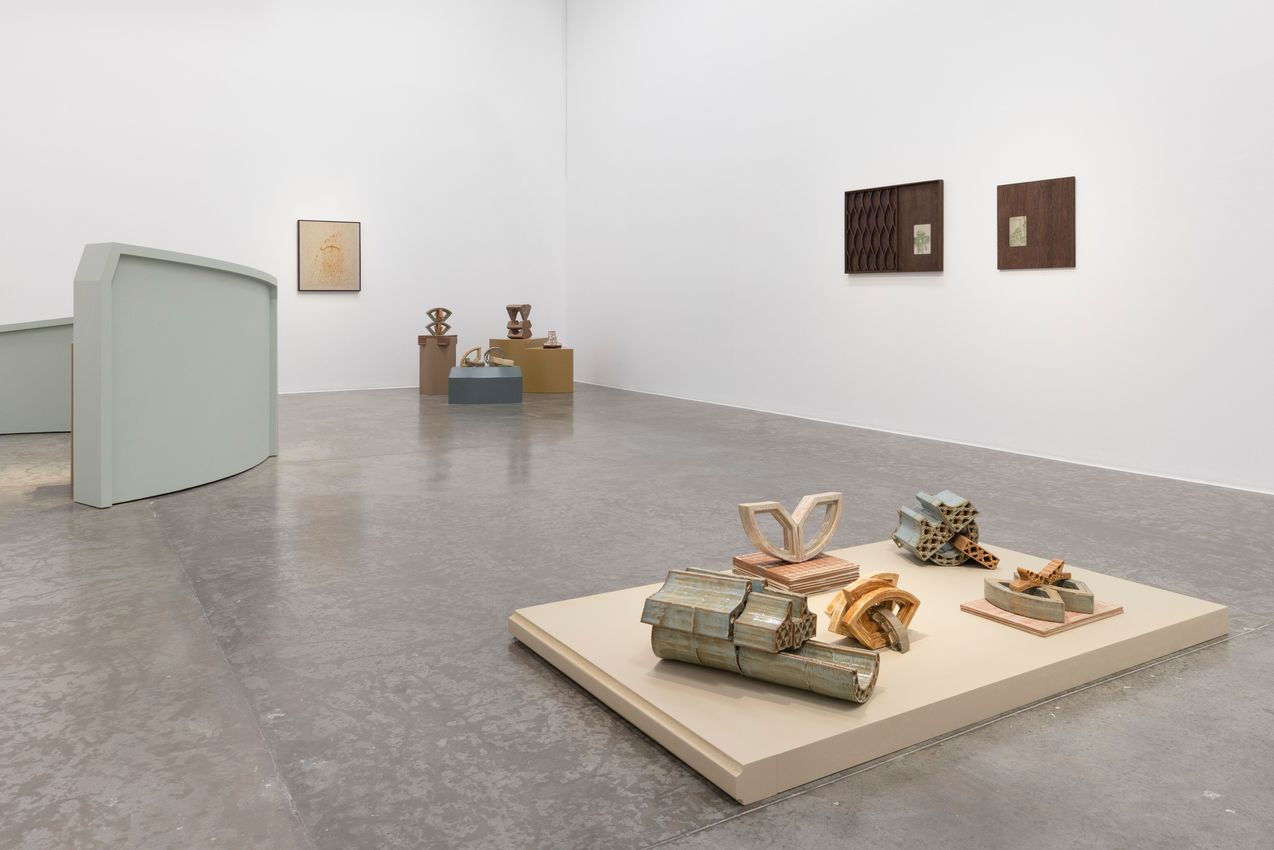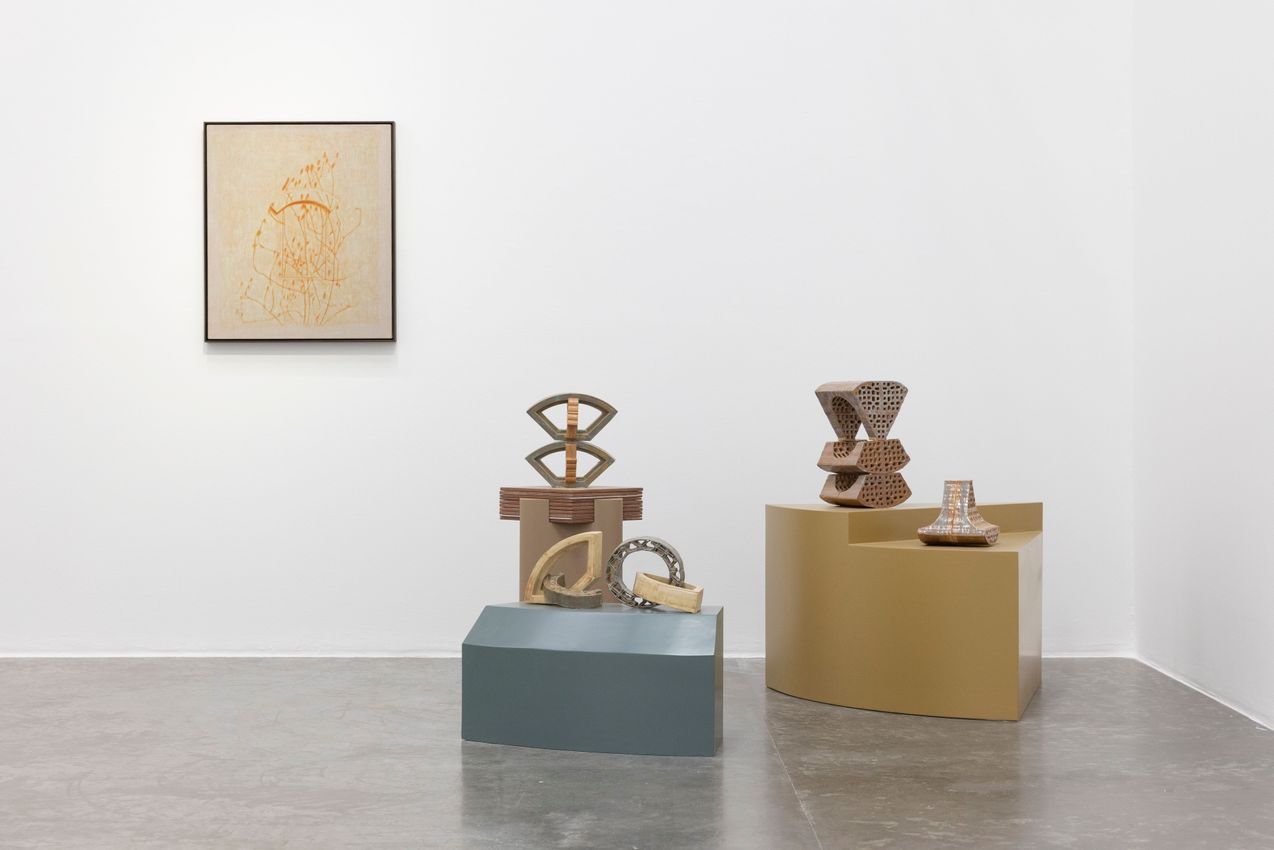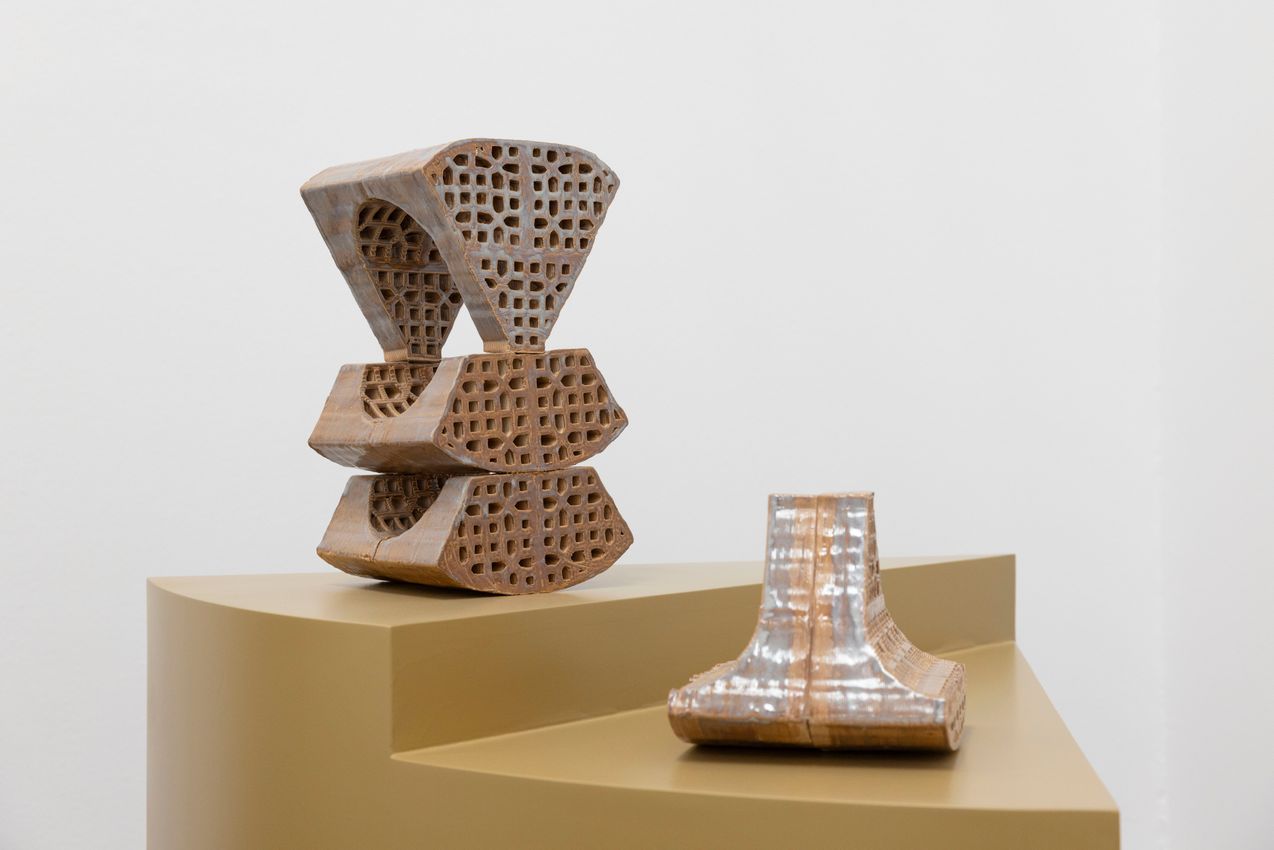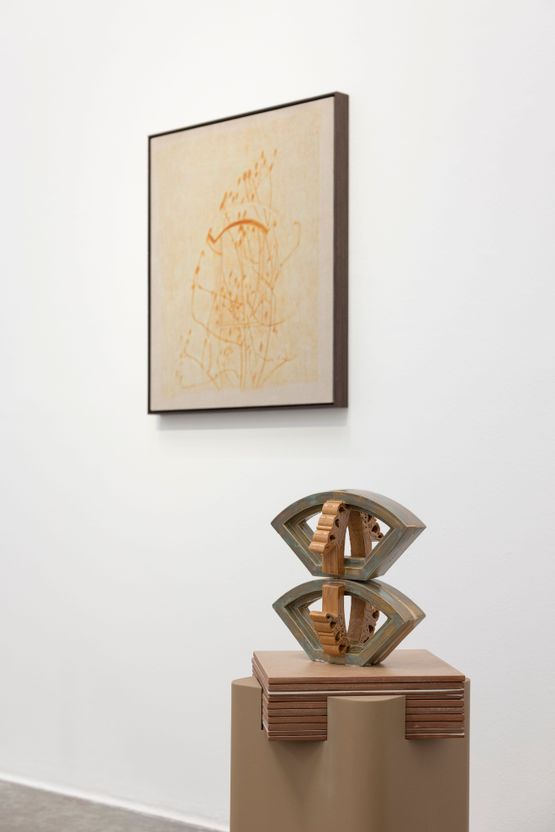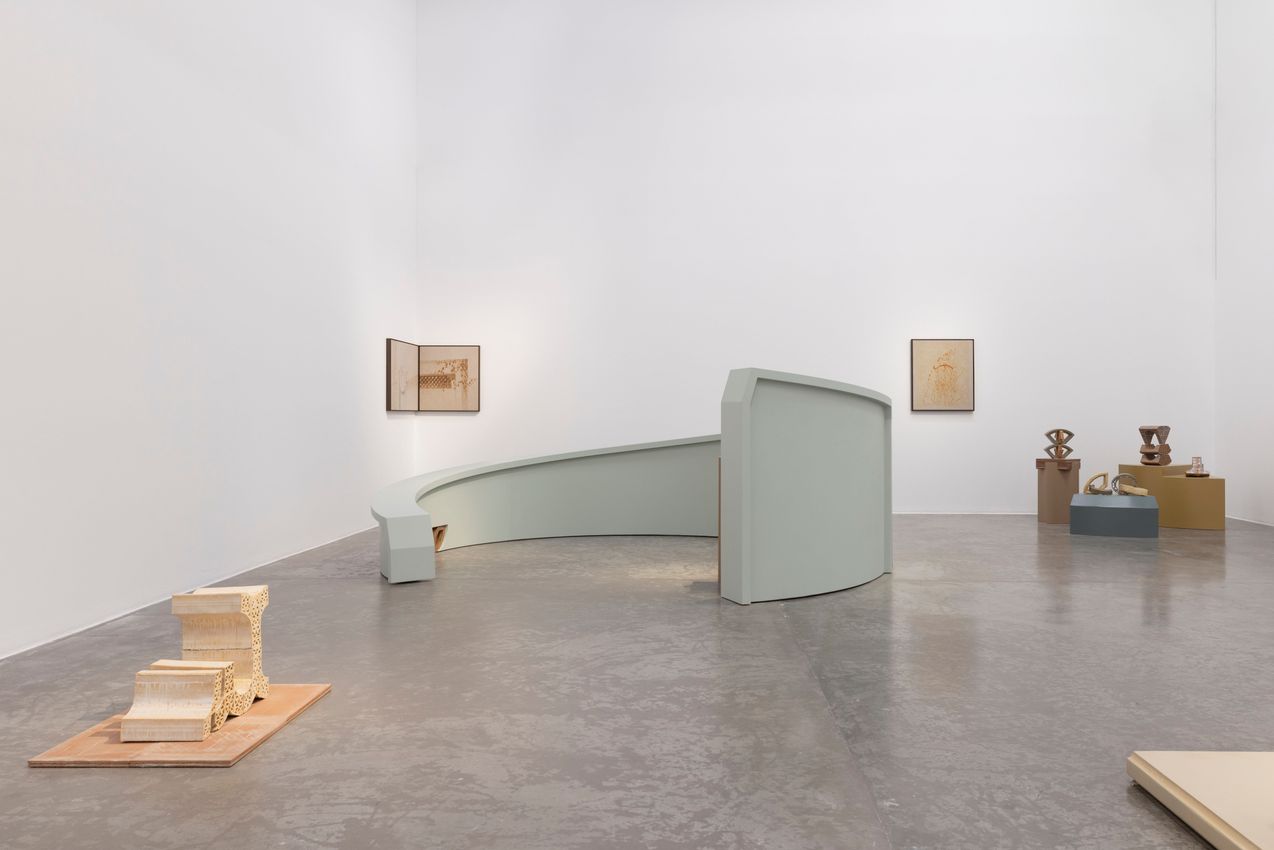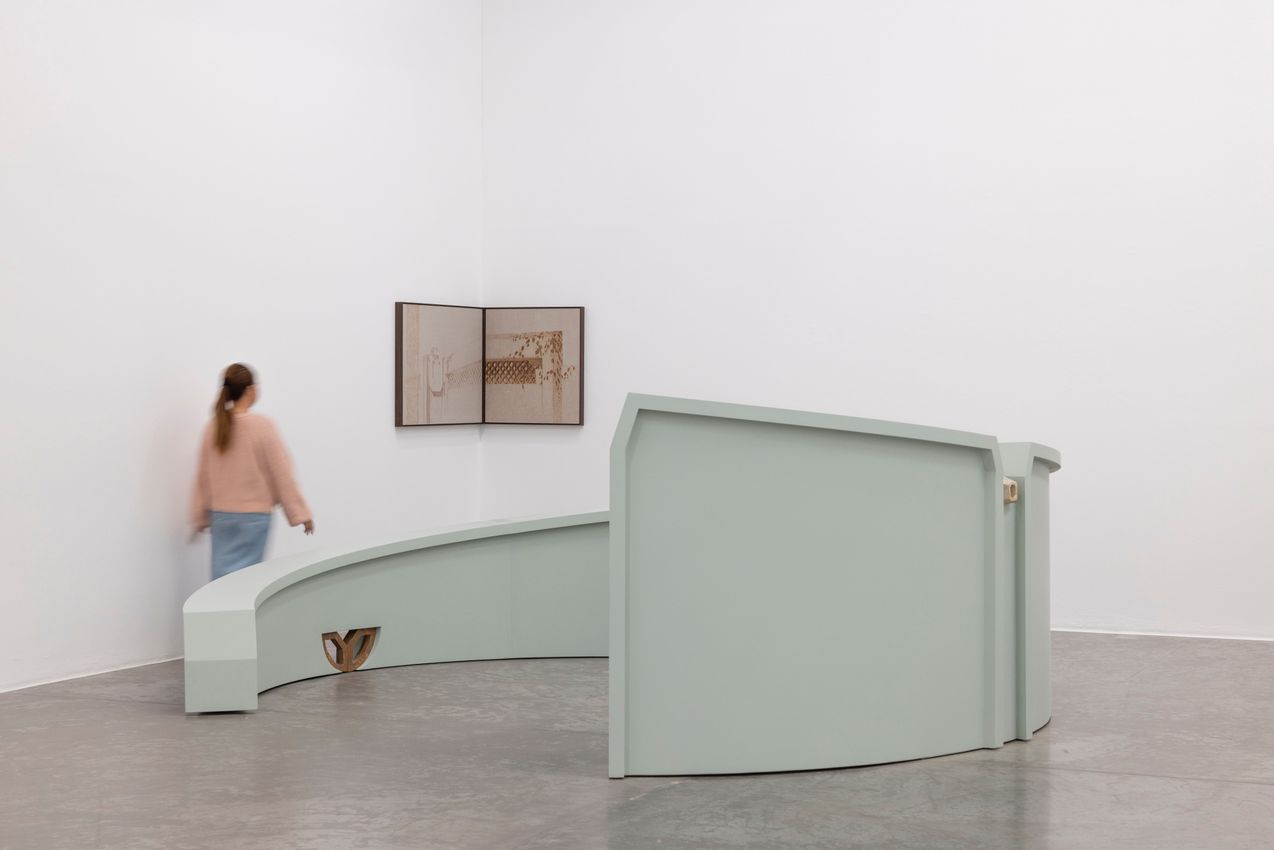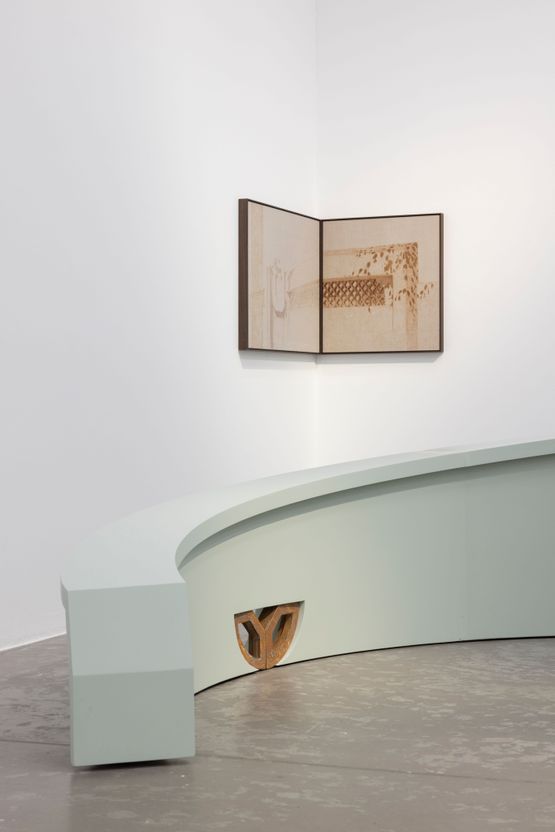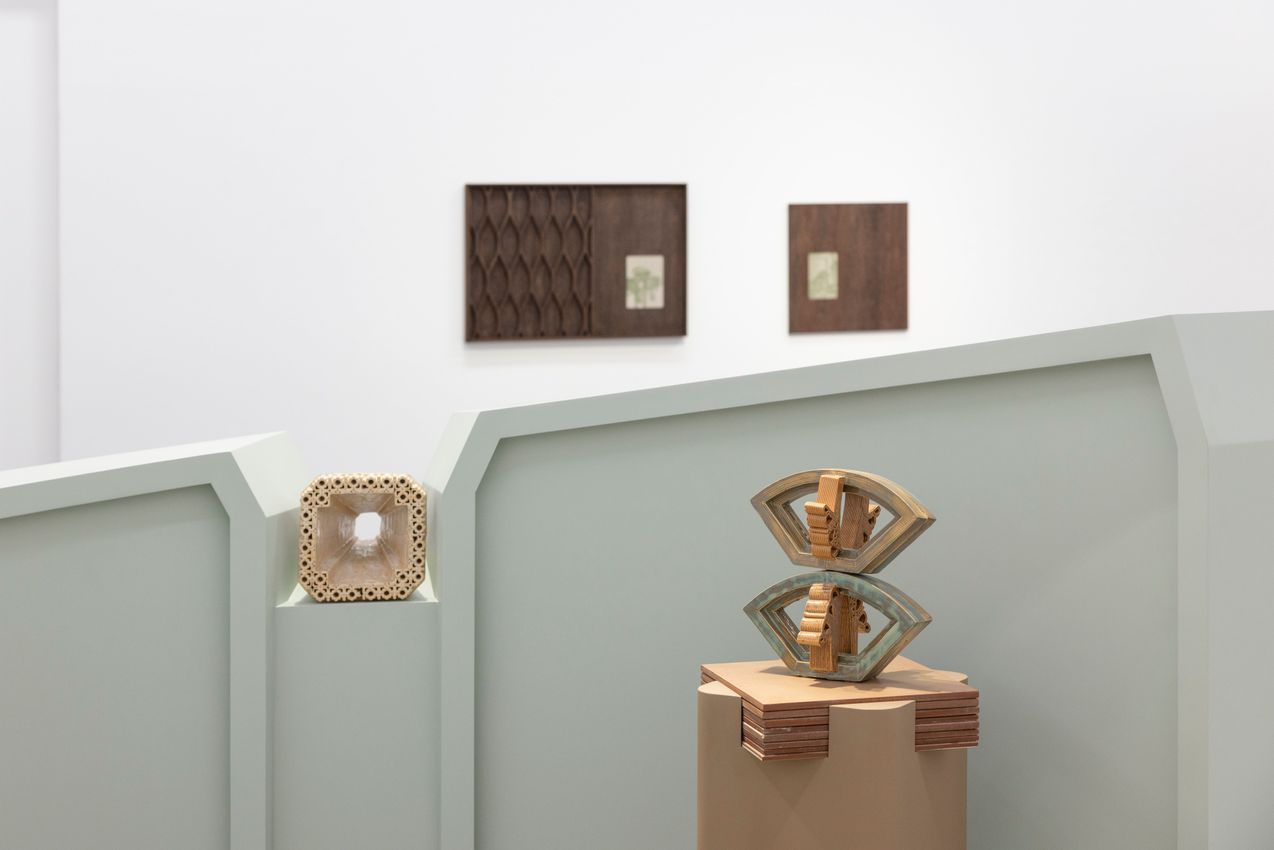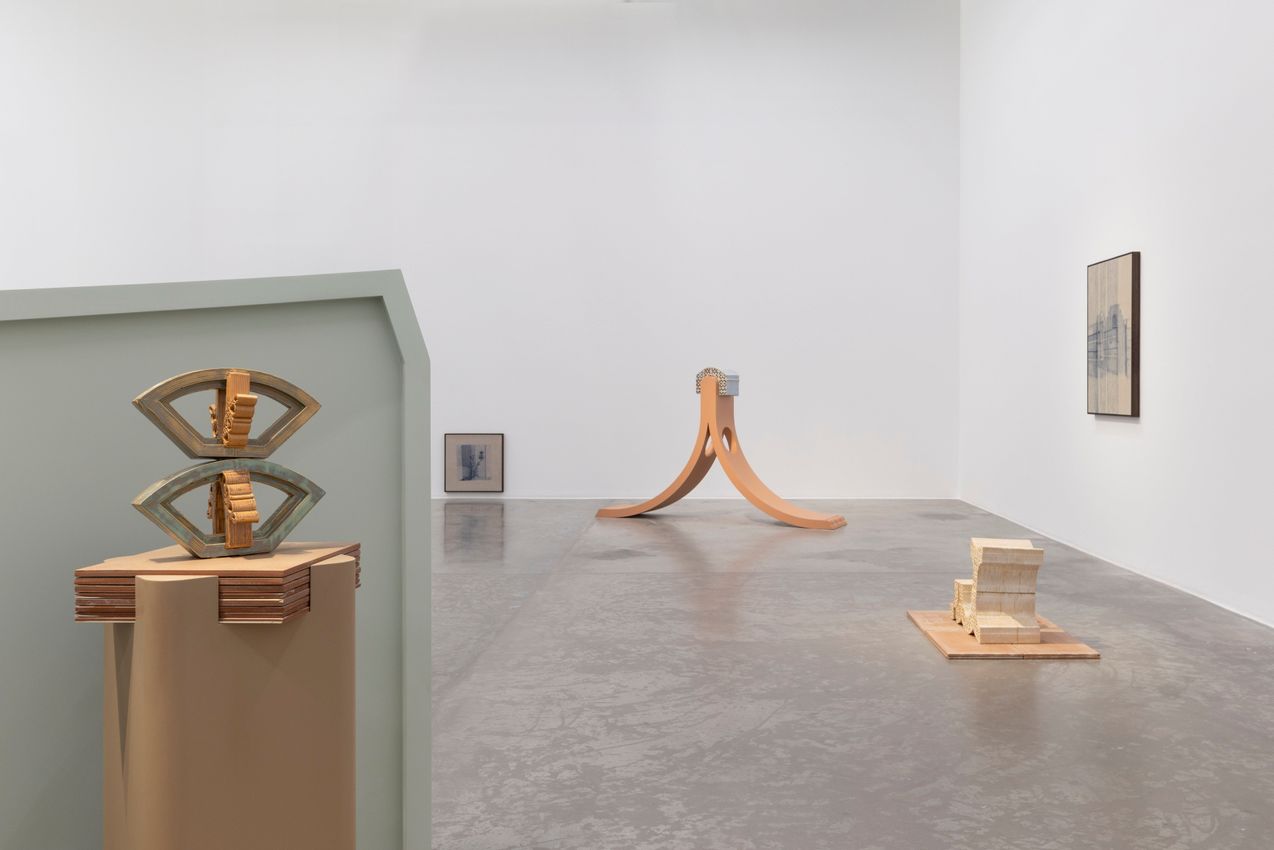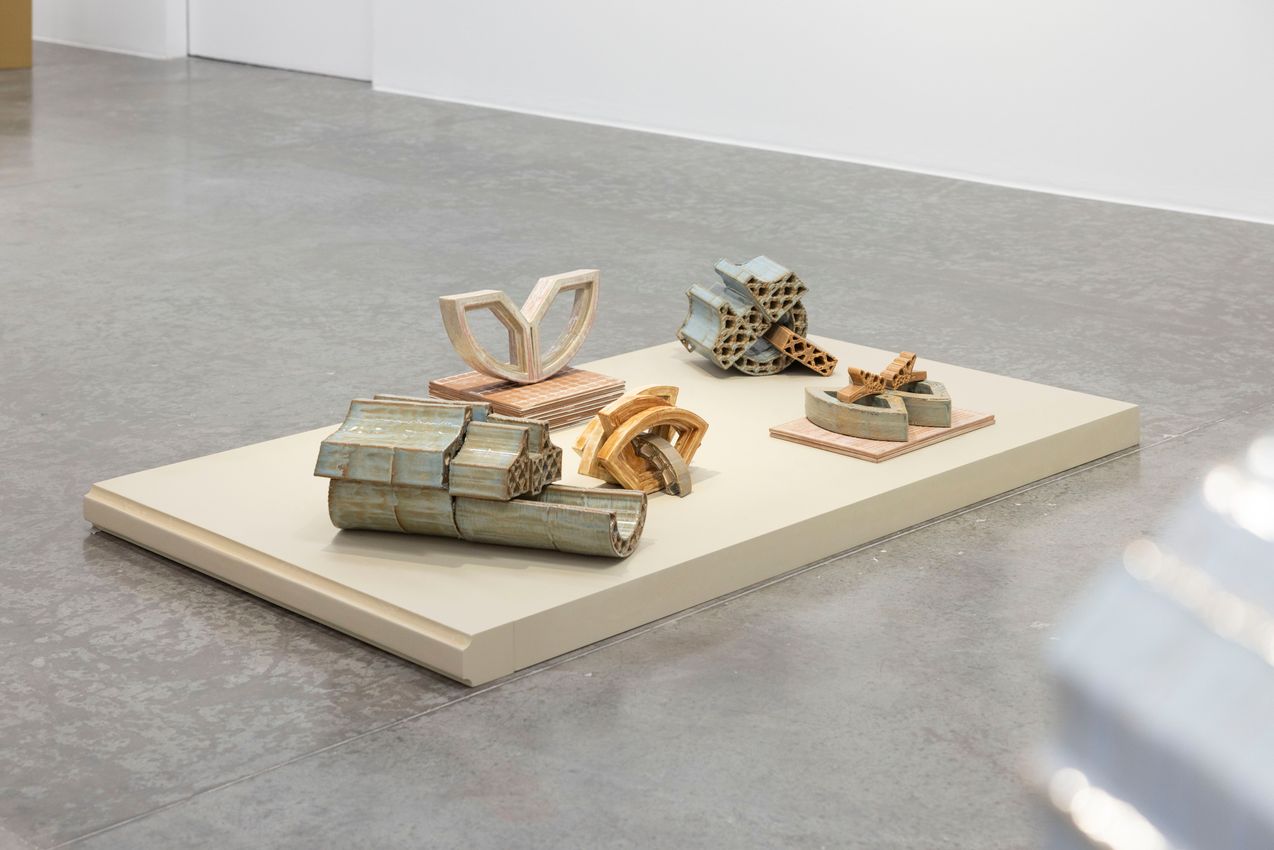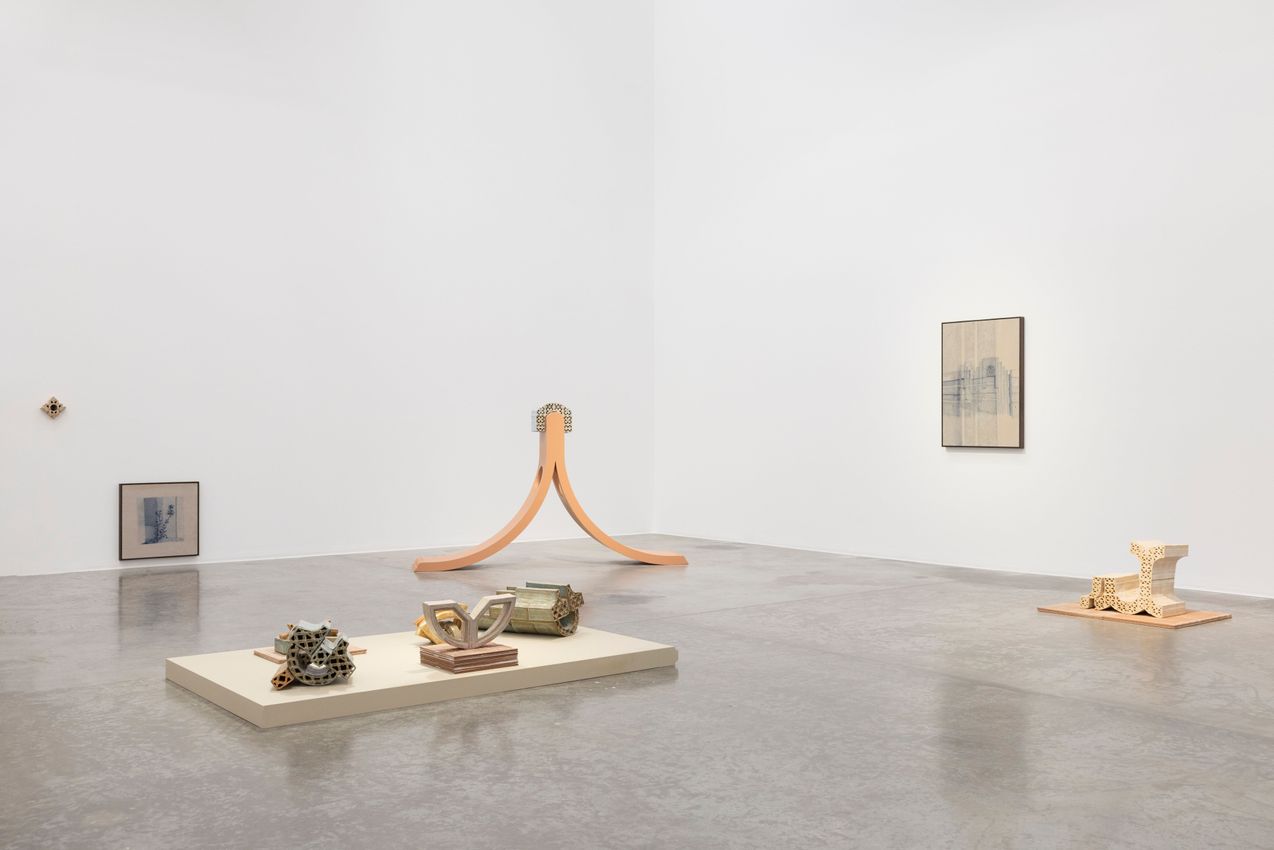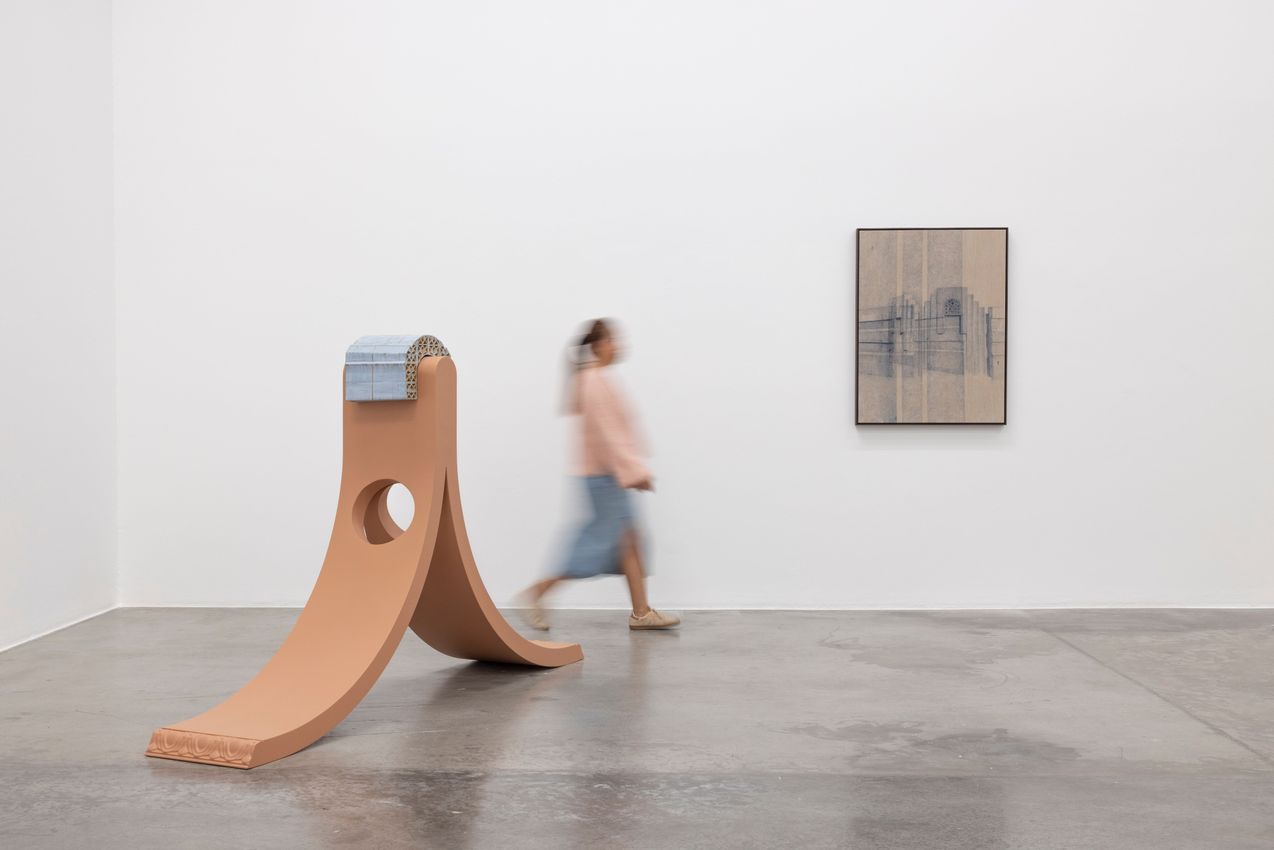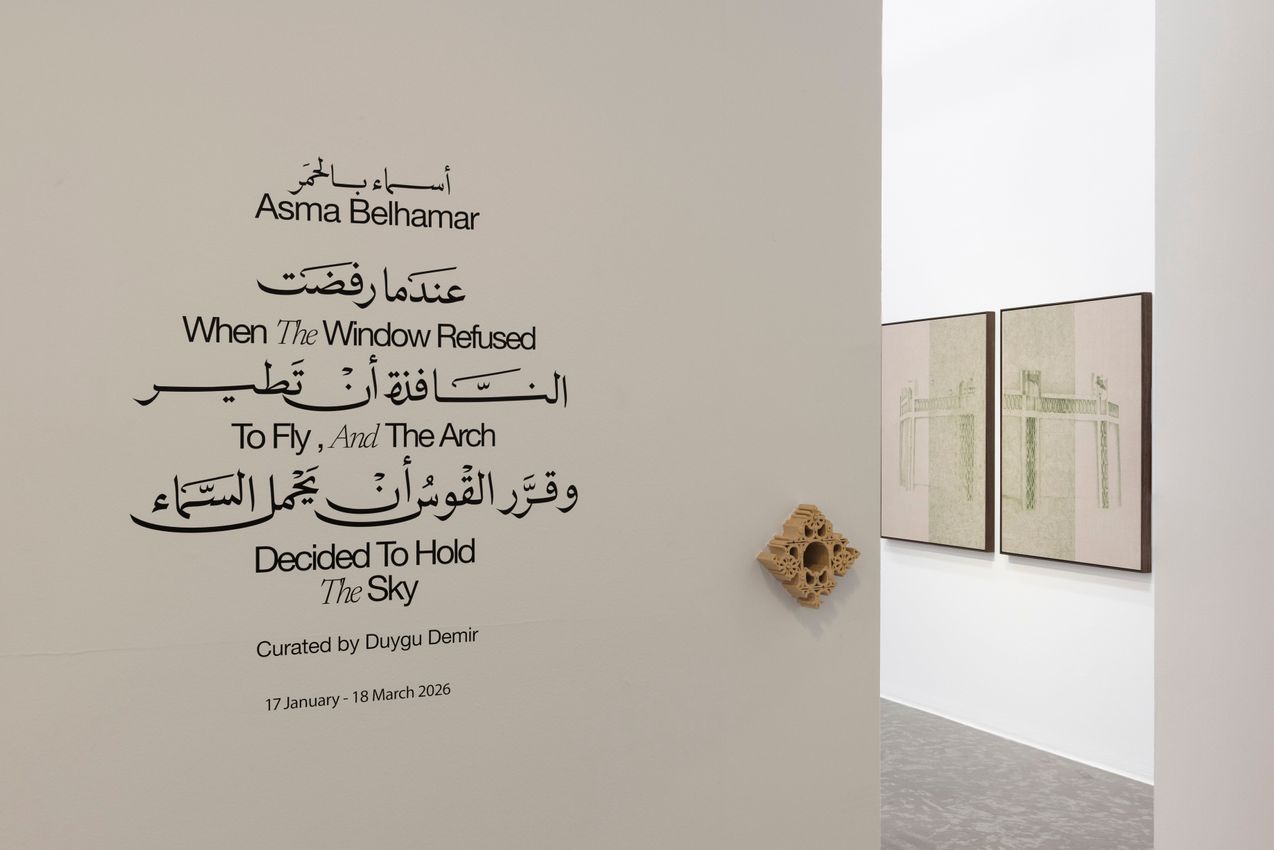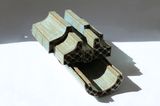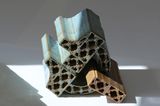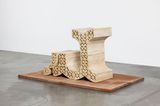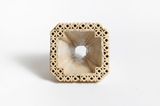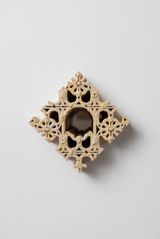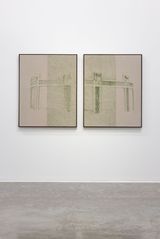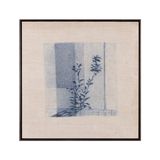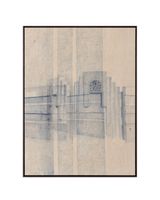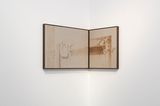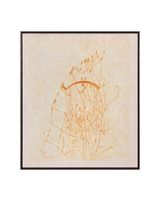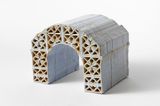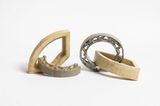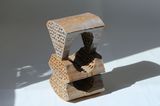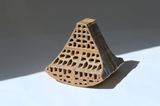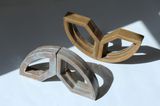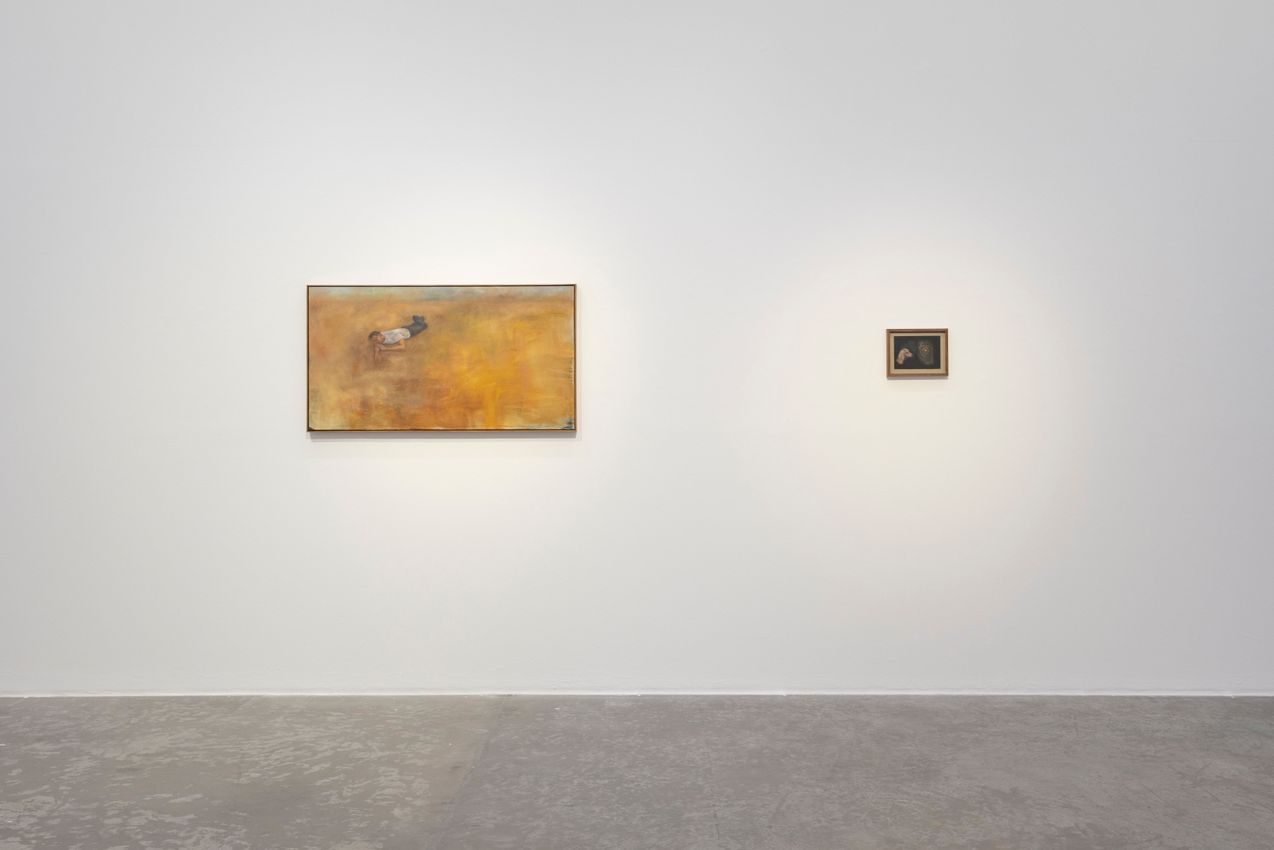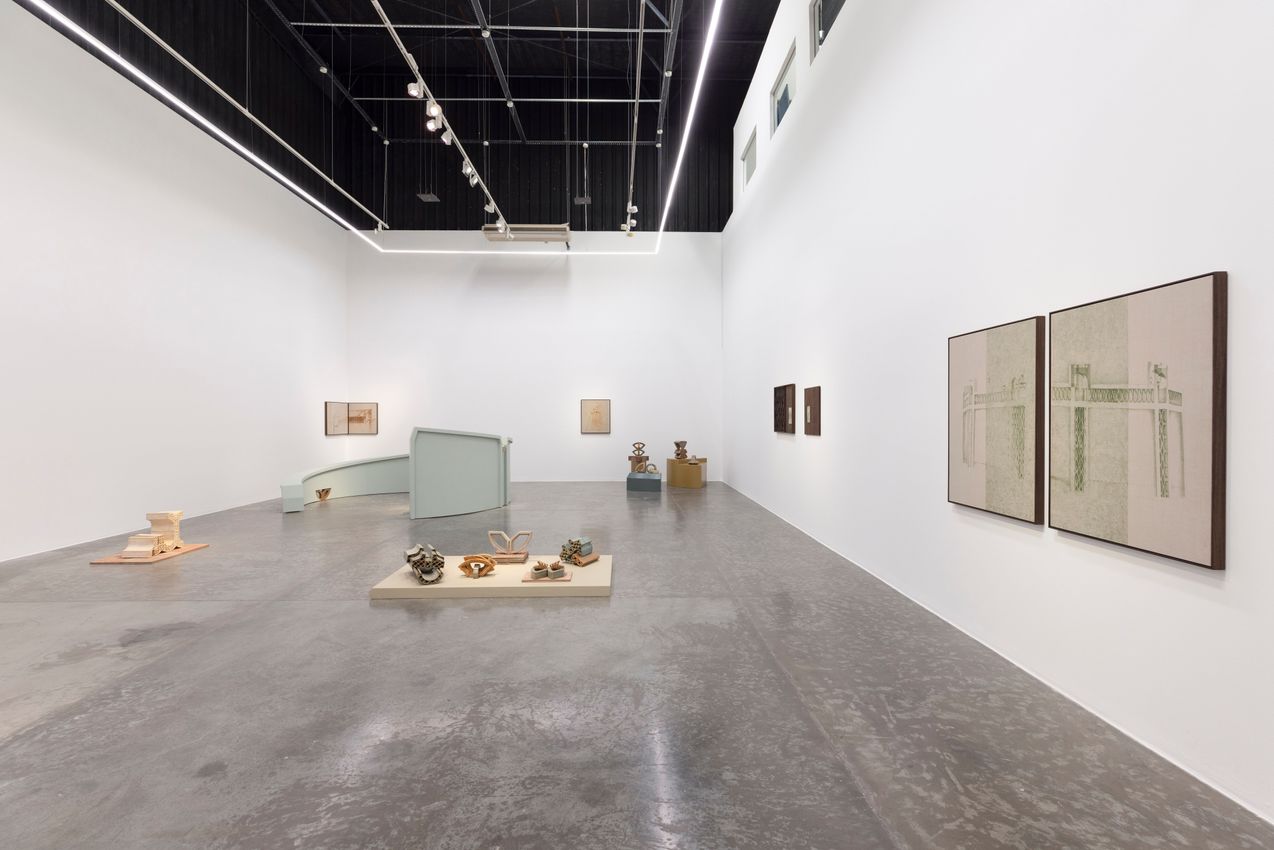
For her solo exhibition at Green Art Gallery, Asma Belhamar presents drawings and assemblies of 3D-printed stoneware clay, wood, and ceramic tiles. Further expanding her visual and material vocabulary, Belhamar continues her exploration of architectural elements as bearers of the past and projections into the future, carrying both aspirations and contradictions tied to futurity and nostalgia, inspiration and preservation, acceleration and repose.
Titled When the Window Refused to Fly, and the Arch Decided to Hold the Sky, the exhibition presents a whimsical spatial proposal, inviting the viewer to regard the courtyard of the Emirati house as a type of playground—a place of belonging and memory, as well as a space for imagination and play. It is based around the memory of a second, unfinished courtyard in Belhamar’s family home, where, while the adults remained undecided on how to use the plot or simply waited for the family to expand, the children played with discarded building materials and turned the empty space into a stage. The artist invites the viewer to join her in this childhood game: walk around, sit, stand, sneak, slide, or simply imagine. Take a peek at the elements at hand before closing your eyes and allowing your ideas to take flight.
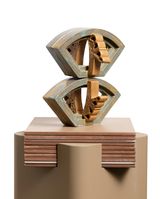
Belhamar fuses fragments of local examples of ornamentation, which she documents on her evening walks, with existing generic forms extracted from both the urban environment (such as walls, curbs, and playground slides) and the domestic environment (for example, stairwells and seating). Her focus remains fixed firmly on architecture in its physical and psychological forms. The drawings presented are extensions of Belhamar’s ongoing exploration into how architecture in the United Arab Emirates is experienced, as though viewed from a moving vehicle. Like the balustrades that she has come to be known for, which appear to stretch or melt, her drawings play with the idea of double-takes, whether due to the optical effect of speed or the distorted residue of a memory. Reminiscent of glitching cameras, dreamy flashbacks, or the drive-by glimpse of a scene, the drawings hone in on corners, freezing the movement of shadows or capturing the layered grid structures of the city. Created on primed canvas using acrylic, the drawings feature a color palette that echoes the sun-soaked walls of government-granted plots demarcated by UAE citizens under land grant schemes, as well as the sepia tones of old family albums. The drawings also replicate the physical delineations they capture, forming walls within walls, which serve to enclose the gallery space, effectively turning it into a courtyard.
For this exhibition, Belhamar used a technique that merges the affordances of technological advancement with the handmade. The ceramic elements within her spatial assemblies are 3D printed. Far from the smooth, hassle-free process one may imagine, this is an intensive approach to making. The artist must first create an inner architecture for structural integrity, for which she appropriates ornamental forms, before processes of wedging, printing, attaching, drying, firing, glazing, and re-firing can take place. These pieces are then married with other forms in wood, the result of which represents neither architecture nor furniture. While the pieces take inspiration from existing elements, they are skewed in scale. Some pieces are placed on unused tiles from the artist’s home, while others are carefully nestled within supportive frames, encouraging the viewer to contort to their own logic.
In The Poetics of Space (1957), Gaston Bachelard sets out to prove that “imagination augments the values of reality,” suggesting that it is the memories of all the houses we have lived in, or dreamed that we have lived in, that culminate in our concept of what we call a home. This is how a space becomes a place: the psycho-social, the analytical, and the phenomenological operate simultaneously. Simply put, it is something beyond the physical edifice that makes a house a place of dwelling. It is the result not of the form, material, nor size of a dwelling, nor its location, smell, or the memories contained within it, but rather an accumulation of the physical and the psychological. In his 1971 text “Building, Dwelling, Thinking,” Heidegger states, “We do not dwell because we have built, but we build and have built because we dwell.” Belhamar’s artistic proposal is infused throughout the entire exhibition space and can be taken to function as a wider metaphor for the building practices of the UAE at large, as far as they can be interpreted on a domestic scale. It offers an invitation to ruminate on the nostalgia of the modern, the efficiency of the technological, as well as the creative challenge of the empty lot. If dwelling is a question of how to live, then it is indelibly tied to the question of how and what we build in order to live. Belhamar’s work proposes that dreams are constructed from both the future and the past.


Asma Belhamar’s interdisciplinary practice explores the phenomenon of the megastructure in the Emirates and its impact on the topographical memory of local landscapes. Through installation, experimental print, video and three-dimensional modelling, she synthesises the architectural and the organic to construct hybrid spaces that engage with notions of temporality and spatial memory. Her practice is driven by a desire to illustrate the effect that various architectural trends have had on perceptions of the Emirates both locally and globally.
Green Art Gallery is a contemporary art space featuring a multi-generational mix of artists whose practices are rigorously researched, idea-led, and representative of our current moment. The gallery now represents a multi-generational mix of artists from the Middle East, North Africa, South Asia and beyond, including Turkish artists Hale Tenger and Hera Büyüktaşcıyan; Iranian artists Kamrooz Aram and Nazgol Ansarinia; and Shadi Habib Allah, Seher Shah, and Alessandro Balteo-Yazbeck, who are Palestinian, Pakistani and Venezuelan respectively. In this geographic mix, the gallery reflects Dubai’s position as a cosmopolitan—as well as artistic—entrepôt, even as it boasts of a strong parallel Arab Modernist program.

A respected voice in contemporary art discourse.
Focusing on ambitious storytelling and insightful art-world commentary. Ocula Magazine publishes in-depth interviews, critical essays and timely analysis on the artists, exhibitions and ideas driving the global art world.
Learn more about Ocula Magazine
Showcasing the best of the art world.
Ocula partners with galleries from around the world to highlight their artists, artworks and exhibitions. Gallery membership is by application and invitation, with each member vetted by an independent panel.
Learn more about Ocula Membership

Specialises in the sale of major artworks.
Led by a team with deep ties to the world’s leading auction houses, galleries and collectors. Ocula’s advisory team offers bespoke services to high-net-worth clients from around the world who are looking to acquire the best of contemporary and modern art.
Learn more about our team and services