I wonder, do animals worry about falling off the edge of things? Do they see edges at all? Do they see an edge as an edge?
— Anne Carson
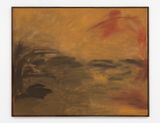
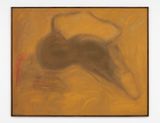
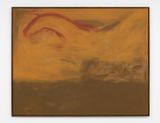
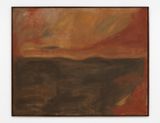
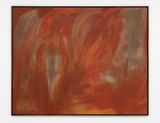
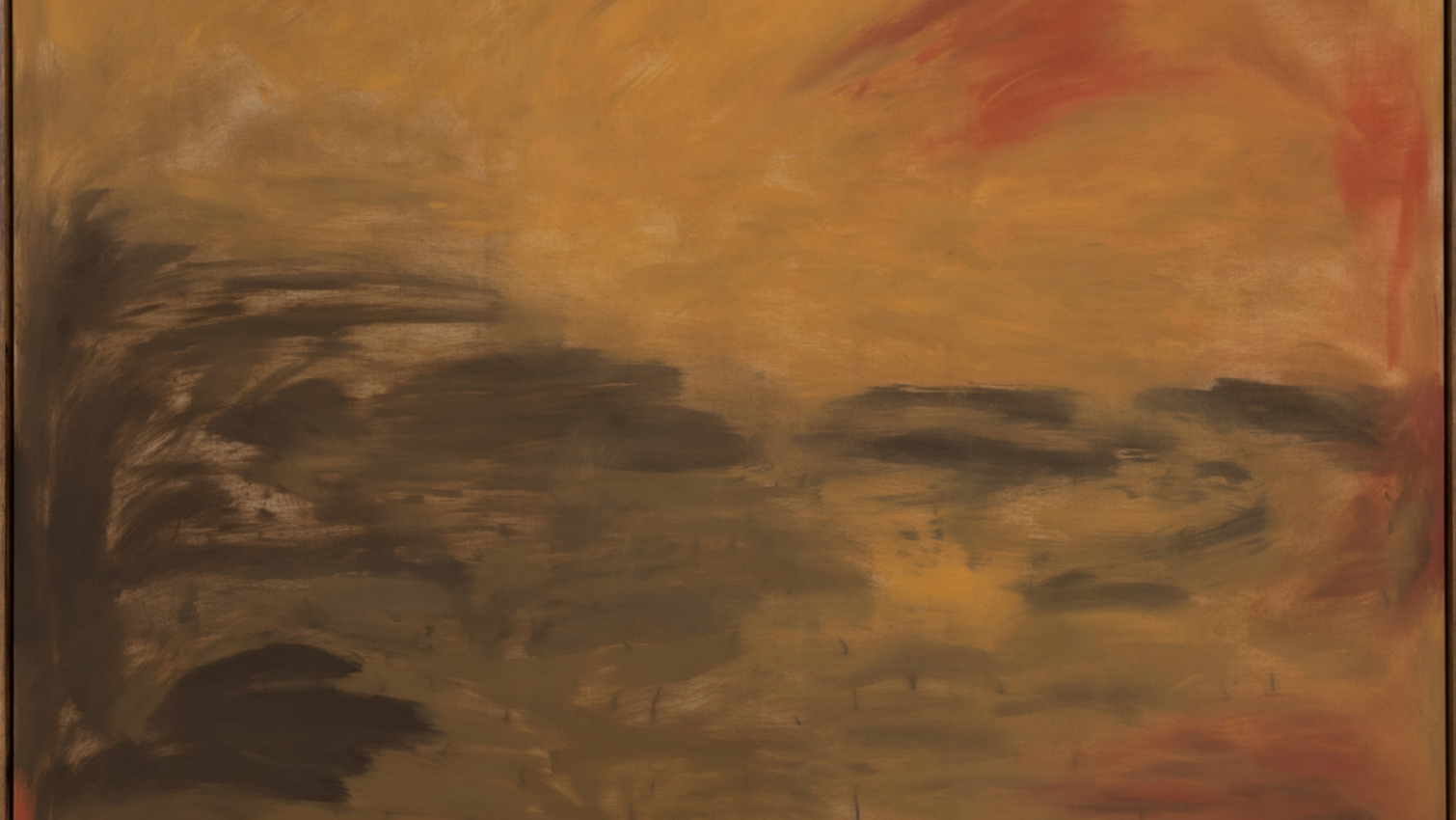
Dominique Knowles’s work occupies the spectral plane between dreams and waking life. His debut at Greene Naftali expands the corpus of roiling landscapes for which his known, laced with figurative elements in what he calls “a build-up of ritual, a sediment of memories.” The Solemn and Dignified Burial Befitting My Beloved for All Seasons circles his recurring themes: forms of devotion, alchemy, loss, and a heightened attunement to animal being.
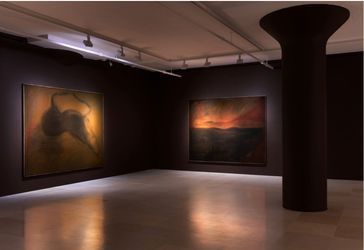
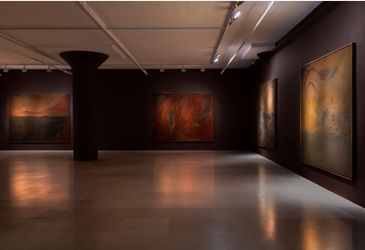
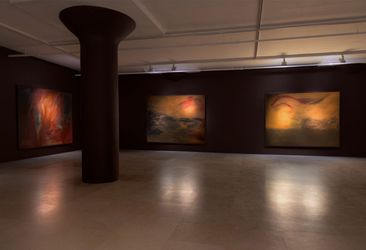
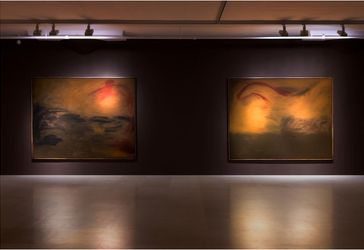
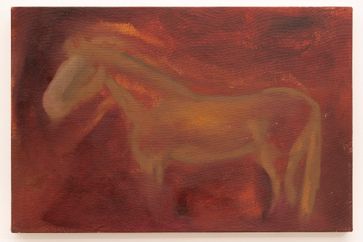
Painted in the French countryside, the new works on view mourn the artist’s late horse and lifelong companion. A painter, poet, and accomplished equestrian, Knowles grew up around the stables, and a reverence for the bonds that can form between species animates his work. Each expanse of stretched linen teems with his signature brushwork, both ethereal and grounded—whorls of thinned paint in an earthen palette of ochre, umber, moss, and sandstone red. Horses appear in schematic outline or partial silhouette; horizon lines pulse like waves on the sea; a human-like figure either exits or immolates in a wall of flames. The pull of death in arcadia underlies what one critic calls Knowles’s “necropastoral,” haunting a genre typically concerned with nature’s cultivation and mastery. 1
Knowles’s painting practice also reworks the motif of the horse and rider: a staple in Western art from cave paintings to battle scenes and imperial portraits. Yet in his hands, those archetypes for nobility or state power “become metaphors for queer desire, or a quest for intimacy.” Knowles has likened the act of painting a horse to that of grooming one—the muscle memory of care and concern for another transferred onto the canvas. A 2019 video work, Tahlequah, touches on similar themes, taking its name from a grieving orca who traveled thousands of miles carrying her stillborn calf. Using found footage of this and other instances of empathic connection among animals, Tahlequah aligns with Knowles’s broader aim to dislodge the anthropocentric point of view. The paintings are a swirling lament for the kinship humans once had with other beings, and their hazy atmospherics—enhanced by the artist’s prescribed sepia walls and spotlit works—admit a surprisingly frank encounter with death and its attendant transformations. Knowles holds fast to the fact of decay while remaining alert to its cathartic release: “I would go into [it] thinking of a burial,” he has said of his process, “but it would come out a resurrection.”
1 Mark Pieterson, “Fielding the Necropastoral Exchange,” Texte Zur Kunst 131 (September 2023); citing a term coined by the poet and theorist Joyelle McSweeney.


Dominique Knowles lives and works in Chicago, IL. Knowles received both his MFA in Painting as a New Artist Society Award full scholar in 2020 as well as his BFA in 2017 from The School of the Art Institute of Chicago.


A respected voice in contemporary art discourse.
Focusing on ambitious storytelling and insightful art-world commentary. Ocula Magazine publishes in-depth interviews, critical essays and timely analysis on the artists, exhibitions and ideas driving the global art world.
Learn more about Ocula Magazine
Showcasing the best of the art world.
Ocula partners with galleries from around the world to highlight their artists, artworks and exhibitions. Gallery membership is by application and invitation, with each member vetted by an independent panel.
Learn more about Ocula Membership

Specialises in the sale of major artworks.
Led by a team with deep ties to the world’s leading auction houses, galleries and collectors. Ocula’s advisory team offers bespoke services to high-net-worth clients from around the world who are looking to acquire the best of contemporary and modern art.
Learn more about our team and services