‘Sometimes a straight line has to be crooked’ is the first exhibition to put the work of Henry Taylor, one of today’s most celebrated painters, in dialogue with that of his teacher, California modernist James Jarvaise (1924 – 2015). Taylor will explore an idea he has long carried: to pay homage to Jarvaise—an artist who saw something special in him as a student in the 1980s—through an exhibition.
Composed along loosely thematic lines and consisting largely of paintings, this major installation will span the 1950s to the present, with new works created especially for the show by Taylor, whose interest in landscape, alongside the figure, will be freshly explored. The first exhibition of Taylor’s work to take place at Hauser & Wirth in Los Angeles, the title is taken from advice Jarvaise imparted to his student: the words of a vital teacher who offered Taylor many lessons on how to build a painting with integrity.
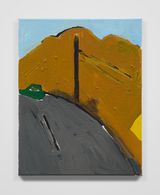
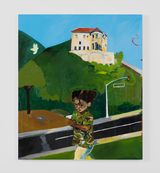
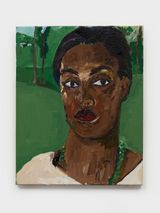
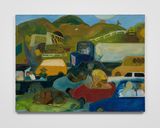
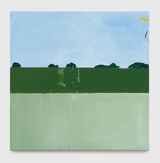
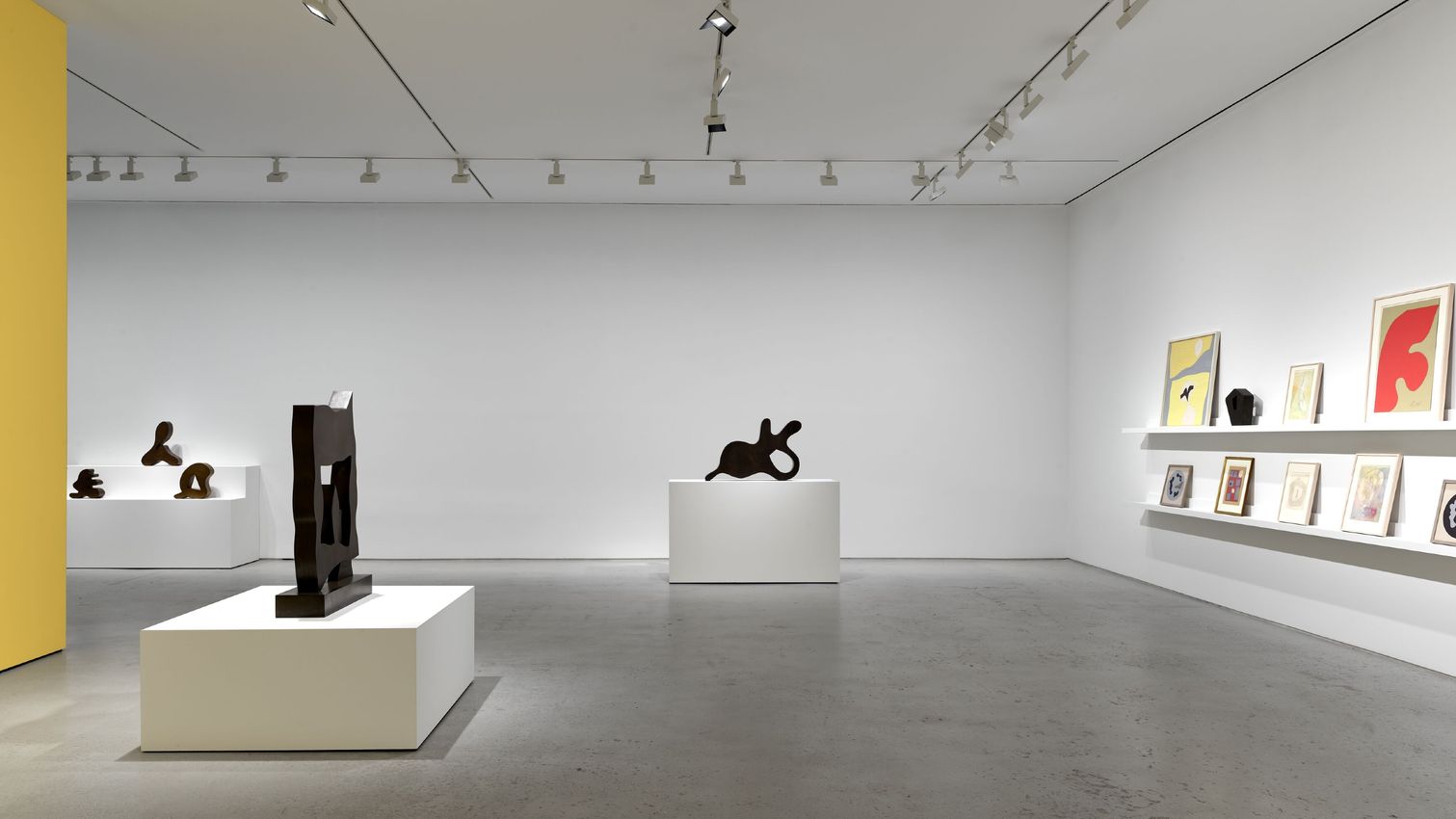
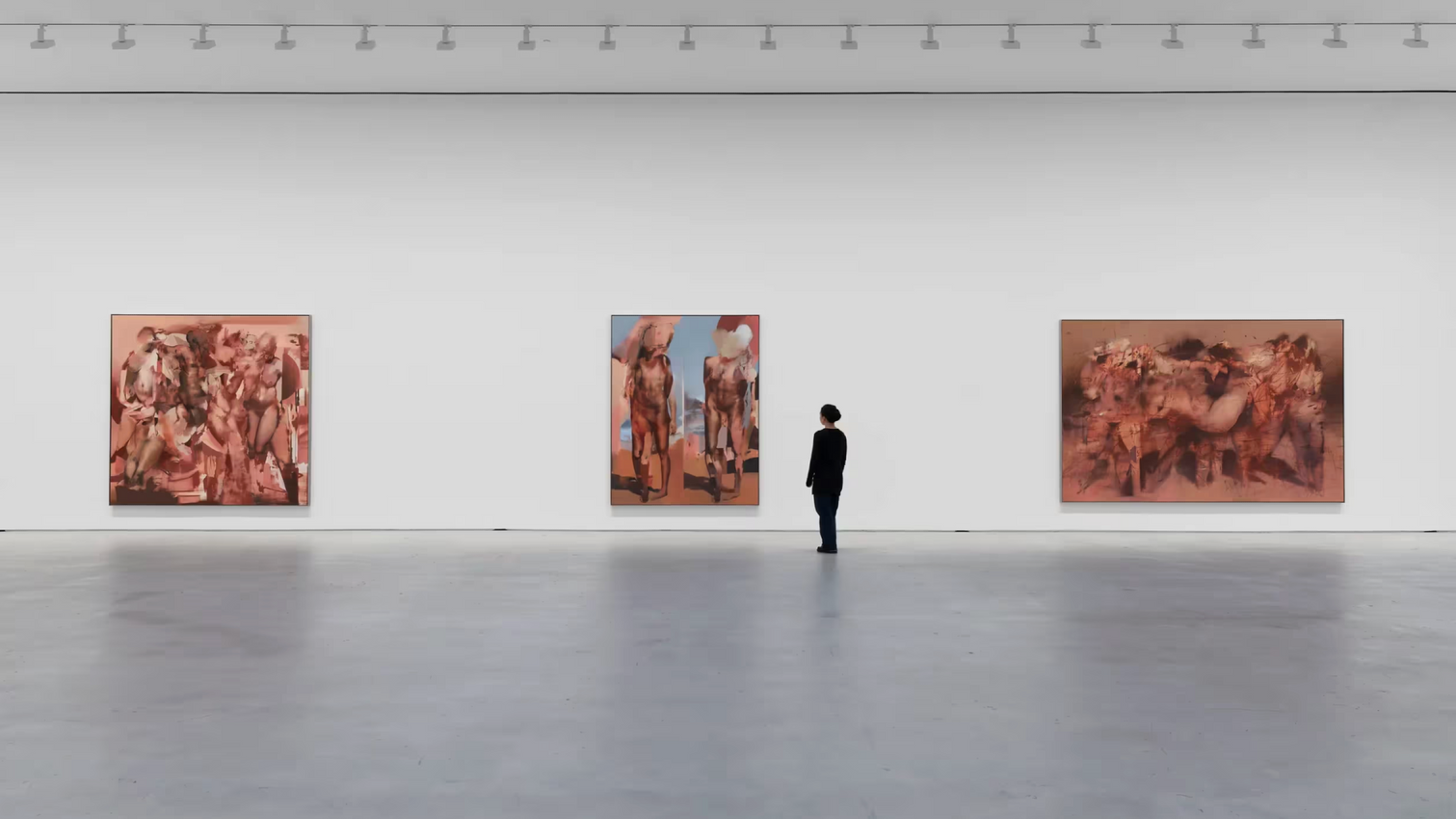
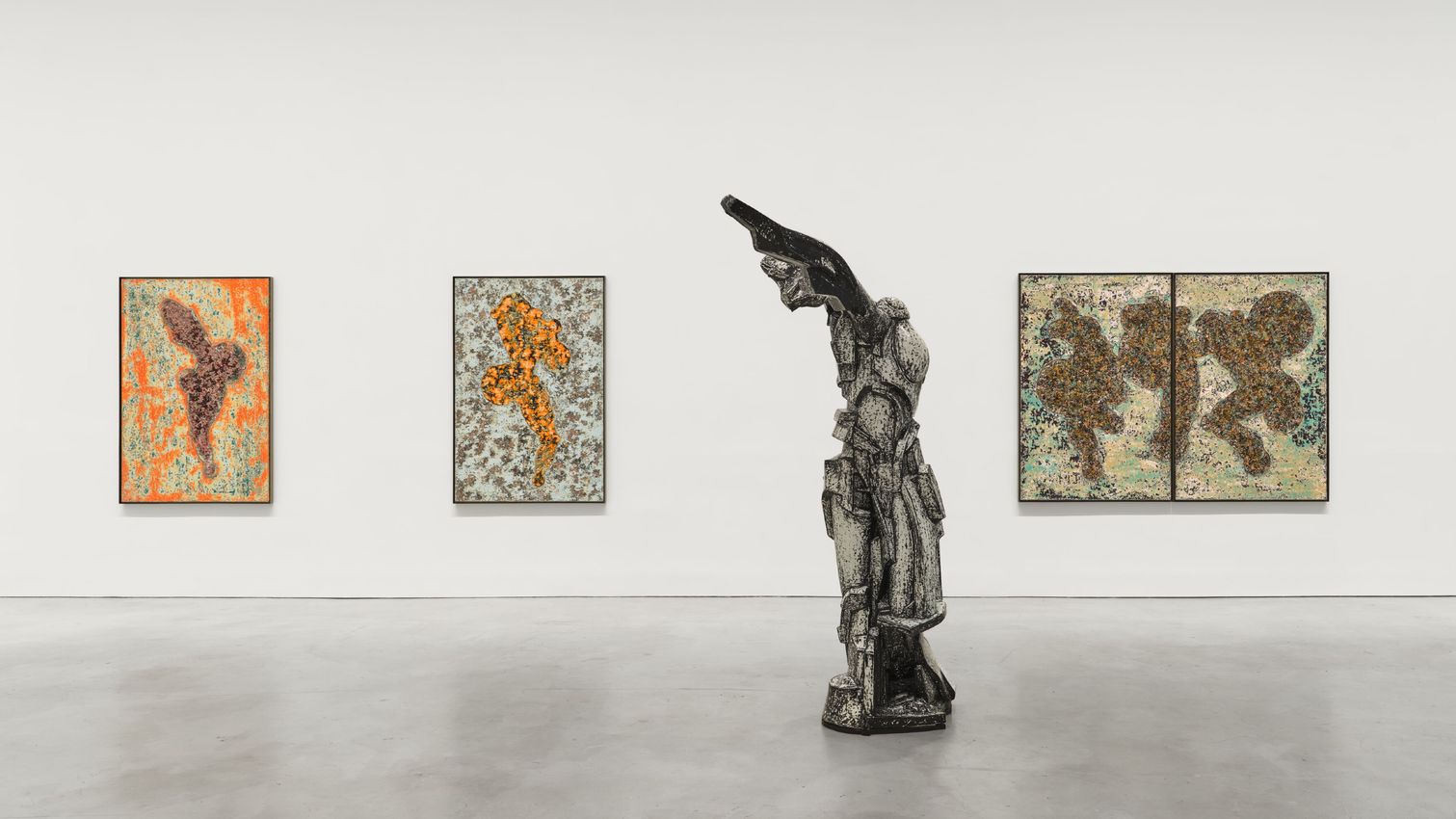
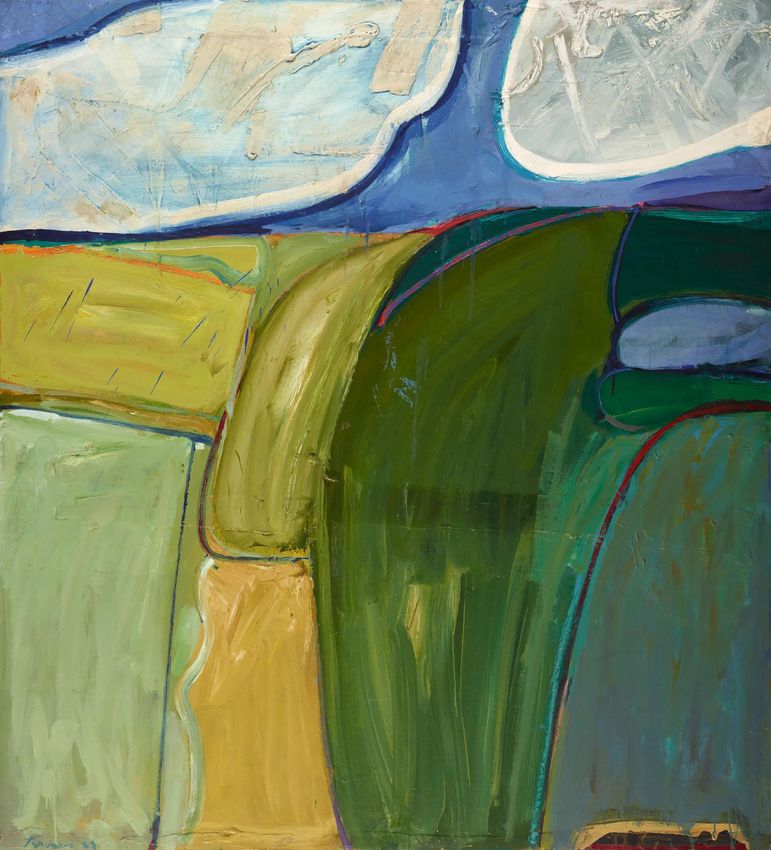
Seen together for the first time, the exhibition will feature over seven decades of work by the two artists. On view will be paintings and related drawings from Jarvaise’s historic Hudson River School series, which was included in the 1959 exhibition ‘Sixteen Americans’ at The Museum of Modern Art, New York, alongside that of Jay DeFeo, Jasper Johns, Robert Rauschenberg, Frank Stella and other emerging artists of the time. These works will be presented along with modernist collages from the 1950s, figurative paintings from the 1960s, and large-scale paintings on burlap from the 1970s that were specifically chosen by Taylor. The installation will also encapsulate three decades of Taylor’s work with over 40 paintings to concentrate on portraits of friends, family and strangers, figure studies, neighborhood scenes and landscapes. New works on view will include a group of tree sculptures— each trunk sporting an arboreal afro of artificial hair—that Taylor, who plays as hard with language as he does the brush, refers to as his ‘For-Us’ forest.
Henry Taylor credits James Jarvaise with having been the first to recognise his talents in the early 1980s. At the time, Taylor was supporting himself as a psychiatric technician at the Camarillo State Mental Hospital while pursuing a range of interests, including classes in journalism, cultural anthropology and set design at Oxnard College. There, he repeatedly enrolled in Jarvaise’s painting class, where he was introduced to the works of Max Beckmann, Jean Dubuffet, Philip Guston, Cy Twombly and other modernists who were entirely new to him. At the same time, Jarvaise recognised something urgent and distinctive in Taylor, and insisted the student take himself seriously as an artist. Taylor accordingly enrolled at CalArts but continued to bring his work to Jarvaise for valued critiques. Taylor describes packing up his car with paintings and waiting in the college parking lot to show Jarvaise his latest explorations, relying on his critique to resolve and push a painting to completeness.
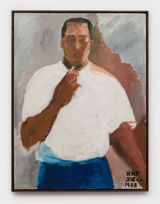
When exhibited together, the works of Jarvaise and Taylor appear to be in clear dialogue with one another. Notwithstanding the obvious differences in their approach to content and historical contexts, Taylor’s vivid portrait of Jarvaise and Jarvaise’s archetypal ‘Man in the Room’ (1963) have a strikingly similar resonance and shared sensibility. ‘Sometimes a straight line has to be crooked’ connects Jarvaise and Taylor formally—works on view spotlight the two artists’ approaches to massing flat shapes that move between figuration and abstraction, and their talent for deploying off-beat colours, strong tones, straight horizons and curvaceous lines—and unites them energetically across time.
Henry Taylor’s imprint on the American cultural landscape comes from his disruption of tradition. While people figure prominently in Taylor’s work, he rejects the label of portraitist. Taylor’s chosen subjects are only one piece of the larger cultural narrative that they represent: his paintings reveal the forces at play, both individualistic and societal, that come to bear on his subject. The end result is not a mere idealised image, but a complete narrative of a person and his history. Taylor explains this pursuit of representational truth: ‘It’s about respect, because I respect these people. It’s a two-dimensional surface, but they are really three-dimensional beings.’[1]
Hauser & Wirth was founded in 1992 in Zurich by Iwan Wirth, Manuela Wirth and Ursula Hauser, who were joined in 2000 by Partner and Vice President Marc Payot. A family business with a global outlook, Hauser & Wirth has expanded over the past 26 years to include outposts in Hong Kong, London, New York, Los Angeles, Somerset and Gstaad. The gallery represents over 70 artists and estates who have been instrumental in shaping its identity over the past quarter century, and who are the inspiration for Hauser & Wirth’s diverse range of activities that engage with art, education, conservation and sustainability.

A respected voice in contemporary art discourse.
Focusing on ambitious storytelling and insightful art-world commentary. Ocula Magazine publishes in-depth interviews, critical essays and timely analysis on the artists, exhibitions and ideas driving the global art world.
Learn more about Ocula Magazine
Showcasing the best of the art world.
Ocula partners with galleries from around the world to highlight their artists, artworks and exhibitions. Gallery membership is by application and invitation, with each member vetted by an independent panel.
Learn more about Ocula Membership

Specialises in the sale of major artworks.
Led by a team with deep ties to the world’s leading auction houses, galleries and collectors. Ocula’s advisory team offers bespoke services to high-net-worth clients from around the world who are looking to acquire the best of contemporary and modern art.
Learn more about our team and services