Press Release

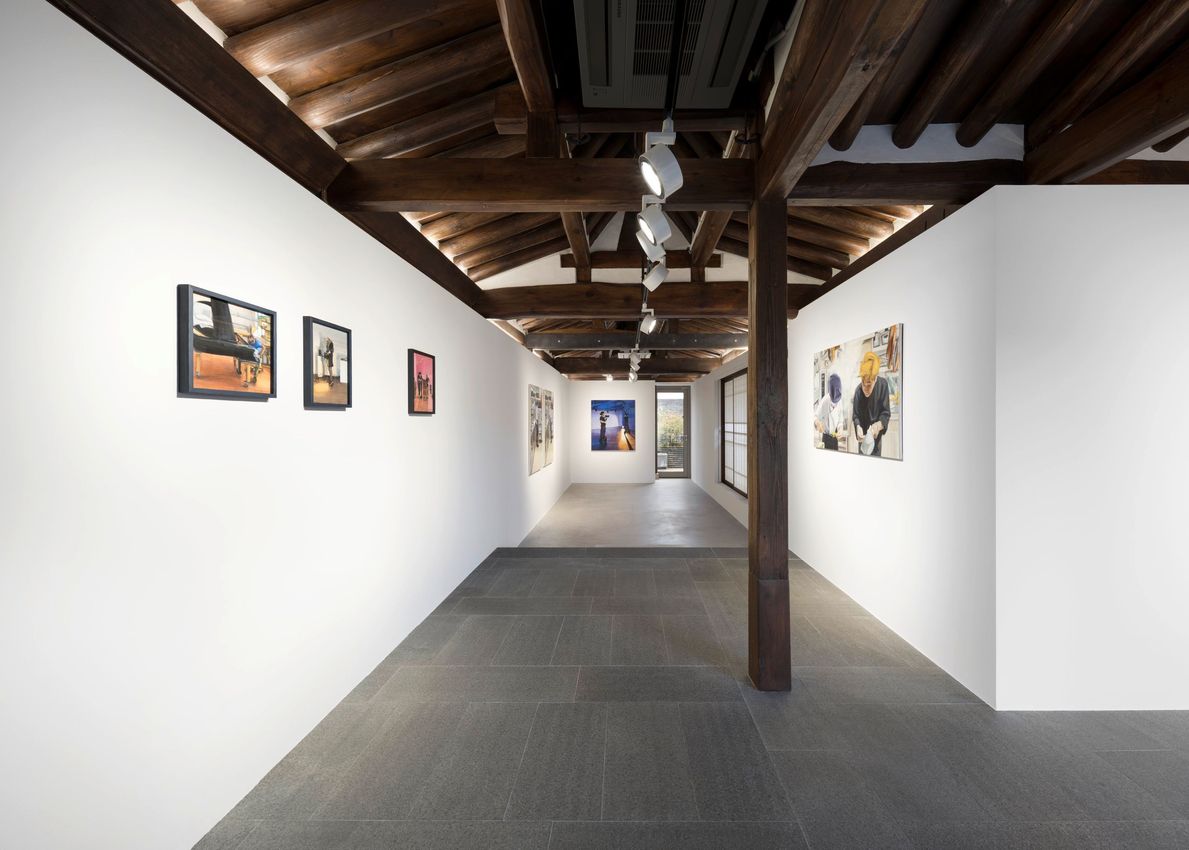
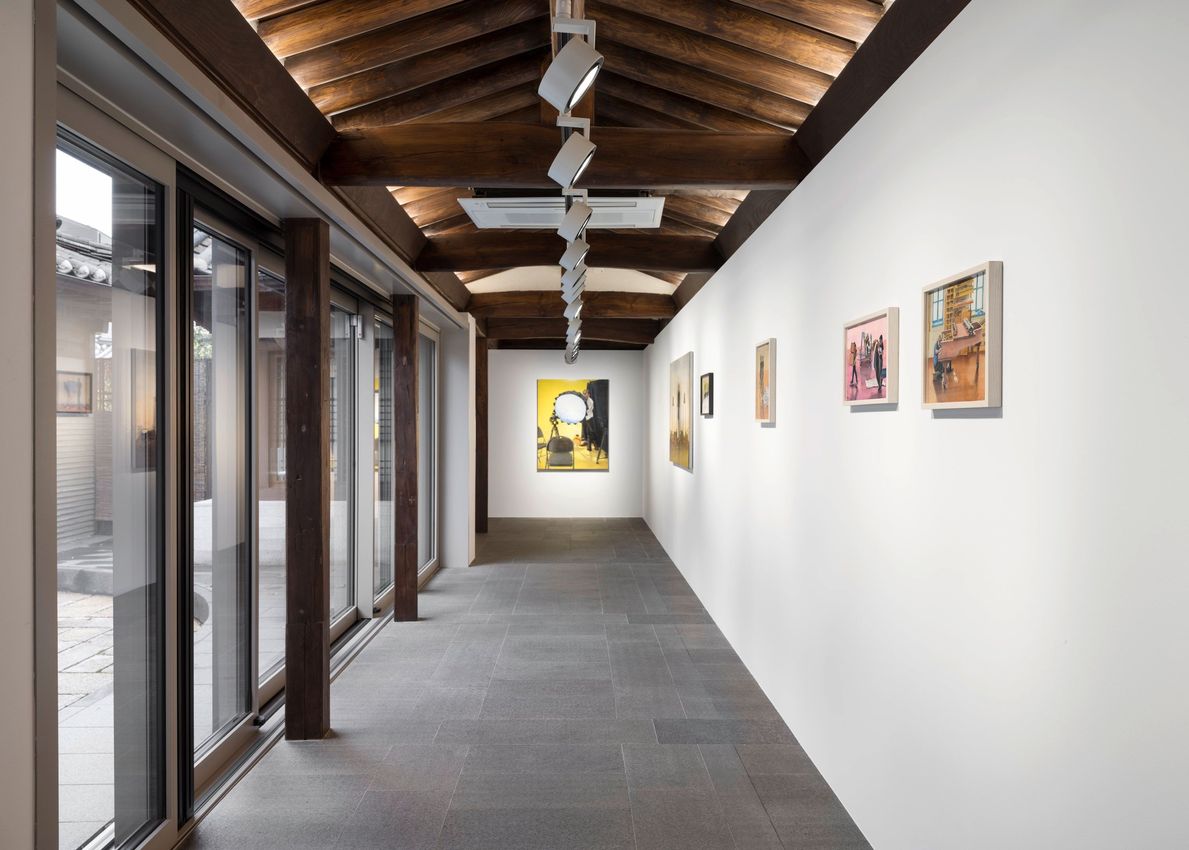
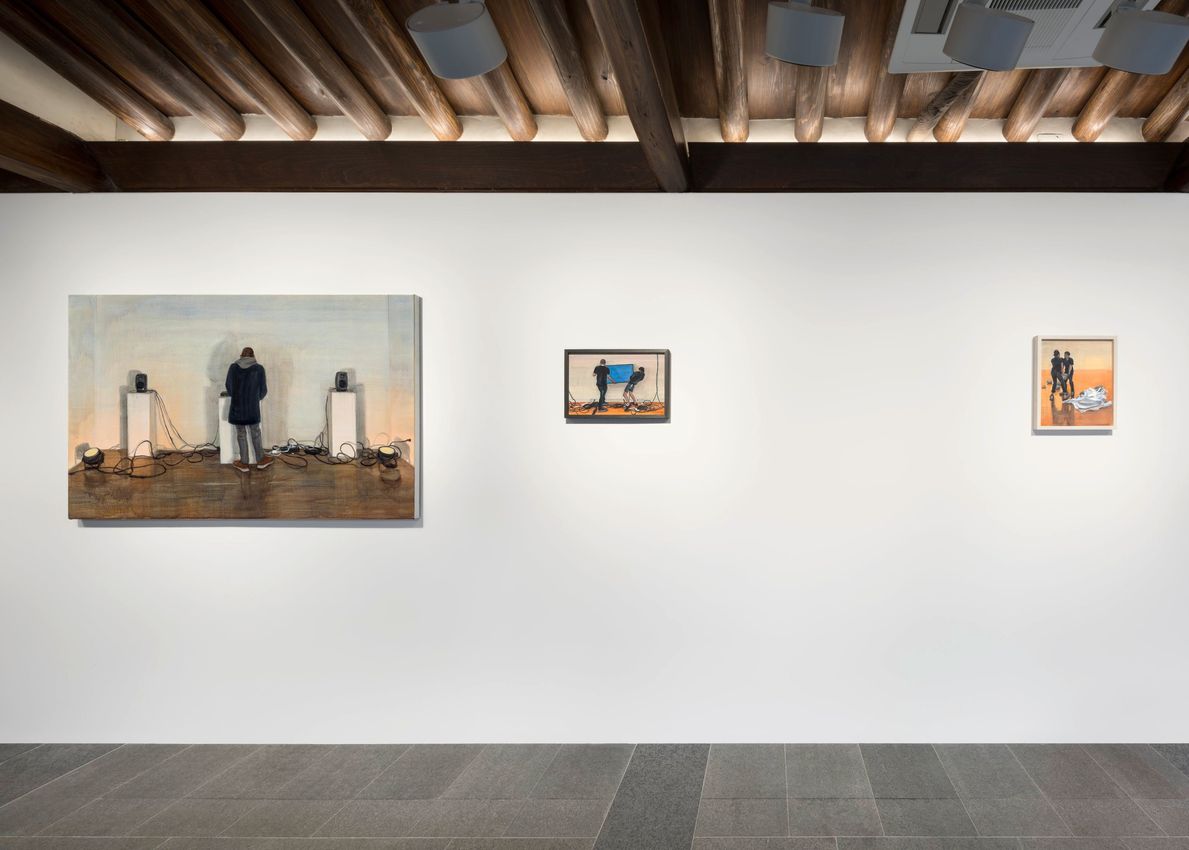
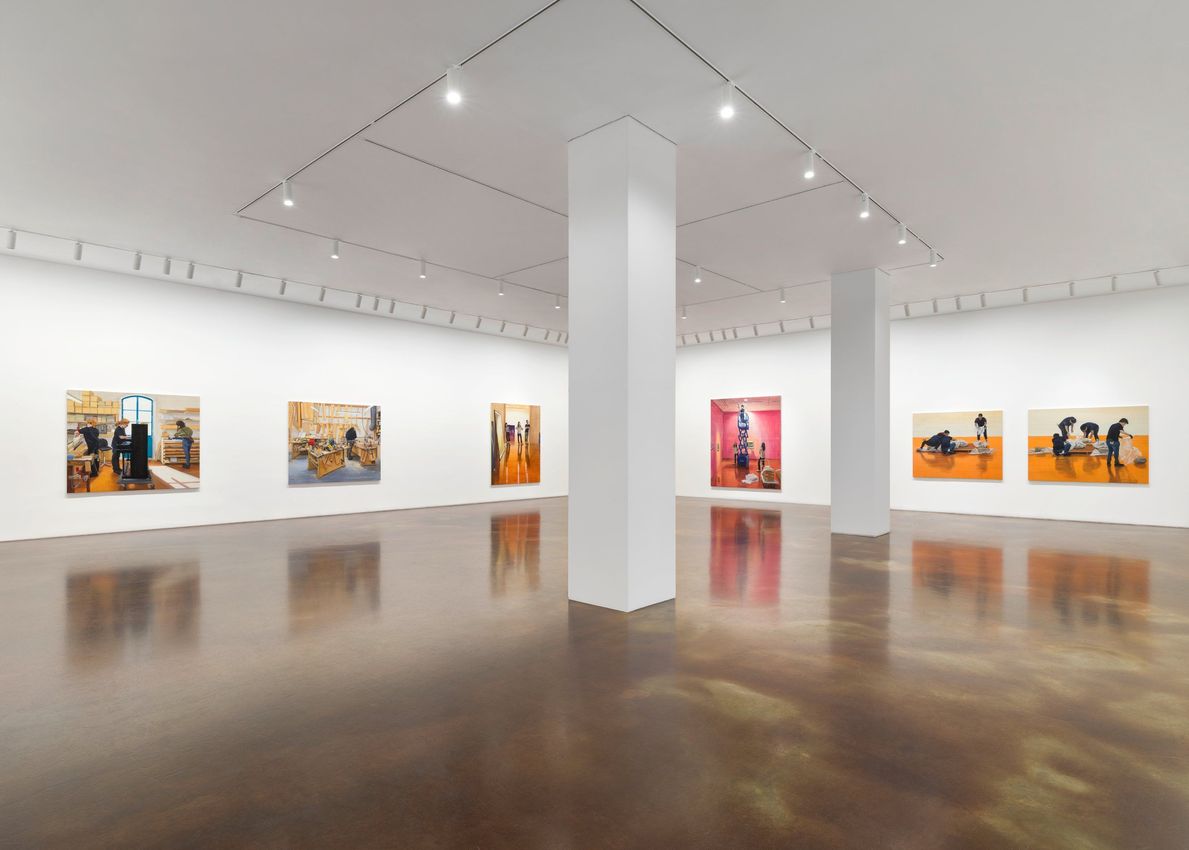
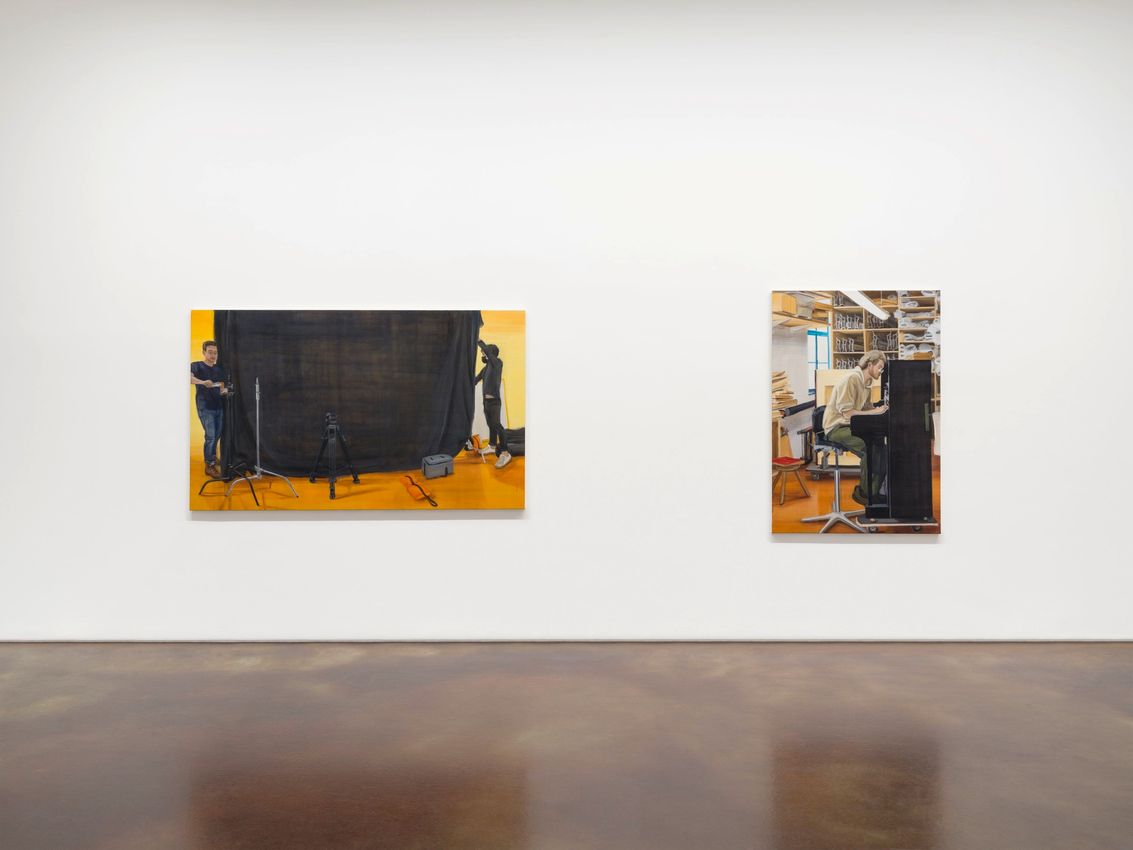
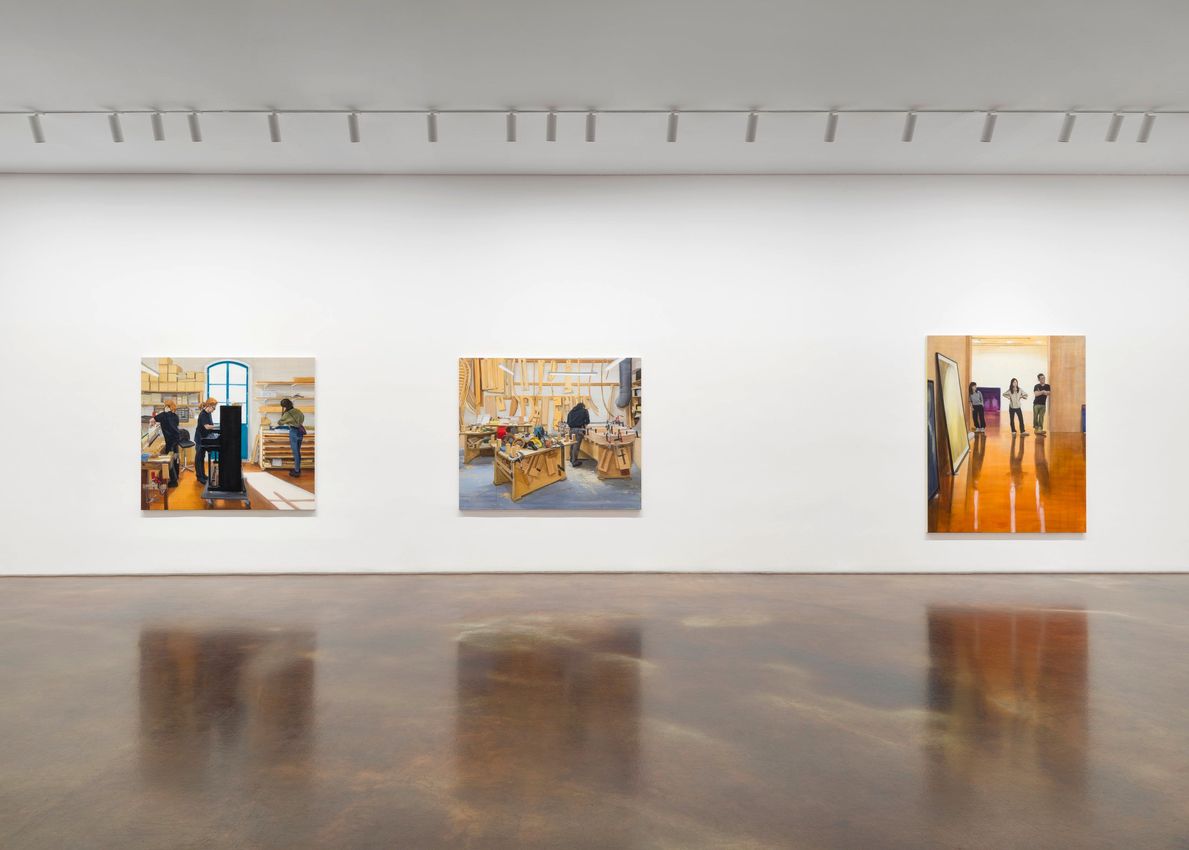
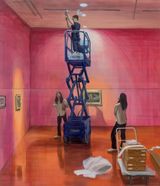
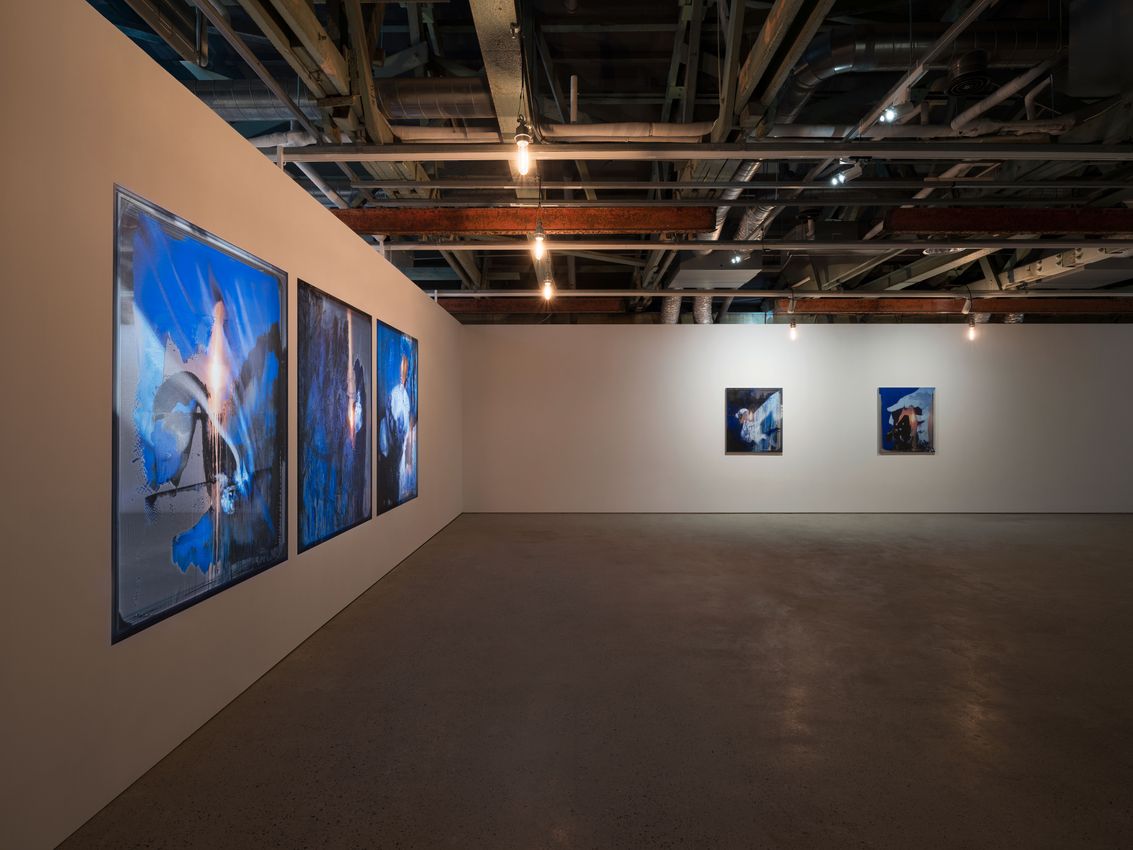
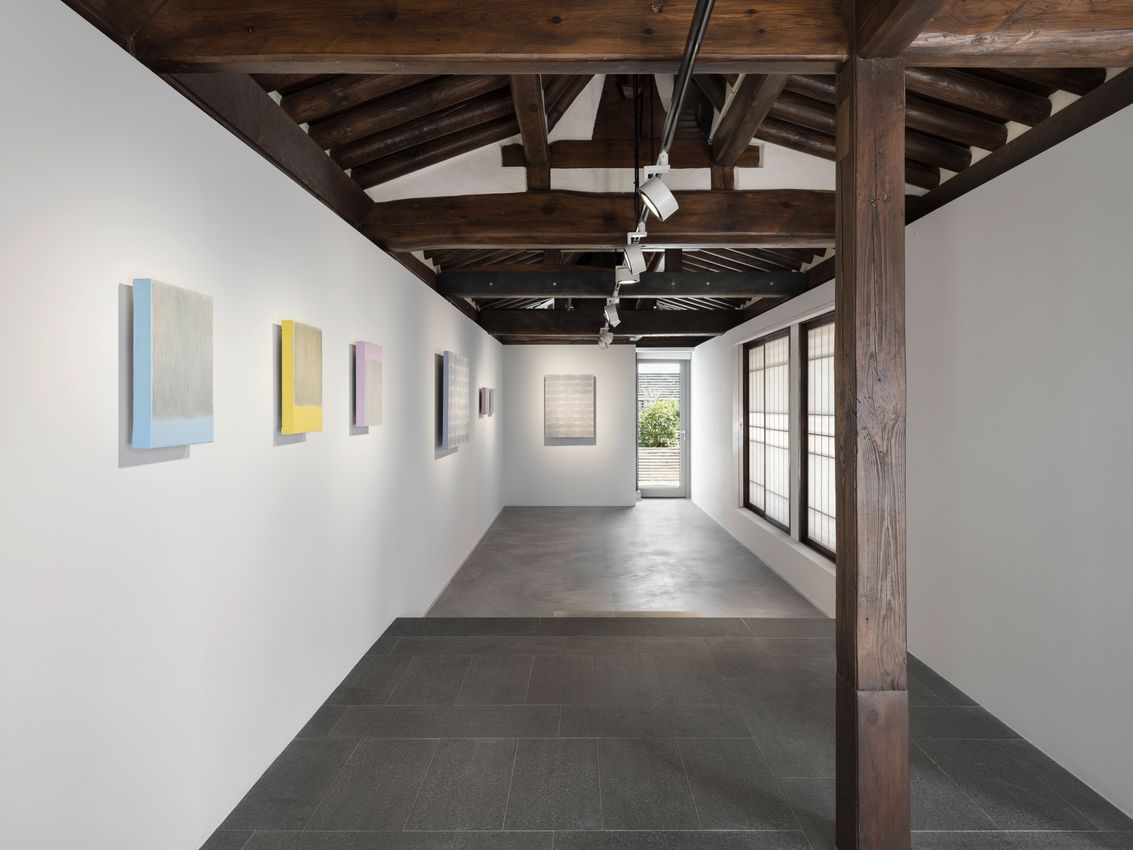
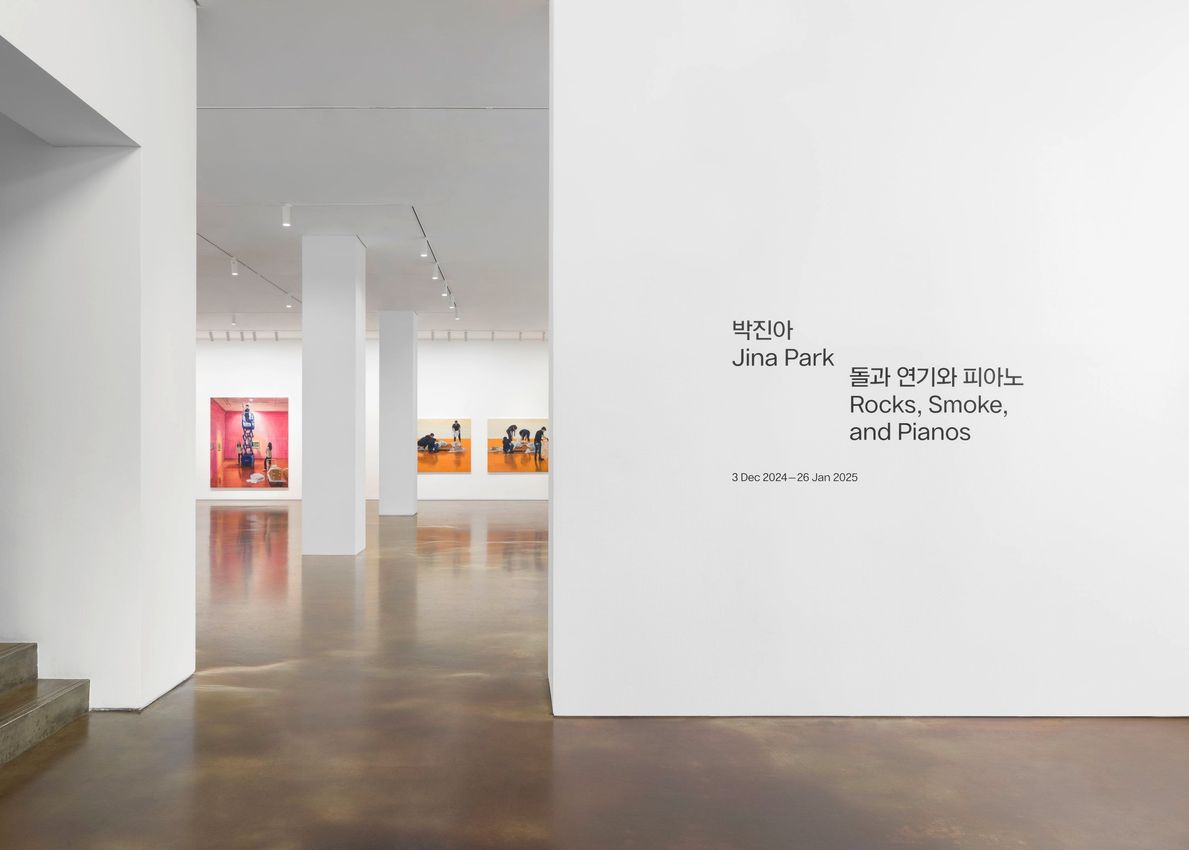
Kukje Gallery is pleased to present Rocks, Smoke, and Pianos, a solo exhibition by Jina Park, from 3 December 2024 to 26 January 2025, in the gallery’s Seoul K2 and Hanok. In this first presentation of the artist’s work in the gallery’s Seoul space since her Busan solo exhibition in 2021, Park showcases approximately 40 new works using oil and watercolour that explore site-specific locations including a museum exhibition hall, a restaurant kitchen, and a piano factory. Here, she continues to use photography as the basis of her painting practice, reconstructing scenes captured through her camera. Since her ‘Lomography’ series (2004–07), where Park used a Lomo camera, Park has assigned herself the task of creating paintings not bound by the subject, action, or event, but instead focusing on transforming utterly quotidian moments into painterly subjects that occur in an invisible dimension of space.

While the previous exhibition Human Lights (2021) held in the gallery’s Busan space included nocturnal scenes set outdoors, all of the paintings featured in this exhibition illustrate interior spaces, each depicting figures immersed in their work with a sense of purpose. The exhibition title_Rocks, Smoke, and Pianos_ refers to mundane objects that one might pass by without noticing, and is a synecdoche alluding to the different sites that the artist visited and recorded with her camera.

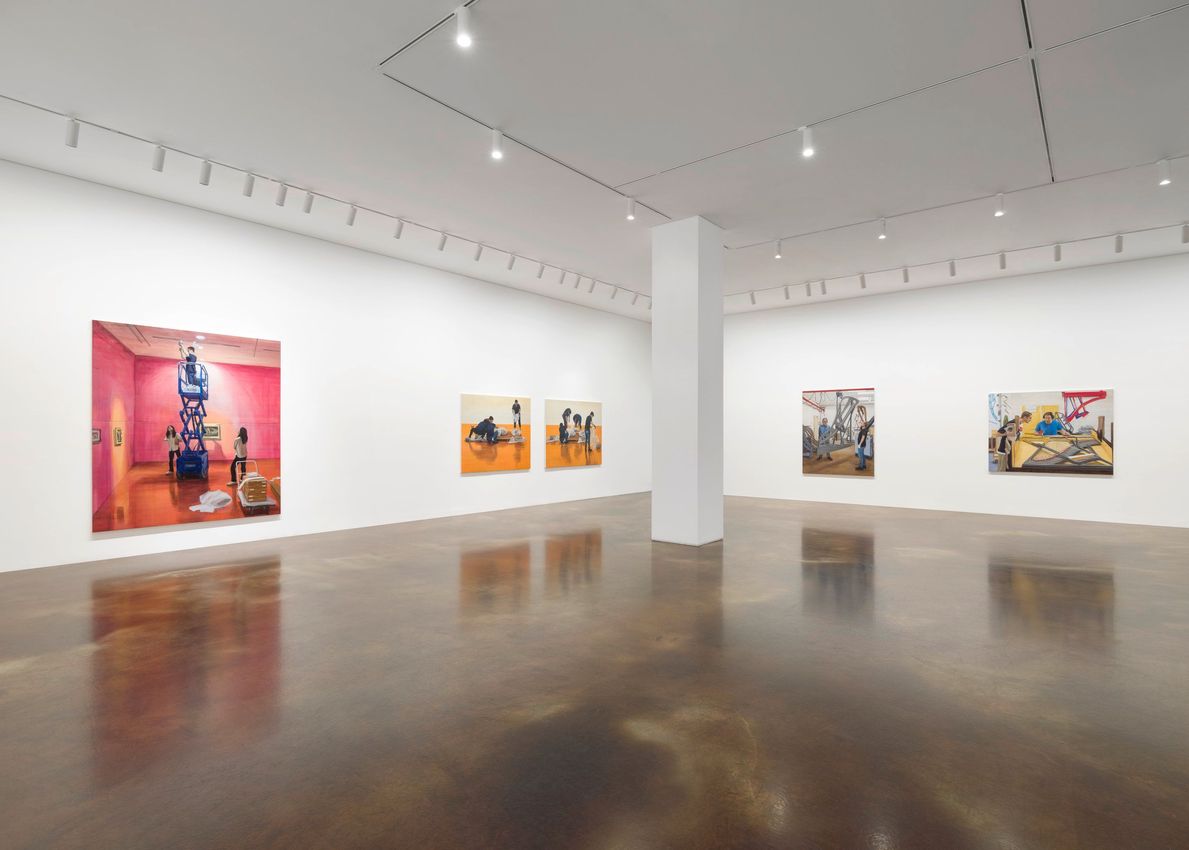
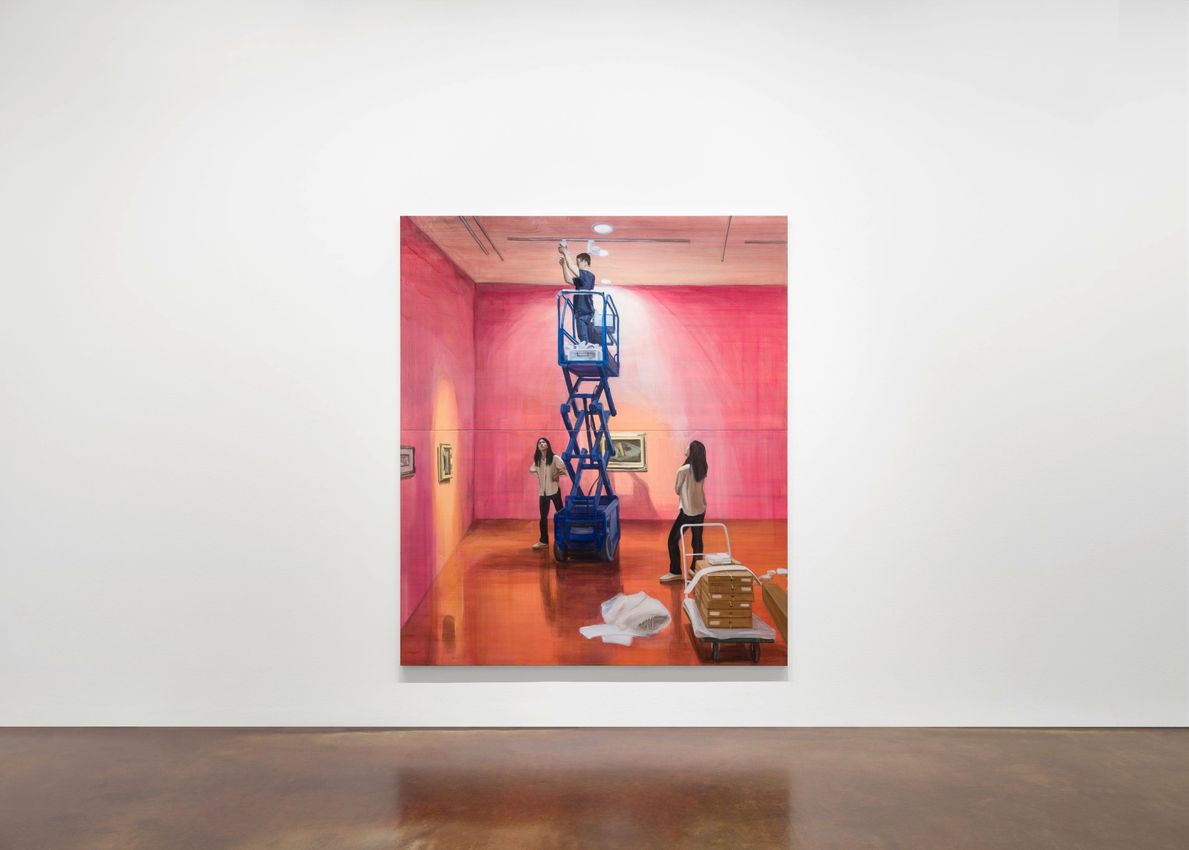
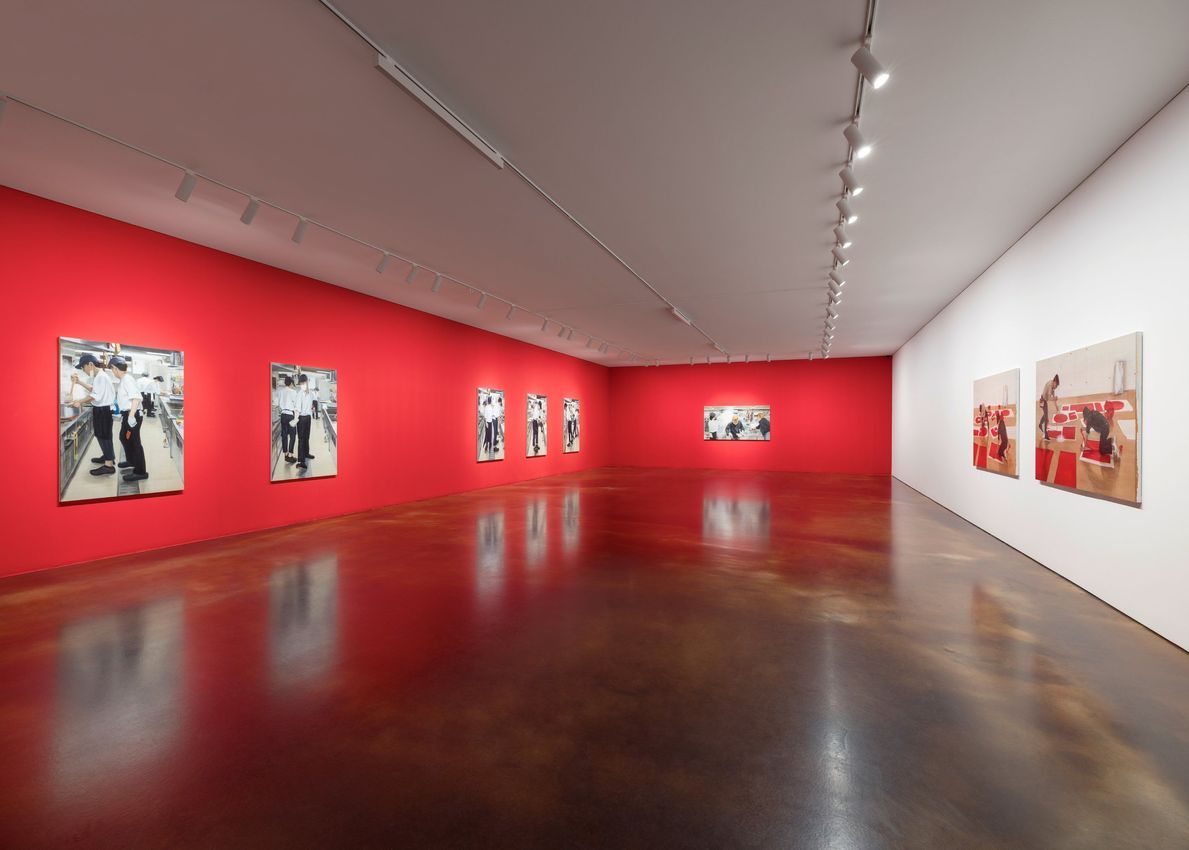
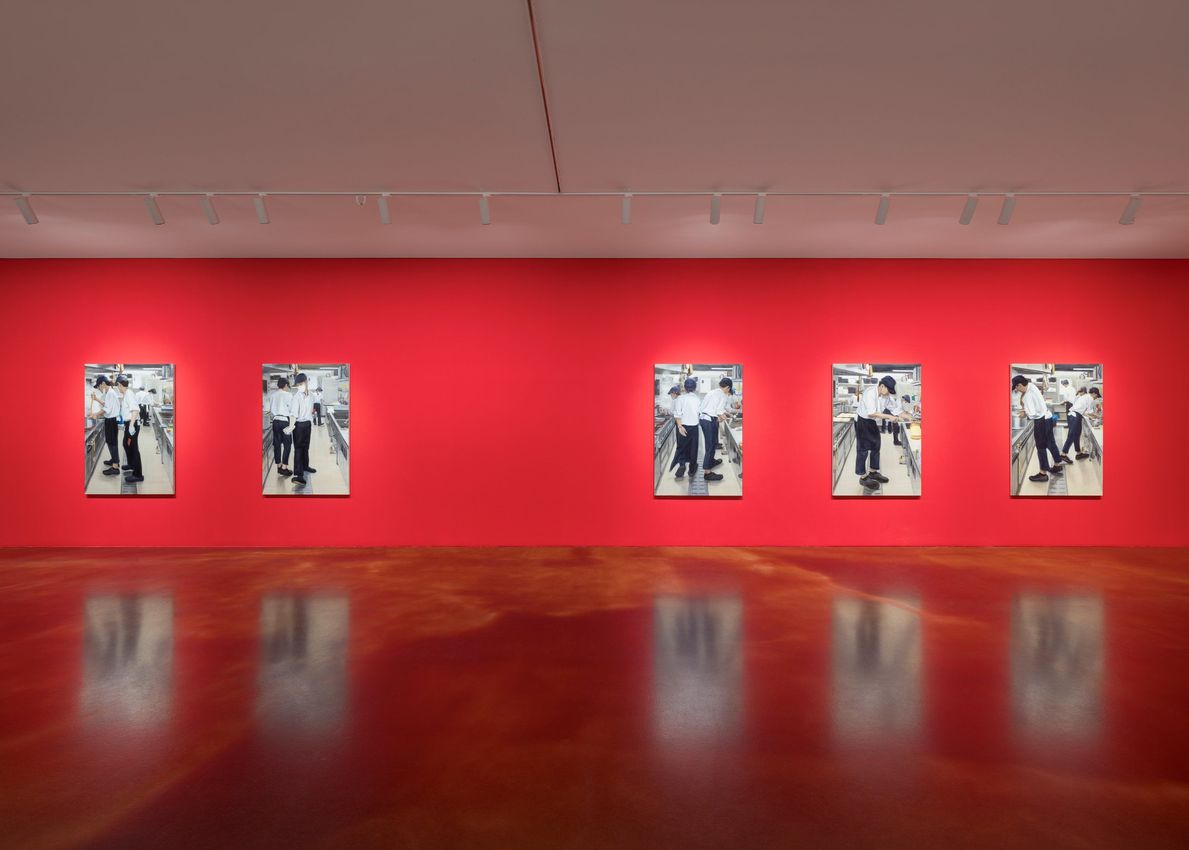
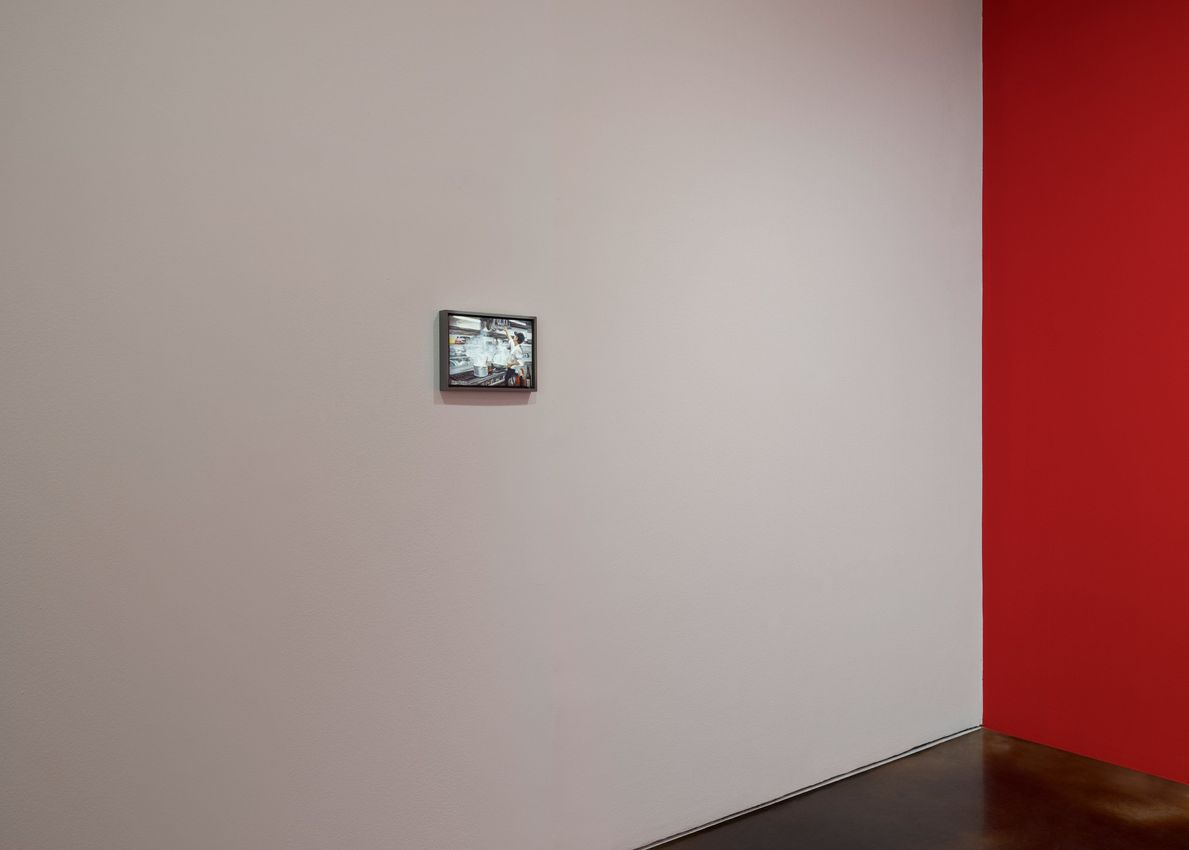
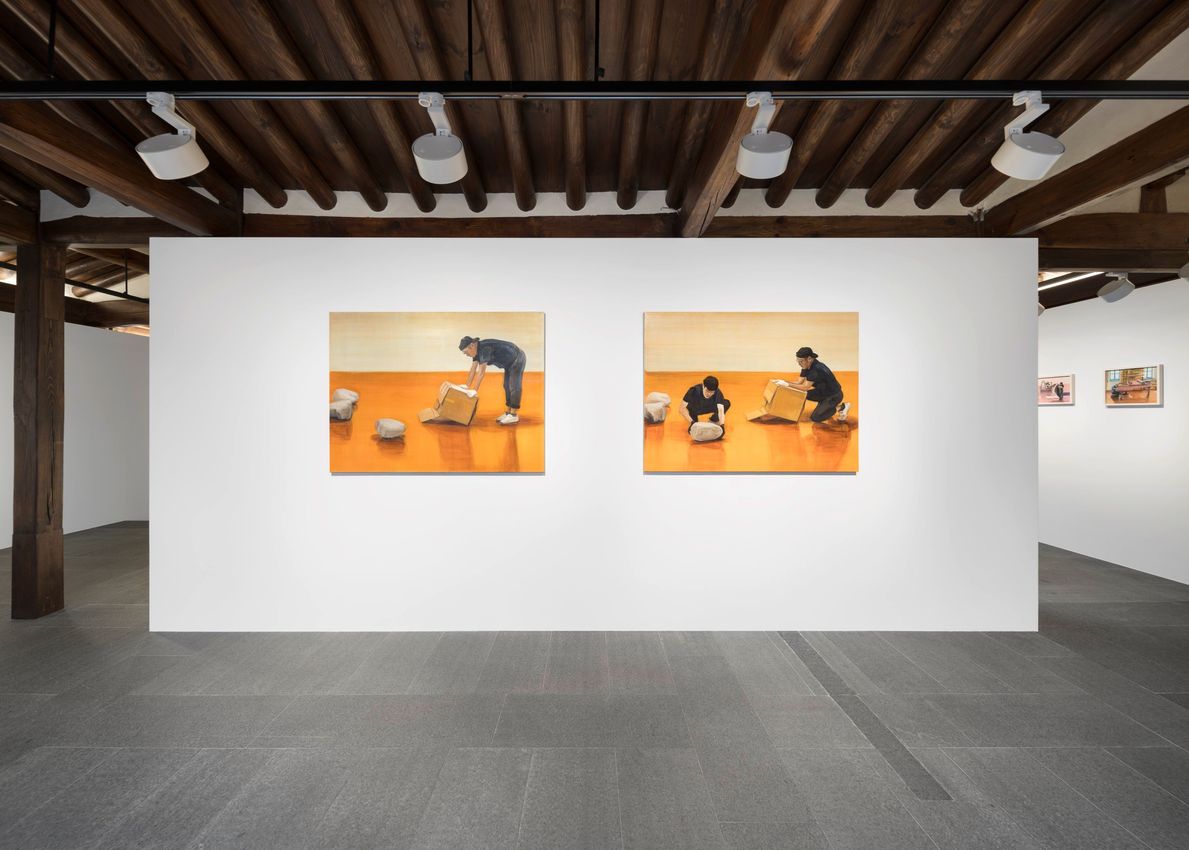
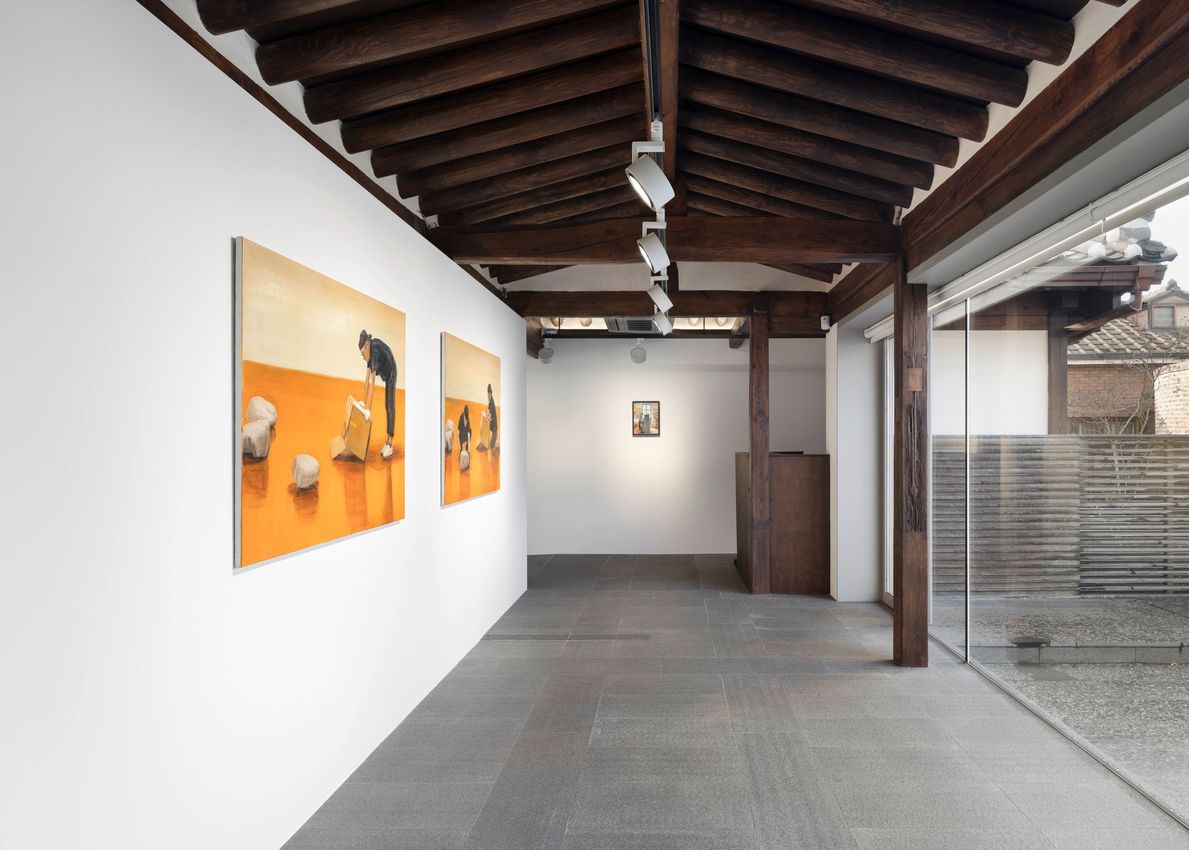
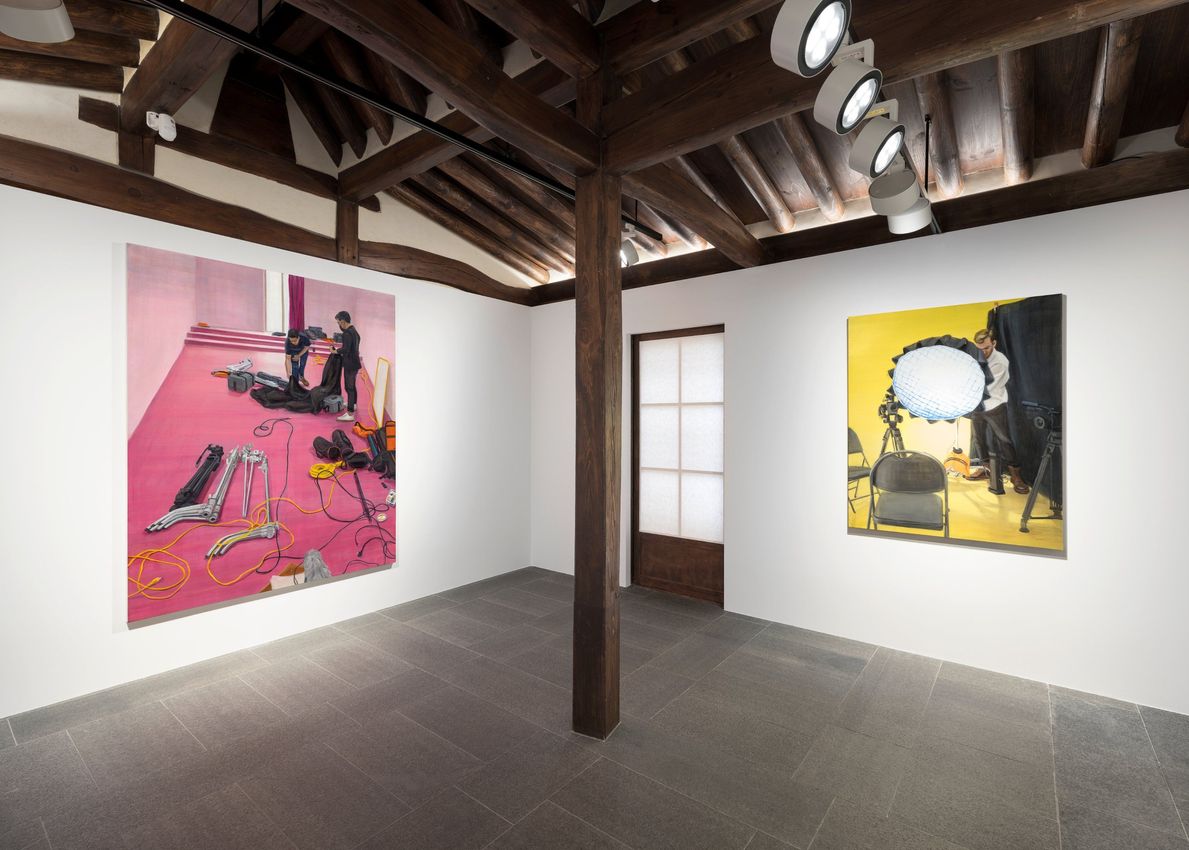
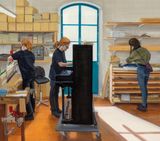
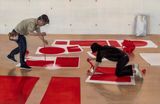
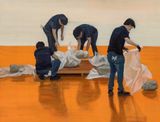
Among them, a group of works collectively referred to as ‘rocks’ comprises scenes captured during the group exhibition which Park was invited to participate in by the Busan Museum of Art. This includes scenes of art handlers unpacking rocks—elements from artist Park Hyunki’s work—as well as staff preparing adhesive vinyl for the exhibition, photographed during Park’s research trip to the museum when the installation for the previous exhibition was underway. The works organised around the motif of ‘smoke’ depict busy scenes inside the restaurant kitchen at Kukje Gallery. Lastly, works gathered around ‘pianos’ are Park’s latest series that explores the inner details of where Steingraeber pianos are manufactured in Bayreuth (a town located in northern Bavaria), Germany, which Park visited this year.

These sites chosen by the artist share the characteristics of being everyday places of labor where workers in each industry carry out their responsibilities behind the ‘Staff Only’ signs. Given her framing approach, one might assume that the activity of these individuals is the most important subject in each scene. However, in the moments captured by Park’s camera, where chance becomes a key element, there are really no dramatic actions, narratives, or pre-assigned meanings. For example, in the ‘Kitchen’ series (2022–24), what takes up a large portion of the canvas is a crowded countertop covered with various cooking utensils, and smoke rising into the air, as much as the figures concentrated in action. Also, the lines and colour planes that compose the scene become an event in themselves as in the rectangular vinyl sheets dispersed rhythmically on the exhibition floor in the ‘Red Letters’ series (2023–24); in the orange floor that takes up two thirds of the painting in the ‘Rocks’ series (2023–24); or in the bold lines and curves that traverse the canvas in the ‘Piano Factory’ series (2024). Figures in ambiguous poses with no intention of conveying meaning merely hint at their context and the speculation of the ‘before’ and ‘after’ of the scene—giving a sense of tension to the painting. This tension arises from the fact that, while the painting originates in everyday subjects captured through Park’s camera, it eliminates the social context or direct meaning they may hold, highlighting the formal and compositional relationships of the lines, planes and colours. In other words, the tension is intensified as Park heads forth in her experimentation towards art for art’s sake.

As early as in 2005, Park spoke of how she wants to create ‘horizontal paintings, or paintings without hierarchy.’¹ In this statement, we see how questions about the ‘pictoriality of painting’ have been a core of her work all this time. Park has continuously experimented with her art pursuing greater honesty in the physical qualities of her painterly materials and seeking greater autonomy. With regards to her techniques, Park makes quick strokes reminiscent of drawings to create loosely structured images to the extent that the figure seems to be almost blending into the background. However, unlike in the drawings, the figures are in fact realised as lumps of paint, composed of layered brushstrokes. Also, the physical qualities of the painting materials are no longer solely subjected to representation or signification, as the artist makes evident in her leaving the oil paint flowing down the canvas or the smeared marks of watercolour on paper. She leaves visible the materiality of the artistic medium and deliberately employs implicit and elliptical expressions to provide space for the viewer’s imaginative engagement.

At the same time, the camera has become a useful tool in Park’s experimentation, which aims to subvert the established hierarchy among the traditional elements of painting and to achieve the desired autonomy. Park recomposes various scenes captured with her camera, thereby disallowing a specific time frame to appear in the still image on the canvas. Moreover, her work clearly reflects the camera’s unique imaging qualities, such as the distortion of straight lines caused by the use of wide-angle lens, the flattening of the spatial dimensionality of the background and an abstracted planar colour block as an effect of the camera flash, or the division of the pictorial frame into dramatic proportions due to the angle adopted by the camera. As a result, in such works as Light for Interview (2023), A Pink Room (2024), and Hoverboards in Blue (2024), the wall and the floor are connected in a continuous plane, expressed through the yellow, pink, and blue colour fields, and this use of colour emerges as an important characteristic in Park’s work. With these devices, the artist embraces contingency, a-temporality, and a-placeness which are qualities of abstract paintings, and constructs a unique visual language where abstract and representational space coexists.

This exhibition is a journey in which Park traverses traditional boundaries that exist between drawing and painting, figuration and abstraction, as well as photography and painting. By inserting discordant gaps into what appears to be a smooth surface of the painting, she seeks her own approach to the question, “What is the pictoriality of painting?.” Naturalistic style undergoes a series of transitions, summarised as the distortion from the camera lens and the painterly experimentation of the artist, to return with a completely new pictorial language and grammar. This enables the artist to create works that thoroughly investigate and deliberately express the pictoriality of painting. These fleeting moments, suspended in the present continuous tense, come together in the exhibition space and invite reflection on the true essence of painting.

1 Eunjoo Lee, ‘Between Moments of Leisure,’ Leisure (Seoul: Kumho Museum of Art, 2005).

Read More

Installation Views

About the Artist

Park Jina (b. 1974) currently lives and works in Seoul, Korea. She is a graduate of the Seoul National University College of Fine Arts and received her Masters in Fine Art from the Chelsea College of Art & Design. Her work in painting is unique in her exploration of composition and her ability to capture powerful moments in a manner recognized for its sublimity. The originality of Park’s work lies in her interest in the ordinary aspects of daily life and the way she places the subjects of these ordinary aspects into the logical form called painting.

View Artist Profile

Also Exhibiting at Kukje Gallery

About the Gallery

Established in the heart of Seoul in 1982, Kukje Gallery is a leading Korean gallery dedicated to showcasing works by Korean and international artists and promoting modern and contemporary art. At 54 Samcheong-ro, Jongno-gu, the gallery has 3 key exhibition spaces, respectively named K1, K2, and K3. In 2018, the gallery opened a second location in F1963, a cultural complex housed in a former wire factory in Suyeong-gu, Busan.

View Gallery Profile
Address
54, Samcheong-ro
Jongno-gu
Seoul
South Korea
Opening Hours
Monday – Saturday
10am – 6pm

Sunnday
10am – 5pm

National Holidays
10am – 5pm
(1)
Seoul 54, Samcheong-ro, Jongno-gu
Kukje Gallery
54, Samcheong-ro, Jongno-gu, Seoul, South Korea

Opening hours
Monday – Saturday
10am – 6pm

Sunnday
10am – 5pm

National Holidays
10am – 5pm
The art world in focus