Axel Vervoordt Gallery is pleased to present Remanence, Germaine Kruip’s exhibition for the Escher Gallery. Bringing together light, sound and sculpture, the exhibition becomes a mutable perceptual field, extending sculpture beyond its formal and material confines into the realms of resonance, light, atmosphere and duration, where the material and immaterial are held in continuous exchange. Germaine Kruip’s practice is rooted in the distinct yet interconnected realms of stage (theatre, cinema, performance), architecture, and visual arts. Initially trained as a scenographer for the theatre, Kruip has fostered a dynamic exchange between the fields of visual arts and theatre throughout her career. Some of her light performances for the theatre have been reimagined in the context of galleries and museums, while elements from these environments have, in turn, influenced her theatrical works. Remanence features a constellation of sculpture and site-specific light pieces within a darkened transformation of the Escher Gallery.
At its centre, is Pendula, a monumental five-metre-high brass sculpture, created with German master instrument makers Thein Brass, Kruip’s longstanding collaborators. Although suspended in space, the sculpture is fixed and immoveable. In quiet stillness it resists the familiar symbolism of the pendulum marking time through its movement. Inst
ead, time is articulated through sound; through an emergence o resonance, gradual decay, and the eventual return of the ambient soundscape. When activated, the sculpture fills the space with sustained resonance. The introduction of sound is not a musical event but an invisible sculptural material that extends beyond the object itself. As the resonance builds and slowly disappears, the boundaries between sculpture, visitor and surrounding space begin to shift. What is heard is also felt; what has sounded continues to exist momentarily as a trace within the body and the architecture.
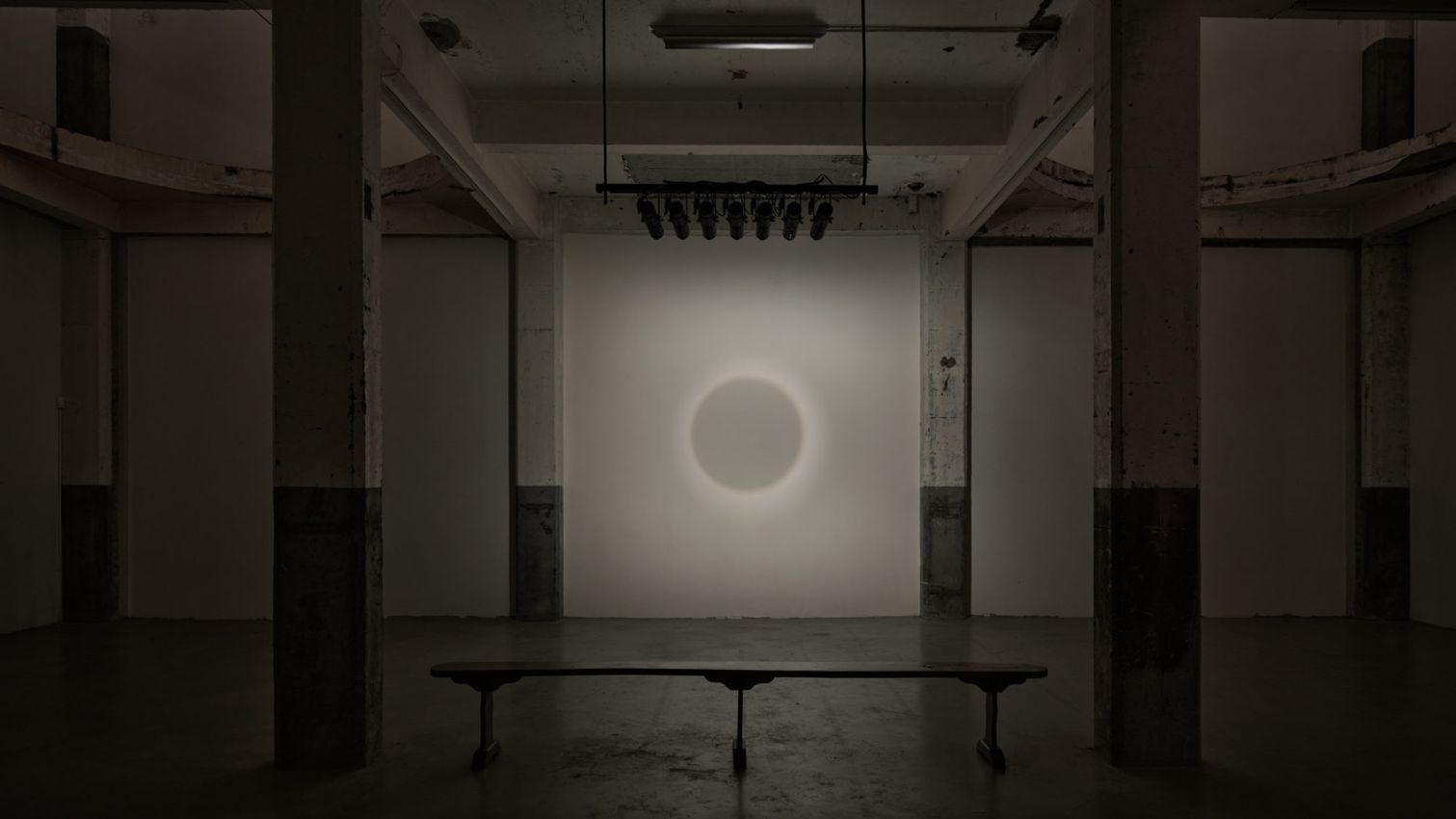
Through the Untitled Circle works, Kruip stages a precise encounter between material and perception. Elliptical planes of mirror-polished copper and stainless steel are positioned and activated by a focused spotlight, to produce a luminous circle that appears on the wall as a dematerialised counterpart to the physical object. The relationship between the two is both simple and elusive. The reflective surface functions simultaneously as sculpture and optical instrument, translating an embodied object into an immaterial image. Conversely, Untitled Circle Stainless Steel, Phantom (2024), produces a circle of shadow rather than light. Through this displacement, Kruip sets up a quiet tension between presence and projection, material and immaterial, object and image. The works are less concerned with representing a circle than with allowing one to come into being through the specific conditions of light, surface and space.
Surrounding the sculptures, Kruip presents a sequence of light installations that continue her longstanding investigation into light as a material in its own right. By combining traditional theatre spotlights with advanced LED technology, Kruip proposes here a synergetic exchange between white cube and black box that divides the Esher Gallery in two, inviting visitors into a darkened environment.
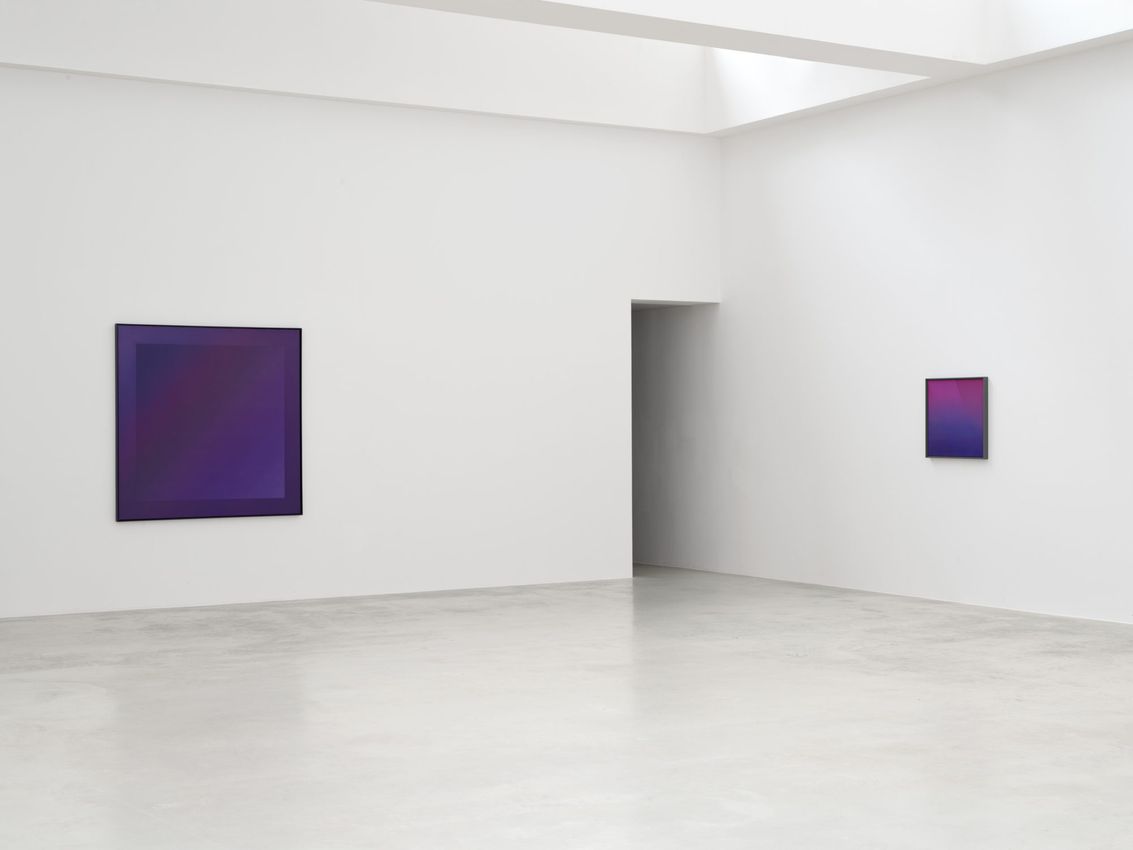
Upon entering the first half of the space, visitors are met with two slowly pulsing abstract light compositions, Horizon (2025) and Ray (2025). The works emanate a contemplative atmosphere, inviting reflection on concepts of positive and negative space, the frames of our visual field, the mechanics of perception, and the passage of time itself. Light appears and disappears, yet its presence continues in the eye as an afterimage—a visual trace that remains after its source has vanished.
In the second half of the space—wider and darker still—visitors encounter Focal Point (2025), a monumental yet elusive light composition created in real time The gallery’s existing architecture becomes a blank canvas for a filmic interplay of light and shadow. As visitors adjust to the darkness, their pupils dilate, and their field of vision shifts to a heightened sensorial perspective, encompassing the entire space. Kruip’s artworks become most tangible once the eye has adjusted to the darkness, requiring the visitor to fully surrender to the light—its presence and its absence. The feeling of being submerged becomes a ritual the viewer must go through so that their perceptions become heightened and altered. What has disappeared does not entirely cease to be present, but persists as a perceptual trace in the eye, the body, and the space. Darkness is an active medium rather than simply the absence of illumination.
In this way, time and light become film. Designed to encourage visitors to spend a specific duration in the gallery, the light compositions draw on the legacies of avant-garde cinema, exploring the interplay of mental and physical images, the convergence of reality and fiction, and the liminal spaces between them. Remanence points to what remains after the source itself has disappeared: an image retained by the eye after light has vanished, a resonance continuing after a sound has been struck, or the perceptual trace of an experience after the event has passed. As one moment continues to resonate within the next, perception becomes an unfolding process, anchoring the viewer in the immediacy of the present.
Courtesy Axel Vervoordt Gallery.


Over the past two decades, Dutch artist Germaine Kruip (b. Castricum, NL) has been developing a practice that merges time, space and perception. In between the visual arts, the stage, and architecture, she investigates and presents her observations through architectural, sculptural and performative interventions. Kruip studies the scenography of ungraspable phenomena, such as the ever-changing daylight and the passage of time; the relationship between art and ritual in repetitive gestures, aiming to subtly alter perception; historical attempts to create abstraction by means of geometry—and finally the desires, theories and ideologies underlying these attempts. Kruip lives and works between Brussels and Amsterdam.


The Axel Vervoordt Company and Axel Vervoordt Gallery are located at a site known as Kanaal–a converted industrial distillery that has become a cultural and residential community.

A respected voice in contemporary art discourse.
Focusing on ambitious storytelling and insightful art-world commentary. Ocula Magazine publishes in-depth interviews, critical essays and timely analysis on the artists, exhibitions and ideas driving the global art world.
Learn more about Ocula Magazine
Showcasing the best of the art world.
Ocula partners with galleries from around the world to highlight their artists, artworks and exhibitions. Gallery membership is by application and invitation, with each member vetted by an independent panel.
Learn more about Ocula Membership

Specialises in the sale of major artworks.
Led by a team with deep ties to the world’s leading auction houses, galleries and collectors. Ocula’s advisory team offers bespoke services to high-net-worth clients from around the world who are looking to acquire the best of contemporary and modern art.
Learn more about our team and services