



Press Release

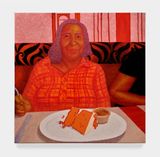
Lehmann Maupin presents You Know I Used To Love You but Now I Don’t Think I Can: There Ain’t No Right Way To Say Goodbye Again, an exhibition of new paintings and works on paper by New York-based artist Arcmanoro Niles. The exhibition marks the first presentation of the artist’s work in Europe and his second with the gallery. Drawing upon a variety of genres, including portraiture, landscape, and still life, the works in You Know I Used to Love You... examine what it means to say goodbye to people, places, and behaviours. Across the exhibition, Niles employs an expressive colour palette as he depicts moments of quiet rupture: experiencing loss and heartbreak, aging, leaving home, giving up habits.

Vividly capturing feeling and mood, the artist draws upon his own experiences primarily as a means of connecting to others. The artist’s works are highly personal in their content, and Niles often depicts emotionally charged memories and scenes as he charts a record of contemporary existence that is simultaneously intimate and collective. ‘Painting has been a way for me to approach topics that I felt like I couldn’t talk about growing up and things I feel like we don’t always know how to talk about now,’ the artist stated. “I think a lot about how people deal or cope with aging, loneliness, heartbreak, and love. A lot of my paintings are reflections on these things.’

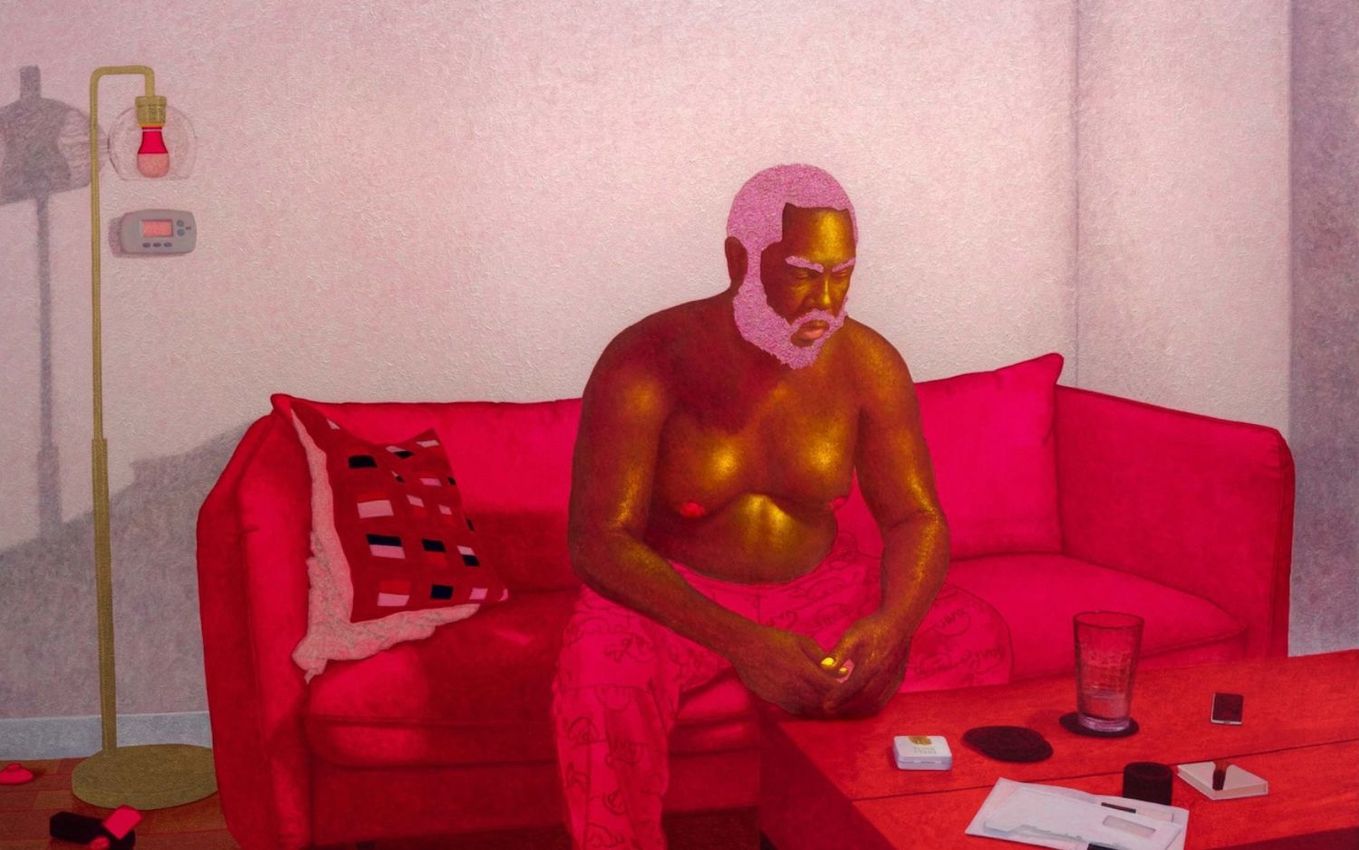
For Niles, figuration offers a way into suggesting shared emotional experiences. The artist often depicts his subjects in moments of solitude and contemplation. Growing Up May Be The Hardest Thing I Do (Healing Doesn’t Happen In A Straight Line) (all works 2022) shows a figure as he sits shirtless on a sofa, his gaze downcast and his hands gently clasped. In his Living With a Broken Heart Made It Difficult When I Was Young and Bullet Proof (It’s Easier To Miss You Than It Is To Let You Down), Niles shows another inwardly focused figure, seated in a hospital hallway in a wheelchair, his hands over his face. While often self-contained and introspective, Niles’ life-size figures nevertheless directly engage viewers, mirroring their bodies and inviting them into a shared space.

The exhibition also examines other, subtler forms of loss. Always Had Me Under Your Spell (Some Things Ain’t Meant To Stay the Same) depicts the park adjacent to the artist’s former Brooklyn apartment, where he would frequently take breaks from painting to watch the setting sun. The work gestures both to the artist’s nostalgic associations with place and to his own experiences of calm and self-reflection in nature. Indeed, in Niles’s work, the natural landscape is also a landscape of memory and feeling. A still life, I Don’t Keep Liquor Here (I Been Learning How To Do It All the Hard Way), likewise explores connections between self and place. A countertop reveals traces of daily life, featuring objects such as bags of snacks sealed with clips, packages of wipes, a pair of oven mitts, and the work gestures to the artist’s own experiences of sobriety primarily by way of omission. For Niles, still lives can function akin to portraits, suggesting both the presence and absence of a space’s inhabitants and capturing the traces of themselves that they leave behind in their environments.

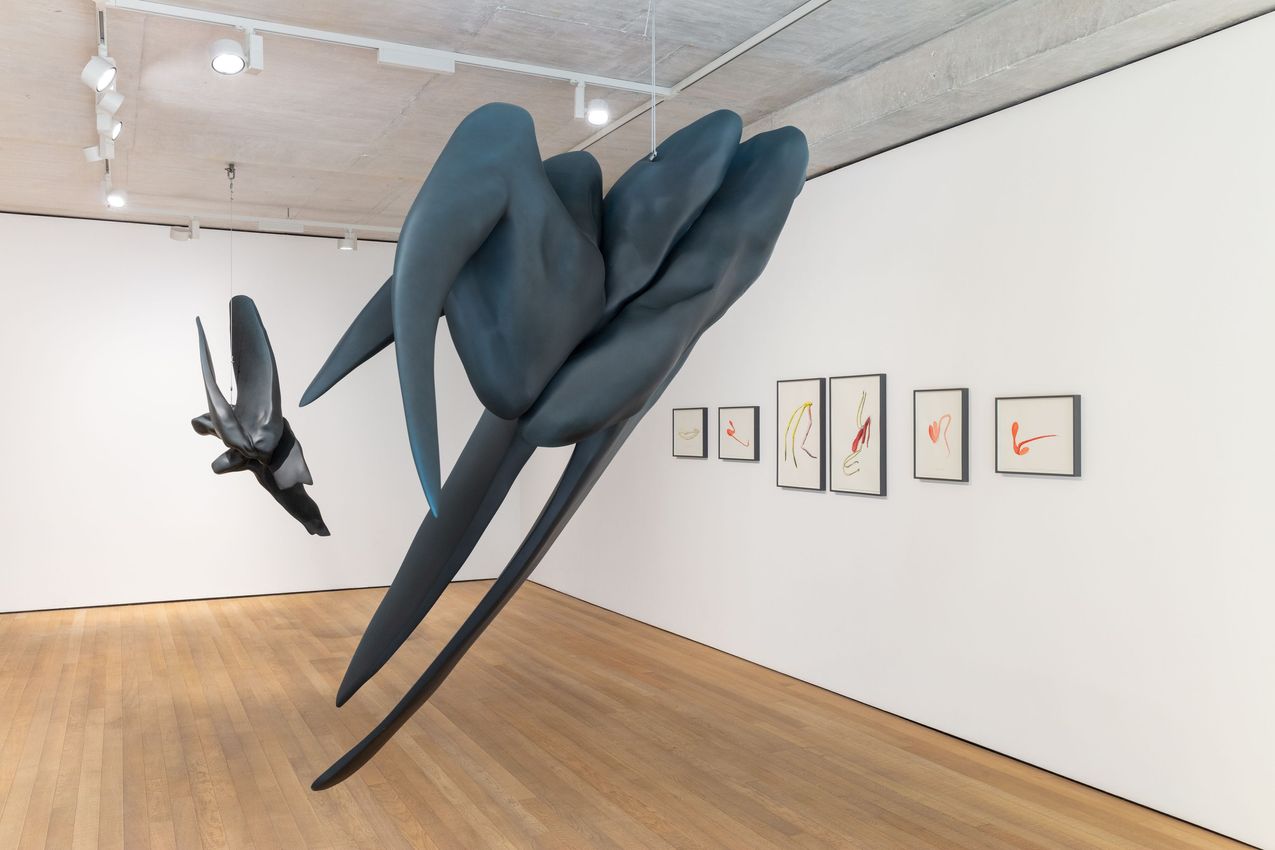
The London exhibition also includes new drawings, a medium to which Niles has recently returned. While the artist had not produced drawings outside his sketchbook since college, he revisited the medium over the past year, borrowing from his approaches to painting to reinvigorate his engagement with drawing. Across his drawings, Niles often allows for the surface of the paper to remain partly visible, and the artist strategically uses negative space, allowing room for absence as he endows his subjects with powerful presence.

For Niles, capturing the specificity of experience–with both text and image–is a way of making it more vivid and communicable to others. Here, and across his practice, the artist creates complex, highly evocative titles for his works. Niles works associatively, and image and text emerge simultaneously in his work, with each informing the other. Yet, Niles’s works are never merely explanatory or didactic, and with his poetic, carefully crafted titles, Niles poses additional prompts and channels of engagement to his viewers.

While often somber and still in mood and content, the works in You Know I Used to Love You... are emphatically vibrant in colour. The artist first began experimenting with non-traditional colour palettes and techniques in part because of the frustration he felt as he attempted to depict the deep reds and purples and golden tones he saw in his own skin. He found that forgoing traditional painting techniques and introducing vibrant colours he loved allowed for a rich representation of darker skin. With his fluorescent figures, Niles offers an authentic, alternative mode for representing contemporary life. Even as he dispenses with a naturalistic colour palette, Niles allows his figures’ subjectivities to remain powerfully legible, and he uniquely grants his subjects visibility. With a colour palette guided by expressivity rather than adherence to naturalism, Niles rejects overdetermined modes of representation and lends additional depth and complexity to subjectivity and experience. ‘When I let naturalism go,’ the artist stated, ‘the works ended up feeling more real to me.’

Read More
About the Artist

Arcmanoro Niles (b. 1989, Washington, D.C.; lives and works in New York, NY) makes vivid, brightly-hued paintings that expand our understanding of traditional genre painting and portraiture. Niles offers a window into seemingly mundane moments of daily life―a child seated at the table for breakfast, a man about to get into his car, a couple in their bedroom―with subjects drawn from photographs of friends and relatives and from memories of his past. The paintings, though intensely personal and autobiographical, engage in universal subjects of domestic and family life while also making reference to numerous art historical predecessors, including Italian and Dutch baroque, history painting, Color Field painting, and ancient Egyptian sculpture. Though drawing from many styles and genres, Niles is particularly inspired by the paintings that 16th century Italian painter Caravaggio created of daily life through representations of his family and friends. In depicting not only people close to him but the places and times they inhabit, Niles creates his own record of contemporary life.

View Artist Profile

Also Exhibiting at Lehmann Maupin

About the Gallery

Rachel Lehmann and David Maupin founded Lehmann Maupin in 1996. The gallery represents a diverse range of American artists, as well as artists and estates from across Europe, Asia, Africa, South America, and the Middle East. It has been instrumental in introducing numerous artists from around the world in their first New York exhibitions.

View Gallery Profile
Address
No. 9 Cork Street
London
United Kingdom
Opening Hours
Tuesday – Saturday
10am – 6pm
(1)
London No. 9 Cork Street
Lehmann Maupin
No. 9 Cork Street, London, United Kingdom

Opening hours
Tuesday – Saturday
10am – 6pm
The art world in focus