



Press Release

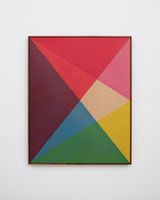
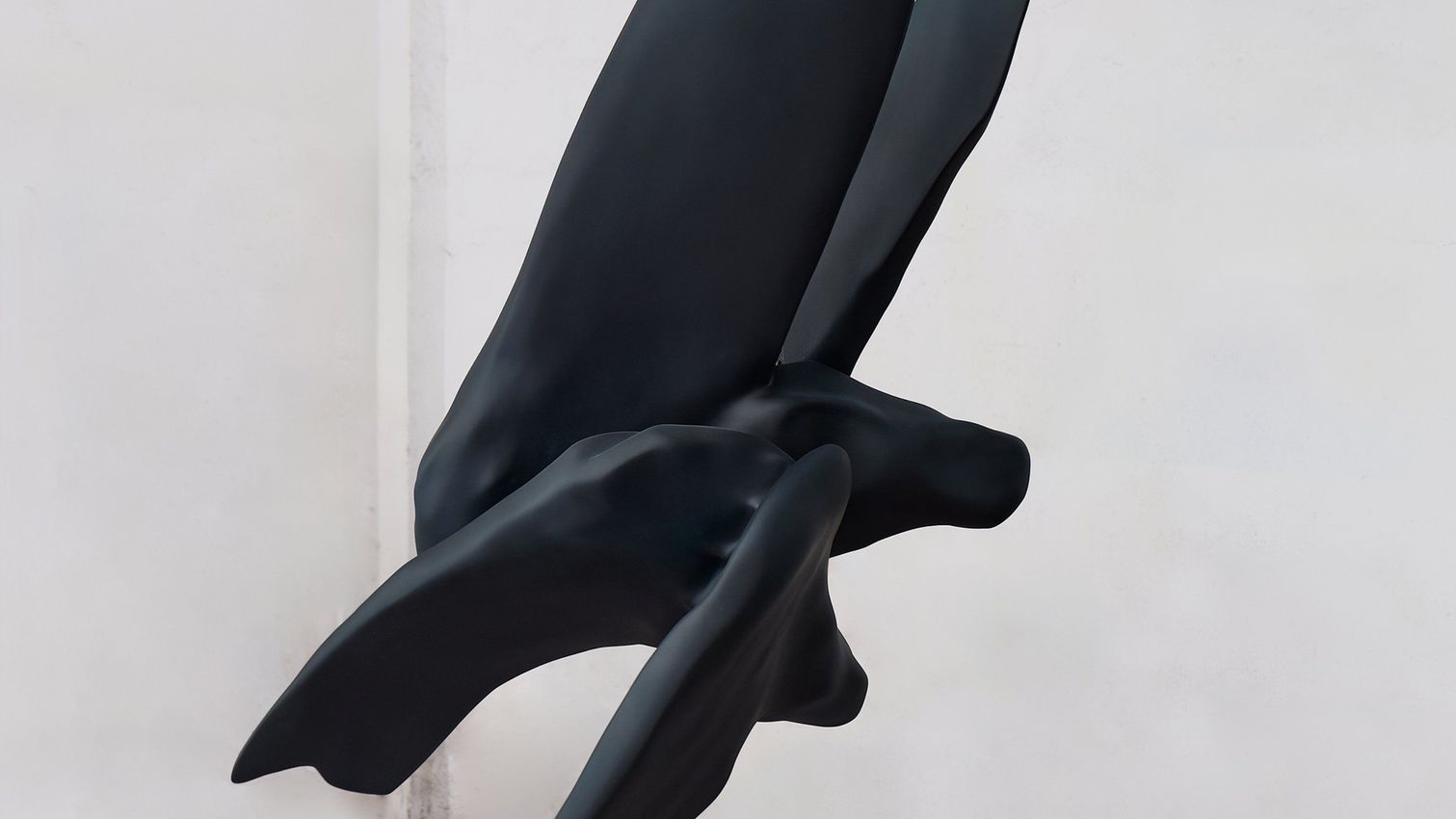
Lehmann Maupin is delighted to showcase Rana Begum’s first solo exhibition in New York. Over the past two decades, Begum has cultivated a distinctive visual language that explores abstraction through a phenomenological lens. Central to her work is light, which she treats as both subject and medium, allowing her sculptural works to absorb, reflect, and transform their surroundings in ways that feel both temporal and sensorial. The exhibition follows Begum’s U.S. museum debut at the SCAD Museum of Art in Savannah and coincides with a series of public projects and exhibitions, including her recent site-specific commission for Climate Clock, an urban art trail in Oulu, Finland, organized as part of the European Capital of Culture program to promote environmental awareness. Notably, Begum is also one of three contemporary artists featured in a major outdoor sculpture exhibition at Kew Wakehurst in Sussex, England, alongside iconic works by Henry Moore. In fall 2026, Begum will unveil new site-specific commissions at the Ismaili Center in Houston, Texas, and Towner Eastbourne in Eastbourne, England.

Drawing on the history of geometric abstraction—as well as the practices of artists such as Agnes Martin, Donald Judd, Mary Martin, Sol Lewitt, and Tess Jaray—Begum’s work is informed by both the urban environment and the geometric motifs of Islamic art and architecture. This is exemplified in her commission for the MFA Boston’s reinstalled Art of Islamic Cultures Gallery, where her site-specific work responds to the ornate sandstone arch typical of South Asian Islamic architecture. The influence of Islamic art and the spiritual importance of repetition and meditation is also at the heart of Begum’s practice. Often using industrial materials and reflective surfaces, Begum creates visually dynamic experiences that shift with the viewer’s perspective and environment. Begum’s focus on symmetry and rhythm evokes a sense of the infinite, creating contemplative spaces.

Begum’s ongoing experimentation with color, light, and space expands the narratives of abstraction and minimalism to encompass a more global perspective. At the center of the exhibition in New York is a large-scale installation from the artist’s Chainlink series, which transforms chain-link fencing into a suspended, richly textured form that softens its industrial character. Removed from its familiar function, the material draws attention to the beauty of its woven structure and organic geometry. In developing the artwork titled No.1272, Begum looked to the paintings of Mark Rothko, reflecting on the way layered fields of color can evoke a distinct atmosphere and emotional weight.

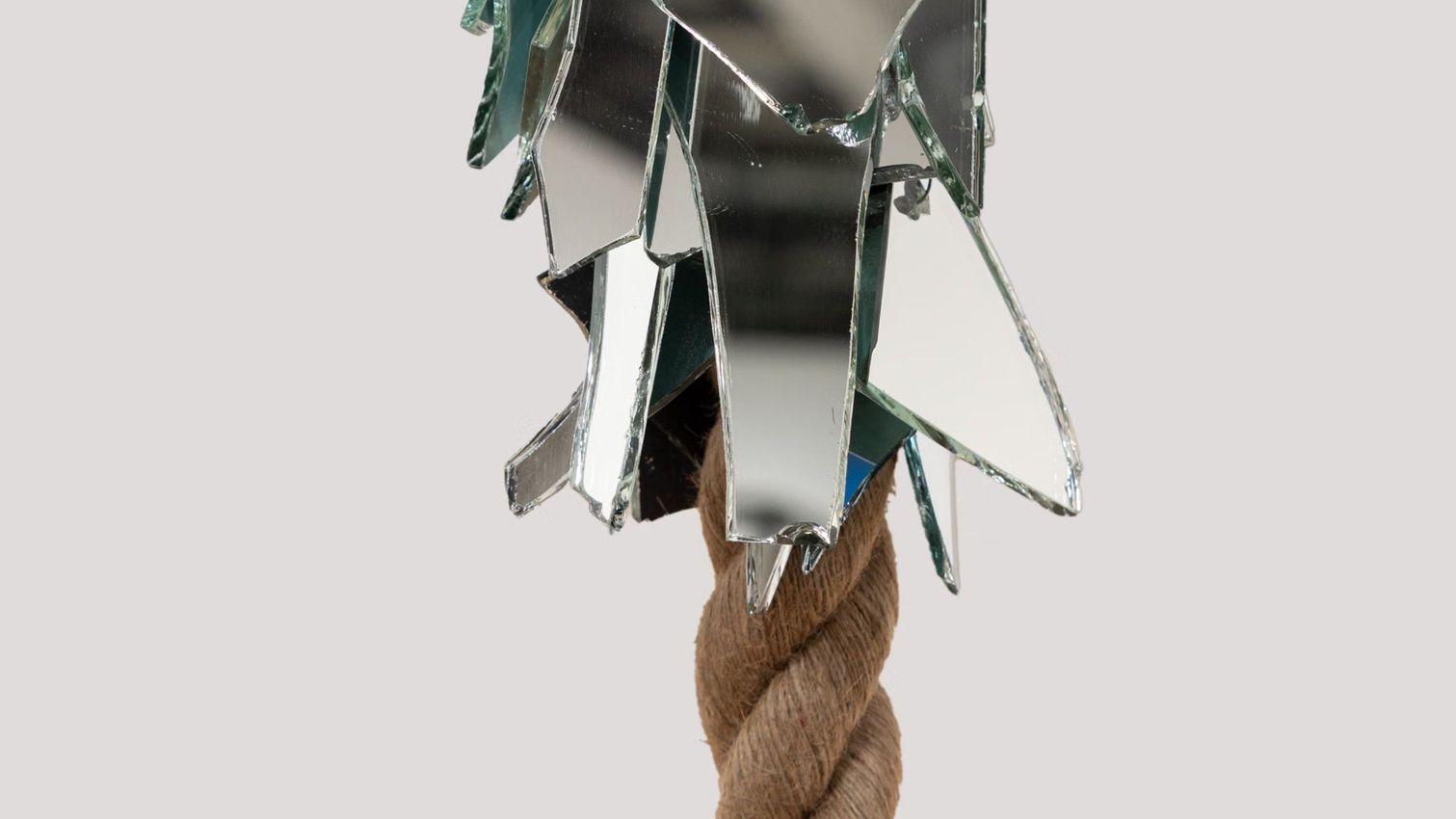
Similarly, Begum’s Louvre series draws inspiration from the formal simplicity of everyday materials such as louvres—architectural elements commonly found in ventilation panels, façades, and blinds throughout urban landscape. A decade of experimentation and research resulted in this series which explores ideas of permeability. Foregrounding materiality and color, spanning metal, stone, and glass, these works investigate how each medium interacts with and responds to light. Whether wall-mounted or suspended, the works possess a distinct physical presence, their material qualities conveying varying degrees of weight, density, and fragility. At times appearing ethereal and elusive, they shift with changing conditions before resolving into more defined and solid forms.

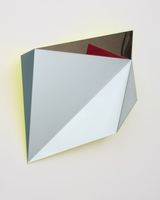
Additional highlights include new works from Begum’s latest Fold series. Originating from Begum’s experiments with paper, these wall reliefs explore the relationship between surface and space, transforming flat sheets of metal into dynamic three-dimensional forms. Begum has long been captivated by the way folded paper interacts with light, casting shadows and revealing subtle tonal variations—white is no longer simply white, but a surface through which colour gradually emerges. Inspired by Bangladesh’s centuries-old tradition of kite flying, each work takes shape through a series of precise, meticulously executed folds. These geometric interventions create a compelling interplay of light, shadow, and color that shifts and intensifies as the viewer moves around the work. Angular shadows and diffused hues extend onto the surrounding walls, expanding the composition beyond the object itself and creating a sense of infinite spatial possibility.

Read More
About the Artist

Rana Begum is an Anglo-Bangladeshi contemporary artist who experiments with the boundaries between painting, design, and architecture. She is influenced by both Minimalism and her childhood experiences of Islam and Islamic art and architecture. Born in Sylhet, eastern Bangladesh, the artist moved to England when she was only eight years old. She now lives and works in London and describes it as a city that is ‘constantly morphing and changing’. She combines her early childhood’s sense of steady repetition and calm contemplation with urban structures and industrial materials to create a conversation between form, colour, and light. The artist finds inspiration in her childhood memories of light hitting the water in Bangladesh’s rice fields, as well as the ritual of praying five times a day.

View Artist Profile

Also Exhibiting at Lehmann Maupin

About the Gallery

Rachel Lehmann and David Maupin founded Lehmann Maupin in 1996. The gallery represents a diverse range of American artists, as well as artists and estates from across Europe, Asia, Africa, South America, and the Middle East. It has been instrumental in introducing numerous artists from around the world in their first New York exhibitions.

View Gallery Profile
Address
501 West 24th Street
New York
United States
Opening Hours
Summer Hours:
Monday – Friday
10am – 6pm
(1)
New York 501 West 24th Street
Lehmann Maupin
501 West 24th Street, New York, United States

Opening hours
Summer Hours:
Monday – Friday
10am – 6pm
The art world in focus
