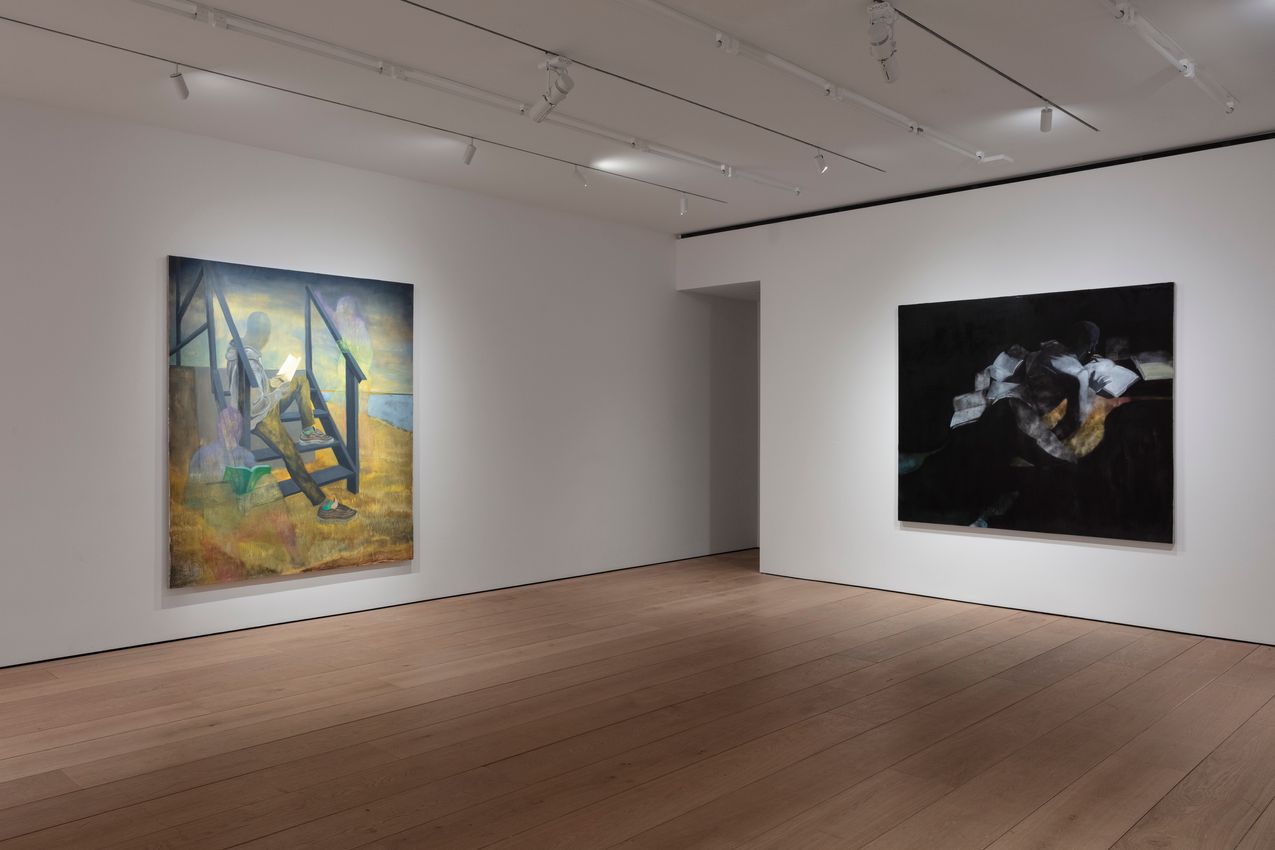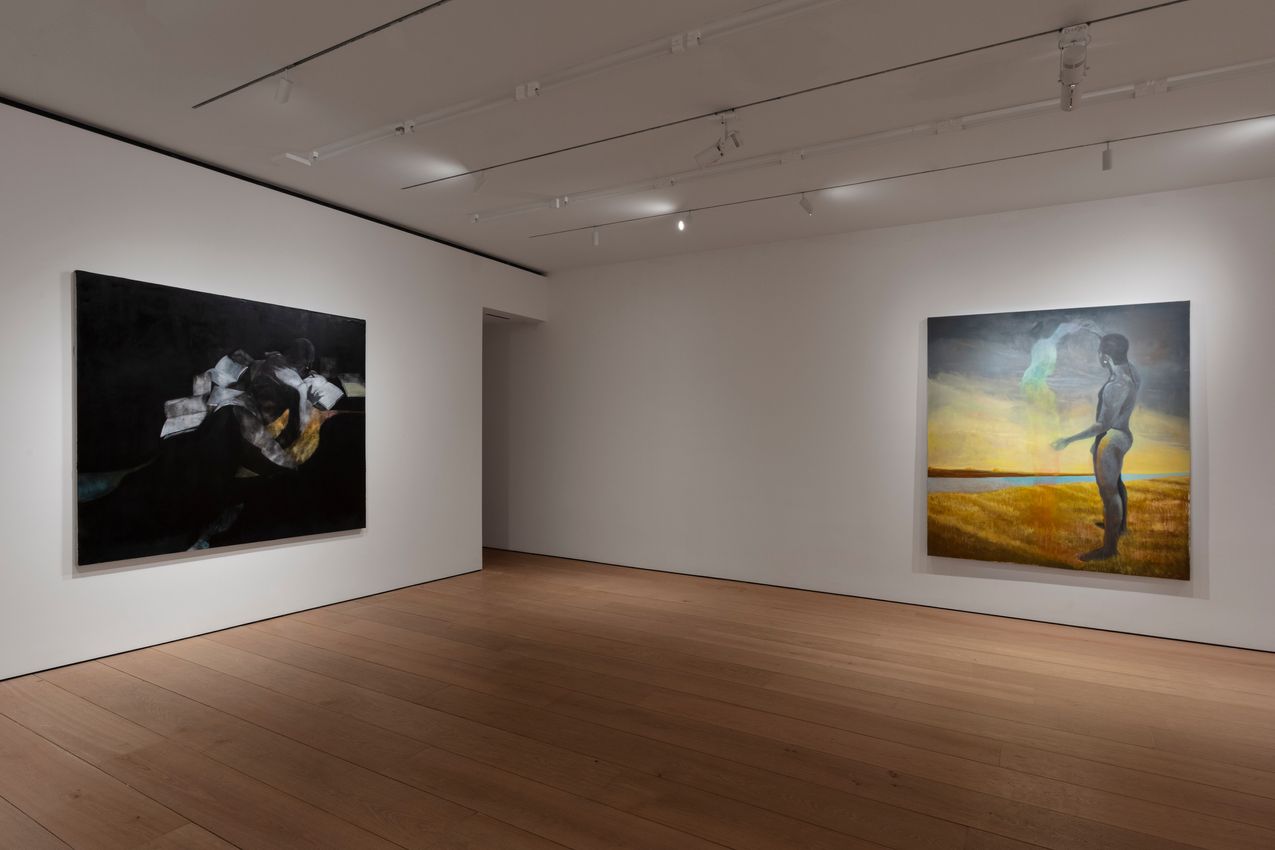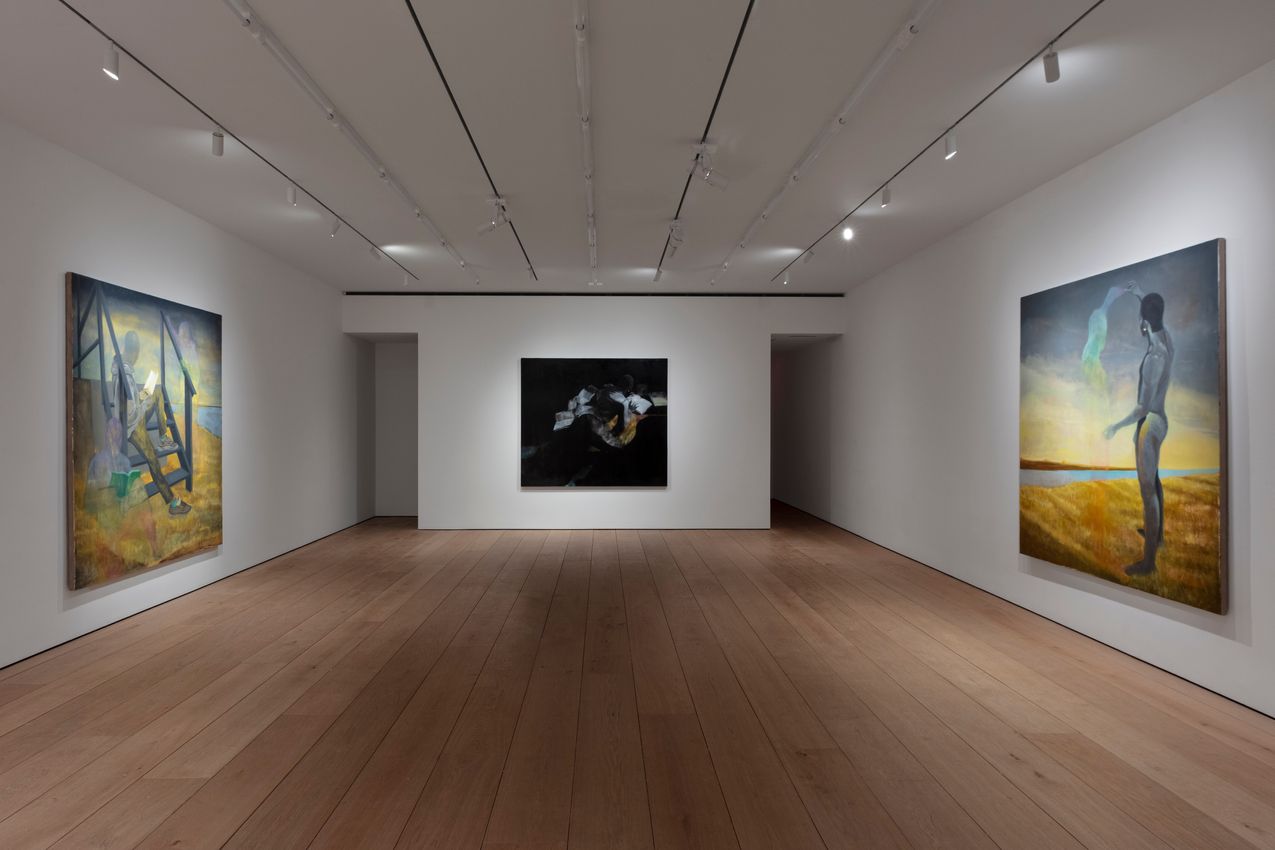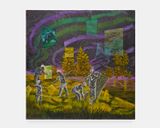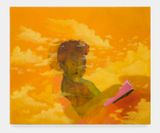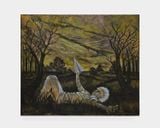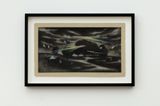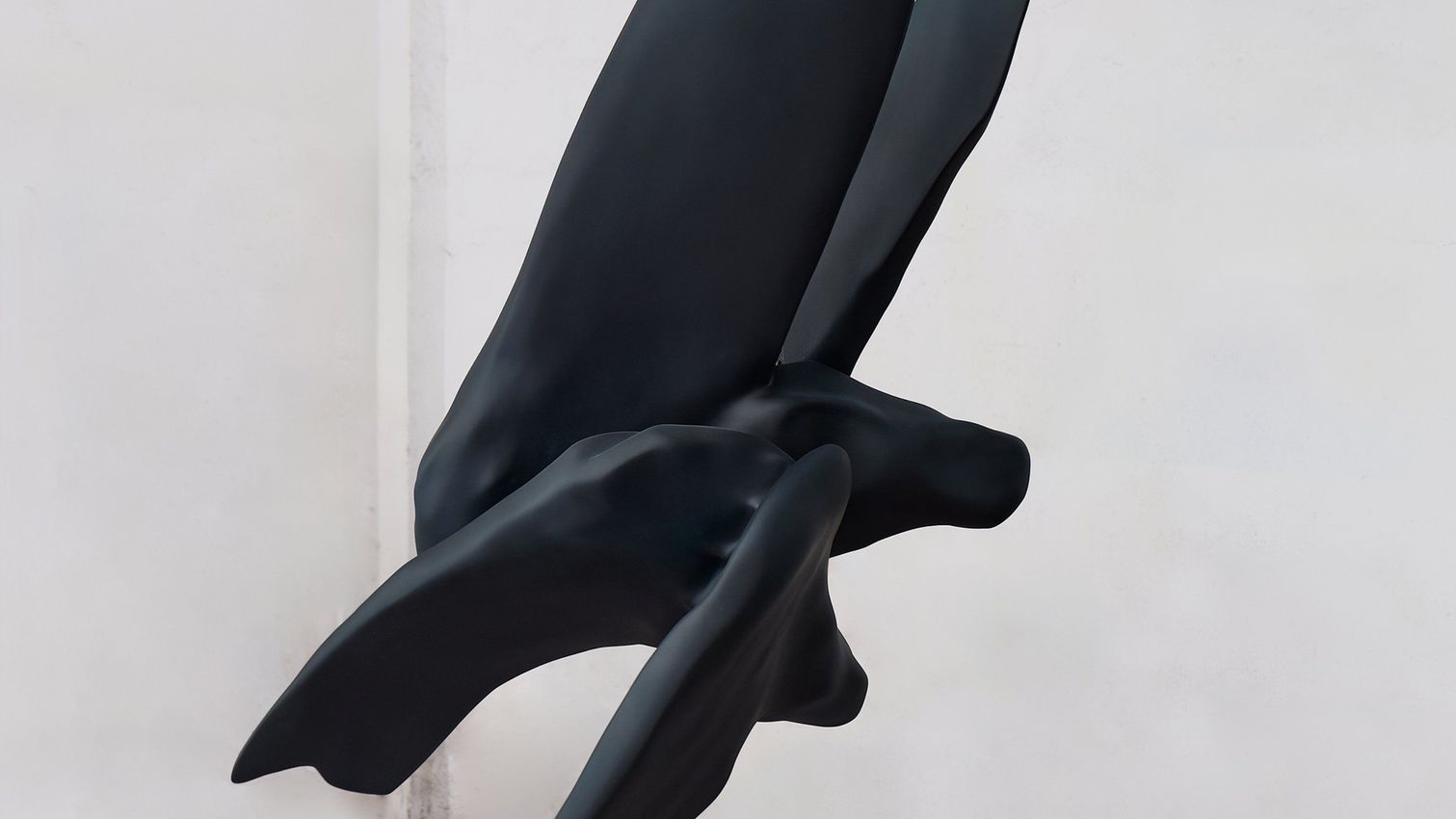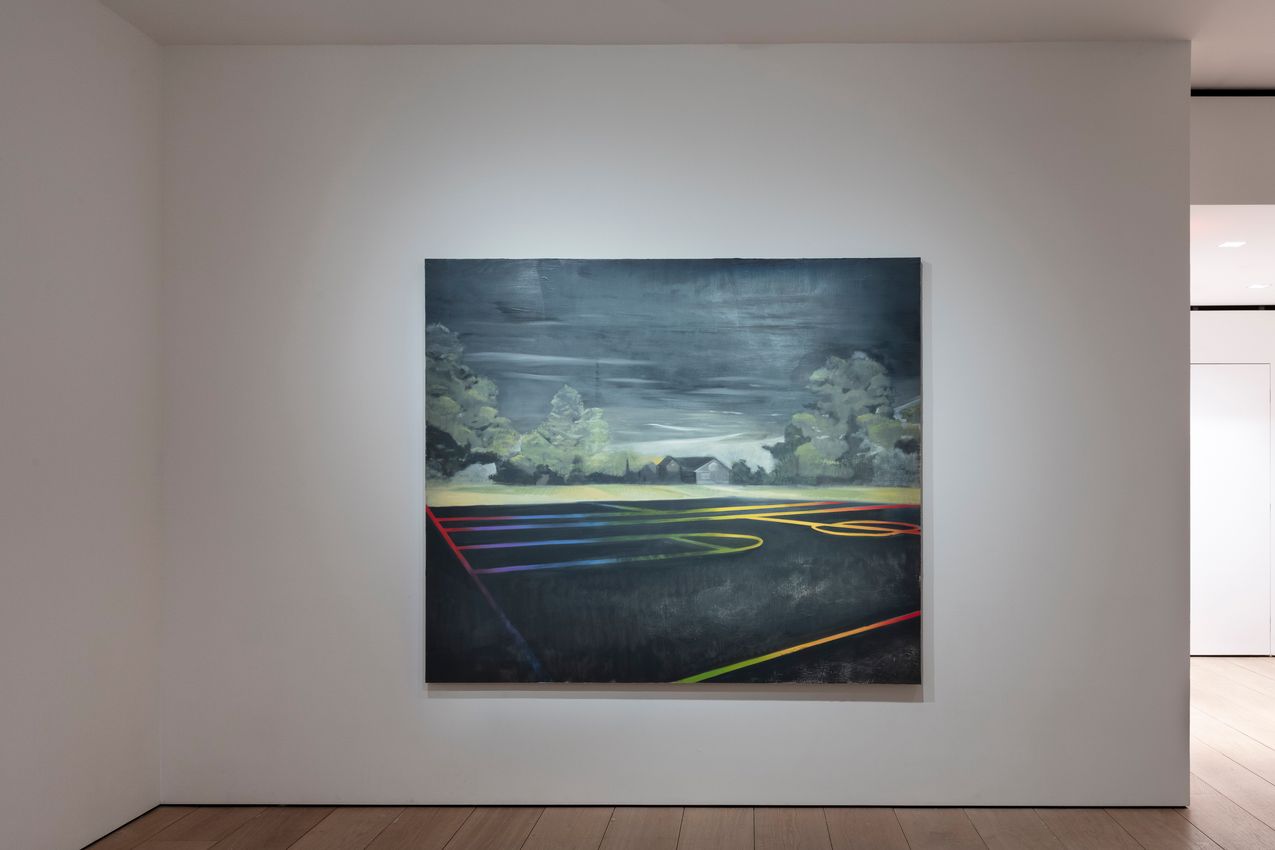
Lehmann Maupin announces Soft Shadows, a focused presentation of new work by artist Dominic Chambers. Born in St. Louis, MO (1993) and currently based in New Haven, CT, Chambers creates vibrant paintings that deftly combine an exploration of the modes, conventions, and traditional themes of art history with contemporary concerns around race and identity. The artist’s most recent bodies of work feature images of friends, family members, and acquaintances engaged in acts of leisure and contemplation, set in vividly coloured environments that border on the ethereal. A writer as well as an artist, Chambers draws inspiration as much from art historical models as from literature–particularly Magical Realism and the writing of W.E.B. Du Bois. Many of his compositions incorporate Fabulist elements, including ghostly silhouettes meant to be stand-ins for the artist, and lush, surreal landscapes that feel at once familiar yet uncanny. Comprised of the artist’s newest paintings, Soft Shadows marks Lehmann Maupin’s first exhibition with Chambers, who joined the gallery’s program in 2021.
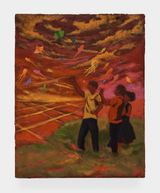
Fundamentally interested in how art can function as a mechanism for understanding, recontextualising, or renegotiating one’s relationship to the world, Chambers sees painting as a critical and intellectual endeavour as much as an aesthetic one. Recent series have focused on representations of Black leisure, with Chambers depicting many of his subjects reading or lost in thought, their gaze fixed far outside the frame. ‘Too often, the Black body has been located in our imaginations as one incapable of rest,’ Chambers explains, “often when we imagine what the Black body is doing it is usually an act of labor, rebellion, or resistance.” In series like After Albers and Primary Magic, Chambers seeks to remove these associations, portraying his figures in moments of reflection or reverie, meditative and serene. Colour, and especially our physical experience of it, also plays a crucial role in Chambers’ work. The artist has described colour as a protagonist in his paintings that is as critical to understanding their meaning as their subject matter. With an eye to the Unione mode of the High Renaissance, Chambers strives to create harmony and balance throughout his compositions while retaining enough tension and interplay between contrasting colours to give each painting a subtle charge.
Best known for his highly saturated canvases imbued with rich tones of blue, green, red, and yellow, Soft Shadows evinces a subtle shift in Chambers’ work. Pulling from personal and imagined narratives, the artist depicts a myriad of activities—from engagement with books to dancing with one’s own shadow—rendered in tones of black, white, and grey, set against bright washes of colour or punctuated by strategic glimmers of prismatic light. Part of his recent Shadow Work series, in these paintings Chambers considers ways in which light and shadow are negotiated both formally and conceptually. Throughout the series he makes overt reference to iconic paintings from across art history, reinvigorating and reinterpreting some of its most famous images with particular attention to the racialised connotations of illumination. Taken together, the Shadow Work paintings represent the most recent development in the artist’s profound interest in the interrogation of art history and his rigorous exploration of colour theory and its relationship to race.
Dominic Chambers (b. 1993 St. Louis, MO; lives and works in New Haven, CT) creates vibrant paintings that simultaneously engage art historical models, such as color-field painting and gestural abstraction, and contemporary concerns around race, identity, and the necessity for leisure and reflection. Interested in how art can function as a mode for understanding, recontextualizing, or renegotiating one’s relationship to the world, the artist sees painting as a critical and intellectual endeavour, as much as an aesthetic one. A writer himself, Chambers draws inspiration from literature, especially Magical Realism and the writing of W.E.B. Du Bois, particularly Du Bois’ The Souls of Black Folk, and one of its central themes―the veil. A product of racial injustice that is a metaphorical lens through which Black bodies are observed and experienced, references to the veil appear throughout the artist’s work, whether in the large swaths of color that obscure the figures in his Wash Paintings series, or in his recurring use of a raindrop motif as both an active and passive element in his paintings. Many of Chambers’ compositions incorporate Fabulist elements, including ghostly silhouettes meant to be stand-ins for the artist and surreal landscapes that feel both familiar yet unplaceable.
Rachel Lehmann and David Maupin founded Lehmann Maupin in 1996. The gallery represents a diverse range of American artists, as well as artists and estates from across Europe, Asia, Africa, South America, and the Middle East. It has been instrumental in introducing numerous artists from around the world in their first New York exhibitions.

A respected voice in contemporary art discourse.
Focusing on ambitious storytelling and insightful art-world commentary. Ocula Magazine publishes in-depth interviews, critical essays and timely analysis on the artists, exhibitions and ideas driving the global art world.
Learn more about Ocula Magazine
Showcasing the best of the art world.
Ocula partners with galleries from around the world to highlight their artists, artworks and exhibitions. Gallery membership is by application and invitation, with each member vetted by an independent panel.
Learn more about Ocula Membership

Specialises in the sale of major artworks.
Led by a team with deep ties to the world’s leading auction houses, galleries and collectors. Ocula’s advisory team offers bespoke services to high-net-worth clients from around the world who are looking to acquire the best of contemporary and modern art.
Learn more about our team and services