Lehmann Maupin presents In the Corner of the Mind, an exhibition of new paintings by Brazilian artistic duo OSGEMEOS (b. São Paulo, Brazil, 1974; live and work in São Paulo, Brazil). In the Corner of the Mind marks the artists’ fifth solo presentation with the gallery. The London show precedes a highly anticipated solo exhibition of the artists’ work opening this fall at Centro de arte contemporáneo de Málaga (CAC Málaga) in Spain.
As OSGEMEOS, twin brothers Gustavo and Otavio Pandolfo are perhaps best known as pioneers of Brazilian public art, with their work often featuring long-limbed yellow characters, vibrant colours, and elaborate patterns. Across their practice, OSGEMEOS have brought their distinctive style to a range of substrates—from building facades to discarded doors, from wood panels to canvas. The duo draws inspiration from a variety of art forms, including graffiti, animation, film, dance, and music, to create complex, highly imaginative works that fuse distinct cultural references and modes of artistic representation. While the artists find inspiration in numerous sources, their distinct visual language is always charged with personal significance, incorporating their family, travels, and their fantasy universe, which they have named ‘Tritez.’ OSGEMEOS’ signature thinly outlined, yellow-hued figures, for example, recall the yellow-tinged light that permeated the artists’ childhood home, while their vast array of signs and symbols are often drawn from their own dreams, which, as twins, they frequently share.
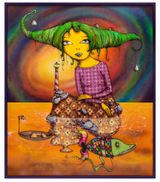
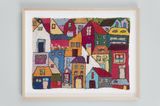
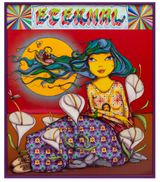
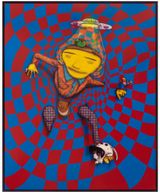
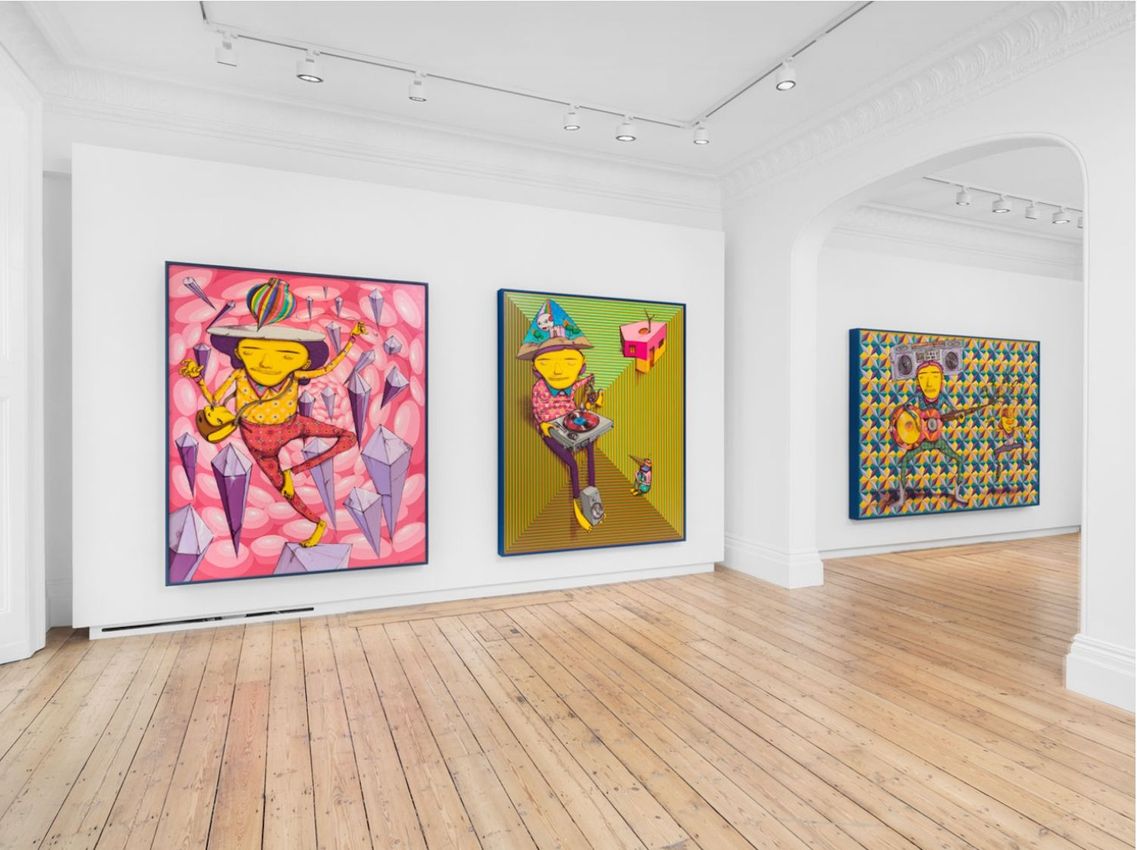
Throughout this new body of work the artists give space and form to their vivid inner worlds, and the works collapse distinctions between body, architecture, sacred geometry, and landscape to create a universe where the self fantastically converges with the wider world. In No canto do pensamento / In the corner of the mind (all works 2022), a head-shaped structure emerges from the landscape to offer shelter to a woman, while in Vagalume / Firefly, the lone figure’s dress doubles as a building, its folds revealing towers and doors. Defying conventions of perspectival space, OSGEMEOS’ works complicate notions of figure and ground; in O canto do pássaro / The bird’s song the central figure’s hat depicts a fantastical landscape, as if another universe is springing forth from the subject’s head. The work’s striped, brightly-coloured background recalls the geometric compositions of Frank Stella or the vibrant surfaces of Op art. Across OSGEMEOS’ patterned surface, the central figure’s limbs cast long shadows, and the artists’ geometric worlds reveal traces of their inhabitants at every turn.
Reflecting the duo’s expertise in a variety of painting techniques and artistic languages, the works in In the Corner of the Mind blend muralism, graffiti, and traditional painting practices to thwart distinctions between interiority and exteriority, figure and ground, and self and world. Representing their dreamlike universe, OSGEMEOS consider space an expansive term that simultaneously encompasses both the public sphere and inner fantasy.
OSGEMEOS (b. 1974, São Paulo, Brazil; live and work in São Paulo), translated as ‘the twins’ in Portuguese, is a collaborative art duo comprised of twin brothers Gustavo and Otavio Pandolfo. As children, the brothers developed a distinct way of playing and communicating through artistic language, but it was with the invasion of hip-hop, and the explosion of Brazilian culture during the 1980s that OSGEMEOS began to use art as a way of sharing their dynamic and magical universe with the public. Combining traditional, folkloric, and contemporary elements of Brazilian culture with graffiti, hip-hop, music, dreams and international youth culture, the artists have created an expansive body of work that includes murals, paintings, sculpture, site-specific installations, and video. They use a symbolic visual language often inspired by their dreams that, as twins, they claim to share. In addition to the use of bright colours and elaborate patterns, they are best known for their paintings that feature long-limbed yellow-skinned figures with thin outlines, enlarged faces, and simplified features. The yellow skin colour indicates a universal figure, rather than a direct reference to a specific race or culture, which reflects the highly diverse population of Brazil and the world. The use of doors, canvas and mirrors, both literal—painting directly on discarded doors and incorporating reflective surfaces into their works—and as motifs, signal access to another realm or an entry point to the psyche, pulling viewers into their surreal and chimerical world.


Rachel Lehmann and David Maupin founded Lehmann Maupin in 1996. The gallery represents a diverse range of American artists, as well as artists and estates from across Europe, Asia, Africa, South America, and the Middle East. It has been instrumental in introducing numerous artists from around the world in their first New York exhibitions.
A respected voice in contemporary art discourse.
Focusing on ambitious storytelling and insightful art-world commentary. Ocula Magazine publishes in-depth interviews, critical essays and timely analysis on the artists, exhibitions and ideas driving the global art world.
Learn more about Ocula Magazine
Showcasing the best of the art world.
Ocula partners with galleries from around the world to highlight their artists, artworks and exhibitions. Gallery membership is by application and invitation, with each member vetted by an independent panel.
Learn more about Ocula Membership

Specialises in the sale of major artworks.
Led by a team with deep ties to the world’s leading auction houses, galleries and collectors. Ocula’s advisory team offers bespoke services to high-net-worth clients from around the world who are looking to acquire the best of contemporary and modern art.
Learn more about our team and services