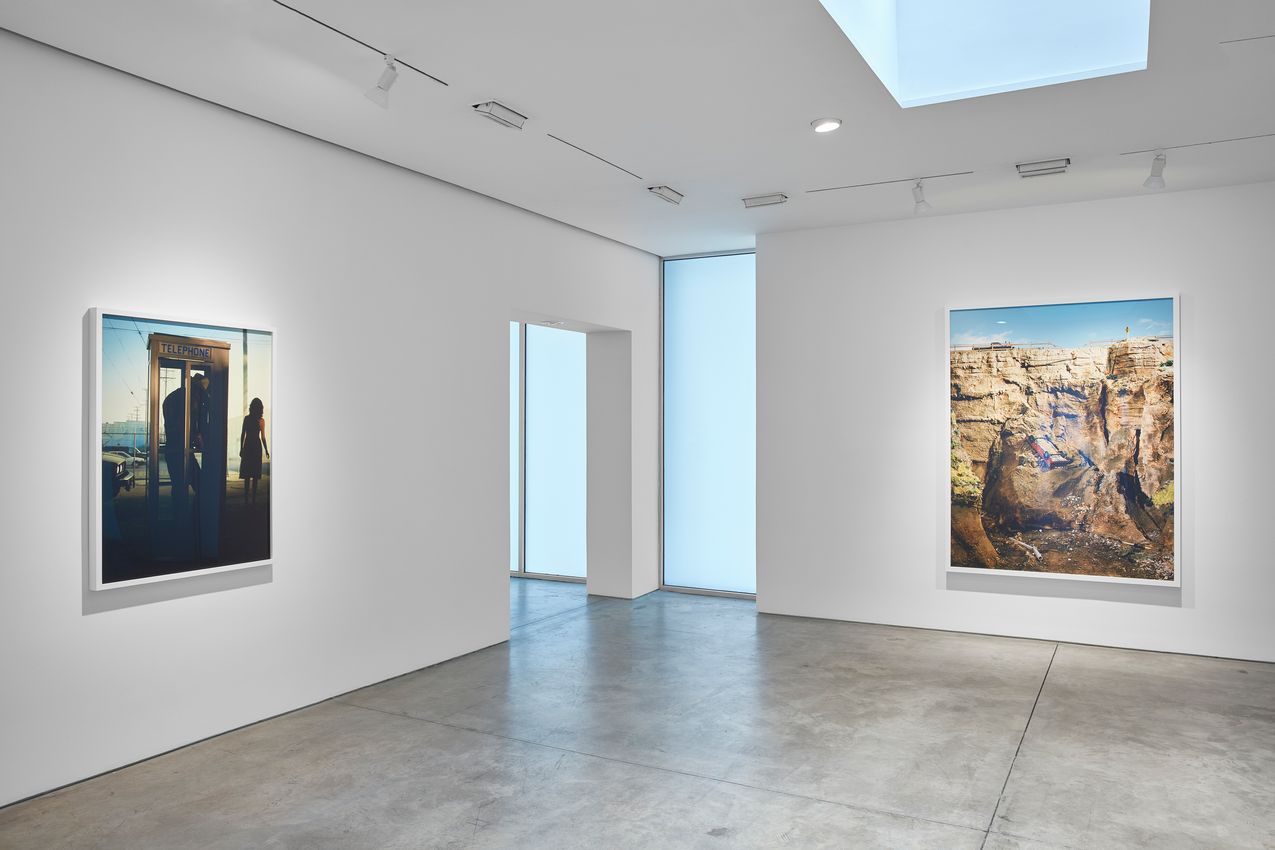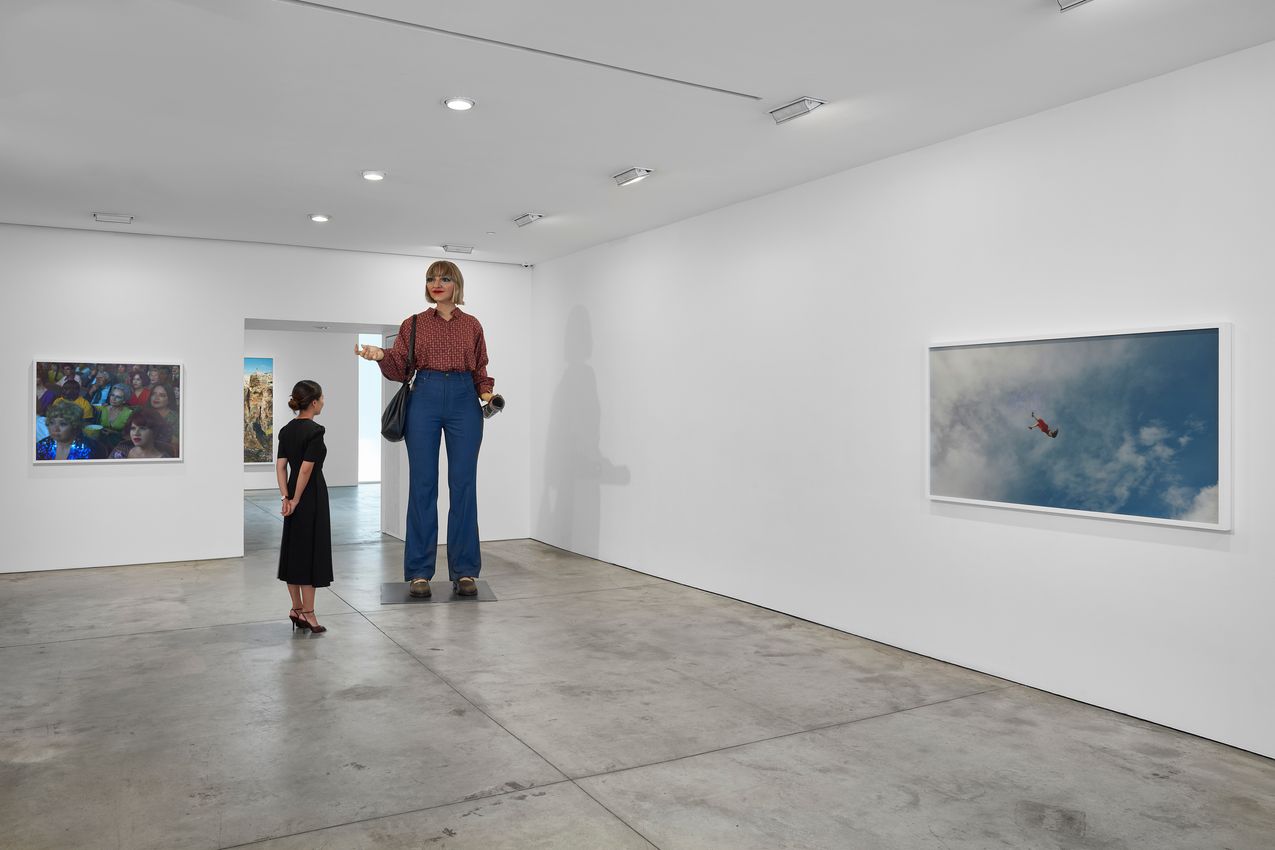
Lehmann Maupin is pleased to announce an exhibition of new work, including a new film, Play The Wind (2019; 8 minutes), by Alex Prager. Well established for her genre-defying approach to image making that timelessly combines eras, cultural references, and personal experiences, the photographs and the film debuted in this exhibition are a fresh reflection on Prager’s place of origin, site of inspiration, and frequent character—the city of Los Angeles. The world premiere of Play The Wind on Thursday, September 5, will include an opening reception for the artist at 536 West 22nd Street.
Prager’s contemporary take on the modernist tradition of anthropomorphising a city, from Henri de Toulouse-Lautrec’s Paris, to James Joyce’s Dublin, to Keith Haring’s New York City, arises from the artist’s recent professional and personal transformation. Having passed a major career milestone—the publishing of her first monograph, Silver Lake Drive (2018, Chronicle Books), and a mid-career retrospective of the same title—Prager spent time reflecting on her beginnings as a photographer and her transition to film directing. In addition, the birth of her first child in the city where she too was born and has lived most of her life contributed to an uncanny nostalgia for the artist that psychologically pulled her into the past while simultaneously beckoning her toward the future. Creating a film that could contain these seemingly contradictory impulses became the impetus for this new body of work.
In Prager’s newest film, Play the Wind, we are led on a journey throughout Los Angeles with our protagonists Dimitri Chamblas (dean of the Sharon Disney Lund School of Dance at the California Institute of the Arts) and Riley Keough (American Honey and The Girlfriend Experience). Depicted from the vantage point of driving in the city, Prager cultivates a surreal sentiment of passing moments that feel like a fabricated memory or a dream. She utilises this sensation of motion throughout the film as a narrative device, with her command of film directing, honed over eight films including the Emmy Award winning Touch of Evil (2011), now contributing a new sense of movement also evident in the accompanying still photographs. She anchors her characteristically elaborate fictional scenes within the real Los Angeles, shooting for the first time in many years primarily on location rather than in the studio—a decision that harkens back to when Prager began her career over a decade ago. Though the images contain large constructed set pieces and are populated with carefully cast extras (numbering up to 300), the presence of the Los Angeles streets infuses an element of urban lifeblood that is palpable in the work. Prager’s perception of Los Angeles is one of the artifice and drama befitting Hollywood, with real world chaos that overflows into sci-fi dystopia and post-apocalyptic dread. She toys with these visions of the city disseminated on film, TV, and within the popular imagination, which inform our characterisation of a place as much as our own memories.
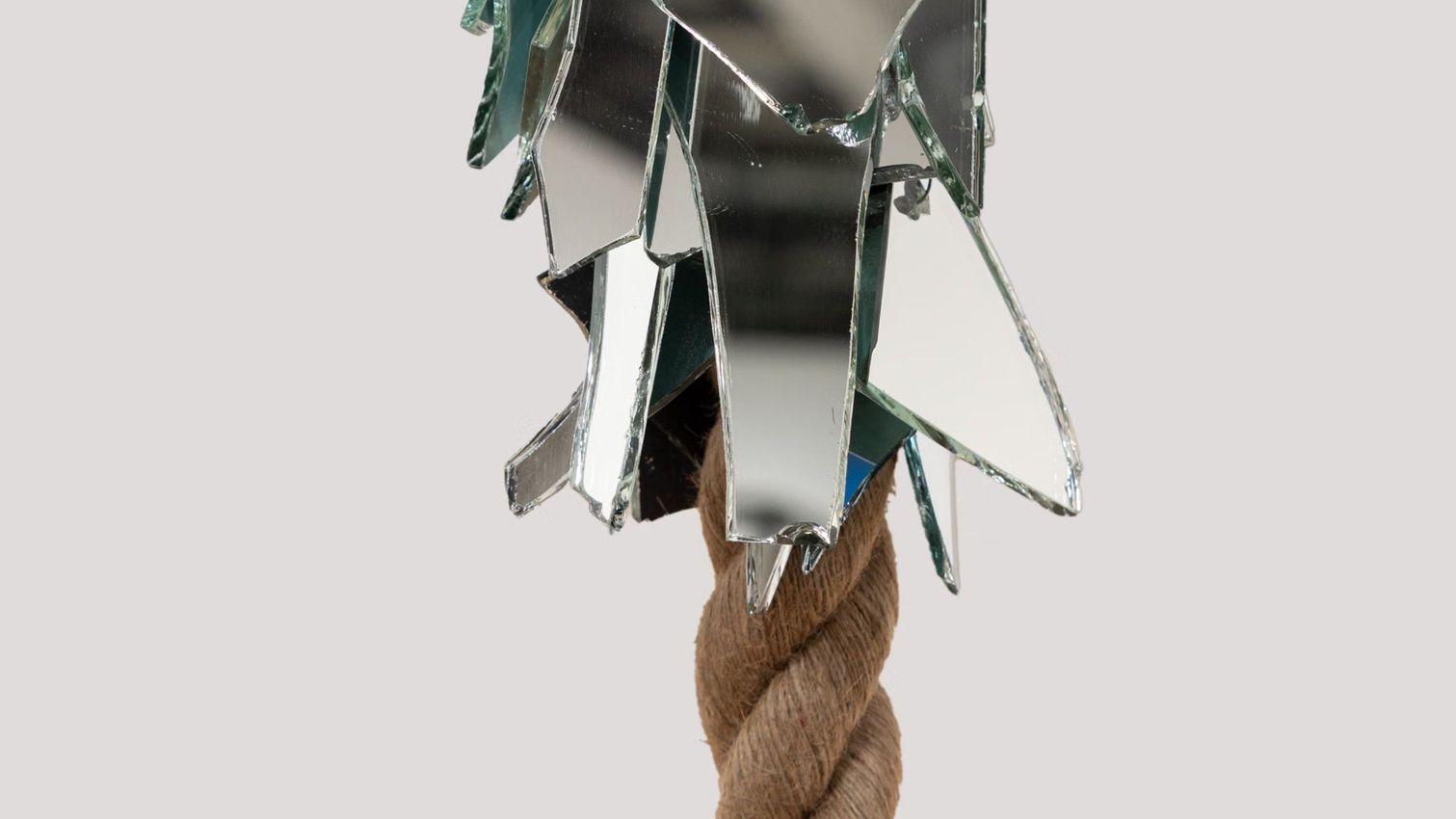
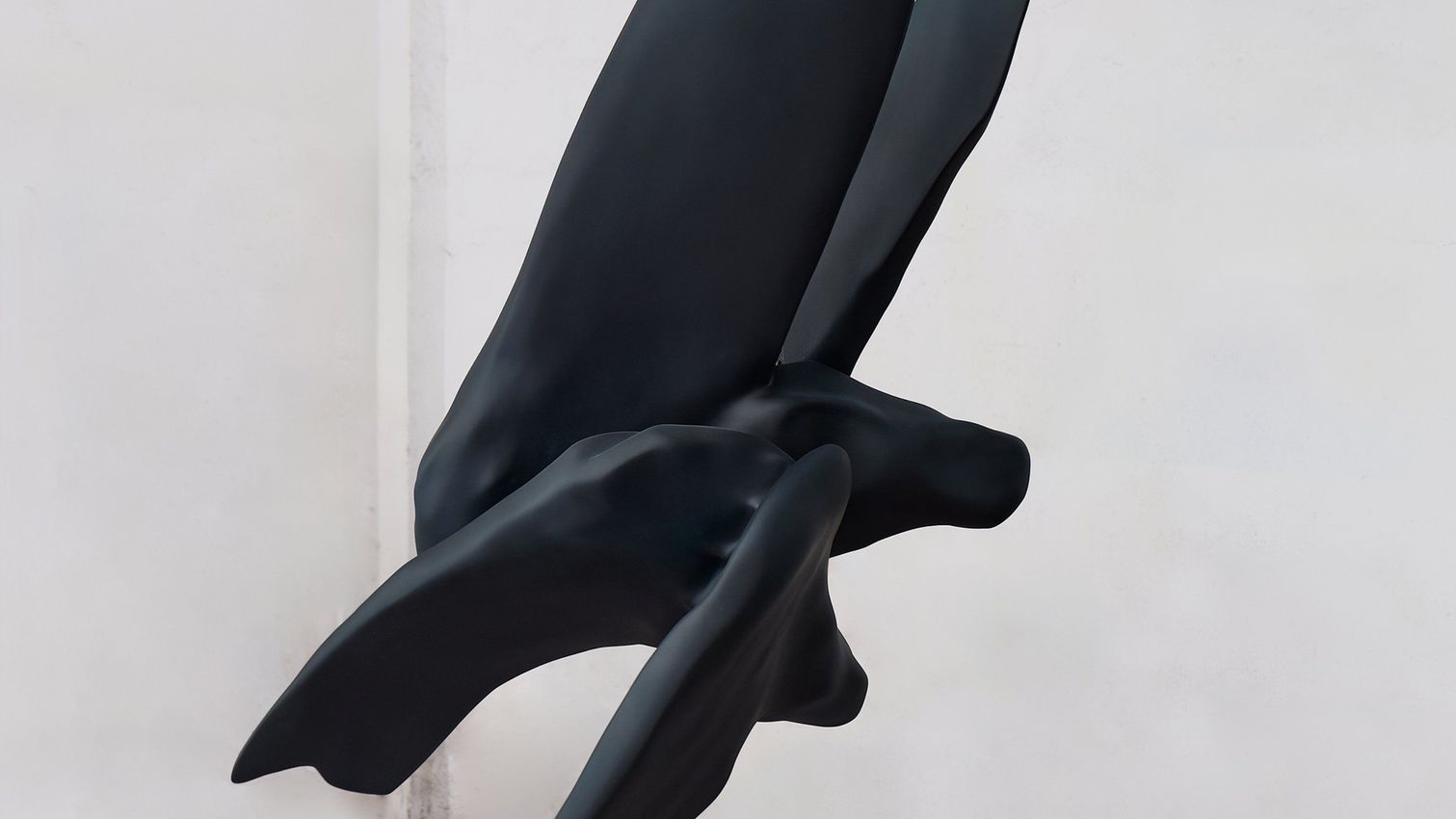
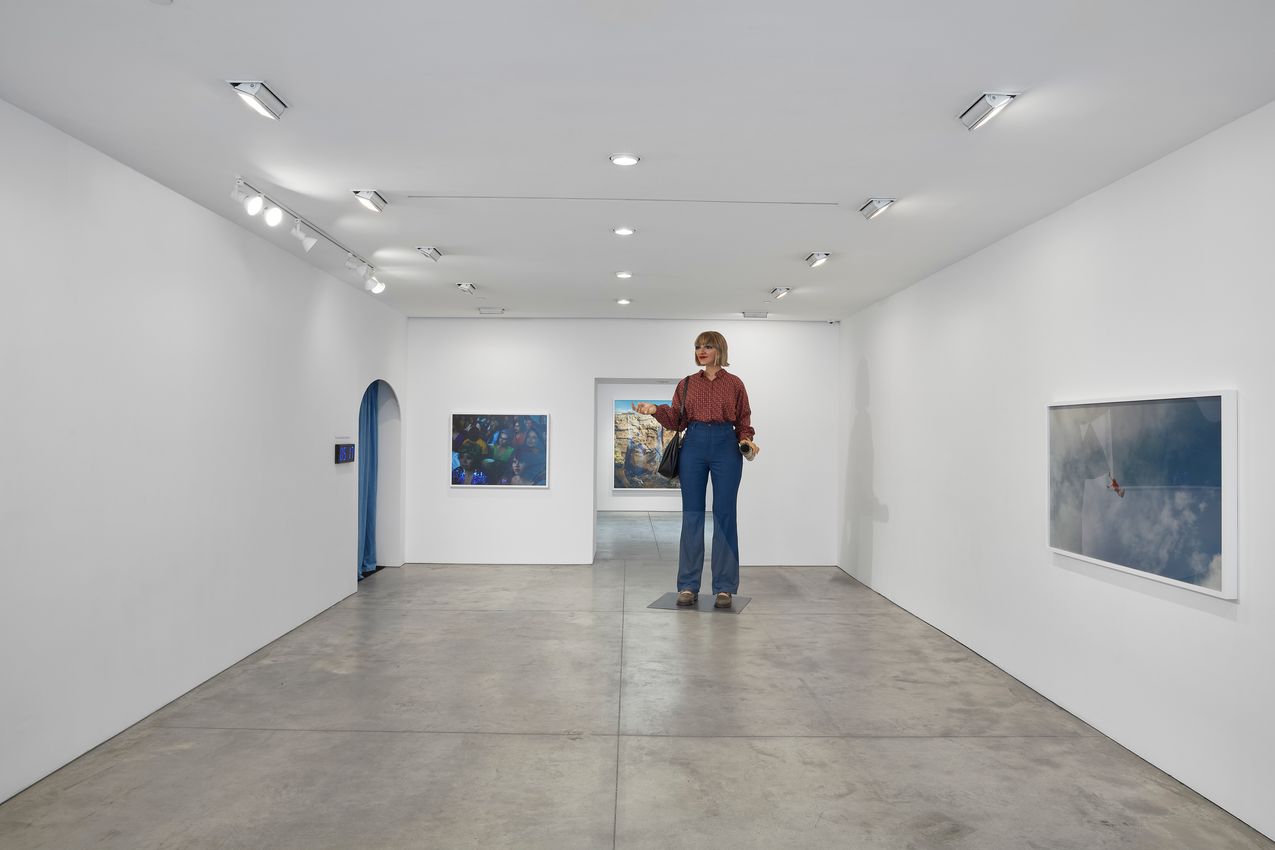
Technically important to the making of this film was Prager’s collaboration with a team to produce set designs and props that would add a layer of artifice and duplicity to her real-world locations. The interference of these traditional illusionary effects upon the actual Los Angeles streets and locations Prager shot on creates an unnerving sensation, hinting at the reality that might exist just outside of our perception. All of these elements are recast in the series of photographs, which appear in different configurations or on various scales that further destabilise any linear narrative. Drawing on the concept of a distorted memory, Prager has found ways to incorporate objects seen in the photographs and film into the gallery as sculpture, with the intent to further dislodge our understanding of place and time and bring us deeper into her highly constructed world.
Connoisseurs of Prager’s work will likely spot the references to her past series, such as the noir themed Compulsion (2012), or the archetypical ingénue of The Big Valley (2008). This self-referencing becomes yet another layering device, mixing Prager’s career-spanning themes and the greater art historical genres from which they are drawn to create work both entirely new, yet seemingly familiar. Prager’s incorporation of her past into her present work serves as a reminder that while the past may not be returned to, it does remain with us, appearing in surprising, sometimes unsettling ways.
Major support for Play The Wind is provided by Arts & Sciences and Dropbox.
Alex Prager (b. 1979, Los Angeles, lives and works in Los Angeles) has had solo exhibitions organised at FOAM Photography Museum, Amsterdam, Netherlands (2019); Museum of Multimedia, Moscow, Russia (2019); The Photographers’ Gallery, London, United Kingdom (2018); Musée des Beaux-Arts, Le Locle, Switzerland (2018); Des Moines Art Center, IA (2017—2018); Saint Louis Art Museum, MO (2015); Galerie des Galeries, Paris, France (2015); Goss Michael Foundation, Dallas, TX (2015); National Gallery of Victoria, Melbourne, Australia (2014); Corcoran Gallery of Art, Washington, D.C. (2013); SCAD Museum of Art, Savannah, GA (2013); and the FOAM Photography Museum, Amsterdam, Netherlands (2012). Select group exhibitions featuring her work include Telling Tales: Contemporary Narrative Photography, McNay Art Museum, San Antonio, TX (2016—2014); Open Rhapsody, Beirut Exhibition Center, Lebanon (2015); The Noir Effect, Skirball Cultural Center, Los Angeles (2014); No Fashion, Please: Photography Between Gender and Lifestyle, Kunsthalle Wien, Vienna (2011); and New Photography, The Museum of Modern Art, New York (2010). Her work is in numerous international public and private collections, including the Museum of Modern Art, New York; Whitney Museum of American Art, New York; Los Angeles County Museum of Art; San Francisco Museum of Modern Art; Queensland Gallery of Modern Art, Brisbane; Kunsthaus Zurich, Switzerland; and Moderna Museet, Stockholm, Sweden.
Prager has received numerous awards, including the FOAM Paul Huf Award (2012), the Vevey International Photography Award (2009), and the London Photographic Award (2006). Her editorial work has been featured in prominent publications, including Vogue, New York Magazine, and W Magazine, and her film series Touch of Evil, commissioned by The New York Times Magazine, won a 2012 Emmy award. Her first major public commission, Applause, for Times Square Arts: Midnight Moment, New York, took place in summer 2017.
Alex Prager (b. 1979, Los Angeles; lives and works in Los Angeles) is a photographer and filmmaker who creates elaborately staged scenes that draw inspiration from a wide range of influences and references, including Hollywood cinema, experimental films, popular culture, and street photography. She deliberately casts and stages all of her works, merging past and contemporary sources to create a sense of ambiguity. Her familiar yet uncanny images depict worlds that synthesise fiction and reality. Each photograph captures a moment frozen in time, inviting the viewer to ‘complete the story’ and speculate about the narrative context. Prager’s work often makes the viewer aware of the voyeuristic nature of photography and film, establishing the uneasy feeling of intruding upon a potentially private moment. In her images of both crowds and individuals, she examines conflicting emotions of claustrophobia and isolation, revealing an ominous and perpetual anxiety. The highly choreographed nature of her photographs and films exposes the way images are constructed and consumed in our media-saturated society. This puts her work in direct conversation with artists engaged in the tradition of staged photography, such as Cindy Sherman, Gregory Crewdson, and Thomas Demand.
Rachel Lehmann and David Maupin founded Lehmann Maupin in 1996. The gallery represents a diverse range of American artists, as well as artists and estates from across Europe, Asia, Africa, South America, and the Middle East. It has been instrumental in introducing numerous artists from around the world in their first New York exhibitions.

A respected voice in contemporary art discourse.
Focusing on ambitious storytelling and insightful art-world commentary. Ocula Magazine publishes in-depth interviews, critical essays and timely analysis on the artists, exhibitions and ideas driving the global art world.
Learn more about Ocula Magazine
Showcasing the best of the art world.
Ocula partners with galleries from around the world to highlight their artists, artworks and exhibitions. Gallery membership is by application and invitation, with each member vetted by an independent panel.
Learn more about Ocula Membership

Specialises in the sale of major artworks.
Led by a team with deep ties to the world’s leading auction houses, galleries and collectors. Ocula’s advisory team offers bespoke services to high-net-worth clients from around the world who are looking to acquire the best of contemporary and modern art.
Learn more about our team and services