Press Release

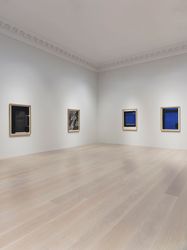
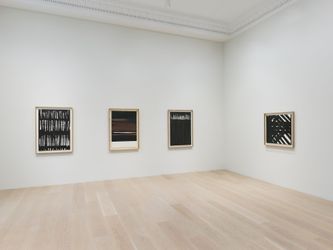
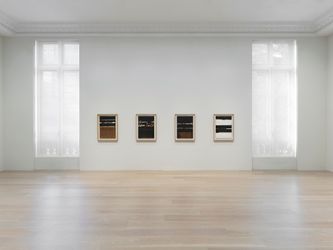
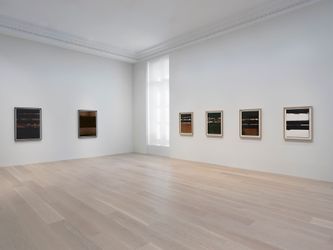
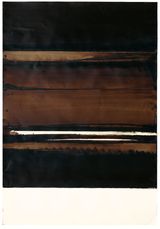
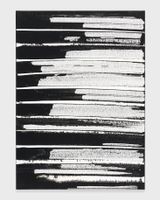
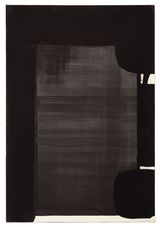
New York—Lévy Gorvy Dayan is pleased to announce Pierre Soulages: Paintings on Paper, which will feature more than twenty of the French artist’s works on paper, the majority of which have never been exhibited before. We are honoured to collaborate on this presentation with the artist’s widow, Colette Soulages, to reveal the importance of the medium to Pierre Soulages’s groundbreaking oeuvre. Paintings on Paper marks the sixth solo exhibition of Soulages’s work presented by Dominique Lévy during her decades-long relationship with the artist and his estate. The medium of paper is foundational to Soulages’s artistic practice, dating back to the mid-1940s. Paper was his first support, and he evolved his body of paintings on paper alongside and independently of his canvases; the paper works often anticipated developments he would bring to his oil compositions. Arguably, the artist’s works on paper are the purest form of his painterly expression. Rendered in walnut stain, gouache, and ink, they express his unconstrained creativity. Unlike his canvases, Soulages did not need to determine the format of his paintings on paper in advance and wait for a stretcher to be prepared. Instead, on the paper support, he could immediately capture his, in his words, “inner imperative”. Further, Soulages gravitated to the swift rhythm of working on paper; the fluidity of his pigments and the absorptive nature of his support required rapid decision-making and denied opportunities for changes or corrections.

Importantly, as Pierre Encrevé, the author of Soulages’s catalogue raisonné, notes, the artist’s paintings on paper are autonomous and do not constitute studies for the canvases. He states, “Paper never functions as the place for making sketches that the canvas might then lead to completion; rather, it is a specific creative territory where freedom to experiment authorises what sometimes appears, after the event, as genuine prefigurations of what the painter did on canvas only later.” He continues, “For Soulages, there has never been a hierarchy between works on canvas and works on paper.”

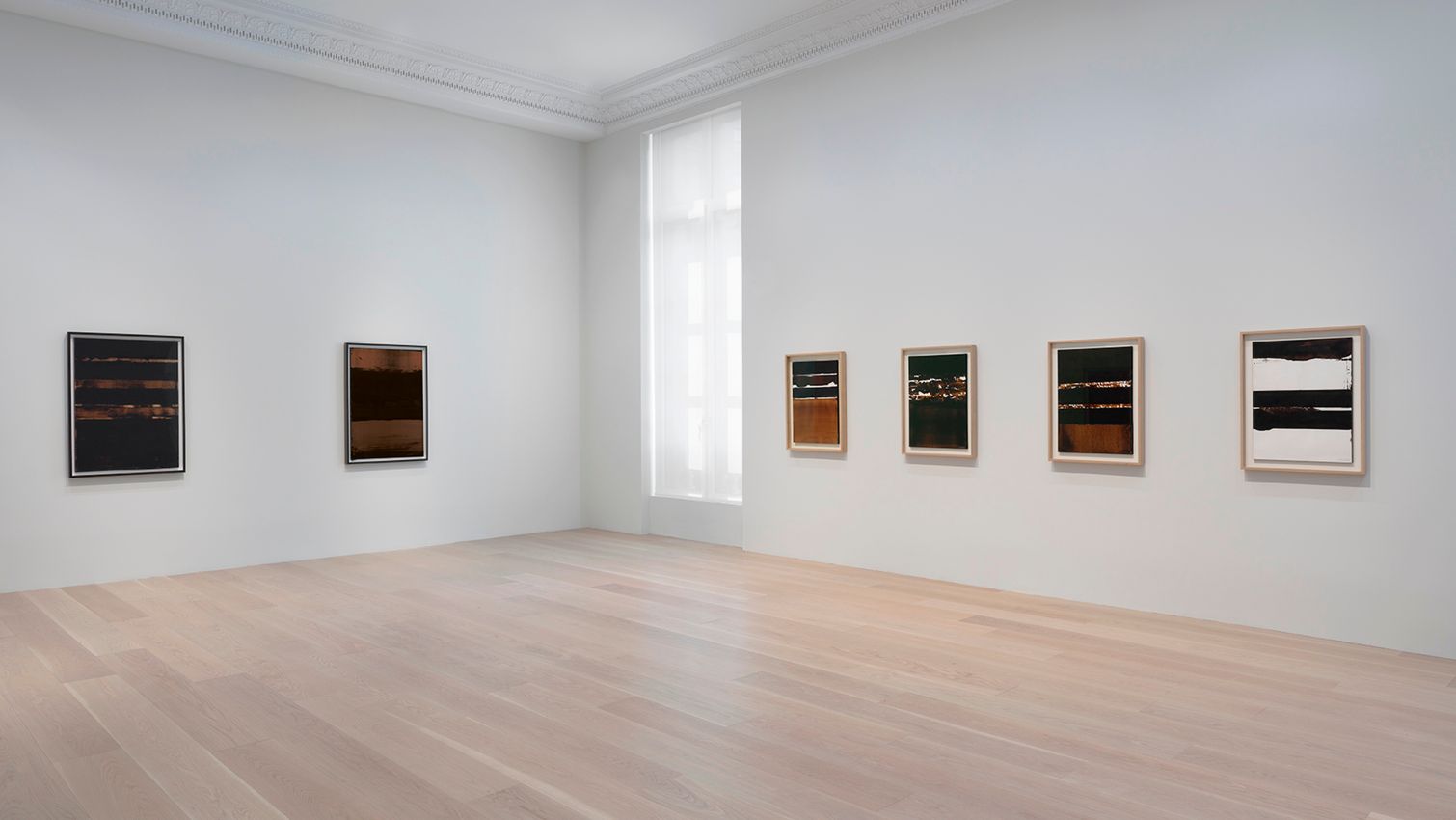
The earliest innovations that would determine the rest of Soulages’s storied career catalysed on paper in 1947. Breaking with the figurative and colourful neo-Fauvist paintings of the School of Paris that were widely exhibited at the time, Soulages turned to walnut stain (brou de noix) on paper to create striking abstract compositions. He reflected, “It was with the walnut stain paintings that I was able to get myself together and obey a kind of inner imperative. The truth is that I felt restricted by oils. I’d used them before the war, and I knew what the constraints were. One day, in a burst of impatience and temper, I grabbed some walnut stain and some housepainter’s brushes and unleashed myself on paper.” Traditionally used by artisans to dye wood, walnut stain represented a utilitarian, everyday material that the artist could control by way of concentrating or diluting the walnut powder. Its malleable fluidity and depth of hue—ranging from brown to black—created layered effects of transparency and opacity, especially when combined with the absorptive properties of paper.

Soulages sought similar flexible densities in his subsequent paintings on paper utilising ink and gouache. These pigments allowed him to work with luminosity in different ways than in oil and acrylic on canvas. Across his paintings on paper, the white of the paper constitutes a compositional form. In these works, he seeks, as he described, an “[emerging] relationship with the ground: a painterly light sparked by contrast or the picture’s reflection of light.” Expanding his use of unconventional materials, Soulages took up scrapers, blades, sponges, and other tools of his own invention. He explained, “Not wanting to be tricked by the tools that were on offer and that didn’t suit me, because they were made for a kind of painting with a practice and an ideology that didn’t suit me, I made my own tools.” Soulages advanced his artistic experimentations with light on paper until 2004, creating a body of work featuring active and involved surfaces marked by an interplay of bold, saturated strokes and those seemingly illuminated in their transparency. While exhibited throughout the artist’s career, Soulages’s paintings on paper have been the subject of increased study, most recently through the donation of over one-hundred works in 2014 to the Musée Soulages, Rodez, France; a large-scale focused exhibition at the Musée du Luxembourg, Paris, from 2025 to 2026; and a forthcoming catalogue raisonné that will accompany that of the works on canvas.

Courtesy Lévy Gorvy Dayan.

Read More

Installation Views

Exhibition view: Pierre Soulages, Paintings on Paper, Lévy Gorvy Dayan, New York (17 September–17 October 2026). Courtesy Lévy Gorvy Dayan.
Exhibition view: Pierre Soulages, Paintings on Paper, Lévy Gorvy Dayan, New York (17 September–24 October 2026). Courtesy Lévy Gorvy Dayan.
About the Artist

Known as ‘the painter of black and light,’ Pierre Soulages has forged a career remarkable not only for its rigorous invention, but for its longevity. Since the postwar period, the artist has worked predominantly with the colour black, creating canvases which might recall nocturnal landscapes or charred earth. Rather than adhering to such movements as Abstract Expressionism, tachism, and Informel, Soulages contextualises his paintings in terms of vitalism, classicism, and prehistoric forms. Since 1979, he has pursued his series Outrenoir, whose title is a portmanteau Soulages defines as ‘beyond black.’ With these scraped and slicked tar–like surfaces, he transforms the spatial and temporal dimensions of painting.

View Artist Profile

Also Exhibiting at Lévy Gorvy Dayan

About the Gallery

Helmed by Dominique Lévy, Brett Gorvy, and Amalia Dayan, Lévy Gorvy Dayan collaborates with artists, estates, non-profit organizations, foundations, museums, and private collections to increase the visibility of twentieth- and twenty-first century works and artists—realizing seminal projects and furthering legacies. In forming Lévy Gorvy Dayan, the partners merge their respective specialties across twentieth- and twenty-first century art, their reputations as leaders and tastemakers, and their respective backgrounds in the primary and secondary markets. Lévy Gorvy Dayan provides opportunities for education, exposure, and access to acquiring exceptional art through its museum-quality exhibition program and thoughtful participation in international art fairs. Expanding, refining, and enhancing world-class modern and contemporary art collections, the gallery emphasizes connoisseurship and curation in its collection development, estate planning, and art appraisal services. Both international and local in practice and perspective, Lévy Gorvy Dayan has unique spaces and unmatched market knowledge in New York, London, and Hong Kong, in addition to representation in Geneva, Milan, Paris, Shanghai, Singapore, and Taiwan.

View Gallery Profile
Address
19 East 64th Street
New York
United States
Opening Hours
Tuesday – Saturday
10am – 6pm
(1)
New York 19 East 64th Street
Lévy Gorvy Dayan
19 East 64th Street, New York, United States

Opening hours
Tuesday – Saturday
10am – 6pm
The art world in focus