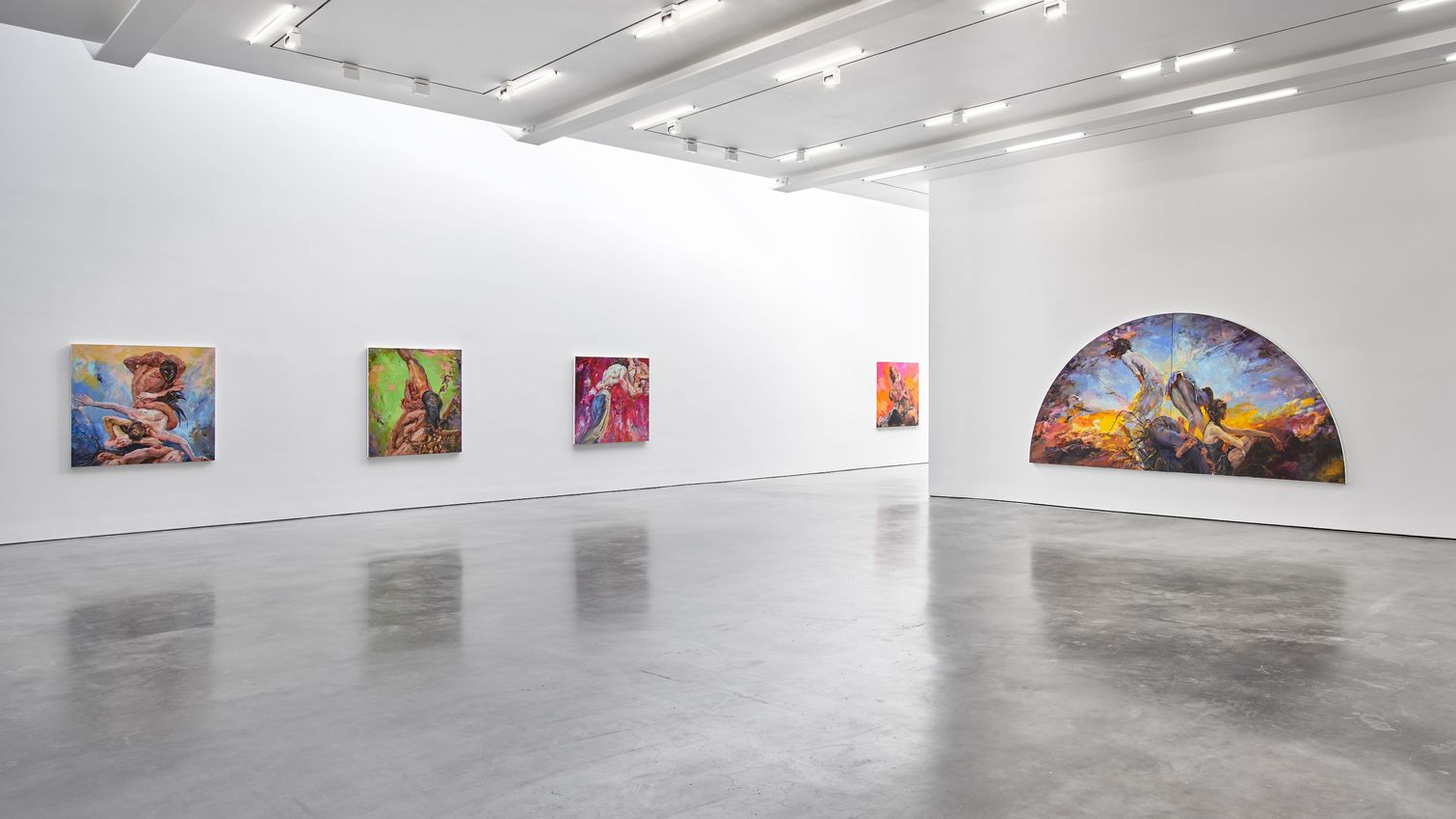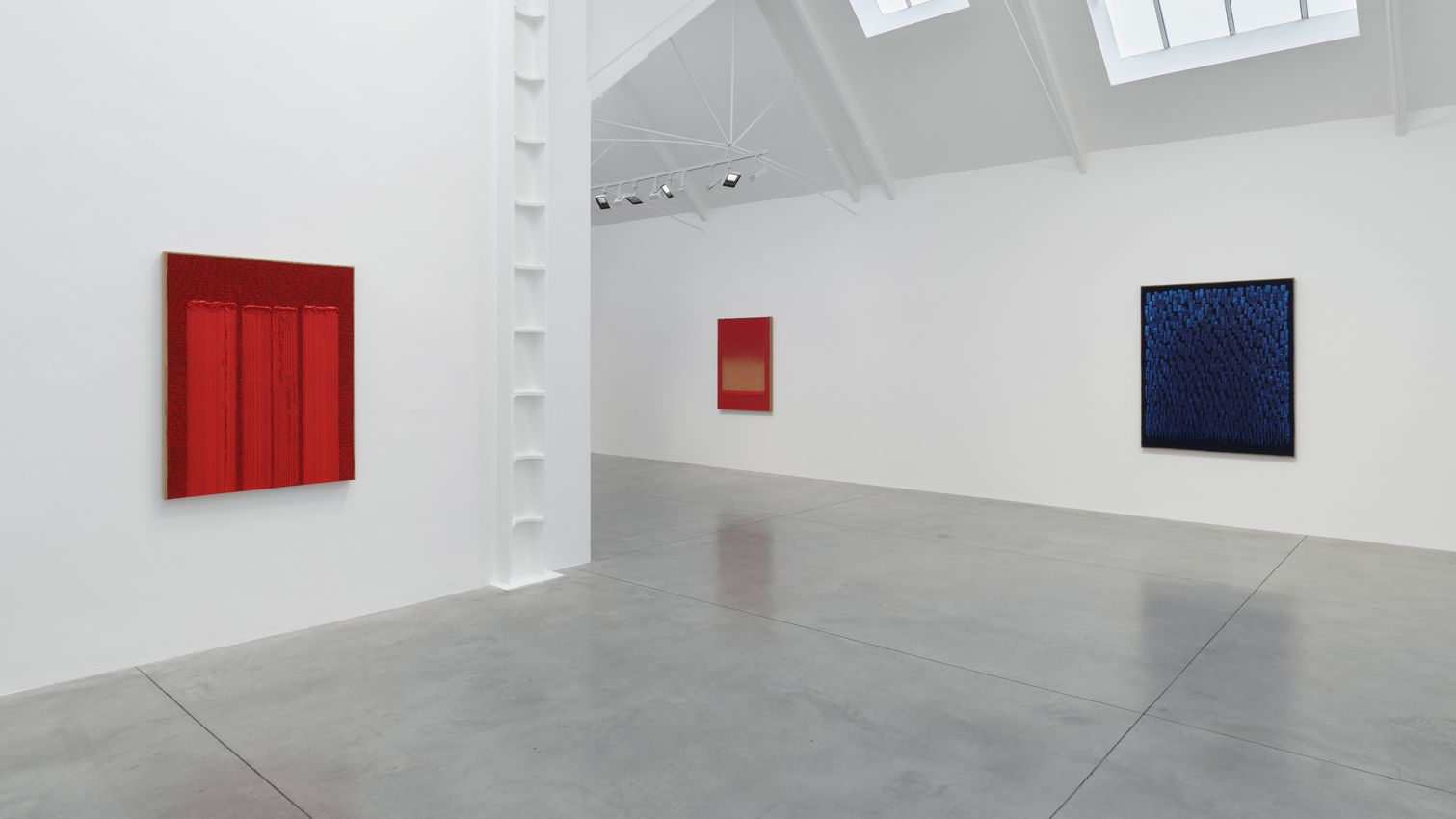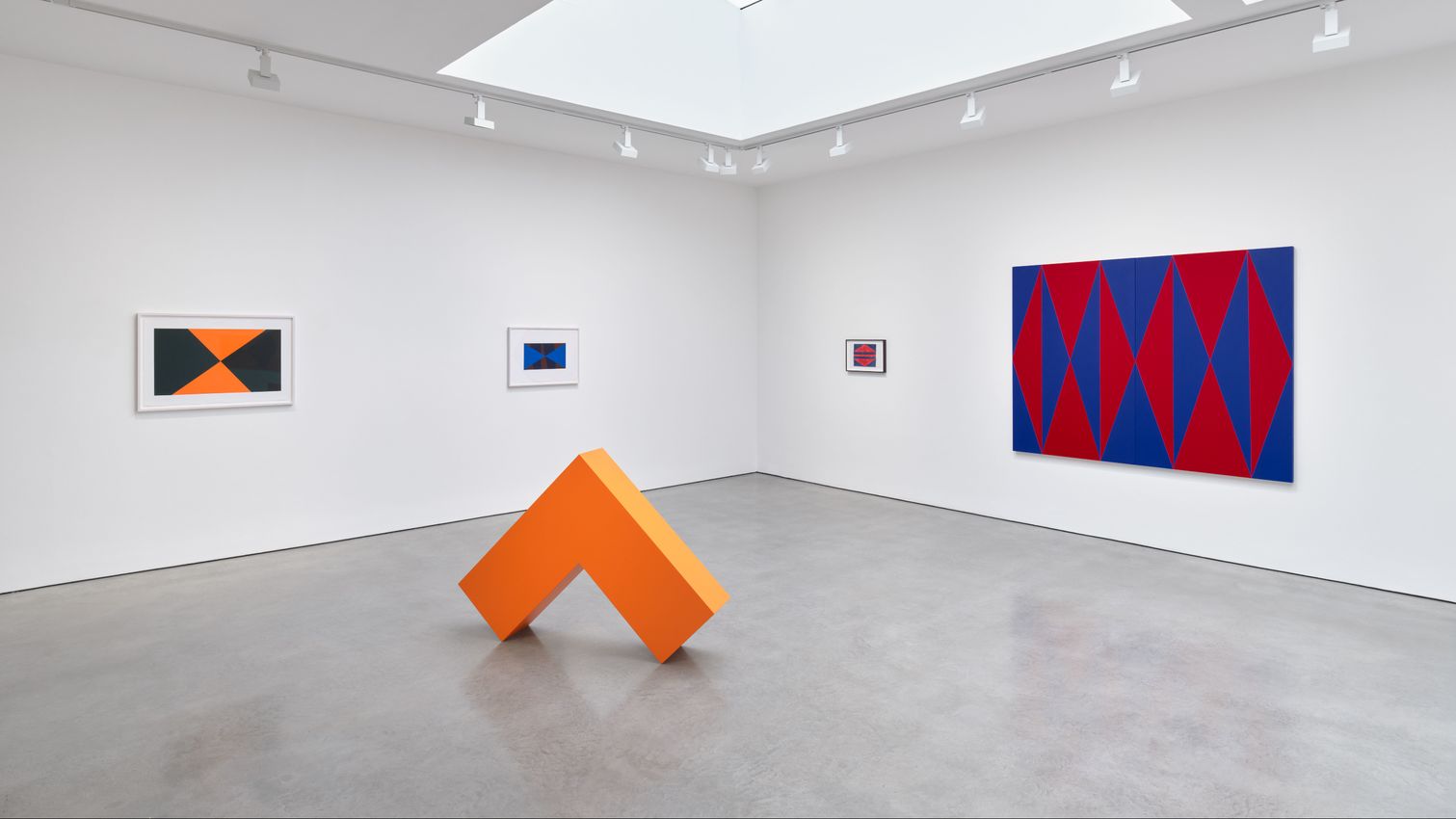
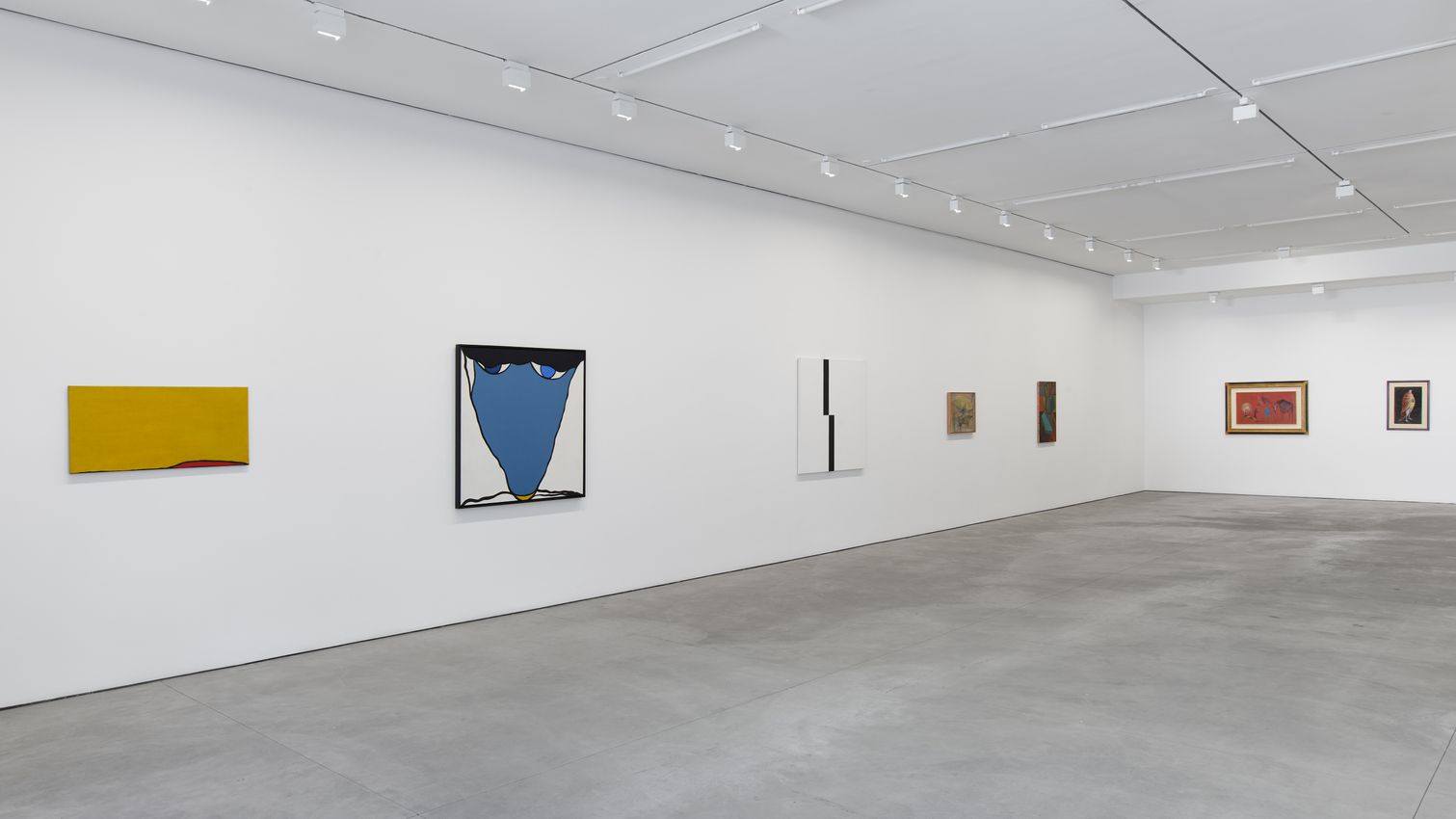
Inspired by Carmen Herrera’s peripatetic existence between Havana, New York and Paris and her subsequent shifts in style, this show centers on a wider, interconnected group of twentieth-century artists who moved to spend formative time within new communities of artists and writers in Mexico City, São Paulo, London and elsewhere. Following patterns of diaspora triggered by repression, conflict, curiosity and adventure, this exhibition includes works made by seven artists – Huguette Caland, Chen Kong Fang, Carmen Herrera, Wifredo Lam, Hélio Oiticica, Alice Rahon and Mira Schendel – during and after World War II, each charting a new geographic or formal horizon. The show weaves in and out of movements such as Surrealism, Neo-Concretism and Existentialism, in order to trace the artistic diversions and cross-cultural exchanges that each adopted country and each migration had on the evolution of their practices.
A never-before-seen painting by Carmen Herrera, Early Figure Female (1941, pictured below), serves as a point of departure. Leaving behind Cuba’s brutal revolution on her journey towards geometric abstraction, she took in the influences of early Abstract Expressionism and Tachism for Lignes Guides #30 (1951), while meeting and forming a relationship with another globetrotting compatriot, Wifredo Lam. His own mission led him from mid-century paintings featuring ‘diabolical’ animals to his characteristic fragmented humans that challenged the hegemony of Western Modernism by way of his Afro-Caribbean and Latin American heritage. Commenting on Lam’s colonial legacy, Claude Cernuschi wrote: “as languages migrated, myths migrated along with them.”
Similarly rooted in travel as a source of mythical narratives, Leonora Carrington’s Brothers (1953) – painted a decade after she emigrated to Mexico – shows the bond between her young sons through hieroglyphic pairs of Egyptian jackals and bird-like creatures. She reached her mature fusions of man and beast in portrayals of former lover Max Ernst as a nightingale, as in Señor Ruiz el Ruiseñor (1967). In the aftermath of trips across the Pacific Northwest, Carrington’s contemporary, the French Surrealist poet Alice Rahon, also introduced local visual cultures and Indigenous mythologies to her work, infused as it was previously with homages to modern figures, notably Paul Klee. Migration as a catalyst for personal liberation can likewise be seen after Huguette Caland’s relocation from Beirut to Paris, where she developed a newly sensual language of painting, heralding her Bribes de corps series from 1970.
The work of three artists who found or left Brazil against their will – Chen Kong Fang, Mira Schendel, and Hélio Oiticica – sheds further light on the transformative power of displacement, presenting it as an impetus towards artistic synthesis and freer expression. Fang demonstrates a unique fusion of European still life with his training under a Japanese émigré teacher, while retaining a connection to the philosophies of his Chinese upbringing. Schendel’s early figuration drew on Morandi and metaphysics, before she entered into a dialogue with Brazilian artists and thinkers who led her to experiment with cryptic letterforms and broken language on Japanese rice paper.
A peer of Schendel, Oiticica found Brazil’s political climate restrictive, choosing self-imposed exile in London and New York to move beyond his early geometric abstractions, as seen in Pintura H (1956–57), towards more immersive, participatory forms of expression. This is exemplified in the 1972 Parangolé, a wearable cape activated through audience interaction, which he made once he reached America and began the deconstruction of the man, the myth and his own Tropicália movement.
Courtesy Lisson Gallery.


A respected voice in contemporary art discourse.
Focusing on ambitious storytelling and insightful art-world commentary. Ocula Magazine publishes in-depth interviews, critical essays and timely analysis on the artists, exhibitions and ideas driving the global art world.
Learn more about Ocula Magazine
Showcasing the best of the art world.
Ocula partners with galleries from around the world to highlight their artists, artworks and exhibitions. Gallery membership is by application and invitation, with each member vetted by an independent panel.
Learn more about Ocula Membership

Specialises in the sale of major artworks.
Led by a team with deep ties to the world’s leading auction houses, galleries and collectors. Ocula’s advisory team offers bespoke services to high-net-worth clients from around the world who are looking to acquire the best of contemporary and modern art.
Learn more about our team and services