He’s a sentimental silviculturalist. He’s a traditionalist. He’s a significant shade-bearing tree but he’s generous to younger artists. He’s a soft touch. He’s a wit, but he’s not trying to be funny. He’s sick, but he doesn’t know it yet. He dreams of being twenty-seven metres tall and hung from the ceiling, but he’s rooted. He’s well aware of what keeps him upside-down at night, ‘before the brain gets it right’, he’s branching out but misses the band, misses using his hands, he’s reliably uncertain, occasionally diffident, he flinches from being called obstreperous, but leans into sneaky, sessile, generous, emblematic. - Max Porter, Trees, 2025
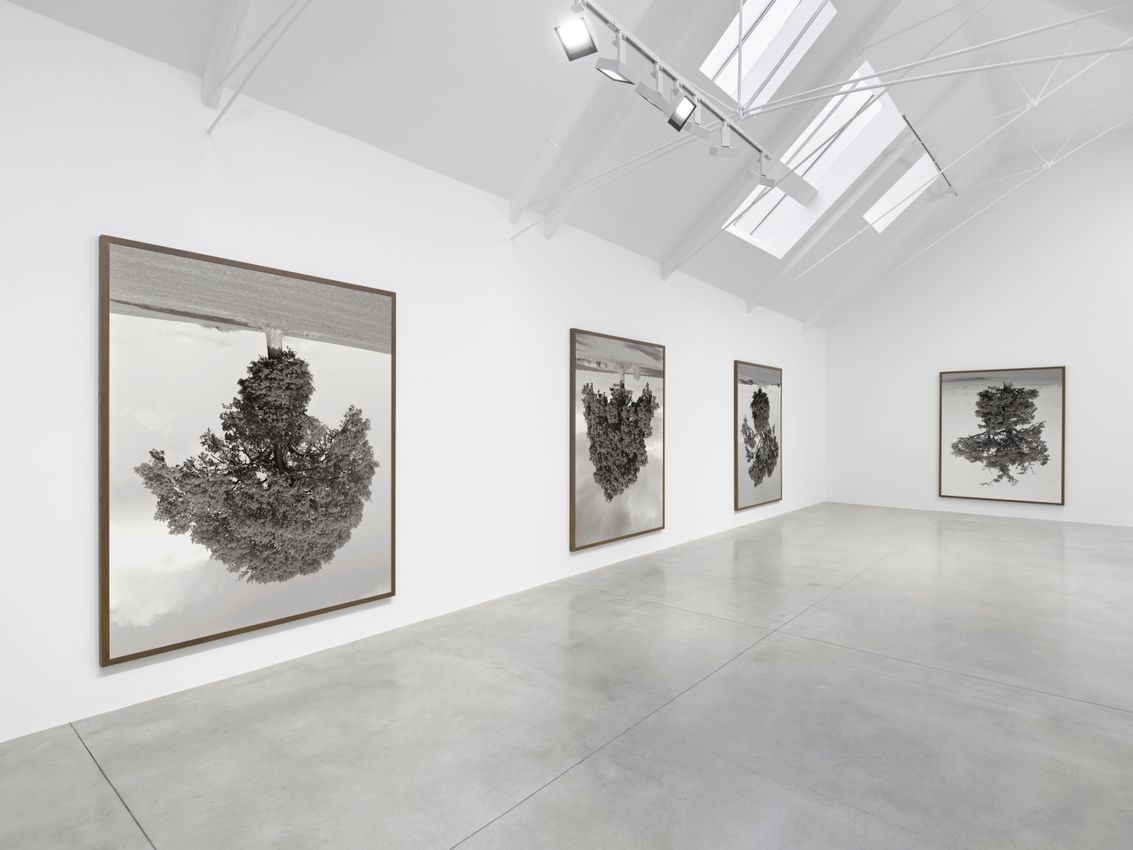
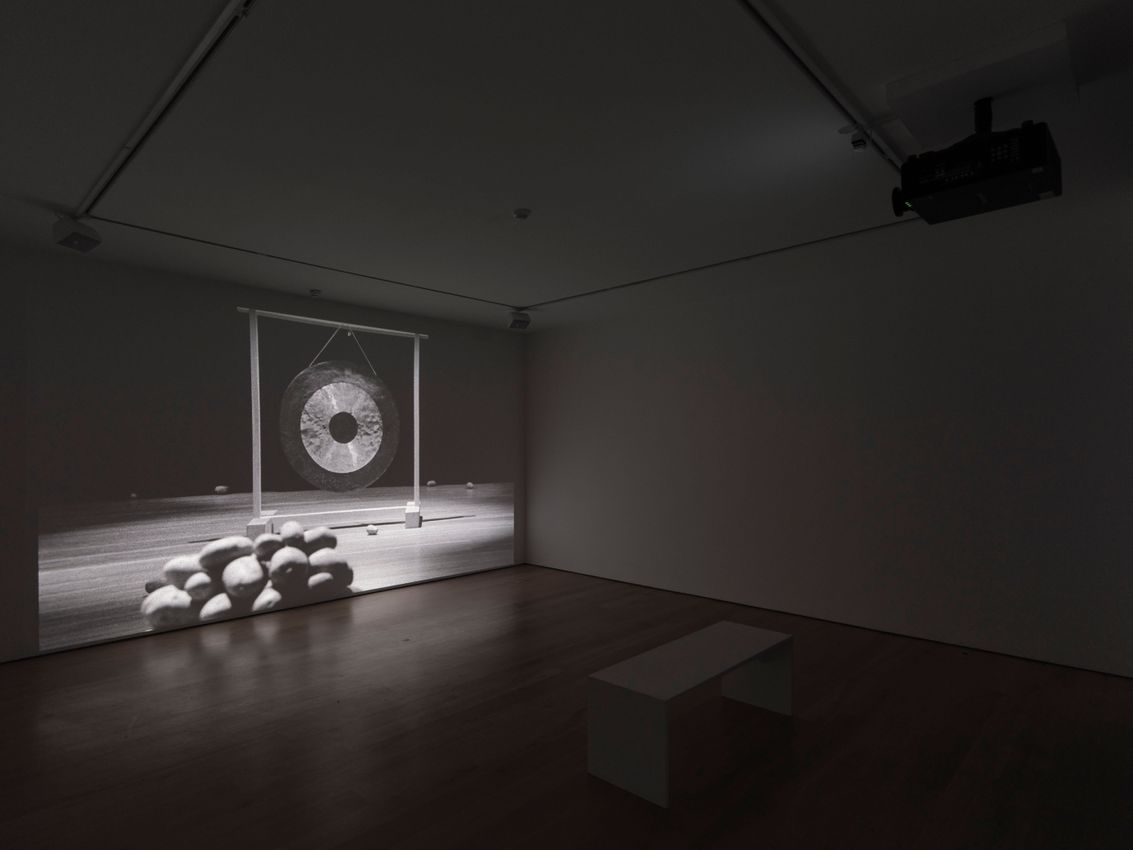
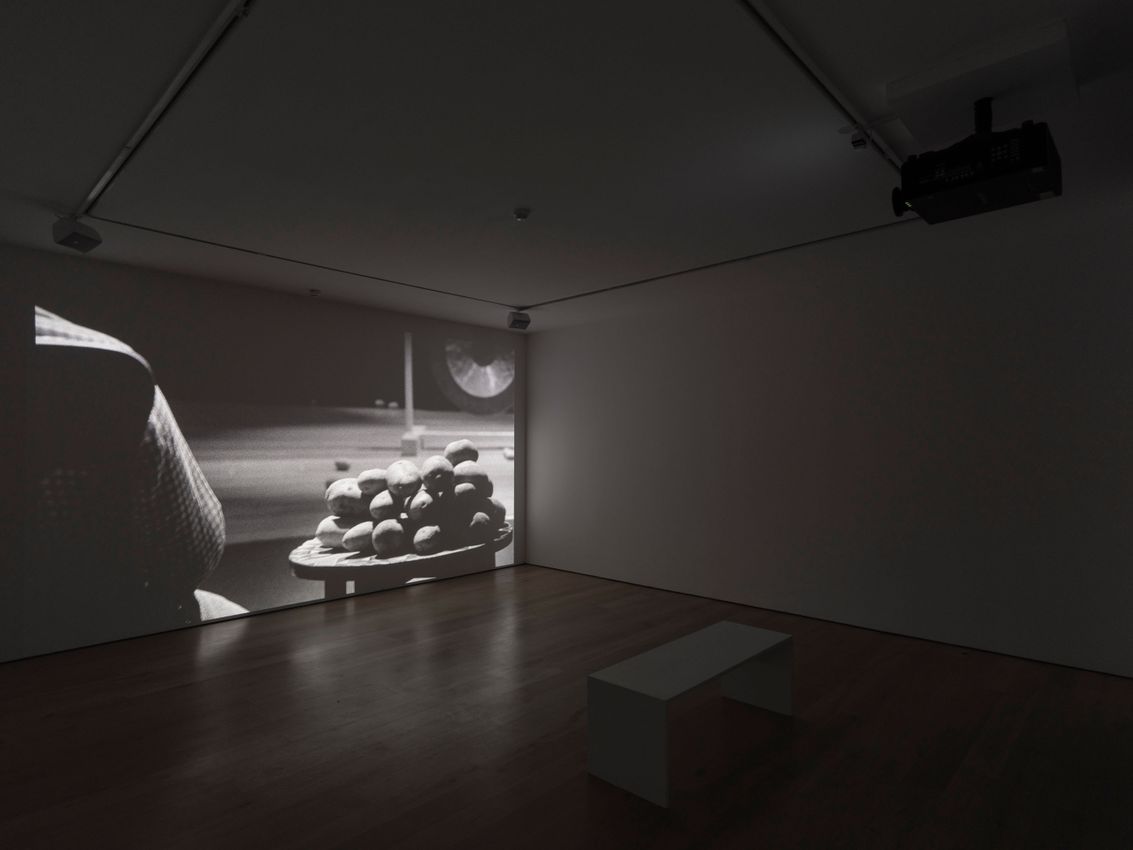
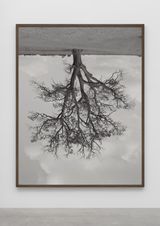
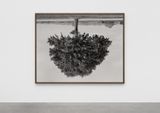
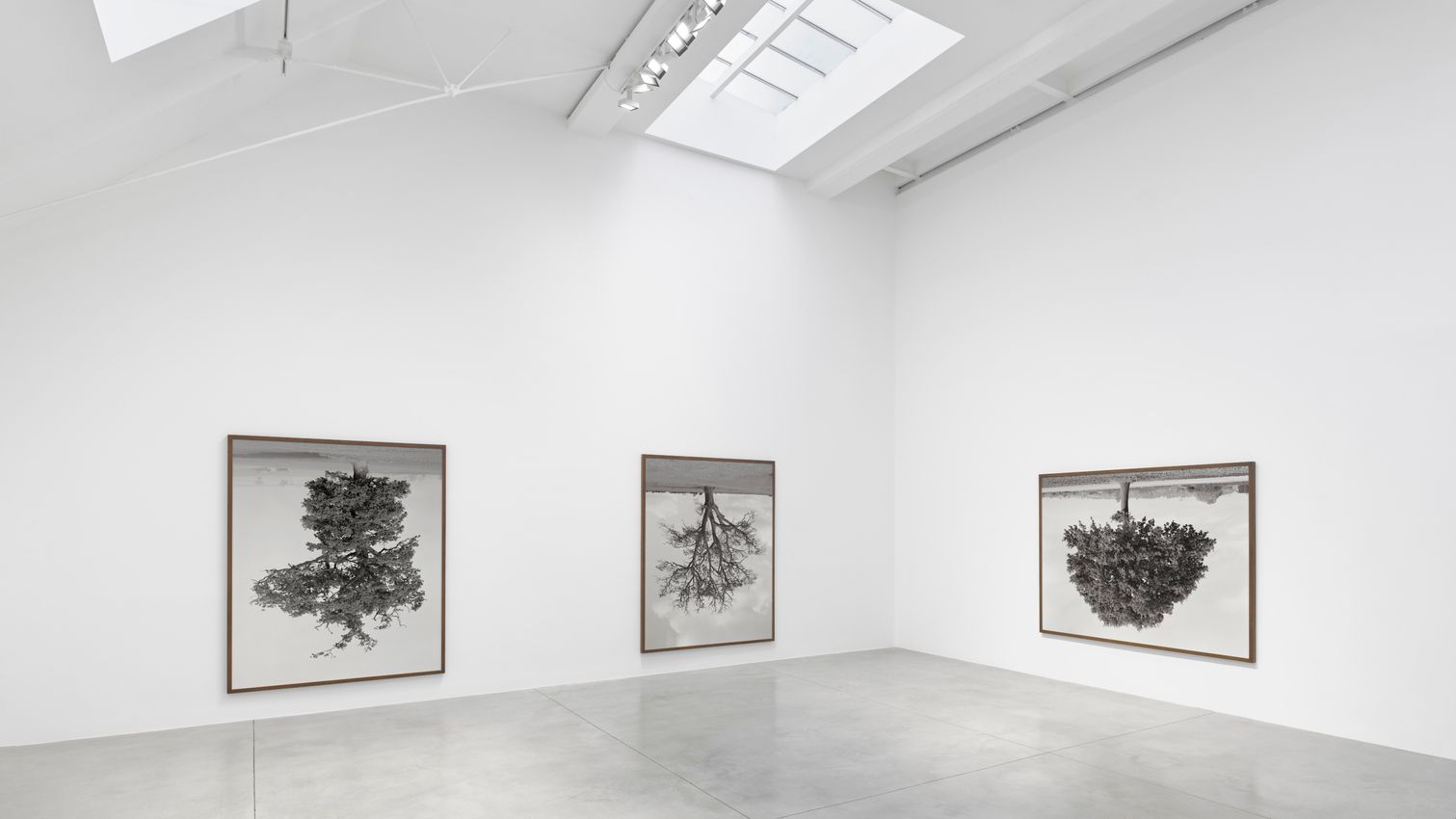
Rodney Graham’s 15th show with Lisson Gallery explores the late artist’s longstanding relationship to the natural world through two major bodies of work related to trees: the large-format photographs of upside-down Oxfordshire Oaks (1990) and a two-screen, immersive video environment entitled Edge of a Wood (1999). Stemming from his use of both the camera obscura and the cinematic techniques associated with movie-making, these two early meditations on the tree as both solitary, spectacular object and as a performative, brooding presence, will be accompanied by a new ‘accidental novella’ in 100-word bursts, such as the above, by author Max Porter (known for Lanny and Grief is a Thing with Feathers among other books). In this publication, Porter connects Graham’s many different voices and disguises to the mercurial uniqueness of trees as endlessly branching marvels, or “thirty-thousand armed monsters” as the writer puts it. In another seminal film installation, Lobbing Potatoes at a Gong, 1969 from 2006, Graham inhabits one of his most beloved characters, a musician or artist nonchalantly throwing his percussive tubers for an expectant audience.
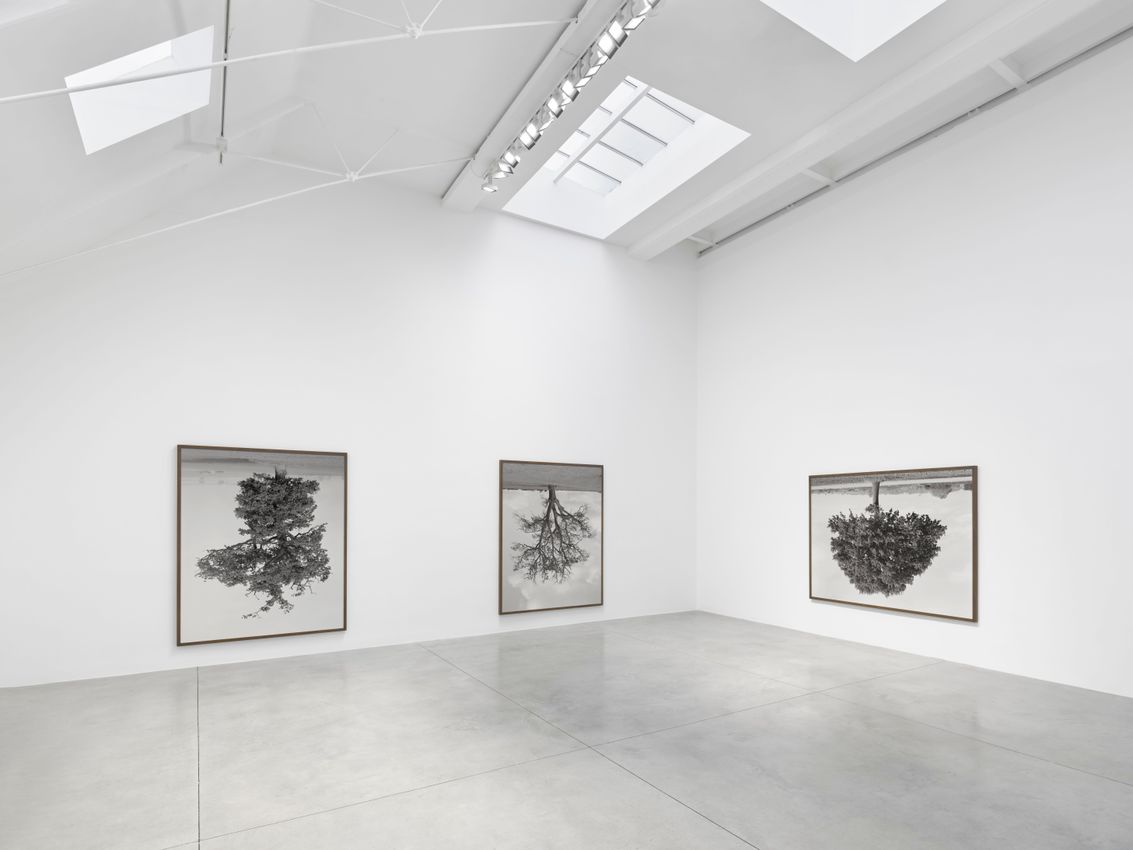
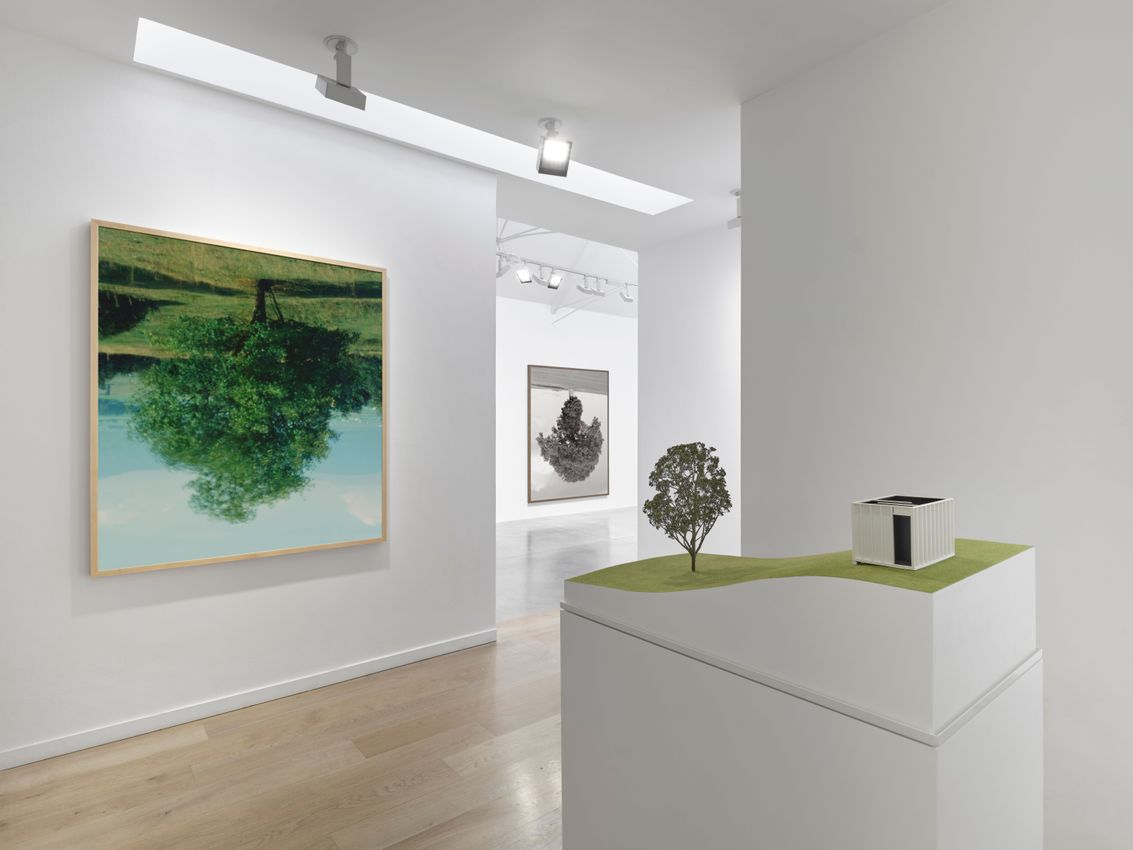
In many ways this exhibition takes Rodney Graham back to his roots as an artist concerned with the connection between humans and nature, but particularly with the many devices and methods that we have developed to document and understand this relationship. His early interest in the pinhole camera led to him build a walk-in structure in a field outside Vancouver in 1979, where one could observe a solitary tree in the darkened space, flipped upside down and singled out among many. This experiential outdoor project led to a two-decade series of tree photographs – which read almost as portraits of heroic individuals – using a large-format camera, while retaining the inversion of the camera lucida, seemingly for iconic or comedic effect, but fundamentally because this is how our eyes perceive images before the brain corrects them.
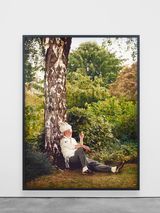
Among the pines, willows, maples and cedars Graham photographed (as well as the Betula Pendula ‘Fastigiata’ that appears in the self-portrait lightbox, Sous-Chef on Smoke-Break of 2011), all the way from Canada and North America to Belgium, Italy and Wales, this set of six Oxfordshire Oaks was shot in autumn of 1990 between Banbury and the Cotswolds, hauntingly and viscerally described in Porter’s accompanying publication:
Pull over on the verge. There’s room for a vehicle to pass. Just catch the end of the radio programme about the reunification of East and West Germany. Exit the car with your camera bag. See the oak. Feel a rippling full body goosebump wobble bladder to brain. Shiver. Swallow. It’s like a ghost ship in the mist. Go get it.
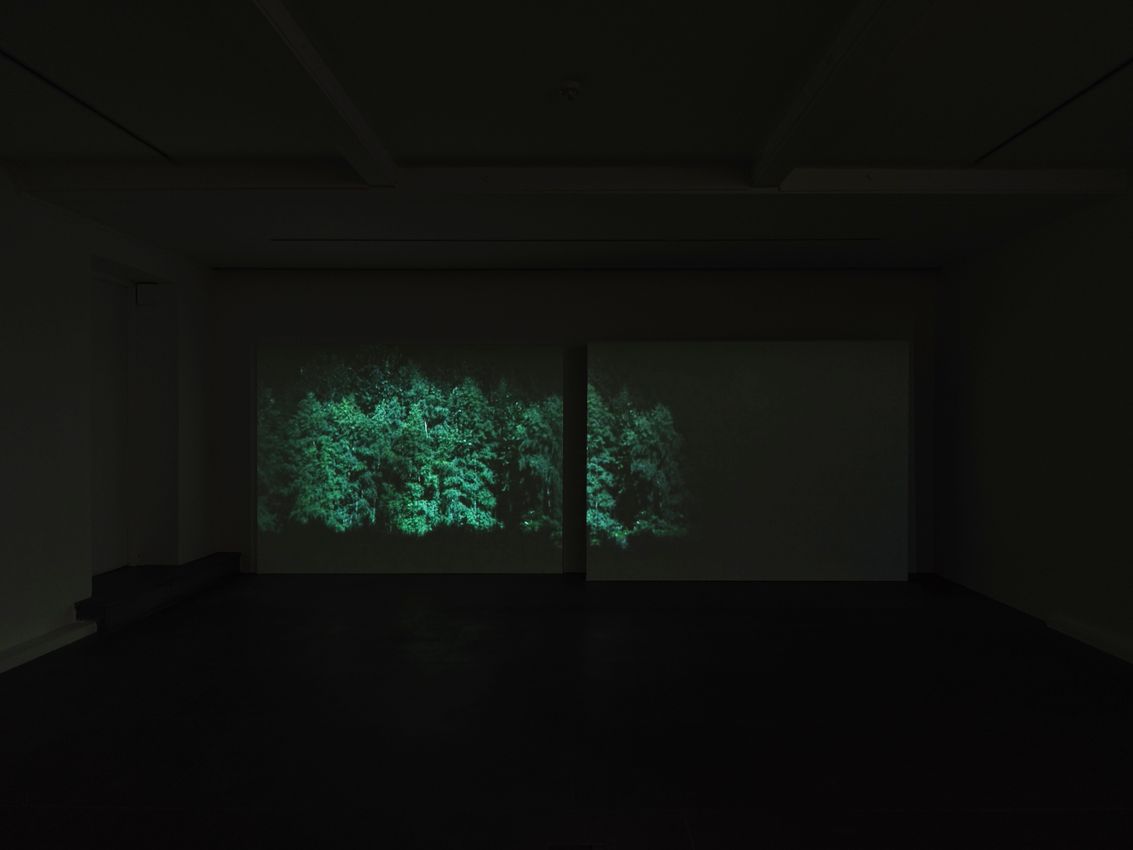
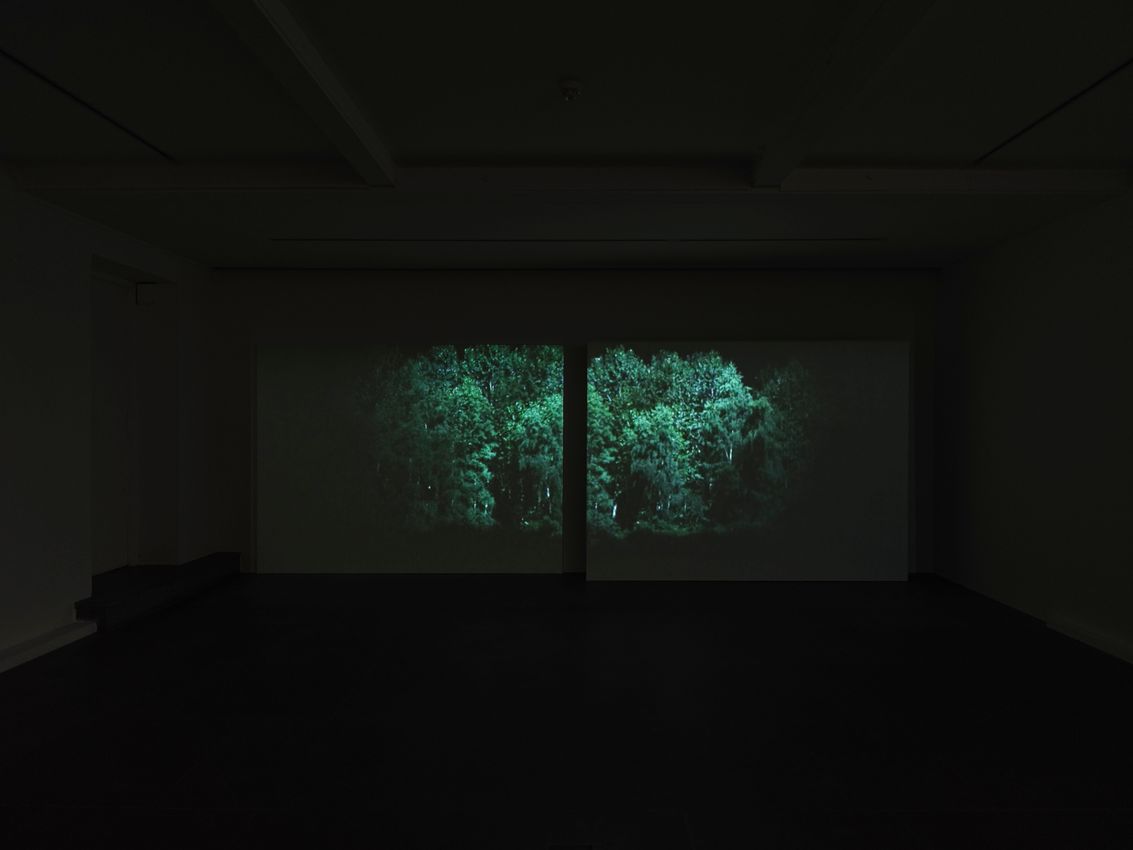
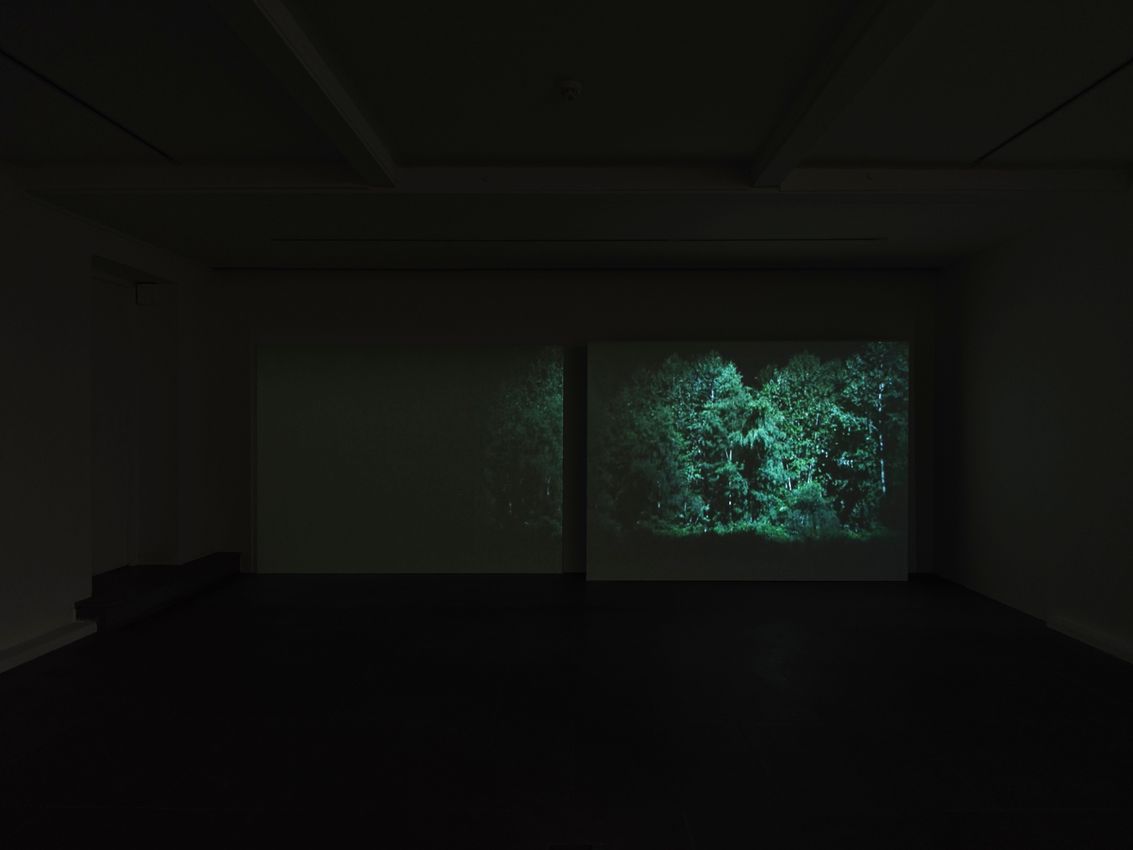
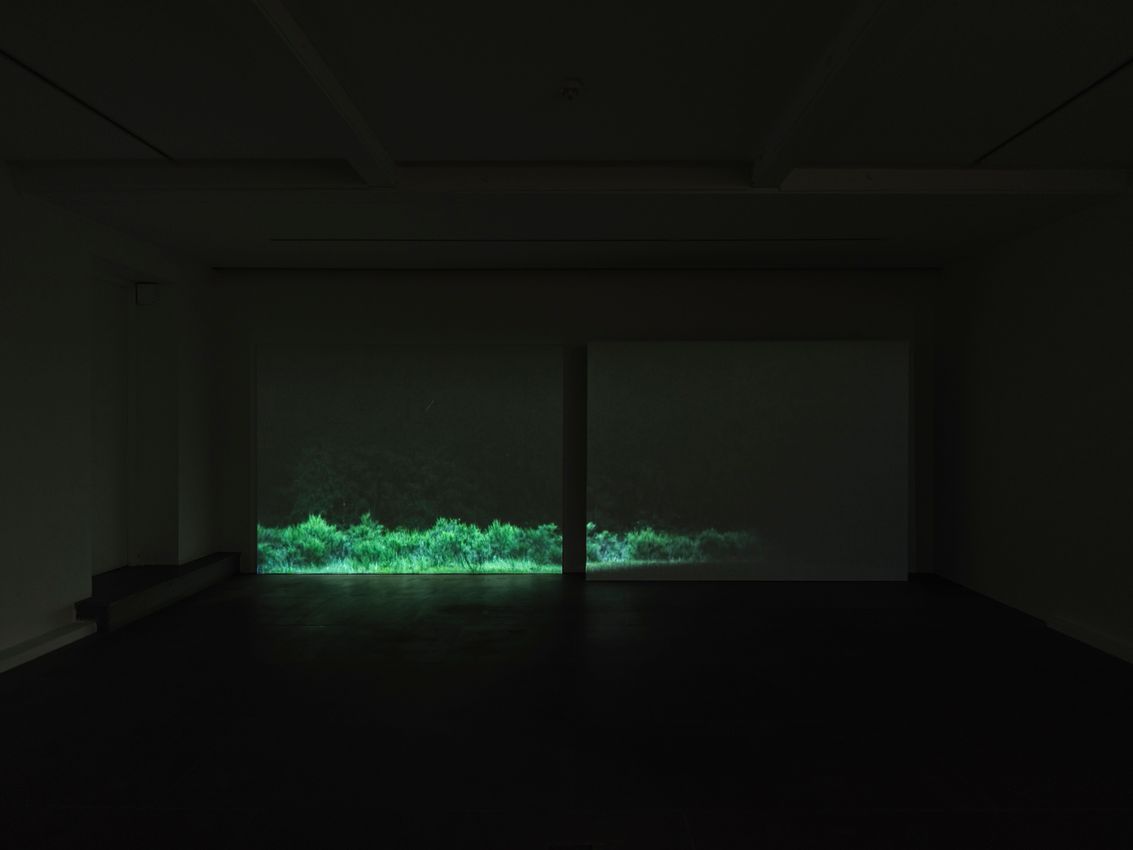
The two-screen film downstairs, Edge of a Wood (1999), also has its origins in Graham’s early ‘nature theatre’ projects such as the Camera Obscura and the Illuminated Ravine (both 1979), but in this noisy landscape a helicopter hovers over a forest while shining an ominous beam down over its leaves, anonymizing and mechanising his romantic single trees into a heavily surveilled territory of the unknown.
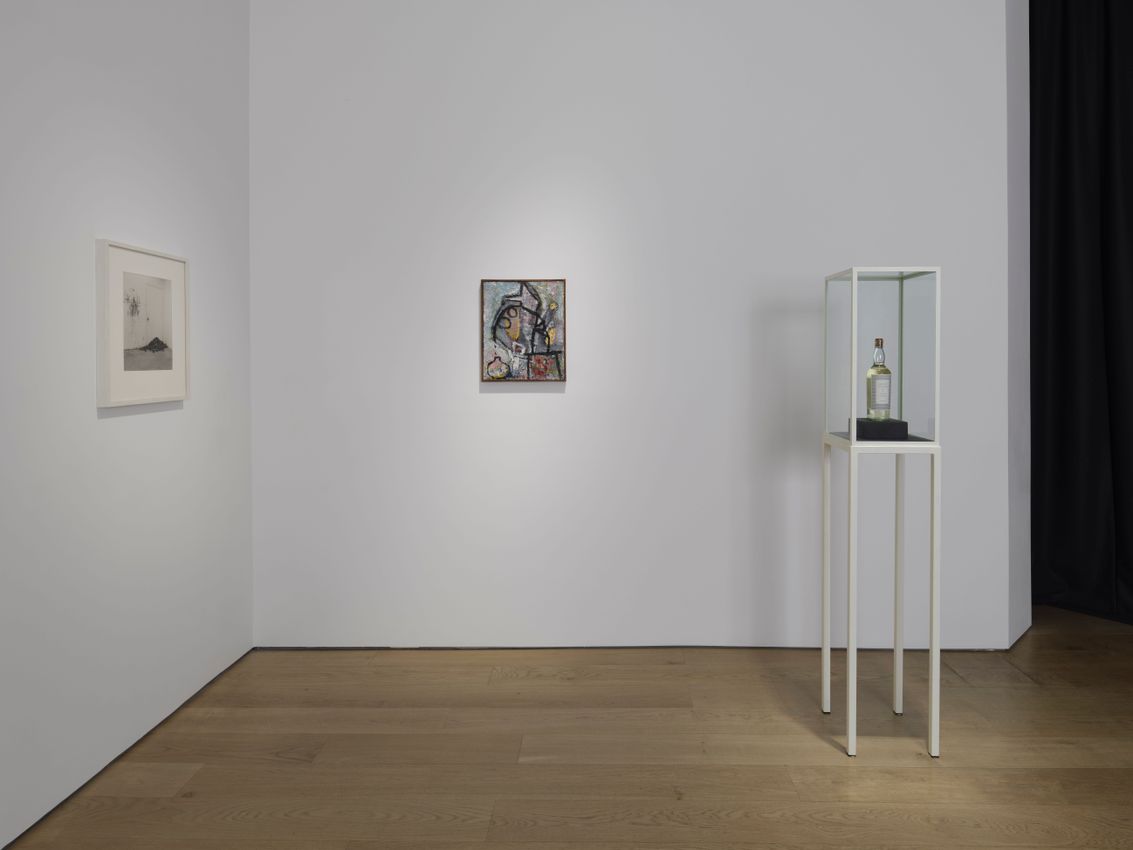
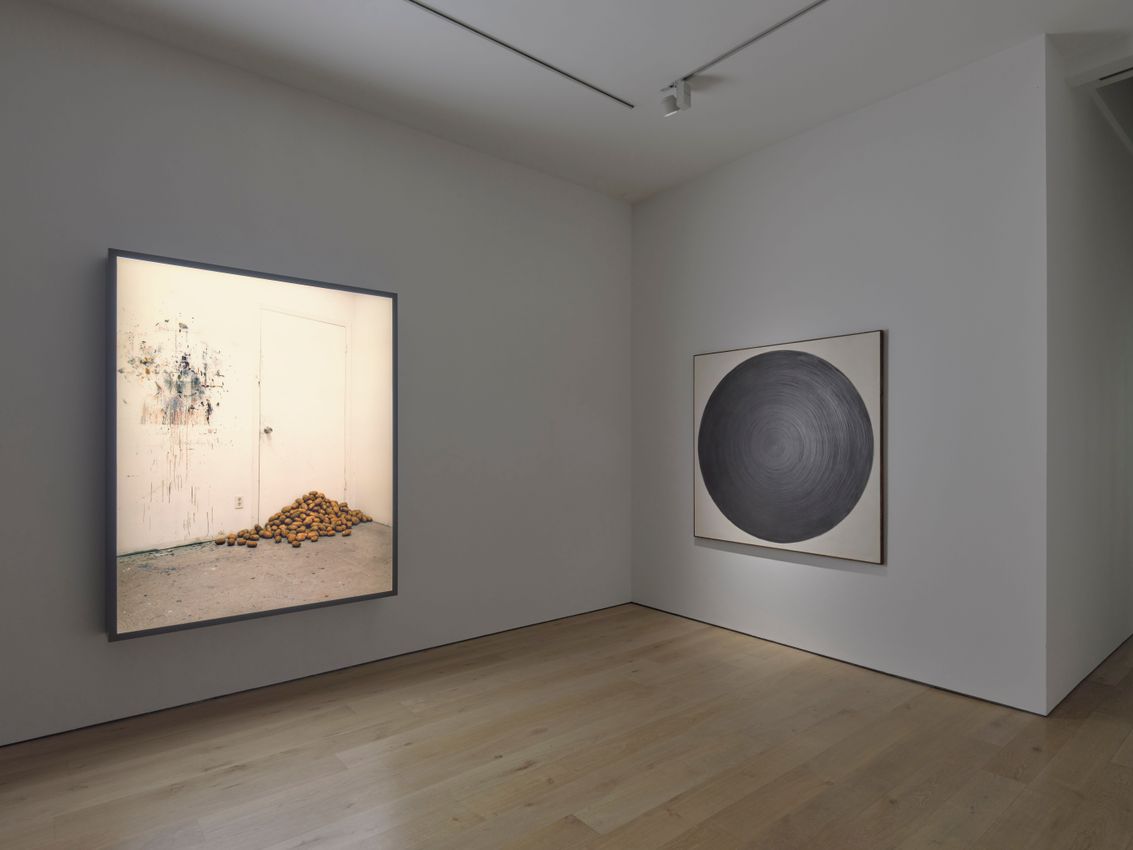
The final works,Lobbing Potatoes at a Gong, 1969 and the pendant lightbox, Potatoes Blocking my Studio Door (both 2006) also nod to Graham’s conceptual art roots and his admiration for artists of the preceding generations. This faked staging of a 1960s-style performance (in the manner of a Fluxus happening or even a Dada action) shows a long-haired drummer type attempting to strike a gong with his vegetable projectiles in order to punctuate the silence of an enthralled crowd with occasional eruptions of clashing, reverberating noise. The artist previously performed this piece in London at Serpentine Gallery’s 2011 Garden Marathon. The show’s title comes from the song_Theme from the Phonokinetoscope_ (Who is it that does not love a tree? / I planted one, I planted three / Two for you and one for me / Botanical anomaly...) with lyrics by Graham and Syd Barrett, the Pink Floyd co-founder often cited as the inspiration behind Lobbing Potatoes.
A major posthumous touring retrospective of Graham’s work is in development for 2027 at both the Vancouver Art Gallery and the National Gallery of Canada, Ottawa.
On the occasion of Who does not love a tree?, Lisson will host a conversation with Max Porter at the gallery on 19 February at 6.30pm. The talk is open to the public, but rsvp is requested via Eventbrite.
Courtesy Lisson Gallery.


Rodney Graham pulls at the threads of cultural and intellectual history through photography, film, music, performance and painting. He presents cyclical narratives that pop with puns and references to literature and philosophy, from Lewis Carroll to Sigmund Freud to Kurt Cobain, with a sense of humour that betrays Graham’s footing in the post-punk scene of late 1970s Vancouver. The nine-minute loop Vexation Island, 1997, presents the artist as a 17th-century sailor, lying unconscious under a coconut tree with a bruise on his head; after eight and a half minutes he gets up and shakes the tree inducing a coconut to fall and knock him out, and for the sequence to start again. Graham returns as a cowboy in How I Became a Ramblin’ Man, 1999, and as both city dandy and country bumpkin in City Self/Country Self, 2001 – fictional characters all engaged in an endless loop of activity. Such dream states and the ramblings of the unconscious are rooted in Graham’s earlier upside-down photographs of oak trees. Inversion, Graham explains, has a logic: ‘You don’t have to delve very deeply into modern physics to realise that the scientific view holds that the world is really not as it appears. Before the brain rights it, the eye sees a tree upside down in the same way it appears on the glass back of the large format field camera I use,’ 2005.


Established in 1967 in London, Lisson Gallery is one of the most well-known galleries operating globally. Boasting an influential and continuing legacy, including playing a pivotal role in the careers of many pioneers of historically important art movements, the gallery works with some of the most significant contemporary artists today.

A respected voice in contemporary art discourse.
Focusing on ambitious storytelling and insightful art-world commentary. Ocula Magazine publishes in-depth interviews, critical essays and timely analysis on the artists, exhibitions and ideas driving the global art world.
Learn more about Ocula Magazine
Showcasing the best of the art world.
Ocula partners with galleries from around the world to highlight their artists, artworks and exhibitions. Gallery membership is by application and invitation, with each member vetted by an independent panel.
Learn more about Ocula Membership

Specialises in the sale of major artworks.
Led by a team with deep ties to the world’s leading auction houses, galleries and collectors. Ocula’s advisory team offers bespoke services to high-net-worth clients from around the world who are looking to acquire the best of contemporary and modern art.
Learn more about our team and services