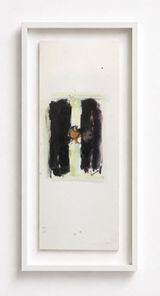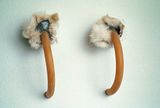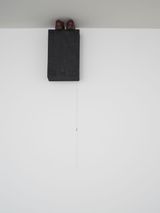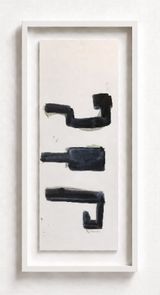
Gomide&Co is pleased to present Smoke, the first solo exhibition by Lucia Nogueira (Brazil, 1950 – United Kingdom, 1998) at the gallery. Featuring a critical essay by Carina Bukuts, the exhibition is on view from August 7th through October 3rd.
Based in London since 1975 and having died prematurely in 1998, Lucia Nogueira developed a body of work that today occupies a singular position within the international generation that redefined sculpture in the 1980s and 1990s. Alongside artists such as Doris Salcedo and Félix González-Torres, she contributed to expanding the sculptural field toward more open, subjective, and experimental forms, constructed from ordinary materials and unexpected associations. Her work is included in major international collections and remains a reference for artists and researchers of subsequent generations. The exhibition follows her presentation at the 33rd Bienal de São Paulo (2018) and joins the growing institutional recognition of her production.
Through a practice spanning installation, sculpture, drawing, and video, Nogueira explored themes such as language, displacement, corporeality, and transformation. Her work brings together seemingly disparate materials in precise and delicate arrangements designed to challenge perception and suspend stable meanings. Often appearing as visual enigmas, her works mobilize recurring motifs such as the double, absence, repetition, familiarity, and estrangement.
The exhibition’s title refers directly to an audiovisual work presented on a monitor. Smoke consists of 16 mm film footage, later transferred to video, documenting a series of interventions carried out by the artist as part of the Berwick Ramparts Project (1996), a program dedicated to temporary works conceived for the historic ramparts of Berwick-upon-Tweed, in northern England. In high-contrast black-and-white images, isolated cabins appear in the landscape, along with birds in motion, kites in the wind, and a ladder projecting into the open field, composing a sequence of ephemeral and suggestive situations that invited public participation.
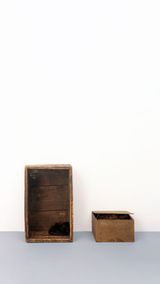
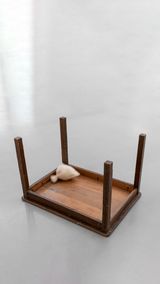
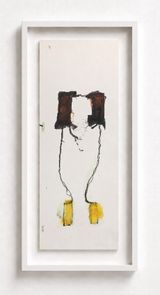
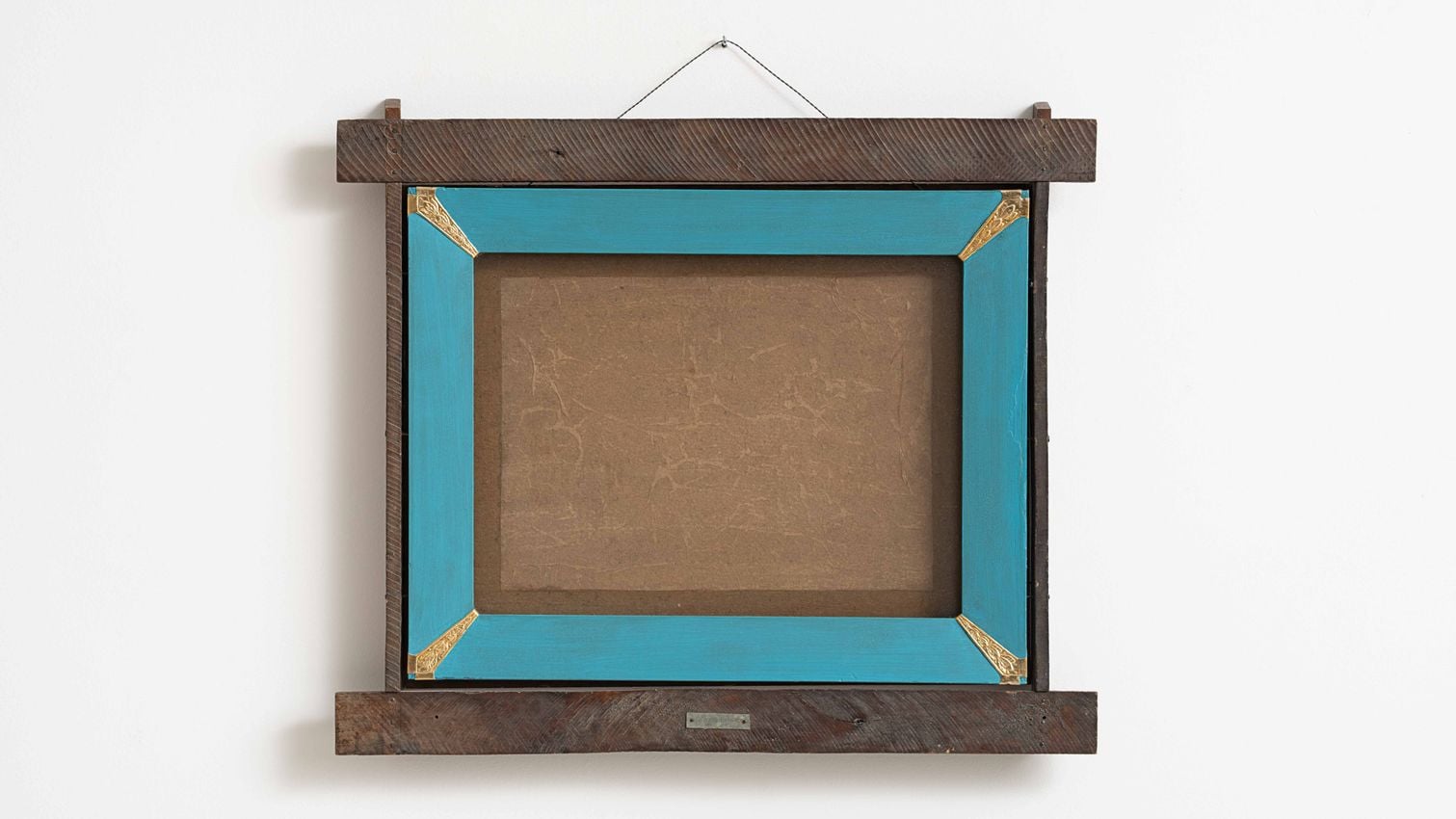
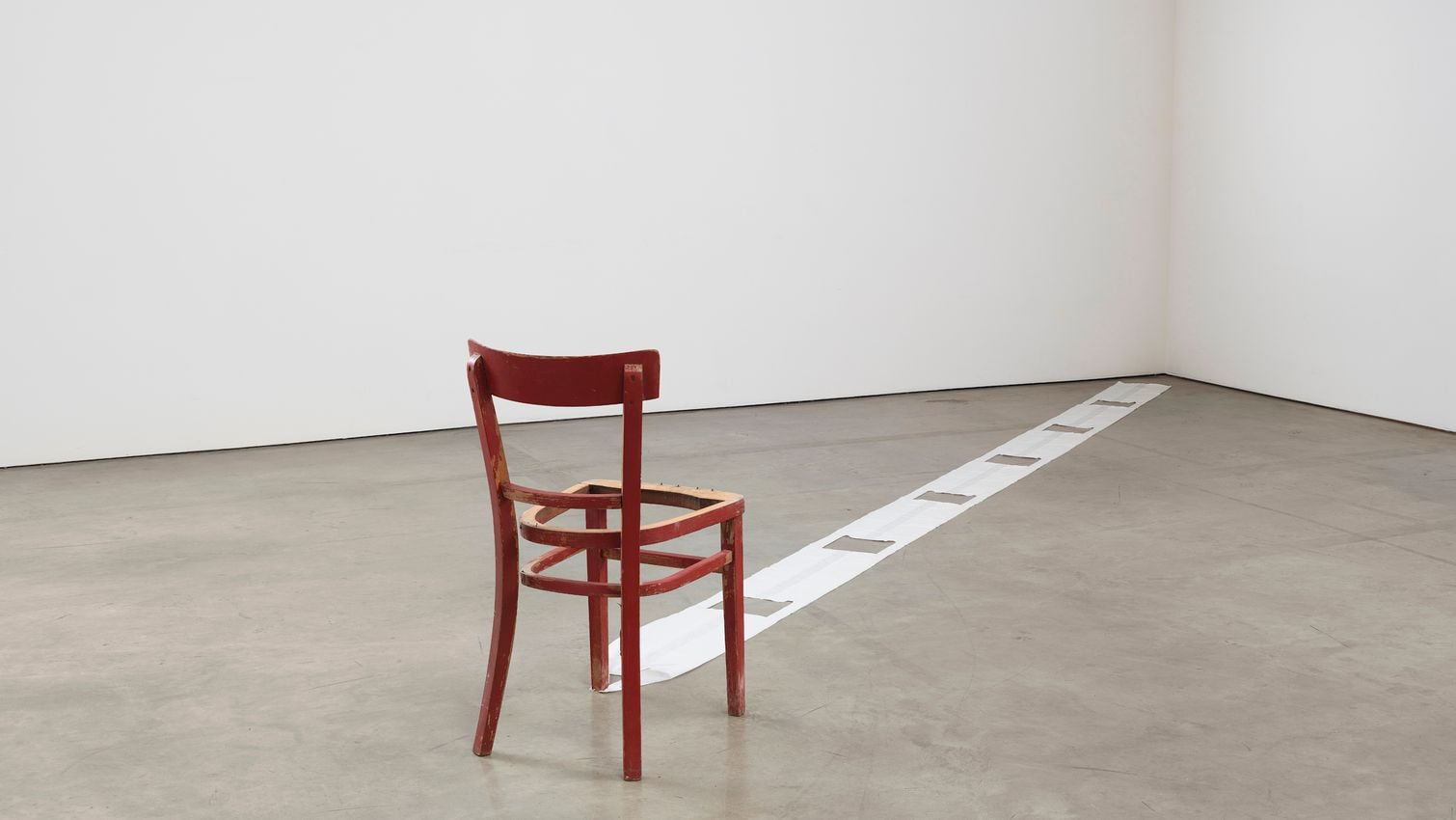
In addition to this audiovisual work, presented for the first time in Brazil, the exhibition brings together a group of sculptures produced between the late 1980s and the mid-1990s, arranged in dialogue with one another and with the gallery space. A highlight is Mischief (1995), in which an ordinary chair is transformed into an unstable, almost anthropomorphic presence. The minimal intervention on the object displaces its original function and produces a field of associations between body, shelter, and absence. As in many of Nogueira’s works, the humor suggested by the title coexists with a latent sense of unease, keeping interpretation permanently open.
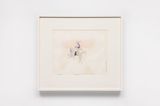
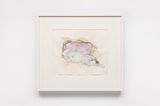
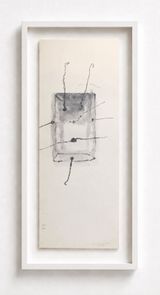
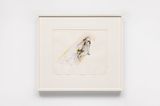
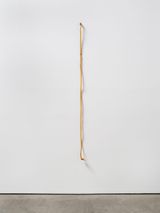
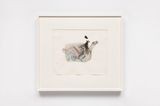
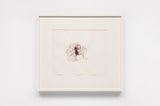
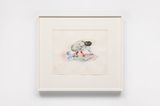
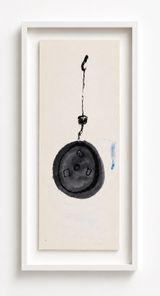
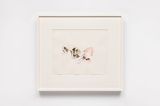
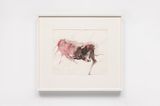
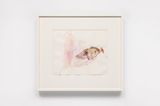
Other works push industrial materials to the limits of recognition, establishing exchanges between their formal attributes—lines, grids, planes, and volumes—and their possible resonances associated with shelters, bodies, and prisons. In several works, leather, animal skin, beans, latex, and human hair introduce subtle references to the body, bringing objects and materials into a dimension that is simultaneously physical, affective, and imaginary. Without resorting to direct representation or closed narratives, Nogueira creates situations in which things appear animated by their own logic, oscillating between the familiar and the strange, formal precision and poetic suggestion. Another highlight of the exhibition, Snail (1995), uses a radio antenna to approach a drawing in space, engaging with a suite of works on paper in which forms relate to the surrounding white space, suggesting movement and communication.
Bringing together works produced at different moments in Lucia Nogueira’s trajectory, Smoke offers an overview of the formal and conceptual strategies that shaped her practice. Rather than presenting isolated objects, the exhibition highlights how the artist constructed subtle relationships between materials, spaces, and images, transforming everyday elements into ambiguous and evocative presences. Between humor and strangeness, delicacy and tension, her work continues to resist classification and affirms the power of sculpture as an open field for experimentation and imagination.
Lucia Nogueira was born in Goiânia, Brazil, and developed her artistic career in London, where she lived from 1975 onward. Over the course of a brief yet remarkable trajectory, she built a singular and profoundly sensitive body of work encompassing sculpture, installation, drawing, and video. Her practice articulates the relationship between object and language, exploring the fragility of the human body and its presence in space.

A respected voice in contemporary art discourse.
Focusing on ambitious storytelling and insightful art-world commentary. Ocula Magazine publishes in-depth interviews, critical essays and timely analysis on the artists, exhibitions and ideas driving the global art world.
Learn more about Ocula Magazine
Showcasing the best of the art world.
Ocula partners with galleries from around the world to highlight their artists, artworks and exhibitions. Gallery membership is by application and invitation, with each member vetted by an independent panel.
Learn more about Ocula Membership

Specialises in the sale of major artworks.
Led by a team with deep ties to the world’s leading auction houses, galleries and collectors. Ocula’s advisory team offers bespoke services to high-net-worth clients from around the world who are looking to acquire the best of contemporary and modern art.
Learn more about our team and services