‘From early and earthy stacks made at the Royal College of Art, through to his later and larger columnar, spinning stacks in wood, stone, bronze and steel, Tony Cragg’s sculpture continues to surprise and enthral, offering up a fascinating mixture of order and disorder, balance and imbalance, method and madness, encouraging us to think about our place in the world and what lies beneath.’-Dr Jon Wood, 2019
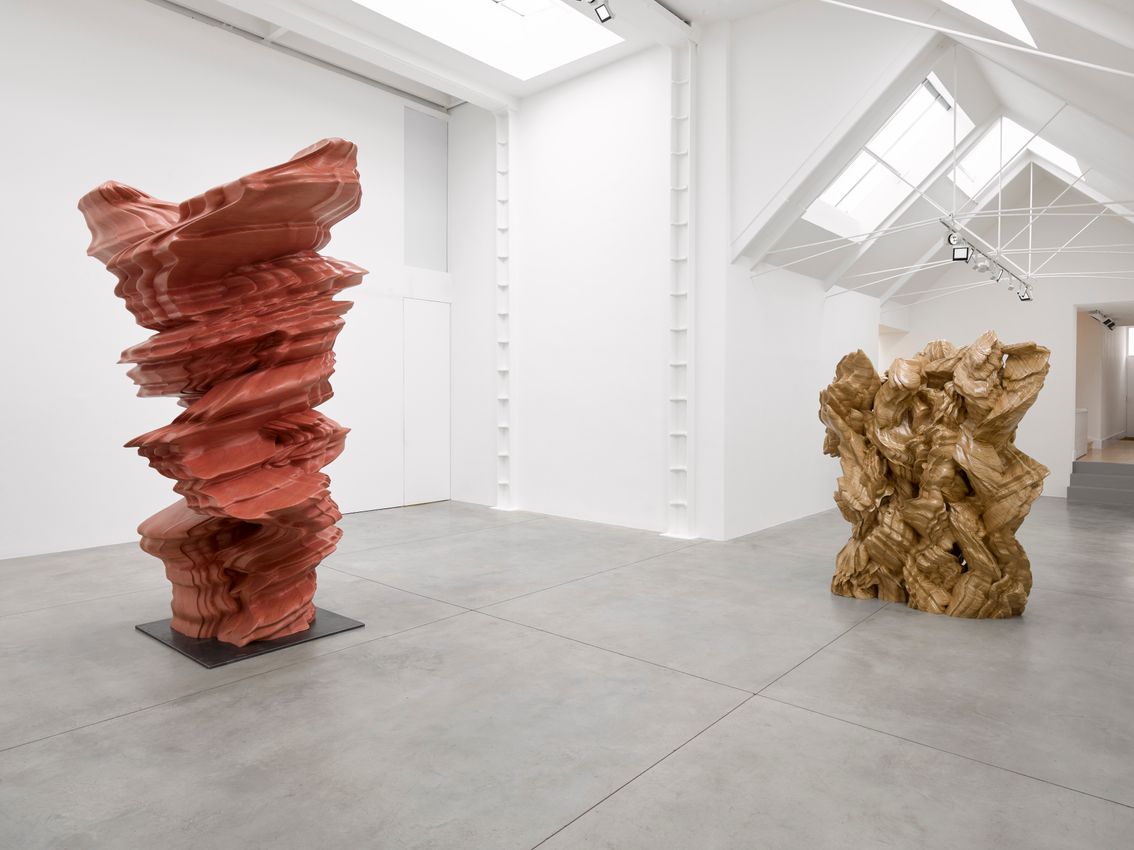
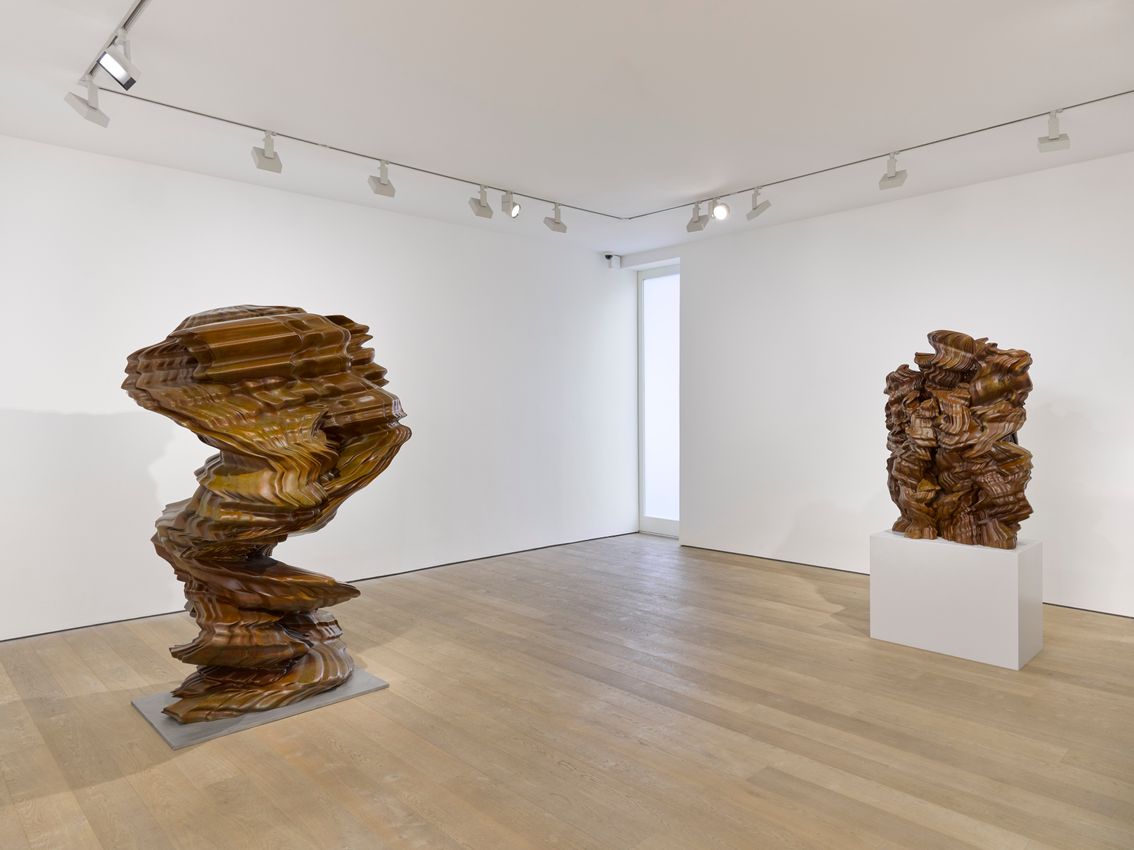
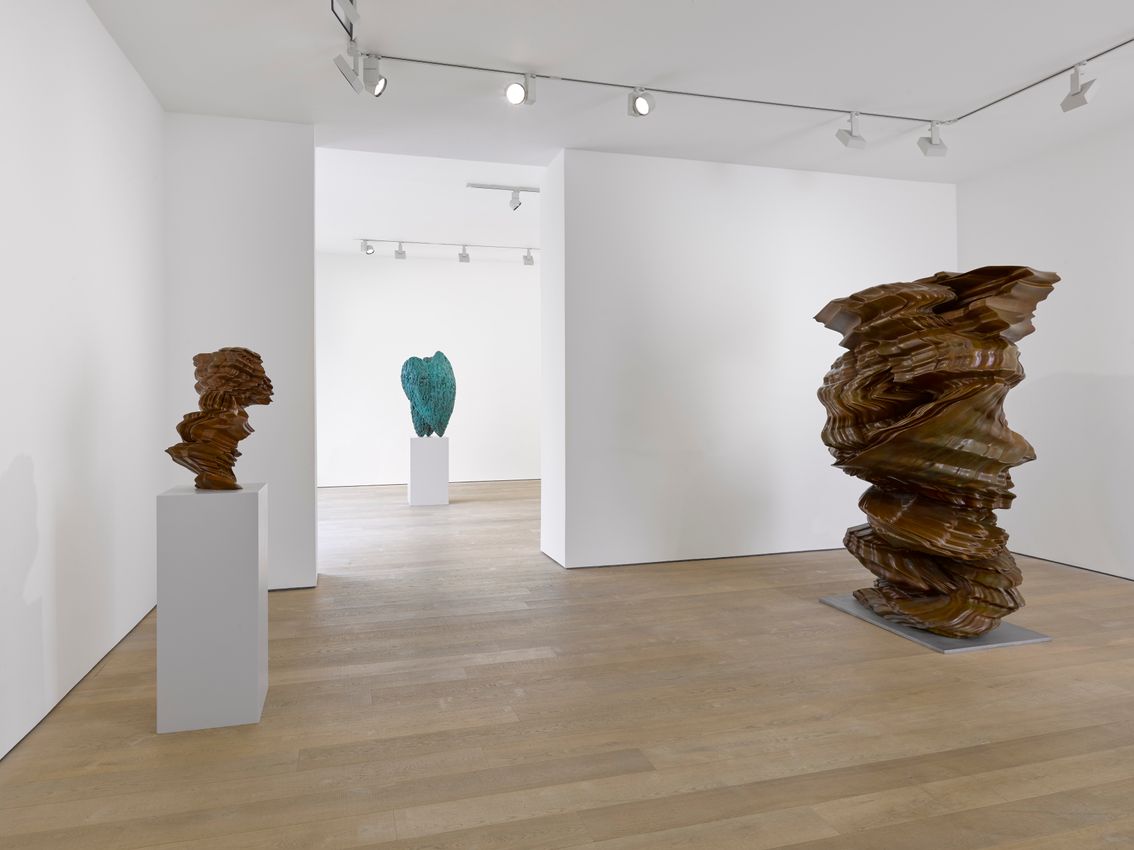
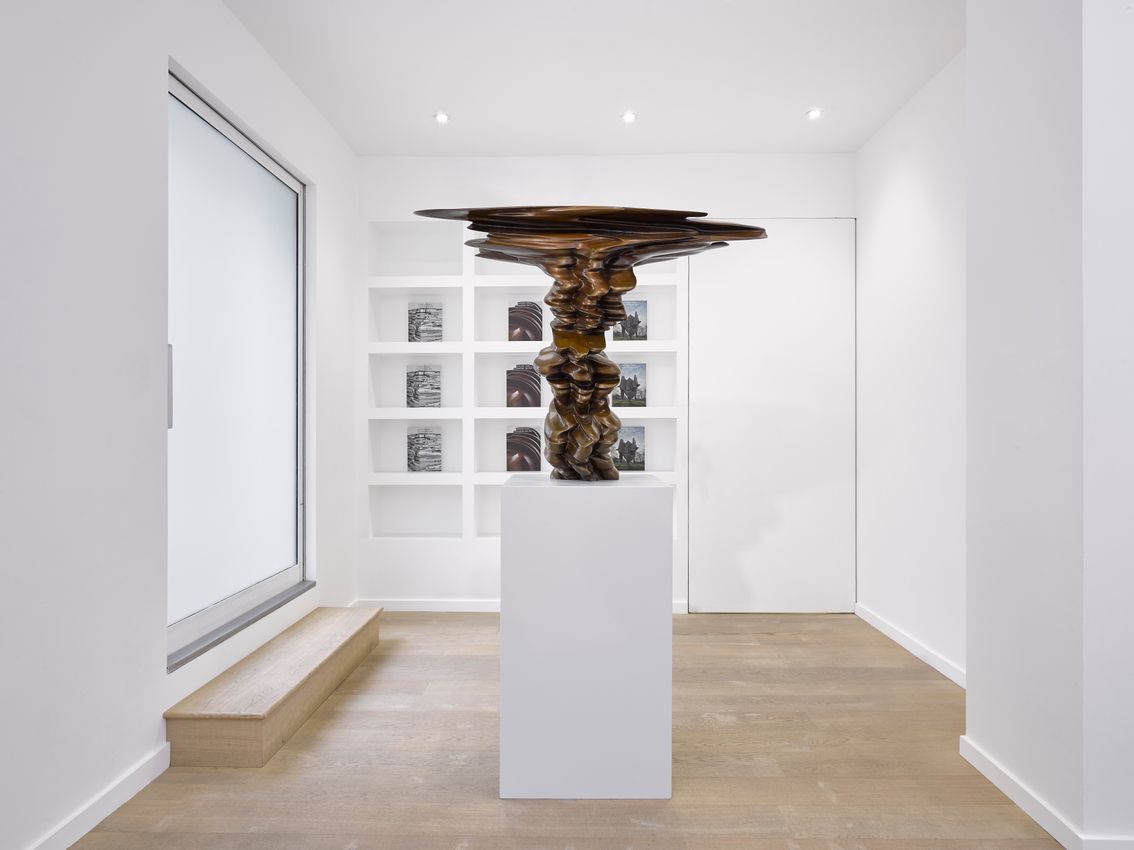
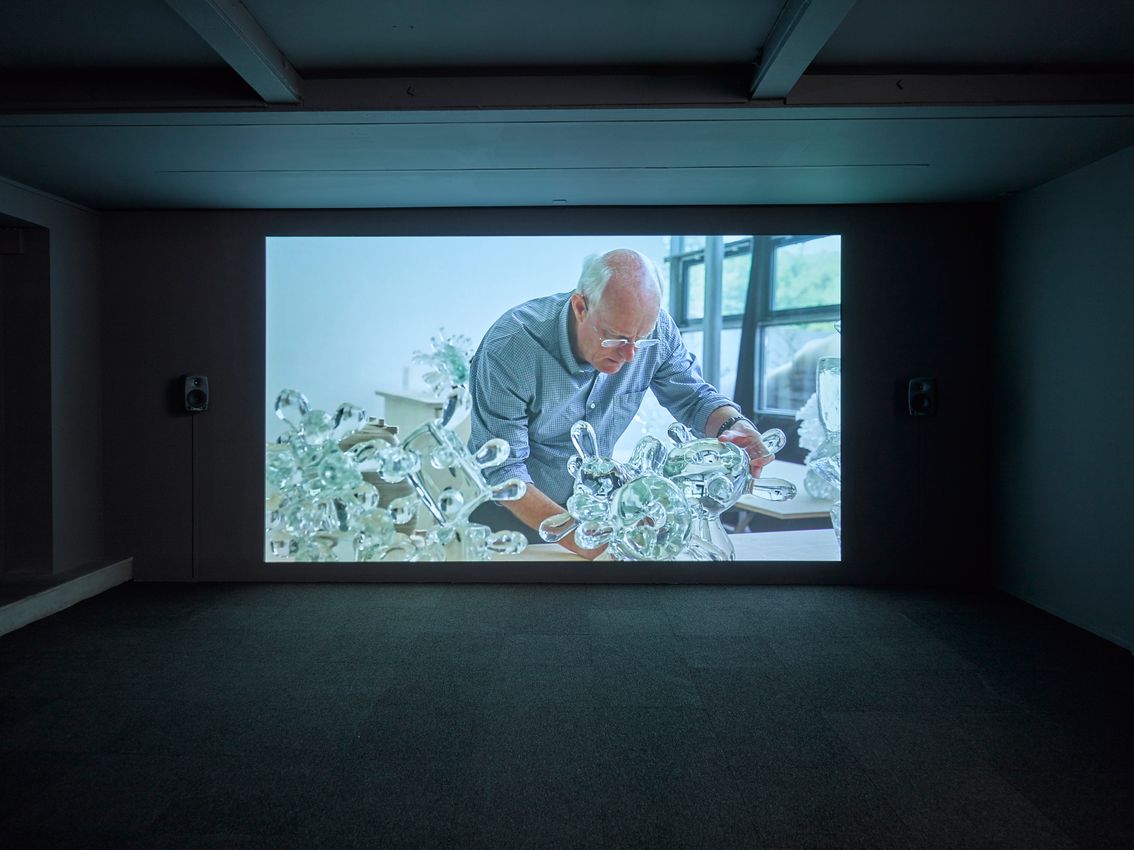
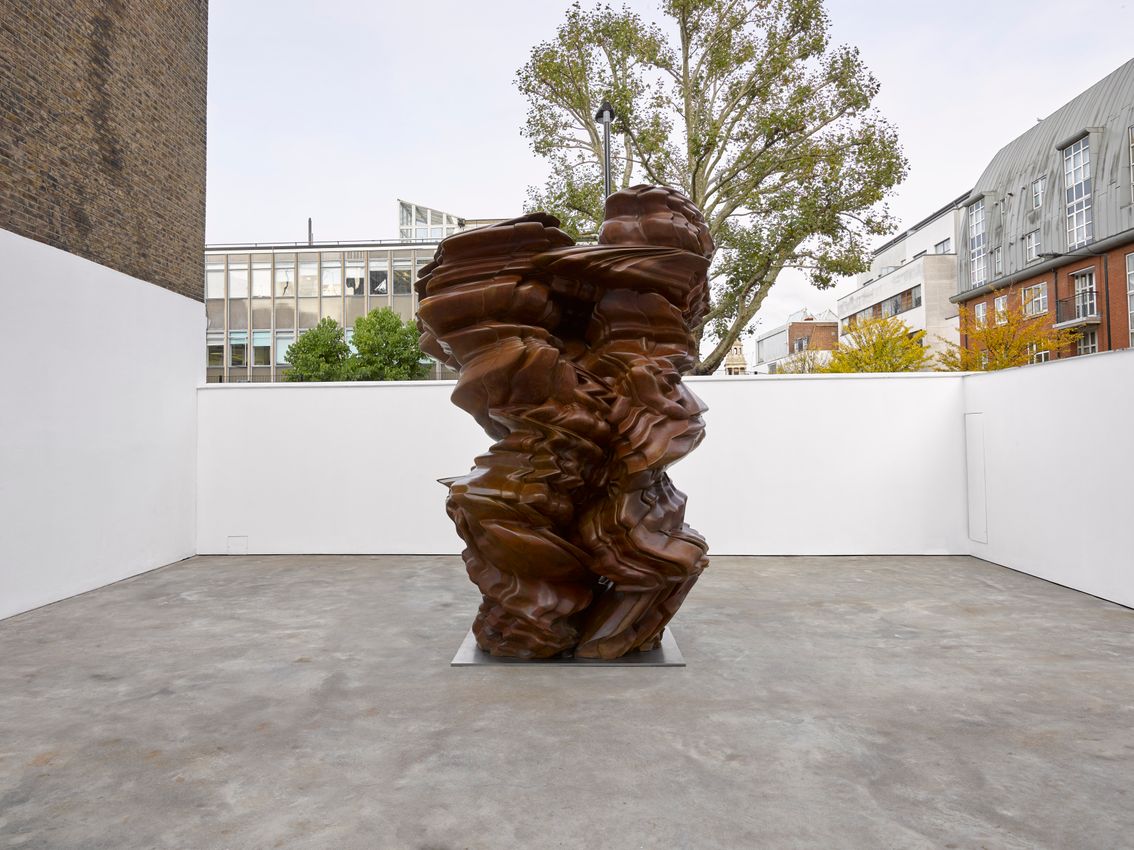
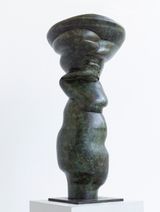
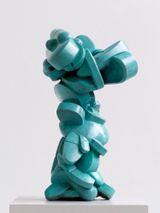
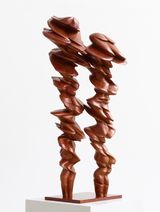
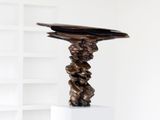
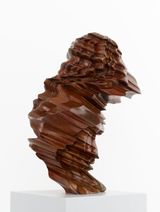
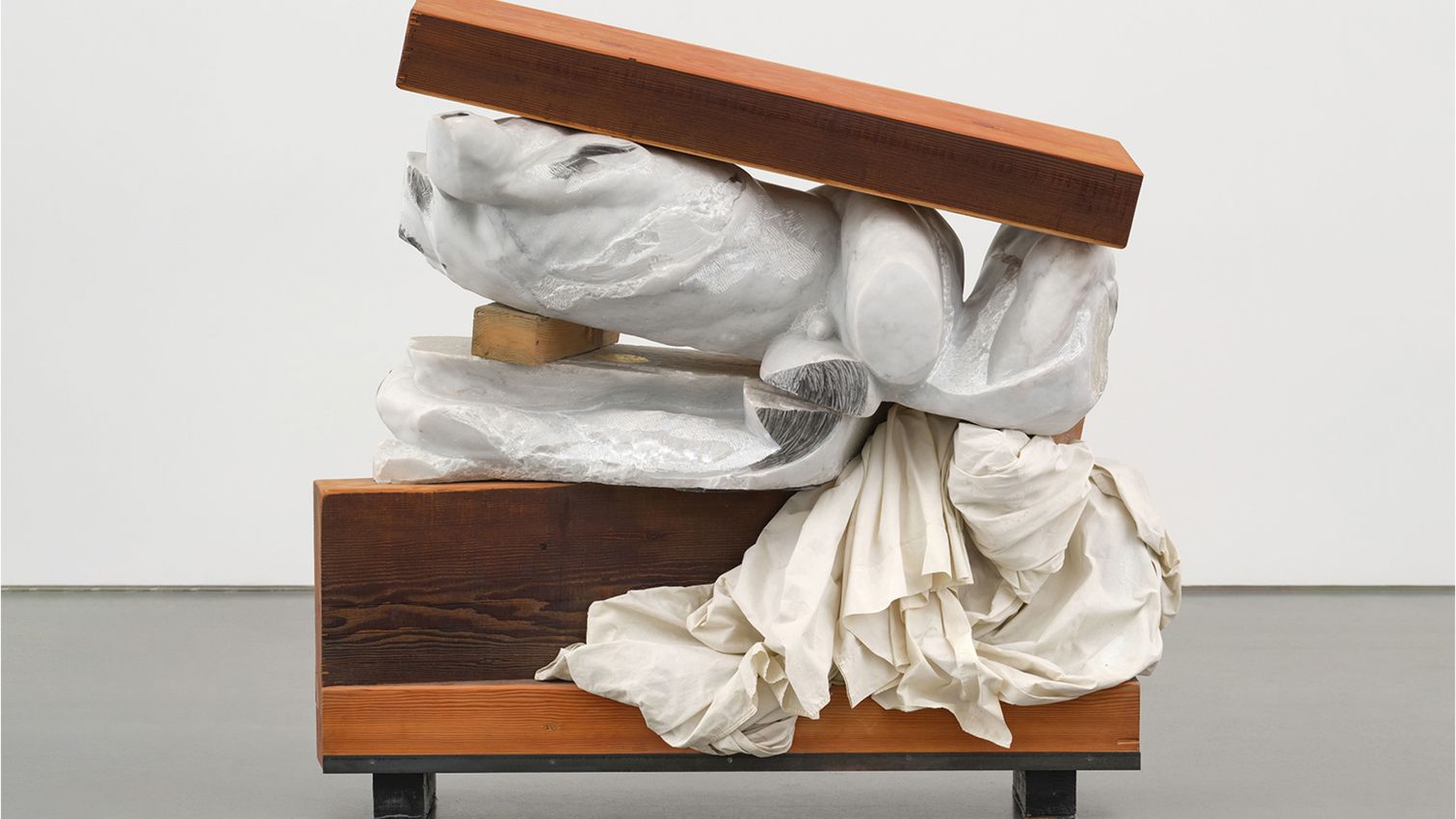
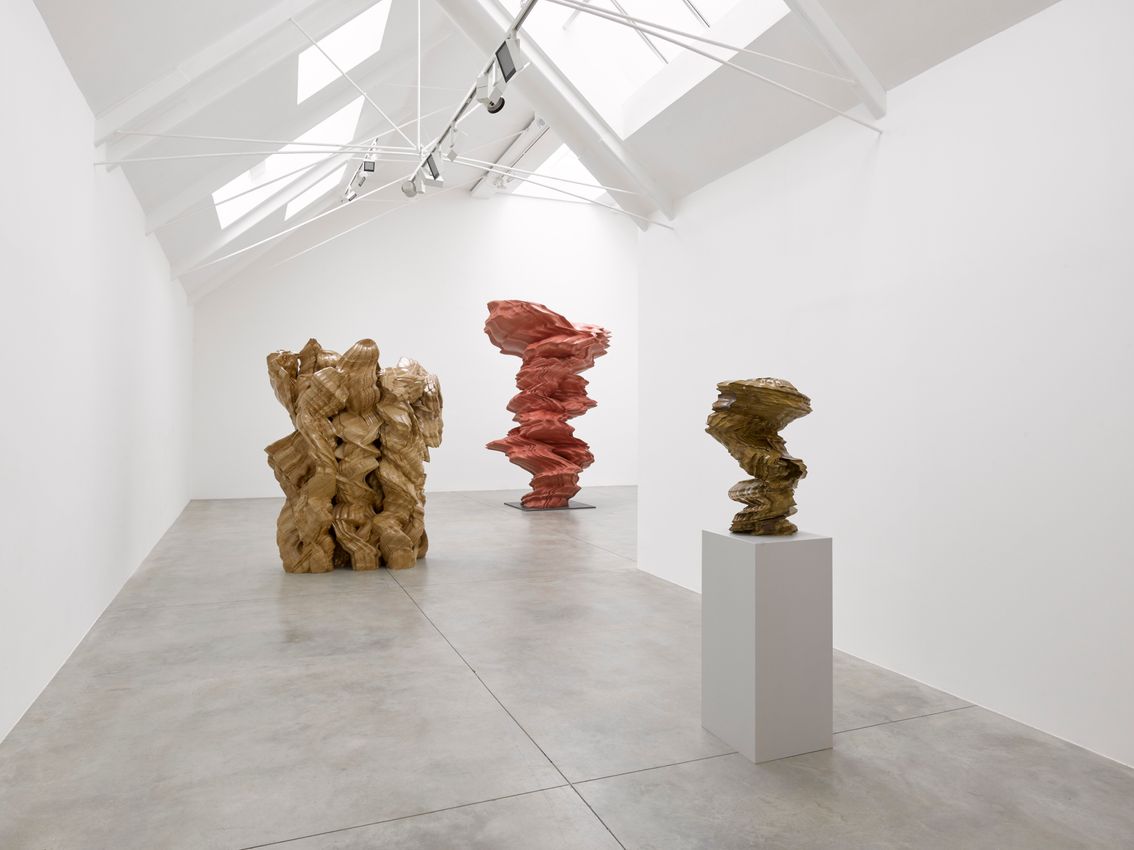
For Tony Cragg‘s fifteenth exhibition with Lisson Gallery, the artist will present a selection of complex polymorphic sculptures, rendered in bronze, wood and steel, including a new series of works entitled Stack, alongside works from the ‘Lost in Thought’ and ‘In No Time’ series, as well as works on paper. This exhibition will also extend outside the galleries, featuring the debut of a monumental, outdoor bronze Stack. This presentation illustrates the movement, growth, dynamism and sense of wonder at the seemingly unlimited possibilities of sculptural form. The exhibition will also celebrate the artist’s long-standing relationship with Lisson Gallery-the show being 40 years since his first with the gallery in 1979.
The exhibition focuses on the resonance of stacking in Cragg’s practice, considering how the creation of solid, cohesive forms out of small, disparate parts has been a constant in his work, spanning over five decades of making. Cragg’s Stacks developed initially in the ‘70s, coinciding with his emergence as an artist and the critical recognition of his exhibited work, as well as his move to Germany in 1977. Cragg has variously stacked, gathered and layered ever since, deploying various acts of stratification, compilation, accrual and accumulation in his work. These constructive, physical activities have also been animated by a range of ideas, references and narratives, drawing from geology, archaeology, biology, chemistry, natural history, psychology and anthropology. The geological concerns displayed by these early works-including the sculptural Stack presented at Tate in 1975 and Minster (1987) presented at Hayward Gallery that year, combining a multitude of miscellaneous, recycled and geological materials with physical hand-made endeavour-set Cragg apart from the other artists working in Britain at the time.
The exhibition will also include works from Cragg’s ‘Lost in Thought’ and ‘In No Time’ series. These works conjure up emotionally-charged ideas of bodily enclosure, intimate habitation and the feeling of living between the layers. These works also speak to the connection between ‘layer’ and ‘history’-the accumulation of meaning, and developing histories. Cragg has always been interested in etymologies and the ways in which experiences, ideas and words are materialised. In German, the word Geschichte means both ‘history’ and ‘story’-two theoretically different concepts, with history referring to a ‘factual’ event in the past, and a story referring to a narrative or fictional tale. ‘We might also talk about ‘storey’ and ‘story’: the storeys of buildings and the stories of life’, says Cragg. ‘Telling ‘histories’ as telling ‘stories’ and recounting ‘tales’. I think about ‘telling’ as ‘narrating’ but also about ‘accounting’ or ‘recounting’. You might recount a tale and tell a history, for example, or account for yourself. Counting and accounting, telling and numbering, adding and accumulating... these words and ideas also introduce time and are part of a broader, bigger idea of history as layering or a layering upwards of deeper experiences.’
The exhibition follows a solo presentation of Cragg’s work at this year’s Armory show with the gallery, and museum exhibitions at the Kunstpalast Düsseldorf and the Franz Marc Museum in Kochel Am See (2 June-6 October), as well as a major installation of his works at the Boboli Gardens, behind the Pitti Palace in Florence (7 May-13 October).
A publication focused on the history of Cragg’s Stack works will accompany the exhibition, featuring an essay by Dr Jon Wood, entitled ‘Strata, structures, stories: “Stacking” in Tony Cragg’s sculpture’.
Tony Cragg is one of Britain’s foremost sculptors. Constantly pushing to find new relations between people and the material world, he works with stone, wood, glass, aluminium, cast bronze and cast iron, and found objects, from plastic consumer goods to rubbish from the streets. His early stacked works present a taxonomical understanding of the world, and he has said that he sees manmade objects as “fossilized keys to a past time which is our present”. So too, the witty floor and wall arrangements of objects that he started making in the 1980s blur the line between manmade and natural landscapes: they create an outline of something familiar, where the contributing parts relate metaphorically to the whole. Cragg originally trained as a scientist and had a job as a lab technician at the National Rubber Producers Research Association, 1966–68, an experience that is reflected in his vigorous approach to material. He has said, “I see a material or an object as having a balloon of information around it”, 1992, and he pummels this aura in different ways across two broad bodies of work – Early Forms and Rational Beings. The Early Forms explore the possibilities of distorting everyday vessels such as vases or plastic bottles, morphing into and around themselves. The Rational Beings sculptures take the outline of a human gesture or profile as starting point for exuberant improvisations on natural processes.


Established in 1967 in London, Lisson Gallery is one of the most well-known galleries operating globally. Boasting an influential and continuing legacy, including playing a pivotal role in the careers of many pioneers of historically important art movements, the gallery works with some of the most significant contemporary artists today.

A respected voice in contemporary art discourse.
Focusing on ambitious storytelling and insightful art-world commentary. Ocula Magazine publishes in-depth interviews, critical essays and timely analysis on the artists, exhibitions and ideas driving the global art world.
Learn more about Ocula Magazine
Showcasing the best of the art world.
Ocula partners with galleries from around the world to highlight their artists, artworks and exhibitions. Gallery membership is by application and invitation, with each member vetted by an independent panel.
Learn more about Ocula Membership

Specialises in the sale of major artworks.
Led by a team with deep ties to the world’s leading auction houses, galleries and collectors. Ocula’s advisory team offers bespoke services to high-net-worth clients from around the world who are looking to acquire the best of contemporary and modern art.
Learn more about our team and services