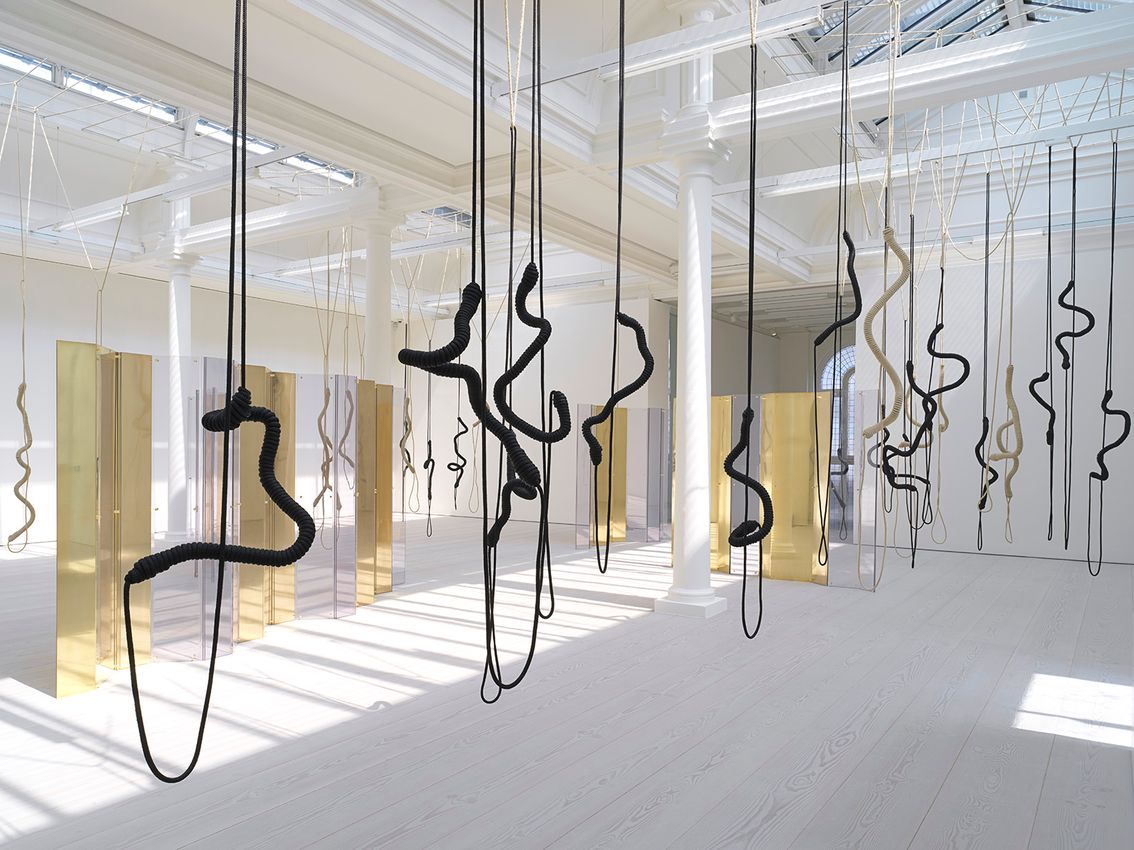
Marian Goodman Gallery London is pleased to present an exhibition of works by Portuguese artist Leonor Antunes. This is the artist’s first exhibition with the gallery.
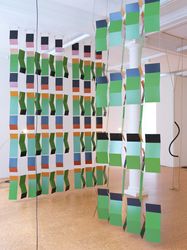
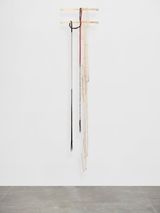
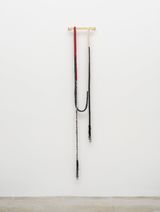
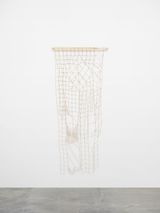
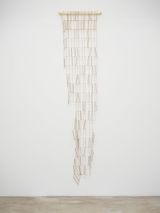
Leonor Antunes’s practice provides a unique contemplation on modern art, architecture and design through a reinterpretation of sculpture in a given space. Inspired by important figures in the realm of creation in the 20th century, and often influenced by female protagonists such as Anni Albers, Mary Martin and Eileen Gray, Antunes’s work begins by measuring features of architecture and design that interest her. She then uses these measurements as units which can be translated into sculpture. Embracing traditional craftsmanship from around the world, she employs materials such as rope, leather, cork, wood, brass, and rubber to create unusual forms. Her new sculptures unfold on both floors of the gallery, creating a dialogue with the architecture of the space. Thoroughly and systematically, Antunes immerses herself in the history and cultural heritage of the place where her work is exhibited, thereby offering a unique tribute to a specific environment through her poetic, fragile and complex structures. This exhibition can be seen as a continuation of her recent presentation at the Whitechapel Gallery, entitled the frisson of the togetherness.
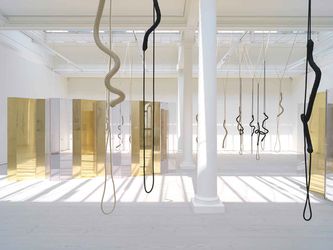
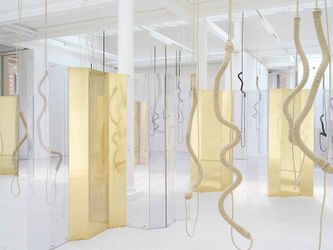
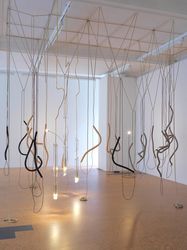
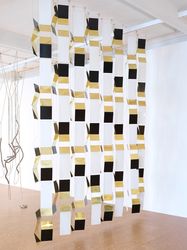
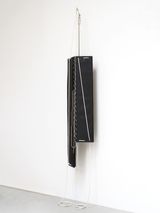
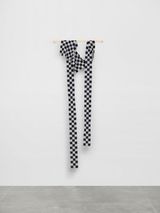
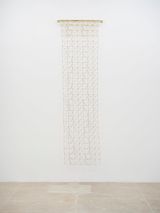
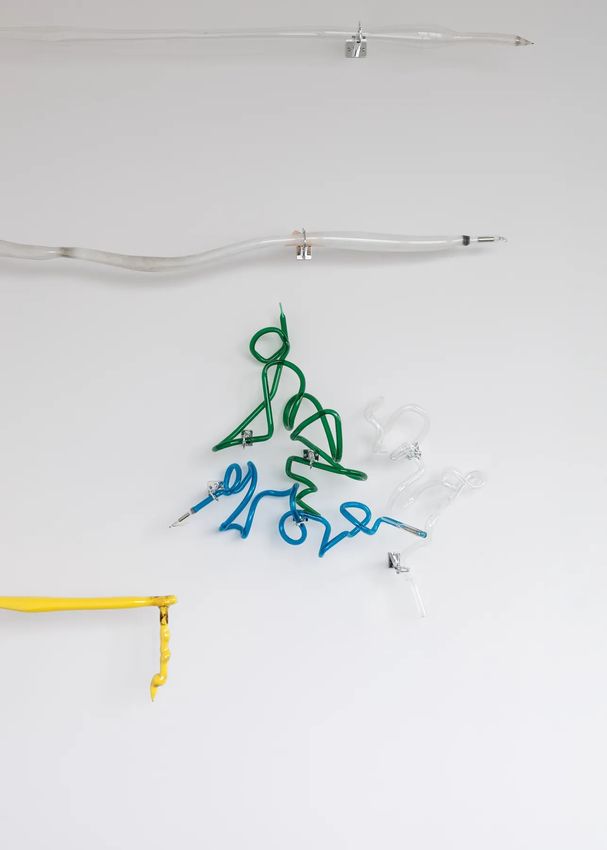
On the ground floor of the gallery Antunes has conceived a sculptural path in different parts based on a relief made by British artist Mary Martin (1907-1969), which takes the form of a monumental screen, acting as a partition, fragmented in sections. Made of powder-coated brass, the elements of the structure are attached by cables, fixed from the ceiling to the cork floor, which has been specifically built for the exhibition. A series of hanging sculptures in leather is presented alongside suspended brass and glass lamps, which recall some drawings made by Anni Albers (1899-1994). The drawings were eventually enlarged by Antunes who used their measurements and volumes for her sculptures. Despite having never met, Mary Martin and Anni Albers were connected through their use of form in their respective practices. A continuous flow of lines and twisting shapes is central to their work, as well as Antunes’s.
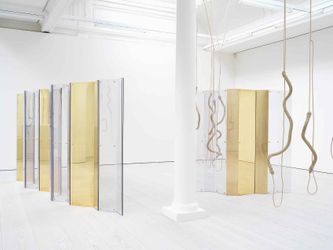
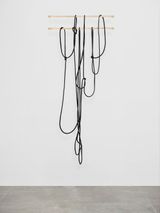
On the first floor of the gallery, Antunes exhibits sculptures made of polycarbonate and brass in the form of combined and free-standing panels, which have been shaped prior to their assembly, during the fabrication process. Each screen corresponds to the exact measurements of one of the glass panels in the Upper Lawn Pavilion in Wiltshire, built between 1959 and 1962 by the British architects Alison and Peter Smithson (1928-1993 and 1923-2003). Antunes extensively researched the pavilion for her exhibition at the gallery, in an effort to render the distinctive transparency of the site. Alongside this piece, Antunes presents several groups of sculptures made of rope which hang from the ceiling, echoing the leather sculptures on the ground floor.
The title of the exhibition is a poetic allusion to a text by Alison Smithson, published in a book entitled Upper lawn: solar pavilion folly. It refers to Smithson’s relationship to the medium of polythene (which was later replaced by glass in the structure of the Wiltshire pavilion), and how this material affected her perception of the outside world, as though she were looking through lenses.
Leonor Antunes’s works exist as new artistic entities, which quote luminaries of the past, in a moving manner and through a continuous study. In a singular approach to the organic and natural world, she attempts to preserve the ancestral artisanal techniques of the materials she uses with the introduction of a new contemporary discourse on the possibilities of sculpture.
Leonor Antunes (b.1972, Lisbon). Lives and works in Berlin.
Recent solo exhibitions include the frisson of the togetherness, Whitechapel Gallery, London (2018); New Work: Leonor Antunes, San Francisco Museum of Modern Art (2016); the pliable plane, CAPC, Bordeaux (2015); the last days in chimalistac, Kunsthalle Basel (2013). Antunes is currently preparing several important solo exhibitions for the Museo Tamayo, Mexico City (June 2018); Hangar Bicocca, Milan (September 2018); MASP, São Paulo Museum of Art (2019); The Box, Plymouth (2020).
Her work will be part of upcoming group exhibitions at the Fondazione Prada, Venice (May 2018); the Hayward Gallery, London (September 2018); the Gwangju Biennale (September 2018).
She participated in the 57th Venice Biennale (2017); 12th Sharjah Biennial, UAE (2015), the 8th Berlin Biennale (2014).


For over forty years, Marian Goodman Gallery has played an important role in helping to establish a vital dialogue among artists and institutions working internationally. Marian Goodman Gallery was founded in New York City in late 1977. In 1995 the Gallery expanded to include an exhibition space in Paris – with an additional exhibition space and bookshop added in 2016 - and in 2014 an exhibition space in London. The London space transitioned to Marian Goodman Projects in 2021, a new initiative to present exhibitions and artist projects in London and other select cities around the world.

A respected voice in contemporary art discourse.
Focusing on ambitious storytelling and insightful art-world commentary. Ocula Magazine publishes in-depth interviews, critical essays and timely analysis on the artists, exhibitions and ideas driving the global art world.
Learn more about Ocula Magazine
Showcasing the best of the art world.
Ocula partners with galleries from around the world to highlight their artists, artworks and exhibitions. Gallery membership is by application and invitation, with each member vetted by an independent panel.
Learn more about Ocula Membership

Specialises in the sale of major artworks.
Led by a team with deep ties to the world’s leading auction houses, galleries and collectors. Ocula’s advisory team offers bespoke services to high-net-worth clients from around the world who are looking to acquire the best of contemporary and modern art.
Learn more about our team and services