Press Release

MAKI Gallery is pleased to present Mythic Threads, an exhibition by Japanese artist Asami Kiyokawa shown at our Tennoz gallery space. Building upon her special exhibition Mystic Weave: Stitching Myth held at Kirishima Open-Air Museum in Kagoshima Prefecture during the summer of 2024, Kiyokawa strives through her upcoming show to reimagine the ongoing human narrative from past to future at the intersection of nature and urbanity, tradition and technology.

At her exhibition in Kirishima, Kiyokawa showcased a blend of her iconic works featuring embroidered photographs and new pieces inspired by Kirishima’s natural heritage. These works expressed the complexity and beauty of contemporary society whilst exploring new relationships between humanity and nature. In a time when technological advancement and urbanisation increasingly distance us from nature, Kiyokawa created interactive installations that integrated nature as an essential element of the artwork. These installations offered visitors a space to experience the interconnectedness of humans and nature.

This attempt was not merely about depicting nature as a subject but about exploring a new vision of the future through the fusion of art and technology. The essence of Kiyokawa’s work lies not in critiquing issues such as climate crisis or ecological destruction but in presenting a positive vision of the future and providing viewers with a chance to weave their own stories for tomorrow.

Regarding the theme of ‘myth,’ which is central to both this and the Kirishima exhibition, Kiyokawa states:

I view myths and fantasies as ‘messages for the future.’ They are timeless stories showing how humanity has understood the world in the past and how we should move forward into the future. Especially in an era of rapid social changes, I believe myths serve as vital clues for reconsidering fundamental human values.

Guided by this perspective, Kiyokawa draws upon Japanese and global myths that have shaped the worldview, societal norms, and the foundations of human culture for thousands of years. She seeks to express alternative perspectives on contemporary issues such as environmental challenges, identity, technology, and power dynamics. Her work takes us back across an unimaginably vast timeline to the age of primordial chaos, an age in which no established values existed. It appears that with this as a point of origin, Kiyokawa wishes to encourage us to reweave the world and the essence of human existence anew.

Referring to the significance of presenting this exhibition in Tokyo, far from the mythologically rich region of Kirishima, Kiyokawa notes that “In urban spaces, where the separation between nature and humanity is most pronounced, reclaiming the beauty and vitality of nature holds a special meaning.” In today’s world, urban and natural elements are often seen as opposing forces. However, Kiyokawa seeks to interweave these elements, using her unique embroidery technique to enable dialogue between nature, myth, and urban spaces. This approach aims to share values essential for a new era.

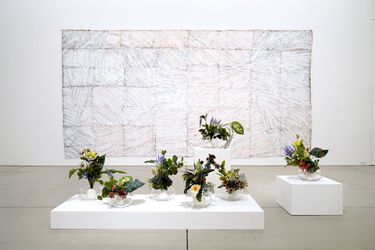
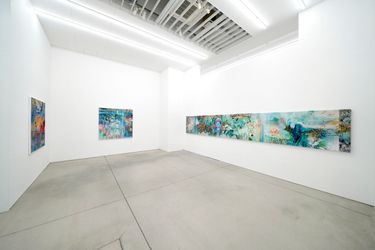
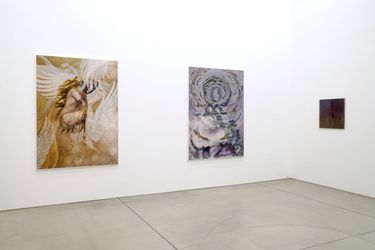
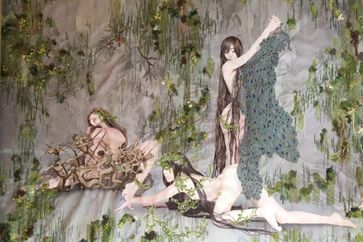
At the heart of this exhibition lies the Serendipity series, a symbolic embodiment of Kiyokawa’s artistic endeavours. Serendipity (Phantasm) is a new body of work themed around ‘myths of the future,’ where embroidery is applied to paintings to represent spaces where nature and urbanity, hope and anxiety intersect. The works suggest a digitally recreated flicker of natural light, set against ominous silhouettes of urban landscapes. Serendipity, signifying hidden blessings within chance, conjures hope for the future, while Phantasm conveys the unease and uncertainty that lurks within cities. Through this stark contrast, Kiyokawa explores the challenges facing contemporary society and envisions possibilities for new harmonies.

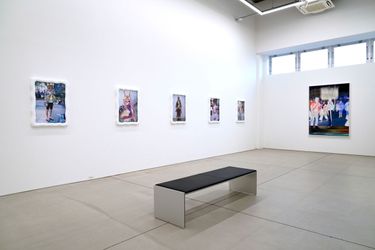
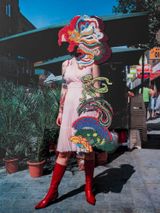
The exhibition also includes past works such as HAZY DREAM, which dives into the ambiguity and allure of reality, and the MONSTER series, which delves into the uncertainties of modern life, portraying young people striving to discover new selves. By presenting these series together, the exhibition illuminates the boundaries between reality and myth, the visible and the invisible, continuing Kiyokawa’s exploration of timeless and universal themes.

Asami Kiyokawa’s artistic journey has evolved from her early works that dealt with personal emotions and introspection to her current pieces that address societal and global themes. Yet, at the core of her practice remains a steadfast commitment to questioning the essence of humanity. Kiyokawa is deeply driven by a desire to inspire novel perspectives on themes such as nature and urbanity, tradition and technology, and the individual and societal. Through this exhibition, she invites viewers into the realm of myth, offering a space in which to explore values for a new era together. We warmly encourage you to visit and experience this thought-provoking exhibition.

Written by Haruna Takeda

Read More

Installation Views

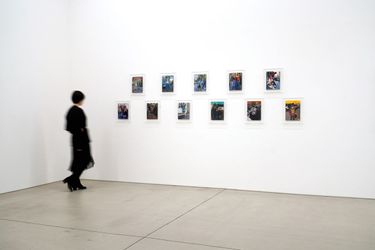
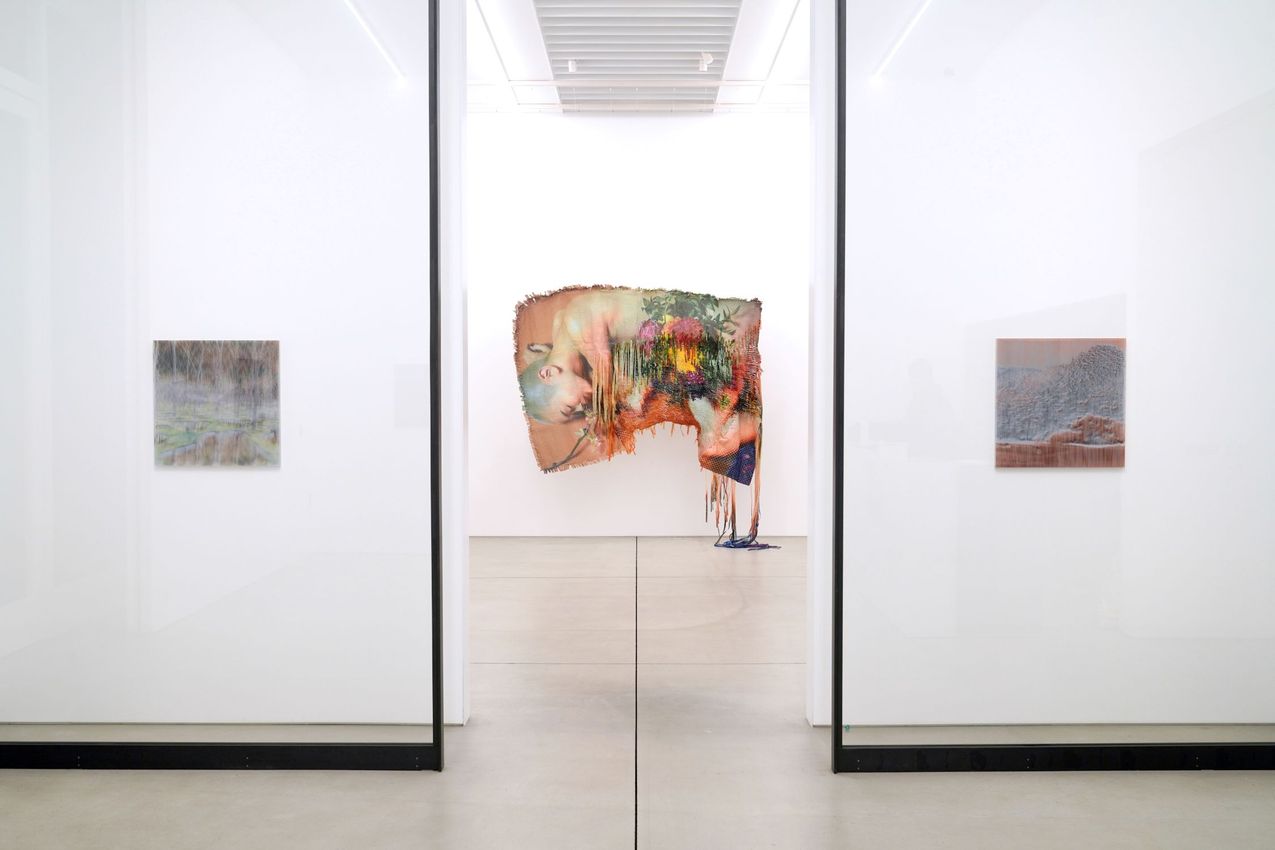
Installation view "Mythic Threads" by Asami Kiyokawa
About the Artist

Born in 1979 in Awaji Island, Japan, Asami Kiyokawa currently lives and works in Tokyo. Kiyokawa first came to public attention as an amateur fashion model, and while studying fashion at Bunka Fashion College in the 2000s, she began her creative practice exploring the unlimited possibilities of fashion and self-expression. Since her debut solo show SAUCE in 2001, Kiyokawa has held numerous exhibitions both in Japan and abroad. The artist examines and visualizes the contradictions that arise between the internal and external components of an individual’s identity, particularly within a society exposed daily to vast amounts of information. Known for her unique method of applying embroidery to photographs, magazines, books, and fabric, Kiyokawa has created such signature series as Beauty Collection, Complex, ****and TOKYO MONSTER. In recent years, she has further broadened her range of artistic expression to include creative work in costuming, advertising, film, picture books, spatial design, product development, and regional revitalization projects.

View Artist Profile Asami Kiyokawa contemporary artist
About the Gallery

MAKI Gallery was first established in Tokyo in 2003, with the aim of promoting works by seminal avant-garde Japanese artists of the 1950s-60s. The gallery has since gradually shifted its focus to working with emerging contemporary artists. After opening a location in the bustling, high-end shopping district of Omotesando in 2014, MAKI Gallery opened an expansive, museum-caliber space in the growing gallery hub of Tennoz in 2020. Across these two outposts, MAKI Gallery presents a broad range of works by internationally active artists, including Mungo Thomson, Miya Ando, Susumu Kamijo, and Marius Bercea, while also introducing younger Japanese artists, such as Anne Kagioka Rigoulet, Keisuke Tada, and Takuro Tamura, to a global audience. The gallery has also participated in various international art fairs such as Frieze New York, The Armory Show, Asia NOW, and West Bund Art & Design.

View Gallery Profile
Address
1-33-10 Higashi-Shinagawa
Shinagawa-ku
Tokyo
Japan
Opening Hours
Tuesday – Saturday
11:30am – 7pm
(1)
Tokyo 1-33-10 Higashi-Shinagawa, Shinagawa-ku
MAKI
1-33-10 Higashi-Shinagawa, Shinagawa-ku, Tokyo, Japan
+81 368 104 850
http://www.makigallery.com

Opening hours
Tuesday – Saturday
11:30am – 7pm
The art world in focus