





‘I Guess I Really Like Dancing’: IW Payne’s Stereotype-Subverting Silhouettes
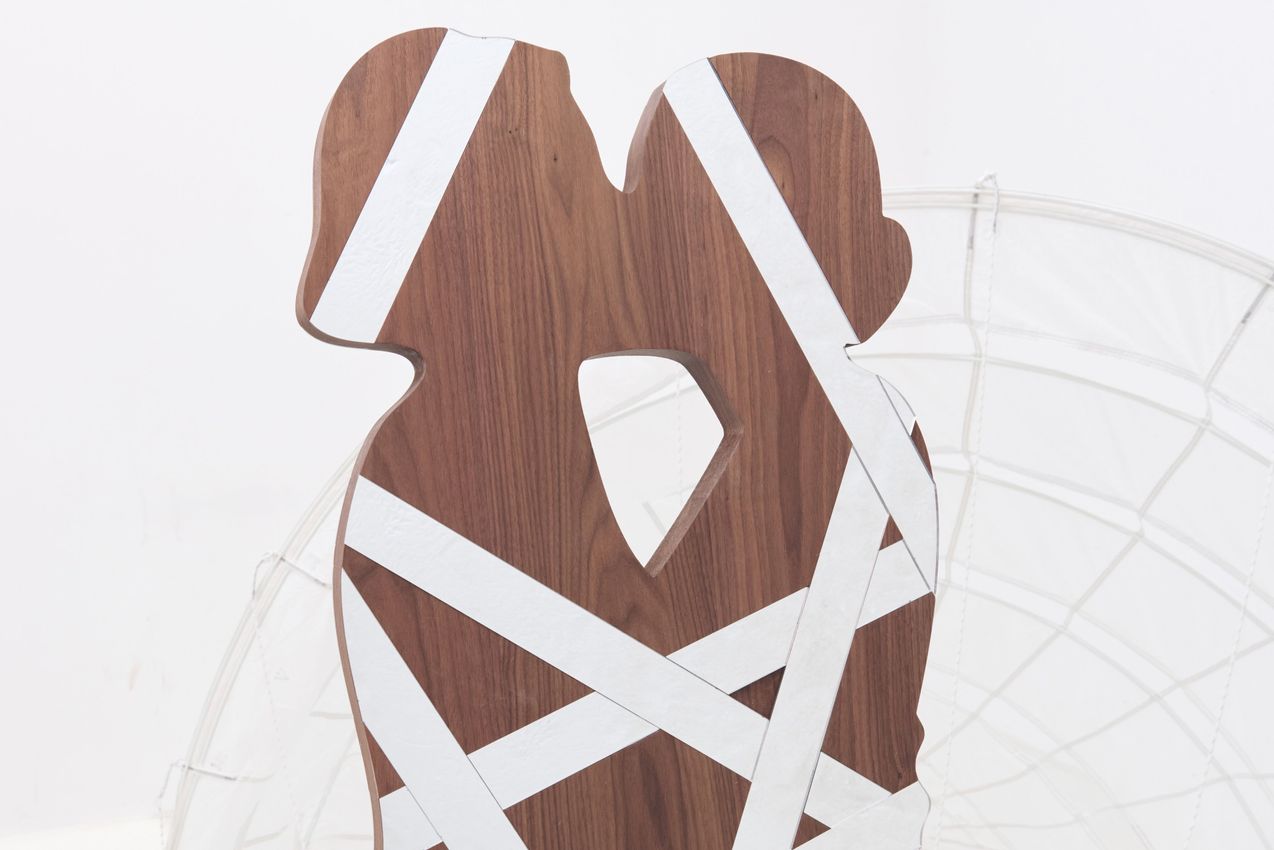
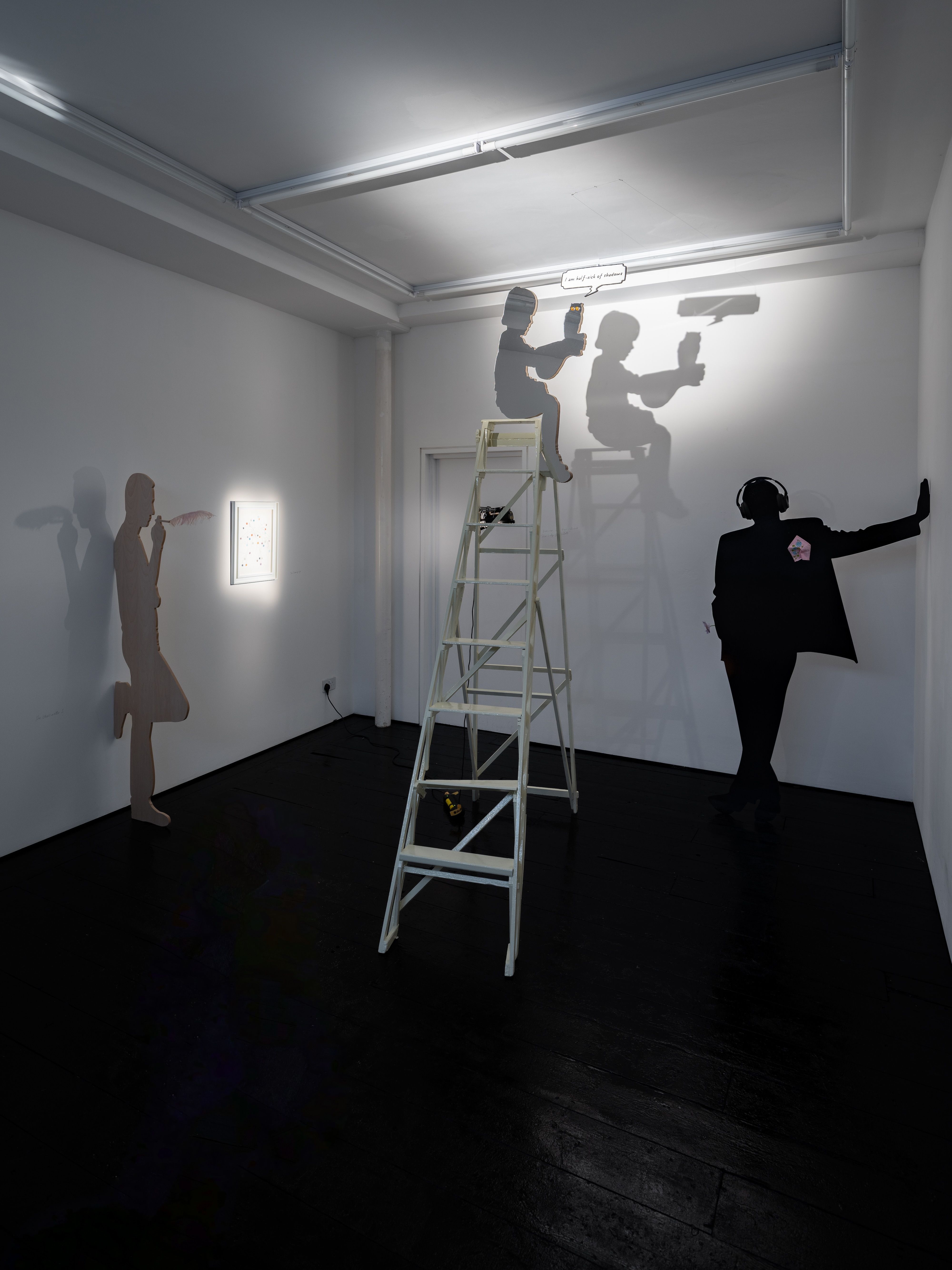
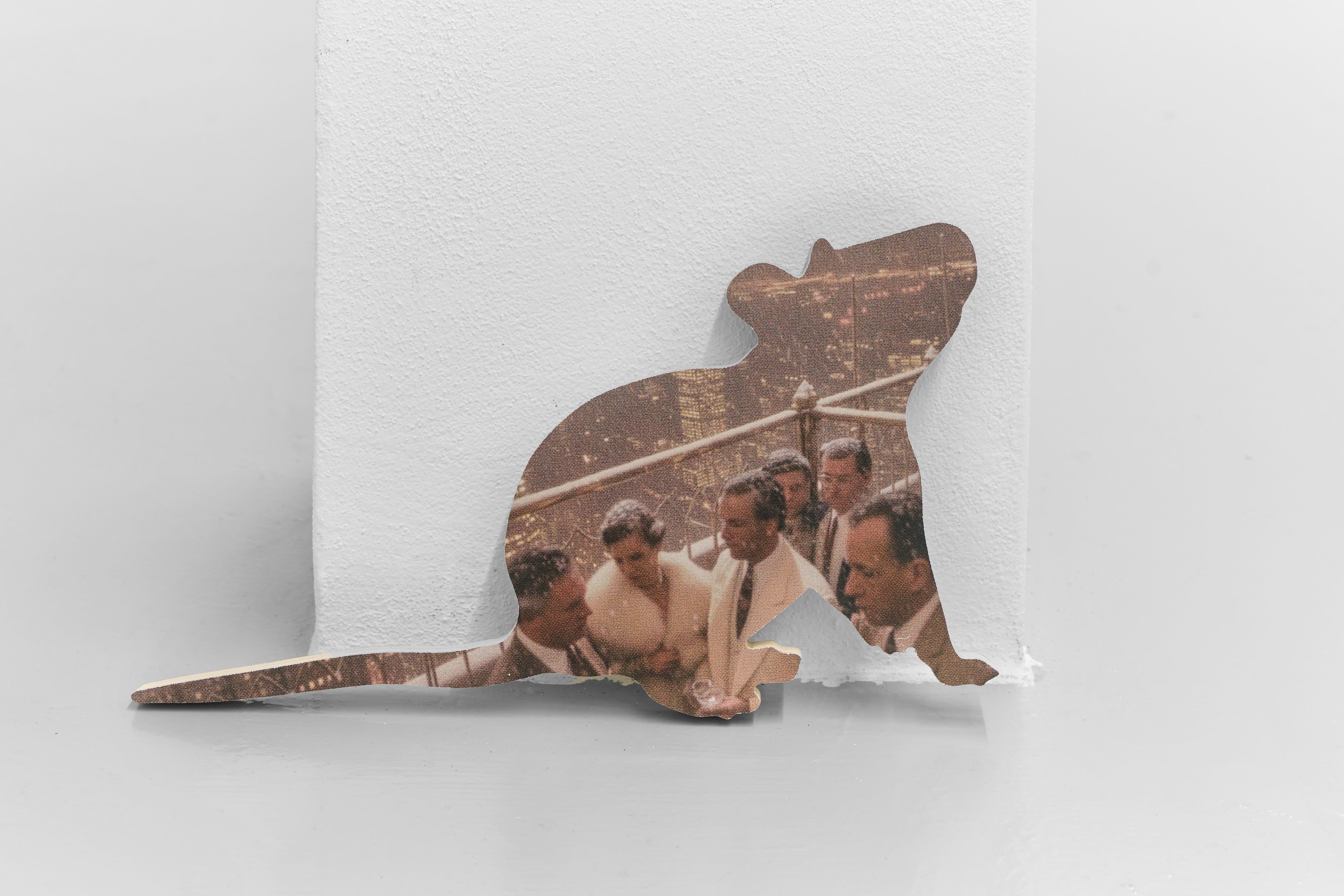
IW Payne on humour, amplifying female voices, and how today’s politics are reminiscent of the early 20th century. Save to My OculaThe wooden cut-out silhouettes that appear in the work of London-born artist IW Payne evoke moments in cinema that feel transcendent. These hand-built sets attempt to capture moments of climax, or the quieter points in the film where verisimilitude is briefly achieved, such as the moment at which Anna sinks into the furniture in Leos Carax’s Mauvais Sang (1986). For this year’s Frieze London, Payne has installed a stage set within 243 Luz & Co’s booth in the fair’s Focus section. The cut-out depicts a pair of mythological fauns making out. They kiss in the smoking area of a club, while printed text emerging from rats on the floor quote cult artist and author of lesbian modernist novel Nightwood Djuna Barnes and British poet and author Mina Loy.
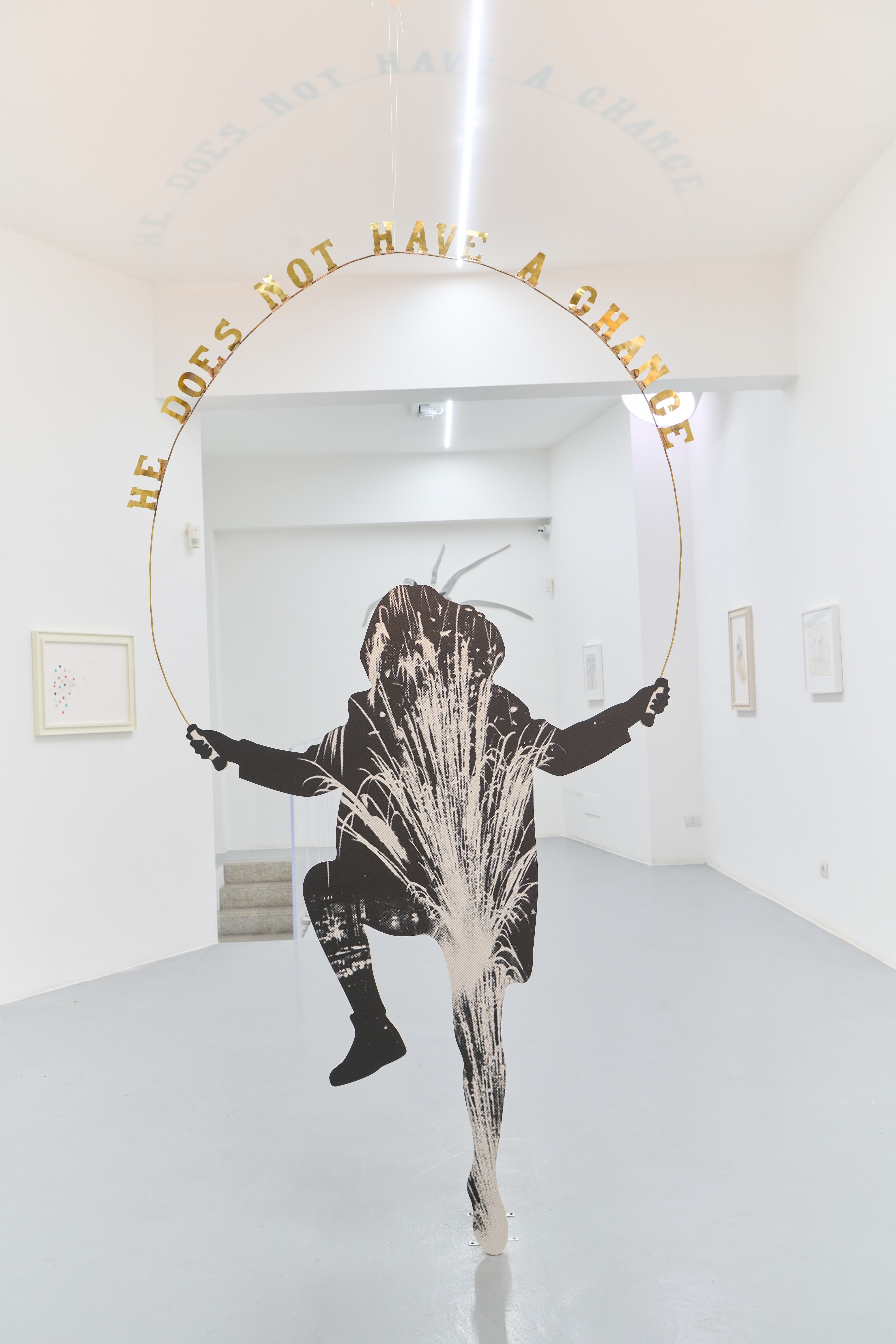
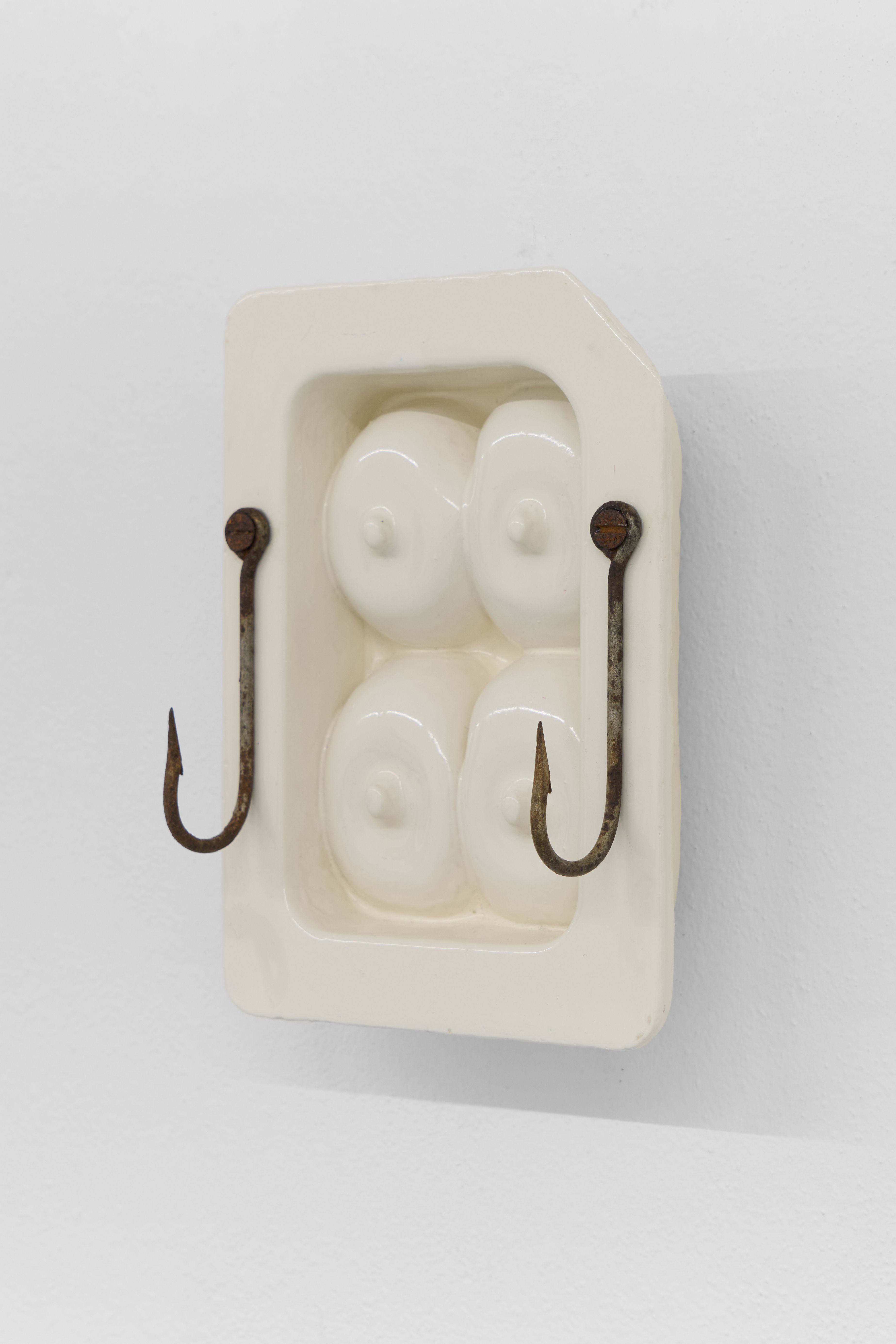
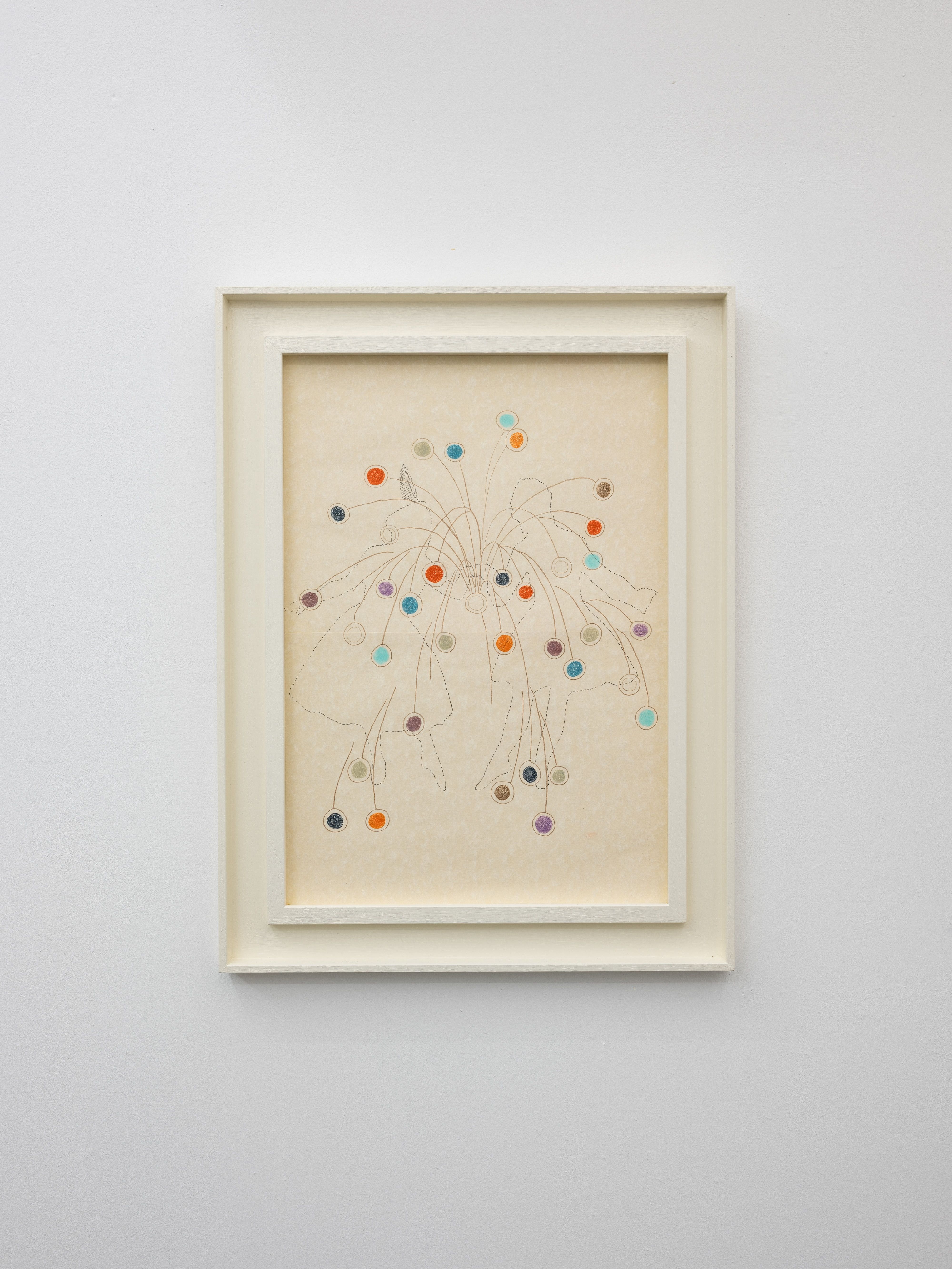
Payne recently closed He Does Not Have A Chance, an exhibition at Triangolo in Italy, in which she exhibited work that responded to 1993 documentary film Beatrice Wood: Mama of Dada. The film explores Wood’s experiences as a member of the Dada group during the 1910s and her enduring influence on a new generation of artists. Wood, a friend of Marcel Duchamp’s, co-edited the Dada magazine Rongwrong. Payne approaches her accompanying drawings with appropriate humour. The show formed a throughline between Payne’s favoured period of time, the 1900s–1920s, and our current moment: both periods that germinated between proto-fascism and technological revolution.
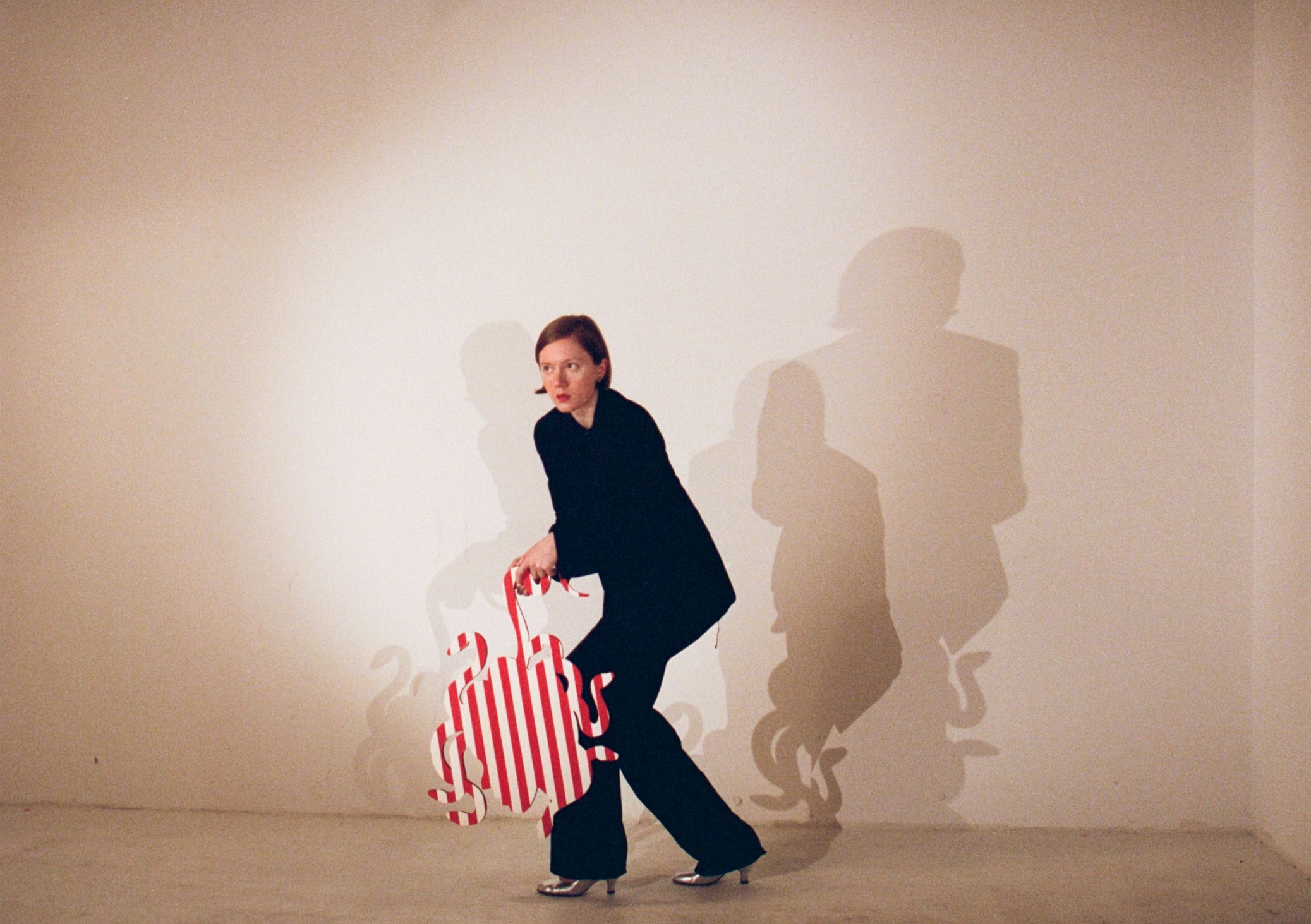
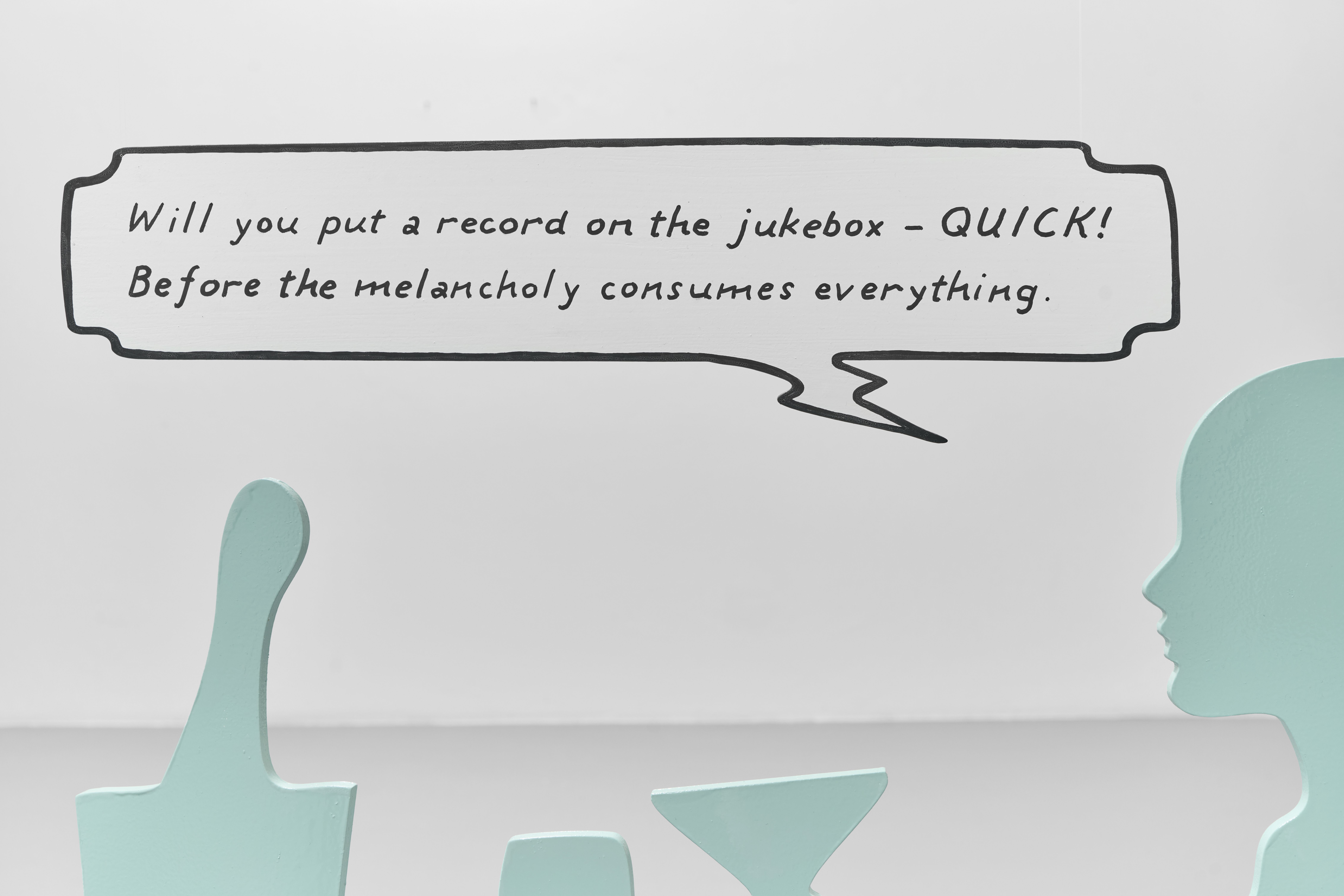
Lydia Eliza Trail: Can you tell me about the speech bubbles that appear in your silhouette works?
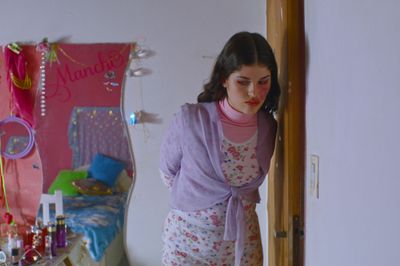
IW Payne: I’m always trying to portray a stronger female voice that could be thought of as hysterical. I hate how that word belittles women’s urges and feelings, so I wanted to use these quite “hysterical” voices in my work. In one work at Triangolo, I quote from the script of one of my favourite scenes in any film, Leos Carax’s Mauvais Sang (1986). In the scene, the female protagonist is very depressed, and her form takes the shape of the bed itself; she almost disappears. Then he puts the radio on, and it plays Modern Love by David Bowie, and he sprints down the street with the camera following him.
LET: What is the silhouette to you?
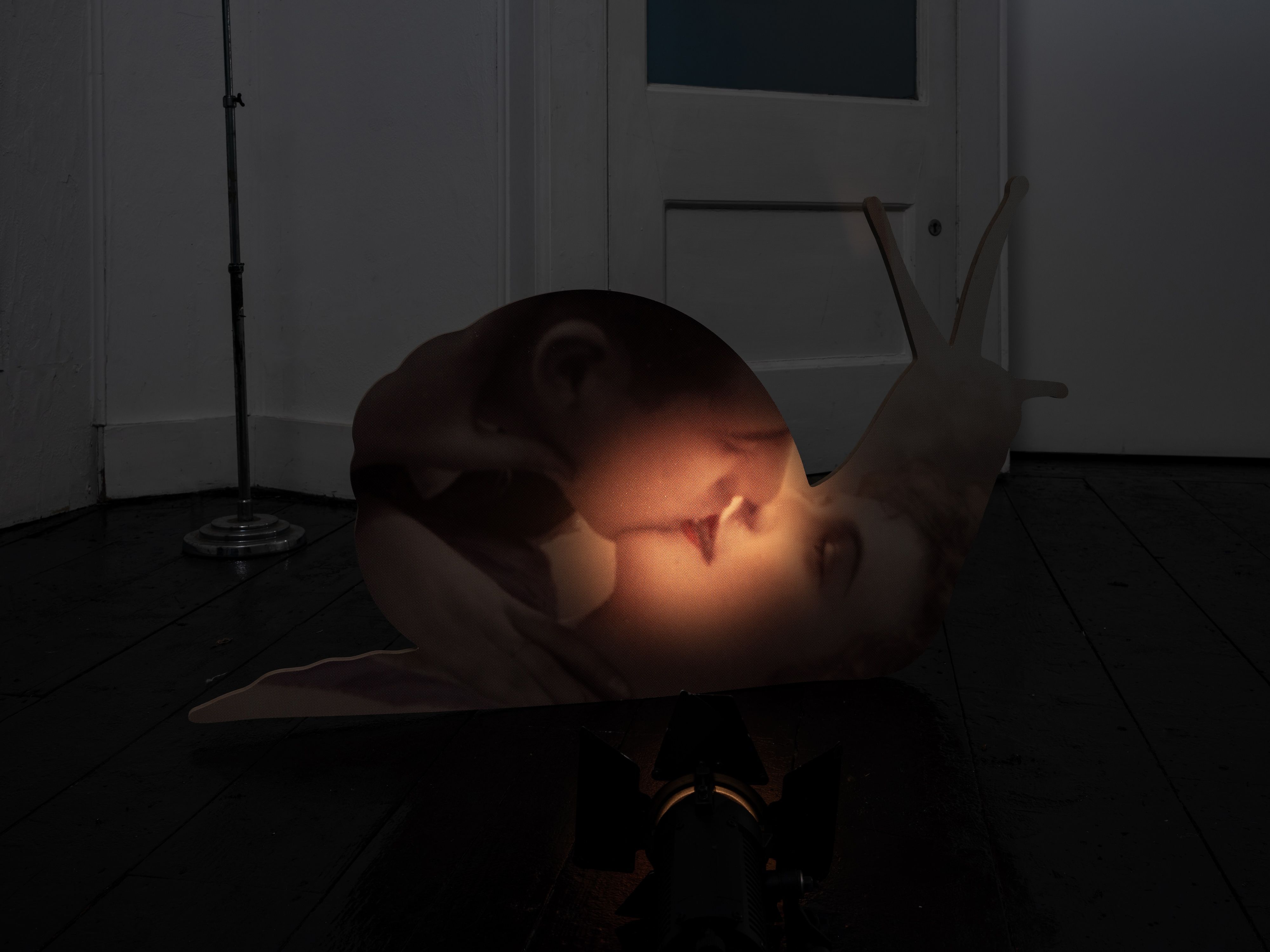
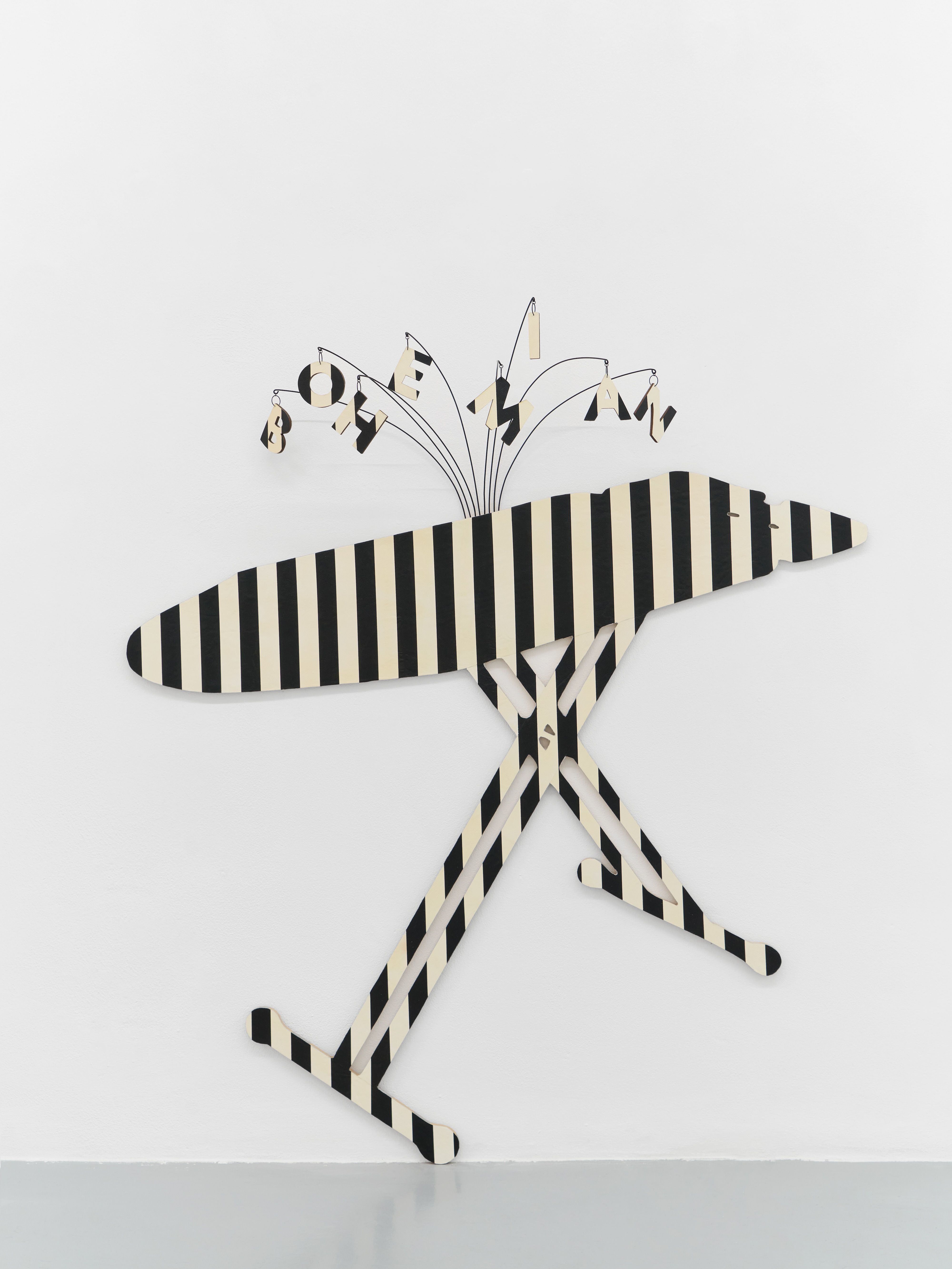
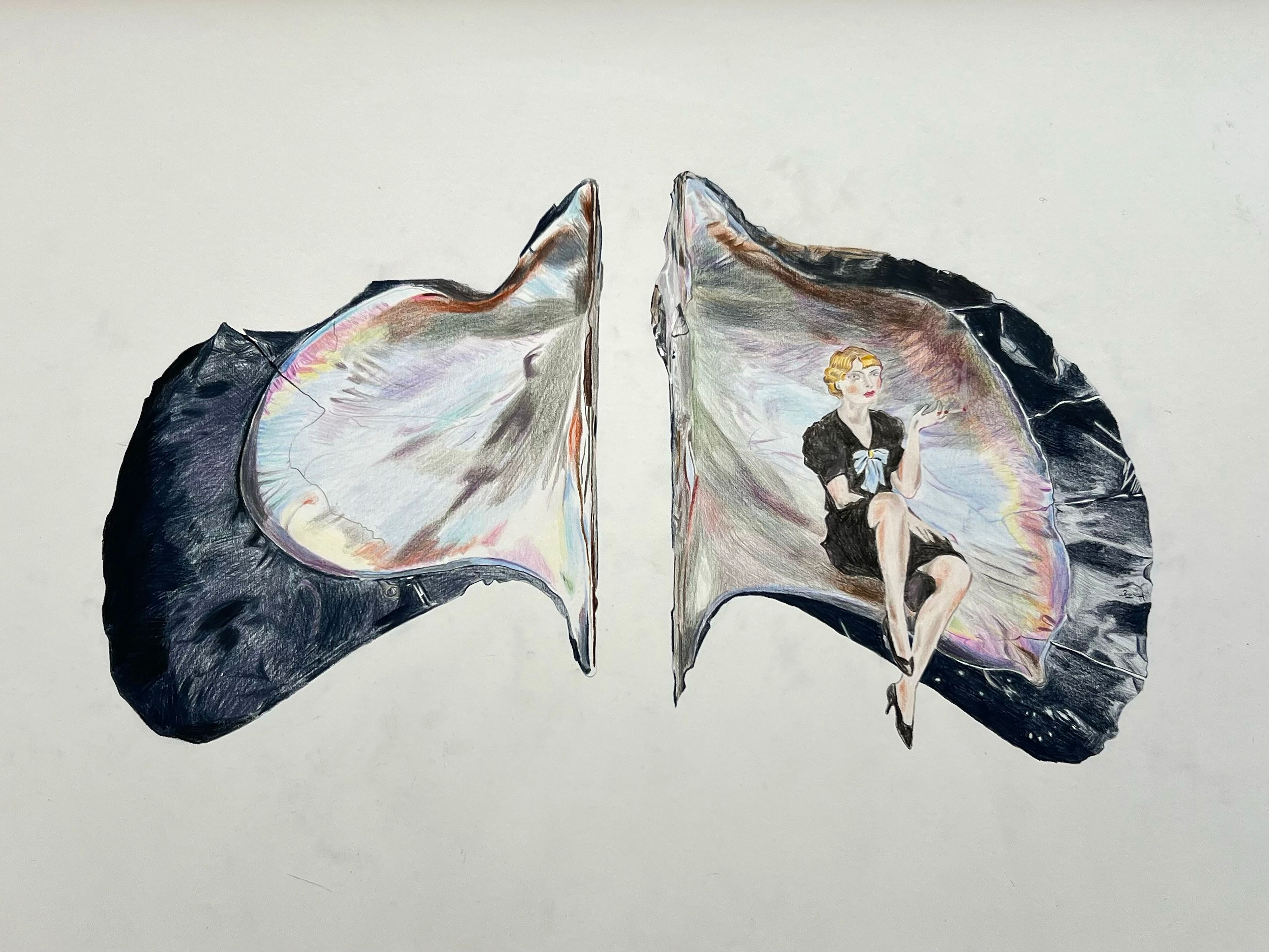
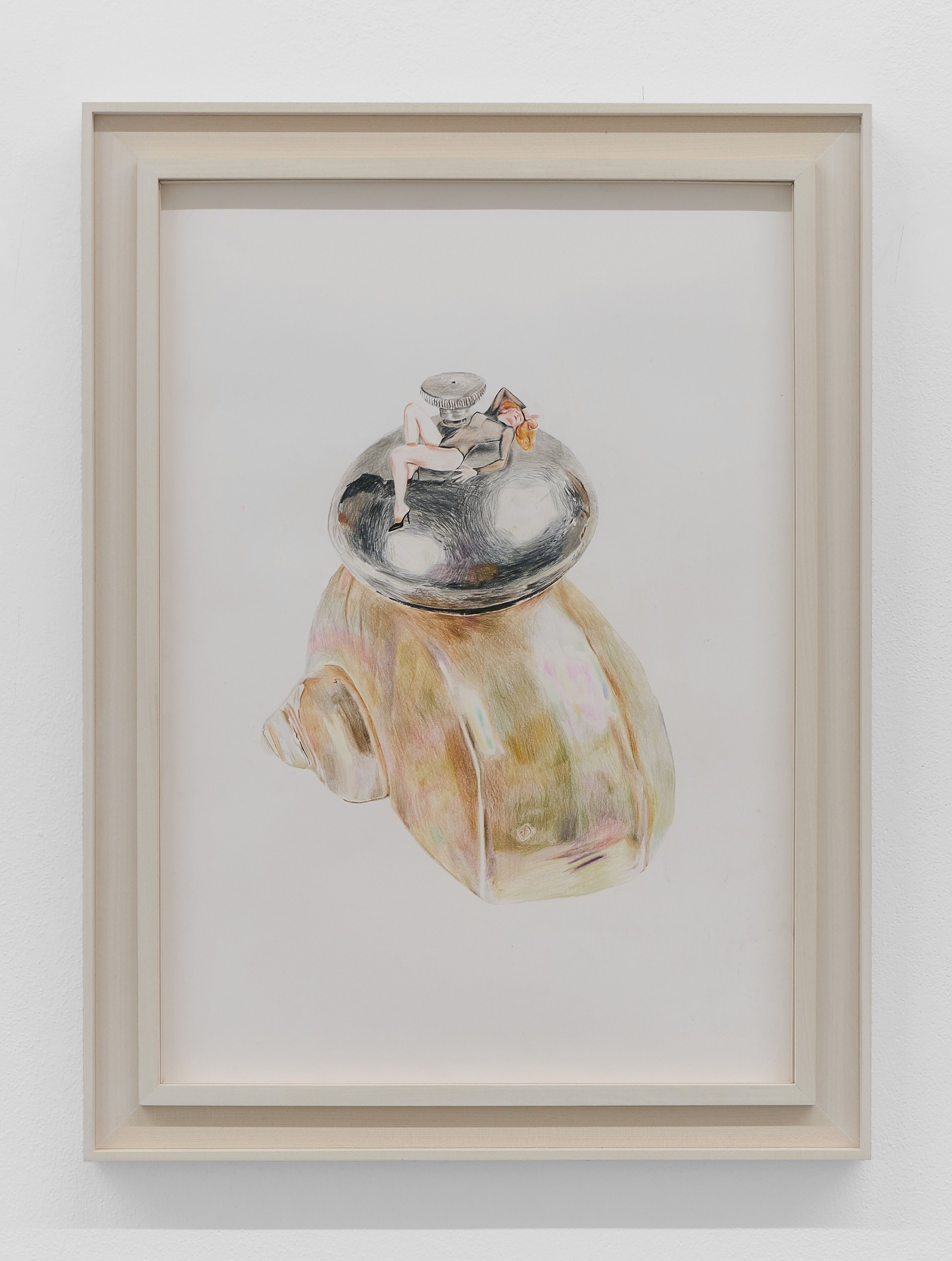
IWP: It allows me to play with stereotypical outlines of people that could be seen as quite nuclear. The thing with the silhouettes is that I can combine them with a pattern or a photograph, and there’s a clash that happens or a harmony. Sometimes the pattern can be quite jarring or graphic. Sometimes it’s a photograph that’s quite alluring; usually it’s the composition of the photograph within the shape, but it’s also the connection between the meanings of the silhouette and the photo. In Lie Down I Think I love you (The Snail), the snail is this slow and wet thing, and the lovers that kiss on its surface are also slow, creating a weird harmony between the material and the subject matter of the photograph.
LET: Would you give that technique a name?
IWP: I don’t know. The only name I’ve come up with is cut-outs. Duchamp coined this great term “infrathin”, which I learned about when I studied in Amsterdam. It’s this boundary between two things: the feeling of breath between two people, or the warmth left on a chair after someone’s left.
LET: For your Frieze booth, you use silhouettes of two fauns, wrapped in an embrace by the strings of a parachute. Can you discuss these? You call them “Punky Fem Fauns”.
IWP: It started with a postcard someone gave me ages ago of these legs on a sink at Ham House in London. I loved it. The legs on the sink were cast like hooves. Originally, the figures had normal, human legs, and then I drew them with faun legs. With my work, I’m looking for an escape and realism doesn’t work so well anymore. I want it to be more escapist.
There’s a lot of humour to my Frieze booth. There are rats on the floor with quotes: one from Djuna Barnes’s Nightwood, the other from Mina Loy’s 1914 manifesto: “To your blushing we shout the obscenities, we scream the blasphemies, that you, being weak, whisper alone in the dark.” To me, that was quite a feisty, anti-fascist line. I wanted it to relate to the queer love I’m portraying in the fauns’ embrace.
“With my work, I’m looking for an escape and realism doesn’t work so well anymore”
LET: Do you see yourself in the fauns?
IWP: My influence for the fauns was a combination of Vaslav Nijinsky performing in the Ballet Russes’ The Afternoon of a Faun (1912), and then also in Greek mythology, Pan was seen as the god of the dawn awakening, which I liken to discovering queer identity. I also took inspiration from Matthew Barney, who dressed up as faun-like characters in the Cremaster Cycles (1994–2002).
LET: Your work has a vintage and retro feel. Why are you drawn to the turn of the 20th century?
IWP: I’m obsessed with the 1900s, 1910s and 1920s because of the similarities between that time and the time we’re in now. With the rise of proto-fascism and the crazy acceleration of technology and industrialisation, there was an obsession with the future. A lot of my imagery draws on this period, and at the Frieze London booth, the parachute sculpture is lifted from this time period.
LET: What role does kitsch play in your work, and what does the word mean to you?
IWP: When I was younger, I modelled for British fashion designer-duo Meadham Kirchhoff. This must have been around 10 years ago, when I was 15 or 16. I loved the brand because of its kitsch, overtly camp and girly appearance; the collections always had insane handmade elements. Those early fashion shows, paired with the kitschiness of artist Mike Kelley with his plush toys and knitting, influences my practice. But I also love the German hard edge of Joseph Beuys’ drawings, or the fabric-based sculptures of Rosemarie Trockel.
LET: Is Matthew Barney in your dream exhibition? Who would you put alongside him?
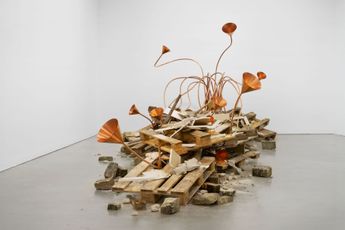
IWP: It would be Matthew Barney and Alexander McQueen. I have a specific dress in mind, which my mum, who is a designer, made for McQueen’s Autumn/Winter 1999 show on an ice rink. She does a special painted-leather technique that he wanted. The other artist is Rebecca Horn, for her kinetic sculptures, which McQueen drew on for the Spring/Summer 1999 show.
LET: You say you like to bring together anachronistic elements in your work. What in the Frieze booth brings in elements of today’s culture?
IWP: On the back of the booth, there’s an artwork that references my early experience of clubbing 10 or 11 years ago, when I started going out. We’d all be less on our phones, more in the moment. The fauns are caught up in a romantic moment in the smoking area of the club, with the artwork behind spelling out “SEX-O-THEQUE”. I guess I really like dancing.—[O]
Main image: IW Payne, We Fucked a Flame Into Being (2026). Preview of new installation to be presented at Frieze London 2026 with 243 Luz & Co. Photo: Luca Pellegrino













A respected voice in contemporary art discourse.
Focusing on ambitious storytelling and insightful art-world commentary. Ocula Magazine publishes in-depth interviews, critical essays and timely analysis on the artists, exhibitions and ideas driving the global art world.
Learn more about Ocula Magazine
Showcasing the best of the art world.
Ocula partners with galleries from around the world to highlight their artists, artworks and exhibitions. Gallery membership is by application and invitation, with each member vetted by an independent panel.
Learn more about Ocula Membership
Specialises in the sale of major artworks.
Led by a team with deep ties to the world’s leading auction houses, galleries and collectors. Ocula’s advisory team offers bespoke services to high-net-worth clients from around the world who are looking to acquire the best of contemporary and modern art.
Learn more about our team and services