





Making Sense: Leiko Ikemura Pushes Visual Art Beyond Sight Alone
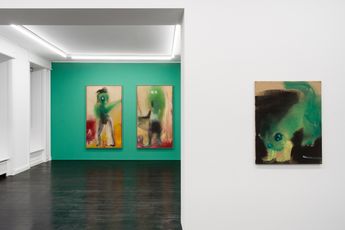
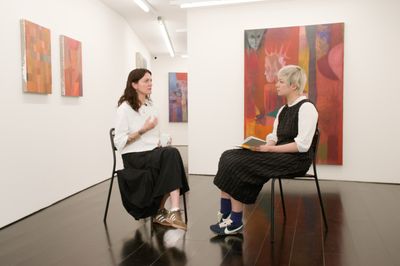
A vivid green wall extending several metres in diameter is the first element of artist Leiko Ikemura’s latest exhibition, De Sensu, that hits you when you enter Contemporary Fine Arts in Berlin. For Ikemura, the extension of bold colour beyond the boundaries of her canvases is central to an exhibition in which she explores the further reaches of the senses. “It’s not about only visual sensation or about listening or touching,” she says. “It’s more about this opening to the porosity, and just how I work and transform this chaos of unknowns.” Ikemura’s latest exhibition explores the immersive possibilities of visual art as a means of evoking the senses beyond sight alone. “I was thinking also about sound, smell, but I would like to do that in a way of imagination,” she reflects. “If you read, for example, Marcel Proust about this sudden remembering of the taste of madeleine. The smell, it reminds him of childhood. If you read it, you are smelling already.”
Born in Japan in 1951, Ikemura’s own childhood was lonely as she fought against the truncated experience of girlhood within a strongly patriarchal society. “Seeing the generation of my mother, it was really sad and I suffered with them,” she says. “It was a very strong decision for me: I do not want to live this life.” Ikemura “missed” being a child owing to the expectations in her home country that children grow up fast, and when she left Japan she was only 21, with no support from her family. “I was really passionate to change my life, to do something for me but also for society,” she says. “When you see how I lived all my life, it was always in an adventurous and unknown way. I don’t know what’s happening tomorrow. And I do things, a lot of things that I don’t plan. This is also my way of painting. The painting itself, they have their own life.”
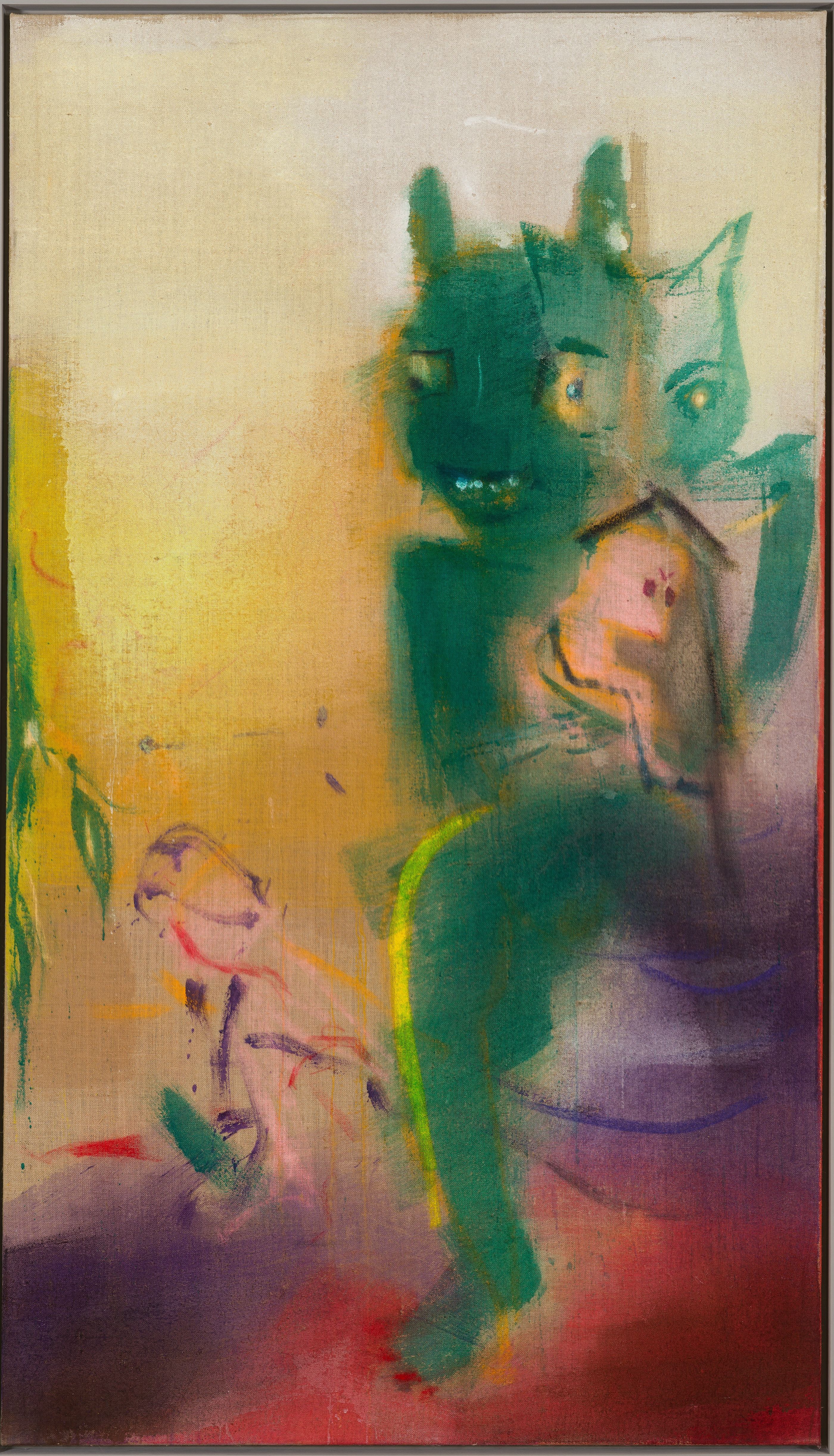
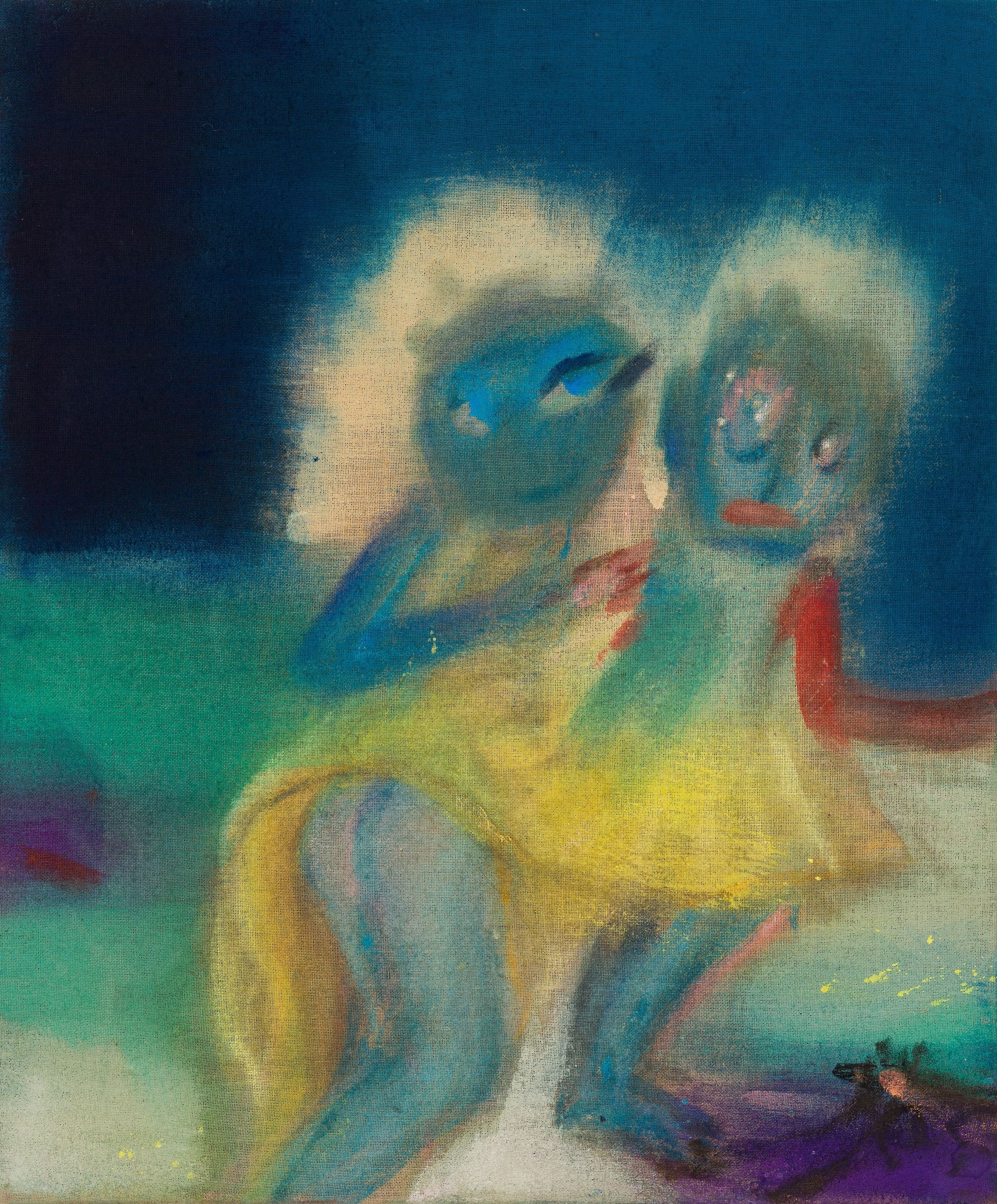
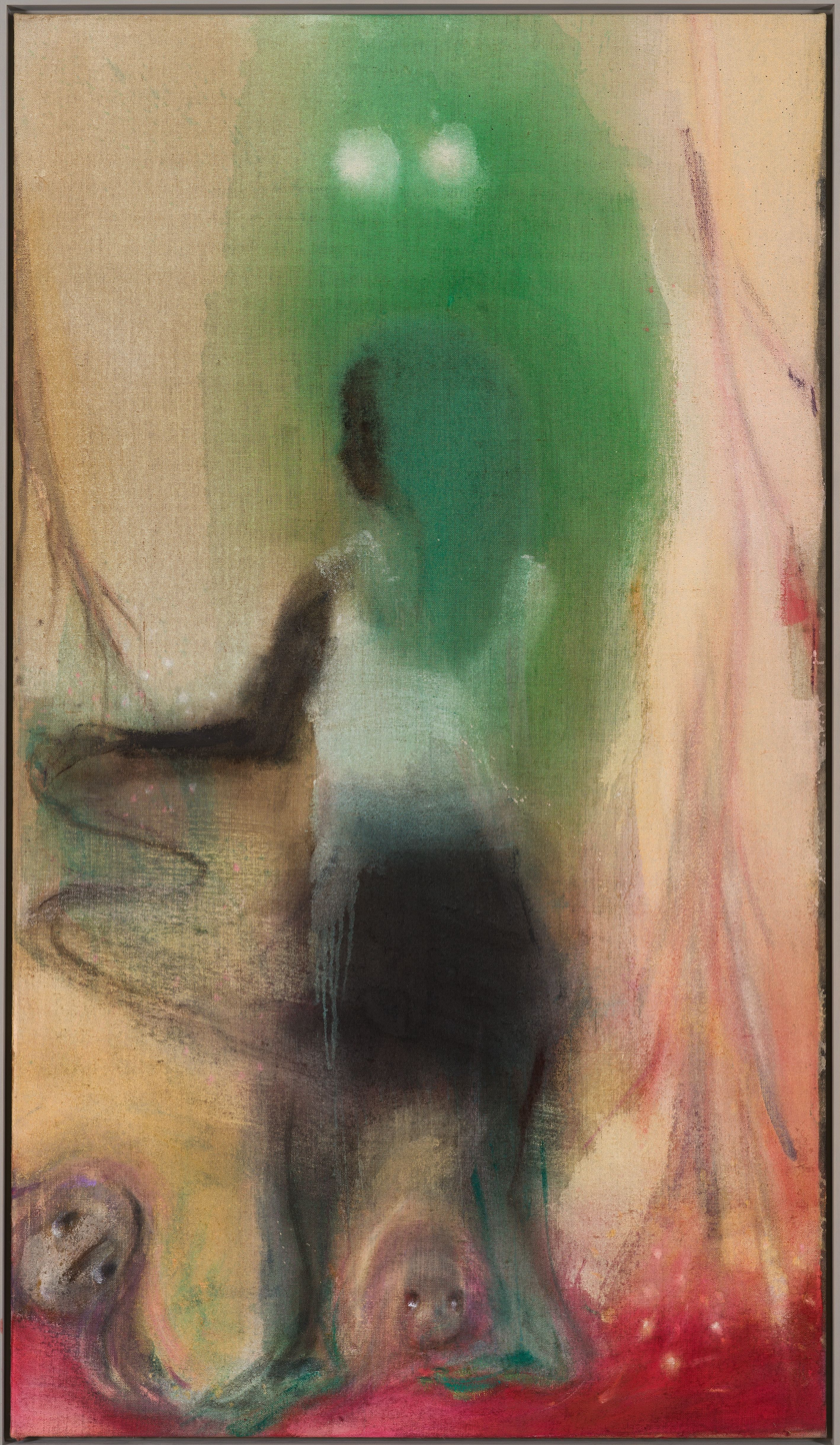
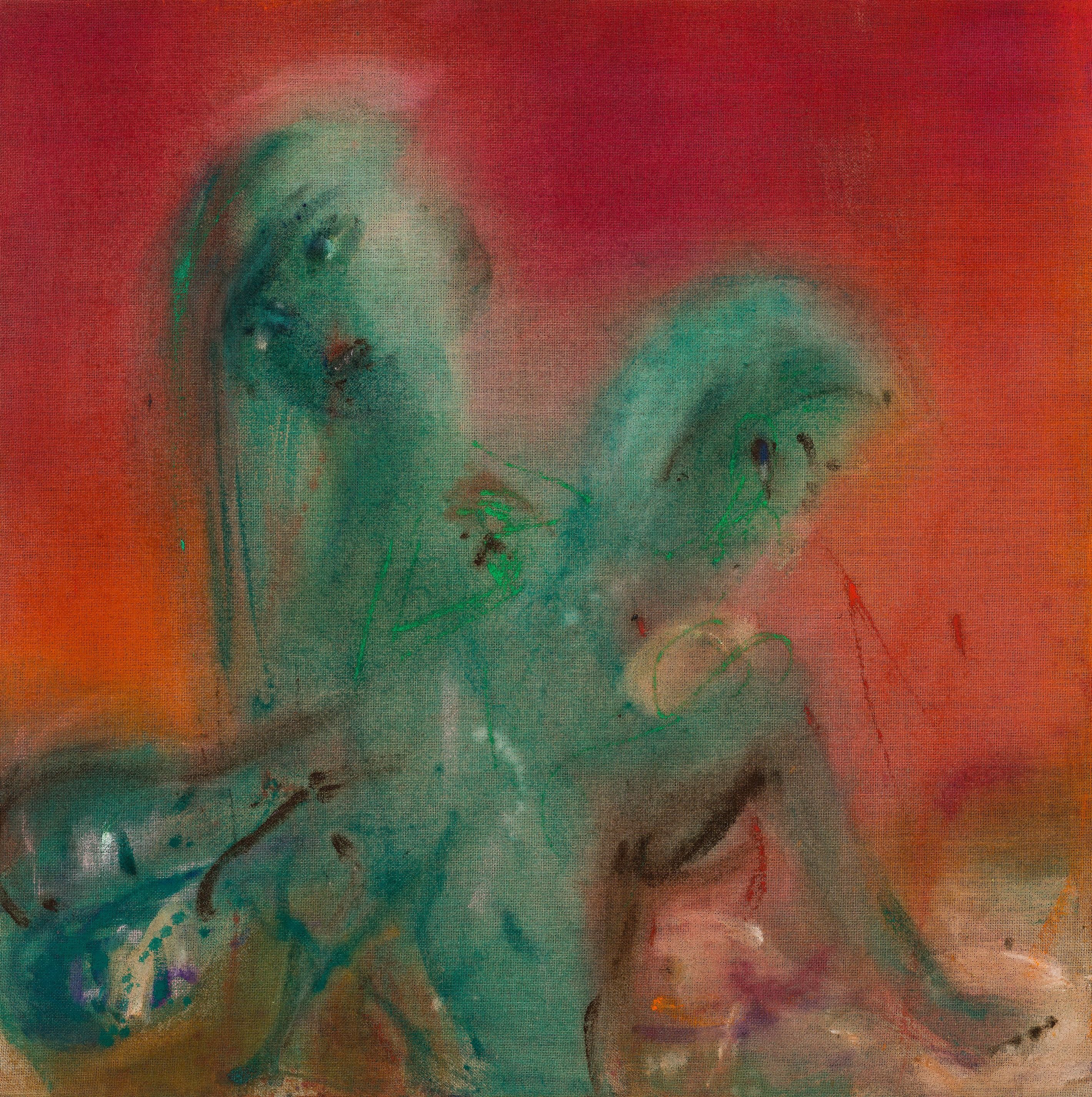
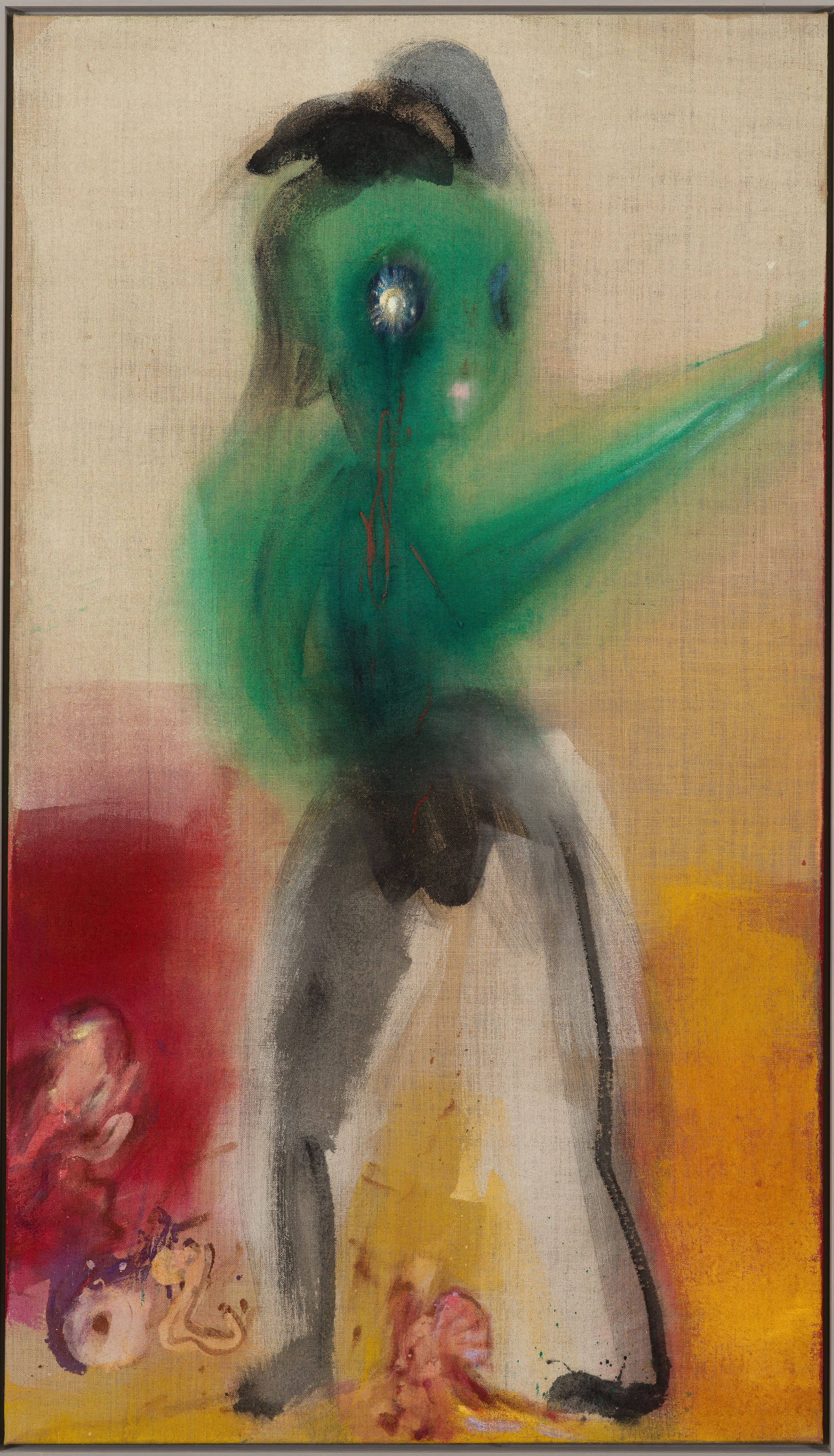
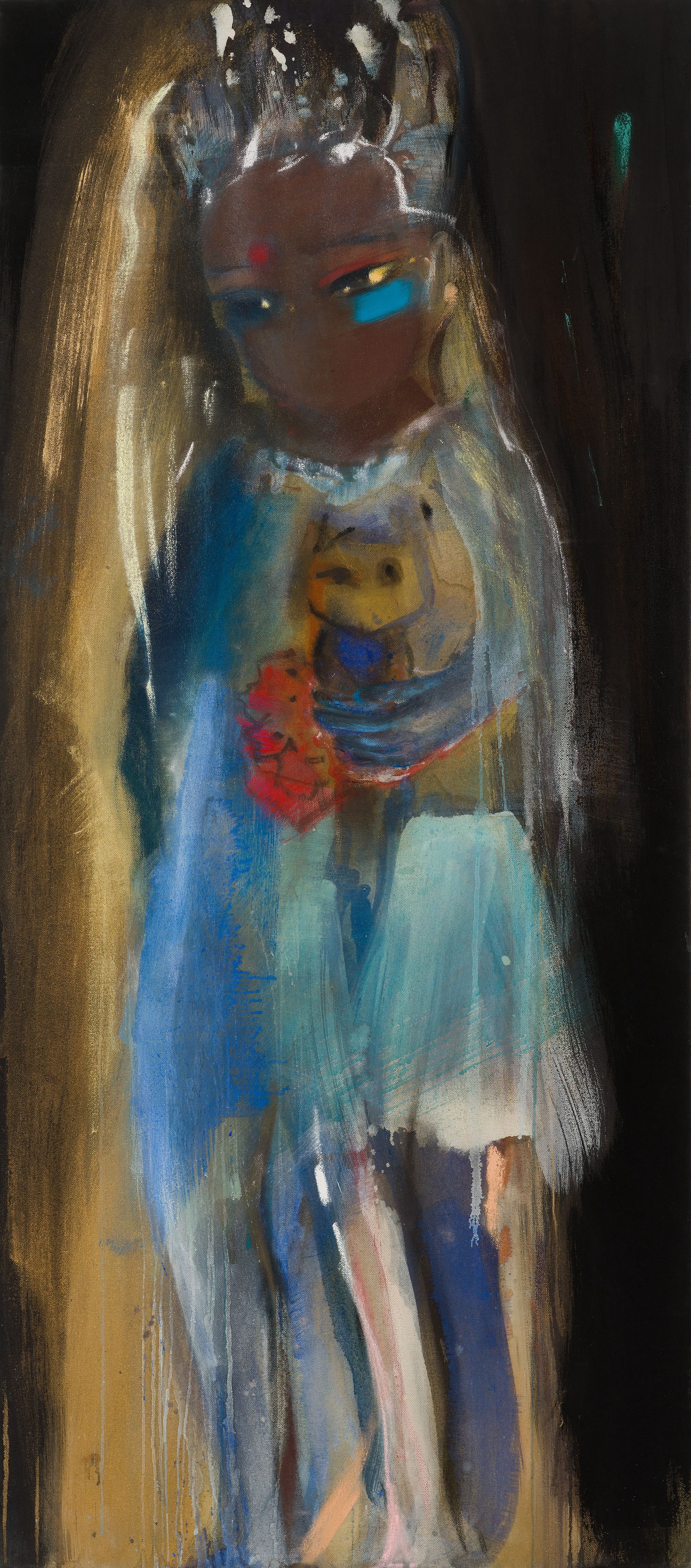
Three green figures form the heart of De Sensu, each painting hung side-by-side against the green wall: Green Baby, Green Mom, and Dear Spirit (all 2025). In Green Mom, a small infant figure is held by the central maternal subject. The oil and tempura brushwork is hazy and fragile against the stretched jute canvas, the larger figure shadowed by a second evocation of their form, as if flitting between two versions of the self—much as motherhood often necessitates the splintering of one’s identity. Contained within a small, roofed box and cradled in their arms is the baby, pink and frowning.
“When you see how I lived all my life, it was always in an adventurous and unknown way”
Ikemura has returned repeatedly in her work to motherhood, including in her solo exhibition at Contemporary Fine Arts in 2024, titled Momstars (in a play on ‘monsters’), and in 2025 at Vienna’s Albertina Museum with Motherscape. Ikemura herself has no children but is interested in the role of caregiving, as well as the cycle from birth to death, and how the boundaries between the self and the other can be dissolved and realigned. “I would not say that they are the mothers, but they can create new generations, new creatures,” she says of the figures who populate her recent paintings.
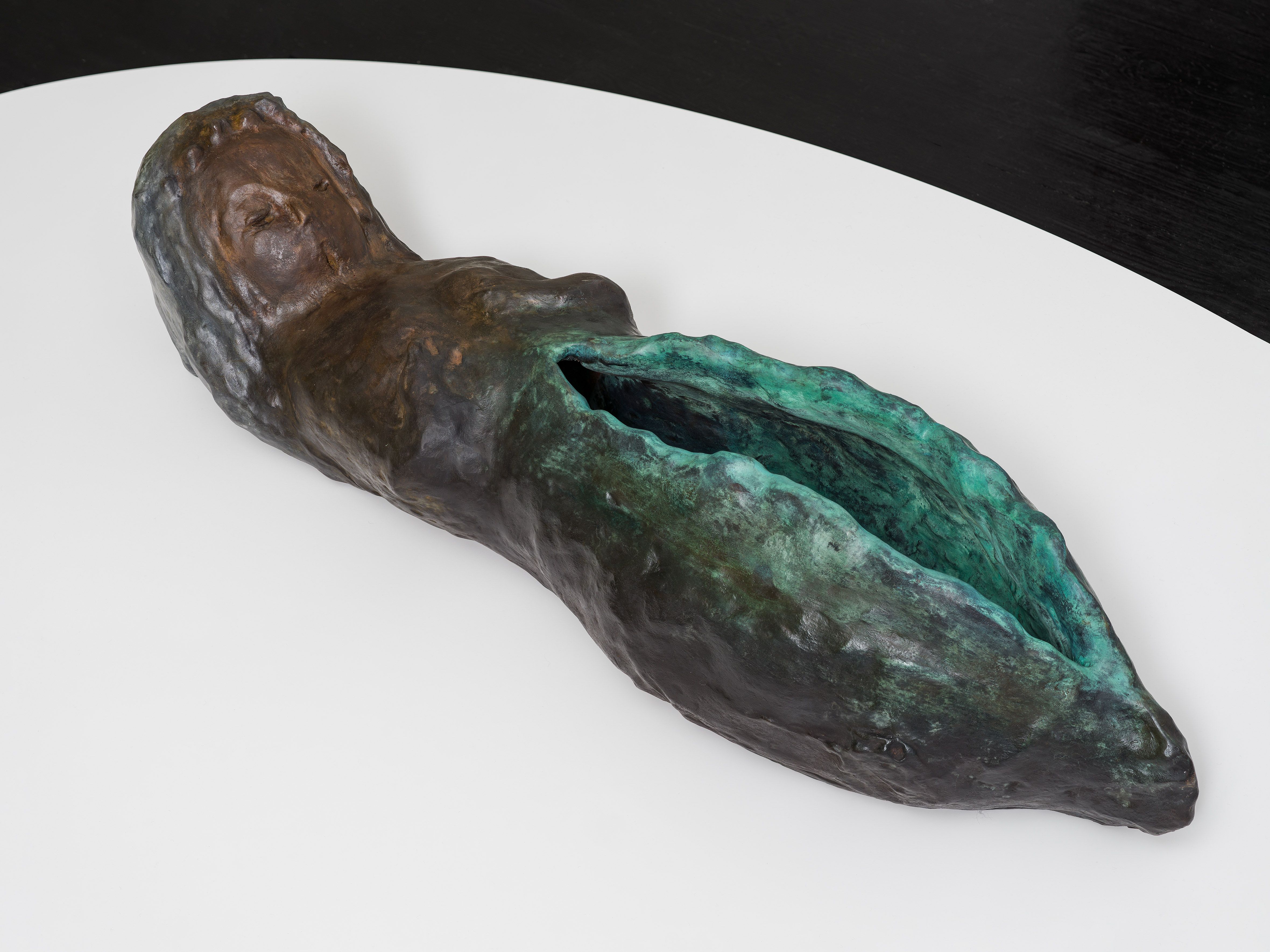
A bronze sculpture of a reclining female figure lies on a large white oval plinth, like an egg from which she has emerged. The thumbprints and marks of Ikemura’s hands can be seen on the sculpture, titled Milk Lady (2026), while a yonic opening gapes wide where her legs would otherwise be. The work again evokes the cyclical nature of birth and the transition to motherhood as a form of both obliteration and renewal.
“In art history,” says Ikemura, “there aren’t many women shown from the point of view of women artists.” Austrian painter Maria Lassnig is an influence, alongside Angelica Kauffman and Paula Modersohn-Becker, who was “the greatest painter of her time, even better than Picasso”. As Ikemura puts it: “Some people started to find their own way to see the body of women, to see the character of women. I make my own contribution.”—[O]
Leiko Ikemura, De Sensu (until 24 October) at Contemporary Fine Arts, Berlin





A respected voice in contemporary art discourse.
Focusing on ambitious storytelling and insightful art-world commentary. Ocula Magazine publishes in-depth interviews, critical essays and timely analysis on the artists, exhibitions and ideas driving the global art world.
Learn more about Ocula Magazine
Showcasing the best of the art world.
Ocula partners with galleries from around the world to highlight their artists, artworks and exhibitions. Gallery membership is by application and invitation, with each member vetted by an independent panel.
Learn more about Ocula Membership
Specialises in the sale of major artworks.
Led by a team with deep ties to the world’s leading auction houses, galleries and collectors. Ocula’s advisory team offers bespoke services to high-net-worth clients from around the world who are looking to acquire the best of contemporary and modern art.
Learn more about our team and services