





The Promises Auction Houses Make to Secure Major Consignments
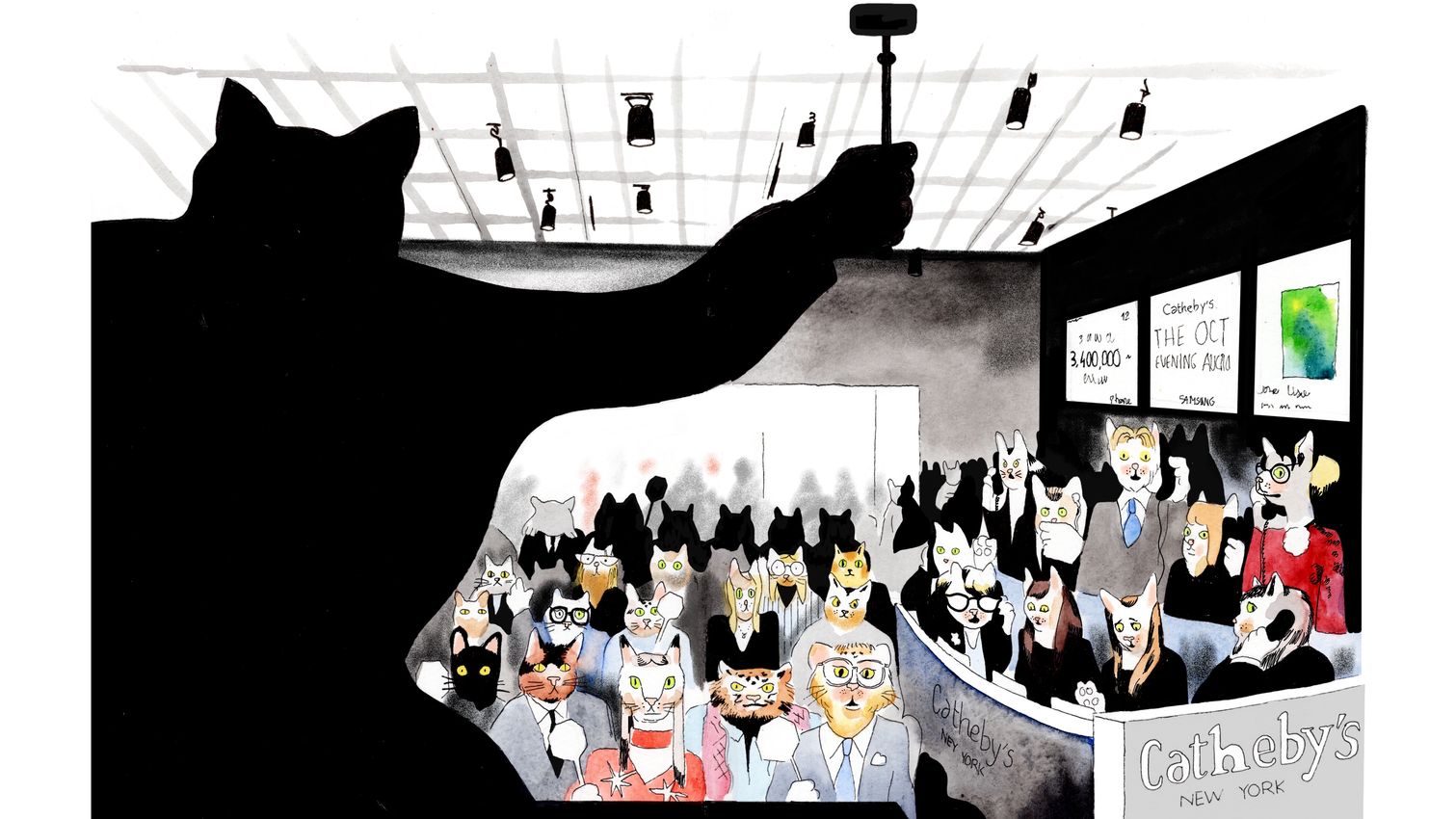


Simon de Pury, the iconoclastic art-world figure who has been described as the Mick Jagger of auctioneers, is best known for his gavel-in-hand theatrics in the auction room. But, the former Sotheby’s chairman tells me, some of the most hair-raising moments of his career have been on the other side of the deal: securing consignments. “It’s a constant competition,” he says. “You’re only as good as your next auction. It’s like an election campaign that never, never ends.”
He describes the nerve-wracking experience of visiting a big consignor—usually an important collector or the representatives of their estate—to present to them. “You have half an hour or 45 minutes at your disposal and you know that the other houses will maybe come the same day.” They may even have already been. You start to wonder: “Is the strongest impression left by the last person they’ll see or the first person they’ve seen?” It seems like a minor fixation, but the stakes are high: “With a more important collection, sometimes the whole season, the whole year, depends on whether you will secure that consignment.”
In the past year, the art market has been buoyed by a series of blockbuster consignments. Sales of the collections of big names like SI Newhouse and Leonard Lauder (which respectively netted Christie’s and Sotheby’s $1.1 billion and $527.5 million) have been credited with curing an ailing art market. Last month, the veteran reporter Daniel Cassady coined the phrase “The Great Estate Rush”.
It’s a chicken-and-egg situation: are the estate sales to thank for a good market or is the good market leading to the estate sales? Such self-fulfilling cycles are familiar in the art market. As Cassady tells me, “The entire thing is based on sentiment: if the market is perceived to be doing well, then it will do well.”
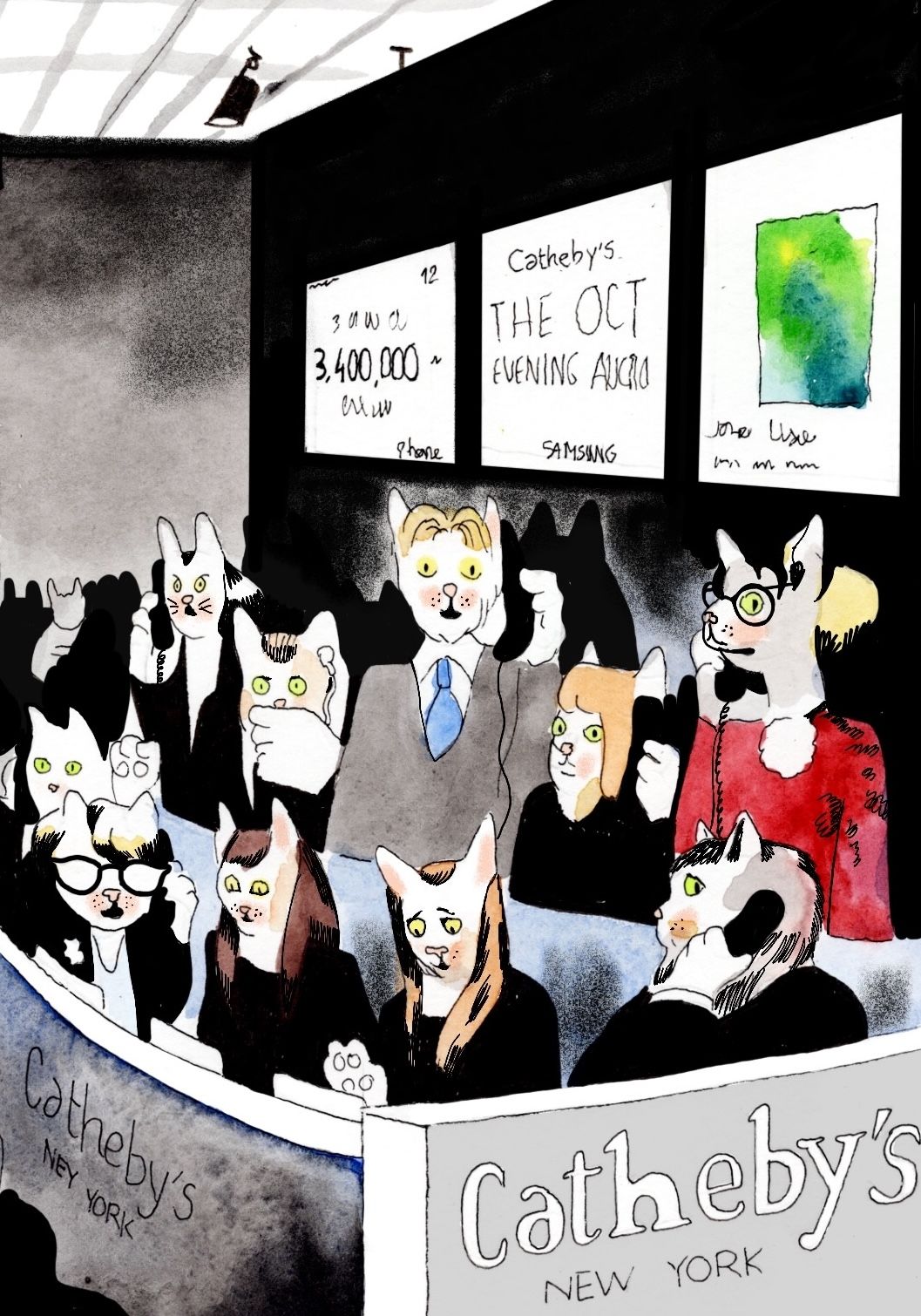
One thing is clear: the onus is on auction houses to keep securing these blockbuster consignments. But how do they do it, and how do their activities impact other areas of the art world?
The two major auction houses, Sotheby’s and Christies (“the duopoly”, as de Pury calls them), compete for most of the top consignments. Their job, he says, is to convince the potential consignor that they can achieve the best return on the sale.
The promise of a third-party guarantee is a much-discussed way for auction houses to inspire confidence on this front. A guarantor agrees to pay a certain price for a lot in advance of an auction. If the lot doesn’t reach this number on the night, the guarantor’s bid wins; if it’s surpassed, they receive a share in the financial upside.
“Are the estate sales to thank for a good market or is the good market leading to the estate sales?”
“You don’t go into court and ask people in the courtroom questions that you don’t already know the answer to,” says Kathryn Brown, the art historian and former lawyer whose 2024 book Art Auctions: Spectacle and Value in the 21st Century charts the evolving ambitions and methods of auction houses. The same is true at auction: the offer of a guarantee, she explains, is effectively a way of assuring potential consignors that “you’re not just throwing yourself out there to the mercy of the market”.
Ten years ago, “guarantees were there to take away risk for a very high-profile consignment”, India Phillips, managing director of modern and contemporary art (Europe) at Phillips, tells me. Since then, “people who are buying in the art market have become much more familiar with guarantees and people want to take part”. Guaranteeing a work you’d be happy to own is a win-win. Today, lots are guaranteed at all levels and most big sales are fully guaranteed.
However, guarantees might play a smaller role in securing consignments than their prevalence suggests. Cassady explains that, with “wire-thin margins”, neither major auction house can offer a guarantee much better than the other. (As de Pury puts it, “In financial terms, if you have been too aggressive or too generous, if you win it may be a pyrrhic victory.”) “Very often,” says Cassady, “they will be in such close competition that the vibe in the room matters just as much.”

Many of the auction specialists I speak with are keen to impress that financial returns are far from being the only promise that they deploy in order to convince collectors and their heirs to sell with them. Cementing and publicising the consignor’s legacy (a function usually associated with museums) is equally important.
Mackie Hayden-Cook, specialist and co-head of online sales at Sotheby’s contemporary day sale, describes the importance of exhibition staging in the house’s courting of Pauline Karpidas, whose Surrealism-centred collection secured the house $136 million last September. “We transformed the entire building on New Bond Street into Pauline’s home, to show her vision of the collection, her character and the way she collected,” she says. Londoners might remember the monumental pair of eyes that covered the building’s façade while the collection was on show.
Similarly, Phillips tells me, when US ambassador John L Loeb Jr consigned his collection of Danish art to the house, “the opportunity to celebrate the collection and to see his legacy celebrated, to see the works together touring around the world” drove his decision. The collection was taken to seven locations, including Copenhagen and Hong Kong.
Where auction houses were once purely transactional spaces, they now perform multiple public-facing functions, including exhibition-making, events and publishing. In a symbol of this shift, last year Sotheby’s moved its global headquarters to New York’s Breuer Building, best known as the former home of the Whitney Museum. A key difference between the two institutions is that Sotheby’s viewing hours are free for visitors.
“Where auction houses were once purely transactional spaces, they now perform multiple public-facing functions”
Unlike museums, auction houses exist principally to make money. “At the end of the day, if you sell something, you want to obtain the highest possible price for it,” says de Pury. “That has to be the overriding thing.” To a cynic, the museum-like actions of auction houses might look like marketing for this end. Indeed, for marketing, their pockets seem to be especially deep; from week-long architectural transformations to the recruitment of global celebrities for advertising, it’s difficult to imagine museums going to the same lengths to promote their work.
“What one might call traditional museum-type activities are being brought into the commercial world… I hesitate to say for the public good, because they’re for commercial ends,” says Brown. Cassady points out that, for collectors and their heirs, museum donations were once the only way into the history books. An attention-grabbing sale is now a means to the same end. “Now, if you’re building a legacy, you can do that and become more liquid.” Hayden-Cook, the Sotheby’s specialist, demurs: “Whether we’re competing with museums isn’t really something we consider.”
Keeping art from reaching museums is an ugly mandate that I doubt any auction house would outwardly align itself with. Currently, it would be crude and alarmist to characterise them in these terms. However, as the “Great Estate Rush” swells and they continue to vie for the best consignments, auction houses might spare a thought for the collateral impacts of their campaigns. —[O]











A respected voice in contemporary art discourse.
Focusing on ambitious storytelling and insightful art-world commentary. Ocula Magazine publishes in-depth interviews, critical essays and timely analysis on the artists, exhibitions and ideas driving the global art world.
Learn more about Ocula Magazine
Showcasing the best of the art world.
Ocula partners with galleries from around the world to highlight their artists, artworks and exhibitions. Gallery membership is by application and invitation, with each member vetted by an independent panel.
Learn more about Ocula Membership
Specialises in the sale of major artworks.
Led by a team with deep ties to the world’s leading auction houses, galleries and collectors. Ocula’s advisory team offers bespoke services to high-net-worth clients from around the world who are looking to acquire the best of contemporary and modern art.
Learn more about our team and services