





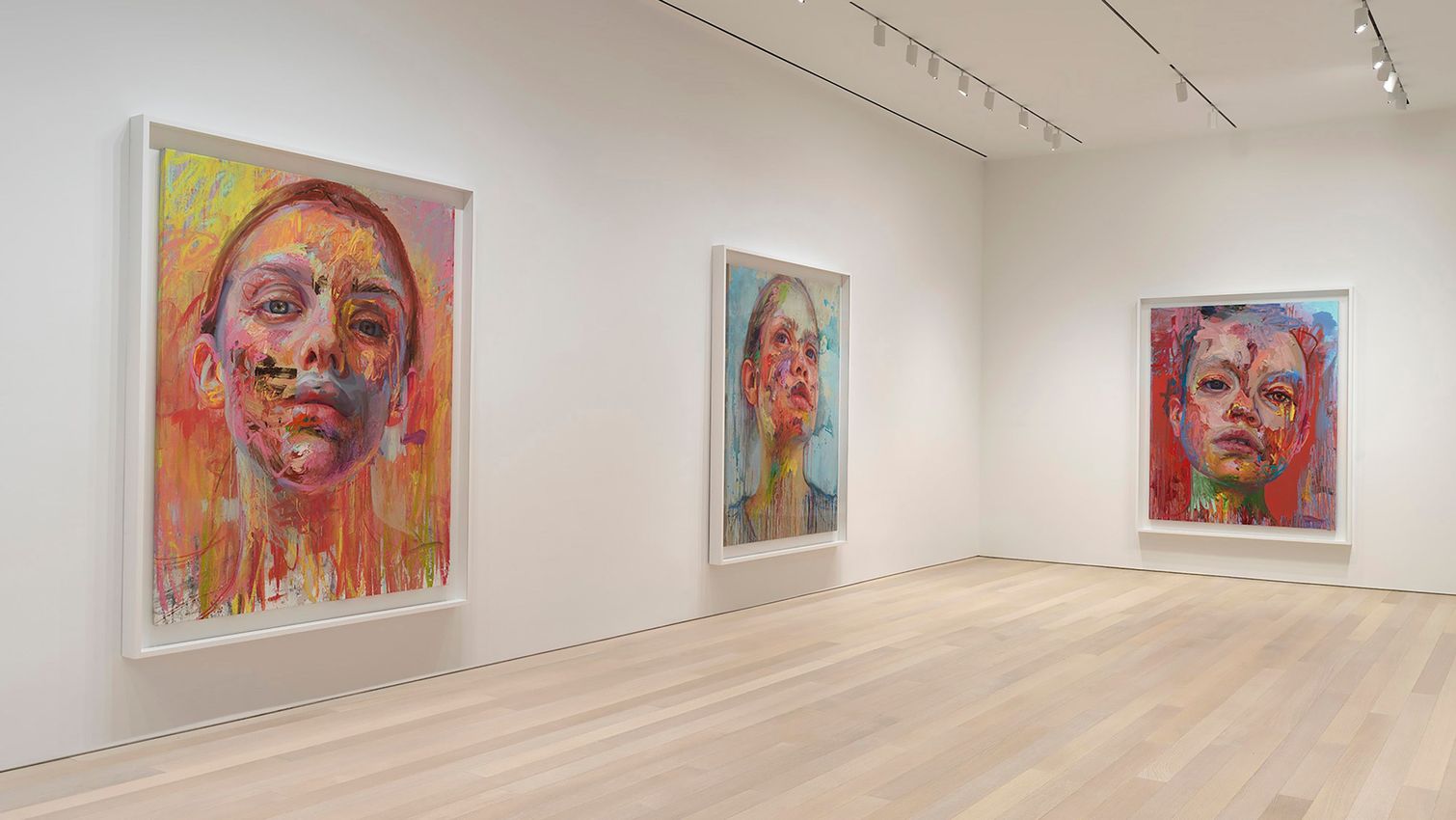
JENNY SAVILLE
b. 1970, United KingdomJenny Saville is one of the world’s most sought-after contemporary artists, renowned for her monumental, visceral paintings of the human body that have redefined figurative painting for the 21st century, earning her major survey exhibitions at institutions such as London‘s National Portrait Gallery.
Born in Cambridge, England, in 1970, Jenny Saville rose to prominence in the early 1990s as a leading member of the Young British Artists (YBAs). This movement transformed the landscape of British contemporary art.
After studying at the Glasgow School of Art, Saville’s graduate work caught the attention of influential collector Charles Saatchi, who offered her a contract and a platform at the Saatchi Gallery in London. Her early career was shaped by her inclusion in the landmark Young British Artists III exhibition (1994) and the Sensation show at the Royal Academy of Arts (1997), which propelled her to international acclaim.
She currently lives and works between London, Oxford, and Palermo.
Early Years
Saville’s fascination with the human body began during her studies at Glasgow, where she immersed herself in anatomy books and observed plastic surgery operations in New York. These experiences informed her distinctive approach to painting flesh, form, and the realities of the body.
In 1991, she spent a term at the University of Cincinnati. Her studies focused her interest on the societal implications and taboos surrounding the ‘imperfections’ of flesh. While on a fellowship in Connecticut in 1994, Saville observed a New York City plastic surgeon at work. Studying the reconstruction of human flesh was formative in her perception of the body—its resilience, as well as its fragility.
Jenny Saville Artworks
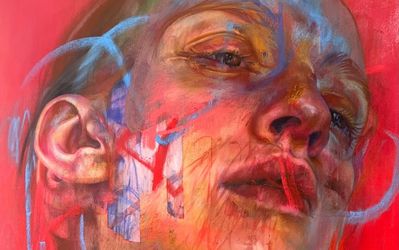
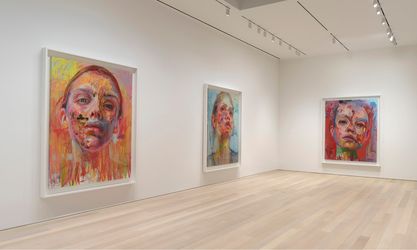
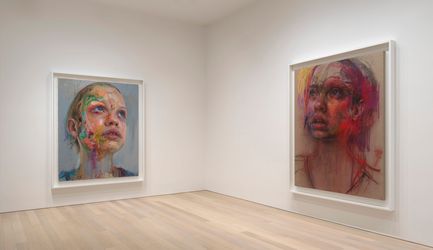
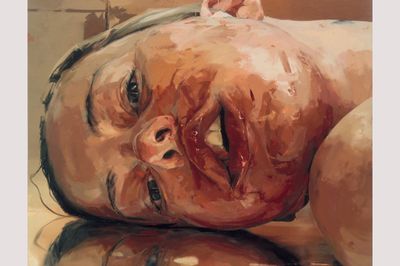
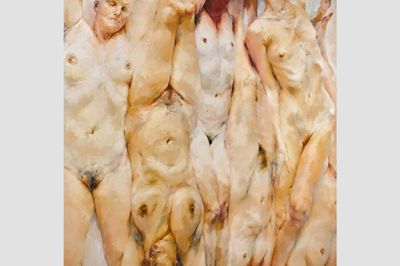
Saville’s practice centres on large-scale paintings and drawings that confront traditional ideals of beauty and the representation of the female nude in art. Her works are celebrated for their raw depiction of the human form, challenging both art historical conventions and contemporary standards of body image.
Seminal Early Works
Saville’s early paintings, such as Plan (1993) and Propped (1992), are iconic for their unflinching portrayal of the body’s mass and imperfections, rendered with expressive, tactile brushwork. Propped became one of the most expensive works by a living female artist sold at auction.
Continued Innovation
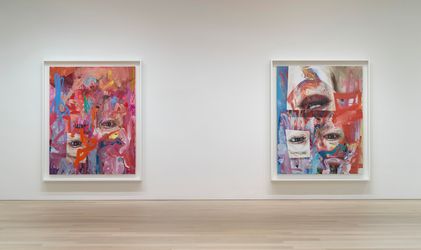
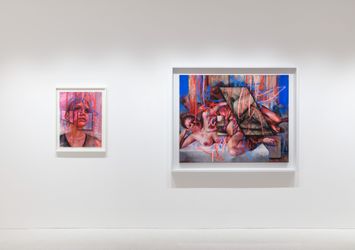
Throughout her career, Saville has continued to explore the boundaries of figuration and abstraction, often working with models who have undergone surgery or who challenge binary gender norms. Her later works incorporate multiple perspectives and layered forms, further pushing the possibilities of contemporary figurative painting.
Awards and Accolades
- Elected Royal Academician, Royal Academy of Arts (2007)
- One of only two women in the top 10 auction lots sold in 2023.
Exhibitions
Jenny Saville has been the subject of major solo and group exhibitions at leading institutions.
Solo Exhibitions
- Jenny Saville: The Anatomy of Painting, National Portrait Gallery, London (2025)
- Jenny Saville, Modern Art Oxford, Oxford (2012)
- Jenny Saville, Norton Museum of Art, Florida (2012)
- Jenny Saville, Museo d’Arte Contemporanea, Rome (2005)
- Now: Jenny Saville, Scottish National Gallery of Modern Art, Edinburgh (2018)
Group Exhibitions
- Sensation: Young British Artists from the Saatchi Collection, Royal Academy of Arts, London (1997)
- 50th Venice Biennale (2003)
- All Too Human, Tate Britain, London (2018)
- Women Painting Women, Modern Art Museum of Fort Worth (2022)
Jenny Saville FAQs
Where can I see Jenny Saville’s work?
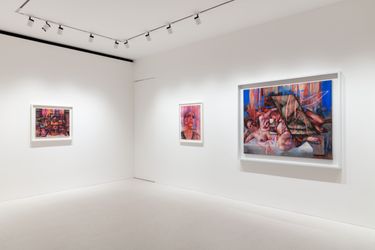
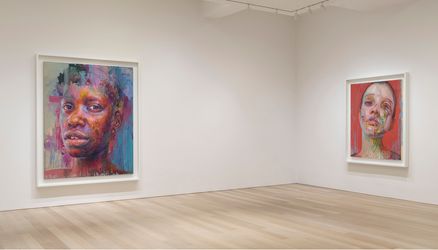
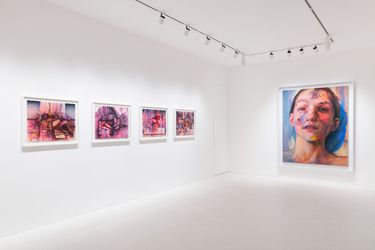
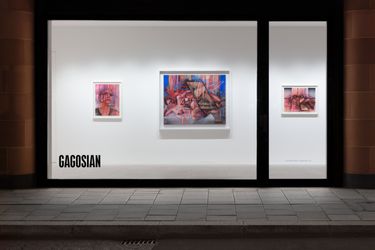
Saville’s artworks are held in significant public collections, including The Metropolitan Museum of Art (New York), The Broad (Los Angeles), Museum of Contemporary Art (San Diego), and the National Portrait Gallery (London). Her paintings are also regularly shown at Gagosian and have been featured in art fairs such as Frieze and Basel.
What makes Jenny Saville’s art unique?
Saville is recognised for her monumental scale, expressive brushwork, and unfiltered depiction of the human body, challenging both art historical conventions and contemporary ideals of beauty.
What is her connection to art history?
Saville’s paintings draw on the traditions of Rubens, Lucien Freud, and Francis Bacon while reinventing the female nude for contemporary art.
Which artists have influenced Jenny Saville?
While influenced by old and modern masters such as Rembrandt, Francis Bacon, and Lucian Freud, it is the work of abstract artists—including Willem de Kooning and Cy Twombly—that also captivates Saville. Her work explores different ways of reconstructing reality, leading her to engage more with abstract painting. She studied the work of de Kooning in the early 2000s, which proved pivotal to her art, inspiring her to integrate his modernist abstraction into her figurative painting.
What else has influenced Jenny Saville’s painting?
Saville has analysed medical illustrations and observed plastic surgeons at work, studying the reconstruction of human flesh and the ways it could be transformed and reconfigured. Her visceral paintings bring this fascination to life.
Are there any interesting facts about Jenny Saville?
Saville’s Propped (1992) set a record as the most expensive work by a living female artist at auction. She is also a Royal Academician and has taught at the Slade School of Fine Art.
How do you pronounce her name?
Jenny Saville is pronounced ‘JEN-ee SAV-ill’.
Ocula | 2025

Explore Jenny Saville's Exhibitions

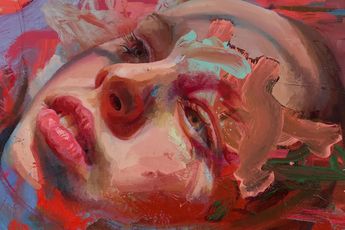

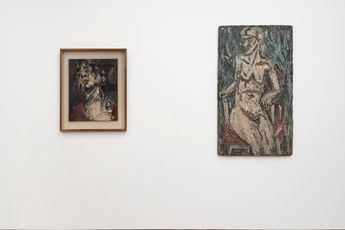


Representative Artworks
View exhibition
View exhibition






Explore and Follow Artists Shaping Contemporary Art
A respected voice in contemporary art discourse.
Focusing on ambitious storytelling and insightful art-world commentary. Ocula Magazine publishes in-depth interviews, critical essays and timely analysis on the artists, exhibitions and ideas driving the global art world.
Learn more about Ocula Magazine
Showcasing the best of the art world.
Ocula partners with galleries from around the world to highlight their artists, artworks and exhibitions. Gallery membership is by application and invitation, with each member vetted by an independent panel.
Learn more about Ocula Membership
Specialises in the sale of major artworks.
Led by a team with deep ties to the world’s leading auction houses, galleries and collectors. Ocula’s advisory team offers bespoke services to high-net-worth clients from around the world who are looking to acquire the best of contemporary and modern art.
Learn more about our team and services