




NANCY GRAVES
1939-1995, United StatesNancy Graves was a pioneering American artist celebrated for her diverse and experimental practice across sculpture, painting, printmaking, drawing, and film.
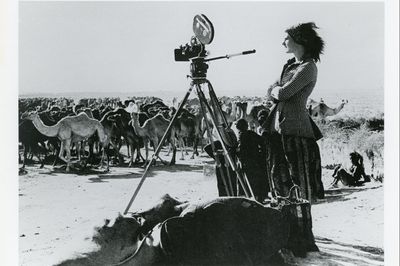
Renowned for her scientific curiosity and innovative use of materials, Graves became a sensation in the late 1960s with her life-size, hyperrealistic camel sculptures—a nod to her fascination with natural history and taxonomy. At just 29, she became the youngest artist and only the fifth woman to receive a solo exhibition at the Whitney Museum of American Art, cementing her place in postwar art history.
Education and Early Influences
Graves graduated from Vassar College in 1961 before earning her MFA in painting from Yale University in 1964. Following her studies, she was awarded a Fulbright scholarship to study in Paris. This period abroad, including travels to Italy, proved formative, as she developed her sculptural language by engaging with anatomical models and the visual traditions of European museums.
Artistic Process
Graves was known for her methodical research and inventive processes. She meticulously collected images and articles on prehistoric and scientific subjects, using them as source material for her art. Her practice of ‘visual quotation’ involved repeating and transforming images—both found and self-generated—creating works that explore repetition, variability, and the interplay between the past and present. Graves was particularly interested in images produced by machines, such as satellite and lunar photographs, which she saw as collective cultural artefacts rather than personal expressions.
Themes and Materials
Graves’s work is marked by a deep engagement with natural phenomena, scientific imagery, and the remnants of past civilisations. She frequently drew inspiration from sources as varied as taxidermy animals, lunar maps, and prehistoric art, synthesising them into complex visual languages that blend abstraction and figuration. Her renowned Camels—sculptures made from wax, polyurethane, and fur—were first presented at the Whitney Museum and explored the relationship between reality and art, evoking animals, bones, and skeletons.
In the following decades, Graves’s sculptural practice continued to reference the real world. Using the ancient lost-wax technique of cire-perdue, she cast bronze sculptures of everyday objects such as fruit, plants, and flowers, creating asymmetrical works that addressed notions of balance and perception. Her later works often incorporated found objects cast in bronze—plants, mechanical parts, tools, and food—arranged in playful, colourful assemblages.
Painting and Interdisciplinary Research
From the 1970s, Graves’s large-scale paintings translated her in-depth research in disciplines such as archaeology, anthropology, palaeontology, and scientific observation into intricate abstractions. Her canvases drew inspiration from ancient artefacts—prehistoric cave markings, mythological busts, maps of burial sites—as well as technological advances like satellite imaging, NASA photography, and circuit boards. Referencing sources from antiquity to modern technology, Graves alluded to a convergence of time where past and present are intrinsically interconnected.
From the mid-1980s onward, she blurred the boundaries between sculpture and painting, attaching protruding aluminium elements to her canvases that extended her pictorial motifs and brushstrokes. These sculptural paintings, hovering between two mediums, are a testament to Graves’s ongoing exploration of space and movement.
Notable Works
- ‘Camels, VI, VII, VIII’ (1969): Life-size sculptures in wood, steel, burlap, polyurethane, wax, and oil paint
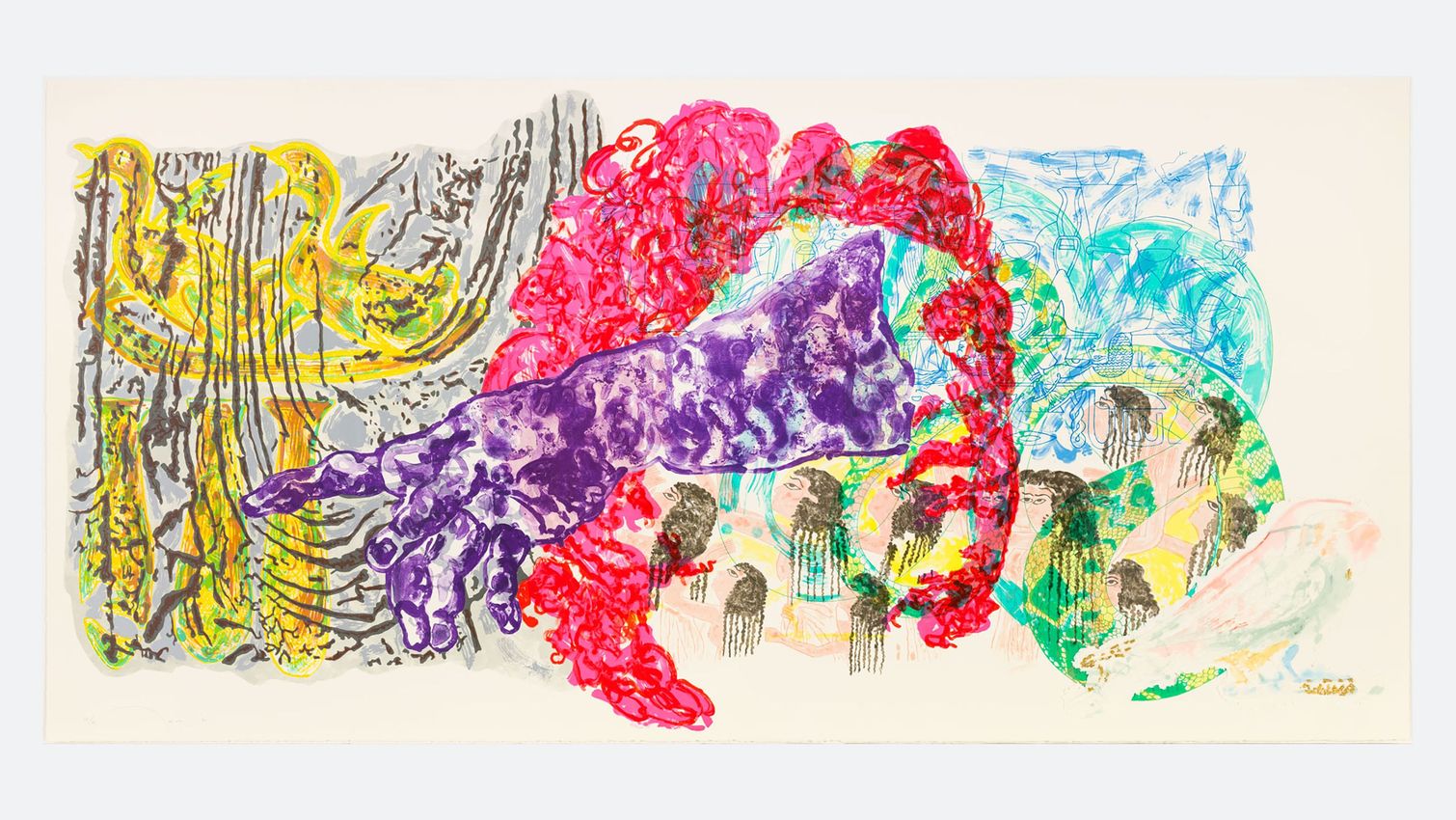
- VI Maskeyne Da Region of the Moon (1972): Lithograph based on lunar maps
- Trace (1980): Large bronze and steel mesh sculpture
- Wheelabout (1985): Bronze sculpture
- Immovable Iconography (1990): Bronze sculpture
Exhibitions and Collections
Graves’s art is held in major public collections worldwide, including:
- Whitney Museum of American Art, New York
- Museum of Modern Art, New York
- Metropolitan Museum of Art, New York
- Solomon R. Guggenheim Museum, New York
- Los Angeles County Museum of Art
- Art Institute of Chicago
- Museum of Contemporary Art, Los Angeles
- San Francisco Museum of Modern Art
- Smithsonian American Art Museum, Washington, D.C.
- Walker Art Center, Minneapolis
- Museum Ludwig, Germany
- Centre Pompidou, France
- National Gallery of Australia, Canberra
Her work continues to be exhibited internationally, with recent shows at institutions like ICA Boston and galleries such as Mitchell-Innes & Nash, Ceysson & Bénétière, Locks Gallery, and Perrotin. The Nancy Graves Foundation also works with Ceysson & Bénétière in France and Luxembourg.
Representation and Legacy
The Nancy Graves Foundation manages her estate and collaborates with leading galleries for exhibitions and representation. In a recent development, Perrotin—a prominent international gallery—announced its collaboration with the Nancy Graves Foundation, joining a select group of galleries working to further Graves’s legacy and bring her work to new audiences.
Nancy Graves FAQs
What is Nancy Graves best known for?
Graves is most famous for her hyperrealistic camel sculptures, first exhibited at the Whitney Museum of American Art in 1969. These works explored her fascination with natural history, taxonomy, and museum display, and established her as a leading figure in postwar American art.
What were the main themes in Nancy Graves’s work?
Her art frequently engaged with natural phenomena, scientific imagery, archaeology, and anthropology. Graves drew inspiration from sources such as taxidermy animals, prehistoric art, lunar maps, and technological imagery, blending abstraction and figuration in her practice.
Where can I see Nancy Graves’s work?
Her work is held in major public collections worldwide, including:
- Whitney Museum of American Art, New York
- Museum of Modern Art, New York
- Metropolitan Museum of Art, New York
- Los Angeles County Museum of Art
- Art Institute of Chicago
- National Gallery of Australia, Canberra
What is the Nancy Graves Foundation?
Established and endowed by Graves’s will, the Nancy Graves Foundation became active in 1996. Its mission is to advance understanding of visual arts by investigating Graves’s legacy through exhibitions, research, publications, and educational programming. The Foundation maintains a comprehensive collection of her works and archives, supporting scholarship and offering grants to individual artists. While not open to the public, its research library is available to scholars by appointment.
How did Nancy Graves influence contemporary art?
Graves’s interdisciplinary approach and her blending of scientific inquiry with visual art have influenced generations of artists. Her work anticipated many contemporary themes—such as the aesthetics of data, the use of found imagery, and the hybridisation of abstraction and figuration. As Christina Hunter, Executive Director of the Nancy Graves Foundation, notes, Graves was acutely aware of making art in the ‘information age’, a perspective that resonates strongly today.
Graves’s legacy endures through the continued efforts of her Foundation and the renewed attention from leading galleries like Perrotin, ensuring her innovative vision remains vital to contemporary art discourse.
How did Nancy Graves die?
Nancy Graves died of cancer in New York City on 21 October 1995 at the age of 55.
Ocula | 2025





Explore and Follow Artists Shaping Contemporary Art
A respected voice in contemporary art discourse.
Focusing on ambitious storytelling and insightful art-world commentary. Ocula Magazine publishes in-depth interviews, critical essays and timely analysis on the artists, exhibitions and ideas driving the global art world.
Learn more about Ocula Magazine
Showcasing the best of the art world.
Ocula partners with galleries from around the world to highlight their artists, artworks and exhibitions. Gallery membership is by application and invitation, with each member vetted by an independent panel.
Learn more about Ocula Membership
Specialises in the sale of major artworks.
Led by a team with deep ties to the world’s leading auction houses, galleries and collectors. Ocula’s advisory team offers bespoke services to high-net-worth clients from around the world who are looking to acquire the best of contemporary and modern art.
Learn more about our team and services